Tag: PepsiCo

  • Om Jha levels up: From Pepsico prodigy to global media maestro

    Om Jha levels up: From Pepsico prodigy to global media maestro

    MUMBAI: Five and a half years ago, Om Jha took his first sip of Pepsico’s high-energy corporate culture—nervous, excited, and ready to shake things up. Now, with a portfolio of impactful marketing, media, and data-driven campaigns under his belt, he is stepping into the future with a brand-new role in the company’s global media & transformation team. From Gurgaon to Plano, Texas, Jha’s journey has been nothing short of fizz-tastic. But what’s next? Let’s pop the cap and find out.

    “I was stepping in to do something I had never done before,” Jha reminisced about his early days at Pepsico. “Thanks to Vishal Kaul for hiring me and introducing me to the world of possibilities, and thanks to George Kovoor and Anshul Khanna for letting me define my own role with every passing year.”

    Jha didn’t just dip his toes into the Pepsico pool—he dived in headfirst. As head of media & partnerships (2019–2022), he spearheaded efforts to connect Pepsico’s legendary brands with consumers using a potent mix of media, data, and technology. He led high-stakes advertising and marketing negotiations, ensuring every penny squeezed out more efficiency and effectiveness.

    By 2022, he stepped up as director – media, data, marketing capabilities & partnerships. Here, he architected a robust first-party data-led marketing infrastructure, setting the stage for cutting-edge digital campaigns and award-winning brand partnerships.

    Fast forward to March 2025, and Jha is now embracing his biggest role yet—director of global media capabilities. This new challenge places him at the intersection of global strategy and transformation, a role tailor-made for someone who thrives on the ever-evolving media landscape.

    But Pepsico is just one stop in Jha’s dynamic career. Before this, he was assistant vice president – customer strategy at Disney Star (2018-2019), where he led the strategy vertical for the northern region, handling TV and digital ad sales revenue across multiple entertainment portfolios. Prior to that, he spent nearly two years as senior director – strategy at GroupM, simplifying media and technology for brands while driving insights-based performance marketing.

    Jha’s journey also took him through the telecom world. At Airtel (2015-2016), he headed business planning & consumer insights for the Delhi circle, overseeing operational strategy, financial planning, and product pricing. Before that, he honed his consulting expertise at KPMG India (2014-2015), managing large-scale business transformation projects.

    His early career included a five-year stint at Idea Cellular Ltd, where he worked as chief of staff in the MD’s office, focusing on corporate strategy and operations. He also gained experience in engineering and manufacturing at Mahindra Group (2005-2007), before transitioning into business roles.

    “A huge thank you to Shyam Venugopal and Abhishek Jadon for this opportunity,” Jha said, his excitement as palpable as the fizz in a freshly opened Pepsi can.

    Corporate careers are a bit like carbonated drinks—always under pressure, occasionally shaken, but ultimately, they’re all about making a splash. And if Jha’s track record is anything to go by, he’s about to pop the lid on something truly groundbreaking.

  • Reliance eyes sports drinks disruption with Rs 10 Spinner

    Reliance eyes sports drinks disruption with Rs 10 Spinner

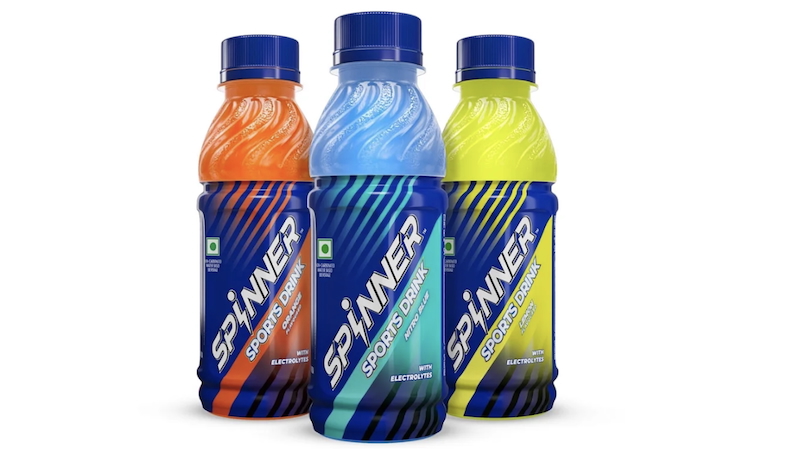
    MUMBAI: It’s looking at pumping up a rather placid Indian  sports hydration drink market which has not seen much innovation from major players who have  gotten used to selling bottled refreshments at high sticker prices.  

    Reliance Consumer Products is, like in the past, using price and packaging as points to gain consumers’ attention and possibly upset the existing economics that multinationals have put in place for their production pipelines over the decades that they have been present in India and serving sports hydration drinks.  

    Spinner the  Reliance offering is priced at Rs 10 for 150 ml, making it much more affordable than established players like  Pepsico’s Gatorade and Coca-Cola’s Powerade which retail at Rs 50 and above  for 500 ml. Decathlon’s sports drink Aptonia costs Rs 99 for a 400 ml bottle, though it is available at Rs 69 on the portal.

    Co-created with cricket legend Muttiah Muralitharan, Spinner is be available in lemon, orange and nitro blue flavours. The company aims to create a Rs 83,000 crore (US$1 billion) sports beverage category in India within three years.

    The launch follows Reliance’s successful disruption of the sparkling beverages market with Campa, which gained 10 per cent market share in some states within two years. The company has partnered with five IPL teams including Mumbai Indians and Gujarat Titans to boost brand visibility. 

    “We’ve created an affordable hydration solution for everyone,” said Ketan Mody, chief operating officer at Reliance Consumer. The launch comes after the company’s recent entry into energy drinks with RasKik Gluco Energy, also priced at Rs 10.

    600 ml of Spinner -four packs of 150 ml each –  will cost  Rs 40, which is a substantial hair cut over the long-in-existence  price point that the big two have been commanding in the market. A price war is imminent with packaging variants  and pricing options being forced upon  Powerade and Gatorade.

    Should the consumer celebrate? 

  • “We believe brand strength is crucial in this category”- Britannia vice-chairman & MD Varun Berry

    “We believe brand strength is crucial in this category”- Britannia vice-chairman & MD Varun Berry

    It’s been 11 years since Varun Berry has been serving as managing director of food company Britannia Industries. Since then, the designation of vice-chairman has been added to his titles. But a lot more has happened at Britannia: its product portfolio has significantly expanded beyond biscuits into adjacent categories like dairy, cakes, rusk, and croissants. He has focused on driving innovation, strengthening distribution networks particularly in rural areas, and implementing robust cost efficiency measures.

    Prior to joining Britannia, Berry had a long stint at PepsiCo, where he held various leadership positions including CEO of PepsiCo Foods for Greater China. He also served as CEO of PepsiCo’s Indian snack food business.

    Berry is known for his strong operational expertise and focus on execution. During his tenure, Britannia has consistently improved its market share in the biscuits category while maintaining healthy profit margins despite inflationary pressures. He has emphasised direct distribution expansion, particularly in rural markets, and driven premiumisation across product categories.
    His management style focuses on systematic improvements in distribution, cost management, and innovation. Under his leadership, Britannia has also made significant investments in new manufacturing facilities and automation to support growth. 

    Berry  recently made a presentation  after the company’s Q3 and nine month  2025 financials as well as answered investment analysts’ questions. Excerpts from the presentation and question and answers sessions..

    On the macro environment.

    It’s been quite challenging. Food inflation was nearly in double digits, with cereals up 6.5 per cent and oils and fats around 15 per cent. The government’s GDP projections show real GDP growth at 5.4 per cent and nominal at 8 per cent, though they’re forecasting a recovery to 10.5 per cent in the second half.

    On inflationary pressures on input costs and on managing them.

    We’re seeing palm oil up 43 per cent, cocoa up 103 per cent, flour up 4 per cent, and corrugated boxes up 15 per cent. Overall commodity inflation is about 11 per cent. It would have been 2-4 per cent higher if we hadn’t done forward buying. Sugar has remained flat, and laminates saw a nominal three per cent increase. We have been forward buying of key commodities, getting in manufacturing efficiency improvements, optimising procurement, improving Logistics,  keeping overhead cost under control, and managing employee cost -targeting 0.75x of revenue growth, optimising work capital limit usage and using capacity strategically.

    On Britannia’s growth relative to the industry

    Based on the exit numbers and public declarations by other companies, we’re performing ahead of the industry. Our core biscuits business grew about 5.5 per cent in volume terms, with total volume growth at 6 per cent, showing the positive impact of our adjacency businesses.

    On the approach to  different segments

    We’re taking a multi-tiered approach. For our  core product, biscuits, we have launched  premium cookies with new variants like fruit & nut, butter, jeera. We have maintained popular price points with grammage management.  We have ringfenced our core products and are very clear we will be protecting market share  by innovating in existing segments. In our premium offerings we have launched Britannia Pure Magic Choco premium offerings. There are new premium croissant variants, an upgraded cake portfolio and premium cheese. 
    In the value segment, we have introduced Rs 5 packs for Rusk and our focus has been on maintaining competitive pricing while strategically managing grammages. 

    On  brand investments.

    We’re focusing on several areas: Critical growth brands, innovation-led initiatives, higher impact social media activation, tactical consumer promotions, digital campaigns showing strong consumer connection,  premium segment emphasis, regional preference consideration, and brand strength maintenance against competition.

    On growth in  adjacency businesses

    We’re seeing strong momentum. Croissants will cross Rs 200 crore next year, milkshakes have already crossed Rs 200 crore and are growing high double digits. 17 per cent contribution from e-commerce
    We’ve launched new products like a dual-flavoured layer cake, a Rs 5 pack in rusks, and a triple chocolate croissant. In drinks, we’ve introduced Winkin’ Cow Grow, a Rs 20 flavoured milk fortified with 16 nutrients.

    bihar plant

    On the cake portfolio.

    We’re in the midst of a full cake portfolio relaunch with new graphics and improved recipes that are outperforming competition. We have launched a triple chocolate variant. Similarly, we’re rolling out a relaunch of our entire cheese portfolio. These relaunches are backed by new graphics and superior recipes. Our cheese is beating competition in taste tests.

    On the company’s  approach to the salty snacks category.

    We’re being very deliberate here. While we recognise it’s a large category, it’s also highly competitive. We’re running pilots in some markets, experimenting with different formats, marketing approaches, product specifications, working on advertising pull vs push, on pack sizes and grammage,  and on consumer preferences.  We’ll only launch nationally when we’re absolutely confident of sustainable success.

    On the company’s advertising strategy

    We’re focusing on critical growth brands and innovation, with increased emphasis on high-impact social media activation. This approach is delivering better productivity for our advertising investments

    On  competitive pressures, particularly from new entrants

    While we’re aware of new entrants, including large players, we believe brand strength is crucial in this category. Price alone isn’t sufficient for success, and our established brands have consistently maintained their position despite competitive pressures.

    On Britannia’s e-commerce strategy

    We’ve developed in-house capabilities for data-based consumer insights and personalised content. E-commerce contribution varies significantly by category – about four per cent for biscuits, 17 per cent for croissants, nine per cent for cakes, and 11 per cent for dairy products. It’s particularly effective for new product launches.

    Varun berryOn the company’s approach to innovation

    We’re taking a measured approach. For instance, our Pure Magic Choco Frames with Harry Potter themes, launched exclusively for e-commerce and modern trade, is performing exceptionally well. We’re focusing on innovations that can be sustained and scaled.

    On distribution initiatives

    We’re implementing several strategic changes. For urban retail, we have a five-part strategy: leveraging high-potential outlets, right-sizing service frequency, upskilling salesmen capabilities, upgrading technology for better productivity, and increasing feet on street. We’re also planning a refresh of our rural route-to-market approach. Direct distribution has been  increased to 2.88 million outlets from 2.79 million. Then rural distributors have expanded to 31,000 from 30,000. We are also laying greater emphasis on focus states with distribution growing at 2-2.5 times the average.

    On growth in the focus states.

    They contribute about 15-16 per cent to our overall revenue and are growing at 1.3-1.4x the company average. These states represent 35 per cent of the rural category, and our market share there is less than half of what we have in the rest of the country, so there’s significant headroom for growth.. Following distribution-led, brand-led growth strategy. No big bang pricing strategies. Focus is  on sustainable growth through execution excellence

    On  the capex outlook

    We’re taking a break after significant investments. Planning to keep it between Rs 150-200 crore annually, unless volume growth demands more. We have three new plants with new lines and sufficient capacity headroom, so we’re well-positioned for now.

    On the  outlook on margins
    While we don’t give forward estimates, we’re confident about managing the current challenges. The 6-6.5 per cent price increases, combined with our 2.5 per cent cost savings target and other efficiency measures, should help us maintain our profit margins. We’ve navigated similar environments successfully in the past.

    On the company’s approach to  cost leadership
    Our cost savings programme has evolved significantly. In 2013-14, it represented 0.7 per cent of revenue; now it’s at 2.5 per cent. We reset these targets annually – whatever is achieved ends with the year, and we start fresh with new initiatives each April. 

    On the company’s  ESG initiatives

    We’ve received recognition from Times Now for ESG impact and a silver award from Scotch ESG awards. We’ve run a successful campaign highlighting our achievement of 100 per cent plastic neutrality, energy efficiency, and water stewardship.

    On  managing the price-point products given the inflation

    A: For popular price points like Rs 5 and Rs 10, we’re carefully managing grammage while ensuring consumer value. We’re also introducing new price points where relevant, like our Rs 20 Winkin’ Cow Grow product, which helps us tap into new market segments.


    On the company’s international business
    The international business continues to perform well across markets. While we don’t break out specific numbers, it’s showing consistent growth and remains a focus area for us.

    On employee costs fluctuations.

    We had a Rs 75 crore impact in Q3 related to stock appreciation rights, based on share price movements. Last quarter had a Rs 50 crore provision, and Q1 had about Rs 25 crore. These fluctuations are based on share price changes – when the share price moved from Rs 6,338 to Rs 4,762, it impacted the provisions.

    On the approach to  technology and digital transformation

    Several initiatives are underway: we are developing e-commerce capabilities in-house even as we are taking a data-based consumer insight approach. We are producing a lot personalised content along with the automation of sales force and digital tech upgrades. Tools have been put in place to enhance productivity and platforms where consumers can engage have been built. Digital campaigns are being managed on these platforms and outside. 

    On pricing strategy in FY 2025 as against FY 2023

    Initially, we thought it would be a deflationary year and had actually taken some price decreases. Then the inflationary trend emerged. We were also hopeful that government duties on fats would be temporary, but as the finance minister clarified, these are here to stay as part of the effort to indigenise fats in India. Now we’re taking decisive pricing actions. We’re implementing a three-phase price increase totalling 6-6.5 per cent: two per cent already implemented, 2.5 per cent being implemented; Q1 FY26: 1.5 per cent planned. This is calibrated to address the 11 per cent commodity inflation while maintaining competitiveness.

     

  • Quest Retail appoints Rahul Shanker as group CEO

    Quest Retail appoints Rahul Shanker as group CEO

    MUMBAI: Quest Retail, a key omnichannel player in the beauty, fashion, and lifestyle sectors, has announced the appointment of Rahul Shanker as group CEO. Shanker will oversee the company’s four business verticals and its operations in India, Sri Lanka, and Bangladesh. Quest Retail’s brand portfolio includes notable names such as The Body Shop, Kiehl’s, Anastasia Beverly Hills, Kylie Cosmetics, Avon, and Max Factor.

    Shanker brings over two decades of experience in leadership roles across various sectors, having previously served as the CEO of Modicare, where he achieved over fivefold revenue growth. He has a demonstrated track record of turning around struggling businesses and driving profitability through strategic transformation
    .
    An alumnus of Amity University (MBA) and Sri Venkateswara College, Delhi University (BSc. Hons), Shanker has held CEO and MD roles since 2015. His extensive background spans prominent companies such as PepsiCo, Wrigley-Mars, Philips, and Avon, where he was instrumental in launching new products and executing high-impact marketing campaigns.

    With experience in both multinational and Indian firms, Shanker is recognised for his ability to set effective cost structures and innovate go-to-market strategies, making him a valuable asset to Quest Retail as it continues to expand its market presence.

  • Nitin Bhandari appointed VP & general manager, India & south Asia beverages at PepsiCo

    Nitin Bhandari appointed VP & general manager, India & south Asia beverages at PepsiCo

    MUMBAI:  Nitin Bhandari has taken on the role of vice-president & general manager, India & south Asia beverages at PepsiCo. Based in Gurugram, Haryana, Bhandari will oversee the company’s beverages business in the region, focusing on unlocking growth opportunities and delivering value to consumers, communities, and stakeholders.

    He replaces George Kovoor senior vice-president & GM India beverage who has chosen to retire come 31 March 2025. 

    In his 19-year tenure at PepsiCo, Bhandari has held diverse leadership roles across India, Southeast Asia, and the Pacific. Most recently, he served as VP & chief growth officer for PepsiCo India, spearheading transformative strategies for its foods and beverages business in India, Bangladesh, Sri Lanka, and Nepal. Prior to this, he was general manager for the Philippines, Malaysia, and Singapore, managing both beverages and foods.

    Bhandari’s career highlights include launching e-commerce initiatives in Asia, turning around PepsiCo’s Thailand foods business, and leading the marketing strategy for iconic brands like Mountain Dew in India. His achievements have earned him accolades such as the PepsiCo Chairman’s Award in 2015.

    All that experience will be put to the test  in the coming summer as Reliance Industries which has resuscitated the Campa-Cola brand and has proved a price warrior renews its assault on the Indian soft drink market, possibly with a few new variants as well as deepening its distribution. At the same time, the Jubilant Bhartia group is pumping in Rs 12,500 crore in Coca-Cola Co’s main Indian bottler Hindustan Coca-Cola Beverages and acquiring a 40 per cent stake.

    An alumnus of the Indian Institute of Management (IIM), Indore, Bhandari expressed gratitude to PepsiCo leaders Eugene Willemsen and Jagrut Kotecha for this opportunity and acknowledged George Kovoor’s contributions in building a strong foundation for the business over the past three years.
     

  • Apple ropes in Mili Kapoor as IPad product marketing lead

    Apple ropes in Mili Kapoor as IPad product marketing lead

    MUMBAI: In her 17 years of employment, Mili Kapoor has worked in various trades, verticals and product categories  –   as a jeans designer, a retail consultant, as a brand manager on oats, at a spirits company, at a global factual television channel, at a foods giant, at a global social media giant,  and at a consumer electronics megacorp.

    .Not only did Mili make her career choices such that she could give herself as wide an exposure as she could, she took the same path for her education as well.

    She completed her high school in commerce from La Martiniere Girls High School, Kolkata. Then she went to do her fashion design course from NIFT, Delhi. Mili followed that up with an MBA in marketing and strategy from the Indian School of Business.  Clearly, she wanted to educate herself to the fullest she could by getting herself certifications in Google, Meta, social marketing, content marketing, and programmatic 101.

    That kind of a varied career, colourful background and her go-getting attitude are what excited the out-of-the box-thinking company called Apple to hire her as product marketing lead for the iPad in India.  

    That Mili is  a fast learner is quite obvious. However, she has been a fast riser up the  corporate ladder as well. Amongst the companies she then chose to work with include: 

    VF Corp (designer, Wrangler Jeans, 2007-08); Technopak Advisors (associate consultant, Sep 2008-Apr 2010).  PepsiCo  (sr brand manager Quaker Dairy,  July 2011-Aug 2018), Pernod Ricard (sr mkg mgr, premium portfolio-north zone, Aug 2018-jul 2019);  National Geographic Channel (AVP-mktg & brand strategy, July 2019-Nov 2020), Nestle (mktg lead-Purina petcare, Nov 2020-March 2022), Meta (Biz mktg mgr, March2022-Dec 2022), Nestle (mktg head, Nestle Profeesional, Dec 2022-Jul 2023), and Philips (consumer mktg leader, Jul 2023-Oct 2024). 
     

  • Jubilant FoodWorks signs MoU with Coca-Cola India for its sparkling beverages

    Jubilant FoodWorks signs MoU with Coca-Cola India for its sparkling beverages

    MUMBAI: Just a couple of  weeks after the Jubilant Bhartia group said that it would be taking a 40 per cent stake in Hindustan Coca-Cola Holdings (the parent company of the largest Coca-Cola bottler in India),  it announced that its offshoot Jubilant Foodworks Ltd (JFL)  has signed a memorandum of understanding (MoU) with Coca-Cola India to procure its  sparkling beverages for its fast-food outlets.

    JFL  operates five brands – three of them are under master franchise  agreements from three global players —Domino’s, Popeyes, and Dunkin’—and two are proprietary brands Hong’s Kitchen, an Indo-Chinese QSR  brand in India and a café brand Coffy in Turkey. The group has 3,130 outlets in six markets including India, Turkey, Bangladesh, Sri Lanka, Azerbaijan and Georgia with India accounting for 2,199 of them as of 30 September.

    Until now, Coke rival PepsiCo was the beverage partner of Domino’s in India following  an agreement in 2018. As part of that, PepsiCo’s  carbonated beverages such as Pepsi, Mountain Dew, 7Up, and Mirinda along with Lipton Ice Tea are served to customers. India is the largest market outside of the US for Dominos. 

    The Coca-Cola Co India’s brands include Coca-Cola, Thums Up, Sprite, Minute Maid, Maaza, SmartWater, Kinley, Limca, and Fanta.

    JFL made a regulatory filing with the Bombay stock exchange informing it of the MoU on 26 December. It further stated that “MoU between Coca-Cola India and JFL contains the principal terms and conditions for purchase of a portfolio of sparkling beverage products and certain other products from The Coca-Cola Co authorised bottlers and for conducting marketing activities (which will be undertaken in the usual/ordinary course) for the said products, as defined in the MoU in relation to various brands of JFL (franchised/owned brands) and products purchased by JFL from The Coca-Cola Co authorised bottlers. A master agreement will be executed between the parties based on the principal terms and conditions mentioned in the MoU on 1 April 2025.  After execution of the master agreement, The Coca-Cola Company authorized bottlers will become suppliers of sparkling beverages and other products as set out in the MoU to JFL. The arrangement will help JFL enhance its consumer offerings.”

  • Pepsi unveils its new logo with street art murals in Sri Lanka

    Pepsi unveils its new logo with street art murals in Sri Lanka

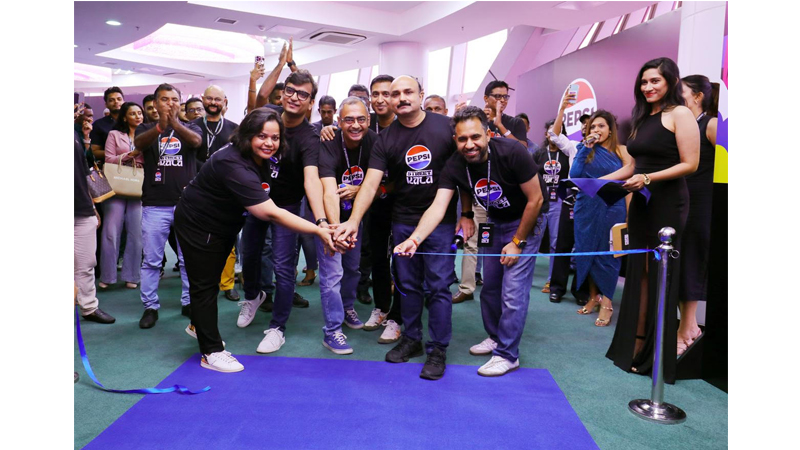
    Mumbai: Honouring its 125-year-long legacy, Pepsi, a brand that has been at the centre of global pop culture, unveiled its new identity in Sri Lanka today through its groundbreaking campaign, ‘Pepsi Street Kala’. The Pepsi Street Kala campaign represents a groundbreaking moment for the brand, introducing its revamped brand identity through public art for the first time globally. With 17 murals featured across the country, this initiative is an attempt to democratize art through dynamic experiences that invite public interaction and make art and culture more accessible.

    Pepsi celebrated this milestone with a spectacular launch event at the iconic Lotus Tower – South Asia’s tallest self-supported tower. The event brought its bold identity to life through immersive experiences, captivating the audience from start to finish. Media, influencers and individuals from the art community in Sri Lanka enjoyed a sensory feast, with the aura of Pepsi resonating throughout, showcasing the brand’s vibrant spirit. The highlight of the evening was the illumination of the Lotus Tower in Colombo with Pepsi’s new bold colours, transforming the city’s skyline.

    Speaking on the launch, PepsiCo associate director, area-countries region Anuj Goyal said, “Pepsi has consistently been at the forefront of youth culture and with this initiative, we are extending that dedication to the streets of Sri Lanka. The new Pepsi logo represents a bold new chapter for Pepsi, bringing it to life through street art with the ‘Pepsi® Street Kala’ campaign – enabling us to expand the horizons of visual narrative. The grand launch event, including the striking projection of our brand colours at the iconic Lotus Tower and the murals altogether, are a celebration of youth, creativity, and the spirit of Pepsi.”

    Talking about the murals, PepsiCo India & South Asia head of design Tanu Sinha said, “The ‘Pepsi Street Kala’ campaign is a vibrant celebration of art, culture, and the passions of the youth of Sri Lanka. Each mural was carefully designed to reflect the new brand identity while staying true to the unique ethos of Sri Lanka. We wanted to create artworks that not only capture the new logo of Pepsi but also democratize art and resonate with the audience, making each piece a symbol of shared creativity and connection.”

    Also commenting on the launch, Varun Beverages – Sri Lanka country head Sandeep Kumar also added, “We are excited to bring the ‘Pepsi® Street Kala’ campaign to life in Sri Lanka, showcasing the refreshed brand identity of Pepsi. This campaign and today’s event celebrate creativity, culture, and the unbreakable bond Pepsi shares with the people of Sri Lanka. We’re proud to be part of this milestone that reflects the vibrant energy of Pepsi consumers while integrating public art experiences in their routine commute.”

    Flagship streets across Sri Lanka are featuring vibrant murals that celebrate Pepsi®’s refreshed identity and bold new logo. Strategically placed at iconic locations such as the Sri Lanka Tennis Association, Nawala, Welisara, and the railways stations at Kollupitiya, Wellawatte Rathmalana, and Bambalapitiya, the murals have become popular selfie spots for locals and travellers. These visually immersive artworks are renditions of how artists see Pepsi connecting with Sri Lanka’s youth, highlighting themes like food, music, dance, culture, and sports.

    Pepsi has brought together an eclectic mix of 90 budding artists, who have infused their creativity into this campaign. These talented individuals have helped create vibrant murals that reflect the boldness of Pepsi while celebrating Sri Lanka’s rich cultural heritage. Their month-long hard work now reflects on more than 8,000 square feet, showcasing a dynamic fusion of food, music, lifestyle, and sports—key elements that resonate with the country’s youth and make Pepsi® a brand that speaks to the heart of their experiences.

    The murals from the ‘Pepsi Street Kala’ campaign, will be on display for a limited period, offering both the public and tourists a chance to engage with the brand in a completely new way. Follow #PepsiStreetKala online to know more.

  • House of Omkar is focused on creating new age, meaningful and socially relevant content: Poonam Kaul

    House of Omkar is focused on creating new age, meaningful and socially relevant content: Poonam Kaul

    Mumbai: On 19 July, EkDesh and House of Omkar founder Poonam Kaul celebrated the launch of her latest artistic endeavor- a short film titled Pinky Ka Bastaa. Known for her distinguished career and notable achievements in the corporate world, including her role as the chief marketing officer at Apple India, her foray into the film industry has been equally remarkable.

    With over 20 years of experience in leading global companies such as Microsoft, Nokia, and PepsiCo, Poonam Kaul has seamlessly transitioned her expertise into the realm of cinema. Her previous production, The Last Color, directed by Vikas Khanna, gained international acclaim, traversing nearly 20 film festivals worldwide. This film, inspired by a book of the same name, explores the unlikely friendship between a 60-year-old widow, portrayed by Neena Gupta, and an eight-year-old street performer in Varanasi.

    Indiantelevision.com reached out to Kaul, where she explained her transition journey from being a CMO and a successful career in tech and corporate to filmmaking, some insights into making of Pinky Ka Bastaa and much more…

    Edited excerpts

    What motivated you to transition from being a CMO and a successful career in tech and corporate to filmmaking?

    Telling stories is what I am passionate about. Whether it is for a brand or through the medium of cinema. Whether it is a 30 sec ad-film or a press release or a 90 min film, at the core lies a story that needs to be told.

    Incidentally, I have not transitioned out of being a CMO. While, I have stepped away from a formal corporate role,  I have set up my advisory CMO-on-Demand where I work with startups/ organisations and help them tell their story. I enjoy swinging the rope between formal set up as a CMO  and film making set up as a Producer

    Could you share the vision behind House of Omkar and how it integrates your diverse talents and experiences?

    House of Omkar is a newly set up production house focused on creating new age, meaningful and socially relevant content. We want to be the catalysts in driving change around significant societal issues through the medium of cinema. Our debut venture, The Last Color brought forth issues around girl child education and empowerment at one level while highlighting the need for rehabilitation and societal reforms needed for widows at another level. The film successfully travelled across the world starting with the world premiere at Annual Palm Springs International Film Festival in Jan 2019 followed by a UN screening to coming home to premiere at the Mumbai International Film Festival in Oct 2019, and finally making it to the Eligibility List for Oscars 2020. The film had a successful screening in LA in October, followed by a theatrical release in Dec 2020 in India.

    Barefoot Empress, the second venture was an inspirational story of courage, perseverance  of Karthyayani Amma – story of a girl who dreamt of going school, and finally walked to school at 96 years! The short documentary, directed by Chef Vikas Khanna, produced by Oscar nominee Doug Roland, also had Dr Deepak Chopra, the globally renowned Indian American Author as the Executive Producer.

    Imaginary Rain is the upcoming venture of House Of Omkar. Imaginary Rain is an inspirational story of a 65-year-old woman chef running a small Indian restaurant in downtown Manhattan ever since she migrated to America. It’s a story of hope, resilience and a winning comeback which is much needed in the current times.

    Our other filmography includes Valley of Fireflies, based on the challenges women face in the Apataani tribe of Arunachal while Kitchens of Gratitude at core is how food unites all religions.

    House of Omkar has been created by me and my sister Pooja Kaul, a practicing architect specializing in conservation architecture.  This is in the name of our father Omkar Nath Kaul and his commitment to drive self reliance and independence for girls, starting with education.

    Can you tell us more about the characters in “Pinky Ka Bastaa” and what kind of research did you undertake to portray the issue of school dropouts accurately in the film?

    It’s hard truth today that #Covid19 led to 11 million adolescent girls dropping off the education/ skilling grid, globally, as per UNICEF data. In India specifically, the numbers vary from study to study though broadly in line with global numbers! This not only threatens decades of progress made towards gender equality, but also puts girls around the world at risk of adolescent pregnancy, early and forced marriage, and domestic violence. According to multiple studies, more than 50% of the girls are unsure about returning to school post-pandemic, while a staggering 64 per cent have been pulled into care and domestic work.

    Pinky Ka Basta is the story of countless girls like Pinky who stopped going to school and have either got married at an early age or been pulled into domestic work! In the 3 min film, we also bring forth the digital divide that exists between girls and boys. If there was one phone in the house during the pandemic, it was obviously given to the boy of the house. Pinky Ka Basta aims to highlight the debilitating impact of the pandemic on education for adolescent girls, bringing forth their ongoing struggles in accessing educational opportunities.

    Educating a girl helps empower the next generation. Therefore, besides the societal impact with reduced child marriages, poverty alleviation and increased women’s participation in the society also leads to significant economic impact. According to the World Bank, one year of secondary education can make a 25 per cent difference in wages for women. Education today, is not just a step into the window of opportunity for girls but also a leap forward for a better future

    What do you hope viewers will take away from watching “Pinky Ka Bastaa”?

    With Pinky Ka Basta, we aim to generate awareness about this significant issue as well as create an enabling ecosystem for young girls who are dropping off school. The goal is to either get them back to school or enrol them in skilling programs so that they can become self-reliant and independent. We hope to build this ecosystem of corporates, NGOs and like minded citizens.

    Over the years, I have worked a lot in various organisations as a volunteer both pre and post Covid and the one thing I learnt is that there lots of people wanting to come forward and make a difference, however, they struggle to find a starting point. We hope to give them a starting point – even if you are able to support even 1 girl child in your surroundings and make her independent – e.g., your house help or your veg vendor’s daughter, I would say, Pinky Ka Basta has delivered on its mission.

    How was your experience producing “The Last Color,” and some key lessons you learned so as to incorporate into your future projects?

    Last Color was my debut venture as film producer. It started off with Chef Vikas Khanna and I looking for a Director and Producer for the book “Last Color”. After meeting several people, we realised that most people were looking at it like a project – which is fair. However, we were too passionate and emotionally involved in the story and therefore, decided to make it ourselves! That’s how House of Omkar was born.

    Some of the lessons I learnt – One, you don’t know it all! Period. And you need to keep on learning every single day on the set and beyond. Two, we broke a lot of rules with film – the protagonist of the film is Chotti, a 9 year old girl who had never faced a camera in her life. We auditioned 1000s of girls but we were finally able to get our Chhoti – a first time actor from a school in North Delhi, or Chintu, a young boy and Chhoti’s friend in the film, who we met on the banks of Varanasi playing with his younger brother. Again never faced camera before and both of them have delivered stunning performances. We try to stay true to the story and that was one of the reasons we cast a transgender in the film to play the role of Anarkali, a transgender in the film. We didn’t belittle it by asking a man or woman to deliver on that role. So, we took a lot of risks, a lot of heavy duty risks actually and were not bound by the rule book.

    Three, at core it is a beautiful story that you are telling through the medium of cinema and like in marketing, the product has to be great before you start marketing it. Focus on having the best product from your stable, because there is no going back and there will be no Ver 2.0 of the product!

    What valuable lessons from your time at Apple, Microsoft, Nokia, and PepsiCo have you applied to your ventures in the culinary and filmmaking world?

    I have a Masters in business and not a technology background, however, I have only worked for tech companies other than PepsiCo. In the early years of my career, when I was in Mudra, I realised I love telling stories around tech – whether it was HCL V-Sats or the Max pagers or Ericsson Mobility networks, I loved demystifying them. The one thing that really helped me throughout was being open to learning, every single day. That’s the one big thing that I have applied to film making – every day I learn something new and that keeps me charged and super excited. The film space is so vast and like tech, anything is possible. Second lesson or learning if you say, is eye for detail. You cannot take your eyes off the ball here at all like in a tech environment. Lastly, is the structure. In corporates, we follow a phased approach / a Go-To-Market approach which has GTM 1, GTM 2, GTM3 and when you are ready to roll, that’s launch or GTM4 . I tried to bring that into how we work on the film which initially became hard for everyone to adjust because while there is a Go to Market plan for films, the adherence to what we deliver on each phase was new but it was fun to get that structure being applied and get some semblance of order. 

  • Masters’ Union collaborates with PepsiCo

    Masters’ Union collaborates with PepsiCo

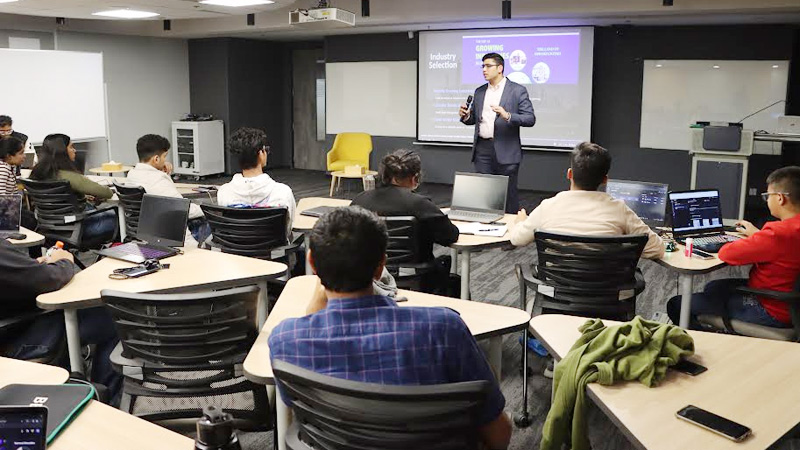
    Mumbai: Masters’ Union, the new-age business school, and PepsiCo, the global f&b corporation, recently organised a Winter Week Bootcamp from 18 to 22 December focusing on nurturing high school students’ talents. The five-day event aimed to equip young minds with practical skills, mentorship, and real-world insights.

    The Bootcamp provided a platform for students to explore diverse disciplines such as design principles, content creation, and stock market trading through hands-on activities, workshops, and discussions led by industry experts. Key workshops were led by professionals including Geetha Radhakrishnan, Franchise Commercial Director – India Beverages, PepsiCo, Susheel Lakhera, Associate Director – Franchise, PepsiCo, Neha Verma, Senior Marketing Manager, Vaango, and Rahul Puri, vice president of Information Technology, Vaango, covering innovation, marketing strategies, and the role of technology in shaping industries.

    Masters’ Union founder Pratham Mittal said, “Collaborating with PepsiCo for the Winter Week Bootcamp was an incredible opportunity to drive practical learning beyond traditional education boundaries. The event aimed to empower students with hands-on skills and insights, preparing them for the dynamic demands of the industry. Education extends far beyond textbooks, and this collaboration aligns perfectly with our vision to equip students with practical expertise that transcends theoretical knowledge.”

    PepsiCo hub lead, e-commerce DTX, data science and analytics Sourabh Agarwal said, “Partnering with the Masters’ Union for the Winter Week Bootcamp was a rewarding experience. Engaging with young minds and further fueling their enthusiasm for learning reaffirms PepsiCo India’s commitment to help foster innovation and skill development in the youth. We are glad that we could be part of this Bootcamp and engage with such young and great talent.”

    Students engaged with real-world case studies, working on tasks like crafting advertising campaigns for PepsiCo, trading stocks on platforms like StockGro, and developing apps for Vaango, bridging theoretical knowledge with practical application. The bootcamp culminated in students showcasing their growth and expertise through final projects, offering insights into their comprehensive learning experiences. The event attracted students from schools like Manthan International School, Sanskaar Valley, CS Academy, Sarvottam International, and KC High. It left a lasting impression, setting the stage for future educational collaborations.