Tag: penal

  • Advisory issued to TV channels on reporting communal matters with caution

    Advisory issued to TV channels on reporting communal matters with caution

    NEW DELHI: In view of the manner in which the Muzaffarnagar communal riots were reported, the government has advised all television channels to adhere by the programme/advertising code to prevent attracting penal provisions in section 20 of the Cable TV Networks (Regulation) Act 1995.

    In a notification posted on its website, the Information and Broadcasting Ministry said that it was issuing this advisory in exercise of powers under the uplinking/downlinking guidelines issued by it, the terms of permission granted to the channel to uplink/downlink TV channels and under Section 20 of the 1995 Act.

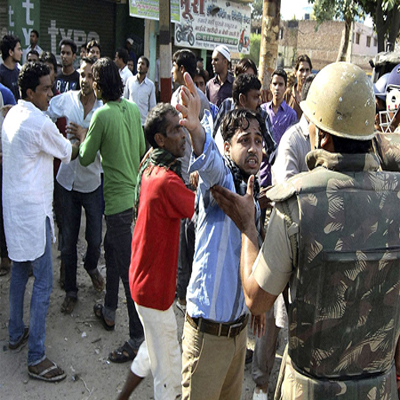
    It noted that in the wake of the recent Muzaffarnagar communal riots, some TV channels had been telecasting inflammatory and provocative news/programmes in a sensational manner. Some TV channels had also been airing footage, video, interviews, etc. of leaders of diverse spectrum which could vitiate the situation in the entire area. These could further ignite communal tension, violence and create law and order problem not only in the riot affected area but elsewhere.

    The Ministry said a strong need is felt that TV channels should take all steps to avoid telecasting such inflammatory and sensitive material and should exercise maximum restraint and caution in reporting matters of this nature. News, views or comments relating to communal tension/clashes should be telecast only after proper verification of facts and presented with due caution and restraint in a manner which is in the public interest of maintaining communal harmony. No news/programme should be carried by TV channels which are likely to foment disharmony or enmity between religious groups.

    Section 5 of the 1995 Act read with Rule 6(1) (c), & (e) of the cable TV Networks Rules 1994 as amended from time to time are clear that ‘no programme can be transmitted/re-transmitted on any Cable Service which, inter-alia, promote communal attitudes; and is likely to encourage or incite violence or contains anything against maintenance of law and order or which promote anti-national attitudes.’

    The Ministry therefore advised all TV channels to follow the provisions of the Programme Code scrupulously and exercise restraint and sensitivity while reporting such incidents and refrain from telecasting any material which could ignite communal passions and create law and order problem.

    It also said any violation of the provisions of the programme/advertising code would attract penal provisions stipulated in section 20 of the Act and the terms and conditions of uplinking and
    downlinking guidelines.
  • Penal provisions to ensure Govt ads only via DAVP

    Penal provisions to ensure Govt ads only via DAVP

    NEW DELHI: Penal provisions should be put in place to discourage Ministries and Government Departments from issuing display advertisements directly to the media without routing them through the Directorate of Advertising and Visual Publicity (DAVP).

    Severely reprimanding this trend, the Standing Parliamentary Committee for Information Technology has said that this violates Clause-3 of the Advertisement Policy of the Government, which provides that all Central Govt. Ministries/ Departments/ Attached & Subordinate Offices/ Field Offices shall route their advertisements, including display advertisements, through DAVP.

    The Committee noted that the Information and Broadcasting Ministry had time and again taken up the issue with the Ministries/Departments to route their advertisements through DAVP only to no avail.

    The DAVP is the nodal multi media advertising central agency to execute publicity campaigns through advertisements etc. on behalf of various Ministries/Departments of Government of India, autonomous bodies and public sector undertakings.

    It noted that the immediate fall out of such violation by the Ministries/Departments has resulted in small, medium and regional language newspapers not getting their due share. Many regional newspapers have been alleging favoritism by DAVP.

    The Committee was also unhappy that total outstanding dues to DAVP from various Ministries/Departments of the Government of India is approximately Rs 630 million till 31 March this year.

    The Committee have been informed that the Ministries/Departments pay their outstanding in the first quarter of the next financial year. Fresh outstanding also arise in the last quarter of the financial year, when the Letter of Authority issued by the Departments/Ministries lapses on 31 March. The Committee observed that the existing system of recovery of dues from Ministries/Departments is not prudent enough leading to huge amount of outstanding dues. Therefore, the Committee desire that DAVP should evolve a system whereby the Ministries/Departments may be asked to settle their dues within one month from the date of issue of letter of Intent.

    Interestingly, the Committee was informed by the I&B Ministry that the Prime Minister’s office, the Planning Commission, and the Cabinet Secretariat etc. had been designated as non-paying departments and their expenditures were borne by the I&B Ministry.

    Ministries and Departments are permitted to issue tender notices directly to empanelled newspapers only at DAVP rates. PSUs, Autonomous Bodies & Societies of the Central Government may issue all advertisements, directly at DAVP rates to empanelled newspapers, provided all classified and display advertisements are released in the following manner:

    (In rupee terms)

    Small 15% minimum

    Medium 35% minimum

    Big 50% maximum

    English language 30% (approx.)

    Hindi language 35% (approx.)

    Regional and Other languages* 35% (approx.)

    These include Bodo, Dogri, Garhwali, Kashmiri, Khasi, Konkani, Maithili, Manipuri, Mizo, Nepali, Rajasthani, Sanskrit, Santhali, Sindhi, Urdu and Tribal languages as certified by State Governments.

    The Committee noted with satisfaction that there had been near 100% utilization of RE funds by DAVP during the Eleventh Plan. The Committee hoped that the same trend will continue during the Twelfth Plan.

    (Rs in million) 2007-08 2008-09 2009-10 2010-11 2011-12
    Proposed Outlay 282.5

    228

    59.3

    530

    545
    B. E. 260.1

    217.6

    268.8

    445

    560
    R. E. 184.1

    481.8

    368.8

    445

    887.9
    Actual 184.1

    481.9

    368.1

    328

    757.7
    %age of expenditure 100

    100.02

    99.81

    73.89

    85.34