Tag: Peacock

  • Netflix schools rivals as streamers ace June TV viewership charts

    Netflix schools rivals as streamers ace June TV viewership charts

    MUMBAI: Class is in session and Netflix is teaching everyone a lesson in domination. In Nielsen’s 50th The Gauge report for June 2025, streaming flexed its muscle once again, accounting for a record 46.0 per cent of total TV usage in the US. Leading the binge brigade was Netflix, which saw a 13.5 per cent surge in viewership over May, grabbing an 8.3 per cent share of total television minutes. That’s 0.8 points up month-on-month and enough to account for 42 per cent of streaming’s total gain in June.

    The platform’s winning streak was powered by its usual bag of tricks: original series Ginny & Georgia was crowned the most-streamed title of the month with a jaw-dropping 8.7 billion viewing minutes, while acquired shows Animal Kingdom and Blindspot together clocked 11.4 billion minutes. And just to put a cherry on top, Squid Game Season 3 dropped in the final three days of the month and still managed nearly a billion viewing minutes per day.

    Peacock wasn’t far behind on the podium, notching a 13.4 per cent usage rise fuelled largely by the new season of Love Island USA, which bagged 4.4 billion viewing minutes and ranked fourth overall. The streamer finished June with a 1.5 per cent TV share, up from 1.2 per cent in May.

    Much of the streaming spike can be chalked up to school being out. Kids and teens (aged 6–17) increased their TV usage by 27 per cent in June, with streaming accounting for 66 per cent of their total watch time. Netflix and Peacock saw viewership from this age group climb 32 per cent and 37 per cent, respectively.

    This cohort also powered up consoles and cable boxes, leading to a 41 per cent jump in the “Other” category home to video games and set-top box viewing far above the overall 14 per cent gain in that segment.

    Meanwhile, traditional TV continued its summer slump. Broadcast viewership dipped 5 per cent to an all-time low share of 18.5 per cent, slipping below the 20 per cent mark for the first time. Cable remained mostly flat but still ceded 0.7 share points to end at 23.4 per cent. Combined, cable and broadcast dropped from 44.2 per cent in May to 41.9 per cent in June.

    That said, the NBA Finals threw broadcasters a lifeline, ABC aired all seven of the month’s most-watched telecasts, including the NBA Trophy Presentation. On cable, Conference Finals on ESPN and TNT scored big, while news and special programming like Fox News’ Army 250 Parade and CNN’s Goodnight and Good Luck helped shore up ratings.

    With summer holidays in full swing and streamers rolling out irresistible content, one thing is clear: viewers are switching channels literally and figuratively. And if June is any indication, traditional TV might need more than just a timeout to catch up.

  • Sourav Ganguly brings humour and nostalgia to Netflix’s Khakee promo

    Sourav Ganguly brings humour and nostalgia to Netflix’s Khakee promo

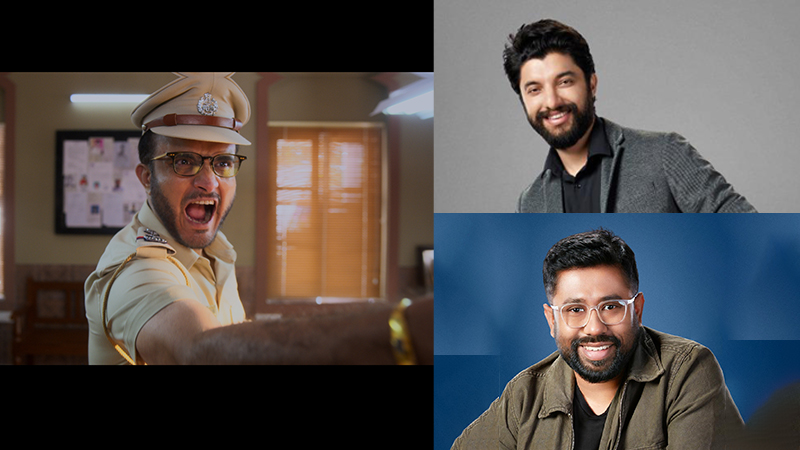
    MUMBAI: Netflix India has pulled off a marketing coup by featuring former Indian cricket captain Sourav Ganguly in an unexpected and humorous role for its latest original series, Khakee: The Bengal Chapter. The promotional campaign, crafted in collaboration with Trailer Park Group, Netflix’s creative agency for the series, blends nostalgia and entertainment to captivate audiences across India.

    Trailer Park Group has ingeniously woven Ganguly’s charismatic persona and cricketing legacy into the promo, delivering a light-hearted yet engaging narrative. The film opens with Ganguly interrupting a scene on the set of Khakee: The Bengal Chapter, eager to take on the role of a tough police officer. Initially struggling to embody the fierce aggression required, he finds his rhythm by channelling memories of his fiery cricketing moments, particularly his rivalry with Greg Chappell. The scene unfolds with comedic brilliance, as Ganguly jokingly suggests using his signature cricket strokes the cover drive, cut, and pull with a police baton to take down criminals, all while reaffirming his famed preference for the off-side.

    “Integrating Dada’s dynamic presence into the campaign brought authenticity and excitement to the storytelling. This collaboration allowed us to blend nostalgia with humour, creating a moment that truly resonates with audiences.” White Turtle Studios executive director and co-founder Ankit Bhatia.

    “Working with Netflix India on the creative strategy for this series has been a thrilling experience. At Trailer Park Group, we strive to push creative boundaries and build deep audience connections through powerful storytelling.” Trailer Park Group Asia-Pacific (APAC) managing director Tamagna Ghosh.

    Renowned for delivering iconic campaigns across OTT, cinema, gaming, music, and sports, Trailer Park Group has previously worked with major platforms such as Prime Video, Warner Bros., Universal, and Peacock.

    Directed by Neeraj Pandey, Khakee: The Bengal Chapter promises an intense and gripping narrative. The series features an impressive ensemble cast, including Jeet Madnani, Prosenjit Chatterjee, Saswata Chatterjee, Ritwik Bhowmik, and Chitrangda Singh. A sequel to Khakee: The Bihar Chapter (2022), the crime thriller is set to premiere on 20 March 2025 on Netflix.

  • Six US media firms account for 51 per cent of global content spends: Ampere Analysis

    Six US media firms account for 51 per cent of global content spends: Ampere Analysis

    MUMBAI: The big media and entertainment boys are at it, despite all round murmurings that the content production business is seeing a massive slowdown. At least, that’s what new intelligence from Ampere Analysis has revealed. 

    The research firm stated that while recent market challenges have impacted the TV and film production landscape, spending across the top six global content providers – Disney, Comcast, Google, Warner Bros. Discovery, Netflix, and Paramount Global – has grown since the pandemic. Combined spending across these groups will reach a new high of $126  billion in 2024 and account for 51 per cent of the total content spend landscape, up from 47 per cent in 2020. Original content spend remains the leading spend type across these providers, accounting for over $56 billion in investment and 45 per cent of their total spending since 2022.
    Despite announced cutbacks among its linear and theatrical brands, Disney remains the largest contributor to the media landscape at 14 per cent of global investment in TV and film content in 2024. This has been supported by the full acquisition of Hulu at the beginning of 2024, adding an additional $9 billion in to Disney’s spend total.

    Netflix is the top investor in global streaming content. It has averaged a total of $14.5 billion in annual investment in original and acquired programmes since the pandemic. Further growth is expected in 2025 through the acquisition of sports tights for NFL matches and WWE entertainment.

    In total, $40 billion of the $126 billion is currently spent on these six operators’ subscription streaming services (including Disney+, Peacock, and Paramount+). This highlights the growing importance of these platforms as audiences move away from linear television in favour of the convenience and expansive catalogues available via streaming.

    Google’s contribution to the content market comes via YouTube, and investment in programming through its revenue-sharing arrangements with content creators. While a different entity to other TV and film groups, YouTube continues to build its global presence through partnership deals with major content owners, making it the third largest contributor to the content landscape.

    Despite production shutdowns caused by the US writers’ and actors’ strikes, streamers have continued to support the production landscape by pivoting towards more global strategies. International (non-US originating) programming accounts for 40 per cent of Paramount+’s and 52 per cent of Netflix’s spend in 2024. Such content is typically cheaper to produce, and effective in motivating new and niche audiences to subscribe to a platform, supporting revenues.

    “Ongoing investment by major studios and streaming platforms into new programming will be key to keeping audiences engaged and entertained. We can expect the content landscape to see low-level growth in 2024 as production schedules recover from disruptions caused by the pandemic and the writers’ and actors’ union strikes. Looking forward however, overall growth in spend is set to plateau as companies look to refocus their output. This will include limiting commissioning volumes and prioritising strategic investments and profitability to counter the current challenges of the media market,” said Ampere Analysis investment analyst Peter Ingram, in his recent analysis made public today. 

    Pix Courtesy: The Walt Disney Company

  • Hyundai Motor India Ltd collaborates with Falguni Shane Peacock for 17th India Couture Week 2024

    Hyundai Motor India Ltd collaborates with Falguni Shane Peacock for 17th India Couture Week 2024

    Mumbai: In a fusion of automotive innovation and bespoke fashion, Hyundai Motor India Ltd (HMIL), today showcased a specially wrapped Hyundai IONIQ 5 in collaboration with celebrity fashion designers Falguni Shane Peacock. This specially wrapped Hyundai IONIQ 5 will make its runway debut at the finale of the 17 editions of India’s marquee fashion event- India Couture Week 2024 (ICW). The exclusive collaboration with Falguni Shane Peacock promises to captivate audiences by blending technology with unique design aesthetics.

    Continuing its collaboration with the Fashion Design Council of India (FDCI) for the second consecutive year, HMIL is proud to partner once again for Hyundai India Couture Week 2024. The 17th edition of ICW will highlight the pinnacle of fine craftsmanship on a star-studded runway, celebrating the avant-garde creations of India’s couturiers.

    Speaking about HMIL’s association with FDCI, Tarun Garg, COO, Hyundai Motor India Ltd, said, “We are thrilled to continue our association with FDCI for the second year running. Aligned with our parent company Hyundai Motor Company’s vision of ‘Progress for Humanity’, we aim to create innovative experiences for our customers in India. For the 17th edition of ICW 2024, we have partnered with renowned designers Falguni Shane Peacock, who come with an experience of 20 years of creating timeless designs. Our collaboration with them is a testament to our commitment of supporting artisans and diverse cultural heritage of India. We are excited to unveil the specially wrapped IONIQ 5 for ICW 2024 and look forward to a successful show.”

    Falguni Shane Peacock said, “It is our immense pleasure to present our collection at the Hyundai India Couture Week 2024. This year, our inspiration draws from the opulent heritage, mythology, and grandeur of India’s past. Our collection celebrates the essence of India’s cultural legacy, showcasing elements that hold deep significance in Indian culture. The motifs, colors, and textiles we have chosen are steeped in Indian heritage, featuring luxurious silks and silk threads. In collaboration with Swadesh, an organization dedicated to preserving and promoting the rich heritage of Indian handcrafted art, we have incorporated these exquisite fabrics into our designs. At Falguni Shane Peacock, we pride ourselves on infusing traditional inspiration with a modern, contemporary twist, staying true to our brand’s signature style. This collection exemplifies our commitment to blending rich Indian elements with a new-age perspective. We look forward to presenting our bespoke, culturally-rich ensembles to you.”

    FDCI, chairman Sunil Sethi said, “FDCI is delighted to partner with Hyundai Motor India Limited for yet another year of India Couture Week. Our collaboration has been a thrilling journey of creativity and innovation. This year’s event will be even grander, with Falguni Shane Peacock as our finale designers. The Hyundai India Couture Week 2024 at the Taj Palace is going to be a spectacular event.”

    Hyundai India Couture week 2024 will bring home-grown luxury to the centre stage, featuring exclusive collections from 14 esteemed Indian couturiers – Abu Jani Sandeep Khosla, Amit Aggarwal, Dolly J, Falguni Shane Peacock, Gaurav Gupta Couture, Jayanti Reddy, JJ Valaya, Kunal Rawal, Rahul Mishra, Rimzim Dadu, Roseroom by Isha Jajodia, Siddartha Tytler, Suneet Varma, and Tarun Tahiliani. The event is set to dazzle New Delhi from 24-31 July’ 2024 at the Taj Palace Hotel and Ashoka Hotel.

    Adding to the glamour, the specially wrapped Hyundai IONIQ 5 will delight the audiences at the star-studded event on the closing day. This partnership blends innovation and tradition, celebrating the enchanting realm of artisanal finesse and enduring narratives. 

  • Disney+, Hulu combined would own most hit titles in the US: Ampere Analysis

    Disney+, Hulu combined would own most hit titles in the US: Ampere Analysis

    Mumbai: A combined offering of Disney+ and Hulu would account for the largest share of the 100 most popular titles of any US subscription video on demand (SVoD) service. At approximately 30 per cent, the player would enjoy a comprehensive lead on Netflix’s 23 per cent, according to a recent study by Ampere Analysis.

    Shows from Disney’s Marvel Studios, Lucasfilm, and Hulu Originals, such as Only Murders in the Building and The Handmaid‘s Tale, are among them.

    Will Disney push to close the deal early? The US streaming platform Hulu is currently owned by Disney (67 per cent) and Comcast (33 per cent), who are due to reach a sale agreement in January 2024. However, recent reports suggest that Disney intends to close a deal sooner to take a 100 per cent stake and integrate the streamer into Disney+ as a combined offering.

    The merger seems logical to Ampere’s analysts, as Disney’s share of Hulu content has grown significantly, suggesting that the company has continued to invest considerably in the platform. Since September 2016, the proportion of Hulu’s catalogue for which Disney owns the distribution rights has tripled, from six per cent of all movies and TV shows to 19 per cent by September 2022.

    Meanwhile, the major studios without streaming platforms have reduced their contribution to Hulu’s content slate (down from 81 per cent in 2016 to 71 per cent in 2022), and those with their own streaming services have generally maintained or reduced their input. Specifically, the combined content from NBCUniversal, Paramount Global, and Warner Bros. Discovery now makes up less than 10 per cent of all TV shows and movies on Hulu.

    Title reclamation is posing a threat to Hulu. The removal of content from Hulu to support newer services like Peacock, Paramount+, and HBO Max poses a threat to Hulu’s competitiveness. The streamer has already lost highly popular titles like America’s Got Talent (to Peacock), movies and TV shows set within the Star Trek universe (to Paramount+), and Family Matters (to HBO Max). If major studios reclaim their proprietary content, Hulu could lose 10 per cent of its overall catalogue. This figure rises to 37 per cent of Hulu’s 100 most popular titles, using Ampere’s popularity score metric, which tracks overall online engagement with a title.

    Ampere Analysis analyst Christen Tamisin said, “The threat of further popular or critically acclaimed titles leaving Hulu for rival platforms is a concern as engaging content is critical for subscriber retention, especially as the US SVoD market nears saturation. This risk makes the argument for Disney to merge Hulu and Disney+ into a single platform stronger.

    “On the other hand, Disney+ and Hulu’s complementary catalogues mean a combined platform would have a more diverse content offering—akin to that of other major market players—than the two standalone platforms have currently. While the Disney brand has long been associated with family-friendly content, Hulu has a broader, general-audience appeal, offering a wide range of genres and more adult-targeted titles,” he added.

  • NBCUniversal announces ad innovations for Peacock streaming service

    NBCUniversal announces ad innovations for Peacock streaming service

    Mumbai: US-based media conglomerate NBCUniversal held its first Peacock Newfronts presentation at the Highline Stages in New York City. During the presentation, the company unveiled two new ad innovations for the AVOD streaming service, extending the company’s One22 commitment to enhance the ad experience for consumers and marketers.

    The Peacock Frame Ad keeps users connected to the content they love while a brand frames the experience with contextually relevant messaging and offers for purchase. Brands can leverage our robust first-party data through NBCUnified and a full suite of commerce capabilities including our new partnership with GoPuff, the instant commerce platform that delivers everyday essentials to a customer’s doorstep within minutes.

    The streaming service is also exploring the Peacock In-Scene Ad, which would integrate a brand’s product and/or messaging during post-production. This prototype aims to find the right moments within top shows for more personalized messaging. This custom solution ensures maximum brand familiarity by showcasing the right product in the right content, at the right time, on the right screen.

    Peacock Streaming Council Members will be the first partners to test these new ad innovations.

    “At NBCUniversal, we are constantly developing new and impactful commercial innovations for our marketing partners,” said NBCUniversal president of advertising and partnerships Laura Molen. “With Peacock, we are testing and learning hand in hand with our partners by tapping into NBCU’s data, technology and creative capabilities combined with our iconic storytelling. Research shows that Peacock’s ad innovations deliver better results for our marketers than other CTV competitors all through the purchase funnel. No other media company out there can deliver the pristine ad environment we have already built as well as continue to evolve with our partners and viewers.”

    “NBCUniversal has always been a leader in delivering ad-supported entertainment across platforms and we are proud to be setting the bar for what brands and consumers have come to expect with Peacock’s best-in-class AVOD streaming platform,” commented Peacock senior VP of product and UX John Jelley. “The majority of Peacock customers are opting for our ad-supported experience and we remain focused on collaborating with our brand partners to develop innovative, personalised ad experiences that continue to enhance the customer experience.”

    “The Peacock Newfront is the next step in NBCUniversal’s series of partner events, designed to create a symphony of opportunity for our partners,” said NBCUniversal global CMO – advertising and partnerships Josh Feldman. “At One22, we unveiled the data-driven future of media and technology. Today, we put a spotlight on the future of streaming, and how we are furthering our commitment to Commercial Innovation with two new additions to the Peacock ad experience. As we look ahead to the Upfront later this month, we’ll continue to celebrate the content that informs, entertains and shapes our world.” 

  • Amazon Prime signs multiyear licensing deal with Comcast’s Universal

    Amazon Prime signs multiyear licensing deal with Comcast’s Universal

    New Delhi: Starting 2022, Universal Pictures’ new live action films will first debut on Comcast’s OTT platform Peacock after their theatrical releases, and then land exclusively on Amazon Prime Video four months later.

    The arrangement is part of a multiyear deal that Amazon has signed with Comcast’s Universal Pictures and Peacock, and applies to all live-action films including Jurassic World: Dominion that are scheduled to be released in theatres in 2022.

    The deal is part of the company’s plan to change the traditional home entertainment release pattern. Generally, new movies go to a cable channel or streaming service about six months or more after they debut in cinemas. These films remain with the outlet for an 18-month window, which is referred to as the ‘Pay-One Window’.

    Under the new arrangement, Universal will send its films to streaming quicker and will break up the 18-month period. So, new movies will go to Peacock four months after their theatrical debut, and four months later, these films will be available on Amazon Prime Video for ten months and then back to Peacock for four months, it said in a statement.

    “We’re thrilled to team up with Amazon to deliver our titles to its customers. This agreement further delivers on our distribution strategy to monetize our unparalleled movie library across multiple services, while offering customers the most choice, control and flexibility in how, when and where they watch films,” said UEFG, vice chairman and chief distribution officer, Peter Levinsohn in a statement.

    As the streaming war rages on, media companies are trying new strategies to bolster their streaming services and challenge the domination of streaming giant Netflix, which currently boasts of 208 million subscribers. 

  • Is Comcast eyeing a mega-streaming deal?

    New Delhi: The world is moving towards streaming at a pace like never before. And, the media titans are eyeing every opportunity they can get to consolidate their digital entertainment businesses and brace up for the streaming war.

    After AT&T and Amazon, it is now the turn of the US cable giant Comcast to make its move to turbocharge its streaming operations. According to media reports, the company is mulling a mega-deal with one of the two media giants- Roku or ViacomCBS.

    However, the question that Comcast’s CEO Brian Roberts is wrestling with is- whether to build something internally or buy to become a streaming powerhouse, reported The Wall Street Journal on Wednesday. The merger seems unlikely, but Roberts is evaluating his options, which include a potential tie-up with ViacomCBS or acquisition of Roku Inc, the business daily reported citing unidentified persons.

    All three companies have declined to comment on the matter and issued no statements so far.

    The US cable giant Comcast had branched out from its cable and broadband into entertainment in 2009 with the acquisition of NBCUniversal, whose streaming service Peacock is yet to catch up with the likes of Netflix or Disney+. However, its broadband business has continued to grow. As the first wave of the pandemic ravaged the world last year, its broadband business added nearly two million customers and the unit’s revenue rose 10 per cent to about $21 billion.

    An acquisition of streaming giant Roku at this stage could help it to step up its streaming game against the industry titans – Netflix, Disney, and Amazon. Roku’s valuation has more than tripled in the past year to $53 billion.  

    On the other hand, a transaction with ViacomCBS which owns streaming service Paramount+ could provide the much-needed boost to its streaming operations, but it is too early to say.

    However, several analysts say, the latest buzz could be just ‘speculation’ as a merger at this stage seems unlikely. One of the reasons is that Comcast has been largely focussing on developing the software behind its Xfinity cable boxes, called X1, and its Flex streaming boxes which resemble Roku. The other being its potential partnership with Walmart to further the Smart TV technology.

    The reports come close on the heels of two major media deals that happened over the last few weeks. First AT&T announced its decision to spin off entertainment giant WarnerMedia and merge it with Discovery becoming the world’s second-largest media firm by revenue after Disney. The new entity Warner Bros. Discovery is now led by Discovery CEO David Zaslav. Soon thereafter, Amazon made its most ambitious move in the entertainment business and announced that it is buying MGM Studios.

    So, whether or not Comcast is considering a transaction with ViacomCBS or the acquisition of Roku, it has definitely stirred many questions on the cable giant’s next step.

  • ‘New doesn’t kill off the old but grows the industry’ – Phil Schuman

    ‘New doesn’t kill off the old but grows the industry’ – Phil Schuman

    MUMBAI: “One thing is always clear: those who embrace change consistently end up better off than those who can’t or don’t. All of this to say the entry of streaming into our industry is likely going to add more,” said  FTI Consulting senior managing director in business transformation and a leader of the media and entertainment practice globally Phil Schuman.  He was delivering a virtual keynote address "content strategies in the streaming era’  during the online version of  MIPTV 2020 earlier this month. MIPTV is normally held in the Palais des Festivals in Cannes, France every year, but was called off this year due to the Covid2019 pandemic, and the conference was streamed online.

    “New technologies emerge in consumer taste and demands always evolve but in the end the industry is still going to be here; and content will still be king. Again and again we have seen that the new doesn’t kill off and replace the old but grows the industry, creating more opportunities for everyone, and when I say more opportunity, I mean a lot more,” he says.

    “Let’s talk about the change in television. It’s been around as long as TV, but I have always found that my colleagues in the industry have the view that change is great, but just don’t change me! Every major change over the past 60 years in the television industry has been met with fear. Back in the 1970’s in the US when HBO started, people were concerned that it would kill theatrical, but it didn’t,” he said.

    “When multichannel pay TV broke out in the 1980’s as a mass medium people thought it would kill broadcasting. It didn’t at all. Now the fear is that Netlfix is killing television; but let’s look back and see how the industry fared among these changes in the past. PTV turned out to be a goldmine for studios, creating new rights windows for film libraries and syndication of popular broadcast series driving massive new incremental revenue streams,” he explained.  

    According to him, the innovation of pay television also paved the way for retransmission fees for free-to-air broadcasters an entirely new revenue stream that is projected to bring in over 12 billion dollars this year. Now I know hindsight is always 2020, looking back it’s hard to imagine what the broadcasters were so worried about the emergence of cable and pay television was probably the best thing that ever happened to them.

    “As we know the driver in television growth today has been the VOD segment and it’s been brisk at 15-plus per cent compounded annual growth rate since 2014. The number of scripted TV shows on TV now tops 500, growing 30 per cent in the last five years. And the diversity of channels and platforms has proliferated more in the last few years than in the previous 60. All this change has led to crazy stock valuations and huge mergers that have remade the landscape. Just five years ago, the capitalization of major players in the television landscape looked like this on the chart. With digital players being big but still close in scales of legacy players and they are being more major participants,” he said.  

    Today, he said, the major player comparative landscape looks quite different with major tech players with overwhelming capital size and fewer major legacy companies in pursuit and those legacy players are falling further behind in size to the digital players. “One point I would like to make though is that history tells us that today’s giants will not show all of the world they’d never seen. Let’s take a stroll down memory lane to emphasize that point.”

    “Do you remember when AOL met Time Warner they were going to be twice as big as their next rival and that spread fear in all the industry, and I don’t know that one worked out. How about when Comcast met Universal vertically integrating a major studio networks and distribution it was expected to be the end of non-exclusive network distribution. How about when AT&T met Warner Media. This deal also led to calls of doom that never happened and Disney and Fox? Looks to me these mergers generally add to the landscape after the integrations are completed. Now I will admit today is tricky. There is more competition, more diverse competition, than ever before. New guys have stormed the gates and everyone has had to adjust. Yes, Netflix can buy out Apple, so can Amazon, may be even Disney at this point,” he said.

    Streamers are also making huge investments in funding content production around the world, unlocking opportunities for storytellers everywhere. “By our count, content spent by Netflix, Amazon, Apple and Hulu in 2019 was over 30 billion dollars, much of it incremental increase in spend in the sector.

    The streaming sector itself continues to grow too. By our count, there are at least 15 sizable global or regional streamers, with more on the way.”

    Regarding the broadcasting sector, none of these legacy players have gone or going away. They may be a little smaller part of the overall puzzle, but there is clear tried and trusted demonstrated value in broadcasting that won’t be disappearing anytime soon.

    He asserts that broadcast is still unbeatable in reach. One major sporting event still brings an audience far larger than Netflix’s entire global subscriber base. Just look at the FIFA World Cup audience when compared to Netflix. This reach comparison remains true within local markets, too.

    “Take a look at the UK for example. As you can see the broadcast reach surpasses OTT service penetration. Today, the content creation market is crowded and competitive, but open. In the global category we have the major powerhouses such as Netflix, Amazon, Disney, and Apple. These are already flexing their muscles in buying global rights of the content; but let’s be clear. There are potential emerging global players as well, such as HBO Max and Peacock Hulu,” he added.  

    The landscape for buyers and sellers is drastically shifting with an influx of new entrants to the buyer market; buyers becoming sellers, and sellers becoming buyers.

    Creating organisations that are able to sell content tailored to their environment using an adaptive business model and varying return on investment. One related trend is to have in place financing for shows in advance for production as opposed to traditional deficit financing with later syndication.

    Another funding model is co-productions between US premium networks and other global networks with upside and risk shared across the partners.

    Go global in a local way. We have heard from streamers and broadcasters alike that the demand for locally produced content is very strong especially in Latin America. Local language content tops the most popular Netflix releases of 2019 in eight countries. So here’s the opportunity: while streamers may be building up internal development capabilities in the US and perhaps the UK, they have not yet built that capacity at scale in other countries, and when they do turn their focus to particular markets, they still need local production teams to satisfy content demand.

    Consortium content creation among various localised participants is the most common success tack that we have seen. This model has one major benefit: it allows for higher content cost shows to be acquired in any given market, but with the cost spread so that all parties can obtain the content within their respective budget. Atrium TV with member companies in Europe, Latin America and Asia is a private company trying to create consortium is just an example.

    There are also examples of ad hoc consortiums being created show by show where rights are shared.

    "With respect to streamers’ best practices, Netflix and Amazon, they will likely to need more local production access and all participants can work with them on this. With respect to the emerging global streamers such as Hulu, Disney+, Peacock, HBO Max, etc. They will likely need additional content above their own supply and can provide good partners for local broadcasters," he said.