Tag: Peace TV

  • Arnab-Barkha face-off amplifies disturbing trends

    Arnab-Barkha face-off amplifies disturbing trends

    When a section of the Indian media tries to make a case for prosecution of industry colleagues, it’s a disturbing trend. It’s more worrisome when the case being made out is based on the assertion either-you-are-with-us-or-against-us, implying that plurality of opinion (no matter how unpalatable the `other’ view is) is not welcome and that everyone needs to subscribe to just one narrative.

    Is it a case of bloated egos?

    Could be.

    Is it a case of a section of powerful media succumbing to political pressure?

    Very much possible.

    Is it a case of corporate vested interests at work?

    Why not? As most Indian media organisations, especially the big ones, are owned and run by corporations who treat media just as a business.

    Or, is it an example that in a big democracy like India a pillar of democratic right — freedom of expression — now is being readied for sacrifice at the altar of short-term gains?

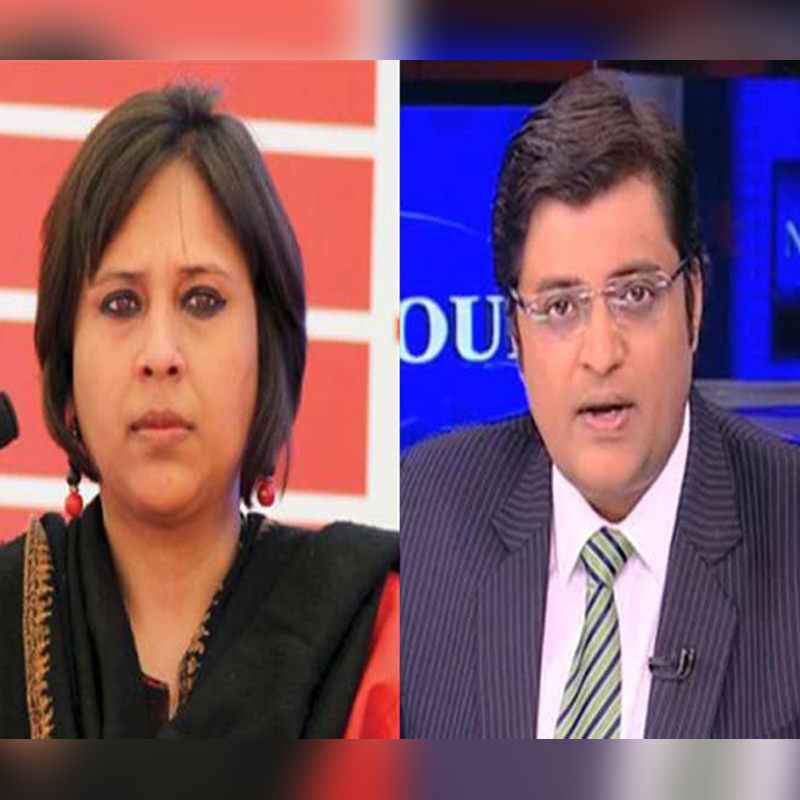
    The Arnab Goswami-Barkha Dutt (AG-BD) spat that’s keeping the nation interested presently and consuming lot of online space probably is the result of all the reasons listed in the previous para – and much more.

    While the AG-BD scrap, which has spilled over everywhere, has managed to corner eyeballs (wonder whether BARC would have data on this saga), another media related development seems to have largely gone unnoticed.

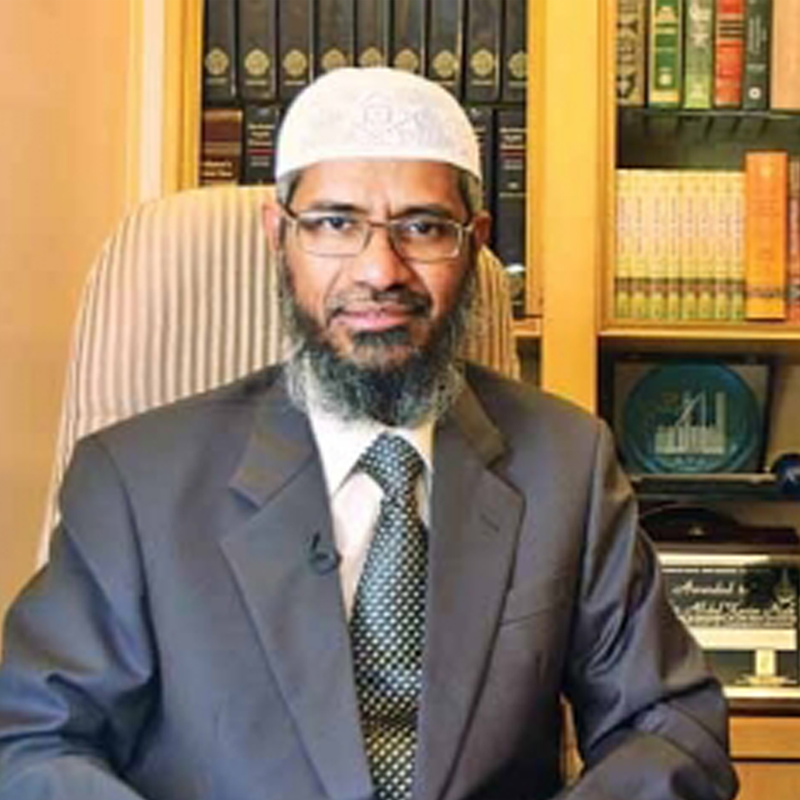
    According to the Mukesh Ambani-controlled online publication Firstpost, controversial teleevangelist Zakir Naik, accused of allegedly spreading hate through his sermons on his TV channel Peace TV, has slapped a Rs 500 crore defamation suit on Times NOW and AG.

    Why are we mentioning this defamation suit by Naik at all here? Simply because such cases will chip away at the foundation of Indian democracy and Indian media’s role as a watchdog or the Fourth Estate. This will also encourage vested interests in the country to take on more often a divided news media.

    Coming back to the face-off between AG and BD, it echoes many things, but more sharply two facts: growing intolerance in the country towards plurality of thought and opinion and increasing commercialisation of a news media where fact and fiction mix freely without alerting the consumer.

    Old school journalists have been aghast at the public display of verbal fisticuffs and washing of dirty linen (and egos) terming such behaviour from two high-profile news anchors as “shrewish and infantile,” egoistical and unworthy of such perceived role models for youngsters in the media.

    On the other hand, there are supporters of AG too, who is said to have started it all when during one of his recent shows he advocated that everybody who’s seen as anti-national (to be defined, probably, as per standards laid down by him and like-minded people), including media persons, should be legally prosecuted and punished. BD and some others media pros waded into the debate sullying the waters further with views and counter views.

    Where does that leave thousands of faceless and not-so-high profile journalists trying to eke out a living being a watchdog far away from the limelight?

    That’s a question that the media itself has to answer if it has to regain its fast-losing credibility and also protect its freedom that’s so essential in a democracy like India. For the present, it seems the Indian media is reeling under the Donald Trump effect.

  • Arnab-Barkha face-off amplifies disturbing trends

    Arnab-Barkha face-off amplifies disturbing trends

    When a section of the Indian media tries to make a case for prosecution of industry colleagues, it’s a disturbing trend. It’s more worrisome when the case being made out is based on the assertion either-you-are-with-us-or-against-us, implying that plurality of opinion (no matter how unpalatable the `other’ view is) is not welcome and that everyone needs to subscribe to just one narrative.

    Is it a case of bloated egos?

    Could be.

    Is it a case of a section of powerful media succumbing to political pressure?

    Very much possible.

    Is it a case of corporate vested interests at work?

    Why not? As most Indian media organisations, especially the big ones, are owned and run by corporations who treat media just as a business.

    Or, is it an example that in a big democracy like India a pillar of democratic right — freedom of expression — now is being readied for sacrifice at the altar of short-term gains?

    The Arnab Goswami-Barkha Dutt (AG-BD) spat that’s keeping the nation interested presently and consuming lot of online space probably is the result of all the reasons listed in the previous para – and much more.

    While the AG-BD scrap, which has spilled over everywhere, has managed to corner eyeballs (wonder whether BARC would have data on this saga), another media related development seems to have largely gone unnoticed.

    According to the Mukesh Ambani-controlled online publication Firstpost, controversial teleevangelist Zakir Naik, accused of allegedly spreading hate through his sermons on his TV channel Peace TV, has slapped a Rs 500 crore defamation suit on Times NOW and AG.

    Why are we mentioning this defamation suit by Naik at all here? Simply because such cases will chip away at the foundation of Indian democracy and Indian media’s role as a watchdog or the Fourth Estate. This will also encourage vested interests in the country to take on more often a divided news media.

    Coming back to the face-off between AG and BD, it echoes many things, but more sharply two facts: growing intolerance in the country towards plurality of thought and opinion and increasing commercialisation of a news media where fact and fiction mix freely without alerting the consumer.

    Old school journalists have been aghast at the public display of verbal fisticuffs and washing of dirty linen (and egos) terming such behaviour from two high-profile news anchors as “shrewish and infantile,” egoistical and unworthy of such perceived role models for youngsters in the media.

    On the other hand, there are supporters of AG too, who is said to have started it all when during one of his recent shows he advocated that everybody who’s seen as anti-national (to be defined, probably, as per standards laid down by him and like-minded people), including media persons, should be legally prosecuted and punished. BD and some others media pros waded into the debate sullying the waters further with views and counter views.

    Where does that leave thousands of faceless and not-so-high profile journalists trying to eke out a living being a watchdog far away from the limelight?

    That’s a question that the media itself has to answer if it has to regain its fast-losing credibility and also protect its freedom that’s so essential in a democracy like India. For the present, it seems the Indian media is reeling under the Donald Trump effect.

  • Kurnool LCO’s office sealed, 3 others’ being investigated: MIB on Peace TV

    Kurnool LCO’s office sealed, 3 others’ being investigated: MIB on Peace TV

    NEW DELHI: While denying that the Information and Broadcasting Ministry had asked the Home Ministry to help in keeping a check on illegal channels, the government today said that five complaints had been received in July on the carriage of un-permitted satellite TV channels:

    Yesterday, Information and Broadcasting Minister M Venkaiaih Naidu had told the Rajya Sabha that action had ‘reportedly’ been taken in Kurnool and Aurangabad for carriage of illegal channels.

    However, the Lok Sabha was told today by Minister of State Rajyavardhan Rathore that the office of Seema Communication Pvt. Ltd. in Kurnool had been sealed and equipment seized This was on a complaint on 9 July 2016 by Rajya Sabha member T G Venkatesh against the LCO for telecasting the non-permitted ‘Peace TV’ in Kurnool District. The complaint was sent to the District Collector, Kurnool on 10 July 2016. The DC carried out the instructions and found that the operator was actually carrying the non-permitted channel and an FIR was lodged by the authorized officer.

    However, another complaint on 12 July from Vinay Patil against Yashodeep Cable Network for transmission of the same channel in Aurangabad District was found to be incorrect as the Deputy Commissioner found that this channel was not being carried by the LCO.

    Another complaint of 7 July 2016 from Kuldeep Kumar Sahani against Venkata Sai Entertainment Pvt. Ltd. for illegal transmission of Peace TV in Nizamabad District was sent to District Collector, Nizamabad, on 22 July 2016 for further necessary action by the authorized Officer.

    A complaint about Peace TV on 9 July 2016 from A Thirupathi Reddy against Sri Sai Communications in Karimnagar District was sent to District Collector, Karimnagar on 22 July 2016 for further necessary action by the authorized Officer.

    A fifth complaint of 8 July 2016 from Nandyal Digital TV Communications against Siti Vision Digital Media Pvt. Ltd. for illegal transmission of Peace TV in Kurnool District was sent to District Collector, Kurnool, on 22 July 2016 for further necessary action by the authorized Officer.

    Apart from advisories sent to the authorized officers, MSOs, and LCOs, the minister said an appeal was issued on social media platform to the general public to report cases of transmission of un-permitted satellite TV channels by cable operators.

    Meanwhile, the minister said that in addition to satellite channels, the ministry has received recommendations from the Telecom Regulatory Authority of India on its query that the procedure for cable operators to transmit local (ground based) channels had not defined in the Act.

    Peace TV from Dubai and as many as fourteen television channels from Pakistan figured in a list of 24 channels which the Home Ministry identified as ‘not conducive to the security environment in the country’ in December 2015.

    The Pakistani channels are PTV, PTV Home, PTV World, Geo TV, Dawn, Express, Waqat, Q TV, Madni TV, Noor TV, Hadi TV, Aaj, Filmax and STV.

    Out of the other ten, there are two from Nepal (one identified as Nepal, and the other as Kantipur), and one channel each from Bangladesh (NTV Bangladesh), Maldives (TV Maldives), Bhutan (Bhutan Broadcasting Service), and there was a United Kingdom-based channel, Ahmedia Channel.

    The other channel from Arab countries was Saudi TV while the nationality of two channels was not disclosed: ARY TV and XYZ TV.

  • Kurnool LCO’s office sealed, 3 others’ being investigated: MIB on Peace TV

    Kurnool LCO’s office sealed, 3 others’ being investigated: MIB on Peace TV

    NEW DELHI: While denying that the Information and Broadcasting Ministry had asked the Home Ministry to help in keeping a check on illegal channels, the government today said that five complaints had been received in July on the carriage of un-permitted satellite TV channels:

    Yesterday, Information and Broadcasting Minister M Venkaiaih Naidu had told the Rajya Sabha that action had ‘reportedly’ been taken in Kurnool and Aurangabad for carriage of illegal channels.

    However, the Lok Sabha was told today by Minister of State Rajyavardhan Rathore that the office of Seema Communication Pvt. Ltd. in Kurnool had been sealed and equipment seized This was on a complaint on 9 July 2016 by Rajya Sabha member T G Venkatesh against the LCO for telecasting the non-permitted ‘Peace TV’ in Kurnool District. The complaint was sent to the District Collector, Kurnool on 10 July 2016. The DC carried out the instructions and found that the operator was actually carrying the non-permitted channel and an FIR was lodged by the authorized officer.

    However, another complaint on 12 July from Vinay Patil against Yashodeep Cable Network for transmission of the same channel in Aurangabad District was found to be incorrect as the Deputy Commissioner found that this channel was not being carried by the LCO.

    Another complaint of 7 July 2016 from Kuldeep Kumar Sahani against Venkata Sai Entertainment Pvt. Ltd. for illegal transmission of Peace TV in Nizamabad District was sent to District Collector, Nizamabad, on 22 July 2016 for further necessary action by the authorized Officer.

    A complaint about Peace TV on 9 July 2016 from A Thirupathi Reddy against Sri Sai Communications in Karimnagar District was sent to District Collector, Karimnagar on 22 July 2016 for further necessary action by the authorized Officer.

    A fifth complaint of 8 July 2016 from Nandyal Digital TV Communications against Siti Vision Digital Media Pvt. Ltd. for illegal transmission of Peace TV in Kurnool District was sent to District Collector, Kurnool, on 22 July 2016 for further necessary action by the authorized Officer.

    Apart from advisories sent to the authorized officers, MSOs, and LCOs, the minister said an appeal was issued on social media platform to the general public to report cases of transmission of un-permitted satellite TV channels by cable operators.

    Meanwhile, the minister said that in addition to satellite channels, the ministry has received recommendations from the Telecom Regulatory Authority of India on its query that the procedure for cable operators to transmit local (ground based) channels had not defined in the Act.

    Peace TV from Dubai and as many as fourteen television channels from Pakistan figured in a list of 24 channels which the Home Ministry identified as ‘not conducive to the security environment in the country’ in December 2015.

    The Pakistani channels are PTV, PTV Home, PTV World, Geo TV, Dawn, Express, Waqat, Q TV, Madni TV, Noor TV, Hadi TV, Aaj, Filmax and STV.

    Out of the other ten, there are two from Nepal (one identified as Nepal, and the other as Kantipur), and one channel each from Bangladesh (NTV Bangladesh), Maldives (TV Maldives), Bhutan (Bhutan Broadcasting Service), and there was a United Kingdom-based channel, Ahmedia Channel.

    The other channel from Arab countries was Saudi TV while the nationality of two channels was not disclosed: ARY TV and XYZ TV.

  • Action “reportedly” taken against LCOs in Kurnool and Aurangabad showing Peace TV: Naidu

    Action “reportedly” taken against LCOs in Kurnool and Aurangabad showing Peace TV: Naidu

    NEW DELHI: Reiterating that action was taken against telecasting of unpermitted television channels, Information and Broadcasting Minister M Vekaiaih Naidu said today that such complaints were received against some cable operators from some districts such as Kurnool and Aurangabad regarding carriage of Peace TV channel.

    He told the Rajya Sabha that the complaints were forwarded to the District Collector for necessary action by the authorized officers under the Cable Television Networks (Regulation) Act 1995 and Rules 1994.

    “They have reportedly taken action”, the Minister added in reply to a question.

    The Ministry has also invited complaints by the general public regarding transmission of unpermitted satellite TV channels by cable operators on its social media platforms. These are also forwarded to the District Collectors for necessary action.

    Whenever instances are brought to the notice of thr Ministry regarding Uplinking of unpermitted TV channels through any Indian teleport, action is taken to stop the same as per the provisions of Uplinking guidelines 2011, he said.

    He said that the Cable Act and Cable Rules regulates the transmission and re-transmission of TV channels over the Cable Networks. The Authorized Officers (the District Magistrates, the Additional District Magistrates, the Sub-Divisional Magistrates and the Commissioners of Police within their territorial jurisdiction) under the Act are empowered to take action whenever violations of the Cable Act, 1995 are brought to notice.

    The Telecom Regulatory Authority of India (TRAI) has made recommendations on the regulation of ground channels in this regard.

    Meanwhile, he said his Ministry had on 8 July 2016 issued advisories to the State Governments and Union Territories, the District Collectors and the MSOs/LCOs that no unpermitted satellite channel such as Peace TV should be carried by the cable operators in the country.

    In addition, the Ministry has issued advisories from time to time to the State Governments and Union Territories to constitute State and District Level Monitoring Committees for recommending action against broadcast content being carried by the cable operators which are in violation of the Programme Code and the Advertisement Code under the Cable Act 1995.

    The Ministry has mandated Digitization of the entire cable network in the country by December, 2016 in a phased manner through the introduction of the Digital Addressable Systems (DAS). This measure is expected to address the issues of transmission of unpermitted TV channels, he added.

  • Action “reportedly” taken against LCOs in Kurnool and Aurangabad showing Peace TV: Naidu

    Action “reportedly” taken against LCOs in Kurnool and Aurangabad showing Peace TV: Naidu

    NEW DELHI: Reiterating that action was taken against telecasting of unpermitted television channels, Information and Broadcasting Minister M Vekaiaih Naidu said today that such complaints were received against some cable operators from some districts such as Kurnool and Aurangabad regarding carriage of Peace TV channel.

    He told the Rajya Sabha that the complaints were forwarded to the District Collector for necessary action by the authorized officers under the Cable Television Networks (Regulation) Act 1995 and Rules 1994.

    “They have reportedly taken action”, the Minister added in reply to a question.

    The Ministry has also invited complaints by the general public regarding transmission of unpermitted satellite TV channels by cable operators on its social media platforms. These are also forwarded to the District Collectors for necessary action.

    Whenever instances are brought to the notice of thr Ministry regarding Uplinking of unpermitted TV channels through any Indian teleport, action is taken to stop the same as per the provisions of Uplinking guidelines 2011, he said.

    He said that the Cable Act and Cable Rules regulates the transmission and re-transmission of TV channels over the Cable Networks. The Authorized Officers (the District Magistrates, the Additional District Magistrates, the Sub-Divisional Magistrates and the Commissioners of Police within their territorial jurisdiction) under the Act are empowered to take action whenever violations of the Cable Act, 1995 are brought to notice.

    The Telecom Regulatory Authority of India (TRAI) has made recommendations on the regulation of ground channels in this regard.

    Meanwhile, he said his Ministry had on 8 July 2016 issued advisories to the State Governments and Union Territories, the District Collectors and the MSOs/LCOs that no unpermitted satellite channel such as Peace TV should be carried by the cable operators in the country.

    In addition, the Ministry has issued advisories from time to time to the State Governments and Union Territories to constitute State and District Level Monitoring Committees for recommending action against broadcast content being carried by the cable operators which are in violation of the Programme Code and the Advertisement Code under the Cable Act 1995.

    The Ministry has mandated Digitization of the entire cable network in the country by December, 2016 in a phased manner through the introduction of the Digital Addressable Systems (DAS). This measure is expected to address the issues of transmission of unpermitted TV channels, he added.

  • Telangana state government sets up committees to track the television sector

    Telangana state government sets up committees to track the television sector

    MUMBAI: This is one state which is taking the central government’s order to keep a check on the content being aired satellite TV channels following the hue and cry which was raised after the Peace TV controversy. We are referring to the Telangana state government.

    Yesterday it constituted the State and District level monitoring committees whose job will be to ensure effective implementation of the Cable Television Network (Regulation) Act.

    The committees are expected to meet at least once a year and submit a detailed annual report for Telangan, including district-wise data of cable operators registered within the state and estimated number of TV homes/viewers, to the I&B ministry before 31 December 31 annually. Their job would also be to recommend action and forwarding complaints against satellite television channels that are violating the government’s orders on the programme and advertising codes to the I&B ministry, to ensure that respect, dignity and self-esteem of children and women and other sections of society are duly protected, to see whether the authorised officers are effectively performing their duties, to see how many cases are handled by them and what decisions are arrived at, to give suggestion/ guidance to district/ local level committee, to take decision on the matters referred to it by district/ local level committee, to collect data/ information from district/ local level committee and forward it to I&B secretary.

    On the state level committee would be the following: the principal secretaries of revenue and home, secretary and commissioner of I&PR department, Doordarshan Kendra Hyderabad director and commercial taxes commissioner.

    The district level committee would have the following members: district collector, superintendent of police, commercial taxes deputy commissioner or his representative and the district public relations officer.

    Observers believe that the setting up of the committees is a step in the right direction, but the state would have done well to have other representatives from society and the private sector to give a more holistic perspective.

  • Telangana state government sets up committees to track the television sector

    Telangana state government sets up committees to track the television sector

    MUMBAI: This is one state which is taking the central government’s order to keep a check on the content being aired satellite TV channels following the hue and cry which was raised after the Peace TV controversy. We are referring to the Telangana state government.

    Yesterday it constituted the State and District level monitoring committees whose job will be to ensure effective implementation of the Cable Television Network (Regulation) Act.

    The committees are expected to meet at least once a year and submit a detailed annual report for Telangan, including district-wise data of cable operators registered within the state and estimated number of TV homes/viewers, to the I&B ministry before 31 December 31 annually. Their job would also be to recommend action and forwarding complaints against satellite television channels that are violating the government’s orders on the programme and advertising codes to the I&B ministry, to ensure that respect, dignity and self-esteem of children and women and other sections of society are duly protected, to see whether the authorised officers are effectively performing their duties, to see how many cases are handled by them and what decisions are arrived at, to give suggestion/ guidance to district/ local level committee, to take decision on the matters referred to it by district/ local level committee, to collect data/ information from district/ local level committee and forward it to I&B secretary.

    On the state level committee would be the following: the principal secretaries of revenue and home, secretary and commissioner of I&PR department, Doordarshan Kendra Hyderabad director and commercial taxes commissioner.

    The district level committee would have the following members: district collector, superintendent of police, commercial taxes deputy commissioner or his representative and the district public relations officer.

    Observers believe that the setting up of the committees is a step in the right direction, but the state would have done well to have other representatives from society and the private sector to give a more holistic perspective.

  • Peace TV saga & absence of rule of law

    Peace TV saga & absence of rule of law

    The Peace TV saga after the Dhaka terrorist attack just before Eid and the brouhaha created over availability of an unlicensed channel in Indian television homes highlights yet again rules and regulations have to be applied uniformly and stringently.

    The Indian government woke up suddenly issuing gag orders on distribution platforms when the general media in the country went to town regarding Peace TV. The media alleged Peace TV and the Mumbai-based Islamic tele-evangelist Zakir Naik’s sermons aired on the channel could have instigated the Bangladeshi terrorists. All these allegations were based on some interpretation of a report in a Bangladeshi newspaper.

    That the Bangla newspaper subsequently clarified its report stating categorically that it had never said the terrorists were `inspired’ by Naik’s sermons is a completely another story because the Indian media, by and large news channels, ignored the clarification.

    However, the fact stands that Peace TV is not licensed to air in India and had been denied landing rights by the Indian government several times in the past. Still, the channel was available on Indian networks and the sermons online.

    Similarly, several Pakistani TV channels too are available in some parts of the country (crackdown on illegal retransmissions do happen from time to time, government officials insist) as also Chinese radio stations in border areas.

    So, the question is: how come an unlicensed TV channel officially denied permission to broadcast in India was still reaching Indian TV homes?

    The answer lies in apparent laxity in implementing and upholding existing regulations on the part of Indian policy-makers, regulators and law enforcing agencies. In some cases it may also be local-level indulgences despite knowing that a certain regulation had been breached.

    Because in India most such issues boil down to majority vs. minority yardstick with the victimisation syndrome kicking in — all in the name of certain democratic rights — regulatory breaches are overlooked or rule of the law not enforced. Until one such breach kicks up crap all round; like the Peace TV affair recently did.

    Historically speaking, as India opened up to satellite TV revolution from early 1990s and rules were lax (downlink licence or landing rights were terms not known to Indian policy-makers then) many TV channels invaded the Indian skies and homes. Some of them were bad (read propagandist), some indifferent, but largely most were entertaining.

    As successive Indian governments woke up to the power of TV propaganda in whipping up unpalatable frenzy and jingoism, Ministry of Information and Broadcasting (MIB) started formulating rules and regulations to isolate TV channels, mostly uplinked from outside India, from entering Indian homes via cable or other distribution platforms, which were perceived as not conducive for India.

    One such historic policy drafting also saw a Broadcast Bill being introduced in Parliament in 1996 where the draft stated that certain categories of organisations (like political parties, NGOs, religious bodies, advertising agencies, etc) would be barred from owning and running TV channels.

    The Bill never got enacted into a law and since then half-hearted attempts by other governments to bring similar Bills in Parliament failed to get necessary traction; mostly owing to a superstitious belief that whichever government tries to regulate the broadcast sector went out of power in New Delhi.

    Historical incidents, notwithstanding, it has also been observed in India that any proposed regulation relating to cable and broadcast sector having the potential to affect powerful lobbies like political parties or religious bodies or their proxies get swept under the carpet.

    Take, for example, broadcast carriage regulator TRAI’s two recommendations on media ownership, made after wide consultations with stakeholders. I am told both the reports are gathering dust in some corner of MIB.

    Apart from suggesting many other things on the ownership issue, TRAI said in a set of recommendations in 2014, “…given that about six years have elapsed without any concrete action being taken by the Government, the Authority strongly recommends that its Recommendations of 12 November 2008 and 28 December 2012 may be implemented forthwith.”

    The regulator’s recommendations came after issues relating to media ownership issue and vertical monopoly were referred to it by MIB.

    Emboldened by the fact that MIB had put its weight behind it, TRAI (again) recommended in 2014 that political bodies, religious bodies, urban, local, panchayati raj, and other publicly funded bodies, Central and State government ministries, departments, companies, undertakings, joint ventures, and government-funded entities and affiliates be barred from entry into broadcasting and TV channel distribution sectors.

    The regulator suggested exit routes for existing entities already into business, adding such a debarment could be implemented through an executive decision by incorporating the disqualifications into rules, regulations and guidelines as necessary.

    But by 2014, MIB had already licensed many news and religious/spiritual TV channels and distribution platforms owned/managed by political parties, religious bodies (in one case a temple’s management committee) and/or their proxies for operation at pan-India and State levels.

    And so, even the 2014 TRAI recommendations remain ignored, while at another level technology has outpaced or threatens to make obsolete the Indian process of policy making.

    A colleague, while outlining the potential of Facebook Live (and other such techs like Twitter’s Periscope), recently commented it’s matter of time when Facebook Live will kick into India, dipping into the country’s smart-phone user base (250 million on last count) to give birth to the possibility of “hundreds of news channels on FB dishing out unadulterated, independent updates of developments.” Very few in Indian government would be tracking developments like FB Live.

    In an age when technology is moving faster than policy-making, flat-footedness of Indian policy-makers and our general apathy towards rule of the law will hasten policy chaos resulting in arbitrary decisions being implemented.

  • Peace TV saga & absence of rule of law

    Peace TV saga & absence of rule of law

    The Peace TV saga after the Dhaka terrorist attack just before Eid and the brouhaha created over availability of an unlicensed channel in Indian television homes highlights yet again rules and regulations have to be applied uniformly and stringently.

    The Indian government woke up suddenly issuing gag orders on distribution platforms when the general media in the country went to town regarding Peace TV. The media alleged Peace TV and the Mumbai-based Islamic tele-evangelist Zakir Naik’s sermons aired on the channel could have instigated the Bangladeshi terrorists. All these allegations were based on some interpretation of a report in a Bangladeshi newspaper.

    That the Bangla newspaper subsequently clarified its report stating categorically that it had never said the terrorists were `inspired’ by Naik’s sermons is a completely another story because the Indian media, by and large news channels, ignored the clarification.

    However, the fact stands that Peace TV is not licensed to air in India and had been denied landing rights by the Indian government several times in the past. Still, the channel was available on Indian networks and the sermons online.

    Similarly, several Pakistani TV channels too are available in some parts of the country (crackdown on illegal retransmissions do happen from time to time, government officials insist) as also Chinese radio stations in border areas.

    So, the question is: how come an unlicensed TV channel officially denied permission to broadcast in India was still reaching Indian TV homes?

    The answer lies in apparent laxity in implementing and upholding existing regulations on the part of Indian policy-makers, regulators and law enforcing agencies. In some cases it may also be local-level indulgences despite knowing that a certain regulation had been breached.

    Because in India most such issues boil down to majority vs. minority yardstick with the victimisation syndrome kicking in — all in the name of certain democratic rights — regulatory breaches are overlooked or rule of the law not enforced. Until one such breach kicks up crap all round; like the Peace TV affair recently did.

    Historically speaking, as India opened up to satellite TV revolution from early 1990s and rules were lax (downlink licence or landing rights were terms not known to Indian policy-makers then) many TV channels invaded the Indian skies and homes. Some of them were bad (read propagandist), some indifferent, but largely most were entertaining.

    As successive Indian governments woke up to the power of TV propaganda in whipping up unpalatable frenzy and jingoism, Ministry of Information and Broadcasting (MIB) started formulating rules and regulations to isolate TV channels, mostly uplinked from outside India, from entering Indian homes via cable or other distribution platforms, which were perceived as not conducive for India.

    One such historic policy drafting also saw a Broadcast Bill being introduced in Parliament in 1996 where the draft stated that certain categories of organisations (like political parties, NGOs, religious bodies, advertising agencies, etc) would be barred from owning and running TV channels.

    The Bill never got enacted into a law and since then half-hearted attempts by other governments to bring similar Bills in Parliament failed to get necessary traction; mostly owing to a superstitious belief that whichever government tries to regulate the broadcast sector went out of power in New Delhi.

    Historical incidents, notwithstanding, it has also been observed in India that any proposed regulation relating to cable and broadcast sector having the potential to affect powerful lobbies like political parties or religious bodies or their proxies get swept under the carpet.

    Take, for example, broadcast carriage regulator TRAI’s two recommendations on media ownership, made after wide consultations with stakeholders. I am told both the reports are gathering dust in some corner of MIB.

    Apart from suggesting many other things on the ownership issue, TRAI said in a set of recommendations in 2014, “…given that about six years have elapsed without any concrete action being taken by the Government, the Authority strongly recommends that its Recommendations of 12 November 2008 and 28 December 2012 may be implemented forthwith.”

    The regulator’s recommendations came after issues relating to media ownership issue and vertical monopoly were referred to it by MIB.

    Emboldened by the fact that MIB had put its weight behind it, TRAI (again) recommended in 2014 that political bodies, religious bodies, urban, local, panchayati raj, and other publicly funded bodies, Central and State government ministries, departments, companies, undertakings, joint ventures, and government-funded entities and affiliates be barred from entry into broadcasting and TV channel distribution sectors.

    The regulator suggested exit routes for existing entities already into business, adding such a debarment could be implemented through an executive decision by incorporating the disqualifications into rules, regulations and guidelines as necessary.

    But by 2014, MIB had already licensed many news and religious/spiritual TV channels and distribution platforms owned/managed by political parties, religious bodies (in one case a temple’s management committee) and/or their proxies for operation at pan-India and State levels.

    And so, even the 2014 TRAI recommendations remain ignored, while at another level technology has outpaced or threatens to make obsolete the Indian process of policy making.

    A colleague, while outlining the potential of Facebook Live (and other such techs like Twitter’s Periscope), recently commented it’s matter of time when Facebook Live will kick into India, dipping into the country’s smart-phone user base (250 million on last count) to give birth to the possibility of “hundreds of news channels on FB dishing out unadulterated, independent updates of developments.” Very few in Indian government would be tracking developments like FB Live.

    In an age when technology is moving faster than policy-making, flat-footedness of Indian policy-makers and our general apathy towards rule of the law will hasten policy chaos resulting in arbitrary decisions being implemented.