Tag: PCI

  • IT panel recommends MIB to restructure PCI to cover all types of media

    IT panel recommends MIB to restructure PCI to cover all types of media

    Mumbai: Parliament’s standing committee on communications and information technology, headed by Congress leader Shashi Tharoor has recommended the ministry of information and broadcasting (MIB) to set up a media council on the lines of the Press Council of India (PCI), with statutory powers over print, television and digital media platforms.

    The recommendation was part of the ‘Ethical Standards in Media Coverage’ report which expresses concerns regarding the limited efficacy of existing regulatory bodies like the PCI and the News Broadcasting and Digital Standards Authority (NBDSA) in enforcing their decisions. This has led to the fourth estate “gradually losing its credibility and integrity.”

    The report noted that while the PCI – a statutory body governing the print media – may entertain complaints and is empowered to warn, admonish or censure newspapers, news agencies, the editor or the journalist concerned, it does not have the power to enforce compliance. Its advisories are not enforceable in a court of law.

    Similarly, while the NBDSA (a self-regulatory body for news broadcasting), has the power to fine, its jurisdiction extends to only those organisations that choose to be members of the News Broadcasters and Digital Association. Compliance with its orders is also voluntary.

    Suggesting restructuring the PCI to cover all types of media, the panel said, “In view of the above, the Committee has opined that the MIB should explore the possibility of establishing a wider Media Council encompassing not just the print media but the electronic and digital media as well, and equip it with statutory powers to enforce its orders where required.”

    The committee also recommended that pending a decision on the council, the ministry should look into the possibility of expanding the regulatory framework to monitor e-newspapers.

  • Tokyo Paralympics 2020: Indian Bank joins hands with PCI as banking partner

    Tokyo Paralympics 2020: Indian Bank joins hands with PCI as banking partner

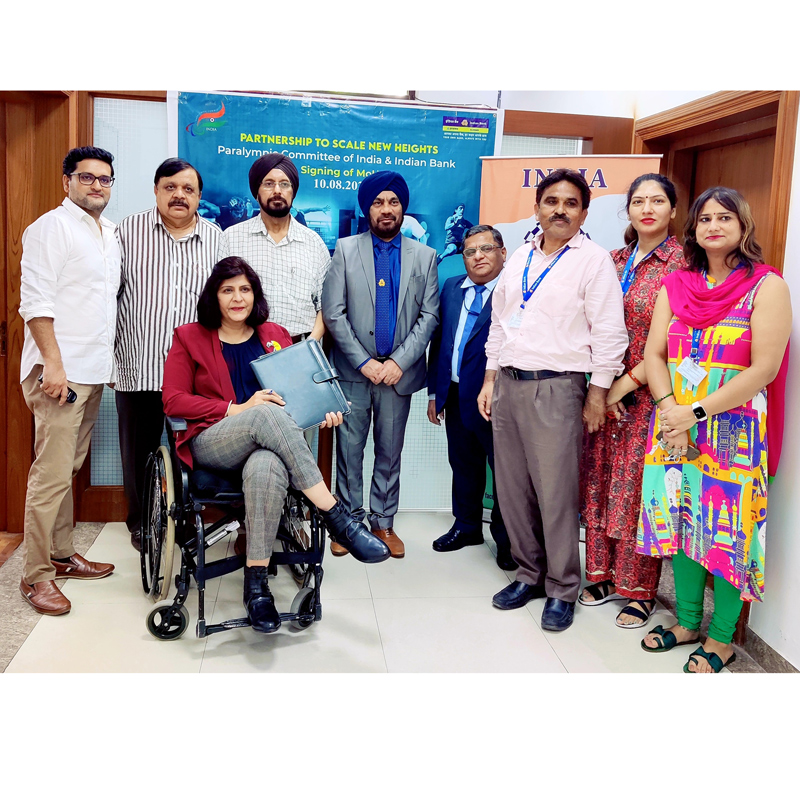
    Mumbai: Indian Bank has signed an MOU and partnered with the Paralympic Committee of India (PCI) as one of the banking partners ahead of the Paralympic Games, Tokyo 2020, scheduled to commence from 24 August.

    “The Bank, through its year-long association with PCI, will provide financial assistance, in an endeavour to support the Paralympic athletes prepare for the coveted sporting events in the domestic arena as well as global platforms for a year,” said the press statement.

    PCI president Dr Deepa Malik and Indian Bank field general manager (Delhi), Ravindra Singh emphasised while signing the MOU that the resources offered by the bank will be channelised towards meeting the requirements of the Indian para-athletes ranging from their training, nutrition, equipment, certifications to name a few. Timely financial aid provided to these sportspersons will encourage them to focus their efforts on the game and win laurels for the country.

    On this occasion, Indian Bank MD & CEO Padmaja Chunduru said, “We are delighted to have partnered with PCI to work towards promoting the Paralympic ecosystem and making resources available for differently-abled athletes in our nation. Even though the Paralympic movement is at a nascent stage in India, several young and talented athletes have been training rigorously to represent India in an international arena. It is our belief that this initiative will empower many athletes to take up sports as a career without experiencing any dearth of resources. At Indian Bank, we have always strived to maintain an inclusive environment and supported employees who have exhibited a flair for sports.”

  • Delhi HC stays PCI’s order regarding ad in Hindustan newspaper

    Delhi HC stays PCI’s order regarding ad in Hindustan newspaper

    New Delhi: The Delhi high court stayed a directive passed by the Press Council of India (PCI) to government departments, which had effectively stopped government advertisements in some editions of the Hindi daily, Hindustan.

    The directions were passed by the court while hearing a plea filed by Hindustan Media Ventures Ltd, which had challenged the PCI’s order, Live Law reported.

    On 22 January, PCI had “censured” Hindustan newspaper stating that it had not clarified that a certain content printed in its Dehradun edition was an advertisement, as required by the norms of journalistic conduct framed by it. PCI also communicated the order to various governmental advertising agencies including the DAVP and sought an `action taken report’.

    The counsel for Hindustan argued before the court, that even though the word ‘advt’ does appear in very small font size and print in the advertisement, the impugned order and the communication of the Press Council has, in effect, barred all government agencies from placing advertisements in the said newspaper. He also submitted that PCI’s order was "beyond the powers contemplated under Section 14 of the Press Council Act and was also arbitrary.”

    After analysing the order, the court was of the opinion that it indeed gave the impression that government agencies cannot place any advertisements in the said newspapers, even though no such direction was part of the order. Therefore, it decided to stay the PCI’s order communicated to all government departments on 28 January to take action and submit the action taken report.

    It further stated that the ramifications of the impugned communication can be quite detrimental to the financial health of the publication, if all government advertising is directed to be stopped due to an order of `censure’ passed by the Press Council.

    The case was adjourned for next hearing on 22 April.
     

  • PMO directs MIB to withdraw guidelines on fake news

    PMO directs MIB to withdraw guidelines on fake news

    MUMBAI: The Prime Minister’s Office (PMO) has ordered the withdrawal of guidelines to crack down on journalists responsible for distributing fake news, a senior government official said today.

    “The prime minister has directed that the press statement regarding fake news be withdrawn and the matter be addressed in the Press Council of India,” a senior official in Modi’s office told news agency Reuters. No reason was given.

    On Monday, the Ministry of Information and Broadcasting (MIB) had issued a statement stating that noticing increasing instances of fake news in various mediums, including print and electronic, the guidelines for accreditation of journalists have been amended with penalties and punishment factored in.

    “On receiving any complaints of instances of fake news, the same would get referred to the Press Council of India (PCI) if it pertains to print media and to News Broadcasters Association (NBA) of India if it relates to electronic media for determination of the news item being fake or not,” the MIB statement had said, adding that the process would be completed within 15 days.

    Even as the government announced amendments in the guidelines for accreditation of print and electronic or TV journalists outlining punishments for breaches on account of fake news, the intention was termed by stakeholders as debatably honourable but an indirect way to muzzle media freedom.

    Welcoming the decision, News Broadcasters Association has issued a statement. The move has been lauded for letting industry bodies such as NBA and Press Council of India(PCI) to decide all Fake News related issues as it was proposed by Smriti Irani earlier.

    Also Read: MIB issues stringent norms on fake news in TV & print media

  • Action taken in 75 complaints of violations by TV channels in last three years, Govt not considering independent mechanism

    Action taken in 75 complaints of violations by TV channels in last three years, Govt not considering independent mechanism

    NEW DELHI: The Government has reiterated that there is no proposal under consideration of the Information and Broadcasting Ministry for an independent broadcasting media authority/separate mechanism in the country for complaints relating to media

    I and B Minister Arun Jaitley told Parliament that the adequate provisions in the form of various Acts / Rules / Regulations/ Guidelines already exist with regard to print and electronic Media.

    He also referred to the Inter-Ministerial Committee for TV channels, self-regulatory bodies Broadcasting Content Complaints Council (BCCC) headed by retired Judge Mukul Mudgal for general entertainment channels, the News Broadcasting Standards Authority for news television channels, the Consumer Complaints Council (CCC) of the Advertising Standards Council of India (ASCI), and the Press Council of India for print media.

    The BCCC took action in a total of 5036 cases between 2013 and 2015, while the NBSA took action in 1464 complaints between 2012-13 and 2014-15.  

    Thus BCCC had 2298 complaints in 2015, 1791 in 2014 and 947 in 2014. The NBSA -had 110 complaints in 2014-15, 1143 in 2013-14, and 216 in 2012-13  

    Action was taken in 75 complaints relating to violation of Programme or Advertising Codes for Television channels, while the Press council of India heard 521 complaints between 2012-13 and 2015-16.

  • Action taken in 75 complaints of violations by TV channels in last three years, Govt not considering independent mechanism

    Action taken in 75 complaints of violations by TV channels in last three years, Govt not considering independent mechanism

    NEW DELHI: The Government has reiterated that there is no proposal under consideration of the Information and Broadcasting Ministry for an independent broadcasting media authority/separate mechanism in the country for complaints relating to media

    I and B Minister Arun Jaitley told Parliament that the adequate provisions in the form of various Acts / Rules / Regulations/ Guidelines already exist with regard to print and electronic Media.

    He also referred to the Inter-Ministerial Committee for TV channels, self-regulatory bodies Broadcasting Content Complaints Council (BCCC) headed by retired Judge Mukul Mudgal for general entertainment channels, the News Broadcasting Standards Authority for news television channels, the Consumer Complaints Council (CCC) of the Advertising Standards Council of India (ASCI), and the Press Council of India for print media.

    The BCCC took action in a total of 5036 cases between 2013 and 2015, while the NBSA took action in 1464 complaints between 2012-13 and 2014-15.  

    Thus BCCC had 2298 complaints in 2015, 1791 in 2014 and 947 in 2014. The NBSA -had 110 complaints in 2014-15, 1143 in 2013-14, and 216 in 2012-13  

    Action was taken in 75 complaints relating to violation of Programme or Advertising Codes for Television channels, while the Press council of India heard 521 complaints between 2012-13 and 2015-16.

  • TRAI recommendations on accreditation of rating agencies accepted: Tewari

    TRAI recommendations on accreditation of rating agencies accepted: Tewari

    NEW DELHI: Even as the industry body Broadcast Audience Research Council (BARC) is struggling with its teething problems, the Information and Broadcasting Ministry (I &B) has accepted view of the Telecom Regulatory of India (TRAI) that the minimum number of homes that a rating agency should measure should be 20,000 within six months of the guidelines coming into force, after which the number should be increased by 10,000 every year to reach 50,000.


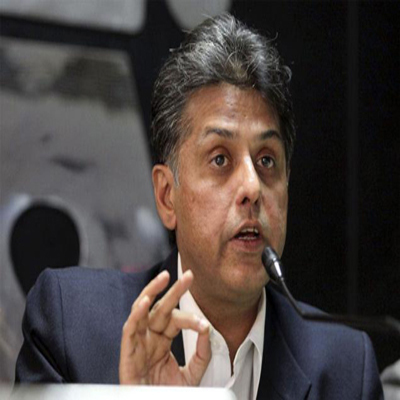
    Minister Manish Tewari has said that his Ministry would place these guidelines before the union cabinet, a note for which has already been circulated. The Ministry had earlier asked the regulator to provide its guidelines on the issue, after which TRAI had in September released its recommendations including a condition that they be notified within two months.


    He said most recommendations had been “more or less accepted.” “Once we have the cabinet approval, we will notify the guidelines,” he added. Interestingly, Tewari, during his speech, also touched upon the dispute on whether the foreign direct investment should be raised for the print media.  While the Press Council of India (PCI) had submitted its recommendations that the current levels of FDI in print media should be maintained, the Indian Newspaper Society (INS) had favoured raising the limit to 49 per cent. “We are trying to build a political consensus after all media is a sensitive area,” Tewari said.


    The TV audience measurement mechanism has been a subject of controversy in the past with many channels expressing dissatisfaction with TAM ratings.


    Tewari said the amendments to the Press and Registration Books Act were already on the Ministry website and stakeholders’ had sought fresh consultations on issues including ‘paid news’, which had been slated for Tuesday.


    Replying to a question related to setting up of a National Gaming and Animation Centre in Mohali in Punjab, Tewari said there was a problem as it was intended to be a Public-Private Partnership (PPP) but the private sector had not responded.


    He said government was considering a plan to set up the institute with Japanese assistance. Tewari said bills to give special status to Film and Television Institute of India (FTII) and Satyajit Ray Film and TV Institute had been sent to the Law Ministry. He said another proposal to give the status of ‘institute of national importance’ to the Indian Institute of Mass Communication was by and large ready.

  • I&B Ministry asks TRAI and PCI to accelerate views on the proposed FDI limits

    I&B Ministry asks TRAI and PCI to accelerate views on the proposed FDI limits

    NEW DELHI: In the light of the current scenario of demands for growth in the media sector escalating, Information and Broadcasting Ministry has asked the Telecom Regulatory Authority of India to speed up its comments on the reference made earlier regarding foreign investment limits in the broadcasting sector.

    In its communication to TRAI, the Ministry has sought comments regarding the paper prepared by the Finance Ministry relating to revision in existing FDI caps in the broadcasting sector. The paper had been forwarded to TRAI seeking its recommendations under Section 11(1)(a)(ii) and (iv) of the TRAI Act, 1997, which pertains to the terms and conditions of license to a service provider and measures to facilitate competition and promote efficiency in the operation of telecommunication services to facilitate growth in such services.

    In a similar separate communication, the ministry has requested the Press Council of India (PCI) to further its advice on the existing sectoral caps of FDI in print media under Section 13 of PCI Act 1978. The advice has been sought in view of the communication received from the Finance Ministry which aims to review policy of sectoral caps of FDI in print media. Section 13 authorises PCI to express its opinion in regard to any matter referred to it by the Central Government.

    The paper proposes to raise the existing FDI cap of 26 per cent which is through FIPB route to 49 per cent through automatic route in the news sector. In the non-news sector, the existing FDI cap is 100 per cent through FIPB route which has been proposed to be 100 per cent through automatic route without the requirement of FIPB’s approval.

    In a consultation paper issued in July following the ministry’s note of the same month, TRAI had reiterated its earlier proposal for increasing the foreign direct investment for FM Radio to 49 per cent, and said the FDI for teleports, DTH, HITS, mobile and cable television networks must be raised to 100 per cent.

    TRAI also conceded a long-standing demand of news and current affairs television channels by recommending that they should be permitted 49 per cent FDI.

    However, TRAI had said that in the cases of both FM Radio and news channels where the existing limit is 26 per cent, the clearance would be through the Foreign Investments Promotion Board.

    In the case of teleports, DTH, HITS, mobile and cable television networks where the limit was 74 per cent, TRAI said that it can be raised to 100 per cent of which 49 per cent would be automatic and the rest would be through FIPB.

    No change had been recommended in the case of downlinking of TV Channels and uplinking of general entertainment (non-news) channels where the upper limit is 100 per cent through FIPB.
    TRAI had earlier given recommendations on the same subject in April 2008 and again on 30 June last year following ministerial references, on the basis of which changes had been carried out. The last such change was on 20 September 2012.

  • NBA urges PM to restrain PCI Chief from making ‘unwarranted comments’

    NBA urges PM to restrain PCI Chief from making ‘unwarranted comments’

    NEW DELHI: The News Broadcasters Association (NBA) has urged Prime Minister Manmohan Singh to ask Press Council of India chairman Justice Markanday Katju to “exercise restraint on commenting upon areas which are outside his jurisdiction”, reacting strongly to the demand for converting the Council into a Media Council.

    In a letter to Singh, the NBA has said that he should “intervene and request the chairman of the Press Council of India to engage himself constructively with print media matters, which is the mandate he has under the Press Council Act and not to exceed his remit.”

    “We are sure under your leadership no unilateral steps will be taken to regulate the electronic media as we are consciously trying to regulate with the sole endeavour to improve broadcasting standards, which are consistent with the tenets of the freedom of speech articulated in our Constitution,” the letter says.
    Noting that both the Broadcasters Editors Association (BEA) and the Editors Guild have already express their unhappiness with the view of Justice Katju, the NBA has expressed “distress” over the “unwarranted comments” of Justice (Retd) Katju in his recent interview with Karan Thapar on CNN IBN that the attempt of the NBA to adopt self-regulation under the chairmanship of Justice (Retd) JS Verma, former Chief Justice of India “simply isn‘t working”; adding that the reason it is not working at all is that “there must be some fear in the media” which can only happen with a “danda”, which he was “magnanimous to say will only be used when required”.

    “We are unable to understand how Katju has come to this conclusion that the self-regulatory mechanism adopted by News Broadcasters Standards Authority has failed. It is important to note that the NBSA was established in October 2008 whereas the statutorily set up Press Council of India has been in existence since 1978,” the letter says.

    It has been pointed out that the NBSA in the last three years has been consciously making all efforts to ensure that broadcasting standards of news channels improve.

    The NBA drew up its Code of Ethics and Broadcasting Standards and has issued various specific guidelines and advisories for covering specific situations and events, including for instance reporting on emergency situations, for covering the Ayodhya Judgment of the Allahabad High Court, the Telangana issue and reporting court proceedings etc. “It is a matter of great satisfaction that the Guidelines issued by the NBA for covering the Ayodhya Judgment were quoted verbatim and made part of the judicial order by the Allahabad High Court”, the letter says.

    The Court had in fact said that “It is not our intent here to lay down any reformist agenda for the media. Any attempt to control and regulate the media from outside is likely to cause more harm than good. The norms to regulate the media and to raise its professional standards must come from inside.”

    The NBSA since its inception in 2008 had considered and reviewed 198 complaints received by member broadcasters/Authority. In the year 2010-11 the Authority considered and reviewed 152 complaints; suo motu action has also been initiated in appropriate cases; and orders have been passed against nine broadcasters so far, wherein the errant news channels have been reprimanded, censured and even fine of Rs100,000 has been imposed. The NBA regulations also allows the Authority “to recommend to the concerned authority for suspension/revocation of license of such broadcaster”.

    The Information and Broadcasting Ministry has recognised NBA‘s self-regulation initiative and has started forwarding complaints against even non-members for consideration of the NBSA. “If the Ministry at all believed that self-regulation had failed, evidently it would not have taken such a pro-active step. The Ministry in the last few months has forwarded 25 complaints which have been considered or are under consideration of the Authority,” the letter adds.

    “In fact on seeing the effectiveness of the NBA self-regulation mechanism, a similar body – the Broadcasting Content Complaints Council (BCCC) for the general entertainment channels has been set up headed by Justice (Retd) AP Shah, former Chief Justice of the Delhi High Court,” the NBA adds.

    From Justice Katju‘s interview “we are also understand he is drawing consensus from the two leading political parties of the country to bring the electronic media within the ambit of the PCI and christening it as a ‘Media Council of India‘. In this regard, we are given to understand Justice Katju has written to you and also met Sushma Swaraj, leader of the opposition in the Lok Sabha. We strongly oppose this move by the Chairman PCI.”

    “In fact, we urge you to further strengthen the self-regulation initiative adopted by the NBA by persuading the Ministry to include the NBA Code of Ethics and the Redressal Regulations and various specific guidelines as part of the Programme Code under the Cable TV Rules,” the letter demands.

    Justice (Retd.) Katju has “vociferously aired his sweeping and generic views on diverse matters like reporting news, what, when & how news should be reported, what should and what should not be reported, the time given for reporting news and the intellectual caliber of journalists,” the letter points out.

    Other than Verma, the NBSA has members which include Kiran Karnik (former president, NASSCOM); Nitin Desai (economist and former Under Secretary General of UN), Chokila Iyer (former Foreign Secretary of India) and Dipankar Gupta (sociologist and former professor of Jawahar Lal Nehru University).
  • Press Council wants larger ambit to deal with paid news

    Press Council wants larger ambit to deal with paid news

    NEW DELHI: The Press Council of India has demanded that it should be reconstituted with members from the electronic and other media if it has to check the paid news syndrome.

    In its report dated 30 July, the PCI also wanted the Press Council of India Act 1978 to be amended to give it more powers to make its recommendations binding, and for empowering it to adjudicate the complaints of paid news and give final judgment in the matter.

    Parliament was informed by Information and Broadcasting Minister Ambika Soni that the Representation of the People’s Act 1951 should be amended to make incidence of paid news a punishable electoral malpractice.

    It has recommended that the Election Commission should set up a special cell for action against complaints about paid news.

    While recommending self-regulation by the media to check the menace, the PCI said the guidelines drawn up by it earlier on coverage of elections should be adhered to by the media organisations.

    Voters should be educated to enable them to differentiate between paid news items from genuine news, and there should be awareness generation amongst the stakeholders.

    At the outset, the Council has defined paid news as “any news or analysis appearing in any media (print and electronic) for a price in cash or kind as consideration.”