Tag: PCCW

  • HBO asia partners with Viu on viu original “The Bridge”

    HBO asia partners with Viu on viu original “The Bridge”

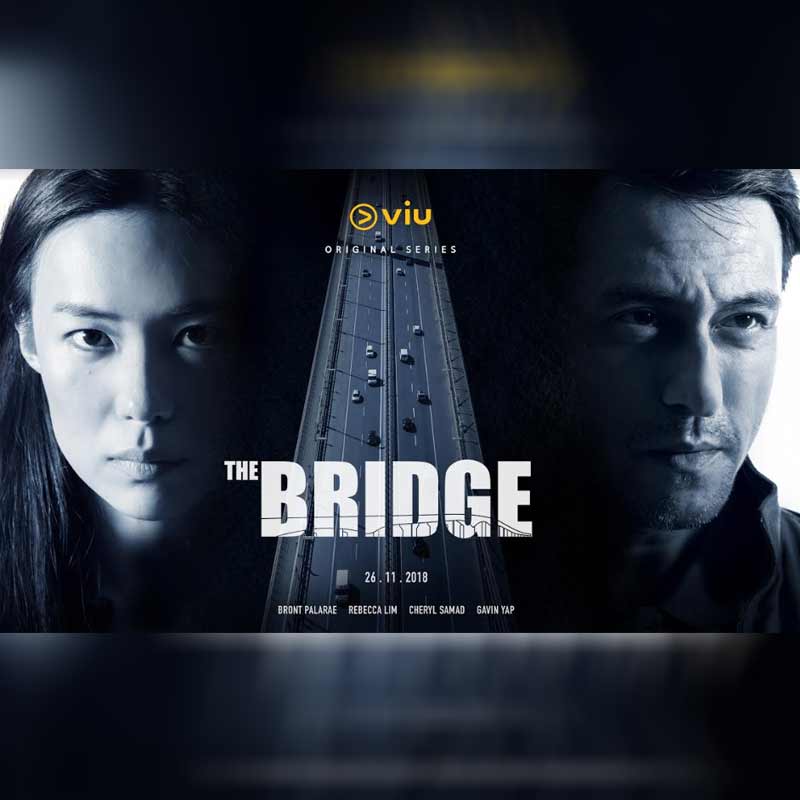
    MUMBAI: Today, HBO Asia and Viu, a leading OTT Video service by PCCW and Vuclip, announce that the Viu Original “The Bridge” licensed by Endemol Shine Group, will be available on HBO Asia’s channels and services throughout Asia. From November 26th, 2018, the show will be available day and date on Viu in all available markets and on HBO, HBO GO and HBO ON DEMAND in the following countries: Brunei, Cambodia, Hong Kong, Indonesia, Macau, Maldives, Mongolia, Myanmar, Palau, Papua New Guinea, the Philippines, Singapore, South Korea, Sri Lanka, Taiwan, Thailand and Vietnam. Fans of Viu Originals will now have the opportunity to view this latest adaptation of global phenomenon, “The Bridge,” on multiple platforms.

    “HBO Asia is committed to quality original local programming and working with Viu on ‘The Bridge’ is another step towards that,” said Jonathan Spink, CEO, HBO Asia. “This adaptation of ‘The Bridge’ will add to our ever-growing line up of Asian Original content that will resonate with audiences in the region and around the world.”

    “Our approach is not just to produce great content, but also continue investing in the local ecosystem by providing a platform for sustained growth. It is great to partner with HBO Asia on the Bridge, because they share our vision and passion when it comes to Original content,” said Kingsley Warner, Country Manager Malaysia and Executive Producer of The Bridge, Malaysia and Singapore.

    Viu is working with longtime partner, Double Vision, to produce a Malaysia-Singapore localised, ten-episode adaptation of global phenomenon, The Bridge, starring Bront Palarae, Rebecca Lim, Cheryl Samad and Tony Eusoff. The Bridge will be directed by Lee Thean-jeen and Jason Chong. A body is found on the border of two countries, Malaysia and Singapore, forcing an investigator from each country to work together to solve the case. This is a licensed format from international production and distribution house, Endemol Shine Group and is a compelling storyline which lends itself to great localization.

    The Bridge (Bron/Broen) was originally created and written by Hans Rosenfeldt as a joint production of Sweden’s Filmlance International, part of Endemol Shine Group and Denmark’s Nimbus Film. The Bridge (Bron/Broen) was produced in co-production with Sveriges Television, DR, ZDF German Television network, ZDF Enterprises Gmbh, Film i Skåne, NRK, Copenhagen Film Fund, Lumiere Group, Stiftelsen Ystad Österlen Filmfond, with from Norvision and in co-operation with Malmö Stad.

  • Vuclip parent PCCW sells 18% in OTT biz for $110m, fuels growth

    MUMBAI: PCCW Media, the parent company of Vuclip which provides web-based and short-form content video services in 19 markets including India, Southeast Asia, Middle East, Africa and other emerging markets with multiple patents, has introduced three investors.

    Further fueling growth and innovation of Viu and other OTT services in Asia and beyond, PCCW has brought in Hony Capital (Hony), Foxconn Ventures (Foxconn) and Temasek as investors of PCCW International OTT (Cayman Islands) Holdings Limited (PCCW OTT).

    This strategic investment will strengthen PCCW OTT’s ability to enhance its core value proposition of relevant content including distinctive original productions, and to continue to deploy the latest technologies and leverage its patents in video streaming and encoding to offer the best customer experience. As a rapidly expanding business, PCCW OTT aims to increase its penetration within the existing markets where it has made significant inroads as well as to expand its footprint in other high-growth markets.

    PCCW OTT engages in the provision of OTT (over-the-top) Internet media and entertainment services in 24 markets globally, including video streaming services under the “Viu” and “Vuclip” brands as well as a music streaming service under the “MOOV” brand. Hony, Foxconn and Temasek will own approximately 18% of the enlarged issued share capital of PCCW OTT for a total consideration of US$110 million. PCCW Media will remain as the controlling shareholder of PCCW OTT.

    PCCW Media Group managing director Janice Lee said, “Our focus on content, pricing and technology that are locally relevant in various markets, together with our fast-tracked rollout across the region, has enabled Viu to become a leading OTT video service in Asia. We are very excited to have Hony, Foxconn and Temasek join us as strategic shareholders. Bringing these reputable partners in the business will support our current plans and strengthen our leading position in the market with the introduction of more locally relevant and original content, and technology to support innovative product development – all of which are beneficial to our ecosystem comprised of users, advertisers and business partners.”

    Hony Capital chairman and CEO John Zhao said, “Hong Kong is the forefront of international collaboration responding to the Belt and Road Initiatives, and Viu at present has laid out effective business map in Southeast Asian countries along the Belt and Road, which will no doubt play an essential and unique role to help the culture, content as well as creative ideas to travel abroad. We are glad that we can join hands with Viu led by Lee, and we hope Hony Capital can bring in not only the capital support, but also other value-added services and resources. In the meanwhile, Hony Capital can incorporate the business into our existing endeavors in the cultural and creative industry, to eventually offer even better Chinese contents to the world.”

    Foxconn EVP Fang Ming Lu said, “Foxconn is transforming to be a Technology Service Provider from content creation to network transmission. We will work with PCCW to deliver advanced OTT service to the market. We believe the collaboration will enhance the customer experience in entertainment life and accelerate the development of the OTT ecosystem.”

    Launched in October 2015, Viu has over 12 million monthly active users as of June 2017. The service operates on a dual-model of an ad-supported tier of service and a premium subscription tier of service with more features. Viu delivers premium Asian content in different genres from top content providers with express delivery of local language subtitles as fast as four hours after original telecast. It also offers original production series under the “Viu Original” initiative. Viu is available in 15 markets including Hong Kong, Singapore, Malaysia, India, Indonesia, the Philippines, Thailand and the Middle East countries of Bahrain, Egypt, Jordan, Kuwait, Oman, Qatar, Saudi Arabia and the UAE.

    Joining the PCCW family in May 2015, both Viu and Vuclip users can enjoy smooth and unbuffered viewing experience regardless of device or network conditions. MOOV is one of Hong Kong’s largest multi-platform digital streaming music service and ranked number one on brand awareness and user satisfaction in Hong Kong (which is also available in Vietnam).

    ALSO READ :

    “We have a multi-headed monetization approach for Viu”- Vishal Maheshwari

    Viu Originals to feature two new shows by Vikram Bhatt & Culture Machine

    Viu goes regional with original

    Viu’s unique Asian content attracts six million active users, claims 50% growth in four months

  • “We have a multi-headed monetization approach for Viu”- Vishal Maheshwari

    In January 2016, emerging markets OTT service Vuclip – operated by Hong Kong based PCCW –  appointed former Yahoo executive Vishal Maheshwari as country manager, India, close to the launch date of its Indian product. The Viu launch went through successfully three months later under his supervision. Since then the FMCG, telco and digital veteran has stealthily steered the service towards an enviable subscriber base of four million plus.

    Viu’s has been a no-nonsense-back-to-basics roll out in the country; it had none of the frills and bells and whistles that are associated with launches.

    Maheshwari has his task cut out for him. The OTT market is getting crowded with every one including his uncle, aunt and cousin believing that they could make a success of their streaming entertainment apps.

    But Maheswari believes that  Viu  is being built bit by bit, content piece by content piece, and customer by customer. And that it is on the right track.

    Maheshwari was part of Indiantelevision.com’s second edition  OTT conference Vident 2017 and he took part in a one on one conversation with founder, CEO and editor in chief Anil Wanvari. Excerpts:

    What is your view of India as a VOD market?

    We believe that this market is not a single homogeneous market, as a lot of people like to believe. We believe this a three tiered market. There is a bottom of the pyramid market which is called the mass market. There is a mid-market, which is being typically being catered to by mobile consumption and by apps.  And then there is the top end of the pyramid, that we have yet to see evolve over here. We think that eventually will happen. We are here to participate in the broad spectrum of the market. Currently we have offerings in the bottom of the pyramid in terms of the  B2B mass market offering . We have been so far been in the mid-market as we like to call It for a year and a half.  – the B2B offering

    I believe you have got a massive war chest. Apparently, Nickhil was quoted saying that he spent about 100 million dollars so far since PCCW came in. So how big is the war chest in India, if you would like to disclose that. If you don’t want to talk about the initiative in terms of local content, making sure you’ve distributed well across different devices whether it’s handsets or being inbuilt into Telco, apps etc.

    I think it is futile trying to talk about numbers in terms of millions of dollars of investments in so and so. It i suffices to say that this is a game of really deep pockets. I have always maintained that OTT is a very easy market to get into. Because I think the common understanding is that all you need is a little bit of content, slap on some technology, some vendors lurking around in Hyderabad and Bangalore who you can hire and get for cheap and you can get into the market.

    But OTT is a very very difficult market to stay in. And a lot of players who were there in this market are beginning to  sort of understand that. The key and the bottom line over here is you need very deep pockets to fundamentally stay in this game. I wish I new how long you need to sustain it; I wish I was a clairvoyant.

    Needless to say, I maintain that this is not a P&L business. It’s a balance sheet business. And you really got to have deep pockets and a very entrepreneurial attitude in terms of trying to win this market. If you try to play by the known rules of how these businesses are built, then there’s only one thing going to happen – you are gonna lose! Given that, we have our own game plan in terms of this market.

    I believe in terms of content, people expect a very different set of content from a premium OTT player. So there is UGC and the YouTube type content at one side and then there is TV broadcasting and cinema on the other side. What consumers expect of an OTT play is really something in the middle. They want content that is high quality, that is potentially cinematographic, in terms of finish, look and feel. And more importantly for the target audience that we are after, which is frankly the millennials, they want content which is real. They want content which reflects their aims, aspirations etc. So, I think you got to be very very careful in terms of how you go about executing your content game. I would say the mantra is being fresh and contemporary. Secondly, we believe regional is really an important play. We were actually the first ones to launch Telugu regional content a couple of months back and that I think pretty much took the industry by storm. That’s because the content put in over there was very high quality. The content that we produced along with Annapurna Studios, was original – Pilla and Pelli Gola.

    And what sort of traction did you get for those shows?

    I am not going to drop numbers again but let me tell you what we did. It was really interesting. Our entire philosophy towards this game of OTT is that it isn’t like a ‘one night stand.’ It is a hare and a tortoise game, but with a little bit of a difference. We don’t believe that ‘slow and steady’ is going to make us win. We believe ‘smart and calibrated’ is going to make you win.

    So when we actually launched our first suite of originals in the month of April, people were surprised, there was no brand campaign? There was  no full page in The Times of India?

    What we actually did over here was very simply put the content into the market, used all organic means to sort of see what the traction on the content was, ran that content frankly for a 10 week period, which is when we actually released our content and came back absolutely beaming in terms of  the results. The traction numbers that we were seeing over there were completely mind boggling as far as we were actually concerned. And if this year proof of the pudding is in the eating, we’ve actually come in and post that have commissioned another eight originals.

    When do we see these eight originals rolling out? Are they with the same production studios or are they with new studios?

    If it ain’t broke, why fix it? Yes, Vikram Bhatt did a couple of products with us. After Gehraiyaan and Spotlight, we have commissioned him again for another two products that will be out in the fourth quarter of this year. And you will see this new suite rolling out from the month of September onwards. We will continue to sharpen our focus on the regional market, we will be adding regional markets to our suite, we will continue our focus on Telugu and you will see some really high quality content coming for those regional markets.

    You were mentioning that you were actually going to do dual language production? Is it going to go beyond dual language, while doing a Hindi show?

    It is part of our overall DNA of experimenting. In our first round, what we actually did was create content specifically for Telugu, create content for Hindi, we have done dubs, we have done crossovers, we are actually studying how that market reacts, what their uptake on that sort of content is. And in the next phase what we are getting into is doing bilingual productions. It could make sense from an advertiser point of view.  It could make sense from a marketing economics point of view. So I think like any good old internet company we are really open to lot of experimentation and bilingual production is one of them. I don’t think the die is set as yet, we are still sort of in discovery mode on these types of things.

    Some numbers on your (monthly active users) MAUs and (daily active users)  DAUs? Downloads?

    We hate downloads because downloads is a bought number. Actually anyone can go out and buy those numbers. As company we are very focused on the metrics that can not be bought and the type of metrics we really focused on UVs (unique viewers), minutes per UV and returning users.

    I think these are the three sets we are absolutely concerned about. Those metrics you can not buy and you have to earn those metrics from the consumers.

    I think with all these three we are on top of the chart in terms of these numbers.

    We have minutes of usages in excess of 100 minutes a month. We have people coming back to us at least six to seven times in a month to view content and that is with the limited suite of the kind of content we have right now.

    Those are some very important numbers we look at and we think that, as content depth fundamentally expands, those numbers are actually going to go up. I think all indicators we are currently capped  on these two consumption metrics by the volume of depth we have available with us on our platform. So that’s the reason we are looking at large volumes of content getting commissioned because once that goes up we know the guy is going to come back to us.  

    You mentioned there are four and half million active users a month?

    Yes, that’s the number we had in the month of April in India.

    So the number has gone up?

    The number has moved up very significantly because April was when we started out with the original content. Those numbers are significantly north.

    Somebody who has visited once month is your active user?

    Everybody has got their own definition. We sort of tried to stick to the most acceptable definition that somebody at least consumed the video once a month and somebody who has  come in and just opened your app. We are sort of pretty clear in terms of the type of standard apply to us in terms of measurement. Honestly BARC coming in is going to be really very interesting.

    What lessons have you learnt in terms of distribution, the customer’s propensity to pay, content creation, technology. Sometimes acquiring a customer is not worth it that what some players are discovering. So the acquisition cost can go haywire and set your entire gameplan haywire.

    Our philosophy in terms of distribution is to go with where the customer is and therefore what we really followed has been a really multi-headed distribution strategy where we had content housed on our apps, we had content housed on our browser. We incidentally believed that the browser still have a very important role to play especially for certain types of content and specifically for certain types of devices. We have also got the Viu video audience network where we collaborated with a bunch of like minded sites who ingest our player. For instance, we have What the duck 2 today which is a cricketing product which runs on Cricbuzz also. We have a strategy in terms of YouTube, Facebook where we don’t hesitate to put our full form of original content. Therefore the strategy for distribution is very clear  – go where the customer is.

    In terms of relationship, we have a very deep relationship with Samsung, where every Samsung device that has been shipped out since November 2016, the Viu SDK ingested in every device as part and parcel of the my Galaxy 2.0 product. So, it’s a bit of a Trojan strategy that we are present on the best Android device that is out there. The underlying philosophy is don’t pull them in,  go also where they are that is the strategy we are going to continue.

    Coming to your questions of acquisition and acquisition cost, it’s a fairly bloody game at this particular point of time. Let’s face it,  your economics are going to tend to infinity and the only way any OTT player can counter that is frankly focus on the depth of engagement that he actually got.

    So there are two philosophies that drive us over there. Either I get you here and make sure that you stay with me for a prolonged period of time and you keep coming back to me. So the strategy of a  sustained-content-release calendar works really well. Or I  get you in and make you consume as much you can within a short period of time because I really can’t stop you from going. And I think that’s where a binge consumption strategy works really well.

    So from us what you will really see is a combination of sustained content release and binge watching strategy and that’s going to be very powerful in terms of trying to maximize the lifetime value of the customer as he comes in. And in terms of recouping your acquisition cost over there. Obviously, I think as we get a lot more brand visible, as brand Viu becomes known, and we expect those costs to move southwards. I think a combination of these two strategies will help us to turn the corner in terms of starting to break even at a unit economics.

    So what is the sweet spot for the price that customer can pay? You’re charging Rs99 apart from the free content that you are giving out to a premium subscriber. So is that a sweet spot  or is the Amazon price a sweet spot, Rs 40-45 when they announced.  What’s the sweet spot?

    Sweet spot is like saccharine, if you have too much of it is going to be very bitter. Our belief over here is customer are going to  pay you for value.

    Indians paid Rs 350 crore a few months back to watch a man beat up his daughters to make them wrestlers. And that’s Dangal.  People do pay for content.

    We think the fundamental point is it’s not about whether customer is willing to pay or not, it’s about the value he is seeing from what you are actually giving to him and we want to keep that power  to choose and decide in the hands of the customer.

    Our strategy is out and out a freemium pricing strategy. We believe that we will continue to give the customer the best possible value in terms of content. He can come and continue it without any barriers, as long as he does not have a problem to get somebody else to pay for him doing it via advertising. We believe we have to make advertising as non-obstrusive as possible. A bunch of initiatives we have taken over there. We collaborate extensively with Facebook and Google to ensure that advertising delveries should be non- obstrusive as possible. We are innovating in terms of ad monetization models. Native is a much abused word but we have taken it very seriously in terms of what are we doing while building our entire ad ecosystem and ad model around.

    At the end of it if we able to give enough value to that customer and he decides  that he actually doesn’t want to see your advertising, he will come and pay us. So we have the patience to sort of wait for customer to graduate from a free service to a paid service.

    Is that happening, the graduation?

    Honestly, at this point of time I don’t care. The one number I don’t look at is what is my free to paid conversion. I think it’s too early and anybody trying to build a castle on subscriptions from day one I think you are walking on  broken glass and it’s going to be very tough.

    On advertising side you have done some deals with DBS and you got some other partners on board?

    We got success with What The Duck 2 where we got DBS Yes we have DBS and Hike coming in as sponsors on the content. I think that’s a very good example of what the philosophy has been in terms of  getting the advertisers to participate as natively as possible in your content. We have recently done a show with McDowell’s known as Yaari No 1 which has Rana Dagubatti over there. It is like a Koffee with Karan kind of a show in Telugu which runs on Gemini TV. A very interesting  product where we actually have gone OTT plus TV simulcast at the  same time with an advertiser like McDowell’s actually coming in and sponsoring that particular product.  And you will see a lot more disruption over here in terms of the type of models we are looking at, they could be ad inventory based, those could be sponsorship based, branded content based or TV to OTT. So it’s going to be multi headed in terms of the monetization approach.  

  • DTT could be thrown open for pvt sector companies

    DTT could be thrown open for pvt sector companies

    NEW DELHI: The Indian government is exploring possibilities of throwing open the digital terrestrial transmission or DTT services for private sector participation.

    Broadcast carriage and telecoms regulator TRAI is poised to start a public consultation in this regard soon.

    Presently, terrestrial transmission, analogue or digital, is a monopoly game with India’s pubcaster Doordarshan being the only player.

    A senior level source in Ministry of Information & Broadcasting (MIB) admitted that in near future DTT could see involvement of private sector companies as seen in the area of cable and satellite broadcasting.

    The MIB source also pointed out that in this connection TRAI has already been consulted and the regulator is in the process of fine-tuning a background paper on DTT that will form part of the consultation with industry stakeholders.

    Some of the issues that could be put up for discussion include whether it’s correct in this age of fast-evolving technology to keep DTT a playing arena for only DD; whether DTT services with private sector involvement would be in an encrypted or unencrypted form and technologies to be used.

    Quite a few Asian countries like Hong Kong, Thailand and Singapore — considered more sophisticated media markets in terms of ARPUs in comparison to India — have private sector companies providing DTT services.

    According to ViaSat magazine, telco PCCW, for example, in Hong Kong recently announced launch of a new set-top box (STB) that will be an all-in-one, 4K-ready device providing IPTV, DTT and over-the-top (OTT) services to subscribers.

    However, it must be remembered that even if TRAI comes out with a consultation paper on DTT and finally recommends that private sector companies be allowed to provide DTT services, along with DD, the final say on the matter would be with MIB.

    In an earlier story Indiantelevision.com had reported that DD, one of the largest broadcasting organisations in the world in terms of the studios and transmitters, has commenced DTT services in 16 cities.

    DD move to also replace its analogue transmitters with digital transmitters will allow up to 8 channels to be carried from a single transmitter.

    Interestingly, while listing the many advantages of DTT services, Doordarshan on its website points out that “DTT secures greater plurality in Platform ownership, ensuring that no single platform owner is so powerful that they can exert undue influence on public opinion or political agendas.”

    ALSO READ:

    Doordarshan launches Mobile TV in India, needs no internet

    http://www.indiantelevision.com/television/tv-channels/terrestrial/doordarshan-launches-mobile-tv-in-india-needs-no-internet-160404

    DD moving to digitisation through Freedish and DTT: Rathore

    http://www.indiantelevision.com/regulators/i-and-b-ministry/dd-moving-to-digitisation-through-freedish-and-dtt-rathore-141202


  • DTT could be thrown open for pvt sector companies

    DTT could be thrown open for pvt sector companies

    NEW DELHI: The Indian government is exploring possibilities of throwing open the digital terrestrial transmission or DTT services for private sector participation.

    Broadcast carriage and telecoms regulator TRAI is poised to start a public consultation in this regard soon.

    Presently, terrestrial transmission, analogue or digital, is a monopoly game with India’s pubcaster Doordarshan being the only player.

    A senior level source in Ministry of Information & Broadcasting (MIB) admitted that in near future DTT could see involvement of private sector companies as seen in the area of cable and satellite broadcasting.

    The MIB source also pointed out that in this connection TRAI has already been consulted and the regulator is in the process of fine-tuning a background paper on DTT that will form part of the consultation with industry stakeholders.

    Some of the issues that could be put up for discussion include whether it’s correct in this age of fast-evolving technology to keep DTT a playing arena for only DD; whether DTT services with private sector involvement would be in an encrypted or unencrypted form and technologies to be used.

    Quite a few Asian countries like Hong Kong, Thailand and Singapore — considered more sophisticated media markets in terms of ARPUs in comparison to India — have private sector companies providing DTT services.

    According to ViaSat magazine, telco PCCW, for example, in Hong Kong recently announced launch of a new set-top box (STB) that will be an all-in-one, 4K-ready device providing IPTV, DTT and over-the-top (OTT) services to subscribers.

    However, it must be remembered that even if TRAI comes out with a consultation paper on DTT and finally recommends that private sector companies be allowed to provide DTT services, along with DD, the final say on the matter would be with MIB.

    In an earlier story Indiantelevision.com had reported that DD, one of the largest broadcasting organisations in the world in terms of the studios and transmitters, has commenced DTT services in 16 cities.

    DD move to also replace its analogue transmitters with digital transmitters will allow up to 8 channels to be carried from a single transmitter.

    Interestingly, while listing the many advantages of DTT services, Doordarshan on its website points out that “DTT secures greater plurality in Platform ownership, ensuring that no single platform owner is so powerful that they can exert undue influence on public opinion or political agendas.”

    ALSO READ:

    Doordarshan launches Mobile TV in India, needs no internet

    http://www.indiantelevision.com/television/tv-channels/terrestrial/doordarshan-launches-mobile-tv-in-india-needs-no-internet-160404

    DD moving to digitisation through Freedish and DTT: Rathore

    http://www.indiantelevision.com/regulators/i-and-b-ministry/dd-moving-to-digitisation-through-freedish-and-dtt-rathore-141202


  • Turner launches Oh!K in Hong Kong with PCCW

    Turner launches Oh!K in Hong Kong with PCCW

    MUMBAI: Turner has joined hands with PCCW to launch a new 24 hour linear channel, Oh!K in Hong Kong on now TV.


    The channel will be available from 12 January, 2016 and will air a slew of Korean entertainment, premium drama series as well as variety and music programming across a number of platforms.


    Additionally, MBC shows will also be available through now TV’s SVOD service, Oh!K On Demand, as well as via PCCW’s newly-launched OTT service Viu. Another part of the Turner-PCCW agreement is the delivery of MBC shows on now TV’s upcoming free-to-air channel, launching in April 2016.


    Oh!K will be part of now TV’s Asia Entertainment Package, and available with English and Traditional Chinese subtitles and Korean audio.


    Turner Southeast Asia managing director and senior vice president Phil Nelson said, “This is an outstanding multi-platform partnership. In its short history, Oh!K has grown significantly with the addition of Hong Kong to our distribution roadmap. Likewise, our content partnership with MBC has allowed new audiences – across all platforms – exposure to a truly impressive and exclusive line-up of Korean content.”


    The current MBC shows available include Glamorous Temptation and Sweet Mob Family, and Korean variety show Infinite Challenge, which will be aired in the same week as its original telecast. In January, Hong Kong viewers will be treated to She Was Pretty.


    MBC director of global business Hyuk Jae Choi added, “This announcement is great news for fans of our content in Hong Kong. We know that they crave MBC dramas and variety shows in both Chinese and English, as soon as possible after their original Korean broadcast, and on platforms beyond just the TV screen. Through Turner, PCCW and MBC, this has become a reality.”

  • Srinivas quits Infosys to join PCCW in Hong Kong

    Srinivas quits Infosys to join PCCW in Hong Kong

    NEW DELHI: B G Srinivas, until now Infosys president, is set to join Hong Kong-based diversified group PCCW as Group managing director in July.


    Infosys has announced the resignation of Srinivas who has been in India’s second largest IT services firm for 15 years and was considered a top contender for the CEO post at the over USD 8 billion IT giant at the end of present CEO Shibulal’s retirement in June next year.


    In a statement, PCCW today said: “PCCW is pleased to announce today the appointment of Srinivas Bangalore Gangaiah as its group managing director with effect from 14 July.”


    Srinivas will succeed George Chan, who will retire from his position as the Group MD, following completion of his contract with the company on 7 July 2014.


    “I am confident that his (Srinivas) immense IT knowledge, experience in service-oriented organisations, leadership skills and international perspective will provide PCCW Group with additional momentum,” PCCW chairman Richard Li said.


    He added that Srinivas will help develop PCCW’s media and IT businesses locally and internationally. With revenues of over USD 3.5 billion in 2013, PCCW is a Hong Kong-based company with interests in telecommunications, media, IT solutions, property development and investment, and other businesses.


    Srinivas’ resignation is the tenth top-level exit from Infosys since the return of co-founder NR Narayana Murthy at the helm of affairs in June last year.


    At Infosys, Srinivas led key portfolios like financial services, manufacturing and public services. He was also the firm’s highest-paid executive (annual compensation of Rs 7.52 crore in 2013-14 fiscal).


    Srinivas, who joined Infosys in 1999, was elevated to the post of president earlier this year in January. Prior to joining Infosys, Srinivas spent 14 years at power and automation technologies firm ABB, where he held several leadership positions.


    He holds a degree in mechanical engineering from Bangalore University and has participated in executive programmes at Wharton Business School and Indian Institute of Management, Ahmedabad. 

  • Casbaa adds Todd Miller and William Wade to board of directors

    Casbaa adds Todd Miller and William Wade to board of directors

    MUMBAI: Casbaa, the Asia Pacific multichannel TV association, has announced the election of Celestial Tiger Entertainment CEO Todd Miller and AsiaSat president and CEO William Wade to the board of directors.

    Re-elected as chairman of Casbaa was Marcel Fenez, global leader, entertainment & media practice, PricewaterhouseCoopers (PwC) and re-elected for additional terms on the board were PCCW TV and New Media MD Janice Lee and GroupM APAC CEO Mark Patterson.

    “We are delighted to welcome William Wade and to have Todd Miller return to the Casbaa board of directors. With their vast experience and wide-ranging knowledge of the multichannel TV landscape in the region, Miller and Wade will prove to be invaluable in helping chart the future of the association,” said Casbaa chairman Marcel Fenez. “We are also pleased to have the continued support of Lee and Patterson whose contributions to the governance of the association has been an integral part of our success.”

    Celestial Tiger Entertainment CEO Todd Miller is responsible for driving the company’s core businesses of branded pay-TV channels, content creation and content distribution across Asia and beyond. Prior to joining Celestial Tiger Entertainment, Miller spent 17 years at Sony Pictures Television, where he last served as executive VP, Networks, Asia-Pacific, overseeing and managing over 25 television networks and channel investments in the region. Miller has previously served two terms on the board of directors of Casbaa.

    William Wade was appointed as CEO on 1 August 2010 to lead AsiaSat, with his title changed to president and CEO from 1 January 2011.  Prior to assuming his role as CEO, he had served as AsiaSat’s deputy CEO for 16 years. Wade has over 26 years of experience in the satellite and cable television industry. Prior to joining AsiaSat in April 1994, he was with Hutchison Whampoa, as director of business development for Pan Asian Systems, and was in charge of all sales and regional operations.

    Miller and Wade will be replacing retiring members Disney-ABC International Television (Asia Pacific) SVP & MD Robert Gilby and Turner Broadcasting System Asia Pacific president and MD Steve Marcopoto.

    Added Fenez: “On behalf of the board of directors, council of governors and the executive office, Casbaa would also like to recognise the incredible efforts and hard work of both Robert Gilby and Steve Marcopoto. Their guidance and dedication to the evolution of the association will be greatly missed.”

  • PCCW bags rights for Italian Serie A soccer

    PCCW bags rights for Italian Serie A soccer

    MUMBAI: Hong Kong communications firm PCCW has announced that its broadband platform now TV has won the media rights to broadcast Italy’s soccer event – the Serie A Championship – in the 2007/2008, 2008/2009 and 2009/2010 seasons.

    Serie A is contested by 20 clubs in a round-robin competition format and comprises a total of 380 matches per season. Under the package acquired from Media Partners & Silva /Dentsu which jointly distribute serie A media rights in Asia, now TV has the television, broadband, IPTV and mobile TV rights for not less than 130 live matches, including most home games featuring major Italian teams such as AC Milan, Inter Milan, Juventus and Roma.

    All Serie A matches available on now TV will be included as further enhancements to the Mega Sports Pack offered for $218 per month on a 12-month term plan. Customers subscribing to the Mega Sports Pack before 30 April, 2007 will be able to enjoy an early bird offer of $178 per month (mini-pack price), with five months’ free viewing if they sign for 18 months.

    The Mega Sports Pack includes not only soccer championships, such as Uefa Champions League, English FA Cup and Serie A, but also other top sporting events like the 2007 FIVB World Grand Prix, 2007 FIVB World Cup and
    IAAF Grand Prix Athletics 2007

    Now TV currently serves an installed customer base of more than 700,000 and offers a choice of more than 120 channels including HBO, Star Movies, ESPN and Star Sports.
     

  • IPTV worldwide subscribers reach 3.6 million

    IPTV worldwide subscribers reach 3.6 million

    MUMBAI: The latest worldwide IPTV research from research firm Canalys shows how the number of commercial IPTV launches escalated in 2006, and suggests that IPTV services are now moving into the mainstream.

    Worldwide subscribers have reached 3.6 million Western Europe leads, with growth expected in emerging markets this year.

    Most major incumbent telecoms providers have launched commercial services and the market is becoming increasingly competitive with the entry of alternative operators, such as ISPs and energy companies.

    Canalys senior analyst Nadia Griffiths says, “2007 will see the competitive landscape become even fiercer as IPTV services from established service providers will be challenged by aggressively priced alternatives from Web TV, cable, satellite and content companies. These are all contenders for a share of the limited wallet of most consumers”.

    Western Europe has 2.4 million IPTV subscribers. The sheer number of operators in the region provides its IPTV scale, and major investments in backbone infrastructure are being made as providers rush to build substantial subscriber bases. The IPTV market is highly fragmented. The top five providers account for over 60 per cent of all subscribers, but the rush of service launches by new entrants in 2006 means that there are numerous companies with only a few thousand subscribers each.

    The top three providers globally according to Canalys are PCCW on 18.2 per cent share, France Telecom with 16.8 per cent and Free Telecom on 14 per cent. These are joined in the top five by Telefonica and Fastweb.

    Threats One of the major threats for many IPTV service providers is the quality of networking once IPTV services become fully fledged. Canalys VP Alessandra Fitzpatrick says, “IPTV networks will quickly become the most complex and bandwidth intensive that have ever existed. Many service providers have invested millions of euros on network upgrades, but it remains unproven whether IPTV networks can scale into the millions without performance degrading and response times slowing, or even collapsing altogether.

    “Another infrastructure challenge is that service providers will quickly have to learn how to manage multiple billing systems and content across large server farms and SANs, while maintaining the highest quality of service.”

    The future, however, looks promising. In 2007, Canalys predicts significant uptake of IPTV in the Asia Pacific region. Hong Kong is already a mature IPTV market, and growth will come from emerging markets such as India and China, following large investments into IPTV deployments there. Australia is also finally moving into the commercial phase of its IPTV offerings, which will lead to fast roll-outs of services in 2007. North America will be another major growth area, with AT&T and Verizon already pushing nationwide roll-outs of IPTV services. Western Europe though will continue to lead and set the pace globally for the IPTV industry in the year ahead.