Tag: payTV

  • JioHotstar hits 200 million paying subscribers as Uday Shankar eyes domestic growth

    JioHotstar hits 200 million paying subscribers as Uday Shankar eyes domestic growth

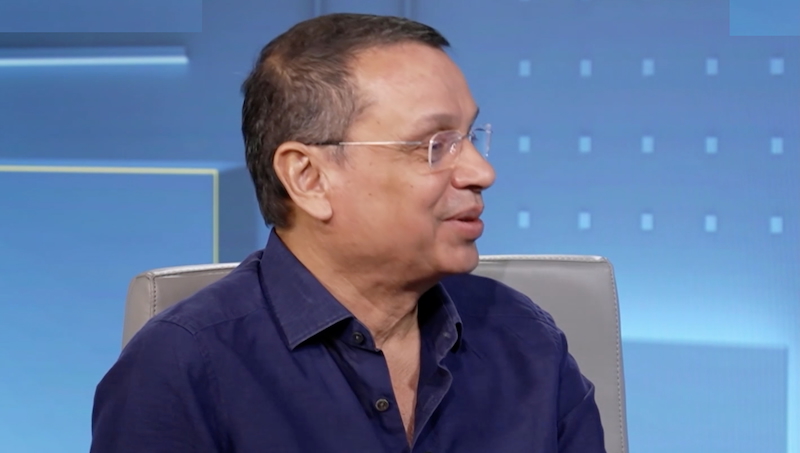
    MUMBAI: JioStar India’s JioHotstar  has reached a milestone of 200 million paying subscribers, making it “one of the biggest streaming services anywhere in the world,” according to vice-chairman Uday Shankar. The rapid subscriber growth since JioStar’s merger validates the company’s belief that “Indians are willing to pay” for content, albeit at “very aggressive” pricing.

    “Our challenge is not to compete with someone. Our challenge is to create a much bigger market,” Shankar said on an interview with BloombergTV’s  Haslinda Amin. “We want to get into every household. We want to be if there is a connected device, we want our content to surface there. We want to be the destination for every Indian who has access to connectivity and data to come in every day for all their requirements of premium content.  “

    The streaming service, backed by billionaire Mukesh Ambani, appears well-positioned to weather global trade tensions. As tariffs roil international markets, JioStar’s “heavily domestic focused” business provides shelter from the storm. “Our consumers are largely Indian. Our content and the driver content, most of it is Indian,” Shankar explained.

    The Indian Premier League (IPL) remains JioStar’s crown jewel, with viewership expected to cross 400-450 million by tournament’s end on  JioHotstar and Star Sports TV channels. However, Shankar views IPL as a “tactical asset” due to its seasonal nature, emphasising the need for year-round content in Indian languages supplemented by Hollywood partnerships.

    While acknowledging potential interest from international investors (read Chelsea club owner Todd Boehly) in IPL teams, Shankar remained coy about JioStar’s future bidding strategy: “We would be very committed to IPL… But then there is a lot of cricket going around, and it finally comes down to the price.”

    Looking ahead, JioStar aims to “consolidate” over the next 12 months by deepening user engagement for its JioHotstar service. “Now that we have got to a sizable number of subscribers, we definitely want to make sure that we get their attention more and more,” said Shankar, though he declined to provide specific subscriber targets beyond the current 200 million. ”Our focus is can we create JioHotstar as an alternative to television as a bouquet, and make sure that we have the attention of everyone every day?”

    With India facing lighter tariff impacts than other nations—26 per cent on some goods, temporarily suspended for 90 days—Shankar expressed optimism about bilateral arrangements between India and the US. Nevertheless, he cautioned that if “global turmoil” continues, “there’ll be impact on consumption, and all of us will be impacted.”

  • Dish TV brings voice search to its app

    Dish TV brings voice search to its app

    MUMBAI: The innovations continue in the pay TV segment. This time it is at DTH provider Dish TV India. One of the pioneers in this ecosystem, has introduced a voice enabled search feature in its MyDishTV mobile app in addition to its already existing search features.

    The company’s tech team has relied on Google’s advanced voice recognition tech and natural language processing functionality, promising a seamless and intuitive experience for users says a company press release. It responds to the home viewer’s voice, offering tremendous convenience.

    The press release adds that “with the voice search, users can effortlessly navigate the application, accessing frequently used sections directly from the home page through simple voice commands. Subscribers will now be able to initiate a range of actions such as ‘recharge my account’ for convenient top-up or ‘change pack’ for a hassle-free subscription modification, among other capabilities. “

    “At Dish TV, we are committed to offering an exceptional entertainment experience to our valued subscribers,” said Dish TV CEO  Manoj Dobhal.  “As we strive to deliver best-in-class services, we recognize the continuous need to enhance user convenience, resulting in the launch of the voice search feature unique feature to make entertainment easily accessible and enjoyable. This feature will certainly redefine the distribution industry’s approach to user-friendliness.”

    The voice search feature is the latest enhancement which, the service provider says, will reinforce MyDishTV app’s status as the preferred choice for viewers by offering comprehensive account management capabilities with the added convenience of voice commands. 

  • ViacomCBS reports $6.871 bn revenue in Q4

    ViacomCBS reports $6.871 bn revenue in Q4

    MUMBAI: ViacomCBS today reported financial results for the quarter and full year ended 31 December. The company’s full year revenue increased 2 per cent, driven by growth in advertising, affiliate and content licensing. Significantly, it reported the first quarterly earnings as a combined company.

    ViacomCBS reported $6.871 billion revenue compared to $7.092 billion in the same quarter of 2018, down by three per cent. The company also mentioned in a press release that transitional Q4 included merger-related expenses. For the full year, it reported revenue of $27.812 billion.

    “In less than three months since completing our merger, we have made significant progress integrating and transforming ViacomCBS. We see incredible opportunity to realise the full power of our position as one of the largest content producers and providers in the world. This is an exciting and valuable place to be at a time when demand for content has never been higher, and we will use our strength across genres, formats, demos and geographies to serve the largest addressable audience, on our own platforms and others,” ViacomCBS president and CEO Bob Bakish commented.

    ‘In 2020, our priorities are maximising the power of our content, unlocking more value from our biggest revenue lines and accelerating our momentum in streaming. With this as a backdrop, we’ve set clear targets for the year and are providing increased transparency around our business to demonstrate ViacomCBS’ ability to create shareholder value today, as we continue evolving and growing our business for tomorrow,” he added.

    In the quarter, affiliate revenue increased one per cent, as strong growth in reverse compensation, retransmission and subscription streaming revenue more than offset declines in the pay TV landscape. Domestic advertising revenue was affected by significant declines in political advertising compared with the prior-year quarter. Domestic Cable Networks’ advertising revenue grew  nine per cent while content licensing revenue declined 11 per cent due to the timing and mix of deliveries.

    On the full year basis, advertising revenue increased two per cent, driven by five per cent growth in domestic advertising sales, reflecting CBS’ broadcasts of Super Bowl LIII and the NCAA Division I Men’s Basketball Tournament’s national semifinals and championship games, as well as higher revenues from Advanced Marketing Solutions which includes Pluto TV, partially offset by lower political ad spend.

    Affiliate revenue grew three per cent, fueled by 20 per cent growth in reverse compensation and retransmission, as well as strong subscription streaming revenue, which more than offset declines in pay TV subscribers.

    Content licensing revenue rose five per cent, reflecting higher revenues from licensing library and original production to third parties. Domestic streaming and digital video business – which includes subscription revenue and digital video advertising – generated approximately $1.6 billion in revenue.

  • Canadians will double up on pay-TV

    Canadians will double up on pay-TV

    MUMBAI: More than 2.5 million Canadian households will have multiple TV subscriptions, paying for TV through a traditional distributor and at least one other OTT (over-the-top) TV service, up over 150% from 2012 levels. By the end of 2014, the number of households that will pay for a second basket of TV content will be more than 100 times greater than the number of households that have cut the cord in 2013, and cancelled their subscription TV, according to Deloitte’s 2014 Technology Media & Telecommunications (TMT) Predictions report.

    For more than a decade, Deloitte’s TMT Predictions have provided advance insights into the implications of what’s to come in technology, media and telecommunications. Deloitte’s TMT Predictions are based on global research including in-depth interviews with clients, industry analysts, global industry leaders and more than 8,000 Deloitte member-firm TMT practitioners.

    “As more and more content owners, aggregators and platforms such as cable, telecom and satellite providers make their content available online through subscription, the number of Canadian households with multiple subscriptions will rise,” said Duncan Stewart, Deloitte’s Director of Research for TMT. “So far, at least, the cord-stackers are running far ahead of the cord-cutters. Households will want the best quality and an abundance of content which will have an impact on bandwidth and put upward pressure on monthly download allowances.”

    Organizations that offer apps, content and services will have a greater opportunity to win a share of the consumer’s wallet as Canadians double up, or even triple up, on TV subscriptions. With global combined sales of PCs, smartphones, tablets, TVs and computer gaming equipment plateauing in 2014, technology spending may shift from hardware to the software, content and services categories.

    Seniors close the smartphone generation gap

    Based on current data and projections, Deloitte predicts that market adoption for PCs, tablets, TVs, computer gaming equipment and smartphones may be saturated and global sales for the combined revenues of these top selling devices will level off, but the opportunity for smartphone adoption will be amongst seniors 65 years and older. Currently less than 30% of seniors own a smartphone in the developed world, and the number will rise 50% in 2014. Deloitte also predicts the smartphone generation gap will continue closing and will possibly be non-existent by 2018. But some things may not change: 30% of those over 65 who own a smartphone have never downloaded an app.

    “The change in the physical form of the smartphone is key to why seniors will embrace the device more and more,” said Richard Lee, a TMT Consulting Partner. “Smartphone screen sizes have increased from smaller than 3.5-inches to at least 4-inches. The larger screen size provides improved functionality and experience for everyone, especially seniors.”

    The appeal of larger screens will also mean growth in the adoption of phablets. Devices boasting screen sizes between 5.0 and 6.9-inches diagonally will represent a quarter of smartphone sales worldwide, but Canadian sales will likely be lower: 15-20% of smartphones, or just over a million phablets out of a 6 million annual smartphone market.

    Reduced patient wait times and decreased education and training costs: Deloitte also predicts that technology will reduce patient wait times and decrease the cost of health care by shifting the focus from prevention to early intervention. There will be 75 million eVisits in 2014 in North America, potentially saving over $3 billion compared to in-person doctor visits, and will benefit patients and doctors both for receiving basic diagnoses, and reducing wait times as well as providing better care for remote communities through services like tele-stroke.

    There is long-term potential for Massive Open Online Courses (MOOCs) to disrupt the education market as cash-strapped governments and students face costs associated with education, but not until key challenges are overcome. Enrollment in MOOCs in 2014 is expected to increase by 100%, but a surprising 93% or more of MOOC students fail to complete courses they registered for.

    “MOOCs are an increasingly attractive method of learning and a suitable education and training model.” said Stewart. “There’s a lot of discussion about their potential for university and college education, but the more exciting near term market is MOOCs for enterprise education and on-the-job training.”

    The 10 most important technology, media and telecommunications predictions for Canada:

       1)  Phablet are not a Phad – The lines will blur as phones and tablets converge. Phablets – part phone, part tablet – are smartphones with a screen size of 5.0-6.9 inches. They’re not doomed because of their size: global sales will be 100% higher than in 2013, with 25% of 2014 smartphone sales, or 300 million units, worth $125 billion.

       2)  Wearables: the eyes have it – Global sales for all categories of wearable computers in 2014 will exceed $3 billion. Some wearable devices will be better positioned for success than others, with smart glasses likely to sell 4 million units at a price point of about $500, for a $2 billion market.

       3) Doubling up on pay TV – By the end of 2014, as many as 50 million homes worldwide will pay for TV through a traditional distributor and have at least one other OTT (over-the-top) TV service.

       4) Narrowing the gap: seniors embrace the smartphone – In 2014, the fastest growing demographic for smartphone adoption globally will be individuals who are 65 and older, with 50% increases year-over-year, and resulting in more than 40% of seniors owning a smartphone.

        5)eVisits – In 2014, the global health market will be driven by eVisits, which are an alternative to face-to-face appointments that offer cost savings to public and private health systems, opportunities for improved patient experiences and access to care; as well as reduced wait times. 100 million eVisits in 2014, with 75 million in North America, saving as much as $3 billion.

        6)MOOCs (short term/long term) – Enrollment in Massive Open Online Courses (MOOCs) will be up 100% compared to 2012 to over 10 million courses, but they will not disrupt the tertiary education market in 2014, with fewer than 5% completing their courses. But the enterprise market looks like it will be an early adopter, both in Canada and globally.

        7)Death of the voice call – but only for some – The proliferation of smartphones, data plans and full-featured messaging apps is expected to create a category of voice seldoms. In 2014, the 20% of Canadian cellular customers who log the fewest minutes of voice calls will spend less than two minutes per day talking on their phones. Instead, many are letting their fingers do the talking through various text messaging applications.

        8)Those who like TV like it a lot – By the end of 2014, the 20% of English-speaking Canadians who watch the fewest minutes of traditional TV will watch just over 30 minutes per day, down from nearly 60 minutes in 2004. At the same time, the one fifth of English Canadians who watch the most traditional TV are predicted to watch even more: 8.2 hours per day, about the same as in 2004, but up 10% from 2009 levels. This decline amongst the first group and the increase amongst the group who watch the most TV will have virtually no effect on the average English Canadian TV viewing of 3.8 hours per day. Demographic commonalities are found in TV viewing behaviours by age, language and ethnicity and even by income and education, which means that advertisers will have the opportunity to better target the audience they want to reach.

        9)The Converged Living Room: a plateau approaches – Global combined sales of smartphones, tablets, PCs, TV sets and gaming consoles have enjoyed remarkable growth since 2003, almost 12% per year, but Deloitte predicts a plateau in growth is imminent. Sales will grow at a slowing rate with a ceiling of about $800 billion a year.

      10)  TV sports rights: extra premium – The global value of premium sports video rights will increase by 14% in 2014, compared to growth of 5% from 2009-2013. This surge will be led by North American sports leagues, including the recent Canadian NHL announcement, and European soccer.

    Deloitte’s TMT predictions will be showcased in a 12-stop Canadian road show with events starting on January 14. Sign up to attend an event here. Visit to learn more about Deloitte’s TMT Predictions 2014.

  • TRAI orders MSOs and payTV b’casters to file interconnect agreements

    TRAI orders MSOs and payTV b’casters to file interconnect agreements

    NEW DELHI: There has been a hue and cry over the last month or so that broadcasters and MSOs have been extremely slothful in signing channel agreements with each other. The Telecom Regulatory Authority of India has taken note of this and asked all of them to furnish the names of the MSO or the service provider with whom the interconnection agreement has been entered into along with the service area covered and the validity period of the said agreement by the week beginning 13 May.

    The directives were sent individually to all pay broadcasters/ aggregators and MSOs on 6 May.

    TRAI has also directed the pay broadcasters/aggregators and MSOs to produce in writing the terms and conditions of their interconnection agreements with MSOs or other service providers wherever they are is providing cable television services through digital addressable systems (DAS).

    The direction has been sent under section 13, read with sub-clauses (ii), (iii), (iv) and (v) of clause (b) of sub-section (1) of section 11 of the Telecom Regulatory Authority of India Act 1997 for implementation of Digital Addressable Cable TV Systems.

    Regulation 5(3) of the regulations provides that every broadcaster has to, within a period of thirty days from the date of receipt of request from the multi system operator, enter into an interconnection agreement or modify the existing interconnect agreement in accordance with the terms and conditions of the Reference Interconnect Offer published under these regulations or as may be mutually agreed.

    Regulation 5(6) provides that it shall be mandatory for the broadcasters of pay channels to reduce the terms and conditions of the interconnection agreements into writing; and Regulation 5(7) provides that no broadcaster of pay channels shall make available signals of TV channels to any multi system operator without entering into a written interconnection agreement.

    Prior to this notice, TRAI had held meetings with broadcasters and MSOs on 22 March, 2 April, 12 April and 18 April on issues relating to implementation of the phase II of implementation of DAS systems wherein the broadcasters and MSOs were asked to expedite the signing of interconnection agreements and submission of the information of the same to the Authority.