Tag: Paytm

  • Demonetisation: Paytm & SBI most talked about on Twitter and Insta

    Demonetisation: Paytm & SBI most talked about on Twitter and Insta

    MUMBAI: It’s been close to a month since PM Narendra Modi announced the demonetisation of higher currency notes and the buzz around the topic hasn’t receded still. After all, several sections of the market remain affected by the scarcity of liquidity in the economy.

    While the country debates on whether the move has been successful in curbing black money or not, one thing is for certain, it caught everyone’s attention.

    Maxus Kaleidoscope has released data that reveals the location-wise mood of India from Twitter and Instagram.

    The conversations were mapped  between the 8 to the 24 of Nov 2016 by when we would get a clear picture of the how the initial euphoria of the demonetization panned out over time.

    Location based Tweets and Instagram Posts oscillated largely between Action oriented and Calm Moods in the fortnight since the demonetization from an All India basis. Calm moods were dominant in the North Eastern states of Mizoram and Meghalaya as depicted in the map below.

    Nearly 5 Lakh conversations on Twitter & Instagram made up the top 10 trending topics. Demonetization accounted for 6 of the top 10 trending topics since the announcement, of which the PM accounted for half of the trending topics. #IamwithModi and #Modi were the topics that made up for 19% of the conversations within the top 10 trends. Cricket shared a bit of the spotlight from demonetization thanks to the ongoing England-India test series.
    public://Demonetisation Mood Mapping by Maxus (1)_0.jpg

    Brands too shared some of the light light that demonetization drew. A total of 23 brands of were linked to the top 10 trending topics during the past fortnight. These brands factored in slightly over 30 per cent of the total conversations. PayTM  leading the bunch (avg. 53% association) and SBI (avg. 16% association) carved out the larger part of the Brand Share of Conversation.
    public://Demonetisation Mood Mapping by Maxus (2)_0.jpg

    The top 5 metros reflected similar patterns of Moods where Action dominated the moods however there were some days especially like 17 Nov in Delhi when the expression of Calm gave way to Action. Additionally Tamil Nadu showed a blip towards Anxiety on the 18, 19 and 21 Nov 2016 when subsequent announcements of the demonetization easing by the government and news of the CM Jayalalithaa seemed to have driven up the specific mood.

    public://Demonetisation Mood Mapping by Maxus (3).jpg

    public://Demonetisation Mood Mapping by Maxus (4).jpg

    public://Demonetisation Mood Mapping by Maxus (5).jpg

    public://Demonetisation Mood Mapping by Maxus (6).jpg

    public://Demonetisation Mood Mapping by Maxus (7).jpg

    According to Maxus Kaleidoscope’s mapped data over Twitter and Intagram, there is a sense of patient restraint in cities across India as the demonetization moves on into the 3rd week and nears the critical end of the month period when cash flows really come into play.
     

  • Day-long cash queues activate Jugnoo digital & MobiKwik transfers

    Day-long cash queues activate Jugnoo digital & MobiKwik transfers

    MUMBAI: Yours digitally — seems to be the new salutation. Owing to demonetisation, queues outside banks and ATM centres only seem to get longer. With people trying to exchange their old currency, the use of debit and credit cards has suddenly come into prominence.

    Keeping the demand in mind, MobiKwik has announced that it is prepared to serve over 300 million users with secure, seamless payments. The company already has over 35 million users and is witnessing over 40 per cent more app downloads on a daily basis. It hopes to have over 10 million users on its platform within the next 30 days alone.

    “We have scaled up our infrastructure within the last few days and are prepared to manage over 300 million users and over 100 million daily transactions,” said MobiKwik co-founder Upasana Taku. The company has launched a user support number that is operational 24×7. Users can call to download MobiKwik app and start sending or receiving money for free. It has registered 18 x growths in transactions since the announcement of demonetization.

    Users can load money using their credit/debit cards or netbanking. They can also convert their Payback points, earned from ICICI bank debit/credit cards, Big Bazaar, Central, HP Petrol Pumps, MakeMyTrip, eBay, BookMyShow and American Express; and reward points earned from SBI, Bank of India, Punjab National Bank, Central Bank, Canara Bank, Union Bank & Bank of Baroda to MobiKwik cash.

    MobiKwik money can be transferred to any mobile number or bank account instantly. Whereas, Jugnoo has witnessed an unprecedented growth in transactions executed using digital wallets. The leading auto-rickshaw aggregator, which is currently operational in over 40 Indian cities, has registered an increase of up to 80 percent cashless transactions across all locations via its platform.

    The top five cities where Jugnoo has registered the highest number of cashless payments post the demonetization announcement are: Gurgaon, Mysore, Chandigarh, Noida, and Pune. These cities have recorded 100 to 150 per cent spike in digital transactions.

    “We welcome the government’s move to demonetize high denomination currency in an effort to curb the entry of black money in India, and by extension, encourage the masses to go digital. At Jugnoo, We have always advocated safe & secure cashless transactions as it provides convenience and eliminates the cash handling process. We are educating our customers to use digital payment wallets as much as possible instead of cards or cash, and are encouraging them to use such options on a permanent basis,” said Jugnoo co-founder and chief technology officer Chinmay Agarwal.

    Apart from digital wallets, Jugnoo also recently announced that it would be introducing UPI (Unified Payment Interface) as an initiative to uphold the cashless economy of country. Earlier this year, the company took another step in this direction via a very innovative move of empowering auto-rickshaw drivers to recharge the customers’ Paytm wallet to address the issue of returning change after completing the ride. Further supporting the cause, Jugnoo is also planning to tie-up with Payment banks, a new model of banks conceptualized by the RBI (Reserve Bank of India) last year that enable transfer of money through a mobile phone.

    “We have tried to go cashless since the outset as it provides convenience to both customers and us. Coincidentally we were celebrating the month as NoChangeNovember to educate the customers towards the cause. However, we did have the COD (Cash on Delivery) option due to the nature of our business and the Indian customer’s preference for cash payment. Following the recent development in demonetized bank notes, we have informed all our drivers to stop accepting cash till further notice, and are also educating our customers to use digital wallets as much as possible instead of plastic cards or cash,” he added further.

    The most common digital wallets that are being presently used by Jugnoo users to make payments are – Paytm, Mobikwik, and Freecharge.

  • Day-long cash queues activate Jugnoo digital & MobiKwik transfers

    Day-long cash queues activate Jugnoo digital & MobiKwik transfers

    MUMBAI: Yours digitally — seems to be the new salutation. Owing to demonetisation, queues outside banks and ATM centres only seem to get longer. With people trying to exchange their old currency, the use of debit and credit cards has suddenly come into prominence.

    Keeping the demand in mind, MobiKwik has announced that it is prepared to serve over 300 million users with secure, seamless payments. The company already has over 35 million users and is witnessing over 40 per cent more app downloads on a daily basis. It hopes to have over 10 million users on its platform within the next 30 days alone.

    “We have scaled up our infrastructure within the last few days and are prepared to manage over 300 million users and over 100 million daily transactions,” said MobiKwik co-founder Upasana Taku. The company has launched a user support number that is operational 24×7. Users can call to download MobiKwik app and start sending or receiving money for free. It has registered 18 x growths in transactions since the announcement of demonetization.

    Users can load money using their credit/debit cards or netbanking. They can also convert their Payback points, earned from ICICI bank debit/credit cards, Big Bazaar, Central, HP Petrol Pumps, MakeMyTrip, eBay, BookMyShow and American Express; and reward points earned from SBI, Bank of India, Punjab National Bank, Central Bank, Canara Bank, Union Bank & Bank of Baroda to MobiKwik cash.

    MobiKwik money can be transferred to any mobile number or bank account instantly. Whereas, Jugnoo has witnessed an unprecedented growth in transactions executed using digital wallets. The leading auto-rickshaw aggregator, which is currently operational in over 40 Indian cities, has registered an increase of up to 80 percent cashless transactions across all locations via its platform.

    The top five cities where Jugnoo has registered the highest number of cashless payments post the demonetization announcement are: Gurgaon, Mysore, Chandigarh, Noida, and Pune. These cities have recorded 100 to 150 per cent spike in digital transactions.

    “We welcome the government’s move to demonetize high denomination currency in an effort to curb the entry of black money in India, and by extension, encourage the masses to go digital. At Jugnoo, We have always advocated safe & secure cashless transactions as it provides convenience and eliminates the cash handling process. We are educating our customers to use digital payment wallets as much as possible instead of cards or cash, and are encouraging them to use such options on a permanent basis,” said Jugnoo co-founder and chief technology officer Chinmay Agarwal.

    Apart from digital wallets, Jugnoo also recently announced that it would be introducing UPI (Unified Payment Interface) as an initiative to uphold the cashless economy of country. Earlier this year, the company took another step in this direction via a very innovative move of empowering auto-rickshaw drivers to recharge the customers’ Paytm wallet to address the issue of returning change after completing the ride. Further supporting the cause, Jugnoo is also planning to tie-up with Payment banks, a new model of banks conceptualized by the RBI (Reserve Bank of India) last year that enable transfer of money through a mobile phone.

    “We have tried to go cashless since the outset as it provides convenience to both customers and us. Coincidentally we were celebrating the month as NoChangeNovember to educate the customers towards the cause. However, we did have the COD (Cash on Delivery) option due to the nature of our business and the Indian customer’s preference for cash payment. Following the recent development in demonetized bank notes, we have informed all our drivers to stop accepting cash till further notice, and are also educating our customers to use digital wallets as much as possible instead of plastic cards or cash,” he added further.

    The most common digital wallets that are being presently used by Jugnoo users to make payments are – Paytm, Mobikwik, and Freecharge.

  • Cyber security can save up to Rs 540 cr each year; Paytm in 10 Indian languages

    Cyber security can save up to Rs 540 cr each year; Paytm in 10 Indian languages

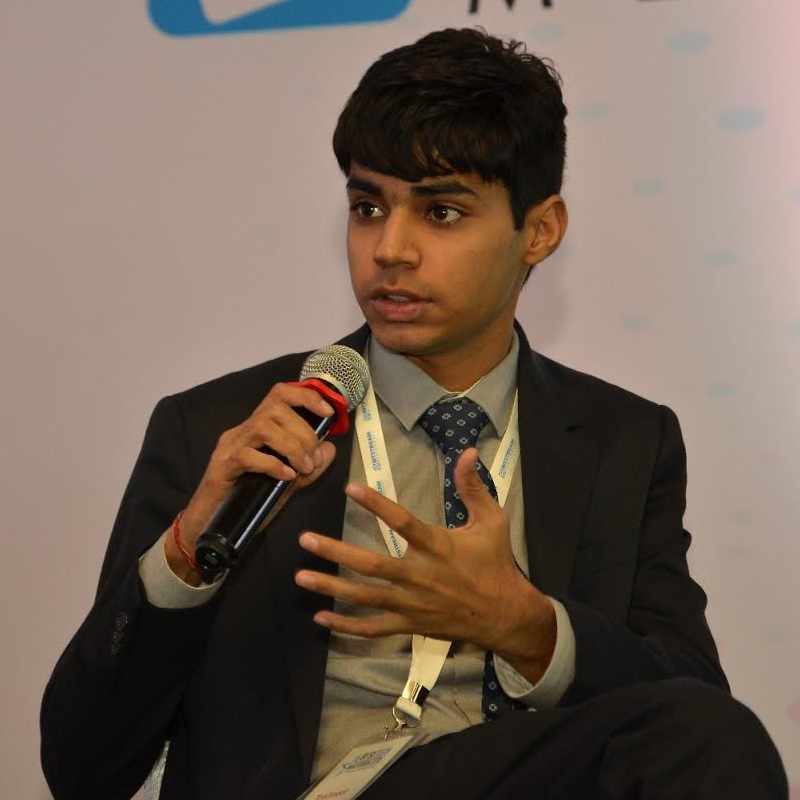
    MUMBAI: As companies increasingly get on to harnessing the benefits of the networked world, overlook the associated threats, said a cyber-security expert and ethical hacker on the lack of awareness around the emerging threats at the BFSI Tech Maestros Awards & Conclave 2016. The expert — TAC Security founder & CEO Trishneet Arora was one of the panelists on the panel at the conclave.

    Paytm meantime is set to unveil its multilingual interface to enable millions of Indians to overcome language barriers and pay and shop in their preferred regional language.

    After the limited demonetization, online transactions have seen a spurt, and the trend is likely to continue. This gives rise to the challenge of ensuring the transactions are safe and secure, the identity of the individuals is not compromised and the organizations operate smoothly. Cyber security experts can play an important role in identifying loop holes and providing a solution.

    Arora said, “Credit card frauds cost banks and credit card companies over US $8 billion (Rs 540 crore) each year. Apart from the Apple Pay fraud, such large-scale mobile wallet frauds have not been witnessed so far, if we discount customer carelessness. However, there is an immense lack of awareness to understand this risk. Several business personalities are not taking cyber threats seriously.”

    “There is only one way to be alert and safe in today’s cyberspace and that rests on knowing your vulnerabilities and patching them before any fraudulent hacker can use it adversely,” he concluded. Recently, details of more than 3.2 million debit cards of some of the banks faced the threat of breach due to hacking.

    The user interface of India’s largest mobile payments and commerce platform on Android will be available in — English and in 10 different regional languages – Hindi, Tamil, Telugu, Gujarati, Marathi, Bengali, Kannada, Malayalam, Oriya and Punjabi. Paytm, which is India’s payments and commerce platform to offer multiple regional language interface, has expanded its reach to over 80% smartphone users in India, who prefer internet-based services in regional languages.

    Paytm senior vice president Deepak Abbot said, “With this new move, we are looking to push our share of customers from tier II and tier III cities from 50% to 70%.”

  • Cyber security can save up to Rs 540 cr each year; Paytm in 10 Indian languages

    Cyber security can save up to Rs 540 cr each year; Paytm in 10 Indian languages

    MUMBAI: As companies increasingly get on to harnessing the benefits of the networked world, overlook the associated threats, said a cyber-security expert and ethical hacker on the lack of awareness around the emerging threats at the BFSI Tech Maestros Awards & Conclave 2016. The expert — TAC Security founder & CEO Trishneet Arora was one of the panelists on the panel at the conclave.

    Paytm meantime is set to unveil its multilingual interface to enable millions of Indians to overcome language barriers and pay and shop in their preferred regional language.

    After the limited demonetization, online transactions have seen a spurt, and the trend is likely to continue. This gives rise to the challenge of ensuring the transactions are safe and secure, the identity of the individuals is not compromised and the organizations operate smoothly. Cyber security experts can play an important role in identifying loop holes and providing a solution.

    Arora said, “Credit card frauds cost banks and credit card companies over US $8 billion (Rs 540 crore) each year. Apart from the Apple Pay fraud, such large-scale mobile wallet frauds have not been witnessed so far, if we discount customer carelessness. However, there is an immense lack of awareness to understand this risk. Several business personalities are not taking cyber threats seriously.”

    “There is only one way to be alert and safe in today’s cyberspace and that rests on knowing your vulnerabilities and patching them before any fraudulent hacker can use it adversely,” he concluded. Recently, details of more than 3.2 million debit cards of some of the banks faced the threat of breach due to hacking.

    The user interface of India’s largest mobile payments and commerce platform on Android will be available in — English and in 10 different regional languages – Hindi, Tamil, Telugu, Gujarati, Marathi, Bengali, Kannada, Malayalam, Oriya and Punjabi. Paytm, which is India’s payments and commerce platform to offer multiple regional language interface, has expanded its reach to over 80% smartphone users in India, who prefer internet-based services in regional languages.

    Paytm senior vice president Deepak Abbot said, “With this new move, we are looking to push our share of customers from tier II and tier III cities from 50% to 70%.”

  • Paytm to hire over 10,000 agents to onboard offline merchants

    Paytm to hire over 10,000 agents to onboard offline merchants

    MUMBAI: Paytm is looking to hire over 10,000 Paytm agents as it seeks to aggressively expand its offline merchant network to over 20 lakh touch-points by the end of the current fiscal year.

    Paytm’s cashless payments are widely accepted across India owing to the ease, convenience and safety they offer. Thanks to the country’s overwhelming response to Paytm, it is setting bolder targets to acquire more offline merchants in the coming months.

    Paytm SVP Amit Sinha said, “As millions of consumers across India have taken to using their Paytm Wallets to transact offline, our biggest opportunity is to be available in every town and city in the country. We want to reach there faster, are looking to further strengthen our onboarding teams as we continue to build India’s biggest payments network.”

    Brick-and-mortar merchants and other online-to-offline sectors present a huge opportunity for Paytm to integrate its fast, secure and convenient payment solution. The company has recently registered unprecedented growth in offline payments. The Paytm platform saw an overwhelming 435% increase in overall traffic within hours of the Prime Minister Narendra Modi announcing his plans to have a corruption-free India. This is a great showcase of how fast consumers across the country are taking to the ease, convenience and safety Paytm’s cashless payments offer.

  • Paytm to hire over 10,000 agents to onboard offline merchants

    Paytm to hire over 10,000 agents to onboard offline merchants

    MUMBAI: Paytm is looking to hire over 10,000 Paytm agents as it seeks to aggressively expand its offline merchant network to over 20 lakh touch-points by the end of the current fiscal year.

    Paytm’s cashless payments are widely accepted across India owing to the ease, convenience and safety they offer. Thanks to the country’s overwhelming response to Paytm, it is setting bolder targets to acquire more offline merchants in the coming months.

    Paytm SVP Amit Sinha said, “As millions of consumers across India have taken to using their Paytm Wallets to transact offline, our biggest opportunity is to be available in every town and city in the country. We want to reach there faster, are looking to further strengthen our onboarding teams as we continue to build India’s biggest payments network.”

    Brick-and-mortar merchants and other online-to-offline sectors present a huge opportunity for Paytm to integrate its fast, secure and convenient payment solution. The company has recently registered unprecedented growth in offline payments. The Paytm platform saw an overwhelming 435% increase in overall traffic within hours of the Prime Minister Narendra Modi announcing his plans to have a corruption-free India. This is a great showcase of how fast consumers across the country are taking to the ease, convenience and safety Paytm’s cashless payments offer.

  • Paytm’s traffic up by 435 per cent within hours of PM’s announcement

    Paytm’s traffic up by 435 per cent within hours of PM’s announcement

    MUMBAI: Mobile payment platform Paytm is registering massive growth across India within hours of Prime Minister Narendra Modi’s announcing the ongoing ban on Rs 500 and Rs 1000 denomination of notes. The Paytm platform saw an overwhelming 435 per cent increase in overall traffic as millions of consumers across India have taken to using their Paytm Wallets to transact offline.

    The company registered a 200 per cent hike in number of app downloads and 250 per cent surge in number of overall transactions and transaction value. The number of Saved Cards also grew by 30 per cent, pointing at a strong set of repeat customers the platform has now acquired. The company has noted 1000 per cent growth in money added to the wallet and 400 per cent growth in transaction value of offline payments. This is a great showcase of how fast consumers across the country are taking to the ease, convenience and safety Paytm’s cashless payments offer.

    Paytm CFO Madhur Deora said, “This is the biggest and most ambitious step ever to crack down on black money and fake currency. We stand by the government in its efforts towards taking black money out of the equation and offering a major boost to the Indian economy. Since Paytm is fast becoming synonymous to all kinds of payments, we are happy to announce we have registered a strong surge in volume on our platform.”

    Paytm’s cashless payments are widely accepted across India owing to the ease, convenience and safety they offer. Brick-and-mortar merchants and other Online-to-Offline sectors present a huge opportunity for Paytm to integrate its fast, secure and convenient payment solution. With the country’s overwhelming response to Paytm, it is setting bolder targets to achieve its goal of helping India’s transition into a cashless economy.

  • Paytm’s traffic up by 435 per cent within hours of PM’s announcement

    Paytm’s traffic up by 435 per cent within hours of PM’s announcement

    MUMBAI: Mobile payment platform Paytm is registering massive growth across India within hours of Prime Minister Narendra Modi’s announcing the ongoing ban on Rs 500 and Rs 1000 denomination of notes. The Paytm platform saw an overwhelming 435 per cent increase in overall traffic as millions of consumers across India have taken to using their Paytm Wallets to transact offline.

    The company registered a 200 per cent hike in number of app downloads and 250 per cent surge in number of overall transactions and transaction value. The number of Saved Cards also grew by 30 per cent, pointing at a strong set of repeat customers the platform has now acquired. The company has noted 1000 per cent growth in money added to the wallet and 400 per cent growth in transaction value of offline payments. This is a great showcase of how fast consumers across the country are taking to the ease, convenience and safety Paytm’s cashless payments offer.

    Paytm CFO Madhur Deora said, “This is the biggest and most ambitious step ever to crack down on black money and fake currency. We stand by the government in its efforts towards taking black money out of the equation and offering a major boost to the Indian economy. Since Paytm is fast becoming synonymous to all kinds of payments, we are happy to announce we have registered a strong surge in volume on our platform.”

    Paytm’s cashless payments are widely accepted across India owing to the ease, convenience and safety they offer. Brick-and-mortar merchants and other Online-to-Offline sectors present a huge opportunity for Paytm to integrate its fast, secure and convenient payment solution. With the country’s overwhelming response to Paytm, it is setting bolder targets to achieve its goal of helping India’s transition into a cashless economy.

  • Paytm is Forbes India’s ‘Outstanding Startup for the Year’

    Paytm is Forbes India’s ‘Outstanding Startup for the Year’

    MUMBAI: Paytm, the Noida-based e-commerce platform which would be the biggest gainers of the government decision to scrap Rs 500 and Rs 1000 notes, has pocketed the ‘Outstanding Startup for the Year’ award at the Forbes India Leadership Awards (FILA) here yesterday. India Inc’s brightest, biggest and bravest entrepreneurs were honoured at FILA.

    Lupin’s Vinita & Nilesh Gupta won Forbes India ‘Entrepreneur for the Year 2016’ award and YK Hamied was conferred the Lifetime Achievement award.

    The awards across nine categories acknowledged the outstanding contributions of CEOs, entrepreneurs and business leaders who have built enterprises that have had a deep and enduring impact on the economy and the wider society.

    “As chroniclers of entrepreneurial capitalism, Forbes India has been celebrating leadership for years. FILA is a one important way we do this where we honour a set of such inspirational business leaders. Now in its sixth year, the awards celebrate those who, by their actions, have made a difference to their organisations, their employees and also to the business segments in which they operate,” said Forbes India editor Sourav Majumdar.

    The achievements of this year’s winners assume significance since many of the business leaders felicitated have braved difficult local and global economic conditions to steer their organisations towards operational excellence.

    Winners of the FILA 2016:

    Outstanding Startup for the Year
    Vijay Shekhar Sharma – Paytm

    Nextgen Entrepreneur for the Year
    Pranav Amin & Shaunak Amin – Alembic Pharmaceuticals

    Entrepreneur with Social Impact
    P Namperumalsamy – Aravind Eye Care System

    Conscious Capitalist Company for the year
    Mahindra Finance

    Best CEO – Multinational Company
    Kenichi Ayukawa – Maruti Suzuki India

    Best CEO – Public Sector
    Sutirtha Bhattacharya – Coal India

    Best CEO – Private Sector
    KBS Anand – Asian Paints

    Lifetime Achievement Award
    Yusuf K Hamied – Cipla

    Entrepreneur for the Year
    Vinita Gupta & Nilesh Gupta – Lupin

    The selection process started with an extensive research along qualitative and quantitative parameters. The long list of nominees for each category was narrowed down to a strong set of three to five nominees per category. A jury headed by Harsh Mariwala, chairman of Marico Ltd, examined the nominations and selected the winners.

    Other members of the jury were — AZB & Partners founder and senior partner Zia Mody, TeamLease Services co-founder and chairman Manish Sabharwal, McKinsey India managing director Noshir Kaka, KKR India managing director Sanjay Nayar, and Omidyar Network partner and Omidyar Network India Advisors managing director Roopa Kudva.

    KPMG, Forbes India’s knowledge partners for the event, helped with the
    nomination process.

    Transformational leadership, which the 2016 edition of the Forbes India Leadership Awards seeks to honour, includes individuals and organisations who have achieved success through their vision, foresight, and business ethics.