Tag: payments

  • Dushyant Panda takes charge as VP marketing at Razorpay, adds SME business P&L to his plate

    Dushyant Panda takes charge as VP marketing at Razorpay, adds SME business P&L to his plate

    MUMBAI: Dushyant Panda has been elevated to vice president, marketing at Razorpay, while also taking the reins of the fintech giant’s SME business P&L. Known for blending brand-building brilliance with business acumen, Panda will now spearhead central marketing and drive growth across Razorpay’s core verticals—including Payments, POS, Engage, and Cross Border.

    In his new role, Panda wears multiple hats: brand custodian across units, growth leader for digital and performance marketing, and business builder with full ownership of SME revenues. He now commands the entire product marketing and creative ecosystem, bringing scale, swagger and sharp positioning to every Razorpay launch.

    Before this, he served as senior director, leading marketing for payments and the SME vertical. Panda joined Razorpay in 2021, quickly climbing the ranks from director of emerging business to now owning the company’s full-stack growth engine.

    A NestAway veteran and Kadence research alumnus, Panda began his career decoding consumer insights in southeast Asia. Now, with Razorpay’s rocket ship under his command, he’s out to turn marketing into a “true growth engine”—in his own words, “why settle for just one challenge?”

    The industry will be watching as Panda attempts to do what marketers rarely get to—run both the story and the store.

  • WhatsApp Pay goes live in India

    WhatsApp Pay goes live in India

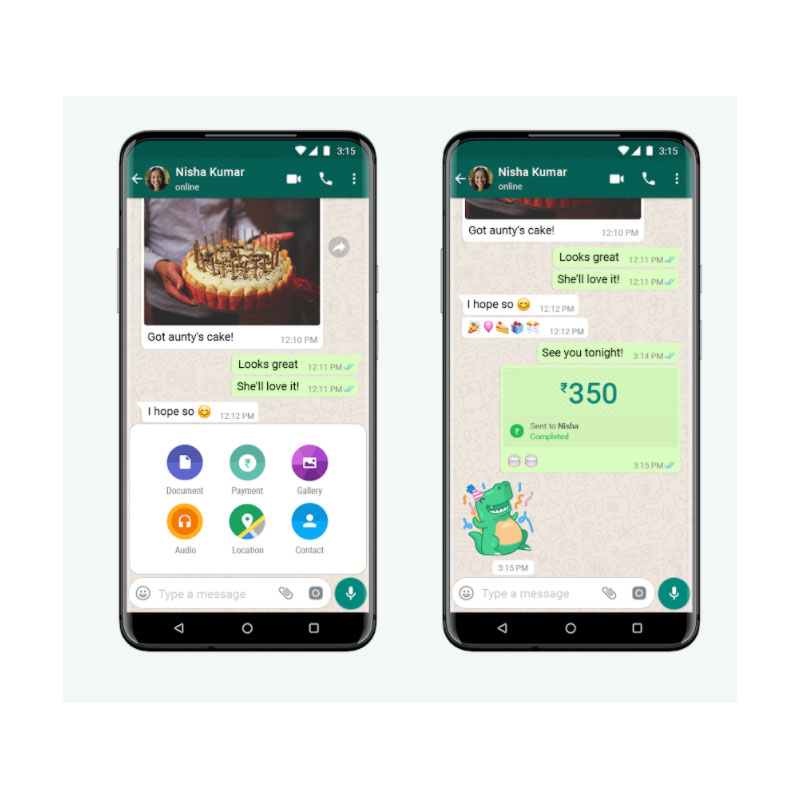
    KOLKATA: In what could be a turnaround for India’s payments market, WhatsApp Pay has gone live today. WhatsApp’s parent company Facebook has been developing the payment feature for a while now, but regulatory hurdles were not easy to overcome.

    The WhatsApp payment feature has been designed in partnership with the National Payments Corporation of India (NPCI) using the Unified Payment Interface (UPI). To carry out transactions via the messaging app in India, it’s necessary to have a bank account and debit card. WhatsApp sends instructions to banks that initiate the transfer of money via UPI between sender and receiver bank accounts. People can send money on WhatsApp to anyone using a UPI supported app.

    The Indian digital payments market is already saturated with homegrown platform Paytm, big players like Google Pay, PhonePe, Amazon Pay, as well as a dozen other start-ups. But an enormous growing user base of 400 million, and a market value projected to reach $1 trillion in the next three years inspires confidence of having more than a fighting chance among new entrants like WhatsApp. Plus, the messaging app already enjoys immense popularity in the country, which also happens to be its largest market.


    “In the long run, we believe the combination of WhatsApp and UPI’s unique architecture can help local organizations address some of the key challenges of our time, including increasing rural participation in the digital economy and delivering financial services to those who have never had access before,” the company stated in a blog post.

    Just like every feature in WhatsApp, payments is designed with a strong set of security and privacy principles, including entering a personal UPI PIN for each payment, the app’s developers added. Payments on WhatsApp is now available for people on the latest version of the iPhone and Android app.

  • MobiKwik elevates Chandan Joshi as co-founder & CEO of payments business

    MobiKwik elevates Chandan Joshi as co-founder & CEO of payments business

    NEW DELHI: Fintech platform MobiKwik has promoted Chandan Joshi as the company’s co-founder and CEO, payments business.

    Joshi has been part of the MobiKwik leadership team for the last 2.5 years as senior vice president, payments, managing all the payment businesses of the company. This is the first time the company has bestowed the co-founder title on anyone outside the original founding team.

    Chandan is now the third co-Founder of MobiKwik in addition to Bipin Preet Singh and Upasana Taku. With this appointment, the fintech platform has kick started its IPO 2022 campaign.  

    Read more news on MobiKwik

    As CEO payments business, Chandan he will take on complete ownership of the company’s flagship payments business which drives 75 per cent of the revenues. While he was already driving the business (sales, marketing, product, engineering) in his existing role, all functions in the Payments BU will now report into him.

    Joshi said, “My journey with MobiKwik so far has been very fulfilling – I joined in the aftermath of Demonetization and my first assignment was organizing the retail payments business, then to run eCommerce payments and finally to grow all of the Payments business. The team and culture at MobiKwik have been a good fit for me. I share a good rapport with Upasana and Bipin and share their vision of delivering on the Digital Credit Card opportunity. I am confident that together we will be able to profitably grow MobiKwik and take the company public.”

    Singh says, “It has been fantastic seeing Chandan build the Payments Business for the past 2 years with amazing zeal and conviction. 

    Chandan has demonstrated all the right traits that we look for in a business leader – he leads from the front, is invested in his teams, is tenacious in driving business results and in closing large strategic deals. He has been a strong growth driver for MobiKwik and we want him to partner with us as a co-founder in the overall build-out of the company.”

    Chandan’s professional journey so far has prepared him well for his role at MobiKwik. Chandan returned to India in 2015 and founded Paketts, an innovative last mile logistics service company. He successfully exited the business after Paketts was acquired by Nuvo Logistics (Peppertap) in 2017. Prior to being an entrepreneur, Chandan was a financial trader in global financial markets with Credit Suisse in London & Hong Kong. Chandan did his Engineering from IIT Delhi and his MBA from London Business School.

    MobiKwik has reported strong financial results: net revenue growth of 133 per cent year over year to Rs 379 crores and cash EBITDA loss reduction of 91 per cent year over year to Rs 8.5 crores. In the report, the brand has spoken passionately about fulfilling a Billion Indian Dreams by making an everlasting impact on Bharat with our digital payment and fintech products. Having delivered three straight years of greater than 100 per cent revenue growth amid stiff competition, MobiKwik claims to have demonstrated strong execution and financial discipline.


  • Surcharge removed for card and online payments for government services

    Surcharge removed for card and online payments for government services

    MUMBAI: In a major development, no surcharge for card and online payments has been removed for government services.

    A government notification to this effect follows a recent cabinet note in which towards the government has suggested removal of the surcharge as its commitment towards less cash economy, formulating a differentiated MDR framework, introduction of a formula linked acceptance infrastructure for different stakeholders, and incentivizing digital transactions.

    The government has also suggested mandating payments beyond a prescribed threshold only in card/ digital mode, rationalization of telecom service charges for digital financial transactions; promotion of mobile banking; and creation of necessary assurance mechanisms for quick resolution of fraudulent transactions and review the payments ecosystem in the country.

    The majority of these recommendations had been made by the Internet and Mobile Association of India (IAMAI) and Payments Council of India (PCI).

    The Association has welcomed the positive and comprehensive steps taken by the government. It expressed the hope that a speedy implementation of all these recommendations will usher in more accountability, transparency and efficiency in the economy. 

    The industry body in its recommendations to the Finance Ministry – ‘Draft Proposal for Facilitating Electronic Transactions’ – had focused on government departments bearing MDR cost like other merchants, differentiated MDR framework for certain cash dominated sectors, having significant ticket sizes and generating considerable volumes of transactions, installing POS devices in proportion to cards issued and incentivizing the customers and merchants for adoption electronic payments among other things.

  • Surcharge removed for card and online payments for government services

    Surcharge removed for card and online payments for government services

    MUMBAI: In a major development, no surcharge for card and online payments has been removed for government services.

    A government notification to this effect follows a recent cabinet note in which towards the government has suggested removal of the surcharge as its commitment towards less cash economy, formulating a differentiated MDR framework, introduction of a formula linked acceptance infrastructure for different stakeholders, and incentivizing digital transactions.

    The government has also suggested mandating payments beyond a prescribed threshold only in card/ digital mode, rationalization of telecom service charges for digital financial transactions; promotion of mobile banking; and creation of necessary assurance mechanisms for quick resolution of fraudulent transactions and review the payments ecosystem in the country.

    The majority of these recommendations had been made by the Internet and Mobile Association of India (IAMAI) and Payments Council of India (PCI).

    The Association has welcomed the positive and comprehensive steps taken by the government. It expressed the hope that a speedy implementation of all these recommendations will usher in more accountability, transparency and efficiency in the economy. 

    The industry body in its recommendations to the Finance Ministry – ‘Draft Proposal for Facilitating Electronic Transactions’ – had focused on government departments bearing MDR cost like other merchants, differentiated MDR framework for certain cash dominated sectors, having significant ticket sizes and generating considerable volumes of transactions, installing POS devices in proportion to cards issued and incentivizing the customers and merchants for adoption electronic payments among other things.

  • FY-15: Facebook revenue grows 43.8%, net income up 25.4%

    FY-15: Facebook revenue grows 43.8%, net income up 25.4%

    BENGALURU: Facebook reported 43.8 per cent growth in revenue for the year ended 31 December, 2015 (FY-2015, current year) at $17,928 million as compared to $12,466 million in FY-2014. The company’s net income attributable to common Class A and Class B stockholders increased 25.4 per cent to $3,669 million (20.5 per cent margin) as compared to $2,925 million (23.5 per cent margin). For the quarter ended 31 December, 2015 (Q4-2105, current quarter), revenue increased 51.7 per cent YoY to $5,841 million as compared to $3,851 million, while net income attributable to common Class A and Class B stockholders more than doubled (up 2.23 times) YoY to $1,555 million (26.6 per cent margin) as compared to $696 million (18.1 per cent margin).

    “2015 was a great year for Facebook. Our community continued to grow and our business is thriving,” said Facebook founder and CEO Mark Zuckerberg. “We continue to invest in better serving our community, building our business, and connecting the world.”

    Approximately 95.3 per cent of Facebook’s revenue came from advertising in the current year as compared to 92.2 per cent in FY-2014, while the rest came from Payments and Other Fees. Please refer to Fig A below for revenue breakup in Advertising and Payments & Other Fees.

    A major portion of Facebook’s advertising revenue (almost 50 per cent) comes from the US and Canada (US-Can), followed by Europe (Eur, about 25 per cent). The Asia-Pacific (APAC) region contributes about 15 per cent, while the Rest of the World (ROW) about 10 per cent. Please refer to Fig 2 below for advertising revenue break-up by user geography.

    Facebook’s Daily Active Users (DAU) in Q4-2015 increased 16.6 per cent YoY to 1038 million from 890 million and increased 3.1 per cent QoQ from 1007 million. The number of Mobile DAUs in the current quarter increased 25.4 per cent YoY to 934 million from 745 million and increased 4.5 per cent QoQ from 894 million.

    Please refer to Fig 3 below. Facebook has the highest number of Daily Active Users (DAU) from ROW followed by APAC , Eur and US-Can respectively in terms of DAU. In other words, US-Canada and Europe’s DAUs, which amount to about 26 per cent, contribute about 75 per cent of Facebook’s advertising revenue, and the ROW and APac’s DAUs contribute about 25 per cent, reflecting higher ARPUs from US-Can, followed by Eur, APac and ROW in descending order.

    The curve B in Fig 3 below signifies the ratio of DAUs to Monthly Average Users (MAU), while curve A indicates the percentage of Mobile DAUs to DAUs.

    >

  • FY-15: Facebook revenue grows 43.8%, net income up 25.4%

    FY-15: Facebook revenue grows 43.8%, net income up 25.4%

    BENGALURU: Facebook reported 43.8 per cent growth in revenue for the year ended 31 December, 2015 (FY-2015, current year) at $17,928 million as compared to $12,466 million in FY-2014. The company’s net income attributable to common Class A and Class B stockholders increased 25.4 per cent to $3,669 million (20.5 per cent margin) as compared to $2,925 million (23.5 per cent margin). For the quarter ended 31 December, 2015 (Q4-2105, current quarter), revenue increased 51.7 per cent YoY to $5,841 million as compared to $3,851 million, while net income attributable to common Class A and Class B stockholders more than doubled (up 2.23 times) YoY to $1,555 million (26.6 per cent margin) as compared to $696 million (18.1 per cent margin).

    “2015 was a great year for Facebook. Our community continued to grow and our business is thriving,” said Facebook founder and CEO Mark Zuckerberg. “We continue to invest in better serving our community, building our business, and connecting the world.”

    Approximately 95.3 per cent of Facebook’s revenue came from advertising in the current year as compared to 92.2 per cent in FY-2014, while the rest came from Payments and Other Fees. Please refer to Fig A below for revenue breakup in Advertising and Payments & Other Fees.

    A major portion of Facebook’s advertising revenue (almost 50 per cent) comes from the US and Canada (US-Can), followed by Europe (Eur, about 25 per cent). The Asia-Pacific (APAC) region contributes about 15 per cent, while the Rest of the World (ROW) about 10 per cent. Please refer to Fig 2 below for advertising revenue break-up by user geography.

    Facebook’s Daily Active Users (DAU) in Q4-2015 increased 16.6 per cent YoY to 1038 million from 890 million and increased 3.1 per cent QoQ from 1007 million. The number of Mobile DAUs in the current quarter increased 25.4 per cent YoY to 934 million from 745 million and increased 4.5 per cent QoQ from 894 million.

    Please refer to Fig 3 below. Facebook has the highest number of Daily Active Users (DAU) from ROW followed by APAC , Eur and US-Can respectively in terms of DAU. In other words, US-Canada and Europe’s DAUs, which amount to about 26 per cent, contribute about 75 per cent of Facebook’s advertising revenue, and the ROW and APac’s DAUs contribute about 25 per cent, reflecting higher ARPUs from US-Can, followed by Eur, APac and ROW in descending order.

    The curve B in Fig 3 below signifies the ratio of DAUs to Monthly Average Users (MAU), while curve A indicates the percentage of Mobile DAUs to DAUs.

    >

  • Comedy man Kapil now gets tax notice

    Comedy man Kapil now gets tax notice

    MUMBAI: Bad news continues to dog India’s funny man Kapil Sharma. The set of his show Comedy Nights with Kapil got burnt to nothing on 25 September, with losses being estimated at between Rs 1 crore to 8 crore.

    Now the standup comic who has put Colors on the comedy show map has been slapped with a service tax evasion notice of Rs 65 lakh by the service tax department.

    Kapil is the creative producer of the show that bears his name along with the Zodiak Entertainment group company SOL Productions and the service tax department says that his production house has collected the tax but not deposited it with the authorities.

    Sharma is reported to have said that he will make good the payments at the earliest after a five hour grilling at the service tax office in Mumbai.