Tag: pay TV

  • After consistent rise, DTH subscribers fall in  Jan-Mar quarter

    After consistent rise, DTH subscribers fall in Jan-Mar quarter

    MUMBAI: After a consistent upward trend, total active DTH pay-TV subscribers in India dropped slightly during the January-March quarter this year. The overall active subscriber numbers dropped to 67.53 million from 67.56 million.

    Telecom Regulatory Authority of India’s (TRAI) quarterly performance indicator indicated that in 2017, six pay DTH operators had added 4.91 million net pay active subscribers reaching the base of 67.56 million.

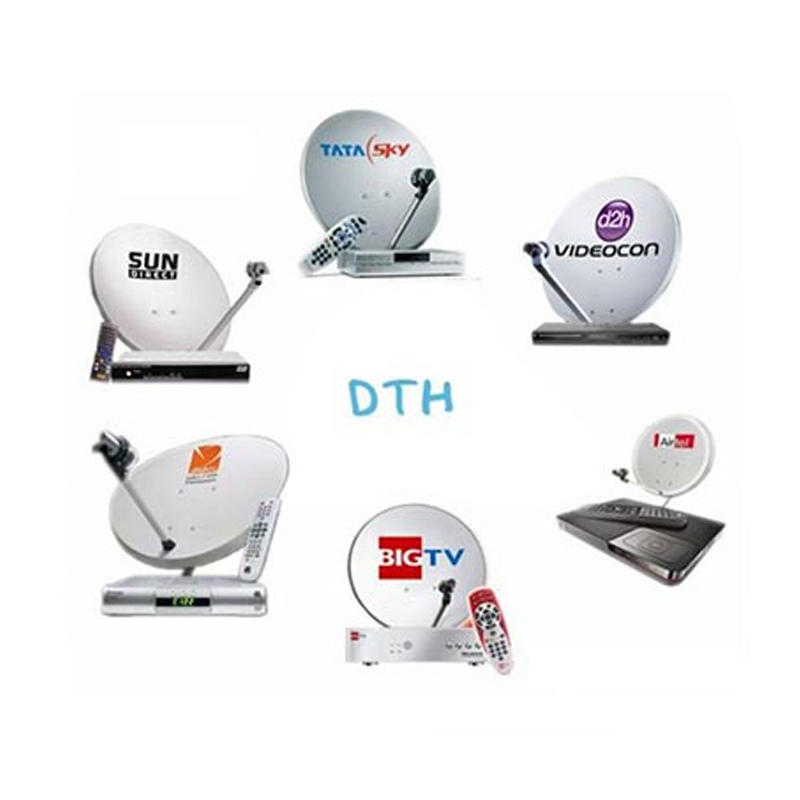
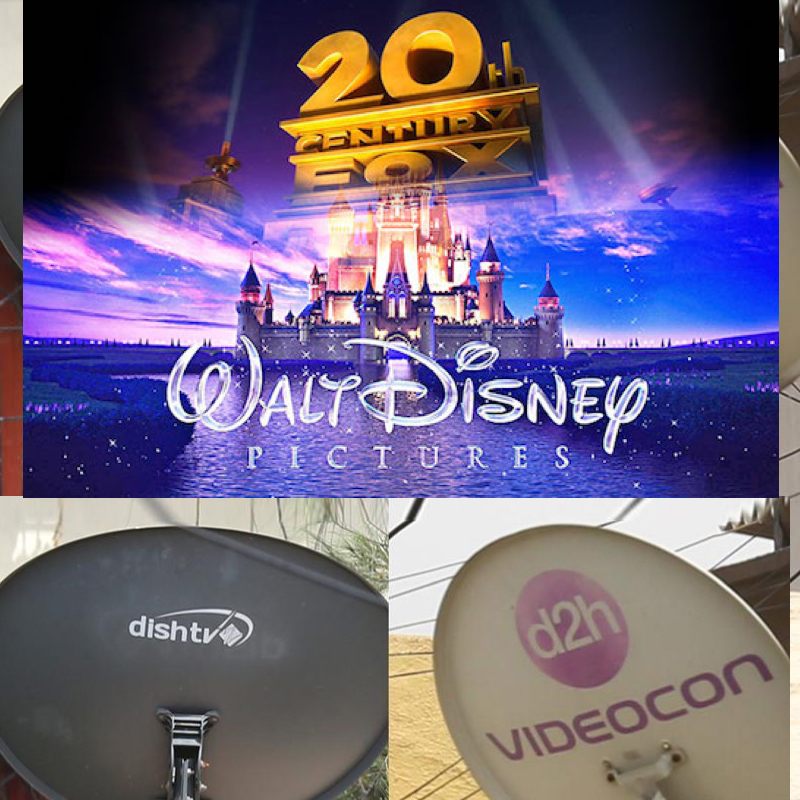
    While there were six DTH players earlier, the merger of Dish TV and Videocon d2h reduced the number to five. Following the merger Dish TV has the lion’s share standing at 43 per cent. Tata Sky (25 per cent), Airtel DTH (21 per cent), Sun Direct (10 per cent) and Reliance Digital TV (one per cent) follow the leader with respective shares. Tata Sky’s share has increased but Reliance Digital TV’s share has dropped.

    The quarter had 308 pay channels including 213 SD pay TV channels and 95 HD pay TV channels as reported by 49 broadcasters. Five new pay channels including Zee Cinemalu HD, Zee Telugu HD, Zee Kannada HD, Colors Tamil HD, and Discovery Jeet HD commenced during the quarter ending 31 March 2018.

    Also Read :

    Uplink, downlink issue: TRAI pushes for a liberal regime keeping most existing norms unchanged

    Third Madras high court judge gives TRAI tariff order thumbs up

  • Traditional pay TV under pressure from OTT services: Horowitz report

    MUMBAI: A recent report from Horowitz Research’s State of Pay TV, OTT and SVOD reveals that three-quarters (76 per cent) of TV content viewers report subscribing to a traditional pay-TV—cable, satellite, or telco—service, down from 86 per cent in 2014.

    According to the study, just 71 per cent of 18-34 year-olds subscribe to a traditional pay-TV service, compared to 75 per cent of 35-49 year-olds and 81 per cent of TV viewers 50+. Although TV viewers are watching more TV content than ever before—the study reveals that TV content viewers report watching an average of 6.5 hours of TV a day—the fact that there are many lower cost services competing for consumers’ video budgets is impacting the perceived cost-benefit ratio of traditional pay-TV.

    74 per cent of cable TV subscribers, 78 per cent of satellite TV subscribers, and 80 per cent of fibre TV subscribers say that they are satisfied with their TV service overall. However, when asked how “worth it” the TV services they subscribe to are cable, satellite, and fibre TV subscribers are less likely to say that their TV service is worth it compared to most over-the-top services, reveals the study.

    public://+.png

    Seventy percent of satellite and fibre subscribers and 62 per cent of cable subscribers say that their service is worth it; between 8-13 per cent say their pay-TV is not worth it. On the other hand, 91 per cent of Netflix subscribers say that Netflix is worth the money, and 83 per cent say that Hulu is worth it. Digital pay-TV providers Sling TV and Hulu with Live TV also fare better than traditional pay-TV, with 79 per cent of Sling TV subscribers and 77 per cent of Hulu with Live TV subscribers saying their service is worth it.

    In addition to exploring the value of TV and video services, the study also asked how interested TV viewers would be in either switching to a service such as this from their cable/satellite/fibre service (if they currently had pay-TV service) or subscribing to one (if they did not currently have pay-TV service). Nearly half (48 per cent) of pay-TV subscribers express interest in a dMVPD (digital MVPD); this rises to 58 per cent among 18-34 year-olds.

    Horowitz SVP of insights and strategy Adriana Waterston says, “The majority of subscribers to over-the-top services like Netflix, Hulu, and Amazon Prime are also multichannel subscribers; a smaller percent of them are cord-cutters and cord-nevers. Those services are essentially VoD ‘on steroids,’ and they have tended to supplement, rather than cannibalise, the services offered by traditional providers.”

    While these data are based on a broad, general description of dMVPDs and may not translate into actual cord-cutting, they do indicate a willingness among consumers to explore these services, and cost plays a major role. Nearly all of those interested in dMVPDs cite the lower cost as a key factor why they are interested in a dMVPD. Beyond cost, the viewing and technology experience that consumers have come to expect from over-the-top services is highly valued and, in many cases, more user-friendly than many traditional MVPDs’ set-top box guides.

    Waterson concludes, “The new dMVPDs do compete directly with traditional providers by offering linear television, including sports and local channels in many markets, DVR service, and other elements of traditional multichannel, but for a lower price and with the app-driven, consumer-friendly OTT experience that has transformed consumers’ expectations about how and where they can access their content. It is incumbent on traditional players to continue to assert their value proposition at the same time as they pivot their businesses to serve consumers’ evolving expectations.”


  • We are becoming more platform and screen agnostic: Sudhanshu Vats

    We are becoming more platform and screen agnostic: Sudhanshu Vats

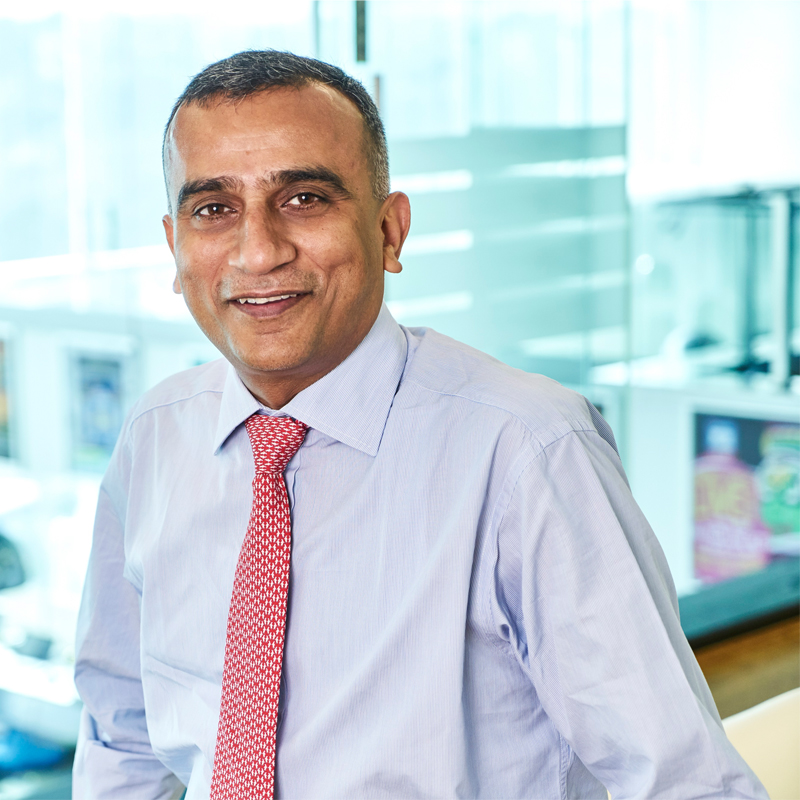
    He heads the youngest Indian network engaged in general entertainment television. Sudhanshu Vats, group CEO, has, over the past six years, steered Viacom18 India into launching a clutch of new channels catering to the different regions of India as well as niche segments. He has built a rock-solid leadership team to run the services, which have been growing at a rapid clip.

    Vats, a former long-serving Hindustan Lever (Unilever India) executive, has also seen the company transition from being a joint venture with global media major Viacom to one which is now majority owned by Mukesh Ambani’s Reliance Industries.

    A thought leader in the industry, he is constantly propagating the message that India is rich with media and entertainment potential at both domestic and international confabs. Vats was at the Media Partners Asia-run APOS in Bali late last month. On stage having a conversation with Vivek Couto, Vats spoke freely on a range of topics right from Viacom18, the Reliance ownership, Voot and the pay TV ecosystem in India. Excerpts from the interview.

    Your views on the pay TV ecosystem in India?

    At one level, the pay TV ecosystem is not developing as well as it should. Partly, all of us, as part of the ecosystem, are to blame. There is lack of addressability. There is lack of customer centricity and customer service attitude with the distribution partners. India being a poor country there will also be a pressure on free to air up to a particular stage.

    My view of the country is that it will be a hybrid ecosystem of both pay and free to air. And, in my opinion, both can exist. But for pay to exist, pay will have to earn its right. And as content players, we are concerned because it’s not going the way we would like it to.

    Free to air is growing and will grow and we need to find models, largely advertising-led models, to make that happen–that piece is okay. But the pay subscription growths are not commensurate–the addressability is not there. Recognition of change of viewership; change of pattern is not there today.

    And I think no better than us, we have leading channels in almost all genres; but our ability to get subscription income is very little. Because it is all dependent on this. Pick up a genre and we have a leading channel. We are not recognising the changes; we are not addressing the customer and not being customer specific.

    How is the Indian television ecosystem faring overall?

    There were two events in India in the last couple of years—GST and demonetisation. They affected ad sales in my opinion. But the good news is that in the last two or three months, it is coming back. We are clearly seeing certain sectors performing very well—FMCG is back and very strongly. Automobile is back in a reasonably big way. Consolidation in telecom will lead to more telecom spends. Handsets are there, they have always been there. Rural economy is also doing quite well. We are seeing a surge in the regional rural pieces quite a lot within our portfolio.

    If you look at Viacom18 per se – I think we have had a pretty good year in FY18, which we closed. We delivered 20 per cent top line growth led by our performance in films as well with Toilet ek Prem Katha. But even in ad sales, we have delivered a mid-teen growth for the year.

    And interestingly this has come at a time when our leading channel Colors was slightly muted because of the impact properties on Colors that came in. It’s the portfolio, which we built that has helped us—its regional, it’s FTA, it’s niche. I personally feel, moving forward, the ad sales will rebound to the levels that India has been used to seeing.

    The ad market will go to mid-teens and some of the better companies may look at doing even high teens.

    How has the change of majority ownership impacted the organisation you head?

    The advantage for us with the consolidation with Reliance is two-fold. Ambition and the things we can do is one big thing today. The second big thing is the resources that can come in which could be of a different level. Because, as a joint venture, we were balancing some of those pieces. Now perhaps we can take concurrent bets as we go forward. So that’s fantastic news for Viacom18. We need to continue to motor on what we have built as a culture that is critical for us. So, if we retain that culture and we bring in that ambition and resources, it’s good news.

    Your digital piece, Voot, how is that faring?

    Voot has been primarily advertising led. The good news here is that we have been growing quite rapidly. We exited March of 2018 at 3X the number we were at March of 2017 on almost all parameters.  So, today, according to App Annie, we are number two in everything which you see after Hotstar. We are number two in downloads; we are number two in active users. We are actually number one sometimes in time spent. We are between one and two in time spent. We have about 35-40 million monthly actives and close to about 45 minutes of watch time.

    The Voot service is doing very well. Interestingly, there is a lot of work which we are doing which is tailored for it. If you look at our content: the breakup of our viewership – if I were to give you an order of magnitude – would be about 60 odd per cent of what you have on television – that’s catchup maybe 60 to 65 per cent. About 20-odd per cent or sometimes 20-22 or 25 per cent is what we call Voot exclusives or content around content. So it is content which is running on television, that is the theme is running on TV – especially non-fiction – and there is a lot of content which is not on television which is shown here. That’s gaining a lot of traction. And finally there are originals and kids. That stacks up the full piece.

    What plans do you have for Voot?

    Our thinking moving forward is that this is just the beginning. It’s an AVOD piece, again advertising is coming in reasonably well from a very small base – we are doubling every year. But what we also do is we’ve built in a freemium layer, for people who are at the higher end where we offer them an ad free environment, maybe additional services—that is the thinking that is there.

    The second thinking that is there is that we are going to do something for Voot Kids. That’s a space we are very bullish on. We want to go well beyond video, we want to well beyond watch, we will go into spaces of watch, learn, play and all that. We are looking at the edutainment piece. You will come into it for entertainment, but you will have light gaming, some number of e-books, some amount of learning or options available to you particularly at the pre-school stage. We are not getting into pedagogy or hard-core education. That’s not the space we want to be in.

    We are looking four to five million daily active users currently. The kind of data you are seeing now is pretty rich. And we are just about beginning to learn to mine that data.
    On the original front, it has been part of our journey. This year you will see us going into overdrive or at least accelerate our originals. You will see a lot more of them in Hindi, you will see them in regional. And as we speak, there is work happening on many of them. We may use some of them to go behind our freemium service as well.

    You seem to have changed your mind on sports as a piece of content? Will Viacom18 drive deeper into sports?

    We have dabbled a bit in sports. We piloted a few things. We actually did the Nidahas Trophy on our channel. We are looking to see if there is a way of putting sports together that may not have cricket. Cricket, as you may know, is with Uday now. We are continuously looking at areas that might be of interest to us.


  • Over 4 million global TV subs added in Q4

    Over 4 million global TV subs added in Q4

    MUMBAI: The informitv Multiscreen Index’s top 100 TV services added a total of 4.33 million pay-TV subscribers in the last quarter of 2017 as compared with 3.70 million in the previous quarter and 4.03 million in the last quarter of 2016. India lead the top 10 services in the Asia Pacific region, which cumulatively added a total of 1.65 million. Dish TV and Videocon d2h, which have since merged, added 360,000 subscribers between them.

    The Multiscreen Index is based on a quarterly survey of 100 leading television services worldwide. Over half of them reported subscriber gains in the last quarter of 2017, but these were largely offset by subscriber losses elsewhere.

    The majority of the gains were once again in the Asia Pacific region, which added 2.35 million subscribers, which is fewer than in the preceding two quarters but about the same number as in the comparable quarter a year previously.

    Satellite services led the worldwide overall gains, adding 1.87 million subscribers worldwide. That is despite DIRECTV losing 147,000 satellite subscribers, which was the largest loss among services in the index.

    “Although there is a popular perception that pay television subscriber numbers are falling, they are continuing to grow worldwide at a rate of around 1 per cent a quarter,” said Dr William Cooper, the editor of the informitv Multiscreen Index. “Much of the growth is in developing economies. Although average revenues are lower, there is still significant potential, with worldwide gains of around 10 per cent forecast over the next five years.”

    “Among the 100 services in the Multiscreen Index, there are almost as many subscribers in the Asia Pacific region as the Americas,” noted informitv analyst Dr Sue Farrell. “The merged Dish TV and Videocon d2h in India now has 29.51 million satellite subscribers, which is more than AT&T has with DirecTV, U-verse and DirecTV NOW combined.”

    The Multiscreen Index comprises 100 multichannel television and video services that collectively account for around 440 million subscribing homes worldwide. The index provides an industry benchmark of the relative performance of television service providers against which customer gains or losses can be measured.

    Also Read :

    Oct-Dec quarter sees highest pay TV DTH subscriber growth in 2017

    MPA forecasts India to lead APAC in ad spend growth


  • Netflix deal will help in customer retention, revenue enhancement: Tata Sky’s Harit Nagpal

    Netflix deal will help in customer retention, revenue enhancement: Tata Sky’s Harit Nagpal

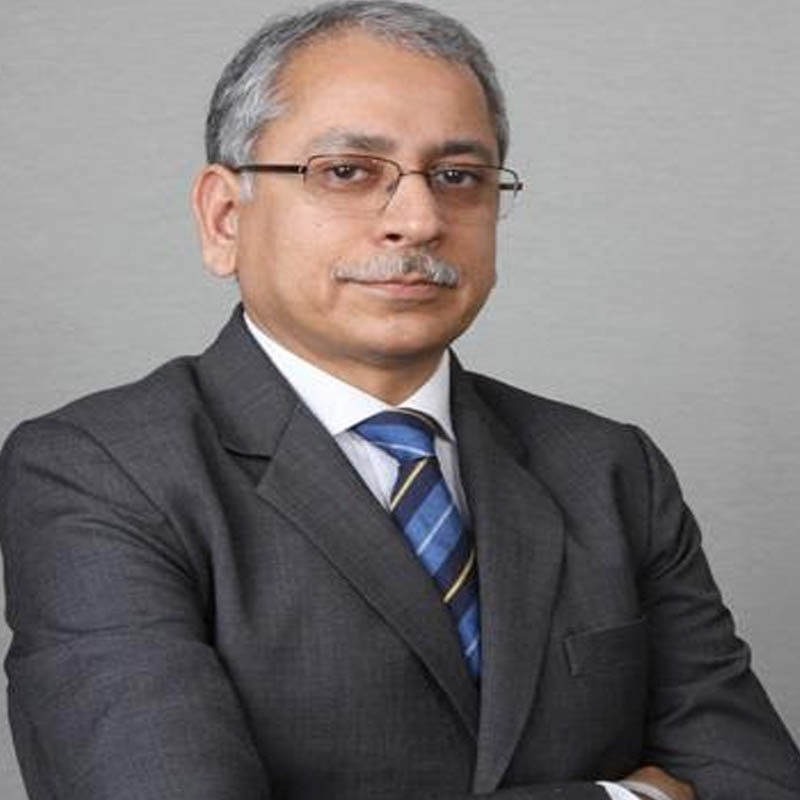
    Tata Sky MD and CEO Harit Nagpal has been a bit of an early mover in terms of innovation and building a world-class satellite TV operation. Whether it has been in the case of HD or VAS or top-notch customer services, Tata Sky has been driving many of the path-breaking initiatives in the DTH sector. Nagpal announced a major strategic partnership with Netflix under which Tata Sky subscribers will be able to watch the world-class streamer’s on-demand content, including TV shows, films and documentaries, in the coming months through the direct-to-home operator’s platforms.

    Nagpal was in APOS Bali and was on stage for a conversation with MPA’s Vivek Couto. He openly spoke about the reasons behind the Netflix partnership, how it will benefit customers, what it means for Tata Sky and how does he see the satellite TV leader continuing with its leadership status. Sources indicate that Tata Sky is generating close to a billion dollars in revenue from about 15 million subscribers. Excerpts from the conversation:

    Why the Netflix tie-up?

    We don’t look at us as satellite TV platforms, we look at ourselves as the equivalent of grocers in this industry that produce and distribute content. We are a distributor part of the content, depending on the customer, whenever he wants to buy wherever he wants to watch we are privileged to provide him that—that was our thinking.

    Some customers of ours—not all, a very small fraction in India—are having access to good quality broadband, which can carry video. Also, they have the capability of paying for the broadband. And third, they don’t have the time to watch when it is broadcast; they’d rather watch it at their time.

    Who are these customers?

    Unlike the western world, where almost everybody falls in this category, in our country, a very small fraction falls in this group. Fortunately, we are providing linear television services to this kind of customers and today there are about 3.5 million such customers who are paying about $10 plus per month on content in a country whose ARPU is much lower. We have two million of these customers. So, it’s been our endeavour to create a platform. Because the lunch is lying in front of me, I would rather eat it rather than wait for someone else to come and eat it. We met Reed (Hastings) and Bill two years ago at their villa in Bali during APOS. And the rest is history.

    How will you differentiate from other service providers and mobile companies?

    We are going to distribute almost everything but not on-demand content like the mobile guys did. Mobile guys could best take a phone and put in five, six, seven eight apps. We were distributing television very differently. We were going to Sony, Star, Zee, Colors and buying content in bulk but providing it to the customer by genres making content discovery easy. That means if a linear TV customer says I don’t have kids, I like music, I don’t like sports, and I speak Malayalam, then I see no reason why he should not be watching on-demand content in the same way.

    It is my job to get all the content from various sources or on demand platforms and make the content discovery as easy as I have made it on the TV screen. We are giving him probably seven days catch-up TV for what he is subscribing on linear. To that you add Netflix, Amazon, Hotstar, YouTube, and whatever else become the prominent apps. You distribute that content via genre and offer it to him for a little over what he is willing to pay for linear TV.

    Is the Netflix addition mostly about ARPU enhancement in India?

    It’s retention and revenue enhancement. We have noticed that a customer when he gets into one of our services, his inclination to churn reduces. To the extent of around 75 per cent. The moment he gets dependent on a DVR, the 12 per cent churn becomes three per cent churn.

    So one more dependency for another service which is OTT will drive down the churn or deactivation even if it is for a short duration. The premium segment which accounts for 15-20 per cent of our base, there is no more price increases you can take on them and hence grow revenue.

    They are also consuming almost every single genre of content that is there. There is no genre to go into and select. We can lure in these guys by giving him additional services.

    Will the tie-up work against Tata Sky? Don’t you fear competition?

    Competitive intensity is good for the industry especially at the stage we are in. We need more high-quality competition to come into this business. I don’t want to run a monopoly because monopolies become very lethargic and they don’t feed the customer and they don’t grow the industry. At this stage, the more, the larger number of good quality competition that comes in it will keep us on our toes it should be there. It will help get good quality of product to the customer and is welcome.

    It’s not going to be a single platform. It’s going to be a combination. Just like a set top box is HD, DVR, SD and all those kinds of things. It’s going to be low cost to high cost. Even the customer price models will be different. You pay upfront a lot and don’t make me subsidise, you pay less per month. You make me subsidise the equipment, you pay me more per month.

    Has not the pay TV market slowed down in India? What about free to air?

    Deceleration is not happening. First of all the pay TV mass in India was not growing. What was happening was the transition from analog cable to digital platforms. If you look at the last five or six years, the pay TV base has not grown tremendously. 50 million people we have migrated from cable TV to DTH. That was growing at a pretty fast pace earlier. In the last two years, it slowed down. First year was because of free to air (FTA). We licked that problem in May last year. And since that the FTA growth has been curbed.

    There has been a lack of competitive intensity amongst the DTH competitors in the last one year. Primarily because a couple of them were busy panning out the merger and they were not participating in the competition in the market. Which has probably led to the slowing down of migration from cable TV to DTH. It’s a momentary thing, I guess. It’s going to come back.

    We don’t treat FTA as competition. FTA is a good thing. FTA provides me a pool from which I can source customers from. Because the customer does not buy a TV and decide to pay subscription simultaneously. He first buys it as subscription is going to be free. Then some of them upgrade to a paid service and that’s the pool we can tap into.

    Where do you see growth coming from?

    I see growth coming from phase IV. Two thirds of India lives in phase IV. They

    live in small villages which have 50 and 100 households. Drawing a cable to that village is uneconomical. If the cable operator who was serving those 150 households, if he loses 50 households then serving the balanced left-over subs become uneconomical.

    Will the march of the telcos like airtel, Jio, Idea Vodafones into content and distribution also impact your business?

    I welcome the telcos getting into the content business because it will keep the addiction to content alive. Compare it to the time when we only had land lines, we talked for 200 minutes a month. And we added mobiles, we are talking for 600 minutes a day. Because I am not restricted to my sofa and talking. I can be in the car, on the road, in the loo, wherever. Similarly, if I am restricted to my living room, then there are chances of addiction not become addictive enough.

    If I have the option I am watching something on the phone then I come back and again watching it on the TV, the addiction will stay. So, it’s additive not subtractive. And nobody has watched content on a six-inch screen if a 42-inch was available in front of him. You will watch it if the remote is taken from you by your wife or the kid, you will watch it on the mobile sitting in the same room: I am not deprived of the content I want to watch.

     

  • Verimatrix recognized for contributions to latin american Pay-TV market with PRODU award win at NAB Show

    Verimatrix recognized for contributions to latin american Pay-TV market with PRODU award win at NAB Show

    LAS VEGAS: Verimatrix, a specialist in securing and enhancing revenue for network-connected devices and services, has received the PRODU Award for Best Pay-TV Technology Contribution on behalf of its MultiRights™ OTT solution. MultiRights helps service providers effectively navigate the modern OTT ecosystem by offering a unified entitlement system that embraces multiple digital rights management (DRM) domains.

    For those seeking to grow OTT services, MultiRights provides a harmonized rights management platform for a wide range of video streaming devices that feature native DRM schemes. One service provider successfully achieving that is the biggest media conglomerate in Latin America, Globo.com. The company is responsible for the highest simultaneous video streaming audiences in Brazil, making it critical that MultiRights unifies its security regime across all networks.

    “MultiRights was launched and proven in the early days of IPTV, and it continues to gain traction from operators and online video publishers seeking the freedom to choose their optimal and preferred approach to DRM across all devices,” said Steve Oetegenn, president of Verimatrix. “We are pleased to win this PRODU Award, which reaffirms the business-enabling monetization technology MultiRights provides in a rapidly growing multi-DRM domain.”

    Making its debut at NAB 2017, the PRODU Awards serve to recognize excellence in technology contributions across the pay-TV industry. This is the second consecutive year Verimatrix has been the award recipient for that category; last year the company won for securing Cablevision Argentina’s TV everywhere service. To see the full list of award recipients, click here.

    At NAB, Verimatrix is demoing MultiRights OTT Plus, which is a cloud-based solution that offers multi-DRM, watermarking and analytic capabilities via the Verimatrix Secure Cloud. To see the demo, visit booth #SU7102 or visit the website to learn more.

  • India, China to provide 50% of global pay TV subs by 2023

    India, China to provide 50% of global pay TV subs by 2023

    NEW DELHI: India and China will together provide half the world’s pay TV subscribers by 2023, according to a new global report that forecasts 95 million additional pay TV subscribers would get added between 2017 and 2023 to take the global total to 1.10 billion.

    China will continue to supply about a third of the world’s pay TV subscribers with 375 million expected by end 2023, while India will bring in another 16 per cent of the total by 2023 that translates into 180 million subs, a global report released by London-based Digital TV Research stated.

    Based on forecasts for 138 countries, the number of pay TV subscribers passed 1 billion in 2017.

    Satellite TV will grow by 31 million subs and pay DTT by 10 million. Digital cable TV will add at 61 million subs between 2017 and 2023, but analogue cable TV will lose 88 million subs – a net loss for cable, an official statement from Digital TV Research stated on Tuesday.

    Siti Networks Ltd chief business transformation officer Rajesh Sethi said: “The Asia Pacific Pay TV Sector is expected to show multi-fold growth in the next five years with digital cable expected to account for half of the overall pay TV subscriber additions of 78 million. India will account for around 59 per cent of the incremental revenue growth of $2.7 billion in Asia Pacific for the said time frame, which is evidence of the strong adoption of digital distribution mediums in the country, in line with the government’s digital India initiative.”

    “We, at Siti, while being cognizant of the immense utility that this brings to our fellow citizens, are well positioned to participate in this exciting opportunity and are diligently ensuring that the digital wave in India is ubiquitous and impactful.”

    There were still 90 million analogue cable TV subscribers by end-2017. Although this figure is down from 335 million in 2010, it still represents a major hurdle for pay TV operators to convert. It is not all gloom as there will be 525 million cable TV subs (both analogue and digital) by 2023, similar to the 528 million recorded in 2010.

    Simon Murray, principal analyst at Digital TV Research, said: “It’s no secret that pay TV subscriber numbers are falling in North America. We forecast 92 million pay TV subs in the region by 2023; down by 20 million from 112 million in the peak year of 2012.”

    The number of pay TV subscribers was flat in Latin America in 2017. Fewer than five million more pay TV subscribers are expected between 2017 and 2023, bringing its total to almost 76 million.

    Eastern Europe will lose 2.4 million subscribers between 2017 and 2023, down by 2.9 per cent to 79 million. This is more to do with poor economic conditions than cord-cutting. Eastern Europe also has a legacy of low-paying analogue cable TV subscribers to convert to digital. Year 2017 was the peak year for the region. The 2017 total included 20 million analogue cable subscribers.

    According to the report, Western Europe will still gain subscribers between 2017 and 2023. Although this only represents a 2.6 per cent increase, it means nearly three million more subs to take the total to 106 million.

    Sub-Saharan Africa will climb by 74 per cent between 2017 and 2023 to 41 million pay TV subscribers. In the Middle East and North Africa, the number of pay TV homes are expected to increase by 4.5 million between 2017 and 2023 to 21 million.

    The Asia Pacific pay TV sector is vibrant with subscribers likely to rise by 78 million over the next five years to 686 million.

    Interestingly, the Global Pay TV Subscriber Forecasts report concluded that IPTV would win most of the additional subscribers, or 81 million. IPTV will overtake pay satellite TV subs in 2018. “Some operators, such as Telefonica in Spain, are encouraging subscribers to convert to IPTV from other platforms. IPTV/broadband subs are more lucrative than satellite TV ones,” Murray concluded.

    Also Read :

    Pay-TV: India among four countries which contributed $16 bn rev between ’10 & ’16

    Indian pay-TV expanding by 10.6 pc, 77 pc to be digitised, ARPUs to rise by ’22: MPA

    Only 3% of Indian households paid subs of SVoD services: Global study

    Dish TV, Hathway & Den amongst top 10 global Pay TV platforms

  • Comcast topples Murdoch’s offer for Sky with $31 bn bid

    Comcast topples Murdoch’s offer for Sky with $31 bn bid

    MUMBAI: The big-name mergers are getting bigger in value with Comcast dropping a bomb that it is ready to pay $31 billion to takeover Sky. Its offer was 16 per cent higher than that of rival 21st Century Fox that had wanted to acquire 61 per cent in Sky.

    “We think Sky is an outstanding company. It has 23 million customers and leading positions in the UK, Italy and Germany. Sky has been a consistent innovator in its use of technology to deliver a fantastic viewing experience and has a proud record of investment in news and programming. It has great people and a very strong and capable management team,” said Comcast Corporation chairman and CEO Brian L Roberts.

    The acquisition will help Comcast for better distribution and technology leadership and expand its international reach to new territories.It believes that together they can create compelling opportunities for growth and innovation.

    Sky’s company secretary Chris Taylor noted that the company had got an offer from Comcast. It called it a ‘possible offer’ and because there was nothing firm, it will make an announcement later.

    Comcast said it will pay all cash for the deal to get a firm hold on the huge UK pay TV market. Fox said that it stays committed to the offer it previously made.

    Last year Comcast bet $60 billion to buy Fox, ultimately losing to Disney.

    Sky reaches 23 million homes in Britain, Ireland, Germany, Italy and Austria.

    Also Read :

    Now, Comcast in talks to buy 21st Century Fox

    Murdoch pledges funding to Sky News

    Comcast may renew bid for 21st CF

  • A tale of two giant mergers and their India fallout

    A tale of two giant mergers and their India fallout

    MUMBAI: Two deals shook the world of media and entertainment last week: Disney-21st Century Fox and Dish TV-Videocon d2h. One was all about content and affects the world of media and entertainment globally including India. The second was all about content distribution and platform and impacts the world of television in India.

    Of course, the ripple effect of the first is oceanic for comparison with the other. So deep will be the impact of Bob Iger and Rupert Murdoch’s decision that the future will look back at the history of media as the pre and post-Disney-Fox and New Fox era.

    Nevertheless, it has created a behemoth in India: the new Disney, which now will house Star India, will have relationships with Tata Sky and the video streaming service Hotstar. The union of Disney and Fox is expected to bring in synergistic savings of close to $2 billion; some of that will be contributed by the Indian division, however marginal that might be.

    In India, the Dish TV-Videocon d2h merger has created the world’s second largest pay satellite TV distribution platform with 29 million subscribers, just behind AT&T’s Direct TV.

    Dish TV Videocon merged is also predicted to bring in large savings through rationalisation of the two companies’ manpower, backend resources and better combined purchasing negotiating power, distribution and infrastructure like offices etc. An estimate is that costs cumulatively will come down by about 10-20 per cent.

    The main leverage it will get is in content costs. Even though the Disney-Fox combine will be unmatchable internationally, in India, Dish TV Videocon could more than prove a match for it. With the expensive IPL under its belt, it will most probably have to kowtow to CEO Anil Dua and chairman Jawahar Goel’s diktats on how much they will pay out for carrying the Star India network’s signals, which includes its premium programming and sports.

    Also read:

    MIB clears path for Dish TV Videocon

    21st CF spins-off into new live news & sports co Fox

    With Star India, Disney emerges as India’s largest M&E firm

  • Indian pay-TV expanding by 10.6 pc, 77 pc to be digitised, ARPUs to rise by ’22: MPA

    Indian pay-TV expanding by 10.6 pc, 77 pc to be digitised, ARPUs to rise by ’22: MPA

    MUMBAI: Pay-TV players in Asia-Pacific region are girding up their loins to integrate online video into their service bouquets and recalibrate owing to broadband growth while concentrating and scaling up their investment on premium content as they stare at competition

    Indian pay-TV revenue, according to the new Media Partners Asia (MPA) report, is set to expand by 10.6 per cent this year. The annual ‘Asia Pacific Pay-TV Distribution 2017’ report covering 17 markets includes analysis of 80 pay-TV and broadband operators with KPIs and P&L.

    Pay-TV industry revenues in India are on track to pass the US$-10 billion mark this year, MPA states. Industry revenues are set to expand by 10.6 per cent this year, picking up the pace again after a 6.3 per cent growth rate in 2016.

    Cable, the dominant platform in Indian pay-TV with 59 per cent of subscription revenue and 67 per cent of subscribers, will expand by 7.0 per cent this year to exceed US$ 3.6 billion, according to MPA forecasts. Revenues for DTH satellite meanwhile will grow by 13.6 per cent to reach approximately US$ 2.6 billion. Pay-TV advertising, meanwhile, is set to contribute just over US $3.8 billion.

    Media Partners Asia president – India Mihir Shah said: “India’s pay-TV market has been shaken and stirred by macro-economic developments, from demonetisation to tax reform, as well as structural shifts in the marketplace, notably TV ratings for rural areas as well as proposals for a new tariff regime from the regulator. That said, the market continues to offer scale and opportunities for monetisation. India’s pay-TV industry will add five million net new customers this year, lifting the base to 155 million homes. By 2022, this base will have grown to 173 million homes.”

    “Although average revenue per user or ARPU is relatively low at US$ 3.4, this will rise to US$ 3.8 by 2022,” Shah added.

    “Digitalisation offers a major opportunity, not only to incumbent cable and DTH operators, but also to new platforms such as DD FreeDish. By the end of this year, there will still be 44 million analogue cable homes in India that need to be upgraded to digital networks. We expect 77 per cent of India’s pay-TV base to be digitalised by 2022. On-ground enforcement of the government’s cable digitalisation programme, together with more foreign direct investment as well as healthy primary and secondary capital markets, will also help drive digital subscriber growth.”

    India’s pay-TV market is poised to be the fastest growing in Asia Pacific over the next five years, as revenues increase by a 7.1 per cent annual growth rate between 2017 and 2022, according to MPA forecasts. Analysts projected pay-TV industry revenues in India to pass the US$ 14-billion mark in 2022.

    Revenue from pay-TV advertising will grow by a 10.5 per cent annual growth rate over this time-frame, increasing its share of the pay-TV pie from 38 per cent in 2017 to 45 per cent in 2022. Pay-TV subscription revenue will grow by a 4.8 per cent annual growth rate, with its share of the pie set to fall from 62 per cent in 2017 to 55 per cent in 2022.

    India is the second largest pay-TV market in Asia-Pacific, after China, which is expected to generate US$ 21.0 billion in revenue this year, according to MPA. Japan, a US$ 6.5 billion pay-TV market, is third. Korea sits in the fourth place, at US$ 5.5 billion, while Australia lies fifth at US$ 2.8 billion.