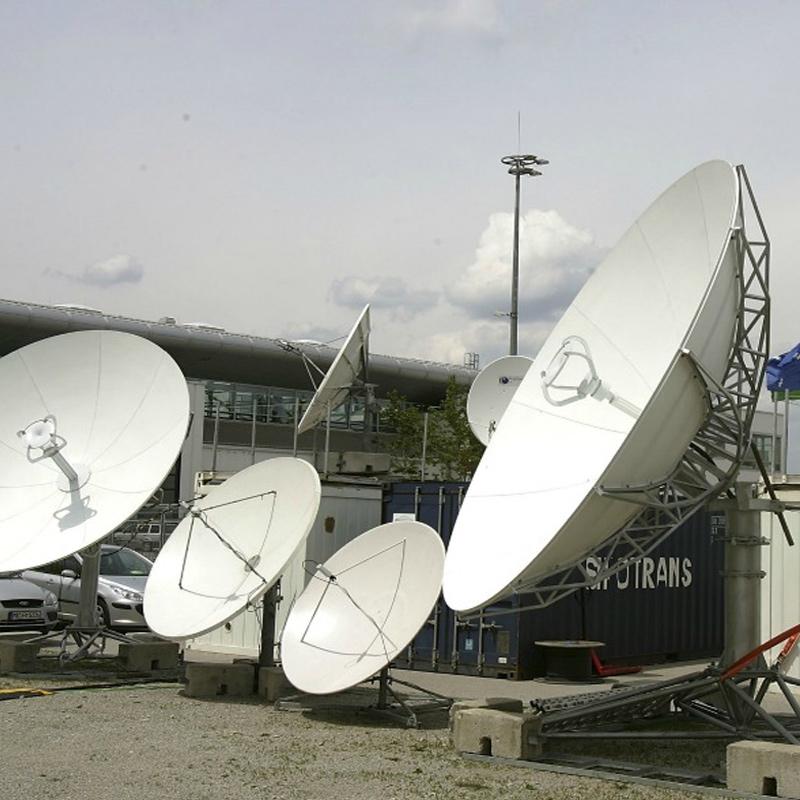
Tag: pay TV

  • New DTH guidelines will make the sector competitive: Javadekar

    New DTH guidelines will make the sector competitive: Javadekar

    KOLKATA: At the end of last year, the ministry of information and broadcasting (MIB) announced revised guidelines for direct-to-home (DTH) operators in India. The new DTH policy will make the sector competitive and will have a positive impact on consumers, I&B minister Prakash Javadekar informed the Rajya Sabha on Monday.

    The minister mentioned that the guidelines with enhanced period of license with provisions of renewal beyond the initial licence period will ensure continuity and a rationalised licence fee regime. Moreover, the rules will have a positive impact on qualitative and competitive services being extended to the consumers in the long term.

    “The changes will facilitate ease of doing business, offer employment opportunities, make the sector competitive with likelihood of new players coming forward to provide DTH services and also provide a rationalised licensing fee regime and enhanced period of licence,” he detailed.

    After resolving the long standing impasse on the DTH licence policy, the government announced DTH licences will now be issued for a period of 20 years. Under the new rules, licence fee will be collected quarterly instead of annually.

    Changes had been approved for 100 per cent foreign direct investment (FDI) in the DTH sector which was earlier limited to 49 per cent. The decision had already been taken by the ministry of commerce and industry but the sector could not avail the benefits due to past MIB guidelines.

    The cabinet also approved the sharing of infrastructure between DTH operators. Distributors of TV channels will be permitted to share common hardware for their subscriber management system (SMS) and conditional access system (CAS) applications. Javadekar said at the time of announcement that the decision had been taken to create a level playing field.

  • Indian pay TV ecosystem yet to optimise HD viewing opportunity

    Indian pay TV ecosystem yet to optimise HD viewing opportunity

    KOLKATA: Industry leaders have emphasised over and over again that despite recent developments and change in consumer preferences, pay TV will continue to coexist with over-the-top (OTT) platforms. On the other hand, the need for a sustainable business model is also undeniable amid the rapid flux in the media and entertainment industry. In the coming future, the conversion from standard definition (SD) to high definition (HD) can be a key growth driver, the experts said in a panel discussion at the Video and Broadband Summit (VBS) 2021. Moreover, the broadband segment will be another crucial factor, which has seen higher uptake in the last few quarters.

    ‘The leaders speak laying out a profitable future’ moderated by Indiantelevision.com founder, CEO and editor-in-chief Anil Wanvari included Indiacast Media Distribution president Amit Arora, Siti Networks CEO Anil Malhotra, Star & Disney India- India & International TV distribution president Gurjeev Singh Kapoor, Travelxp 4K founder & CEO Prashant Chothani, Fastway Transmission & Netplus Broadband group CEO Prem Ojha, and NXTDigital MD & CEO Vynsley Fernandes as panelists.

    Arora said broadcasters will always remain focused on telling new, exciting stories. But the mediums of broadcasting, distributing content will include a range of devices, TV, screens. DPOs have to look at how they can assimilate all the content assets and determine the best way of marketing those.

    “The pot of gold I see for the industry is how you can make a dollar more from the customer giving him more and more content. India will stay in a broad spectrum of free TV to $10 in the next 10 years, which segment you want to operate in is going to be your choice,” he quipped.

    Fernandes agreed to the need of looking at a wider spectrum rather than having a singular kind of telescopic lens for the distribution platform operators (DPOs) as well. In addition to that, DPOs need to bear down costs like infrastructure sharing. The important thing is how they drive out a better value for each dollar, he added.

    “Our offtake of HD in the country is very low. We have not been able to achieve a strong HD push. There is that much runaway available to us. So, can we make the transition from SD to HD as one of the key drivers going forward as there is so much runway available? The second thing we have to focus on is if we can take the second runway of a whole bunch of customers who are watching FTA content and look at them converting them to basic pay bundles, maybe from one dollar,” he stated further.

    Arora highlighted another important aspect; while HD consuming subscribers are hovering around 14-15 million, a large section of the population buys HD boxes but watches SD channels. Hence, marketing the HD proposition is very important to raise awareness.

    “We are a market of 200 million TV homes and we have 15 million homes who are watching HD channels. We have closer to 40-45 million homes that have HD TV set. The communication piece is a big issue. People don’t know when they buy an HDTV set, they also have to buy an HD set top box, along with that they have to buy a subscription for HD channels. What they think is if they have a TV set, they would get brilliant quality of channels regardless,” Kapoor detailed.

    Broadcasters and DPOs have not taken HD expansion as an agenda but it is more important than ever as OTT platforms are offering high-quality video, experts concurred. However, Travelxp’s Chothani thinks the industry needs to look beyond HD and start focusing on 4K too.

    “Five years from now, there will be 40 million 4K homes in India. MSOs and DPOs have to look at the 4K opportunity. India has a great opportunity because of the infrastructure in the cable system. If a consistent effort by MSOs, DTH platforms is taken, people will realise SD quality is not good enough,” he noted.

    On the other side, broadband looms as a highly promising prospect on top of everything, Fernandes added. Siti Network’s Malhotra is also optimistic that there is an opportunity for everyone despite the presence of players like Jio, Airtel as there are 22 million wired broadband customers compared to 650 million internet users in the country. Even if Jio subsidises as it did for wireless broadband, they might have maximum market share but would not be able to acquire all consumers, he opined. However, the home broadband rollout is slow in the country because it is physically extensive work.

    Ojha said that his organisation has already penetrated the urban consumers in its strongholds and will reach rural areas faster than Jio. “Evolution is happening in the ecosystem. There can be imperfection at every level, even at the regulation level. But we will have to look at the longest horizon where the growth engine has to be broadband driven,” Ojha commented.

  • VBS 2021: The way forward for linear TV ecosystem

    VBS 2021: The way forward for linear TV ecosystem

    KOLKATA: The debate of over-the-top (OTT) platforms versus pay TV has been centre stage in media and entertainment conversations over the last couple of years. More recently, the subject has died down as the industry reached the conclusion that both linear TV and on-demand TV will co-exist in India for a long time, unlike the markets in the west. But the change in technology and consumer behaviour have definitely thrown challenges at the traditional TV ecosystem. At the Video and Broadband Summit (VBS) 2021, the industry discussed how to stay resilient even amid the flux.

    The summit started with a welcome note by Indiantelevision.com founder, CEO and editor-in-chief Anil Wanvari as the prestigious conference marked its seventeenth edition this year. Back in 2003, when the summit (earlier IDOS) was held for the first time, the industry was much more disorganised. Over the passage of nearly two decades, the industry has gone through multiple changes like digitisation, new price regime etc.

    India has escaped cord-cutting, TV viewing is growing but the industry cannot afford to lean back, Wanvari said. He also cautioned alarm that despite the projections of the Indian pay-TV ecosystem reaching $15-16 billion revenue, it still stands at around $11 billion.

    “Only about 800 million are being served by linear TV. Another 500 million are yet to be served. Traditional TV is definitely strong here but it has come under attack. Broadcasters have to find ways of combating the surge of edgy and almost meaningful content which has recently been brought under the regulation of I&B ministry that is being put out by OTT platforms to hook and retain customers. Now DTH operators, HITS providers, Cable TV players have to find ways of making their operations even more scalable, provide additional services,” Wanvari commented.

    Post the welcome note, VBS 2021 hosted its first panel discussion, moderated by Wanvari, bringing together top executives from broadcasters and distribution platform operators (DPOs). In ‘The leaders speak laying out a profitable future’ session, Indiacast Media Distribution president Amit Arora, Siti Networks CEO Anil Malhotra, Star & Disney India- India & International TV distribution president Gurjeev Singh Kapoor, Travelxp 4K founder & CEO Prashant Chothani, Fastway Transmission & Netplus Broadband group CEO Prem Ojha, and NXTDigital MD & CEO Vynsley Fernandes discussed the industry’s recovery post-Covid2019 and the way beyond.

    The leaders agreed that the industry has come out of the Covid2019 impact and is bouncing back gradually, although there are still some hiccups. “We all had to recast our business models, there were a lot of learnings that happened. One was that the government ensured that cable TV and broadband were treated as essential services,” Fernandes stated. Fastway’s Ojha added that technology took a big leap catalysed by the pandemic situation.

    “Majority of content consumption still happens on DPO level. They were keeping up the service level in the pandemic. I am really amazed to see how all of them were able to put up that spirit to their team that let’s not get frightened, let’s get the connectivity going. DPOs are the real media Covid warriors. This is my learning from the pandemic – that there has to be cross-dependency and there has to be faith between the entire ecosystem, then we are going to have much bigger recovery, much bigger growth going forward,” Chothani said. While the subscription count went down during the crisis due to migration, MN Vyas asserted that the numbers are bouncing back. “We’re looking forward to the good fiscal year 2022,” Arora said.

    Other than a dip in subscriber addition due to the Covid crisis, the broadcasters and DPOs could not undertake any price revision due to the lack of clarity on NTO 2.0. Kapoor said there is now competition in every genre reducing the risk of monopoly, both for broadcasters and MSOs. Hence, the pricing of content should be left with market forces rather than implementing heavy regulations.

    Talking about future opportunities, the leaders agreed that the conversion from SD to HD can be one potential area if communicated properly to consumers. Along with that, wired broadband is another potential growth driver for MSOs as the penetration is very low currently. Even if deep-pocketed players like Jio starts aggressive acquisition, there will still be enough opportunities left for other players given the fact there are only 22 million home broadband subscribers currently, Malhotra noted.

    Along with a robust business model, technology acts as the deciding factor in today’s fast-moving era. The second session discussed ‘Future proofing DPOs on video delivery solutions’ in the presence of NXTDigital group CTO Ru Ediriwira, Asianet Satellite Communications Ltd vice president & technology head Salil Thomas, Broadpeak Business Development vice president  Xavier Leclercq, and Planetcast Media Services founder director MN Vyas.

    Ediriwira said it is important to focus on future proof technology but new technology can come anytime and disrupt the industry despite the precautions. According to her, it is important to keep abreast of current developments and be open to new opportunities. Thomas echoed a similar sentiment, saying every organisation should be ready to adapt to changes, no matter what.

    “I think futureproof is something which is never possible. We have to really look at what is needed –at least what is needed in the next five years. We have to make a sea change in our distribution system. TV has to be more intelligent,” Vyas added.

    The panel also discussed the possibility of IPTV as a solution to simplify the network. Although it needs long-term investment and has not been considered widely, it could be the right direction to look at. Leclercq said, “Everywhere in the cable network, efficiency is reducing, complexity is moving everything to IP based delivery. I think one of the encouraging steps in this direction is seeing some big scale MSO in Europe, US launching IP only set top boxes.”

    The summit rounded off with a session focusing on ‘Customer First’ moderated by PwC India’s partner and leader – media, entertainment & sports advisory Raman Kalra. The panelists included some of the top names from the broadband and cable industry, such as JioFiber president Anuj Jain, Siti Networks ‘ DGM Strategy Anurag Nigam, UCN Cable Network operations head Debashis Mohanty, GTPL Hathway vice president Yatin Gupta and Shemaroo Entertainment broadcasting business COO Sandeep Gupta.

    Kalra opened the session by mentioning how customers today are spoilt for choice when it comes to choosing content to consume, what with video on demand and OTT platforms mushrooming with ever increasing channels of entertainment. Despite demands for content and internet broadband having skyrocketed during the pandemic, the challenge of remaining relevant is a concern for both the service and content provider, as well, in the highly competitive market. So the question arises on how to acquire and retain a customer base with the constantly changing customer demands and behaviour.

    The panel debated the pros and cons of the pandemic and the post-Covid market scenario. Everyone agreed that the period was a huge shot in the arm to the industry as people were confined to their homes with increasing digital requirements for their work, study and entertainment. It resulted in a major spike in cable TV and broadband consumption in the initial months of the pandemic, which flattened out towards the latter half of the lockdown.

    Strategies were discussed on how best to meet consumer needs and ensure customer stickiness. The session concluded by summarising that there’s a need for businesses to invest deeply in knowing and engaging with their customers. Analysing customers’ content consumption data can also lead to rich dividends.

  • Face of M&E industry in the next 5 years

    Face of M&E industry in the next 5 years

    KOLKATA: Overall advertising spend took a hit in 2020 due to the unprecedented Covid2019 crisis. With hints of recovery, experts are upbeat about adex growth this year as well as in the long term. India’s advertising market is estimated to post a CAGR of 16 per cent over the next five years factoring Covid2019 impact. While digital advertising is estimated to double its share in the overall ad pie, TV spends will largely remain stable, according to a report from Elara Capital.

    However, it mentions that TV advertising may witness a decline in the ad share pie post-2025, if digital scales up further. Globally, digital advertising accounts for 61 per cent of ad spend whereas TV is 23 per cent, given demographics in India (the big mass market with several languages), it is believed that the share of mediums like TV and print will remain higher than the global average.

    Elara Capital VP research analyst (media) Karan Taurani said huge pent-up demand in some sectors (travel, retail & tourism), which were negatively affected during Covid2019, an increase in the number of SME-led advertisers, and the surge in digital advertising led by favourable demographics will drive the growth.

    “Facebook, Google and YouTube will continue to dominate the social, search and video advertising segment within digital advertising. Video advertising, which accounts for almost 30 per cent of digital advertising spend, has outperformed with a 50 per cent growth rate in CY19; however, the larger share keeps moving toward Hotstar and YouTube as they account for almost two thirds of this video advertising pie,” he stated.

    During a panel discussion in Vibes 3.0, The Everywhere Content, Elara Media & Entertainment Conference, experts also reflected similar optimism. They said broader advertising trends within the TV vertical indicate a good recovery, backed by IPL after a big blow during the lockdown. Currently, ad spend stands in good stead after a K-shaped recovery, with some new ad verticals coming up while some old ones are drying up, they added.

    The panellists added that digital will trigger new opportunities as millions of advertisers have moved to digital. SMEs do their own digital advertising, but their adoption is much slower. However, gradually these businesses have been shifting, in line with trends overseas a few years back.

    Digital adoption has been noticeable in consumption patterns too, especially as it has leapfrogged during Covid times. In India, around 10 million viewers have cut chords during Covid2019 lockdown, choosing OTT platforms largely due to a variety of content. The key remains to keep up the engagement of audiences on the OTT platform. TV and OTT can coexist at least for the next eight-ten years. While men used to explore OTT content and women preferred daily soaps on TV, this trend has changed during the pandemic, where family viewing has grown significantly.

    According to the panellists, the value of a revenue-paying subscriber is going to increase significantly. Earlier, with 30-40 OTT platforms and several TV networks, content demand was high. But now, the audience has become quality content-specific and is willing to spend on marquee shows and content. Partnerships with telecom service providers (TSP) will continue to account for a larger chunk of SVOD revenue for broadcaster and other OTTs in the near term; smart TV and smartphones too will support the growth of India’s SVOD ecosystem in the medium term, Taurani added.

    Among other trends in media and entertainment industry, Taurani said cinema remains an outing and socialising trend in Asian countries, such as Singapore, Taiwan, China, the UAE and India. This means there is relatively low or no threat of OTT, unlike the West (US and UK) wherein consumers visit a cinema only to watch a movie. In terms of screen openings too, APAC has 88 per cent of screens open, whereas the US and the EMEA have opened up only 38 per cent and 24 per cent of screens, respectively, until now.

  • #Throwback2020: Cable operators start adapting to stay relevant

    #Throwback2020: Cable operators start adapting to stay relevant

    KOLKATA: Charles Darwin coined the phrase ‘survival of the fittest’ while studying the phenomenon of natural selection in the evolution of life. This concept applies to the inanimate world, too – as exhibited by the Indian cable industry. With changing consumption patterns, advancements in technologies, there are few consistently profit-making cable TV service providers left in the market.

    Then came Covid2019, affecting the supply chain and normal operations. More people turned to online platforms for entertainment, further imperiling the industry. In order to survive, it became vital to adapt – and many large and mid-level cable operators did just that, by innovating business models for sustainability.

    As the countrywide lockdown was implemented, cable TV operators encountered multiple roadblocks. For instance, a part of the workforce in big cities, and students who went back to their hometowns or native villages did not renew their subscriptions. The closure of commercial establishments like hotels and offices also impacted the subscriber base along with financial stress among lower income groups. Due to lack of fresh content on major entertainment channels, live sports content, a number of subscribers downgraded their subscription packs. All of these factors caused a difficult first half of FY21 for consumers.

    The sales of new set top boxes dropped for 75 per cent of cable TV operators during Covid2019, while nearly 84 per cent operators reported a drop in collection, a survey study by INTIN said. And it’s not just for a brief period – 77 per cent multiple system operators (MSOs) expected a decline in revenue in FY21 and some of them even estimated the drop to be greater than 25 per cent.

    Along with subscriber loss, local cable operators faced the issue of payment collection due to restrictions during the stringent lockdown. While it initially led to a drop in revenue, it compelled most MSOs as well as LCOs to adopt digital payment practices. Major MSOs like GTPL Hathway, Siti Networks, IMCL acknowledged that more consumers and local cable operators embraced digital payment options post-Covid2019. However, some of the LCOs who are working on ground also cautioned that the number of consumers paying digitally is still not substantial, albeit the noticeable improvement during lockdown.

    The pandemic has further solidified the need to adopt hybrid boxes among MSOs. Hathway Digital, Den Networks, Siti Networks, IMCL, GTPL Hathway have already launched or are working on rolling out hybrid boxes. Although the roll out has been delayed due to the Covid crisis for some companies, they have set the target of finishing the task within this fiscal itself.

    In addition to providing OTT platforms like Netflix, Amazon, Hotstar on their boxes, foraying into the OTT space could be a big gamechanger for the industry, Intin recommended. Large MSOs often have upwards of 80 local cable channels, which can be readily primed to their own OTT platforms. Currently, only 24 per cent of cable TV players have their own OTT platforms offering pure-play cable content.

    Moreover, the operators who will be able to skinny bundles with an internet connection will thrive in this changing ecosystem. As more people worked from home, attended e-classes, consumed more online content, the demand for high-speed wired broadband has gone up rapidly. The wired broadband sector has continued to grow throughout the year, standing at 21.51 million subscribers as of October. The cable operators have gained from this growth substantially, as all listed MSOs have reported an increase in broadband subscribers.

    But while it is easier for larger players to invest in new technologies, it could be a challenge for the minnows to survive. According to a report from Omid, the number of local cable operators has gone down by 30 per cent between 2015 and 2020. Number of local cable operators is predicted to fall to around 20,000 by 2025, down from about 40,000 in 2019. It also mentioned that consolidation between larger pay TV players like Airtel TV, Dish and TataSky is also possible following the merger of Dish TV with D2H and the acquisition of cable operators Hathway and DEN by Reliance Jio.

    Like other sectors in the media and entertainment industry, cable operators also witnessed some significant changes in regulations. As part of the government’s move to decriminalise smaller offences, the ministry of information and broadcasting (MIB) proposed to remove jail terms for violating Cable TV Networks Regulation Act. Punishments for offences committed under the act would be limited to seizing the equipment of the operator, cancellation of the license, a ban of up to 30 days on the broadcasting of the channel, forcible running of apology scrolls and so on.

    The operators started off 2020 with the amended new tariff order (NTO 2.0) wherein they had to adjust network capacity fee and multi-TV connection charge. In the middle of the Covid crisis, TRAI recommended that all STBs provided to customers must support interoperability and urged the MIB to make it mandatory by introducing the requisite provisions. The viability of the move was questioned and stakeholders warned that it would be a very high-cost operation.

    On the bright side, MIB permitted infrastructure sharing between HITS operators and MSOs, meeting the long-pending demand of the TV distribution sector. The amended guidelines also allow sharing of transport stream transmitted by HITS platforms, between HITS operators and MSOs. As many MSOs across the country are facing a cash crunch, the infrastructure sharing could help them reduce operating expenses.

  • Covid effect: Italian TV market shrinks by over €400 million

    Covid effect: Italian TV market shrinks by over €400 million

    MUMBAI: After debilitating Italy right at the outset, Covid2019 is now hitting the country in a different way. The Television Market in Italy 2020-2022 report published by Rome-based ITMedia Consulting has estimated that the Italian TV market has lost over €400 million in value this year.

    The report states that pay-TV is the only resource that is growing, while advertising has dropped by 13 per cent.

    Notably, pay-TV has surpassed FTA for the first time in terms of revenues, while the TV market should start growing again as a result of the considerable increase in pay-TV revenues and the partial recovery of the advertising market.

    A strong contribution is expected with the entry of Sky Italia as a network triple player operator and SVoD, which should see a 31.3 per cent CAGR in the time period.

    Although Sky Italia, Mediaset and RAI will remain the dominant players overall (over 75 per cent of the total combined), they will lose market share to other operators whose joint turnover will reach almost €2 billion in revenues. While Mediaset still collects over half of the advertising investments, it is losing ground and now accounts for less than 20 per cent of overall TV sector revenues.

    Sky Italia is still the main market player, albeit with a downward trend, as new and aggressive VoD players increasingly gain market share.

    The report highlights that traditional players that rely only on consolidated business models are being penalised, to the benefit of new players that are able to exploit new technological means and changing viewer demand, increasingly moving towards a personalised, multi-platform and multi-screen experience.

    The pandemic has accelerated and amplified ongoing shifts in consumers’ behaviour, pulling forward digital disruption and forging industry tipping points that wouldn’t have been reached for many years. As a result, the entertainment and media world in 2020 has become more remote, more virtual, more streamed. In the Entertainment & Media Outlook in Italy 2020-2024 report predicted that total E&M revenues in Italy will rise at a compound annual growth rate (CAGR) of 3.0 per cent to reach €39.5 billion in 2024.

    In conclusion, this year's ITMedia Consulting report shows how Italian consumers today are also following the new consumption patterns accentuated by the pandemic. They are watching TV with a greater awareness of the different offers and business models, both linear and non-linear.

    Traditional broadcast TV has sensed the looming and very dynamic presence of online streaming services, and adapting their business models to match those of international operators. Even Sky is leaving no stone unturned to develop new strategies to better confront these internet-based players.

    The report also points out how operators who rely solely on consolidated models are being penalised, to the benefit of new entrants who are able to exploit the opportunities offered by technological evolution and the changing needs of demand, translating them into an attractive offer to the public, increasingly oriented towards personalised use, multi-platform, multi-screen, even on mobile.

  • Online video to take lion’s share of video biz revenue in the Gulf by 2025: MPA

    Online video to take lion’s share of video biz revenue in the Gulf by 2025: MPA

    KOLKATA: As more people shift to alternative entertainment options, online video business is going to surpass pay-TV in next five-ten years worldwide. A report by Media Partners Asia (MPA) has projected that online video will account for the lion’s share of total video industry revenue by 2025, with both pay-TV and free TV in six Gulf Cooperation Council (GCC) countries. Within the region, the Kingdom of Saudi Arabia (KSA), and the United Arab Emirates (UAE) will continue to contribute over 70 per cent pay-TV and online video revenues in aggregate by 2025.

    According to MPA, the GCC video industry – comprising free TV, pay-TV and online video – will generate revenues of $1.6 billion in 2020, representing a 13 per cent year-on-year contraction with deep declines in TV advertising and subscription, only partially offset by the significant growth of online video. Covid2019 related macro issues have exacerbated headwinds across the TV sector. A rebound is expected in 2022 but the TV industry will face difficulties in the long term. Overall, GCC video industry revenues are forecast by MPA to increase to $2 billion by 2025, a CAGR of 5 per cent from 2020.

    MPA vice president Aravind Venugopal said: “The GCC’s vibrant and highly competitive video ecosystem has seen some significant changes in the past few years. Online video services continue to grow, driven by: low-cost pricing; telco partnerships, including hard bundles; and the availability of premium local and global content online, including increased investment into exclusive originals.”

    Even with telco partnerships, which help to broaden the customer funnel, the longer-term success of OTT platforms will rest on their ability to retain customers, manage subscriber acquisition costs (SAC) and increase lifetime value (LTV).

    “Over the next five years, the focus will move to the acquisition of high LTV subscribers via D2C. Market consolidation is also likely as the GCC region will be unable to support 15+ platforms with many competing in the same customer segments. New entrants into the market such as Disney+ Hotstar and HBO Max, could provide further impetus to industry growth, competitive intensity and consolidation,” he added.

    Venugopal also noted that the slow pace of innovation by pay-TV operators combined with high prices of subscription based video services, and the proliferation of broadband have contributed to the decline of pay-TV. IPTV has maintained subscriber growth, driven primarily by hard bundled triple-play services. However, as telcos re-examine their cost structures and investments in content and platforms, there remains an impending threat of the breaking of the hard bundle, which could further endanger pay-TV, he surmised.

    The report further states that within the GCC online video sector, three business models have emerged in recent years: freemium operators, led by MBC-owned Shahid, PCCW-owned Viu and Zee’s Weyyak; SVoD operators, led by Netflix, Amazon Prime Video, STARZPLAY, Jawwy TV, Watch iT and OSN Streaming; and AVoD operators, including YouTube and TikTok.

    Given the diverse demographics and large expat population in the region, several services targeted at specific language/ethnic groups have also launched in recent years. These include the Indian and South Asian segment, which are key audiences for Zee5, SonyLIV, Eros Now and YuppTV. As platforms seek to further expand their customer base and drive consumption, investment in Arabic originals has become a key battleground. While the Covid2019 pandemic and the economic-political crises in the region have impacted production activities, MPA has forecast that productions will return to normalcy by Q1 2021 as economies recover.

    In the telecoms sector, fixed broadband has been relatively insulated from economic woes given its utility-status in UAE and low penetration in KSA. However, mobile services, particularly prepaid, have experienced subscriber declines. The UAE and Qatar leads the region, both in terms of fibre connectivity and penetration with over 90 per cent of homes having access to fixed wired services via fibre. From a mobile perspective, the GCC is well connected, with a highly competitive environment (ex-UAE) keeping retail prices relatively affordable. Data consumption remains fairly high, driven primarily by video services. There remains further scope for growth, especially in markets with low fixed broadband penetration.

  • WarnerMedia integrates organisational structure in India, Clement Schwebig to lead

    WarnerMedia integrates organisational structure in India, Clement Schwebig to lead

    KOLKATA: WarnerMedia International has unveiled its new-look for India, southeast Asia and Korea organization and leadership, strengthening its position and commitment to the region. This unites WarnerMedia Entertainment Networks comprising the legacy Turner and HBO businesses with Warner Bros. including theatrical distribution, TV syndication, home entertainment as well as consumer products, gaming and location-based entertainment.

    It forms one of the most powerful integrated entertainment media operations in the region, including TV brands (HBO, Cartoon Network and CNN), the HBO GO streaming service, and hugely popular Warner Bros. franchises like Looney Tunes and the entire DC universe.

    The organisation will be led by WarnerMedia head for India, southeast Asia and Korea Clement Schwebi.

    With the announcement of his leadership team, Schwebig commented: “We have tremendous depth and breadth of talent across our organization and combined, we are definitely better together. We’ve put in place a unique organizational structure for growth that is designed to sharpen our focus on the consumer and build stronger relationships with our local partners. Integrating our commercial activities, content and marketing functions will enable us to leverage our enhanced scale and bigger footprint of consumer touchpoints across our varied businesses, brands, franchises and platforms.”

    The leadership team for the region now comprises:

    Lines of Business

    · Yasmin Zahid heads up affiliate & B2B distribution for all WarnerMedia linear TV networks including HBO channels, CNN International, Cartoon Network, Boomerang, POGO, Warner TV and Oh!K, as well as lead B2B carriage partnerships for the HBO GO streaming service

    · David Simonsen continues to lead the development of HBO GO in Southeast Asia. He will work closely with Johannes Larcher’s global HBO Max team to lay the foundation for its future launch

    · Jae Chang heads up TV distribution and home entertainment overseeing all physical and digital distribution licensing for all WarnerMedia content in the region.

    · Vikram Sharma takes charge of consumer products, advertising and partnerships leading both the licensing & merchandising business for all WarnerMedia IP, brands and franchises, as well as the advertising sales business for all WarnerMedia brands on all platforms linear and digital

    · A new lead for theatrical distribution is being identified. In the meantime, all country managing directors will report directly into Clement Schwebig

    Functions

    · Magdalene Ew takes charge of the company’s consolidated entertainment pillar including all HBO channels, Warner TV and Oh!K as well as Ding Ji Theatre in China. She will also oversee all entertainment original productions in the region, including HBO Asia Originals

    ·Athreyan Sundararajan leads an integrated group marketing team for all WarnerMedia business, including advertising and distribution sales trade, consumer and brand as well as theatrical. Creative services and social Media will also report into him

    · Shonali Bedi heads up strategy and operations including all transformation initiatives in the region and also takes on expanded responsibilities for Research and Insights

    · Leslie Lee continues to lead all the kids brands for WarnerMedia across Asia Pacific, including India, southeast Asia and Korea.

    With these changes and the new organization structure, WarnerMedia SVP and MD South Asia Siddharth Jain, and SVP of original productions – entertainment Jessica Kam will be leaving.

    Schwebig added: “We owe Sid and Jessica a huge debt of gratitude for the many years of significant contribution they have made to WarnerMedia. They have each in their own way left a lasting legacy and helped build an incredible foundation for the future of our businesses.” 

  • Domestic STB manufactures felt the pinch of Covid since January: Amit Kharbanda

    Domestic STB manufactures felt the pinch of Covid since January: Amit Kharbanda

    KOLKATA: The Covid2019 pandemic has hurt most businesses in India since the beginning of March. But the set top box (STB) manufacturers felt the pinch of crisis even before that, from January itself, MyBox Technologies managing director Amit Kharbanda said. Although the company ended up having six months of zero sales, it continued R&D in the interim for new products.

    Kharbanda explained that there are a decent amount of components that come from China, even for normal electronics products. As China went into shutdown from January, MyBox faced a shortage in components for manufacturing. He added that it has impacted all domestic STB companies.

    Furthermore, domestic STB companies have been struggling since ASEAN came into effect a couple of years ago. Big cable and DTH operators that used to buy products from domestic companies, switched to importing from ASEAN. Kharbanda emphasised that the competition in this space is not between Indian STB manufacturers but with the international players. In these challenging circumstances, MyBox has been able to survive as it tends to do R&D all the time whether it is with Google or Amazon, he stated.

    While the business environment was already tough for the players, the cash flow went for a toss post-Covid, Kharbanda added. The company had to cut down on its expenses. “Bankers started questioning the business model. It took time to get that issue streamlined and convince them, finding the right way of optimising the funding and everything. Now as all of that has been settled, we are hoping from this month onwards or next month we should start shipping. At the end of this year, we should at least come back closer to our quantities which we were shipping last year,” he said. MyBox sold 40 crore boxes in FY20.

    However, he mentioned that they kept up R&D during the lockdown. Some product launches including the android box, Alexa Solution have been delayed but the company has added new features during the period. Now as the business is opening up, it will release those products one by one.

    “We have been working on some very interesting solutions. One of these was the Android OTT box which we have tried to make valuable for ISPs. There are a lot of small ISPs in India. They can actually utilise the OTT box and give it as a package to their consumers. There is good ARPU source they can make on,” Kharbanda added.

    Talking about overall opportunities for STB manufacturers, Kharbanda said that India still has millions of TV unpenetrated households. Moreover, there is scope for old box replacements and new hybrid boxes. Even post-Covid, there has been a major demand for TV sets. But it does not translate into a huge benefit for domestic STB manufacturers as the large operators buy from international players, he rued. 

    Although the large DTH operators recently undertook ‘Make in India’ route for STB production, the move is more directed at getting foreign vendors here to assemble and sell rather than buying products from homegrown manufactures. However, he shared that MyBox is working closely with the government of India to push STB manufacturing here. Moreover, the ministry of commerce is also working on the issue and the ministry of information and broadcasting (MIB) is in talks with operators for boosting domestic manufacturing. Kharbanda is optimistic that these endeavours will give a much-needed nudge to the growth of STB manufacturers in India.  

  • TV segment ad revenue decline to be in range of 20-25% at end of FY21, report estimates

    TV segment ad revenue decline to be in range of 20-25% at end of FY21, report estimates

    KOLKATA: The broadcasters have had rockier than the usual first half of the year due to ongoing crisis as the advertising spends fell drastically. While the market is slowly recovering, ad decline could be in the range of 20-25 per cent at the end of FY21. The report published by Elara Capital also predicts that Zee Entertainment Enterprises Limited (Zeel) and TV Today Network (TV Today) will outperform other broadcasters in terms of ad revenue.

    Zeel’s growth will be driven by Zee Anmol moving back towards FTA and strong gains in the south based regional genre, as per the report. It further adds that TV Today will have an advantage of the shift in the news genre due to sharp viewership gains compared to other genres, which has tapered off post the unlock. However, it still remains high compared to pre-Covid levels. Aaj Tak being the leader in the news genre in the first half of FY21, the traction for ad spends in the festive season is expected to remain healthy along with some benefits during Bihar elections, thanks to strong market share for election poll viewership.

    It re-emphasises that the re-conversion of channels like Zee Anmol, STAR Utsav from paid to FTA will continue to benefit the listed broadcasters like Zeel positively as they have been gaining significant market share within the GEC genre attracting ad revenues. Hence, the report predicts the ad revenues from these channels to move back to pre-NTO levels, which had plummeted after their conversion to paid channels post NTO 1.0 implementation.

    Genre-wise, Hindi and regional GEC will outperform TV ad spends, while other genres like English, music, infotainment etc. will underperform given the continued weakness witnessed in the English entertainment genre and struggle of music, infotainment in attracting ad spends.

    The report says that the pricing of GEC genre has seen a sharp recovery and down by merely 25-30 per cent narrowing the gap from 60-65 per cent in April-May. However further recovery for pricing in the GEC genre is expected only after the Indian Premier League (IPL) i.e. November onwards, as the latter has extracted a huge chunk of ad budgets. It also says that the festive uptick coupled with the resumption in GEC ad spends post the IPL season to bode well for the broadcasters, during the first half of the third quarter leading to 15 per cent growth year-on-year.

    Nonetheless, the report mentions that broadcasters would not be able to close the quarter with the festive gains due to some drop towards December. Hence, they will end overall Q3 at a 7-8 per cent growth excluding IPL. During the fourth quarter, broadcasters are expected to report a growth of 10-12 per cent given the low base of FY20 impacted by Covid2019. Based on these expectations, FY21E ad decline translates to average 17- 19 per cent (ex-IPL).