Tag: pay TV

  • Tata Sky Binge app now available on smartphones

    Tata Sky Binge app now available on smartphones

    New Delhi: Leading Pay TV platform Tata Sky has extended the benefit of its pioneering OTT content aggregator service, ‘Tata Sky Binge,’ to mobile with the introduction of Tata Sky Binge Mobile app.

    The OTT aggregation app curates’ content from multiple streaming services into categories such as new releases, popular movies, Trending Now to make content discoverability easy. Content surfing using language, genre, app rails etc., makes search and recommendations faster and convenient. The tab bar at the bottom of the screen gives easy access to Home screen, Search and Watchlist. Single subscription, single payment and single sign-on to view content on one unified platform makes viewing immersive and enjoyable, said the company on Wednesday.

    The company has introduced the Tata Sky Binge Mobile app with two attractive plans. Subscribers opting for a Tata Sky Binge 299 plan will be able to access content from 10 OTT apps on one TV screen (through Amazon Fire TV Stick – Tata Sky Edition or Binge+ STB) and three mobile screens. The 149 mobile-only plan gives access to Binge services on three mobile screens with content from seven premium OTT apps. All new Binge users downloading the Mobile app enjoy a seven-day free trial, it said.

    Commenting on the launch, Tata Sky, chief content & commercial officer, Pallavi Puri said, “The launch of Tata Sky Binge Mobile app is in sync with our endeavour towards making our products available to a larger audience base. Our subscribers can now access their choice of OTT content, on large and small screens, at home or on-the-go, all with a unified interface, single subscription and sign-on.”

    She further added, “Tata Sky Binge on Amazon Fire TV Stick – Tata Sky Edition was our first step into OTT. With the next step we wanted to combine the best of both worlds on one interface, i.e. linear TV + OTT through the introduction of Android enabled smart Set top box, Tata Sky Binge+.”

    Tata Sky Binge aggregates content from as many as premium OTT apps. Single subscription and a unified user interface gives access to partner apps such as Disney+ Hotstar Premium, ZEE5, SunNxt, Hungama Play, Eros Now, ShemarooMe, Voot Select, Voot Kids, SonyLIV and CuriosityStream. Amazon Prime Video can be accessed on the large screen with an additional Prime subscription.

    Tata Sky Binge service was first launched through- Amazon Fire TV Stick – Tata Sky Edition. The next extension was the launch of Tata Sky Binge+ Android enabled smart set-top box and now the same promise is available on Mobile (Android and iOS). Tata Sky Subscribers with a Tata Sky Binge subscription on Fire TV Stick – Tata Sky Edition or Binge+ Set Top Box can login and access content on the Binge mobile app by using their Subscriber ID or Registered Mobile Number. Customers also have the option to choose a mobile-only plan.

  • Discovery extends David Zaslav’s employment contract

    Discovery extends David Zaslav’s employment contract

    MUMBAI:  When you swing a deal like he has done, you probably deserve to be rewarded. Discovery president & CEO David Zaslav played a key role in getting AT&T’s WarnerMedia to align itself with the network he leads, an announcement of which was made earlier this week. Well, his labour has yielded fruit as his employment contract has been extended to run through 31 December 2027 from its previous effective date of 2023.

    Of course, we all know that the merger of the two media firms will lead to the creation of a behemoth offering WarnerMedia’s premium entertainment, sports, and news assets and Discovery’s leading nonfiction and international entertainment and sports businesses. And it was announced that Zaslav will lead the proposed new company.

    Since joining it in 2007, Zaslav has steered Discovery to new heights starting with taking it public in 2008, stream rolling it into the Fortune500 in 2014, acquiring Scripps Networks Interactive, in a transaction which closed in 2018 and ramping up its direct-to-consumer efforts under discovery+. The definitive real-life subscription streaming service launched in the US in January 2021 with more than 55,000 episodes, and internationally, continues its rollout to more than 25 markets and accounts for 15 million subs already.

    The Discovery comprises nearly 20 per cent of ad-supported pay-TV viewership in the US and nearly seven billion monthly video views, making it the No 1 pay-TV portfolio in Uncle Sam, claims a press release. And its global distribution has surpassed three billion viewers.

    Before Discovery Zaslav had a distinguished career at NBCUniversal, where he was instrumental in developing and launching CNBC and also played a role in the creation of MSNBC.

  • Discovery Q1: d2c arm leads growth, income tumbles

    Discovery Q1: d2c arm leads growth, income tumbles

    NEW DELHI: Discovery Inc has 15 million total paying direct-to-consumer subscribers across its global portfolio, it said on Wednesday, as it reported financial results for the quarter ended 31 March 2021.

    The growth was primarily led by discovery+, having crossed 13 million total paying direct-to-consumer subscribers, since its launch on 4 January early this year.

    “The global rollout of discovery+ is off to a fantastic start by any measure. Key metrics, including subscriber additions, customer engagement, and retention, are exceeding our expectations and demonstrating sustained momentum into the second quarter,” said Discovery president and CEO David Zaslav. “Our strong direct-to-consumer performance underscores the outstanding value and appeal of our content, brands and personalities to both consumers and distribution partners alike. We continue to expand the reach of discovery+ with recent launches on Comcast Xfinity and Amazon Prime Video Channels. At the same time, we continue to extend our overall engagement with viewers across screens, anchored by another quarter as the most-watched pay-TV portfolio in the US and our seventh consecutive quarter of international share growth.”

    The media company’s net income dipped 62.9 per cent to $140 million, or 21 cents per share, during the quarter.

    However, revenue rose four per cent to $2.79 billion, edging past Wall Street estimates of $2.78 billion.

    The international advertising revenues increased 16 per cent and distribution revenues were flat, or decreased two per cent ex-FX. Advertising revenue in the US declined two per cent, partly due to lower overall ratings, and to a lesser extent secular declines in the pay-TV ecosystem and lower inventory.

    For the first quarter, Discovery was among the most-watched pay-TV portfolio in the US among key demographics, driven in part by TLC, which was popular among its key female demographics, the company said.

    Internationally, the company said it enjoyed an impressive seventh consecutive quarter of linear share growth, anchored by growth in female genres and best ever quarterly performances in several markets, including the UK, France and Germany. International networks revenues increased 6.9 per cent year-on-year to $987 million. Advertising revenues were up 15.7 per cent, while distribution revenues were down 0.2 per cent.

    The broadcaster said it will invest more than ever in the content across the board to support these platforms in 2021.

    “We expect international distribution revenue to accelerate to mid-single-digit growth during the second quarter,” said Discovery chief financial officer Gunnar Wiedenfels, adding that though the company is investing against a rigorous financial framework, it is also gearing up for two sets of Olympic games this summer and in Q1 next year, both of which will be tentpole events for the marketing of its d2c and linear brand.

  • DTH segment expands its subscriber base by 1.01 mn in 2020

    DTH segment expands its subscriber base by 1.01 mn in 2020

    KOLKATA: The direct-to-home (DTH) subscriber base in India has reached a base of around 70.99 million in 2020, according to the Indian Telecom Services Performance Indicator Report October-December 2020 published by the Telecom Regulatory Authority of India (TRAI). This points to an addition of around one million subscribers in the year.

    While the total active DTH subscriber base stands at 70.99 million as of 31 December 2020, the segment had reported a base of 69.98 million for the last quarter of 2019.

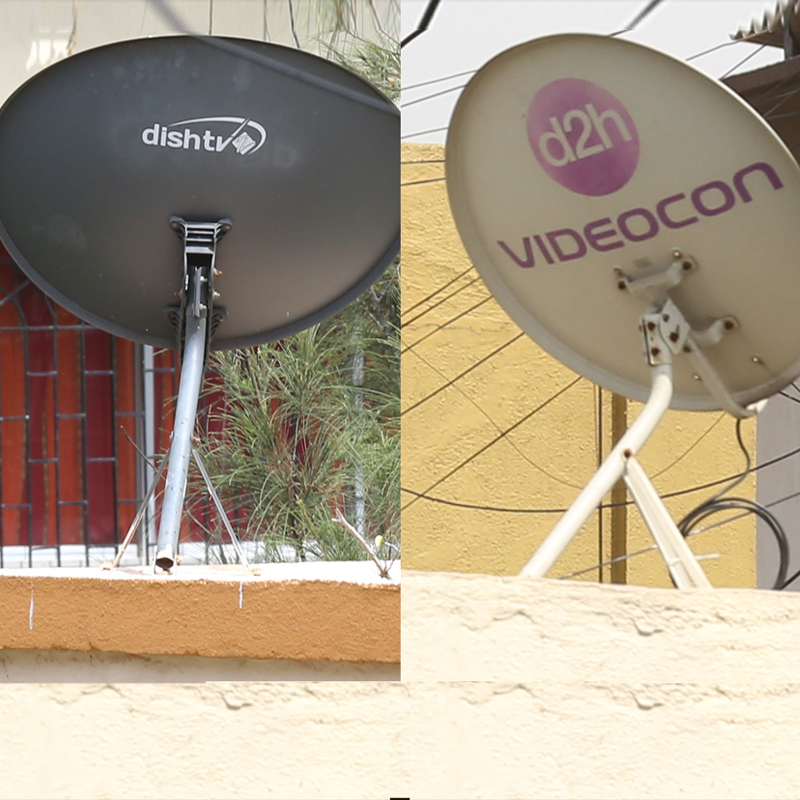
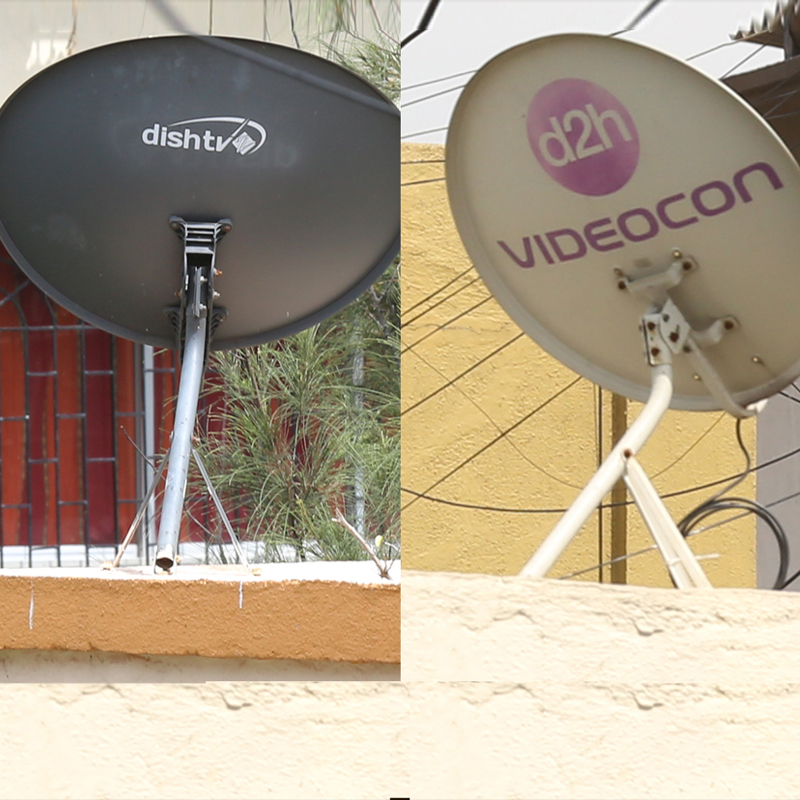
    Tata Sky is leading the DTH segment with 33.03 per cent market share. It has marginally increased its market share of 32.58 per cent from July-September (2020) quarter. Airtel’s DTH arm has almost closed its gap with Dish TV with the former holding 25.17 per cent market share, and the latter gaining 25.45 per cent market share. Sun TV’s DTH arm has also improved its position with 16.35 per cent market share compared to 15.83 per cent in the previous quarter.

    As on 31 December 2020, there are 1,704 MSOs registered with the ministry of information and broadcasting (MIB), as against 1,613 multi-system operators (MSO) at the end of 2019. There were 1,697 MSOs including two provisional MSOs at the end of the previous quarter. Further, TRAI data indicates that there are 12 MSOs and one HITS operator who have subscriber bases greater than one million. Siti Networks, GTPL Hathway and Hathway are the top three players in this category.

    A total of 907 private satellite TV channels have been permitted by MIB for uplinking, downlinking, as on 31 December 2020. There are 326 pay TV channels including 233 SD channels and 93 HD channels and 581 free-to-air channels.

  • Negligible content investment for the urban viewer segment: Tata Sky’s Harit Nagpal

    Negligible content investment for the urban viewer segment: Tata Sky’s Harit Nagpal

    KOLKATA: The pay-TV industry in India has been highlighting the regulatory overburden in the industry for some time now. The players have been battling several legal issues, the amended new tariff order (NTO 2.0) being the most discussed one. According to Tata Sky CEO Harit Nagpal, it has not only impacted the growth of the industry, but put a halt on broadcasters’ plans to bring any change in pricing since January 2020, despite rising industry costs.

    Speaking at the recently concluded APOS 2021, the Tata Sky CEO said broadcasters will not be able to make up for this period, even if they are allowed to alter prices tomorrow. “A hole has already been created in the ability to generate revenue for the industry. There is a logjam between broadcasters and regulators via legal cases, which we are hoping settles down soon, so that broadcasters can raise prices,” he explained.

    According to Nagpal, the price hike will enable broadcasters to invest in creating more differentiated content and help them cater to increasing needs of viewers from various segments. “There has been a negligible investment for the urban viewer segment, even though it is one of the growing segments,” he pointed out, during a virtual session with Media Partners Asia executive director and co-founder Vivek Couto.

    But the Tata Sky CEO highlighted that he still remained optimistic about the growth of linear TV in India. “Both will survive; both will grow but not at the cost of each other. The people who can afford a broadband connection at home, and can subscribe to SVoD, can also afford TV because TV is much cheaper than that,” he added. “And viewers who cannot OTT subscriptions will watch content that comes only through cable and satellite. TV viewing remains a habit for Indians.”

    Recalling the days he spent days walking in and out of 1,200 customer homes in the rural area, Nagpal said there was rarely a home without a television set in India. “It’s like background noise. A family collectively consumes six to 10 hours of TV content per day. It is one segment that leaves a high opportunity for the growth of traditional TV,” he shared.

    Despite that, there are still around 100 million homes that don’t have a TV in India. The data shows that TV sales have picked up in the last few years. But there is still a gap in TV penetration this year due to the ongoing crisis, which will be filled in the next few years, he noted.

    “We have not seen signs of on-demand content or even broadband penetrating the kind of numbers that we have been hearing for the last few years. Despite the best efforts of most of the broadband operators, we have not seen numbers reaching the level that we are talking about,” said Nagpal.

    Tata Sky has embraced the change in the industry with the launch of Binge products – its smart boxes which offer both TV and OT content. The DTH operator has also marketed the product aggressively last year. 

    “We never expected these services to reach the level of DTH. We said both will grow. Maybe Binge will grow faster in terms of percentage because we have got a small base. But there is enough headroom for the satellite TV market to grow. We are pretty happy with the numbers of both sides,” Nagpal stated. 

  • Consumer spending on video grew 9% in APAC in 2020

    Consumer spending on video grew 9% in APAC in 2020

    New Delhi: Consumer spending on video in the Asia Pacific (APAC) region grew nine per cent in 2020 to reach $58.3 billion in aggregate, according to a new analysis and research released by Media Partners Asia.

    The report projects growth to rise a further six per cent CAGR to $79.3 billion, led by the fast-expanding online SVoD sector. MPA forecasts that the online SVoD consumer spending revenue is likely to grow at 15 per cent CAGR over 2020-25 to reach $31.6 billion by 2025. This will represent a 40 per cent market share while consumer spends on pay-TV will grow at two per cent CAGR to reach $47.8 billion, representing a 60 per cent market share.

    The findings were released on the first day of MPA’s APOS Summit which was held virtually this year.

    All the markets increased spending on SVoD services with strong activity in peak pandemic periods during the first half of 2020, and robust spending in the second half of 2020 due to new launches from major players.

    China remains the largest market in APAC for consumer spending on video with $27.6 billion in revenue, led by SVoD and IPTV services. Japan comes in second with $9.2 billion with SVoD representing more than a third of consumer spend, while India is third with $6.5 billion with pay-TV contributing having greater than 90 per cent market share, it stated.

    Korea with $5.7 billion in revenue in 2020 and Australia with $2.9 billion remain formidable markets; Malaysia led southeast Asia with $962 million in revenue with pay-TV contributing more than 90 per cent of market share.

    “Consumer spending on entertainment and sports through video platforms was robust in 2020 due to growth of SVoD in a peak pandemic year along with new competition and consumer choice in many Asian markets,” said MPA executive director Vivek Couto. “

    While SVoD growth will decelerate in 2021, MPA sees "a bright future for the SVoD sector and the stacking of various services across sports, entertainment and deeply integrated local services.”

    According to Couto, China, Japan, India, and Korea will lead the way as the market for SVoD slowly deepens in the key markets across southeast Asia, led by Indonesia, the Philippines, and Thailand. Pay-TV will remain vital in Korea (led by IPTV), India, Malaysia, and the Philippines, he added.

  • Emergency plan in place, cable operators are prepared to counter Covid

    Emergency plan in place, cable operators are prepared to counter Covid

    KOLKATA: During the Covid2019 outbreak last year, cable operators in India served the country’s entertainment and infotainment needs as an essential service. It was not easy to operate in a lockdown for an industry that involves huge on-ground operation as well as close contact with consumers. From running out of inventories to fall in payment collection, the operators face an array of issues. Now, with the country feeling the heat of the second wave, the industry says it is better prepared than last year.

    Fastway Transmissions group CEO Prem Ojha said that the MSO is not facing any issue presently, because only a few parts of the country like Delhi and Mumbai have been significantly impacted. Most of the other geographies are normal right now, barring weekend and night curfews in some places. He noted that field activity gets very limited post 10 pm, right up to 6 am in the morning anyway. Hence, there is no such disruption as of now.

    Although Ojha is uncertain how things will pan out with cases on the rise, the leeway of being part of essential services will play in their favour. But partners and teams have to brave it out, risking their own health to continue to serve, added.  The company already has a contingency plan with the right amount of technical support and equipment in place should matters turn more critical.

    “There will be some hardship but the work will carry on. It will be a challenging scenario but nothing will get stalled. This time people are braver, more confident than last year. Uncertainty factor is lesser compared to last year,” he said.

    GTPL Hathway cable TV head & chief strategy officer Piyush Pankaj acknowledged that due to the looming possibility of a lockdown, certain problems are creeping back. But they have experience on how to deal with the crisis, and the company is well prepared for the situation, he asserted. Since Covid cases began to surge in late March, efforts are underway to cope with the issues.

    PPE kits are ready for staff, digital payments have been established. Moreover, customer communications are being taken care of through online and telephonic medium rather than in-person visits. “We have already taken precautions on ground. We are not facing the mounting problem that we faced last time,” he summed up.

    As of now, the situation on their end is under control, said Siti Networks CEO Anil Malhotra. While the Covid curve began peaking 10-15 days back, the MSO has not seen any major impact so far. However, more operators and staffs are getting affected. Unfortunately, people were not being cautious this time, which will further compound problems, he mused. The company has already started telling people how to take precautions, and is helping those who are suffering.

    “It can’t get worse than last year. We have learnt in 2020 how to work with little or skeleton staff. This time, I am more worried about our staffs and it would be great if the government can insure these people,” Maharashtra Cable Operators Federation president Arvind Prabhu highlighted.

    Despite the sector’s resolute outlook, operational challenges have already cropped up. Although the government has issued a notification where cable service is categorised as essential services, transport is becoming an issue. There is also the risk of infection. At present, operators are rotating the staffs so all of them don’t fall sick and in case someone falls sick, they have backup, Prabhu mentioned.

    Other than workforce issues, the industry faced shortage in inventory and other supply chain issues during lockdown. The same situation is playing out again; there was no disposable income to purchase stock in advance, as cable operators took a 40 per cent hit in revenue last year, Prabhu pointed out. Apart from some of the big players, no one else has kept inventory ready.

    Fastway’s Ojha highlighted a significant trend. With more offices being closed again, the incremental demand for broadband is going up. That traction is visible now, Ojha added. The demand will further go upwards, and therefore the operator is ensuring inventory and other things are in place so they can meet the demand.

    Some of the major MSOs have started work-from-home provision again. One-third of GTPL Hathway’s staff is working from home currently. Siti Networks has also initiated WFH option for non-critical employees and is providing necessary apparatus for that. While all Fastway workers are operating from home, the company is being flexible with employees who are travelling from containment zones or showing any Covid symptom. All of them are ready to ask more staff to work from home if the situation deteriorates.

  • GTPL Hathway posts Rs 599.1 crore revenue for Q4

    GTPL Hathway posts Rs 599.1 crore revenue for Q4

    KOLKATA: On the back of strong performance in the fourth quarter of FY21, GTPL Hathway has posted Rs 599.1 crore revenue, up 29 per cent year-on-year. The pan-India multi system operator (MSO)’s revenue from operations for the last fiscal has gone up 22 per cent year-on-year to reach Rs 2148.4 crore. It has netted Rs 57.1 crore profit in Q4 compared to 13.8 crore loss in the corresponding period of FY20.

    EBITDA stood at Rs 101.16 crore for the quarter ended 31 March 2021, up 32.32 per cent from Rs 76.45 crore in the same quarter a year ago.

    GTPL’s cable TV subscription revenue stands at Rs 266.5 crore for the quarter compared to Rs 271.8 crore in Q3. However, CATV subscription revenue has grown by four per cent for FY21, reaching 1071.2 crore.

    On the other hand, its broadband revenue has grown five per cent quarter-on-quarter basis to reach Rs 81.7 crore in Q4. While CATV subscription revenue saw only one per cent year-on-year growth for the quarter, broadband business has seen a huge turnaround registering 77 per cent year-on-year spike.

    Significantly, the MSO’s overall subscriber base for pay TV universe has remained the same at eight million in FY21 but active broadband subscriber base has increased by 1.5X to reach overall 635K users. Average Revenue Per User (ARPU) has also gone up by 5.5 per cent and stands at Rs 445 at the end of FY 21. The company has added 540K new home passes in the year. In the last quarter, it has added 70K home pass and added 45K broadband subscribers.

    “GTPL Hathway consistently delivered on key KPIs, despite lockdown and restrictions in FY21. The highlight of FY21 was the growth in subscription revenues for both CATV and broadband business, strong profitability, net-debt free status, geographical expansion, healthy balance sheet and improved return ratios,” GTPL Hathway managing director Anirudhsinh Jadeja said.

    “We have reduced our gross debt by Rs 693 million in FY21. Additionally, the company’s board has recommended to increase the dividend to Rs 4 per share in FY21. The company associated with Boman Irani as its brand ambassador during Q4FY21. GTPL is gearing up to launch new products and services in FY22, thereby propelling its value-proposition in existing and new markets,” he added further.

    (All numbers stated here are on consolidated basis unless stated otherwise)

  • Pay-TV revenue to grow at 7 per cent CAGR over 2020-25: MPA report

    Pay-TV revenue to grow at 7 per cent CAGR over 2020-25: MPA report

    New Delhi: India is among a handful of countries where there is great scope for further penetration of television. Since the turn of the millennium, pay-TV connections have more than doubled in Indian households, though data in the public domain indicates there still remain an additional 100 million homes to penetrate.

    Now, a new report published by Media Partners Asia (MPA) forecasts India’s pay-TV industry will grow at roughly seven per cent CAGR between 2020-25. The growth will be accompanied by a significant uptick in the total industry revenues, including subscription and advertising which will reach $12.3 billion by 2025, said the industry analysts.

    The report, entitled India Pay-TV Distribution 2021 released on Monday, predicts that more than 96 per cent of India’s pay-TV homes will be digitalised by 2025.  The total pay-TV subscribers will further expand from 127 million in 2020 to 134 million during the period.

    Distribution dynamics

    The MPA has pegged India’s active DTH homes to grow from 58 million in 2020 to more than 68 million in 2025. Meanwhile, cable’s share of pay-TV subscribers will decline from 54 per cent in 2020 to 46 per cent by 2025; IPTV will pick up a small share after rolling out later in 2021.

    MPA India vice president Mihir Shah said, “Robust backend systems, the ability to offer consumers flexibility in choosing channel packages under NTO and the exit of leading private channels from DD Free Dish helped the DTH pay-TV sector grow even after the new TRAI tariff regulations came into effect.”

    Going forward, DTH will be the key driver of growth fulfilling the needs of the majority of new TV households entering into the pay-TV ecosystem. “Premium cable subscribers in urban centers remain vulnerable to churn as uptake of quality fiber-based broadband services including IPTV grows in affluent pockets of urban India,” he added.

    Monetisation, investment and the outlook for broadcasters

    The total pay-TV industry revenue, including subscription and advertising, had declined 10 per cent year-on-year in 2020 to $8.9 billion as the economic downturn post-Covid eroded advertising. The projections show that the recommencing of fresh content and live sports together with improvements in consumer and economic sentiment will lead to a sharp recovery in 2021. Pay-TV advertising will grow at 12 per cent CAGR over 2020-25 after a 25 per cent contraction last year.

    During 2020, pay-TV broadcasters generated $4.4 billion in total revenue (62 per cent from advertising and 38 per cent from subscription), down 17 per cent year-on-year. A sharp recovery is expected over the next two fiscals with the channel business and advertising primarily driving this expansion.

    According to Shah, TRAI’s heavy spate of regulations in recent years depressed investment in pay-TV content, which could have a detrimental impact on the quality of content available for the mass market.

    “We expect that more consolidation will play out in the broadcasting industry as recent tariff amendments force incumbent broadcast networks to recalibrate existing channel portfolios. The economics of less popular channels and several niche channels are no longer viable. A new and less draconian regulatory framework will help revitalise content creation in the pay-TV industry while also helping to bolster pricing power for pay-TV platforms,” he stated.

  • Kotwali Police Station in Ludhiana busts illegal STB racket

    Kotwali Police Station in Ludhiana busts illegal STB racket

    KOLKATA: A store in Ludhiana, PAL Electronics, was raided by Kotwali police station on 16 March, after Sony-appointed raiding agency Mediasoft Legal Solution’s service manager Harminder Singh complained that pay channels of Sony, Star, Zee and other major broadcasters were being sold via unauthorised set-top boxes (Pagaria Boxes) without the proper licence or any distribution agreements.

    The store was selling the illegal boxes at Rs 1,500 on the false pretence that the buyer can watch all the leading pay channels like SET, Sony SAB, Star Plus, Zee TV etc without any fee for a period of six months. Once the initial free subscription period would be over, the buyers could recharge it at Rs 200 for another six months, the store informed users.

    When the representative of Mediasoft Legal Solutions led by the Sony Pictures Networks Team, along with the Kotwali Police Station raided the store, the team recovered 11 pre-programmed Pagaria STB boxes, which are currently in police custody. The police is investigating the matter and will be filing the FIR today.

    These illegal boxes work with the help of an internet connection and receive pay channels. These Pagaria STBs are being sold to the subscribers with the aforementioned false promises. Of late, there has been a significant rise in piracy of TV channels causing much concern to broadcasters and large multi-system operators (MSOs).

    Naïve users fall prey to this false claim as authentic cable and DTH operators charge around Rs 300 to 350 per month for the popular pay channels. Now with many more such raids in the pipeline by all the leading broadcasters and local MSO’s, it is a matter of time before the TV screens of the users of such illegal STBs are going to go blank suddenly one fine day, with no one to approach for any complaints or servicing. Sony Pictures Networks team has scheduled many raids across Gujarat, Punjab and other states along with other broadcasters.

    TV piracy is becoming big business in India where the miscreants are giving access to multiple premium channels at lower costs with the help of emerging technologies. But with regulators now on the heels of this form of piracy, it is only a matter of time before stringent action is taken against all such players.