Tag: pay TV

  • VBS 2024: The Churning Video Distribution Ecosystem – What’s next?

    VBS 2024: The Churning Video Distribution Ecosystem – What’s next?

    Mumbai: India is in the grips of seisnic changes regarding video and broadband consumption. Pay TV cord-cutting is rampant even as free TV subscriptions are on the rise and OTT buy-ins are churning with the signs up for certain platforms stagnating even as others are seeing rapid increases and some are seeing cataclysmic drops. Aggregators of OTTs are popping up on the horizon promising cheap bundles along with value-added services for cable TV and DTH. There’s a rush to set up free advertising-supported TV channels by TV set manufacturers and smart TV device makers. There’s the Jio factor where it seeks to convert most pay TV customers to free streaming of video content by offering free access to consumers at no cost. The consumer continues to demand bandwidth higher than ever imagined even as prices drop. Margins are under pressure as every player goes one-up on each other acquire and retain customers.

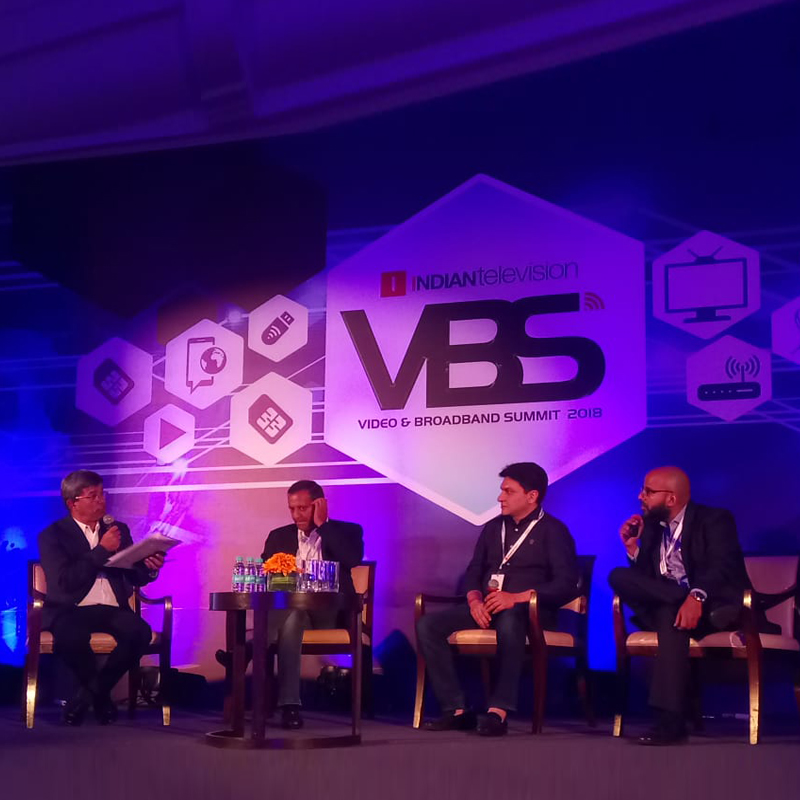
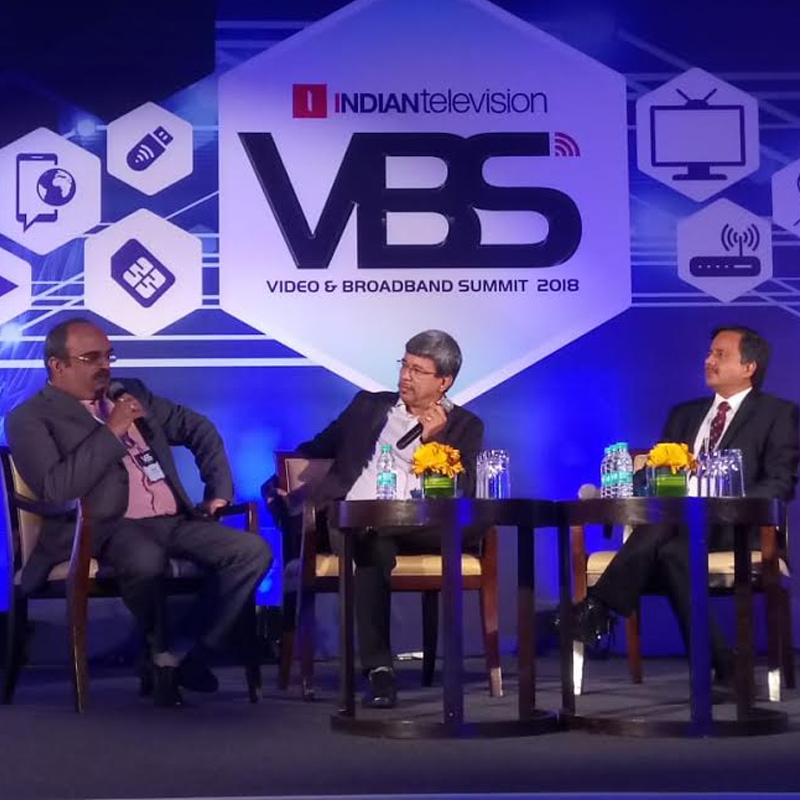
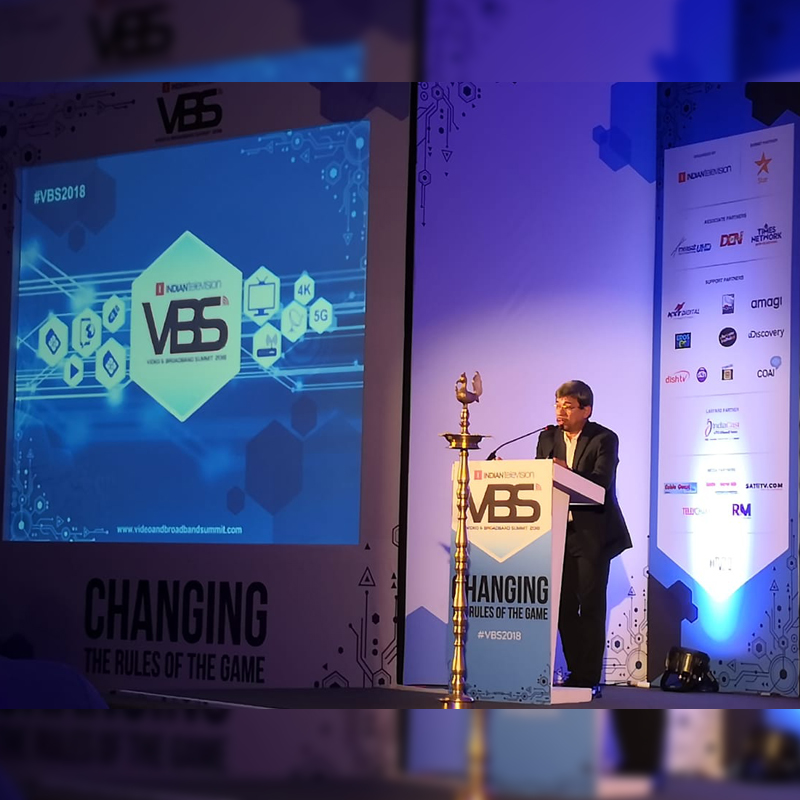
    The video and broadband distribution landscape has not been as vibrant as it is now.. How long will this pot-boiling continue? What will the magic potion of video and broadband look and taste like? And what’s the end game? Indiantelevision.com has held the 20th edition of Video and Broadband Summit better known as VBS at Sahara Star Hotel, Mumbai.

    The session chair for this panel was Ernst and Young LLP partner, media & entertainment advisory services Ashish Pherwani along with panelists: Fastway group CEO Prem Ojha, IndiaCast president Amit Arora, Dish TV CEO Manoj Dobhal, Warner Bros. Discovery & Eurosport South Asia head of distribution Ruchir Jain, Shemaroo Entertainment COO-broadcasting business Sandeep Gupta and Harmonic EMEA-APAC streaming market development director Alexandre Paugam

    Pherwani started off by saying by 2028, the TV world be breaking up into three largely equal partners and will have about 70 to 80 million pay TV and 65 to 70 million free-to-air services.

    Jain said, “We are very hopeful about the future right now. If you look at this, what’s going to happen is one is that the entire set of consumers are increasing in number. So I’m talking about how pay TV is gonna grow, connected TVs, and also about the free-to-air services, etc, so it’s the number of people coming into the media, who is going to invest. So that’s one big factor, the second big factor is the time scale

    Ojha opined that, “Our job is to keep the ground ready so that all this beautiful content and all these absorbing content can reach out to consumers the way they want it today.”

    Arora said, “So it is select all 3 platforms to seem to be consuming a lot of common content assets and that is going to change in the future formats will change may be the price point. I agree with that.”

    Dobhai said, “ We are brands with long-run legacies. And new ones coming up. Fortunately, unfortunately, I’m on the receiving end of it because we are the ones who showed the word of it all the country that you know what experience it brings when you watch an immersive content technology, upgraded version of it, satellite, and all that.”

    Gupta added that for Shemaroo, Gujarati is like building our own Prime Video. Because we are devoted ourselves to Gujrati. We are trying to expand on more areas as well. Other than that Shemaroo and ShemarooMe are mostly devoted to Gujarati.

    Lastly, Paugam replied, “Coming from the technology, part of things, especially the broadcast infrastructure, I think we see a big trend, and DTH cable stays strong. And for us, it stays at a huge part of our business helping protesters and operators distribute their content through those networks and optimize it. But the big growth is in streaming. And we’ve seen a tipping point globally, the number of subscribers from pay TV subscribers, being outpaced by the number of streaming subscribers. We’re moving from sending a unified feed and broke it down to everyone to sending unique guests and a unique feed to the end user. That gives us the ability to customize this unique feed. I think a lot of innovation and new technology that are emerging are around how do we leverage that streaming vessel to have the experience as personalized as possible.”

  • Trai extends deadline for implementation of new tariff order to February next year

    Trai extends deadline for implementation of new tariff order to February next year

    Mumbai: Telecom Regulatory Authority of India (TRAI) has decided to extend the deadline for implementation of the new tariff order (NTO 2.0) from 30 November 2022 to 28 February 2023.

    As per the regulatory filing, the authority said, “All the distributors of television channels shall ensure that services to the subscribers, with effect from 28 February 2023, are provided as per the bouquets or channels opted by them.”

    Several representations have also been received from the stakeholders requesting an extension of the time limit for implementation of the New Regulatory Framework 2020. According to Trai’s recent notice, it stated, “All the broadcasters shall report any change in name, nature, language, MRP per month of channels, and composition and MRP of bouquets of channels by 30 November 2022, and simultaneously publish such information on their websites,” it stated.

    “The broadcasters who have already submitted their reference interconnect offers (RIO) in compliance with the New Regulatory Framework 2020 may also revise their RIOs by 30 November 2022,” it further added.

    In addition to it, Trai also said, “All distribution platform operators (DPOs) will need to submit their distributor retail price (DRP) of pay channels and bouquets & composition of bouquets of pay and free-to-air channels, by 31 December 2022 to Trai.”  

    The authority further, in compliance with the New Regulatory Framework 2020, asked DPOs to revise their already-submitted RIOs by 31 December 2022. 

    After receiving comments and counter comments from the stakeholders on the consultation paper, TRAI was to conduct an open house discussion (OHD) on 21 July 2022, which is now scheduled to take place on 8 September 2022.

    New Tariff Order

    When NTO was first introduced and gave customers the option to select channels à la carte, the price of entertainment increased, forcing Trai to modify its order. In January 2020, NTO 2.0 was introduced, capping the price of a bouquet channel at Rs 12 as opposed to Rs 19. This was not supported by any logical justification or consumer insight, according to the Indian Broadcasting Digital Foundation (IBDF), a unified representative body of Indian television broadcasters.

    Broadcasters have resisted the new tariff order vigorously and reacted by removing premium channels from bouquets and increasing their prices from Rs 20 to Rs 30 after losing the legal battle to overturn the Trai order in both the Bombay High Court and the Supreme Court.

    Cable operators were compelled to ask the regulator to postpone the implementation of NTO 2.0 as a result of major broadcasters like Star, Zee, Sony, and Viacom18 choosing to raise the MRP of their well-liked channels and keep them out of bouquets. For instance, the All India Digital Cable Federation had urged Trai to reconsider the order’s provisions in light of the sustainability aspect of putting this framework into place.

  • Content investment in India, Korea, and Southeast Asia to rise in 2022: MPA Report

    Content investment in India, Korea, and Southeast Asia to rise in 2022: MPA Report

    Mumbai: The video content budget in India, Korea, and Southeast Asia will grow by 15 per cent and reach $12 billion in 2022, according to the latest edition of Asia Video Content Dynamics, published by Media Partners Asia (MPA).

    In 2022, India and Korea will drive the bulk of the increase, but all markets and all verticals are expected to grow. The film industry will be the fastest, growing by nearly 140 per cent as theatres screen fresh movies. Online video will grow the most, by nearly $700 million.

    It increased by 21 per cent last year to $10.4 billion. Except for theatrical, all content verticals saw significant growth. OTT content was the fastest growing vertical, increasing 83 per cent year on year to become the second largest vertical, accounting for 26 per cent of industry investment. Korea & India saw particularly strong OTT investment growth, while Thailand and Indonesia made significant contributions.

    This report examined video content consumption, investment in video content, and production costs in seven key Asian markets: India, Indonesia, South Korea, Malaysia, Philippines, Thailand, and Vietnam. Free-to-air (FTA), pay-TV, online video, and film are among the verticals examined, along with key players and the production value chain.

    Also read: India’s OTT video market to reach $3 bn in 2022; estimated to double by 2027: Report

    Commenting on the findings of the report, MPA vice president Stephen Laslocky said, “Inflation, particularly with online originals, is a factor driving up content costs.”

    He went on to say that online video operators, broadcasters, and producers must see that higher budgets translate into more premium viewing experiences, or the cost increases will be unsustainable.

    According to this report, Pay-TV was the largest vertical, accounting for 46 per cent of total industry content investment, reflecting well-developed pay-TV markets in India and Korea. FTA ranked third with 25 per cent of the total.

    “Internationally successful programmes remain the content licensing holy grail, which thus far, only Korean dramas and some anime, as well as US and UK content, have sustainably achieved. Some Thai content has succeeded outside of Thailand. Quality production values and strong storylines with a focus on younger online demographics will be the building blocks of future investment strategies,” Laslocky added.

    While talking about the expanding online video sector, he expressed that it has been a boon to independent producers. He said, “Profit margins have stabilised at 10 per cent or more across much of the region. More can be done to bolster independent producers, including additional compensation for original concepts, commensurate rewards for breakout successes, and expanded use of pipeline deals (which allows producers to more reliably recoup overheads).”

    “In exchange, producers need to be transparent with production costs. Commissioners need to be willing and able to audit costs,” he added.

    Declining TV ratings 

    TV ratings continue to decline in measured markets. User-generated content (UGC) platforms continue to dominate video consumption, with their share of total video consumption ranging from 82 per cent in Korea to 95 per cent in Vietnam. While YouTube remains the leader, TikTok is driving growth in Southeast Asia. Premium video, both AVOD and SVOD, captures the majority of the balance.

    The consumption of television and online video is diverging. On TV, drama is generally the most watched genre, while variety, including reality, often ranks #2. Movies, kids, and news can be significant drivers of viewership, and sports can over-index with top-rating TV programs. Viewership of some key TV genres is transitioning to YouTube, where they generate significant classified consumption.

    Meanwhile, with premium online video, series account for approximately 90 per cent of consumption, with dramas accounting for the majority of viewership, while movies account for approximately 10 per cent. Dramas account for nearly all of the top titles. Except for India, variety consumption is largely driven by acquired Korean programming.

    Box office revenues 

    In 2021, box office revenues, admissions, and releases all performed poorly. Film costs fell by two per cent as pandemic restrictions delayed release dates in many markets, but delayed tentpoles performed well in 2022.

    Some markets, including India and Indonesia, are expected to recover completely. In other markets, a return to pre-covid may take until 2023. Returning to pre-covid levels in other markets may take until 2023. Elsewhere, prospects may be marginally better but permanently harmed.

  • Global pay TV to add subscribers but lose $25 billion revenue in six years: Research

    Global pay TV to add subscribers but lose $25 billion revenue in six years: Research

    MUMBAI: Digital TV Research forecasts 19 million more pay TV subscribers across 138 countries between 2021 and 2027, but revenues will decline by $25 billion over the same period.

    Digital TV Research principal analyst Simon Murray said, “Between 2021 and 2027, 86 countries will add pay TV subs and 52 countries will lose subscribers. Most of the countries gaining pay TV subscribers are developing nations, with a low average rate per user (ARPUs). The US will be the biggest loser – down by 12 million subscribers.”

    IPTV will add 79 million subscribers globally between 2021 and 2027 to take its total to 439 million. Satellite TV will lose 10 million subscribers between 2021 and 2027.

    Revenues will decline in 70 of the 138 countries between 2021 and 2027. The US will fall by $19 billion. Global satellite TV revenues will drop by $14 billion, with digital cable down by $10 billion. Analogue cable will lose $1 billion. IPTV will grow slightly.

  • Broadcasters promoting pay-TV on Free Dish are shooting themselves in the foot – Saurabh Sancheti

    Broadcasters promoting pay-TV on Free Dish are shooting themselves in the foot – Saurabh Sancheti

    Mumbai: With a 40 million base, which is constantly growing at the cost of Pay-TV, Prasar Bharati’s DD Free Dish is not just another competing platform, but considered by many as a precursor to the success of Free Ad-Supported Television (FAST) model in India. The implementation of NTO 2.0 is going to further intensify this cannibalisation. While broadcasters are riding the FTA wave, some fairly and some in an unfair manner, distribution platform owners are pushing for regulatory intervention and new ways to tackle the challenge.

    Saurabh Sancheti – Business Head | Hathway GTPL,   has long been advocating and working towards building a ‘rupee-a-day’ product that can take on Free Dish. At the Video & Broadband Summit organised by Indiantelevision.com on 19 January, he outlined the approach that is needed to arrive at this solution.

    “Out of the country’s 280-300 million households, nearly 200 million own a television set, and of this, only about 120 million have Pay TV. MSOs and broadcasters have to work together on wooing the remaining 80 mn base with a customised product. LCOs too need to reinvent themselves by adopting digital technology that serves their customers better,” he said. Sancheti is confident that if all players can collaborate on it, not only can the economics be worked out, but the pay-TV basket can be grown by at least 30-40 million in the next couple of years.

    Cog in the wheel

    In the current scenario, (short-term) gains and survival concerns are driving the top and bottom of the pyramid. Elaborating on what he terms as “death by annual plan”, Sancheti remarked, “Broadcasters promoting Pay-TV on Free Dish are shooting themselves in the foot. No matter how big you become on Free Dish, the platform cannot be monetised.”

    “They need to understand the possibilities of working with the DPOs. As people’s income levels increase, they will spend more on subscriptions. Those who join at a Free Dish equivalent pricing today, can become our regular and even premium customers tomorrow. But instead of thinking about taking customers up the funnel, and about the long-term growth of pay-TV, they are worried about their annual and quarterly targets,” he rued.

    Further, he noted that with infrastructure sharing and cheaper bandwidths making it possible to achieve last-mile delivery to the level of a gram panchayat at very low costs, distribution networks will also have to re-engineer themselves to align with the broadband revolution that’s underway.

    It’s obvious that the postulated rupee-a-day product cannot run in the same high-touch manner as the current base is running and hence the requirement of “lot more digital, lot more long-term packs and lot more of DIY”.

    Would that mean LCOs losing control of the last mile and eventually dropping out of the value chain? Commenting on the long-standing issue, Sancehti stated, “The primary models have failed, and MSOs realise that they cannot reach out to consumers directly, but only through the LCOs. That being said, today, consumers want more control. This is the reason why DTH, which has declined globally, is still surviving in India. It is the only medium that allows you to do everything yourself; from channel selection to bill payments. So, the risk of being eliminated is clearly there, however, it’s not because of the large players but the LCOs’ unwillingness to reinvent.”

     The next big opportunity

    Sancheti believes that the linear TV model still has a lot of scope left. Out of the 200 million TV-owning households in India, the top tier of 20-25 mn has both pay-TV and fixed-line connectivity. Their number is growing, and so is their OTT consumption.

    The second set of 100 mn households, which is 70 per cent urban, consumes linear TV on the large screen and OTT on private/mobile screen. It will gradually go the 25 mn way.

    The remaining 80 million (TG for the rupee-a-day product) are the ‘cord nevers’ who are subscribed to either analogue or Free Dish today. As their income levels increase and more content and services suitable for them are made available, they will move up the ladder into the pay-TV base.

    Sancheti, however, finds the 100 million ‘TV nevers’ equally if not more promising than the 80 mn cord nevers. “At Den, Hathway, and GTPL, we believe this is where the opportunity lies to as much as double our base. As the economy progresses, spends on services will increase exponentially, and we are reinventing ourselves for the change; whether it is by way of working on connectivity/network or by value engineering the set-top boxes that begin at an 800 Rupees price point today.”

    Pinpointing the 100 mn challenge and opportunity, he added, “It’s not like the cable hasn’t reached the ‘villages’. The problem is that it has found only 500-odd homes/subscribers there. The art is in doubling this number by offering the right product and pricing.”

    Impact of NTO 2.0

    Winding up the discussion with a word on the present state of regulation and the impact of NTO 2.0, Sancheti observed that “whatever rationalisation had to happen in terms of channel selection at the customer end has already happened with NTO (2019). Beyond a point, more à la carte will only do more harm. With NTO 2.0 we are looking at a 25-30 per cent increase in prices as per published broadcaster RIOs. India being a price-sensitive and value-seeking market, this will further pressurise the PayTV base, leading to more people opting out of it.”


    Please Note : “The views expressed are personal and do not represent the views of Reliance Industries Limited or any of group companies”

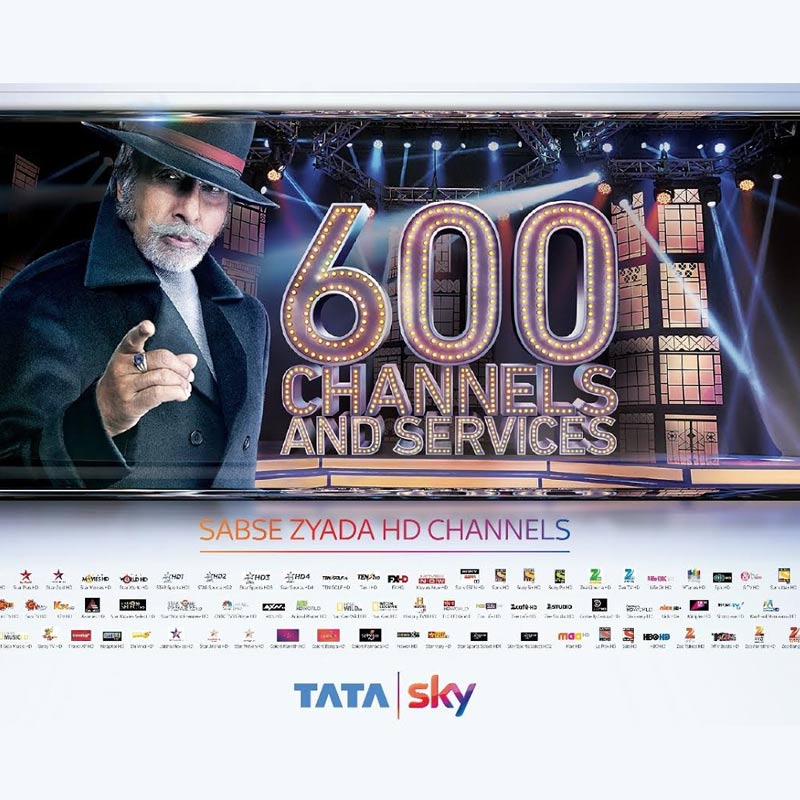
  • There needs to be a level playing field: Tata Sky CEO Harit Nagpal on Free Dish issue

    There needs to be a level playing field: Tata Sky CEO Harit Nagpal on Free Dish issue

    Mumbai: Harit Nagpal, the MD and CEO of India’s largest Pay TV distributor – Tata Sky is known to be a vocal man. Time and again, he has used several platforms and occasions to bring the industry’s concerns to the notice of the government and regulators. Outlining these issues once again at the APOS India Summit – the two day virtual-event that concluded recently, Nagpal stressed upon the need to iron out disparities in regulation that exist in the current ecosystem.

    With the rapid emergence of multiple distribution formats and technologies in the past few years, he strongly believes that the “time has come for everyone to step back and take a look at the regulatory inconsistencies and biases prevailing across platforms.”

    Between the three main distribution technologies of DTH, Cable and OTT, “while both DTH and cable are licensed, regulated and censored (self), DTH pays a license fee while Cable doesn’t. OTTs, on the other hand, are neither licensed, nor regulated or censored, and they don’t even pay a license fee. Just because they came in at different points in time, different rules are applied to each one of them,” said Nagpal.

    In September, Tata Sky and Airtel Digital TV had written to the Telecom Regulatory Authority of India (Trai) asking the telecom regulator to address the issue of broadcasters making their pay channels available for free on DD Free Dish.

    Also Read: https://www.indiantelevision.com/dth/dth-operator/dth-operators-write-to-trai-over-broadcasters-offering-pay-channels-on-dd-free-dish-210909

    At the summit, Nagpal reiterated that while he appreciates Free Dish as a great channel of customer acquisition, there has to be a level playing field.  “There are roughly 100 million homes in India that don’t have a TV. They will not invest in a TV set and subscription simultaneously. Hence, at any given point in time there is a large pool that owns a TV but is not paying for subscription services. A subset of this population moves into the Pay TV universe every year, opening up a huge customer acquisition opportunity for us,” he explained, adding that “the problem begins when Free Dish starts serving them at no cost, the same content that we offer for a price.”

    According to Nagpal, this is an unfair practice on the part of certain broadcasters. It goes against the current tariff regime which mandates designating of channels as either pay or FTA. “This designation should be consistent across platforms,” he insisted. “A customer in rural areas does not understand regulations, and he starts distrusting us.”

    Commenting on the overall growth this year, Nagpal said, “We are north of 17 million homes; much in the same range as what we lost to FTA and economic losses faced by rural India. We have managed to keep our heads above water.”

    Despite the many challenges, he believes that pay TV delivered via cable or satellite cannot be written off in India so quickly. “OTT requires high quality broadband getting into homes, in which case the customer has to pay for both content as well as the pipe. In the case of cable and satellite they pay for the content only. So, when we talk of the masses, Pay TV is here to stay. Out of the 100 million homes without a TV some will keep getting them every year, and those numbers are far larger than the growth of paid OTT. Pay TV and FTA will also coexist and grow.”

    Even though DTH may not be facing an existential threat from either Free Dish/FTA or OTTs, its content that has historically been ‘mass’, will have to evolve, asserted Nagpal. “The masses also want innovation which is why there are nine million HD homes today, and many with HD are now looking for something new. Innovation has, therefore, constantly been on our radar. With regard to content as well, there is a very large number of discerning viewers among those who do not have access to the pipe. They are not happy with the ‘saas-bahu’ or the content of the past. There is a niche which is likely to grow, for which content needs to be invested in by broadcasters.”

    In fact, trends show that customers are not going off Pay TV even when they can afford or avail streaming services. Sharing his observations, the Tata Sky Nagpal stated, “The premium end of our user base did not switch off their Pay TV regardless of having access to VOD services. Binge Plus was an attempt to cater to this set of audiences. Whether a consumer wants to watch OTT or Linear on phone, tablet or the TV set, my job is simply to make it convenient for them.”

    In this space again, he welcomes the advent of aggregators like Prime Channels and Google TV to grow the market and industry together.

    Concluding the discussion with his thoughts on Tata Sky and the overall broadband market, Nagpal shared, “Broadband was never intended for the mass market because we didn’t have a network of fibre in the ground across the country. Our intention is only to reach our premium customers, and hence, it will remain a niche, very high-quality broadband play for us.”

    As for satellite, he averred, “In my understanding broadband is not reaching rural areas not because it is difficult to lay a wire to that place, but the fact that it will be difficult to find enough people in a village who can pay Rs 800 per month, month-on-month. Unless it can be delivered at the rate of Rs 200-300 per month, the economics of which is unviable, it looks unlikely. But we may be surprised in the future.”

  • Global pay-TV, telecom services to reach $1.5 trillion in 2021: report

    Global pay-TV, telecom services to reach $1.5 trillion in 2021: report

    Mumbai: Worldwide spending on telecommunications and pay-TV services is forecast to reach $1.5 trillion in 2021, representing an increase of one per cent over 2020, according to the latest report released by Intelligence Data Corporation (IDC).

    This growth will largely be driven by remote working, collaboration, and rising online media consumption said the market intelligence firm. The fastest expansion is still expected in the Asia-Pacific region.

    While the value of fixed voice and mobile voice services segments will gradually decline, the value of fixed data and mobile data services portions will slowly grow.

    As per the report, the major driver in the mobile segment will be a gradual recovery of roaming revenues fuelled by the recuperation of the global tourist industry. The market for traditional pay-TV services will continue to decline slowly due to the migration of customers to over-the-top (OTT) video services platforms, it added further.

    The overall market’s growth rates are expected to remain stable during the entire forecast period and even speed up slightly in 2025.

    5G will constitute 38.8 per cent of total mobile connections and 41.3 per cent of total mobile spending by the end of the forecast period in 2025.

    “The troubles related to Covid-19 are still not in the rear-view mirror as the worsening pandemic dynamics in some low-income countries and the global supply-chain disruptions threaten to harm the fragile recovery of the market,” said IDC research director, telecommunications Kresimir Alic. “But because of the resiliency the industry showed during 2020, we are convinced that the market will remain in a positive mood for at least the next couple of years.”a

  • DTH operators report sharp drop in subscribers in Jan-March: TRAI

    DTH operators report sharp drop in subscribers in Jan-March: TRAI

    Mumbai: The total number of active DTH subscribers declined to 69.57 million at the end of March 2021 from 70.99 million at the end of December 2020, as per the Telecom Regulatory Authority of India (TRAI). This is in addition to the subscribers of DD Free Dish (DTH service of Doordarshan).

    The share of leading DTH players stood at Tata Sky (33.3 per cent), Dish TV India (24.09 per cent), Bharti Telemedia (25.54 per cent), and Sun Direct TV (17.07 per cent).

    A total of 901 satellite TV channels have been permitted by the ministry of information and broadcasting (MIB) out of which 327 are pay-TV channels. There are 235 SD channels and 92 HD channels. All the other channels permitted by MIB may be considered free-to-air channels.

    There are 1726 MSOs registered with MIB out of which only 12 MSOs and one HITS operator have a subscriber base greater than one million. Siti Networks had 8.2 million subscribers followed by GTPL Hathway at 7.7 million, Hathway Digital at 5.6 million, Den Networks at 4.5 million, Thamizhaga Cable TV Communication at 3.5 million, Kerala Communicators Cable at 3.05 million, Tamil Nadu Arasu Cable at 2.9 million, Fastway Transmissions 2.2 million, NXT Digital (HITS) at 2.05 million, KAL Cable at 2.02 million, VK Digital at 1.7 million, Asianet Digital Network at 1.2 million and NXT Digital (Cable TV) at 1.1 million.

    There are 366 private FM radio channels in 105 cities with 30 private FM radio broadcasters. Odisha Television Ltd, has ceased the operation of its single FM radio station in the city of Rourkela, Odisha. The advertising revenue reported by FM radio broadcasters is Rs 321.52 crore as against Rs 323.01 crore in the previous quarter.

    There are 324 operational community radio stations up from 315 in the previous quarter.

  • TRAI introduces new regulations for technical compliance of CAS & SMS

    KOLKATA: In a bid to put an end to content piracy in the pay TV ecosystem, the Telecom Regulatory Authority of India (TRAI) on Friday amended the interconnection regulations 2017, incorporating a framework for technical compliance of CAS & SMS.

    The authority has been receiving several complaints about the unauthorized distribution of signals and under-declaration of subscribers by distribution platforms, despite the implementation of the new regulatory digitization of the cable TV industry.

    “Sub-standard CAS and SMS also render the distribution network vulnerable to hacking and content piracy,” it said in a statement.

    According to TRAI, the framework is the first step to define an indigenous set of specifications in the line of international standards. A tightly synchronised working of CAS and SMS, as specified by the framework, will enable factual reporting of subscriber base etc. Eventually, this will reduce the revenue loss to stakeholders on account of erroneous subscription reporting.  

    “Better assurance of due revenue, in turn, may encourage the stakeholders to invest for further improvement in quality of content and service thereby benefiting the end consumer,” TRAI noted. Moreover, it will also usher-in better content security in the distribution value chain.

    The authority came out with a consultation paper seeking views on standardization of these systems last April. It also held an open house discussion later. The comments of the stakeholders received by TRAI during the consultation process were analysed. In view of the technical nature of the matter, the Authority decided to form a committee of members across the industry, related institutions.

    The committee, after extensive deliberations, recommended introducing a testing and certification regime for CAS and SMS to ensure better conformity to the standards and to improve the customer experience.

    Distribution platform operators will now need to obtain certification for their CAS and SMS systems from the certification and testing agency. The framework will be implemented through a testing and certification agency.

  • Tata Sky unveils its newly revamped music service, Tata Sky Music

    New Delhi: Aligned with its new brand purpose to make tomorrow better than today for its subscribers, content distribution, and Pay TV platform Tata Sky on Thursday unveiled its revamped music service offering, Tata Sky Music.

    The platform has integrated the strengths of the two earlier portfolios, Tata Sky Music and Tata Sky Music+ at an affordable price.  With 20 Audio Stations and five Video Stations, Tata Sky Music plans to bring together a robust offering of mass, niche, Indian, International, Regional, Devotional, Ghazal, Hindustani, Carnatic music among many other genres. The service will be available on TV as well as with Mobile App at Rs 2.5 per day, it said in a release.

    Commenting on the offering, Tata Sky chief commercial and content officer, Pallavi Puri, said, “We wanted to offer a one-stop music service with added benefits. With a robust, and curated library for all genres of music, a refreshed Tata Sky Music will give subscribers an elevated music experience. With the help of our partner, Hungama Music, this is a step towards expanding the audience base, and exploring many new cohorts of customers.”

    Offering audio and video on one unified platform, Tata Sky Music offers a 360-degree affordable family plan for all music lovers that can be enjoyed anytime anywhere with access on both television and the Tata Sky Mobile App. Active subscribers of the service will continue to enjoy the free Hungama Music Pro subscription plan worth Rs 99 per month, through the Tata Sky Mobile app at no additional cost.

    Active subscribers of the Tata Sky Music & Music+ service will be upgraded to this pack automatically. New subscribers can give a missed call on 080 6858 0815 to enjoy the service on 815.