Tag: pay TV operator

  • Dish TV Videocon: Building a DTH powerhouse of global reckoning

    Dish TV Videocon: Building a DTH powerhouse of global reckoning

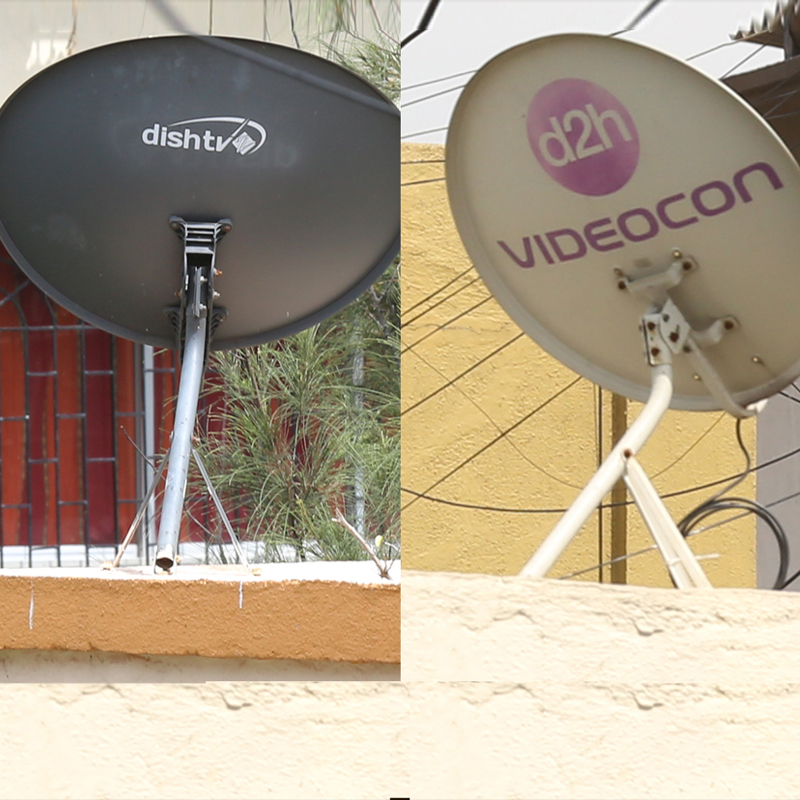
    MUMBAI: It’s a reflection of what’s hitting the corporate world globally – consolidate and build global scale. And scale is important in television distribution – whether cable, satellite or terrestrial or direct to home (DTH). Yesterday’s announcement of — what was speculated for nearly a year – the merger of India’s No 1 DTH operator Dish TV India with India’s fastest growing DTH player Videocon d2h – is a reflection of that trend and the building of a DTH powerhouse and pay TV operator.

    The merger has created a pay TV behemoth unrivalled in TV  distribution in the Indian market (let’s discount the public service terrestrial broadcaster Doordarshan and its satellite service FreeDish). The next Indian private DTH provider is less than half the size of the merged entity’s  size in pure net subscriber terms.

    A collective 27.6 million subs  for the combo firm Dish TV Videocon places it just behind the US-based DirecTV (which is now owned by AT&T) with its 37.6 million subs.  That’s a number which is hard to ignore. Much senior players such as Sky in the UK and dishnetwork in the US have just 21 million subs and 13.6 million subs, respectively.

    Of course, one may argue that ARPUs in India are wafer thin at about $3 or so per subscriber and revenues too are minuscule for the DTH operators.  ARPUs for Sky which is so much smaller than Dish TV Videocon are around pounds sterling 47 while these are at $111 at DirecTV which is far bigger.

    Team Dish TV led by Jawahar Goel and his CEO Arun Kapoor have reason to celebrate. For the fusion of the two players has created an enterprise that probably has overtaken his elder brother Subhash Chandra’s Zee Entertainment Enterprises in terms of EBIDTA and in revenue.  And what must be even more pleasing is that Dish TV has been operational for fewer years than Zee Entertainment which has led the cable and satellite TV revolution in India since the early nineties.

    Ditto for team Videocon d2h that is led by the executive chairman Saurabh Pradeep Kumar Dhoot and CEO Anil Khera. The last entrant in the DTH game, the merger has catapulted it into the leadership position in India.

    True, the market capitalization of Dish TV  (alone) is  Rs 9,321.1 crore  and Videocon d2h is being merged at an equity valuation of around Rs 7,200 crore and at an enterprise value of around  Rs 9,000-odd crore (as per reports) as compared to Zee Entertainment’s Rs 46,284 crore and Sun TV’s Rs 19,747 crore . The market capitalization value of  Dish TV Videocon has yet to be calculated at the time of writing but there’s no doubt it will skyrocket substantially post the completion of the merger in the next six to seven months.

    What does the fusion mean for DishTV Videocon?

    For one, lower costs. On almost every front.

    Imagine the negotiating power it will have with broadcasters on content pricing. Carriage and placement fees will end up being substantial. It  will be in a position to get better rates on hardware, middleware, ERP software, consumer premise equipment. And then, the two companies’ administration and sales teams could also be streamlined to form a formidable lean and mean sales force. Both have vast and deep distribution strengths. While Dish TV has 2,268 distributors, 244,688 dealers and 1090 service franchises across 9322 towns, Videocon d2h has 2280 distributors and direct dealers, 230,000 dealers/retailers and 320 direct service centres nationally. A consolidation of this could also yield cost benefits.

    A PhillipCapital estimate to CNBC TV18 was that the synergy benefit at the EBIDTA level would be between Rs 300 crore to 350 crore from year two onwards.

    The lower costs could allow Dish TV Videocon to also pass on the benefits to consumers and possibly start a price war, should it choose to, and thus attracting subscribers from cable TV or other DTH providers, in the process scaling up even further.

    Dish TV Videocon’s value-added services (VAS) will get a collective boost as these could be cross-promoted between the platforms. Its scale will allow it to negotiate better advertising deals for the two services opening screens, sponsorships and on TVCs.

    Most importantly, the combined entity will end up with a robust financial report card with revenues of Rs 5,915.8 crore ($883 million) for the year ended 31 March 2016.  The figure for the first half of the current fiscal (H1-2017) is at Rs 3,100 crore. That means one can expect it to cross the $1 billion topline milestone either by end this year or mid next.

    Dish TV Videocon’s EBIDTA margins too look  healthy at 31 per cent and absolute last-fiscal-year figures of Rs 1,826 crore ($274 million). The figure for H12017 is at Rs 1,040 crore. EBIDTA minus capex stands at a puny Rs 195 crore ($29 million) but that’s significantly higher than the Rs 116.5 crore of DishTV and Rs 78.5 crore of Videocon d2h, individually. In H12017, that figure had already climbed to Rs 190 crore. The merged entity will have a net debt load of Rs 2161 crore ($323 million). H1 2017, however,  saw that climb to Rs 2660 crore.

    How Dish TV Videocon will service this higher debt – whether it will be through internal accruals or through an external cash infusion – is a question. Both the firms have to also grapple with subscriber acquisition costs  – at around Rs 1500 for Dish TV at the end of March 2016 and at Rs 1,869 for Videocon d2h at the end of 30 September 2016. But, the good part is that both have generated net profits and free cash flows.

    The combined entity will end up with close to 2.8 million HD subscribers, which is around 10 per cent of the overall subscribers. These higher ARPU customers are also growing rapidly, forming around 50 per cent of the net adds.

    Now, one does not know the ambitions that the Goel and Dhoot families are harbouring. Will they go for further scale in a few years once the merger gets digested? Will they acquire other Indian DTH players as competitive forces compel further consolidation? Will they go outside and look for opportunities elsewhere in more mature and developed pay TV markets?

    It appears as if  the road to that journey may have just begun.

    Also read:
    http://www.indiantelevision.com/dth/dth-operator/videocon-d2h-to-merge-with-dish-tv-create-leading-cable-satellite-distribution-platform-in-india-161111


  • Dish TV Videocon: Building a DTH powerhouse of global reckoning

    Dish TV Videocon: Building a DTH powerhouse of global reckoning

    MUMBAI: It’s a reflection of what’s hitting the corporate world globally – consolidate and build global scale. And scale is important in television distribution – whether cable, satellite or terrestrial or direct to home (DTH). Yesterday’s announcement of — what was speculated for nearly a year – the merger of India’s No 1 DTH operator Dish TV India with India’s fastest growing DTH player Videocon d2h – is a reflection of that trend and the building of a DTH powerhouse and pay TV operator.

    The merger has created a pay TV behemoth unrivalled in TV  distribution in the Indian market (let’s discount the public service terrestrial broadcaster Doordarshan and its satellite service FreeDish). The next Indian private DTH provider is less than half the size of the merged entity’s  size in pure net subscriber terms.

    A collective 27.6 million subs  for the combo firm Dish TV Videocon places it just behind the US-based DirecTV (which is now owned by AT&T) with its 37.6 million subs.  That’s a number which is hard to ignore. Much senior players such as Sky in the UK and dishnetwork in the US have just 21 million subs and 13.6 million subs, respectively.

    Of course, one may argue that ARPUs in India are wafer thin at about $3 or so per subscriber and revenues too are minuscule for the DTH operators.  ARPUs for Sky which is so much smaller than Dish TV Videocon are around pounds sterling 47 while these are at $111 at DirecTV which is far bigger.

    Team Dish TV led by Jawahar Goel and his CEO Arun Kapoor have reason to celebrate. For the fusion of the two players has created an enterprise that probably has overtaken his elder brother Subhash Chandra’s Zee Entertainment Enterprises in terms of EBIDTA and in revenue.  And what must be even more pleasing is that Dish TV has been operational for fewer years than Zee Entertainment which has led the cable and satellite TV revolution in India since the early nineties.

    Ditto for team Videocon d2h that is led by the executive chairman Saurabh Pradeep Kumar Dhoot and CEO Anil Khera. The last entrant in the DTH game, the merger has catapulted it into the leadership position in India.

    True, the market capitalization of Dish TV  (alone) is  Rs 9,321.1 crore  and Videocon d2h is being merged at an equity valuation of around Rs 7,200 crore and at an enterprise value of around  Rs 9,000-odd crore (as per reports) as compared to Zee Entertainment’s Rs 46,284 crore and Sun TV’s Rs 19,747 crore . The market capitalization value of  Dish TV Videocon has yet to be calculated at the time of writing but there’s no doubt it will skyrocket substantially post the completion of the merger in the next six to seven months.

    What does the fusion mean for DishTV Videocon?

    For one, lower costs. On almost every front.

    Imagine the negotiating power it will have with broadcasters on content pricing. Carriage and placement fees will end up being substantial. It  will be in a position to get better rates on hardware, middleware, ERP software, consumer premise equipment. And then, the two companies’ administration and sales teams could also be streamlined to form a formidable lean and mean sales force. Both have vast and deep distribution strengths. While Dish TV has 2,268 distributors, 244,688 dealers and 1090 service franchises across 9322 towns, Videocon d2h has 2280 distributors and direct dealers, 230,000 dealers/retailers and 320 direct service centres nationally. A consolidation of this could also yield cost benefits.

    A PhillipCapital estimate to CNBC TV18 was that the synergy benefit at the EBIDTA level would be between Rs 300 crore to 350 crore from year two onwards.

    The lower costs could allow Dish TV Videocon to also pass on the benefits to consumers and possibly start a price war, should it choose to, and thus attracting subscribers from cable TV or other DTH providers, in the process scaling up even further.

    Dish TV Videocon’s value-added services (VAS) will get a collective boost as these could be cross-promoted between the platforms. Its scale will allow it to negotiate better advertising deals for the two services opening screens, sponsorships and on TVCs.

    Most importantly, the combined entity will end up with a robust financial report card with revenues of Rs 5,915.8 crore ($883 million) for the year ended 31 March 2016.  The figure for the first half of the current fiscal (H1-2017) is at Rs 3,100 crore. That means one can expect it to cross the $1 billion topline milestone either by end this year or mid next.

    Dish TV Videocon’s EBIDTA margins too look  healthy at 31 per cent and absolute last-fiscal-year figures of Rs 1,826 crore ($274 million). The figure for H12017 is at Rs 1,040 crore. EBIDTA minus capex stands at a puny Rs 195 crore ($29 million) but that’s significantly higher than the Rs 116.5 crore of DishTV and Rs 78.5 crore of Videocon d2h, individually. In H12017, that figure had already climbed to Rs 190 crore. The merged entity will have a net debt load of Rs 2161 crore ($323 million). H1 2017, however,  saw that climb to Rs 2660 crore.

    How Dish TV Videocon will service this higher debt – whether it will be through internal accruals or through an external cash infusion – is a question. Both the firms have to also grapple with subscriber acquisition costs  – at around Rs 1500 for Dish TV at the end of March 2016 and at Rs 1,869 for Videocon d2h at the end of 30 September 2016. But, the good part is that both have generated net profits and free cash flows.

    The combined entity will end up with close to 2.8 million HD subscribers, which is around 10 per cent of the overall subscribers. These higher ARPU customers are also growing rapidly, forming around 50 per cent of the net adds.

    Now, one does not know the ambitions that the Goel and Dhoot families are harbouring. Will they go for further scale in a few years once the merger gets digested? Will they acquire other Indian DTH players as competitive forces compel further consolidation? Will they go outside and look for opportunities elsewhere in more mature and developed pay TV markets?

    It appears as if  the road to that journey may have just begun.

    Also read:
    http://www.indiantelevision.com/dth/dth-operator/videocon-d2h-to-merge-with-dish-tv-create-leading-cable-satellite-distribution-platform-in-india-161111


  • South Africa’s StarSat dumps adult channels after court order

    South Africa’s StarSat dumps adult channels after court order

    NEW DELHI: StarSat, the successor to South Africa’s pay TV operator ODM, is dumping its controversial adult TV channels.


    The channels have been on air since November 2013 and have been hugely contentious with various legal battles between civic community groups and the broadcaster, and between South Africa’s ICASA broadcasting regulator.


    ODM, in a statement from executive consultant Eddie Mbalo, said the company is disappointed with the Supreme Court of Appeal’s decision to refuse ODM the right to appeal the Western Cape High Court’s initial decision to bar the channels.


    Nevertheless, ODM “as a way of showing respect for the decisions of South Africa’s courts,” has decided to terminate the broadcasting of the adult content channels, it said.

  • FMI closes 1,200 hours programming sales deal in Asia

    FMI closes 1,200 hours programming sales deal in Asia

    MUMBAI: In the last two months, Fremantle Media International (FMI) has closed more than 1,200 hours of programming sales in Asia. On the first day of the Asia TV Forum, the company announced that the deals include many titles from its recently launched Mipcom slate as well as the first ever sale of an Australian drama to a free-to-air channel in the Philippines.


    The competitive reality docu-series, The Fashion Fund featuring Anna Wintour, has been sold to two broadcasters in Thailand: free-to-air channel Workpoint TV and pay TV operator TrueVisions. TrueVisions has also acquired the new Hulu original series Behind the Mask, the one-off feature documentary I Am Steve McQueen and the eye-opening factual special, Asteroids: Doomsday or Payday?


    Solar Entertainment in the Philippines has bought series one to three of Winners and Losers, making it the first ever free-to-air Philippine network to broadcast an Australian drama. It has also acquired The Fashion Fund, David E. Kelley (Ally McBeal, Boston Legal) medical drama Monday Mornings and Web Therapy series three starring Lisa Kudrow.


    The Asia team has made light work of racking up deals across Thailand, Singapore, Malaysia and The Philippines, packaging some 580 hours alone for Mediacorp’s on-demand platform Toggle.sg. Leading shows across all genres, from entertainment and lifestyle to drama and kids, have also been snapped up by a variety of free-to-air, pay TV and cable channels.


    Looks like it is a good time for the Asian market.

  • Media Development Authority of Singapore unveils two-tier license framework for IPTV

    Media Development Authority of Singapore unveils two-tier license framework for IPTV

     MUMBAI: The Media Development Authority of Singapore (MDA) has rolled out a new two-tier license framework for Internet Protocol Television (IPTV) that aims to further facilitate the growth of IPTV services in Singapore, to tangible benefits for the industry and consumers.

    “We took into consideration the developments in technology in a rapidly evolving media landscape and local industry feedback when factoring flexibility in this license framework to address the needs of niche IPTV players vis-à-vis mass market IPTV players while ensuring that consumer interests are not compromised,” explained MDA director media policy Ling Pek Ling.

    “This will enable the entry of more industry players looking to provide a wide range of IPTV services to consumers including those who are currently not served or not well served by existing broadcasters. At the same time, consumers can look forward to richer and diversified content.”

    In line with the new license framework, MDA has issued SingNet Pet Ltd, a wholly owned subsidiary of Singapore Telecommunications Limited, a Nationwide subscription TV service license to roll out commercial IPTV services.

    According to an official release, the tiered IPTV license framework offers service providers two types of licenses:

    – Nationwide subscription TV License: Players providing services that have wide reach (over 100,000 subscribers) and impact. They will be awarded a Nationwide License, similar to that for a mass market pay TV operator.

    – Niche Subscription TV License: This facilitates the entry of new niche players offering IPTV services which have limited reach (100,000 subscribers or less) and impact. The licensee would be subject to a lighter license framework. For example, niche licensees will not be required to carry the local free-to-air channels.

    Where the subscriber base exceeds 100,000 subscribers, the following secondary criteria will be used to determine if the operator can still qualify as a Niche player to allow those targeting niche market segments like the expatriate community and hotels to grow their business and improve their business case:

    – Location: whether the service is offered chiefly to specific non-residential locations in Singapore.

    – Language: whether there is a high percentage of foreign language content.