Tag: Pay TV channels

  • Pay DTH operators lost 1.6 mn subscribers in quarter ended 31 March 2022: TRAI

    Pay DTH operators lost 1.6 mn subscribers in quarter ended 31 March 2022: TRAI

    Mumbai: The number of pay direct-to-home (DTH) subscribers decreased sharply from 68.52 million to 66.92 million in the quarter ended on 31 March 2022, as per latest Telecom Regulatory Authority of India (TRAI) performance indicator report. It has lost a total of 1.6 million subscribers during the period.

    DTH operators have seen a consistent decline in their subscribers since reporting an all-time high of 70.99 million subscribers in December 2022.

    Also read: DTH segment expands its subscriber base by 1.01 mn in 2020 | Indian Television Dot Com

    The number of private satellite TV channels permitted by the ministry of information and broadcasting (MIB) for uplinking or downlinking also decreased from 909 to 898 channels. Broadcasters reported 345 pay channels down from 350 pay channels in the quarter ended on 31 December 2021. The number of free-to-air (FTA) channels also declined from 543 to 540 during the same period.

    Tata Play continued to be the leading DTH operator with 33.23 per cent market share down from 33.48 per cent in the previous quarter. Bharat Telemedia’s share stood at 26.24 per cent down from 26.37 per cent.

    Also Read: Geo-targeted campaigns ramp up as brands go hyperlocal

    Dish TV India increased its market share from 22.04 per cent to 22.10 per cent. Sun Direct also increased its market share from 18.11 per cent to 18.43 per cent.

    [[{“fid”:”1087009″,”view_mode”:”default”,”fields”:{“format”:”default”,”alignment”:””,”field_file_image_alt_text[und][0][value]”:false,”field_file_image_title_text[und][0][value]”:false},”type”:”media”,”field_deltas”:{“1”:{“format”:”default”,”alignment”:””,”field_file_image_alt_text[und][0][value]”:false,”field_file_image_title_text[und][0][value]”:false}},”attributes”:{“height”:”416″,”width”:”700″,”class”:”media-element file-default”,”data-delta”:”1″}}]]

    As per the ministry, there are 1764 registered multi-system operators (MSOs) in the country.

    There are 12 MSOs and 1 headend-in-the-sky (HITS) operator whose subscriber base is more than one million, according to the TRAI data.

    GTPL Hathway widened its lead as the largest MSO in the January-February-March 2022 quarter with 8,232,240 subscribers followed by SITI Networks at 7,281,041, Hathway Digital at 5,455,919 and Hathway Digital 4,458,103 subscribers.

    [[{“fid”:”1087019″,”view_mode”:”default”,”fields”:{“format”:”default”,”alignment”:””,”field_file_image_alt_text[und][0][value]”:false,”field_file_image_title_text[und][0][value]”:false},”type”:”media”,”field_deltas”:{“2”:{“format”:”default”,”alignment”:””,”field_file_image_alt_text[und][0][value]”:false,”field_file_image_title_text[und][0][value]”:false}},”attributes”:{“height”:”444″,”width”:”700″,”class”:”media-element file-default”,”data-delta”:”2″}}]]

    There were 20 internet protocol TV operators in the country as of 31 March 2022.


  • I&B ministry lays down guidelines for infrastructure sharing by MSOs

    I&B ministry lays down guidelines for infrastructure sharing by MSOs

    Mumbai: The ministry of information and broadcasting (I&B) has given its go-ahead to the multi-system operators (MSOs) to share infrastructure with other MSOs on a voluntary basis. As per the guidelines released by the ministry, the responsibility for compliance with guidelines and other regulations will lie with each MSO independently.

    According to the guidelines, each MSO will have to ensure encryption of signals and addressability of subscribers in all circumstances, and provide access of all the systems and the networks, used to provide broadcasting distribution network services, to the concerned broadcasters for audit as per the regulations and the authorised officers of the government and their representatives whenever demanded.

    The sharing of head-end used for cable TV services & transport streams transmitting signals of TV channels, among MSOs is permitted on a voluntary basis, said the ministry.

    Any MSO willing to share its transport stream of TV channels with another MSO should ensure that the latter has valid written interconnection agreements with concerned broadcasters for distribution of pay TV channels to the subscribers. They may share the common hardware for their SMS applications. But, the details of such arrangements should be reported to the MIB, the Trai, and the concerned broadcasters, 30 days in advance.

    As per the guidelines:

    ·Each MSO shall be accountable for ensuring the integrity and security of the CAS and the SMS data pertaining to such distributor.

    ·Each MSO shall maintain the backup of transaction logs and data of the CAS and the SMS, on a near real-time basis, for at least the past two years, at any point in time, on a secondary storage device.

    ·Each MSO shall undertake to provide access of the CAS and the SMS, used to provide broadcasting distribution network services, to the concerned broadcasters for the purpose of audit as per the regulations and the authorised officers of the government and their representatives whenever demanded.

    ·Each MSO sharing its infrastructure and transport streams of TV channels with other MSO, should set up systems and processes which ensure that the broadcasters are able to exercise their right of disconnection of signals in case of default of payment or due to any other reason, in terms of the interconnection agreement entered into between the broadcaster and the distributor and the relevant regulations in place.

    Under the new guidelines, the new applicant and existing licensee will jointly submit a detailed proposal for infrastructure sharing giving details of the infrastructure proposed to be shared and in the manner, infrastructure is proposed to be shared as well as roles and responsibilities of each to MIB. “The adherence and compliance to all the provisions of the rules and guidelines issued by MIB for grant of license to the MSO operator will be the responsibility of the existing operator and the new applicant proposing to share the infrastructure to the extent as may be required / applicable individually,” it added.

  • Viewers of pay TV channels should not be burdened with ads: Javadekar

    Viewers of pay TV channels should not be burdened with ads: Javadekar

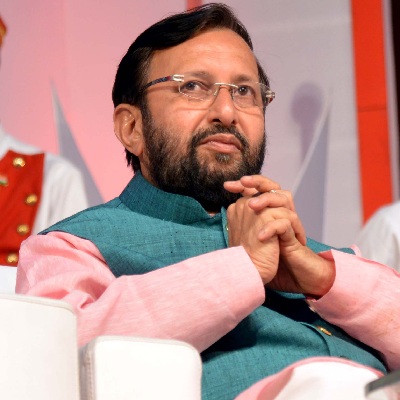
    NEW DELHI: Even as a few broadcasters continue to grapple with the ad cap issue in the Delhi High Court, Information and Broadcasting Minister Prakash Javadekar today said pay channel viewers should not be burdened with advertisements.


    He said that while the government felt the logic of permitting advertisements was logical in the case of free-to-air channels, it would shortly decide whether this kind of restriction should also apply to pay channels who also earned through subscriptions. FTA channels have no other means of revenue apart from advertisements.


    The Minister was answering a question relating to the 10+2 ad cap presently permitted to all television channels. 


    The News Broadcasters Association and other stakeholders have already challenged the 10+2 formula in the Delhi High Court and it is pending hearing.


    While the NBA contends that news broadcasters being free to air do not earn any other revenue, the government has reiterated that the ad cap was part of the Cable TV Networks Regulations 1994 and the Cable TV Networks (Regulations) Act 1995. 


  • MSO protests against Maharashtra cable TV tax

    MSO protests against Maharashtra cable TV tax

    The Hinduja-run MSO InCableNet has raised a voice of protest against the Maharashtra state government’s move to double the entertainment tax levied on cable operators. The state finance minister announced the hike in the budget that was presented to the assembly for 2000-2001 yesterday.

    In a press release , InCableNet has stated that the impost will “financially cripple an already burdened cable industry. The need of the hour is to implement the existing entertainment tax system rather than increase tax burdens.”

    Says IndusInd Media – the company that runs InCableNet – CEO Ram T. Hingorani: “The increase will result in a substantial financial burden on MSOs like In CableNet and cable operators who declare 100 per cent connectivity.”

    Last year the cable TV industry had hailed the-then government’s decision to levy a flat rate of Rs 15, Rs 10 and Rs 5 for each urban, semi-urban and rural cable TV homes respectively. This replaced the earlier system of charging a percentage of subscription fees.

    InCableNet says that the governments contention that entertainment tax targets were not being met by it on account of underdeclaration by cable TV operators (hence it was forced to hike rates) was unfair.

    “The system needs correction not a 100% hike to supplement the lacunae in the entertainment tax levy system” points out Hingorani. “The cable TV subscriber is no mood to pay an increased subscription, particularly in view of the burden of rising prices of day-to-day commodities and the new hikes in kerosene and LPG prices. The current budget has also increased the professional tax which is bound to affect the common man in the state. This additional burden that the Cable TV industry will have to bear will stunt its growth further as the Government is doing nothing to promote it.”

    Hingorani also complained about the varying rates of entertainment tax levied by various state governments on cable TV operators. “All the states have approximately the the number of channels with common pay channels,” he says. “Yet each of the governments imposes varying taxes.”

    He would like the government to tax pay TV channels instead of cable TV operators. “Pay TV channels earn huge sums by way of subscription and ad revenues. The government should examine whether levying a 5 to 10 per cent tax on the channel managements is more feasible. Th tax can be collected at source and evasion will be eliminated in a structure where the onus for paying the tax is absolutely clear,” he says.

    Hingorani suggests that the government should work on schemes such as voluntary disclosure to encourage declaration of larger subscriber bases by cable TV operators.