Tag: Pawan Chopra

  • Navin Chawla assumes charge as I&B secretary

    Navin Chawla assumes charge as I&B secretary

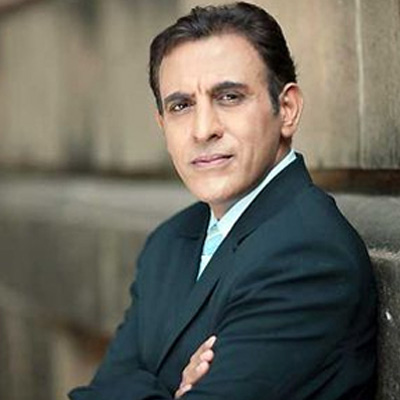
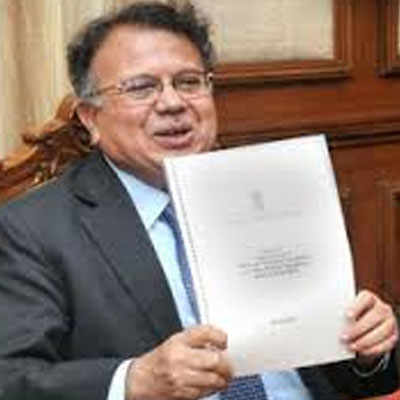
    NEW DELHI: The new information and broadcasting secretary Navin Chawla took over formally in his new posting, replacing Pawan Chopra who retired yesterday from government service.

    However, unlike his minister Jaipal Reddy, Chawla did not meet the media on his first day. That he wants to keep a low profile, especially on the eve of a new Parliament session that begins tomorrow, is understandable.

    On being asked for an appointment by indiantelevision.com, Chawla’s office said that he would prefer to speak to the media after about 10 days by which time he would try to get a hang of things and issues in the ministry.

    Chawla, considered close to the Congress chief Sonia Gandhi’s family, served as a joint secretary in the I&B ministry in the mid to late 1990s period.

  • Chawla new I&B ministry secretary

    Chawla new I&B ministry secretary

    NEW DELHI: The new Congress-led United Progressive Alliance government has started making bureaucratic appointments and information and broadcasting ministry is amongst the first batch of units to get a new crop of officials.

    Navin Chawla has been named as the I&B ministry secretary. He will replace Pawan Chopra who would retire from government service on 31 May, having worked under two ministers —- Sushma Swaraj and Ravi Shankar Prasad — and had been at the helm when some of the controversial issues like conditional access system (CAS) had pitch forked the ministry into limelight.

    Chawla, who takes over from Chopra, is not completely new to the I&B ministry as he had been here as a joint secretary some years back.

    Chawla, himself an author of sorts — he has penned the biography of the late Mother Teresa — is also said to be close the family of Sonia Gandhi, the chief of the Congress party. The Delhi chatterrati circles have it that  Chawlas wife, Rupika, an art historian, is a personal friend of Sonia.

    Chawla comes at a time when the ministry is not being racked by any major issue like CAS and also has a minister, Jaipal Reddy, who is regarded as a levelheaded person. But the new secretary would have to dive headlong into the issue of private FM radio operators licence fee issue and may also have to work on the proposed setting up of a broadcast regulatory body, a pet theme of Reddy reiterated several times.However, Chawla would have the benefit of the broadcast bill that had been tabled in Parliament by Reddy himself during his stint as an I&B minister in 1997. Moreover, some work in this regard has also been done by Chopras team, including additional secretary (broadcasting), Vijay Singh.

    The I&B ministry would have to look for an additional secretary (broadcasting) too as Singh is likely to move out of the ministry as he is slated to be empanelled for a secretary’s post by July.

  • No buzz in capital’s corridors on I&B minister

    No buzz in capital’s corridors on I&B minister

    NEW DELHI: Even as political heat increases in the capital city of India — the natural heat in the third week of May has already touched a scorching 44 degrees Celsius — information and broadcasting ministry is one portfolio that has not been talked about in political circles much.

    Still, one thing is almost certain: that the portfolio of I&B ministry, generally regarded as a propaganda ministry by the government of the day, is unlikely to go to a non-Congress political party irrespective of the sex of the person who presides over the I&B ministry.

    The reason is quite simple, point out political observers. No government of the day would like to hand over charge of resistive and important ministries like finance, home, I&B, defense and even human resources development (it was an important ministry for the BJP-led previous government) to its allies 
    out of fear of power being misused.

    Though in the case of defence, the portfolio may go to the Maratha supremo and leader of the NCP, Sharad Pawar, who may be considered an outsider, but is originally a Congressman.

    Coming back to the I&B ministry portfolio, speculation had been rife that Jaipal Reddy, who had been an I&B minister in the United Front government in 1997, could be brought back. But Congress sources indicate that Reddy is too senior a politician now, to be given the I&B ministry again.

    “Some young blood should be infused and a comparatively younger minister would be preferable at I&B,” a senior Congress leader said, hinting that the usual suspects may not be given this ministry.
     
    The very fact that despite the whittling down of importance of the I&B ministry, the Congress would like to have somebody from the party to lord over it, also rules out the candidature of Dayanidhi Maran, son of late Murasoli Maran, who nevertheless has some media exposure in the form of controlling the Sun group of TV channels and Sumangli publications.There are several other names going round too for the I&B ministry portfolio, but they are all in the realm of speculations.

    A pragmatic Congress leader added that the I&B ministry is important for a government, but “not high on the pecking order” to be discussed at this stage of government formation when the tug-of-war is for far more serious posts like that of the deputy prime minister and home minister.

    But one thing has been made easy for the new incumbent on the fifth floor of Delhi’s Shastri Bhawan, which houses the I&B ministry amongst several others. The new minister would not have to worry much over getting `friendly’ bureaucrats.

    Two of the senior most bureaucrats in the I&B ministry are slated to move out over the next 30-45 days time, making it easier for the new minister to bring in like-minded bureaucrats.

    While I&B ministry secretary, Pawan Chopra, attains super-annuation status on 31 March, the tenure of additional secretary (broadcasting), Vijay Singh, in the ministry comes to an end by July as he gets empanelled for promotion to a secretary’s post.

    Asked by indiantelevision.com whether there is a possibility of his being promoted as a successor to Chopra, Singh said that it was technically possible, “but highly unlikely.” Ideally, Singh, who has seen some of the controversial times (read a fiasco called CAS) in the ministry during former minister Ravi Shankar Prasad’s regime, would like to move out of the ministry.

  • Government keen on Community Radio

    Government keen on Community Radio

    NEW DELHI: The government is keen to encourage community radio and has already opened access to this sector to well established educational institutes, information and broadcasting secretary Pawan Chopra said today.

    Chopra spoke at the inauguration ceremony of a two-day workshop on Designing and Enabling Framework for Community Radio in India, jointly organized by the I&B ministry and UNDP and UNESCO, here today. He offered that the opening up of radio as a medium of community communications reflects the responsiveness of the government to those who believe that this is essential for a homogeneous growth of society.

    According to Chopra, the limited spectrum and growing number of players in the field of broadcasting had to be kept in mind while evolving new policy initiatives, aimed at popularising community radio.

    Though Chopra touched upon the issue of security concern, he did admit that the development paradigm in India has always placed greater importance on mass media as an agent of public service and social change. “Pitfalls and constraints have to be born in mind, while encouraging expansion of community radio,” he said.

    In his comments, Prasar Bharati CEO K S Sarma said the expansion of community radio would supplement the public broadcasters efforts to reach to the masses and meet their aspirations. He said public broadcaster can help the prospective community radio operators by providing technical and infrastructure know-how.

    The workshop would provide a platform to share the experiences of other countries and organisations and to come out with a policy framework that takes into account all the issues.

    The basic purpose of the workshop is to study and share the experience of other stakeholders about successful community radio frameworks and practices, as well as to identify and brainstorm on key issues of concern while formulating a national policy framework on Community Radio in India.

    The participants W Jayaweera of UNESCO, Dr Maxine Olson, UN Resident Coordinator and UNDP president Representative, Prof M Tawfik, director and UNESCO representative, Brijeshwar Singh, director-general, All India Radio, Bharat Koirala from Nepal, Peter Rice from South Africa, Ashish Sen of Voices (a consumer group) , Dr R. Sridher of Anna University, K R P Verma, CMD of BECIL, Giles Tanner from Australia and Rakesh Kakar of the Telecom Regulatory Authority of India.

  • I&B secretary beckons to radio

    I&B secretary beckons to radio

    MUMBAI: Information and broadcasting secretary Pawan Chopra was in Mumbai on Monday evening to participate in a panel discussion on challenges in the infrastructure and technology sphere in television, but took the opportunity to invite radio to join the tech revolution.

    In his address, Chopra announced,”Once you have DTH (direct to home), you can also have audio broadcast of satellite.” Referring to the FM radio broadcast in the country which was launched before satellite broadcasting  was officially acknowledged in the country, chopra said it was now upto radio to respond to this opportunity. ” We may well leapfrog into satellite broadcasting that much faster,” he told the assembled gathering of media and television industry professionals.

    Chopra, who later fielded questions on the rights and wrongs of putting CAS in suspended animation, also said that broadcasters need to pay as much attention to the content, as they are paying to transmission quality. “The proof of the pudding is finally going to be in the content,” he quipped.

  • C’AS and when it happens

    C’AS and when it happens

    MUMBAI:Ultimately, it was independent media auditor Meenakshi Madhvani from the audience who stole the show with her well timed quip at the CNBC TV18 organised panel discussions on ‘That’s Entertainment’ at the J W Marriott last evening.

    While panelists including I&B secretary Pawan Chopra, Star India COO Sameer Nair and SET Discovery president Shantonu Aditya debated the benefits of and choices available to the consumer thanks to CAS, DTH and broadband, Madhvani crisply pointed out that while all the vacillating policies on conditional access thus far had been initiated in the name of the consumer, it was the consumer who would ultimately have the say in accepting either technology. “Remember, the remote is finally in the hands of the consumer, for whose eyeballs the entire fight is about,” she reminded the panelists, to applause from an audience comprising television and advertising professionals.

    In an otherwise bland discussion, in which incisive anchor Anuradha Sengupta could get only optimistic and stoic responses from Aditya and Nair on the return of conditional access, Hathway Cable and Datacom CEO K Jayaraman provided the only vociferous note. “With CAS in indefinite abeyance and DTH already rolled out, we are facing a stiff competition, particularly in SEC A and B homes,” he pointed out. “With CAS continuing to be in limbo, all we will be left with will be SEC C and lower down,” he complained.

    While the broadcasters (Zee Turner president Sunil Khanna along with Aditya and Nair) sounded unanimous that while the need for addressability continues, CAS was not packaged the way it should have been, Aditya said he was more bullish on broadband, hinting that this lternative platform was probably set to take off in the next couple of weeks.

    Chopra himself, despite being cornered by questions probing the sagacity of first announcing and then withdrawing CAS, said that eventually multiple distribution platforms would become available in the country and that, the postponement was CAS was no loss of image for the ministry. “CAS is an integral part of the DTH model,” he said, citing examples of other countries, and maintaining that Prasar Bharati’s free to air DTH would also be a part of the spectrum.

    Aditya foresaw at least 30 to 40 special interest channels entering the country, once CAS comes in, as also the entry of more multinational companies into the ground distribution business with addressability getting implemented in India.. 

  • Trai chief Pradip Baijal’s letter to I&B secretary Pawan Chopra

    Trai chief Pradip Baijal’s letter to I&B secretary Pawan Chopra

    MUMBAI: Given below is the full text of the letter issued by Telecom Regulatory Authority (Trai) chairman Pradip Baijal to information and broadcasting ministry secretary Pawan Chopra today:

    Pradip Baijal
    Chairman

    DO No: 1-7/2004-B&CS Dated 23/2/2004

    Dear Shri Chopra,

    After the Government appointed TRAI as the Regulator for the Broadcasting and Cable sector, vide a notification dated 9th January, 2003, the Authority has taken a number of steps to assess the difficulties faced by the consumers, the effects of the implementation of CAS and the problems that arise, including implementation problems and feasibility of conducting legally required activity in this regard. In mid-January, the Authority began a consultation process, obtained comments on relevant matters within that context in writing as well as through its meetings with various stakeholders, examined the views of the four Governments that have to implement CAS, and considered the regulatory practices in other countries. The TRAI has obtained substantial information and views, and is in a position to take the process forward with a more detailed Consultation Paper.

    2. The Authority’s assessment of the various above-mentioned inputs is that immediate remedial measures need to be taken to properly address the issue of CAS and therefore decide to recommend that the Notification No. SO 792 (E) dated 10th July, 2003 be denotified or kept in abeyance for at least three months and necessary action be taken keeping in view the directions of the Hon’ble High Court of Delhi dated 26.12.2003 in CW 89934/2003.

    3. I am forwarding with this letter the interim recommendations of the TRAI on the subject. A Press Note issued in this regard is also enclosed.

    4. The recommendations along with the text of this letter have been placed today on the TRAI website (www.trai.gov.in) for public information.

    Yours sincerely,

    Pradip Baijal

    Shri Pawan Chopra
    Secretary
    Ministry of Information and Broadcasting
    Shastri Bhavan
    New Delhi

  • Print media not affected by electronic media: RNI Report

    Print media not affected by electronic media: RNI Report

    NEW DELHI: If a government of India report is to be believed then the print medium need not fear the more clamorous electronic medium as far as circulation is concerned.

    The 47th ‘Press In India’ report, prepared by the Registrar of Newspapers in India (RNI), reveals that the total circulation figure of newspapers jumped up from 11,52,53,948 copies in 2001 to 14,20,05,543 copies in 2002-03, registering an increase of more than 24 per cent.
     
     
    The report also indicated that the challenges from the electronic medium have in no way hampered the growth of the print segment. The Indian reader still relishes detailed analysis in addition to hourly news bulletins and talks shows.

    The present report having made a change from the calendar year to the financial year, contains an analysis for 15 months, that is from 1 January 2002 to 31 March 2003.

    The increase can be attributed to the larger number of publishers submitting annual statements. During 2002-03, newspapers in Uttar Pradesh had a total circulation of 2,80,46,287 copies, followed by Delhi with 2,18,56,174 copies.

    On 31 March 2003, the total figure for registered newspapers stood at 55,780, an increase of 7.35 per cent over the previous year.

    The RNI report, the first on a financial year basis, was presented by Newspapers of India registrar G D Beliya to the information and broadcasting ministry secretary Pawan Chopra here today.

    The report indicates that among multi-edition dailies, Dainik Bhaskar, publishing in Hindi with 18 editions, had the largest claimed circulation of 17, 17,294 copies, followed by the Times of India with 13,94,646 copies.

    For single-edition dailies, Hindustan Times claimed a circulation of 11,12,160 copies, while The Hindu came second with a figure of 9,22,407 copies.

    The circulation pattern also revealed that while big publishing houses dominated the metropolises, the medium and small newspapers with their local content influenced small town and rural areas.

    Big newspapers claimed a circulation of 5,11,72,068 copies, while medium newspapers had 5,26,00,091 copies and small newspapers claimed 3,82,33,384 copies. Since many small newspapers perhaps do not send annual statements, these figures do not reflect their actual share in the circulation scenario, the RNI report said.

    Out of the 7156 newspapers which sent their annual statements in 2002-03, 5371 were owned by individuals, while 950 were owned by joint stock companies.

    Language-wise, Hindi dominated with 3410 newspapers, followed by English with 750. In circulation too, Hindi maintained its lead with 6,17,68,735 copies while English followed with 2,6213,142 copies.

  • Govt. taskforce to chalk out Entertainment sector’s Venture Capital funding plans on 13 Dec

    Govt. taskforce to chalk out Entertainment sector’s Venture Capital funding plans on 13 Dec

    NEW DELHI: The much-touted high-powered committee set up by the government, under the chairmanship of Planning Commission member N K Singh, to look into ways of inducing venture capital funding in the entertainment industry would meet here on 13 December to deliberate on the issue.
     

    Government sources said that considering Singh’s penchant for liberalisation, the committee’s recommendations may be “radical”.

    The terms of reference of the committee on VC funding are two-fold: suggest a roadmap outlining a strategy to attract venture capital companies/funds to invest in the entertainment sector and study the existing investment regime in India in order to identify areas for policy changes to facilitate such investment.

    According to an Arthur Andersen Ficci (AA Ficci) study, the entertainment industry can be conservatively estimated at about Rs 96 billion, which is expected to grow to about Rs 286 billion by the financial year 2005.

    The other members of the committee, which has been given six weeks’ time to submit recommendations, include ICICI CMD KV Kamath, additional secretary in the department of banking in the finance ministry Vinod Rai, I&B ministry secretary Pawan Chopra and directorate general of foreign trade L Mansingh.

    Though the VC funding panel has been set up for the entertainment sector, which also includes TV and radio broadcasting, apart from films, the industry representation is dominated by those active in the film sector.

    Until now, according to the ministry, approximately Rs 7,000 million financial assistance has been sanctioned by financial institutions and banks after the film industry was granted an industry status. Out of this Rs 2,000 million has been sanctioned by Industrial Development Bank of India, 

    while the rest has been by various banks like the State Bank of India.

    “Part of our efforts have been focussed on making the regimes covering the flow of finances such as the FDI and the lending regimes of commercial banks and the IDBI more encouraging,” according to information and broadcasting minister Ravi Shankar Prasad.

  • CAS continues to stump I&B ministry

    CAS continues to stump I&B ministry

    NEW DELHI: India’s federal government is still in a spot over the implementation, rather non-implementation, of the conditional access system (CAS) in the cities of Mumbai and Kolkata – with both the metros steadfastly refusing to toe the official line on rollout from 1 September.

    A senior information and broadcasting ministry official today admitted that Mumbai is too hot for the ministry to handle and a “political decision would have to be taken” by the senior most ministers in the government.

    Pointing out that the the 7 September address to the cable ops of Mumbai by Shiv Sena supremo Balasaheb Thackeray would be nothing but a “clarion call for revolt” (against CAS), the ministry official said: “In the wake of such unofficial boycott, a political decision has to be taken by the prime minister or the deputy prime minister in consultation with the I&B minister Ravi Shankar Prasad.”

    But that can only happen when Prasad, along with I&B ministry secretary Pawan Chopra, returns from Venice after soaking in some sun, movies (the film festival is on there) and, possibly, some bilateral agreements related to the film industry and entertainment content.

    The Left-oriented West Bengal government, too, is no mood to relent. In one of its missives to the I&B ministry, the state government has said that the centre should call a meeting of all the states where CAS is being sought to be implemented. It has also been learnt that Kolkata has said that it would watch the Delhi scene very closely before taking a decision on CAS — to go ahead with it or abandon it.

    This too has to wait the I&B minister’s return.

    Meanwhile, the feedback that the ministry has got from Chennai, where CAS was rolled out in a limited way earlier this month, is that “people are saying they were better off without CAS.”

    Some broadcasters too are realising that they may have got away lightly with other metros, but in Chennai the set-top boxes are moving too slowly and confusion reigns. “Our feedback is that about 5,000 boxes have been sold/rented over the last few days. But when you juxtapose this number against the cable subscriber base of over 1 million, the number of boxes out there looks ridiculously low,” a senior executive of a pay channel said
    today after returning from Chennai.

    One hopes that a rejuvenated Prasad will come back from Venice and sort out the various controversies that have plagued the scheduled rollout of CAS in the country.

    Meanwhile, Mumbai-based lawyers are of the opinion that the central government’s dithering over the decision to postpone CAS (conditional access system) rollout in Delhi, Mumbai and Kolkata can be challenged in court.