Tag: Paul Barbaro

  • Houseful at Bengaluru leg of MIP India roadshow

    Houseful at Bengaluru leg of MIP India roadshow

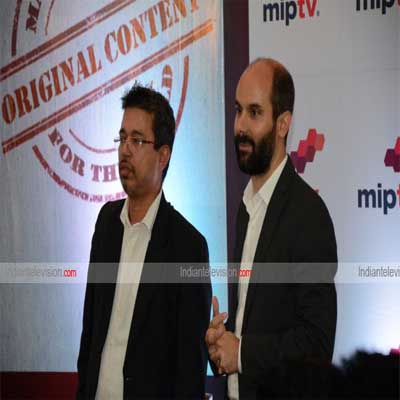
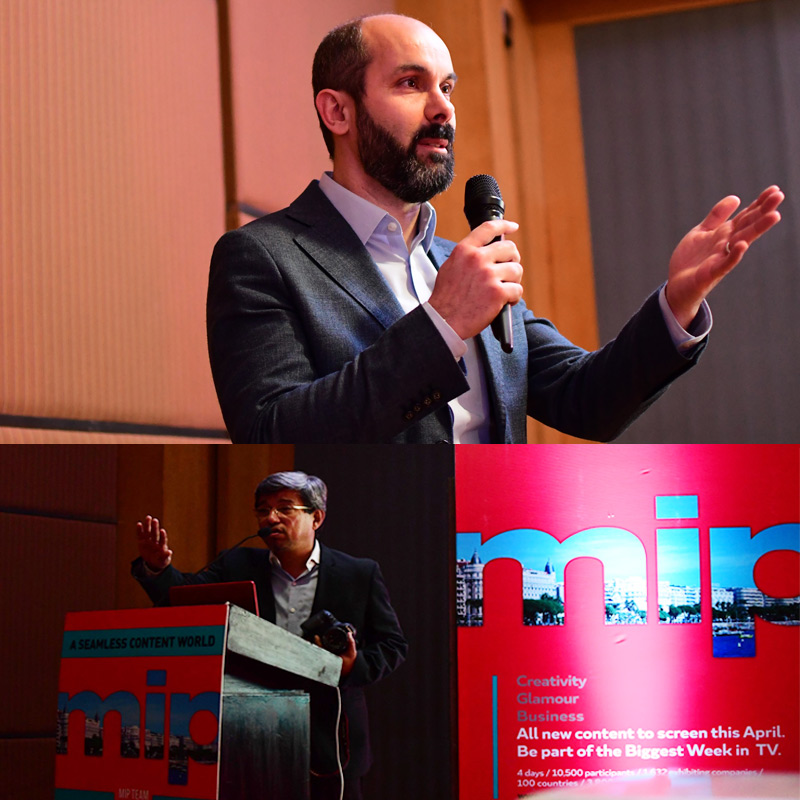
    BENGALURU: All the seats were taken and more had to be brought in as the Bengaluru leg of the MIP TV India roadshow ended last evening at the Lalit Ashok. With the theme ‘A Seamless Content World’, the Bengaluru MIP was addressed by Reed Midem (Paris) Asia Head Paul Barbaro and India representative for Asia Markets and Indiantelevision.com managing director and CEO Anil Wanvari. The duo addressed the rapt audience in tandem.

    Beginning with the theme of the roadshow, Wanvari quoted Netflix chief content officer Ted Sarandos’ words that he had spoken during an interview – “A good story told well is a global product.” In today’s connected world, which is increasingly becoming seamless, content is king, queen and prince irrespective of geography. This was evident by the success of creations such as the Louis Fonse-Daddy Yankee’s Spanish number Despacito, which had 5 billion views on YouTube, even more than those that Gangnam Style had, explained Wanvari.

    “Increasingly, scripted and non-scripted local shows made in a local language and aimed at domestic viewers are finding a global audience. And building a fan base overseas can only boost the revenue potential,” said Barbaro. Exhorting Indian creators, animators, Indian content aggregators and buyers and people from the Indian media and entertainment industry to participate at the India Pavilion at MIP TV 2018 at Cannes from 9 April to 12 April 2018, Barbaro and Wanvari spoke of the advantages, the gains, the benefits of doing so.

    Citing examples of some successes of local content, Barbaro said, “Historically, dramas and comedies have not travelled well because they are steeped in local customs, conventions and cultures. Yet, Keshet’s Loaded, Star India’s Iss Pyaar Ko Kya Naam Doon, and Broken Pieces from Turkey’s Global Agency made compelling scripted entertainment centred on universal truths. And these stories have enthralled audiences in a number of diverse geographies.”

    Reed Midem’s statistics and data about buyers and sellers and the kind of content that was required, details about the money that could be earned from different countries were shared. Case studies were presented and AVIs of some success stories of some of the people who participated at MIP TV were played.

    “Don’t come and register if you plan to come to MIP TV just once. You have to be there for the long haul if you want to truly succeed, to network with the buyers and sellers and leverage the associations that you built there,” concluded Wanvari very bluntly.

    For details contact: Priyanka Sharma +91-8017562056/+91-22-6642 4062

    Email: priyankas@indiantelevision.co.in or devikak@indiantelevision.co.in

  • Mipcom/MipTV reach out to Mumbai’s content community

    Mipcom/MipTV reach out to Mumbai’s content community

    MUMBAI: The Mumbai leg of Reed Midem’s Mipcom and MipTV road show went off like a dream with an attendance from about 80 professionals from the world of television and digital content. It was addressed by Reed Midem international business development director Ted Baracos, Asia sales manager Paul Barbaro and Indian representative (and indiantelevision.com founder & CEO) Anil Wanvari.


    The theme like the other two venues was “Can Indian content leave its stamp on the world?” But unlike Delhi and Hyderabad, the attendees were primarily professionals from TV and digital content production, broadcast syndication and distribution.


    TV producers were represented by Shyamashish Bhattachharrya, JD Majethia, Sumeet Mittal, Rakesh Paswan, Abhigyan and Mrinal Jha, Sudhir Sharma, Lalit Sharma, Asad Abid, Ram Talkit, Rahul Sarangi and Roopak Saluja. Zee TV, Indiacast, 9XM, Sahara TV, Times Television Network, and Travel XP HD were some of the broadcasters who attended. Independent film producers Imtiaz Barolia and Javed Rahman Khan also attended. Amongst the distributors included Bhupin Chhadva, Yuvamira Dwivedi, Vivek Lath, Ratnakar Kumar, Sanjay Hinduja and Rashmmi Menon.


    Rajjat Barjatya, Sandeep Mehra and Ram Seshan made up the digital players. Education companies Educmedia and Laughing Buddha Entertainment Knowledge were in attendance.


    Extremely interactive, the two hour seminar had all the constituents expressing their views. Broadcasters expressed that the two markets are a must attend for TV professionals and that the two markets help generate substantial business for content syndication for them. “Indian TV shows command about $350 to $700 per half hour,” said one of the broadcasters. “The sticker price of non-fiction shows is about $1,500 and above,” said another. “Films sell at anywhere from $500 to $15,-20,000 depending on the territory,” said a third.


    According to them, Pakistan, Afghanistan, Russian, CIS, Mynamar, Poland, middle east and other east European markets are some of the markets which have taken to Indian content well. Most of the attendees expressed that they would like to see an Indian pavilion come up at MipTV and Mipcom, representing the Indian content creation industry, just like 26 other regions from all over the world are doing, Wanvari said he was in conversation with National Film Development Corporation to set up the pavilion once again this year, while the Animation, VFX, Comic & Gaming Industry of Andhra Pradesh was also in the process of doing the same for this year’s Mipcom from 7-10 October.


    Film producer Javed Khan expressed that Mipcom is very conducive to doing co-production deals. He is currently executing a coproduction film with support from Turkey. “We nearly closed one co-production contract at Mipcom three to four years ago,” he said.


    Creative professional and producer Rahul Sarangi spoke about a non-fiction format developed by him which is going on the floors in four different countries. “Indian broadcasters were not very accommodating of my paper format,” he says. “So I invested about $40,000 and created a nice trailer and one of the overseas format distributors agreed to license it. It will be seen in several countries very soon. Mipcom and MipTV have really helped me realise my ambitions. Now an Indian broadcaster is negotiating to buy the licence for India.”


    The entire room gave a rousing ovation to digital producer Rajjat Barjatya who has generated 1.5 billion views for his 45 odd channels on YouTube. “Indian content can travel and is already travelling through my channels,” he said. “The most popular offering is a video Ba Ba Black sheep which has got 76 odd million views,” he said. “And it is being watched by a German mother and her daughter, an English mother and her son.. it has crossed language and cultural boundaries.”


    TV producers stated that they were totally hemmed in by the fact that they did not have the rights to the content they produce, but they would nonetheless like to attend to expand their horizons. Baracos said the Indian case was not unique. He gave the example of UK independent producer organisation Pact. “The UK market was quite similar to India’s as is Japan. The producers lobbied with industry and government to get their rights back again,” said Baracos. “They were successful with a caveat: they would share revenues with broadcasters on sales they achieved. Today, the UK Indies pavilion is generating close to 30 million pounds worth of deals annually. Everyone is happy: the broadcasters, and the producers.”


    Barbaro highlighted that it is imperative that India builds a brand for itself at international markets. “Korea has done it over years; China is doing it. India needs to do it,” he said. “Today, their content is traveling all over the world. Yes, the government supports their efforts with funds, but the Indian content community needs to awaken the Indian government about the opportunities available and what other governments are doing to help and propagate their culture – and indirectly generate national economic benefits – through markets such as Mipcom and MipTV.”