Tag: Paul Aiello

  • CA Media elevates Rajesh Kamat to Asia Group COO

    CA Media elevates Rajesh Kamat to Asia Group COO

    MUMBAI: After successfully launching CA Media India, Rajesh Kamat has been elevated to Chief Operating Officer (COO) of CA Media, the Asian investment arm of The Chernin Group, LLC (TCG). In his new role, Kamat will relocate to Singapore and report to CA Media Group’s Hong Kong-based CEO Paul Aiello. Core to his new responsibilities, Kamat will provide strategic guidance to the group’s existing portfolio investments in the region. He will also support Aiello in identifying and managing growth opportunities for CA Media in Asia.


    Before joining CA Media in 2011, Kamat had launched Viacom18’s Hindi general entertainment channel Colors and made a spectacular success of it.


    Both directly and through CA Media, TCG has made significant investments in the U.S., Europe and Asia. CA Media will continue to focus on supporting the growth of its existing portfolio of investments, while seeking to expand its position in India and other important emerging markets in Asia.


    Kamat will continue to oversee CA Media operations in India while the senior management team – Vivek Raicha and Rishi Negi – will continue to lead their respective domains, as Head of India Investments and Head of India Investee Operations.


    Over the last three years, CA Media India has built a strong portfolio of growth investments in the Indian media and entertainment space, including television and film production, live music events, youth media, digital content, intellectual property and graphic novels. In each investment, CA Media has worked with strong on-the-ground partners and local management teams.


    CA Media India’s current investments include strategic stakes in Endemol India, Only Much Louder (OML), Graphic India, and a wholly owned online influencer network, FLUENCE.


    Since CA Media’s investment, Endemol India has transformed itself from being principally a non-scripted television content production company to one that is producing content across multiple screens including TV, films and digital. Today, OML is India’s premier music, live events and youth media company, with music festival brands such as NH7. While Graphic India is establishing its position as one of India’s leading character entertainment companies, FLUENCE has already become India’s leading online influencer network, connecting celebrities, consumers and brands to create exciting media properties that can be monetised across various consumer facing digital platforms.


    “Given what Rajesh has accomplished with CA Media in India, I am confident in his abilities to take on this expanded regional role for CA Media throughout Asia, we look forward to the contributions he will make,” said CEO CA Media Paul Aiello.


    Chairman of The Chernin Group Peter Chernin noted, “As we move into our next phase of growth, it is critical to have a structure that supports our operations and continued expansion plans in Asia. Rajesh’s new expanded role in the region will help the group achieve this objective.”


    “Moving from a country role to a region profile is both exciting as well as challenging given the diversity of the key Asian markets and our unique portfolio of assets. I look forward to the challenge ahead,” Kamat said.


    Kamat will assume his new role and responsibilities in Singapore starting April 2014.


    CA Media was founded in partnership with Paul Aiello in November 2010 with a mandate to build, manage and operate media, entertainment and technology businesses throughout Asia. CA Media is building a regional footprint primarily focused on the region’s dynamic growth markets including India, Indonesia and China.

  • ‘We are identifying short term tasks and medium term tasks to get to a new, bigger Star’

    ‘We are identifying short term tasks and medium term tasks to get to a new, bigger Star’

    It’s the festival of lights. And for many the festival of noise courtesy exploding fireworks. In the hope of reducing the number of those belonging to the latter tribe, we, at indiantelevision.com, decided to put a display of firecracker articles for visitors this Diwali. We have had many top journalists reporting, analysing, over the many years of indiantelevision.com’s existence. The articles we are presenting are representative of some of the best writing on the business of cable and satellite television and media for which we have gained renown. Read on to get a flavour and taste of indiantelevision.com over the years from some of its finest writers. And have a happy and safe Diwali!

     (Written by: Thomas Abraham in 2007)

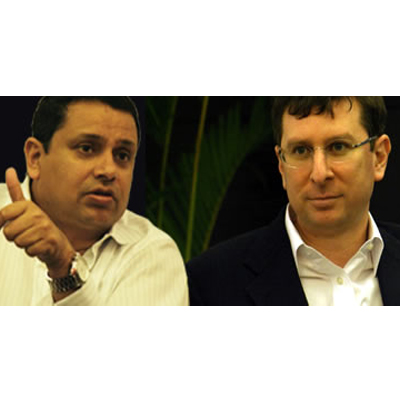
    Two men under whose collective leadership rest the fortunes of Asia’s most powerful media conglomerate. In a way, there is a commonality in how both have risen to the top at Rupert Murdoch’s Asian media arm – from the blue as it were. It was just under ten months ago that Paul Aiello, a one time investment banker, was pitchforked into the hot seat of a company riven by internal power politics and stalled growth stories in the key markets it was operating in.

    Three months later, Aiello opted for another dark horse in then Star News CEO Uday Shankar, giving the newshound turned corporate honcho operational charge of India’s lead broadcast network and the difficult task of setting things right there.

    In conversation with Indiantelevision.com’s Thomas Abraham a day after Shankar was elevated to Star India CEO (on 25 October), the two offer their most detailed overview yet, of the media conglomerate’s plans for this market and the region as a whole. Excerpts:

    These are exciting times for the industry with the economy booming and the sector seeing 20-25 % growth. How does Star view all this? What are the key factors that will drive its growth? What could work as impediments?
    Aiello: I continue to be extremely excited about the market and its growth, even though there are numerous uncertainties. You can argue that there are regulatory uncertainties, uncertainties created by increased fragmentation in viewership and increased competition. But these things are to be expected in a highly dynamic market place.

    The challenge for us is not about focusing on what Star is. It is really about what should the next Star be? What should Star be in the next five to ten years from now? That requires a lot of internal focus and development of strategies. 

    So whether it’s about our core broadcast business where we must deal with increased fragmentation, regionalization… all the phenomena that everyone looks at, we need to be there. As well as looking at the overall growth in the media market and knowing that there are other areas that we’re not in as Star; but areas where we have tremendous capabilities within News Corp and in Star, that we should move in to and make sense of.

    So we’ve been through a strategic review process and now we are coming out of that and are identifying the short term tasks and the medium term tasks to get to a new and bigger Star.

    If you get detracted by a noise event like a new show that someone else has come up with in the last one week or some uncertain ruling or regulatory decision, you can get paralysed and miss what is the more important strategic initiative on where you want to be.

    It is really important to keep that strategic vision because then you become really disciplined to stand by what the vision is and do the execution of the steps necessary, whether it is people moves or moving into new areas of business.

    So which are the new areas?
    Aiello: Certainly we need to expand the footprint of our core business of our channels. In the next six to nine months, we are going to be launching more channels.

    Five channels?
    Aiello:
    Five, six channels, yes. That is one manifestation of the extension of our core business. But we are looking at many other ways to build our business.

    Like for example?
    Aiello: News Corp has tremendous capabilities when it comes to films.

    Everybody was waiting for that. Are you going to go the Sony Pictures route? Will you be getting into movies big time and will that be under your mandate?
    Aiello:
    It is something for not just me to decide, but Fox to decide. We work very closely with our sister companies at New Corp. Let us see what we can do together if such opportunities make sense.

    News Corp is pretty strong in new media, internet as well.

    MySpace?
    Aiello: Yes, MySpace, Fox Interactive Media.

    Ajay Vidyasagar will be on that I am told.
    Aiello: Ajay is very involved in our new media strategy.

    If Ajay will be overseeing that side of the business, there are also the content challenges that lie ahead. How will all this be managed?
    Shankar: Ajay did an amazing job in the last eight-nine months when there was a creative management vacuum when people had left and gone away. Now we have ramped up our content team. So there is Anupama (Mandloi), there is Vivek (Behl), there is Monica and two or three others who have come in. We’ve also created a structure which is more channel focused. So there is a general manager of Star Plus, who’s Keertan (Adyanthaya). There is a GM of Star One, that’s Ravi (Menon). So the day to day channel management activities have become pretty much independent and self contained.

    So, for any of the other senior management, including myself, we don’t have that kind of daily interface. Our task has moved on to doing strategic and long term planning for the channels. Our internal understanding is that Ajay is going to primarily spend his time in building the internet business. And that’s in collaboration with MySpace wherever it’s possible. And internally, we will do a whole lot of other things.

    Where MySpace might not be a partner?
    Aiello: That’s right. Star will have its own new media strategy. At the same time Star will work with MySpace, Fox Interactive Media, in as many places as it makes sense. 


    The times of 50-on-50 top shows is history and we could soon well have a situation of three to four networks fighting it out for top honours. How do you see that panning out? 
    Shankar: I really feel that in this market, in the entertainment space, for a long time will continue to primarily be a two player market. Maybe there might be a third player who will have a little bit of traction. Who that first, second or third player is may change, in two or even in five years time. But I still think that for many years, that is what is going to be the situation.

    The big difference will be this. Typically in broadcasting globally, two key players will be the ones making money. In this market, in GEC, simply because of the size of the universe, it is possible that if people have a disciplined content approach, even the No. 3 and the No. 4 can make money.

    And our advertising space is becoming so segmented. Not everybody has to take big corporate advertisers. Not everybody has to target the same clients.

    What it requires is for people to clearly identify their TG, their target geography and smartly design unique or signature content for these TGs. My big problem is that in category after category you see, people are just cloning the leader.

    The fact is that it has worked because of the very size of the market. News is a classic example of that.

    Shankar: It has worked. But the returns are diminishing. If you see sustainable leadership in whichever category, somebody has been able to challenge the leader’s content model. Star News did whatever turnaround it could manage because it did not follow the Aaj Tak route of live breaking news. It went into appointment viewing and other kinds of signature programming.

    Now what you see is that everybody is chasing one or other player. The same thing is happening in music. You are seeing more and more commoditization of content and less and less differentiation. That is a big challenge.

    I think distribution is a huge challenge for this market; copy content is a big challenge. And the third, I am not saying necessarily in that order, huge challenge is the shortage of original quality talent; which nobody is really talking about. It is the same talent that is going around.

    If you are smart, you change three jobs in two years, your salary will go up four times, and you will get three more promotions. That does not mean that the person’s maturity has gone up or that person’s quality of skills have increased.

    Aiello: This is an issue that applies not only of India, but practically to all of Asia. You have to get fresh new talent. It is critical nurturing them and taking risks in developing them. 


    So the three biggest challenges over the next three years are distribution, commoditisation of content and talent management?

    Shankar: In distribution, if you were to further focus, the two challenges would be, 1) to strengthen the cable infrastructure to allow more and more channels to be delivered to the end customer, 2) is to create a regulatory environment where premium content is encouraged by monetizing.it.

    Not everybody has to pay Rs 500. There should be a good, decent family package available for Rs 75; but, somebody who wants to pay Rs 500 or Rs 1,000 and get great content, should have access to that. It is not to make an argument that people should pay through their noses; but people should have a choice.

    What is your view on Trai’s mandating pricing in non-Cas areas? I am told that broadcasters, as in the IBF, are debating challenging it legally. 

    Shankar: If there is a regulatory order, then everybody will have to comply with that. Obviously we have no choice.

    But this kind of price cap in non Cas areas, in an Indian environment where there is so much of opacity in declarations of subscriber base, is going to be extremely counterproductive for this industry. Because you’re operating in a situation where the cost of distribution has become a very important line item for all broadcasters. Except for one or two channels like Star Plus, everybody else has to shell out a large sum of money on distribution.

    The problem is that this kind of artificial cap on value, when the input costs are not being controlled, is very, very counterproductive. A whole bunch of broadcasters and many of the niches are going to become uncompetitive because of distortions in the distribution space. I think this is going to be highly detrimental.

    Yet you have all these new launches, new networks coming up.
    Shankar: Three reasons. People have faith in the Government, in God and the Regulator. 

    ‘You have to get fresh new talent. It is critical nurturing them and taking risks in developing them’

    It’s ‘karma’ then?
    Shankar: Seriously, if you look at it, there are niche channels where 30-40 per cent of their opex is the distribution fee. It is clearly unsustainable.

    This is a market where the talent costs are going through the roof because of the supply side shortage. It is a market where new competitors are coming, so your content costs are going up. Because clutter is going up, your marketing costs are going up. And your distribution costs are going completely out of whack.

    There is not even a logical relationship. Last year what you spent has no bearing on what you will have to spend this year. And in this market what you spend has no correlation to what you spend for similar deliveries in an adjoining market. This is clearly an insane situation.

    Aiello: That is not to say that some of these people will not succeed.
  • Steve Askew exits Star, Laureen Ong appointed COO

    Steve Askew exits Star, Laureen Ong appointed COO

    MUMBAI: Confirming news that has been doing the rounds for a while now, Star has announced that its long serving COO Steve Askew has resigned from the company. Replacing Askew as chief operating officer is Laureen Ong, whose appointment is effective June.

    A company release issued today cites the reasons for Askew’s departure as personal.

    Star chief operating officer Laureen Ong

    Ong joins Star from National Geographic Channel where she was the founding president of the network, having spearheaded the 2001 launch of NGC.

    Prior to launching National Geographic Channel, Ong served for two years as vice president and general manager of WTTG-TV in Washington where she was the first Asian-American woman to lead a top 10 market affiliate. Ong also helped launch SportsVision in Chicago, where she served for seven years eventually becoming executive producer and VP broadcasting for the World Series-winning Chicago White Sox baseball team (in which she continues to hold an ownership stake).

    Speaking about Askew’s exit Star CEO Paul Aiello said, “Steve has been with Star for over 10 years and has played a key leadership role in virtually every aspect of our operations. He has been an instrumental force in shaping the company and growing it from a relatively small broadcaster into the industry leader it is today. We thank Steve for his tremendous contributions and wish him all the best in his future endeavors.”

  • Star India appoints Vijay Singh as president, strategy & corporate development

    Star India appoints Vijay Singh as president, strategy & corporate development

    MUMBAI: Following the exit of its corporate CEO Peter Mukerjea as of 1 February, and the pending departure of its operational CEO Sameer Nair next month, Star has made the first executive announcement regarding the leadership team that will lead it in the next phase of the network’s evolution.

    Star India announced today the appointment of Vijay Singh, former CEO of Sony Music and currently Tata group company Tetley Tea’s managing director – developing markets, as president, strategy and corporate development. Singh will report to Star Group CEO Paul Aiello, who is currently holding additional charge as Star India chief executive.

    In what the broadcast major terms a newly created role, Singh will be responsible for developing business directions for Star India while taking an active role in the company’s venture businesses in India. He will oversee corporate functions including strategic planning, business development, human resources, legal, government affairs, MIS, administration and corporate communications. A point of note here is that there has been a position of president corporate affairs lying vacant since Nitin Atroley resigned a year ago.

    Singh will join Star in April, soon after the departure of Nair, whose last working day as head of India’s lead broadcaster is 26 March.

    With the public announcement of Singh’s appointment, Star now officially has two presidents. Paritosh Joshi is president, advertising sales and distribution.

    Commenting on Singh’s appointment, Aiello said, “Vijay is a veteran executive with a huge breadth of experience and we feel very fortunate to have attracted him to join Star India. His business acumen and unique insights into India and other developing markets will be invaluable as Star India readies itself for its next phase of growth and expansion.”

  • Vijay Singh to be next Star India COO; Peter Chernin flying in

    Vijay Singh to be next Star India COO; Peter Chernin flying in

    MUMBAI: After Star CEO Paul Aiello, it is News Corp president and COO Peter Chernin, Rupert Murdoch’s right hand man, who will be coming to these shores to shore up the morale of the Indian team. Chernin is flying in late on Thursday and will be in Mumbai over the following three days meeting the troops as it were.

    And in a related development, Indiantelevision.com learns that Vijay Singh, former CEO of Sony Music and currently Tata group company Tetley Tea’s managing director, developing markets, has been appointed as Star India COO.

    The main agenda of Chernin’s visit would appear to be to reinforce India’s importance, as well as to make clear how the new executive structure in Hong Kong and India (of which Singh is a key element) will mesh with News Corp’s overall growth plans.

    Singh, who will complete serving out his notice at Tetley by the month-end, is not taking up his new assignment immediately however. Indications are that he will join Star in the latter half of March. Singh will reportedly be taking up his new position just ahead of the departure of Star Entertainment India CEO Sameer Nair, whose last working day as head of India’s lead broadcaster is 26 March.

    Star officials were unavailable for comment on the issue of Singh’s appointment.

    As regards the announcement of a CEO, it will be made within the next one to two months is all that Indiantelevision.com had been able to garner from industry sources at the time of filing this report.

    With Singh’s arrival as COO, and with Aiello holding additional charge as Star India CEO, the jewel in News Corp’s Asian crown will have gone back to the structure it had before March of 2006 when Nair was COO and Peter Mukerjea was CEO. Mukerjea exited Star as of 1 February.

  • Star announces Nair, Mukerjea’s exit

    Star announces Nair, Mukerjea’s exit

    MUMBAI: Lifting the lid off the worst kept secret in Indian media, Star has made it official that its two head honchos in India – Star Entertainment India CEO Sameer Nair and Star Group India CEO Peter Mukerjea – are out of the News Corp owned Pan Asian broadcaster.

    Star announced Sunday that Mukerjea would be leaving the company at the end of January while Nair will leave at the end of March. Star also announced that Star CEO designate Paul Aiello would for the present be the acting CEO of Star India.

    While Mukerjea has joined his wife Indrani’s global human resources company INX Services as chairman, the betting is on Nair’s teaming up with news major NDTV as head of its entertainment venture.

    Nair’s immediate mandate is clearly to manage the show and chaperone Kaun Banega Crorepati, which launches tonight at 9 pm with Bollywood badshah Shah Rukh Khan in the hot seat, through its 13-week run.

  • Paul Aiello named Star CEO after Guthrie exit

    Paul Aiello named Star CEO after Guthrie exit

    MUMBAI: Star has appointed Paul Aiello, currently its president, as chief executive, replacing present CEO Michelle Guthrie, who has resigned. Guthrie’s departure will be effective 1 March.

    It was only last April that Aiello was appointed president in a newly created role and put in charge of developing strategic and business directions for the pan Asian broadcaster while overseeing corporate functions including business development, strategy and implementation, Star ventures, government affairs and corporate communications.

    The position of Steve Askew, chief operating officer (Star) & president (Star Entertainment) in the new dispensation is also unclear. Askew is presently on four months’ sick leave, according to industry sources.

    Commenting on the announcement, News Corp chairman Rupert Murdoch said, “Paul has done an exceptional job at Star since joining the company, leading its corporate team and overseeing its overall growth strategy. Paul’s business acumen, strong leadership and financial skills as well as in-depth knowledge of the diverse and complex media and telecommunications industries in Asia make him the ideal candidate to steer the long-term growth and success of the company.”

    Meanwhile, Star officials refused comment on reports that Star Entertainment India CEO Sameer Nair had resigned and would be joining Prannoy Roy’s NDTV. Attempts to contact Nair proved fruitless at the time of filing this report.

    When contacted, NDTV officials were quite categorical that reports of Nair’s joining the news major to head up their broadcast entertainment venture were without basis.

    Aiello’s appointment followed soon after the creation of a new, convoluted executive structure within Star wherein Steve Askew was named president of Star Entertainment in addition to COO of Star.

    The biggest news then was of course the shake up in the Indian operations wherein two units were created – Star Group and Star Entertainment – with Peter Mukerjea made CEO of Star Group India and Nair promoted from COO to CEO of Star Entertainment.

    As CEO of Star Entertainment, Nair was given the responsibility of overseeing all day-to-day operations including programming, marketing, advertising sales and distribution while pursuing growth opportunities in new media including wireless and internet.

    Nair was reporting to Askew while Mukerjea continued to report to Guthrie.

    Aiello, 42, joined Star from Morgan Stanley where he worked for more than nine years. Prior to joining Morgan Stanley, Aiello was vice president, mergers and acquisitions, Investment Banking Department of CS First Boston Limited, Hong Kong.

  • Paul Aiello appointed Star Group president

    Paul Aiello appointed Star Group president

    MUMBAI: Star Group has announced the appointment of Paul Aiello as its president. Aiello will report to Star Group CEO Michelle Guthrie.

    In this newly created role, Aiello will be responsible for developing strategic and business directions for the company while overseeing corporate functions including business development, strategy and implementation, Star ventures, government affairs and corporate communications, according to an official release.

    Commenting on Aiello’s appointment, Guthrie said, “As Star continues to expand its operations and look towards diversified growth opportunities in Asia, the need for an experienced and gifted executive with Paul’s background became apparent. Together with Steve Askew who oversees our operations across the region, we now have in place a highly formidable team to lead the company into its next phase of robust development.”

    Aiello, 41, joins Star from Morgan Stanley where he worked for more than nine years. He joined the company as VP in 1997 and subsequently advanced his career to executive director, mergers and acquisitions of Asia Pacific; COO of Asia Pacific investment banking and finally, MD and head of telecom, media and technology group, Asia Pacific in 2000.

    He holds a Ph.D in Economics from the University of Cambridge and a B.A. in Economics and International Relations from the University of Notre Dame, Indiana.