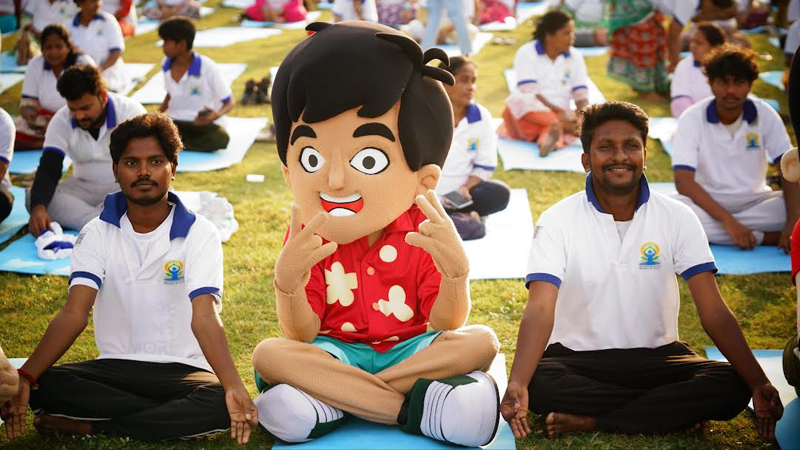
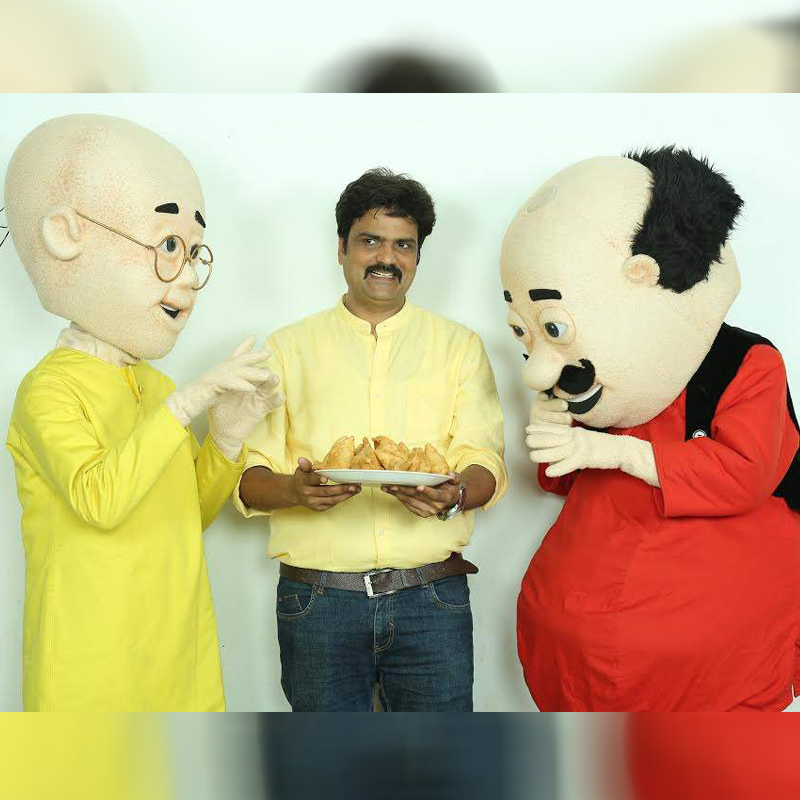
Mumbai: India’s one of the biggest toon icon, Motu-Patlu, turned 10 years old this year, and with an early achievement of being the highest-rated slot on Nickelodeon, Cosmos Maya’s flagship animation, IP Motu-Patlu, has become a success story. The everlasting bond with young viewers, which now extends across OTT, consumer products, games, and beyond, is full of landmarks at every stage.
Nickelodeon and Cosmos Maya collaborated to bring the legendary Motu Patlu to life, and it now reaches over 289 million viewers in seven languages across India. And the credit for all this success goes to Cosmos Maya’s chief creative director Suhas Kadav, the man behind the creation of Motu Patlu.
Kadav is a key creative force in the organisation. He is an animation veteran with nearly 16 years of experience across major animation studios and has worked on multiple internationally acclaimed projects. He is a trained artist from the prestigious J.J. School of Arts in Mumbai. He is also involved in the creation of the company’s new intellectual property.
Decade long success
While speaking to Indiantelevision.com, Kadav shed light on the journey of the show, character development, challenges, and the team. He expressed, “I cannot believe it has been ten years and the show is still going strong since the journey has been so thrilling. I can still recall the first episode’s method of doing it. This show would not have been as popular without the help of Cosmos Maya and the channel. I had complete creative control over the project, and my team collaborated on it without any issues. We currently have 1000 episodes, 26 motion pictures, and one theatrical release. This show will be nominated if we enter it in the Guinness World Records. This was a personal dream of mine that I shared with the studio, my team, and the writer.”
It topped the charts and remained relevant a decade later after debuting in 2012, giving the category much-needed impetus. Motu Patlu’s exponential growth is a testament to Nickelodeon’s challenging DNA, as evidenced by its current top position on the channel, contributing 45 per cent of Nick’s total ratings and ranking among the top five shows in the category week after week.
The Journey
From being born as characters in the kids’ magazine Lotpot, to coming to life on television, to being the first ever Indian animated character duo to have their statues at Madame Tussauds, Delhi, Motu Patlu’s meteoric journey has been unmatched.
“I was reading the comics for the first time when I noticed that one character was overweight and the other was underweight. The Lotpot comic team had come to do a live-action show, but it was unable to materialise because Cosmos Maya was an animation studio. Characters were in their 40s, so a major difficulty was figuring out how to make this relatable to young children,” said Kadav.
The idea was not to make Motu Patlu extraordinary, but rather characters from everyday life who face problems and work together to solve them; this was a valuable lesson for children.
Creation
Kadav explained how, ten years ago, Cartoon Network’s Chhota Bheem was a famous show, and every channel searched for Indian content that would resonate with the audience. Nickelodeon was not an exception, so they agreed to air Motu Patlu.
“When I first started working on it, I wondered what we could change to make it more relatable, so I had the idea that these adult characters should act childish and do things that children would do so that the target audience (kids) could relate to it. As a result, my characters started jumping, crying, and rolling around like children. We had something that would pique children’s curiosity, like a fire in the air and then coconuts falling to the ground,” said Kadav.
He further talked about how Motu Patlu came on screen, “In 2012, we produced a 2.5-minute promo and submitted it to the channel. In that clip, characters were chasing after a Rs 500 note and performing actions that children would typically perform. All of these measures were futile because the Rs 500 note eventually tore. Cosmos Maya’s life was also affected by this promo because it was successful, and the rest is history. It gained such a following not just in India but even outside that the channel attained the top spot,” he said.
Legacy of Lotpot comic
Kadav believes that Lotpot comics’ legacy played an important role. He said, “The legacy of the characters was the selling point. It was a 40-year-old comic, and when we put it in animation, we got an audience of three generations. Those who had read the comic already knew how these characters are; because of their parents, their children were also introduced to the characters when they were kids. But for the third generation, it was in 3D, as they might not have read the comics. It became a family show because all three generations knew it and got connected.”
In the comic, it was a simple story, and they were doing stupid things. Kadav worked on four main characters: Motu, Patlu, Dr Jhatka and Ghasitaram. “Motu is a character who is a buffoon, so we made Patlu an intelligent person so he can have brilliant ideas and then execute them. Doctor Jhatka is a scientist who makes gadgets and gives them to people. Ghasitaram is a Bengali character. We thought there should be a signature dialogue for everyone,” said Kadav.
He further explained how the character development happened for the show, “We made it in 3D instead of 2D, we didn’t change characters, and it was a replica of comic characters. We changed the background for these characters, for instance, they should have a town, so we created one and named it Furfuri Nagar. In the developed village, there is a gate, chai stall, and police station, we developed these spots. We created a policeman and named him Chingum. We also made a thief and named him John because there was a policeman. So this is how characters were built.”
Development
Cosmos Maya was working on IP for the first time; before this show, most of the work was outsourced. Kadav said, “Every episode had a cost when we first started working on it. We were into animation but had no idea how to do it from scratch to execution, so we made the backgrounds cleverly to save time when rendering. We had no idea whether the channel would like the promo or not; we went ahead with it. The channel was looking for Indian content, and it matched.”
Kadav explained how the team found out about the fatigue children had because of the same background, so they thought about taking the characters to London. “We desired something new, but it came at a cost. We considered moving these characters to London, so we created a new background and made around 100 episodes in popular London locations.”
He further added, “We did 100–150 episodes in locations in India, like Mumbai, Delhi, and Kolkata, so we had a cost for it because the background kept changing. We had captured the beauty of India; that was a challenge, and the team was also excited because from Furfuri we went to London and then again to India.”
Team support
Kadav believes that Cosmos Maya’s then CEO Anish Mehta played an important role in the success of Motu Patlu. “When we started, we worked with a 20- to 22-person team. In ten years, 2500 people are working on it, and Anish sir managed them very well.”
While speaking about Viacom18, Kids TV Network creative, content & research head Anu Sikka, Kadav expressed how she risked her job to air this show, which could have been a disaster, “She believed in this product; a 52-episode contract was given; it was the biggest contract, and she had taken the risk because she could have lost the job if it had failed.”
He was in praise for show writer Niraj Vikram, who has written all episodes: “Our duo is like Motu Patlu; what I wanted in the story creatively, he wrote it brilliantly and has a major stake because it connected with the audience, so our combination worked.”
Improved quality
Over the years, the quality of the show has changed, and they have worked on the characters too because of the quality and detail of the background. For the movie, they did a studio-scope shoot in India for the first time. For a 3D movie, they had to think about how the camera would work. They had kept some 15 or 16 golden shots, so characters used to literally come out of the screen to excite kids.
“We set a certain quality for TV — in one month, we do eight episodes, but the movie budget is different, so the quality is high,” he explained. “For the movie Motu Patlu, we retextured it, made new backgrounds, revamped Furfuri Nagar, and introduced new characters as well.”
“We have improved our quality in the last ten years. After ten years, they are back in Furfuri Nagar. We have developed new things in Furfuri Nagar, and we are creating new episodes as well. The plus point is that it’s a comedy show, and they are problem solvers. Problems happen all over the world, so this format works. We have the vision to run it longer, not only for 10 but for 20 years. We have a good captain who gave us freedom, the channel,” he concluded.