Tag: Pather Panchali

  • Govt policies to help media & entertainment ecosystem to generate $53 billion annually by 2025: Anurag Thakur

    Govt policies to help media & entertainment ecosystem to generate $53 billion annually by 2025: Anurag Thakur

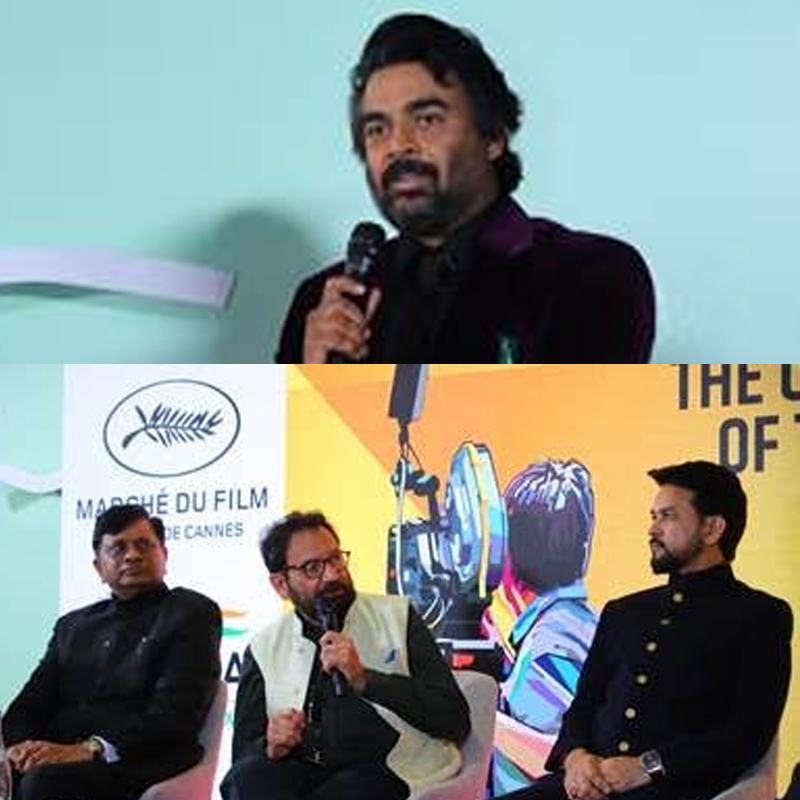
    MUMBAI: In the next five years, India will be among the leading quality content producing nations across the globe. The government policies to help the media and entertainment ecosystem to generate $53 billion annually by 2025. There is an old rush amongst broadcasters as well as telcos to set up their own OTT platforms for India. The Indian government will take all measures to speed up co-production collaborations from around the world. The Union Minister of Information and Broadcasting Anurag Thakur said this while addressing the India Forum at the famous Palais des Festivals in Cannes.

    The session was moderated by Indian producer, Central Board of Film Certification member and film personality Vani Tripathi Pikoo; Ministry of Information And Broadcasting secretary Apurva Chandra; writer, poet and Central Board of Film Certification chairman Prasoon Joshi; Indian actor, writer, director and producer R Madhavan; Indian filmmaker actor, television presenter and entrepreneur and Film and Television Institute of India chairman Shekhar Kapur; Hollywood Reporter editor Scott Roxborough and producer Philip Avril.

    This year marks the 75th year of celebration of both the Cannes Film Festival and the establishment of India-France diplomatic relations. Speaking on the importance of Cannes Thakur said that over the years, ‘Festival de Cannes’ has played a significant role in strengthening Indo-French relations.

    The minister noted historic highs of Indian cinema and said that Indian content has been ruling the hearts and minds of the global audience and the stepping stone was laid by bestowing the Palme d’Or to the prolific Indian filmmaker Chetan Anand’s film Neecha Nagar in 1946 and a decade later in 1956, Satyajit Ray’s Pather Panchali won the Palme d’Or.

    Today the recognition of our cinematic excellence the world over is set to manifest the country into the ‘content hub of the world’, the Minister added.

    Speaking on India’s current presence in Cannes, the Minister said “India intends to give you – the global audience, a flavour of the country’s cinematic excellence, technological prowess, rich culture and illustrious heritage of storytelling. India’s red carpet presence captured the diversity of our cinematic excellence not only in terms of representation of actors and film-makers from various languages and regions but also on OTT platforms, with a strong presence of music composers and folk artists who have enthralled audiences both young and old”.

    The Minister informed the audience about the presence of Indian startups in Cannes and said the startups from the media and entertainment sector will showcase their technological prowess and pitch to the best from the world of AVGC along with a strong delegation of animation professionals from the sector.

    The Minister informed the audience of the various measures by both the Union and State governments and said while the Center has envisioned major initiatives over the last eight years to boost co-productions, film shoots and film facilitations in India, States like Uttar Pradesh and Madhya Pradesh have formulated their film facilitation policies and provided co-production opportunities. He stated that these efforts aimed at boosting India’s media and entertainment ecosystem, which is expected to generate $53 billion annually by 2025.

    In one such measure, he said, “The government officially designated audiovisual services as one of 12 ‘champion service sectors’ and recently set up an AVGC task force comprising of industry leaders to prepare a policy roadmap for India to take a quantum leap in this sector and position us as the preferred ‘post-production hub of the world’ “.

    Thakur added that on one hand artificial intelligence, virtual reality, and immersive technologies such as the metaverse, present immense possibilities to India’s IT skilled workforce, the OTT market in India is predicted to grow by 21 per cent annually to nearly $2 billion by 2024 on the other.

    The minister promised that the government will take all necessary measures to transform India into a ‘Global Content Sub Continent’ and use the skills of our youth to make India the preferred post-production hub for the AVGC sector and to that end government will speed up co-production collaborations from around the world and also offer the best locations in India for Film Shoots. These Thakur envisioned, will in the next five years, catapult Bharat into the league of leading quality content producing nations across the globe.

    Thakur concluded his statement by extending a warm invitation to shoot in India, bask in its hospitality and relish its landscape.

    Meanwhile, Kapur spoke about the effect of access to cheap broadband and mobile devices having a disruptive effect on movie industry and said that India is about to become the world’s biggest ‘influencer economy’ and that cinema will soon be redefined by the young film makers.

    “India is a pool of restless dreams, dreams that are restless to make it big, of looking forward”, said Prasoon Joshi to the comment Kapur. Joshi further added that India has more and more self-belief, and that it shows in terms of the quality of recent cinematic productions. “When a civilisation can express its core authentically, he argued, it becomes even stronger,” he said.

    Chandra cited movies like “Lunchbox”, “Mr and Mrs Iyer” and “Rocketry” that are typically Indian in their story but have resonated with audiences across the world. He further reiterated the incentives announced by the government for filmmakers from across the world.

    Madhavan commented on how India has so much to tell the world in the field of science and technology and the cinema world must explore this idea. From Aryabhatta to Sundar Pichai India has extraordinary stories which are aspirations of youngsters around the world. Madhvan also argued that the advance of new technologies is offering new opportunities to the cinema industry. He reminded the audience that, under the leadership of Prime Minister Narendra Modi, the micro economy has grown spectacularly; he suggested that digitalisation will offer new avenues to shine for Indian cinema.

    Avril who has worked in the past with Tamil and Malayalam movies, applauded the move, which he labelled as significant. He further commented that India has immense talent and extraordinary potential in terms of story-telling but that cultural barriers can sometimes prevent stories to reach foreign audiences. To ensure that Indian stories are not lost in translation and effectively reach foreign audiences, Avril noted the importance of encouraging co-production across countries, which is precisely the strategy of the government.
  • Leading Korean filmmaker impressed by Rajini ‘Robot’; keen to co-produce with India

    Leading Korean filmmaker impressed by Rajini ‘Robot’; keen to co-produce with India

    NEW DELHI: Critically-acclaimed Korean filmmaker Kim Jee-Woon, whose action thriller ‘The Age of Shadows’ is the Closing Film for the International Film Festival of India, said it would “surely be great” to incorporate elements of cinema from both countries into each other’s films.

    Addressing the media in Panaji, he said he would like to mix the elements of Indian cinema like humour and other real life emotions into Korean films, he added.

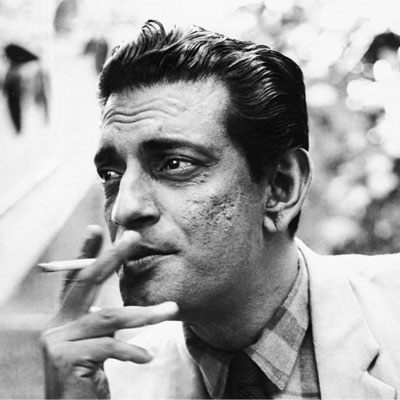
    Kim said he has been greatly inspired by the stalwarts of Indian cinema like Satyajit Ray and his films like Pather Panchali and Aparajita among others. They have had a major impression on his style of film making. He would like to collaborate with the Indian film industry to make films on history and the Independence struggle in both the countries, he added.

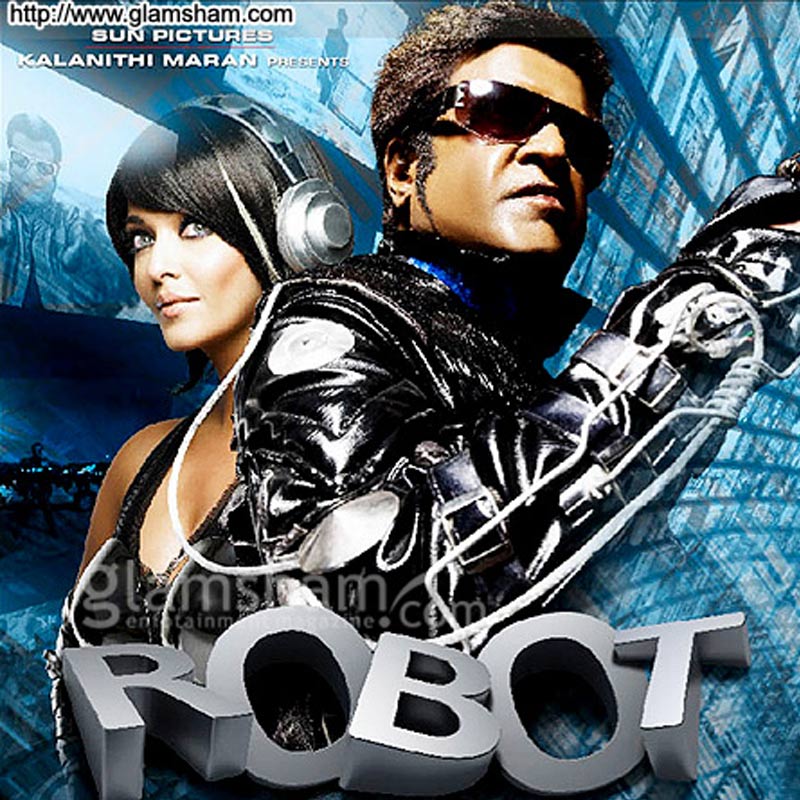
    Jee-woon, who led successful films like “I Saw the Devil”, “The Last Stand” and “The Good, the Bad, the Weird”, was highly impressed with the Tamil superstar Rajinikanth’s “Robot” and would love to make a film like that some mix of historical drama.

    Lead actor Song Kang-Ho said he is honoured that their film – which is also the South Korean entry in the Oscars – has been selected as the Closing Film at the IFFI 2016 and he is hopeful that the times to come would see more critically acclaimed films from both India and Korea being screened for the people in both the countries.

    Set in Seoul and Shanghai, during the Japanese occupation in the late 1920s, the film depicts an intense drama that unfolds between a group of resistance fighters trying to bring in explosives from Shanghai to destroy key Japanese facilities in Seoul, on one side, and Japanese agents trying to stop them, on the other. A talented Korean-born Japanese police officer, who was previously in the independence movement himself, is thrown into a dilemma between the demands of his reality and the instinct to support a greater cause.

    Kim said his film is not an attempt to show action and violence on the screen but to depict intense emotions associated with the Korean Independence struggle against the Japanese occupation. He informed that he has tried his best to show these emotions through special sound effects and the ability of his actors to emote them on the screen.

  • Leading Korean filmmaker impressed by Rajini ‘Robot’; keen to co-produce with India

    Leading Korean filmmaker impressed by Rajini ‘Robot’; keen to co-produce with India

    NEW DELHI: Critically-acclaimed Korean filmmaker Kim Jee-Woon, whose action thriller ‘The Age of Shadows’ is the Closing Film for the International Film Festival of India, said it would “surely be great” to incorporate elements of cinema from both countries into each other’s films.

    Addressing the media in Panaji, he said he would like to mix the elements of Indian cinema like humour and other real life emotions into Korean films, he added.

    Kim said he has been greatly inspired by the stalwarts of Indian cinema like Satyajit Ray and his films like Pather Panchali and Aparajita among others. They have had a major impression on his style of film making. He would like to collaborate with the Indian film industry to make films on history and the Independence struggle in both the countries, he added.

    Jee-woon, who led successful films like “I Saw the Devil”, “The Last Stand” and “The Good, the Bad, the Weird”, was highly impressed with the Tamil superstar Rajinikanth’s “Robot” and would love to make a film like that some mix of historical drama.

    Lead actor Song Kang-Ho said he is honoured that their film – which is also the South Korean entry in the Oscars – has been selected as the Closing Film at the IFFI 2016 and he is hopeful that the times to come would see more critically acclaimed films from both India and Korea being screened for the people in both the countries.

    Set in Seoul and Shanghai, during the Japanese occupation in the late 1920s, the film depicts an intense drama that unfolds between a group of resistance fighters trying to bring in explosives from Shanghai to destroy key Japanese facilities in Seoul, on one side, and Japanese agents trying to stop them, on the other. A talented Korean-born Japanese police officer, who was previously in the independence movement himself, is thrown into a dilemma between the demands of his reality and the instinct to support a greater cause.

    Kim said his film is not an attempt to show action and violence on the screen but to depict intense emotions associated with the Korean Independence struggle against the Japanese occupation. He informed that he has tried his best to show these emotions through special sound effects and the ability of his actors to emote them on the screen.

  • Satyajit Ray’s ‘Apu’ trilogy among top films in Asia: Busan Filmfest

    Satyajit Ray’s ‘Apu’ trilogy among top films in Asia: Busan Filmfest

    NEW DELHI: Indian cine craftsman Satyajit Ray’s Apu trilogy stands at the fifth place in the top ten films in Asia drawn up during the 20th Busan International Film Festival.

    In a separate list of the top ten directors, Ray again figures at the fifth place.

    Ray is the only Indian filmmaker to have won an Oscar for Lifetime Achievement, and the Oscar Committee had come to Kolkata to give him his honour as he was ill at the time. He passed away in April 1992 at the age of 71.

    The top film is Tokyo Story from Japan whose director Ozu Yasujiro features at the top in the director’s list.

    The ‘Asian Cinema 100’ for the Special Programme in Focus this year at the Festival aims to celebrate its history and is a collaboration project with the Festival and the Busan Cinema Centre to shed light on the values of Asian film. 

    The list will be updated every five years to act as a guide for the aesthetic value and history of Asian cinema and to discover hidden masterpieces and talented directors of Asia.

    For the project, 73 prominent film professionals included film critics such as Jonathan Rosenbaum, Tony Rayns, Hasumi Shigehiko, and festival executives, programmers, and directors Mohsen Makhmalbaf, Bong Joon-ho, and Apichatpong Weerasethakul. 

    They recommended their top 10 films, resulting in 113 selections and 106 directors (including joint rankings) for the final 100 list.

    Akira Kurosawa had two films in the top 10 list that included Rashomon (1950) in second place and Seven Samurai (1954) at sixth place. 

    The top 10 (a total of 11 films) will screen under Asian Cinema 100. A special book containing the details and reviews of the films on the list by 29 film professionals will be published during the Festival.

    Interestingly, Close Up from Iran is listed at the eleventh number, while its popular director Abbas Kiarostami figures at number three in the Directors List. 

    There are three Japanese films and two films each from China and Taiwan in the list of eleven films.

    The Apu Trilogy (Satyajit Ray, 1955) depicts the life of Apu in Pather Panchali (1955), Aparajito; (1956), and Apur Sansar (1959). A masterpiece that realistically and placidly portrays Indian society. Ray is called a master of Asian film as well as the father of Indian cinema.

    [Special Program in Focus: Asian Cinema 100 – Top 10 Screening List (11 total, including joint ranking]

     [Special Program in Focus: Asian Cinema 100 – Top 10 Directors (including joint ranking]

  • Nine Ray films to be screened in Spain as part of special retrospective

    Nine Ray films to be screened in Spain as part of special retrospective

    MUMBAI: Nine films of cine craftsman Satyajit Ray are to be screened by the Filmoteca de Catalunya, a film archive in Spain, in collaboration with ImagineIndia and the Indian Directorate of Film Festivals.

    The retrospective of Ray includes Apu Trilogy (Pather Panchali, Aparajito, Apur Sansar), Charulata, Shatranj Ke Khilari, Jalsaghar, Sadgati, Bala, Mahanagar and Satyajit Ray, a biopic on Ray by Shyam Benegal.

    The ten day programme which is a part of a sixteen-day festival will celebrate Ray’s depiction of “the modern ideals of a society that was also a colonized country. A filmmaker (Ray) who should be visited from time-to-time so as to not lose sight of what is essential,” the Filmoteca de Catalunya website says.

    The screenings that will take place at the Cinematheque de Catalunya, Barcelona, Spain will go on from 18 to 28 March.