Tag: Patanjali Ayurved

  • Patanjali Ayurved apologises to SC over misleading ads

    Patanjali Ayurved apologises to SC over misleading ads

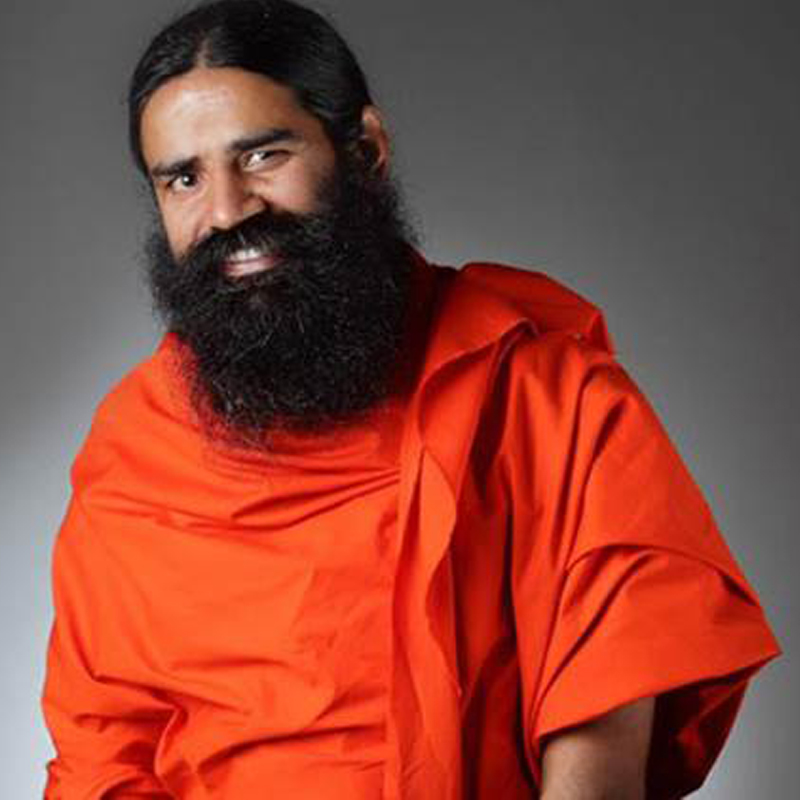
    MUMBAI: So, finally, India’s leading Ayurveda flagbearer has Patanjali Ayurved has bent its knees. The firm has issued an “unqualified apology” to India’s supreme court  about its stance of issuing misleading advertisements and criticism  modern medicines. It has assured the court that it will put a full stop to issuing such ads. 

    The apex court had on 19 March ordered the Swami Ramdevi Acharya Balkrishna owned Patanjali Ayurved to appear before it to clarify the failure to respond to the contempt notice, and misleading advertisements about medicinal cures.

    The supreme court had earlier reprimanded the company from issuing false ads and the counsel for the company had on 21 November 2023 assured it that “henceforth there shall not be any violation of any law(s), especially relating to advertising or branding of products manufactured and marketed by it and, further, that no casual statements claiming medicinal efficacy or against any system of medicine will be released to the media in any form.”

    But Patanjali Ayurved had continued to do so unafraid which led to the court rapping it hard on its knuckles on 27 February banning it from issuing ads for medicines with misleading claims. It had also slapped the central government on its wrists for “sitting with eyes closed” while the entire country was “taken for a ride.”

    The apex court had issued contempt of court notices against both Swami Ramdev and Acharya Balkrishna citing flouting of previous court orders by continuing to peddle misleading claims.

  • TAM report: LIC of India ascended to second position in Jul-Sept’23

    TAM report: LIC of India ascended to second position in Jul-Sept’23

    Mumbai: TAM AdEx India has released a quarterly advertising report on radio for Jul-Sept’23.

    Ad volumes during Apr-Jun’23 and Jul-Sept’23 have witnessed growth of four per cent and six per cent respectively compared to Jan-Mar’23. Also, Jul-Sept’23 observed growth in ad volumes by seven per cent on radio advertising compared to Jul-Sept’22.

    The services sector retained its first position with 34 per cent share of ad volumes during Jul-Sept’23 over Apr-Jun’23 on radio advertising. The top 10 sectors collectively added 89 per cent share of ad volumes in Jul-Sept’23. The education sector descended to sixth position with six per cent share of ad volumes compared to second position in Apr-Jun’23.

    Properties/real estates and hospital/clinics retained their first and second positions during Jul-Sept’23 over Apr-Jun’23 on radio advertising. Life insurance and ret cars were new entrants in the top 10 list of categories in Jul-Sept’23 compared to Apr-Jun’23. The top 10 categories together accounted for 53 per cent share of ad volumes on radio advertising during Jul-Sept’23.

    During Jul-Sept’23, the top 10 advertisers together covered 15 per cent share of ad volumes on radio advertising. LIC of India ascended to second position in Jul-Sept’23 compared to its sixth position in Apr-Jun’23. Union Bank of India, Patanjali Ayurved and Tata Motors entered the top 10 list of advertisers in Jul-Sept’23 over Apr-Jun’23. 2.9k plus exclusive advertisers were present during Jul-Sept’23 compared to Apr-Jun’23.

    Kedia Sezasthan and Vimal Pan Masala retained their first and second positions in Jul-Sept’23 over Apr-Jun’23 on radio advertising. Out of the top 10 brands present in Jul-Sept’23, two of them belonged to Life Insurance Corporation of India. Magics Hair Care was an exclusive brand that entered the top 10 brand list and secured seventh position in Jul-Sept’23 over Apr-Jun’23.

    Properties/real estates among categories witnessed highest increase in Ad secondages with growth of 25 per cent followed by cars with 55 per cent growth during Jul-Sept’23 compared to Apr-Jun’23. In terms of growth percentage, computer printers category witnessed the highest growth percentage among the top 10, i.e. 180 times in Jul-Sept’23.

    Compared to Apr-Jun’23, Gujarat and Maharashtra retained their first and second positions with 20 per cent and 17 per cent share of ad volumes respectively in Jul-Sept’23. Top five states together contributed 67 per cent share of ad volumes in Jul-Sept’23. Jaipur retained its first position with 11 per cent share of ad volumes in Jul-Sept’23 compared to Apr-Jun’23. Also, the top 10 cities together covered 70 per cent share of ad volumes in Jul-Sept’23.

    The evening was the most preferred time band on radio followed by morning and afternoon time bands on radio advertising. Evening & morning time bands together added 69 per cent share of ad volumes.

    Ad commercials with 20-40 seconds was most preferred for advertising on radio during both the periods Jul-Sept’23 & Jul-Sept’22. Together, 20-40 seconds and <20 seconds ad size added 94 per cent share of ad volumes on radio advertising.

  • Ruchi Soya to merge with Patanjali Ayurved under the name ‘Patanjali Foods’

    Ruchi Soya to merge with Patanjali Ayurved under the name ‘Patanjali Foods’

    Mumbai: Baba Ramdev-led Ruchi Soya Industries on Monday stated it will evaluate the most efficient mode to merge Patanjali Ayurved Ltd’s food business with itself and further decided to change the name of the company to Patanjali Foods Ltd.

    Ruchi Soya recently raised Rs 4,300 crore through a follow-on public offer (FPO).

    In its regulatory filing, Ruchi Soya apprised that the board of directors, in the meeting held on Sunday, “gave in-principle approval to evaluate the best way to amalgamate the food business of Patanjali Ayurved Ltd. “

    The board authorised the officials of the company to negotiate, finalise and conclude the terms and conditions of the proposed deal.

    Last month, Baba Ramdev announced that in the upcoming months, Patanjali Ayurved will transfer all food business to Ruchi Soya. Patanjali Ayurved would operate in the non-food, traditional medicine, and wellness space.

    Patanjali Group acquired Ruchi Soya in 2019 for Rs 4,350 crore through insolvency proceedings.

  • News channels data blackout could devalue TV ratings as a currency

    News channels data blackout could devalue TV ratings as a currency

    Mumbai: The news genre relies more heavily on TV ratings than others, argued industry stakeholders during a virtual webinar organised by Indiantelevision.com on Tuesday, highlighting that a major part of their revenues comes from advertising and discontinuation of TV ratings has impacted their ability to customise content, distribution and negotiate fair rates with advertisers.

    The virtual panel discussion – ‘The Need for News TV Ratings’ organised by Indiantelevision.com was powered by Megaphone TV, and joined by stakeholders in the news broadcast and advertising industry. The session was moderated by Indiantelevision.com group’s founder CEO and editor-in-chief Anil Wanwari.

    News broadcasters, agencies and advertisers highlighted that they are keen to understand how market dynamics have changed in terms of reach and viewership for the news channels after more than 15 months of ratings blackout by Broadcast Audience Research Council (Barc) India. The ministry of information and broadcasting has mandated that ratings for news channels be resumed immediately, however, Barc India is yet to share the ratings for news channels.

    TV ratings are a currency

    TV ratings are a currency for selling advertising and are important for news channels. In a populous and diverse country such as India, these ratings are intended to be a statistical representation that intends to show the trend of ‘What India Watches’ and relies on certain methodologies to arrive at these conclusions. In October 2020, Barc suspended reporting data for individual news channels though it continued to report the viewership trend for the entire news genre.

    “We are a midsized advertiser and we have a news-forward plan because we cater to a strong male audience,” said Lupin head of marketing consumer healthcare Supratik Sengupta. “During the blackout, at an AdEx level, we did not implement a news forward plan because we didn’t have the data. We shifted a certain amount of spends to digital and took gut calls on certain leading news channels in the absence of data. Without granular ratings, we started rotating our spends among the top four to five channels.”

    He added, “Week 39’2020 was the last time data was reported for news channels. We’ve had a data dark situation for almost 60 weeks. It is criminal that a genre is not reported for such a long time, whatever the reason. Today, I don’t know the changes, if any, in news channels’ ratings compared to last time data was reported.”

    “In absence of rating, we have been making justified recommendations to clients based on past data and other performance indicators such as views on digital assets,” stated Omnicom Media Group India managing partner and head of investment Yatin Balyan. “The advertisers’ sales team reviews on particular channels, in certain geographies also enabled us to make a more justified recommendation.”

    Patanjali Ayurved COO – media and communications Anita Nayyar highlighted that there was a lot of volatility of viewership in the news space due to factors like recent events such as elections or budget, therefore regular reporting of ratings is important. “A news channel that stood on top in one week may drop dramatically in the next week because they do not have decent content. As a currency accepted by the industry, TV ratings told us whether to stop investing in a news channel because we all know where to invest based on historical data. Unlike the GEC genre, there is no reason why a newcomer cannot top the charts in the news genre because it is completely dependent on the content and the pulse of the audience the channel touches upon,” she added.

    Impact on news channels

    The suspension of news channels had come at a time when relatively new channels were also garnering a significant share of viewership among news channels and advertisers were believed to be closely observing to see if this growth in ratings was a one-off or a long-term trend.

    “The new entrants in the news industry have broken many glass ceilings of content and distribution to go to the top,” said Republic Media Network owner founder and editor-in-chief Arnab Goswami. “Nobody studies TV ratings more than news channels, so we may respond with better quality content, deeper discussion and ways to make the content more interactive. I spend over Rs 100 crore in distribution every year and have a right to know which markets are contributing to my viewership and plan accordingly.”

    He further added, “Barc is supposed to make its decisions based on a consultative process but were media agencies, news channels and advertisers consulted before the decision to suspend ratings was taken? The process of determining ratings is the same for news genre and GECs yet only news channel ratings have been stopped.”

    “The Hindi news genre which commands the largest share of revenues in the news genre saw a distinct change in the pecking order just before TV ratings were stopped,” said TV9 Network CEO Barun Das. “Even today there is ambiguity on why only news channel ratings have been suspended. The Technical Committee at Barc has approved a fresh way of calculating the data for the news genre but it continues to report other genres as usual.”

    “There’s certainly going to be a spike in ratings during the elections,” noted Das alluding to the upcoming state elections. “Media buyers and advertisers would feel more confident spending their money and leveraging the news genre if the ratings are made available. The entire genre would benefit, especially the smaller regional channels whose dependence on advertiser confidence is greater than ours.”

    “A period of 15 months is too much time for any industry to go without measurement,” remarked independent media consultant and industry observer Paritosh Joshi. “Any industry that does not measure itself sees a drop in revenue. A currency is a store of value, medium of exchange and basis of accounting, and all of these things are relevant as far as broadcasting is concerned. If you don’t have a basis of accounting or a medium of exchange for a significant period of time then it devalues the currency.”  

    Monthly ratings for news genre

    The ministry of information and broadcasting has recommended that Barc release news channels data based on a four-week average rolling concept. It has also instituted a committee to look into return path data (RPD) and its applications to strengthen TV measurement. Right off the bat, Paritosh Joshi noted, “RPD is not a substitute for a statistically sound sample.”

    “In my mind, metrics such as TVR/TRP data tell you about the market share of a channel and as an advertiser I would like to have that data as quickly and frequently as possible,” said Sengupta. “While a four-week rolling basis for reporting data will not be a challenge at the planning level because we look at anywhere between four, six and 13-weeks average data for planning, it will be a problem at the post-evaluation level when I have to determine my campaign’s performance. That’s because we will only get an average and not exact data for the week that my ad spot ran.”

    “Secondly, I am not aware of what measures Barc has taken to protect my data,” he added.

    “While we take a long view of a four-week, eight-week or 13-week average basis, weekly ratings are important,” stated Balyan. “That’s because not every event, property or programme that we buy has a longer format. Take an election or any special programming on a news channel, we need to understand how our investments on that particular programme or channel have performed. We need to have a learning base to make a futuristic recommendation and thereby our approach to a particular partner.”

    Paritosh Joshi shared an example of best practice followed by the UK’s TV measurement council BARB. He said, “If a particular broadcast platform’s previous three or six-months’ share of voice in the entire raw panel has come down by a certain percentage (let’s say one per cent), it is no longer qualified for weekly ratings. Depending on how low the ratings have fallen, the frequency of that channels’ ratings may be changed to month, quarterly or even half yearly.”

    He elaborated, “This is not necessarily bad nor does it discredit the platform. Just because the India Readership Survey does a quarterly reporting of data or longer, doesn’t mean that has stopped anyone from buying print. In fact, in some cases it works very well, giving fairly decent forensics to show how viewers are behaving. So, the frequency of data reporting should not depend on the genre, but rather on an objective determinant that says what the share of voice was in the previously leading period. There is really no need to put out all the data in the same way. While we may choose to go with a one size fits all approach in India, this is not the best practice.”

  • #Retrace2021: Cautious optimism will drive industry growth in 2022

    #Retrace2021: Cautious optimism will drive industry growth in 2022

    Mumbai: The year 2021 saw work-life turning 360 degrees for former Havas media India boss Anita Nayyar, as she joined Patanjali Ayurved as COO- Media & Communications, after a year-long stint with Zee5 as head of customer strategy and relations.

    An industry veteran with over three decades of experience, Nayyar has managed many portfolios of brands across sectors. She has played leadership roles in several media and advertising agencies including Saatchi & Saatchi, Ogilvy & Mather, Initiative Media, MediaCom, and Starcom Worldwide. Nayyar spent the longest tenure at Havas – the agency she joined in 2007 as chief executive of the India operations. Under her aegis, the agency grew exponentially and expanded its offerings as an integrated communications group. She subsequently headed Havas Media Southeast Asia (SEA) in addition to her role as CEO of Havas Media.  

    As the year draws to a close, Indiantelevision.com, got into a freewheeling conversation with Anita Nayyar about her big professional move in 2021, leading the media and communications strategy at Patanjali Ayurved, and outlook on industry’s growth as we enter 2022.

    Edited excerpts:

    On looking back at 2021 and her transition from Zee5 to Patanjali

    I spent over 30 years working with agencies and publishers. After so many years on the agency side, I thought I had done my bit. Plus, the monotony tends to set in. So, it’s good to learn something new from the other side of the table. That’s how Zee5 happened. On the whole, I have worked with advertising agencies, media agencies, publishing platforms, as well as new-age digital platforms like Zee5. So when Patanjali came in, I thought it’s a good opportunity to do a full circle and explore all aspects of advertising, marketing, and communication. So to that extent, I feel it completes my circle in the industry.

    On how the year was for Patanjali as a brand, and her priorities when she joined the company in July

    Patanjali is one of those aggressive Indian brands, which has galloped its way through to the top in the Indian FMCG industry. When I took over as the COO for media branding and communication, the idea was to oversee all the strategies that are happening in their advertising domain, how they are progressing and what is it that we can do better. It was interesting to see their (Baba Ramdev and Acharya Balkrishna) vision. Sometimes, it’s even difficult to match up to the speed at which their vision for the company goes- both in the Wellness, fitness, and the Ayurveda sector. Also, the fight that they are bringing to the table for the MNCs in the FMCG category. Patanjali Ayurveda, along with Ruchi Soya, is the second-largest FMCG brand in the country.

    On any key innovation that the brand brought in this year

    The company is constantly innovating, in terms of the categories and areas they have entered in over the years. Like IT solutions or Agri sciences for example and this foresight of acquiring Ruchi Soya. The brand has kept up with the times, even by propagating the fact that they are ‘swadeshi’ as well as ‘Make in India’ initiatives. So innovation, to my mind, is the core of this brand. We have recently launched a Nutrela nutraceutical range of supplements, that’s the new category that Patanjali along with Ruchi Soya has entered into. And it’s interesting as there aren’t too many players in this segment and the fact that people have become very conscious about their health and wellness, especially in the last two years.

    On any changes in the brand’s media strategy in 2021

    This past year has fared fairly well for the brand because we have strategically invested in some high-impact properties. As a brand, we have been highly visible on the news channels and we have done a lot of GECs as well, and as such, there’s a tremendous amount of reach and awareness for the category. New marketing campaigns are on and we are in the process of working on our annualised spend and strategies, so let’s see how that goes.

    On looking ahead to 2022 and expectations for the brand

    We are cautiously optimistic. In businesses, when there’s recovery, optimism is the core. If you aren’t optimistic how will you take risks and move forward? That applies to life in general. But, if I were to wrap up my expectations for the brand in a single word, it’s ‘growth’. That is what every organisation’s looking for and we specifically do so, because we want to bridge the gap between the number one in the industry. And we are getting there. In the media branding and communications domain, I want to maximise the return on investment (ROI) that we are doing in the media industry.

    On key industry trends that might dominate next year

    The past year has certainly fast-paced the digital transformation of companies, whether it was entertainment, online shopping, or the use of digital platforms to connect with other people. It was anyways slated to grow between 25-30 per cent earlier also, the needle just moved quicker now. To my mind, next year we will see a healthy mix of both TV and digital and each medium plays an important role, depending on what the objectives are. TV, of course, remains the mainstay because of its reach and low CPMs (Cost per Thousands) that it offers.

    Print was badly hit during the pandemic. It is doing a little better, but still nowhere close to where they were pre-pandemic as yet. Outdoor is back and Cinema is also showing signs of recovery, depending on the titles that are playing.

    Each medium today has a role to play from that aspect and we use them for their attributes. So I think overall for the media industry and, as per industry reports too, there should be a growth of 12-16 per cent in the media & advertising industry, which given the situation is not a bad thing. 

    On any personal learnings that she will take into the next year

    My personal learning may sound a little clichéd, but it was very important for me to explore other areas and not remain stuck to a particular area of expertise. It’s when you try to explore other fields that you know what your proficiencies are. Every domain that I’ve worked in has given me immense learning. So, it’s a good check for one to constantly keep trying newer opportunities and opening up newer avenues for one’s own learning. If you continue to explore newer domains, it just keeps adding to your professional and personal growth as well. 

  • Patanjali Ayurved onboards Anita Nayyar as COO – media & communications

    Patanjali Ayurved onboards Anita Nayyar as COO – media & communications

    MUMBAI: Patanjali Ayurved has appointed senior media, marketing and advertising professional Anita Nayyar as its chief operating officer-media and communications. Nayyar updated her LinkedIn profile to reflect the development. 

    In her last stint, Nayyar was ZEE5’s customer strategy and relationships head.

    In her expansive career spanning over two decades, Nayyar has been instrumental in driving strategic business development, client relations and creative narratives for brands across her stints at varied Indian and global firms. 

    Nayyar joined Havas in 2007 as CEO of Havas Media India. Under her leadership Havas Media in India grew and expanded its offerings as an integrated communications group. In 2018, Nayyar was promoted to CEO of Havas Media Southeast Asia on the back of an accelerated growth strategy in the region, in addition to her role as CEO of Havas Media India.

    In the past, Nayyar has played leadership roles in advertising and media agencies – Ogilvy, Lintas-Initiative Media, Mediacom, Mudra, Starcom.

  • Patanjali Paridhan launches; celebrates Indiapan!

    Patanjali Paridhan launches; celebrates Indiapan!

    MUMBAI: Patanjali Ayurved Ltd has launched its apparels range called ‘Patanjali Paridhan’ with a brand-new campaign conceptualised by L&K Saatchi and Saatchi building on its brand values of providing a range of world class apparel for every Indian’s needs and wants.

    The brand shared that the primary objective of the launch campaign was to introduce the brand Paridhan by the mother brand Patanjali, carving out a special positioning niche for Patanjali Paridhan within the larger brand equity of Patanjali while retaining youth, modernity, fashion, and trendiness.

    It revealed in a press release, “The big insight that the agency unearthed was the fact that fashion in India is still very west focused. If you discount the token FabIndias, Manyavars, and a few local players, there is no national level India-centric fashion brand. Also, Indians feel slightly defensive about Indian fashion as compared to western fashion, unless it is ethnic wear. The brand wanted to bring Indian fashion fabrics and styles back into everyday life. To prove that Indian fashion is best suited for our body type and climatic conditions, and to celebrate our rich and varied fabric heritage. The idea was to create a movement – Tann Maan Dhan Indiapan, to remind people of the rich heritage of fashion that we have surrendered in the blind pursuit of western fashion.”

    Commenting on the same, Patanjali Paridhan CEO KN Singh said, “India was once one of the biggest exporters of clothing, textile, and styles. With changing language and cultures every 200 kms. in India, one can see a blend of different weaves, textures, and styles. Gradually, we have moved to adopting too much of western clothing and styling. The aim is to bring the focus and interest back to Indian clothing. Every outfit can be adapted for comfort and that is what we aim at doing. We are creating fusions and blends of different clothing formats and styles. Patanjali's objective, through Paridhan, is to mould the old format of dressing into the latest, more comfortable styles, for the Indian youth, while helping the various state handloom corporations and the weavers. All of the products have been selected basis the colour scheme, mood board and quality defined by the global authority on garment quality. Even products and styles from all the Indian states have been given space on our shelves. Our prices are at least 60% less than the international brands. But consumer has to try and use the product to know Patanjali's quality in apparel range.”

    L&K Saatchi and Saatchi managing partner Anil K Nair said, “Patanjali is a home-grown brand that has proven that Indian brands can achieve great success on its own. And on the back of this, Patanjali wishes to provide a range of world class apparel for every Indian’s needs and wants, and that’s the philosophy behind the inception of Patanjali Paridhan. The brand is built on a strong foundation of values that include pride and respect for our cultural identity, being comfortable in our own skin, a celebration of our rich heritage, providing value for money, and being aspirational. And also moving public consciousness from a western-fashion-orientation to ‘desi coolness and swag’.”

    L&K Saatchi and Saatchi executive creative director Kumar Suryavanshi said, “Very rarely does one, as a creative person get a chance to work on a unique brief to build an indigenous fashion brand. I thank Patanjali Paridhan for giving us such an opportunity. The challenge was to maintain a balance between Patanjali's Indian values and fashion codes and sensibilities. The challenge was to bring alive the feeling of Indiapan while showcasing fashion, which has always been associated with international brands. I think we successfully managed to capture the soul of the brand and expressed it beautifully through visuals and the anthem. With the help of a super energetic team, we shot across the country to celebrate diversity in the brand’s offerings. We want people to take pride in Indian fashion and break conventions. We are very thankful to Swami Ramdev baba who has agreed to play a pivotal role in the film and gave us a free hand to make this beautiful and evocative film.”

    L&K Saatchi and Saatchi executive creative director Ashish Naik further added, “It was a pleasure to shoot this campaign as the clothes were vibrant and captured the true essence of India's diversity. The beautiful locations added to the charm of the campaign.

    The campaign will be running on TV, Print, Outdoor, Radio and Digital platforms including the social media handles of the brand and the talent.

  • More TV ads by top 10 advertisers in 2018 than 2017

    More TV ads by top 10 advertisers in 2018 than 2017

    BENGALURU: Indian television broadcasters have a reason to smile in 2018. During the first 32 weeks of 2018, the top 10 advertisers from Broadcast Audience Research Council of India (BARC) placed 21.42 per cent more television insertions than in the first 32 weeks of 2017. The combined total number television insertions by BARC’s weekly lists of top 10 advertisers across genres for the first 32 weeks of 2018 were 13,255,057 as compared to 10,916,451 insertions during the first 32 weeks of 2017. 

    If ad insertions by the top 10 advertisers are a yardstick for the increase in television ads, broadcasters and marketers can definitely expect ad revenues to perk up with more number of advertisements during the fag end of 2018. The major Indian festival season is yet to come – hence the ad tempo can only go up.  If one were to go by the trends of 2017, the number of ad insertions in 2018 could go up by 15 to 20 per cent as compared to the previous year. During the last 20 weeks of 2017, average television advertisements per advertiser among the top 10 advertisers per week had gone up by 16.97 per cent as compared to the first 32 weeks of 2017. Between weeks 33 to 52 of 2017, the average weekly TV ad insertions by BARC’s weekly list of top 10 advertisers had gone up to 27,163.66 from an average of 23,222.52 during the first 32 weeks of 2018.

    Please refer to the figure below for the weekly comparison of the combined total insertions of all the top 10 advertisers during the first 32 weeks of 2017 and 2018 respectively.

    [[{“fid”:”836101″,”view_mode”:”default”,”fields”:{“format”:”default”,”alignment”:””,”field_file_image_alt_text[und][0][value]”:”graph”,”field_file_image_title_text[und][0][value]”:”graph”},”link_text”:null,”type”:”media”,”field_deltas”:{“1”:{“format”:”default”,”alignment”:””,”field_file_image_alt_text[und][0][value]”:”graph”,”field_file_image_title_text[und][0][value]”:”graph”}},”attributes”:{“alt”:”graph”,”title”:”graph”,”height”:347,”width”:574,”class”:”media-element file-default”,”data-delta”:”1″}}]]

    There were 27 advertisers that were present at least once each in BARC’s weekly lists of top 10 advertisers during the first 32 weeks of 2017 and 2018. Hindustan Lever Ltd or HLL was the biggest advertiser by far during the first 32 weeks of 2017 and 2018 with an average of 122,725.65 and 129,604.28 weekly insertions respectively (5.60 per cent increase). At second place was Reckitt Benckiser (India) Ltd (RBIL) with an average of 59,340.66 and 95,546.63 weekly insertions during each of the first 32 weeks of 2017 and 2018 respectively (61.02 per cent increase). Both HLL at ranks 1 (HLL- 32 weeks) and RBIL rank 2 (29 weeks)/rank 3 (3 weeks) were present in BARC’s weekly lists of top 10 advertisers during the first 32 weeks of 2017. HLL was ranked first as top advertiser for 25 weeks and second for 7 weeks, while RBIL was present at rank 1 for 7 weeks, rank 2 for 24 weeks and rank 3 for 1 week during the first 32 weeks of 2018.

    In 2017, only the above mentioned two advertisers were present in BARC’s top 10 advertisers list during all the first 32 weeks of 2017. This year besides HLL and RBIL, ITC Limited (ITL) and Cadbury India (Cadbury) were also present in BARC’s weekly list of top 10 advertisers during all the first 32 weeks of 2018. Both the companies’ – ITC and Cadbury’s average weekly insertions in 2018 were higher than their average weekly insertions in 2017. ITC, which was ranked third in 2018, had average weekly insertions of 33,002.88 in 2018 (32 weeks average) as compared to 18,959.9 in 2017 (20 weeks average), or a 74 per cent y-o-y increase during the periods under review. Cadbury’s average weekly insertions in 2018 were 18.41 per cent more at 27.410.88 (32 week average) as compared to 23,150.03 (31 week average) in 2017. Please note that the growth of average number of weekly insertions has been calculated by determining the average weekly insertions in the first 32 weeks of 2017 and 2018 only when these brands were present in BARC’s weekly lists of top ten advertisers across genres. The actual difference may not be the one mentioned above.

    Most of the advertisers’ average insertions per week when they were present in BARC’s weekly lists of top 10 advertisers across genres have increased in 2018 as compared to 2017. Some notable examples are Procter & Gamble (38.51 per cent increase); Amazon Online India Pvt Ltd (16.47 per cent increase); Colgate Palmolive India Ltd (6.44 per cent increase); Godrej Consumer Products Ltd (17.03 per cent increase); Marico (33.05 per cent increase), etc. 

    A few of notable players that have had a y-o-y fall in their TV ad insertions during their presence in BARC’s weekly lists during the first 32 weeks of 2018 are Baba Ramdev’s Patanjali Ayurved (Patanjali) (-5.70 per cent*), Brooke Bond Lipton India Ltd (-2.03 per cent*) and Ponds India Ltd (-4.48 per cent*).It must be noted that fall in percentages have been derived by calculating the difference in average weekly insertions in 2017 and 2018 only when these brand owners were present in BARC’s weekly list of top 10 advertisers during the first 32 weeks of 2017 and 2018 respectively. The actual difference may not be the one mentioned above.
     

  • Patanjali drags former partner to court

    Patanjali drags former partner to court

    Swami Ramdev’s Patanjali Ayurved has dragged a firm launched by former partner Swami Karamveer to Delhi High court for allegedly violating its trademark and copyrights.

    Karamveer is a former partner of Ramdev, having cofounded Divya Yog Mandir Trust along with Ramdev and Acharya Balkrishna. His company sells a number of consumer products from toothpaste and shampoo to juices and spices under the Kalpamrit brand.

    Patanjali Ayurved has accused Maharishi Patanjali Parivar, whose unit Kalpamrit Ayurved works “under the direct inspiration and guidance” of yoga guru Karamveer, of “infringement of trademark, copyright, dilution, rendition of accounts and damages” by launching products that are “deceptively similar” to Patanjali products in name, logo and packaging. The high court in an interim order on Tuesday restrained Kalpamrit and its associates from using the word Patanjali or logo/artwork similar to those used by Patanjali till further orders.

    “…this court is of the opinion that a prima facie case of infringement of trademark and copyright is made out in favour of the plaintiff and balance of convenience is also in its favour. Further, irreparable harm or injury would be caused to the plaintiff if an interim injunction order is not passed,” a bench of Justice Manmohan said.

    The next hearing on the matter is listed for May 7.

  • Goafest 2017 receives 4500 entries from 329 companies

    GOA: Goafest 2017, India’s foremost advertising, media and marketing convention kick started its annual festival with a ceremonial popping of the champagne bottle to herald a brand-new edition of the event. The day one of the festival saw an exciting conclave with industry stalwarts such as Upasana Taku of Mobikwik, Hemant Malik of ITC Limited and Acharya Balkrishna of Patanjali Ayurved taking the center stage.

    In its 12th year, the convention has received a whopping number of 4500 entries with about 2500 delegates attending the three-day long festival. This year, Goafest has received the highest number of sponsors. What’s more? It has also gone digital with an app and a website this year. The festival is also going green in partnership with National Geographic who have arranged several campaigns like conservation of water, recycled paper, etc.

    Advertising Agencies Association of India president Nakul Chopra said, “Twelve years ago, Goafest began as an event for people from the world of advertising to get together to network and celebrate quality work. Today, it gives me immense pleasure to see how this festival has grown into becoming one of the foremost events in the creative calendar. It’s extremely encouraging for us to see so many young people participating in the event with such enthusiasm – and not just attending the ABBYs but also showing immense amount of interest in the varied seminars that we have lined up this year. If the scene on day one is anything to go by, I’m pretty sure the next two days are going to be just as exciting with some exemplary speakers taking the stage and some must attend seminars taking place.”

    The industry body claims to have invested approximately 8-10 crore in the event this year.

    The Advertising Club president Raj Nayak said, “Goafest is the world’s largest industry event in the advertising industry – organized by two industry bodies coming together. In the true sense, it is an event by Indians, for Indians and completely made in India. Goafest is the world’s largest even organised by an industry body. It is not for profit. This year, we had over 300 jurors from across the country coming together to judge the entries for which awards will be presented over these three days of the event…with almost 112 of them judging tonight’s Media and Publishing ABBYs. Goafest, when it started was only a creative awards ceremony. However, today, in its twelfth edition, it has become a festival of knowledge, wisdom, entertainment, fun and a great networking opportunity.”

    Nayak also said that the event can get almost 10000 people provided there is an infrastructure to support the same.

    Goafest 2017 chairman Ashish Bhasin said, “With changing times, Goafest has also evolved. For the first time Goafest is going green in part by getting the delegates visiting the event to conserve water and taking other baby steps to our bit for the environment. This year we have heavily subsidized entry to let more and more young people to attend the event. It is extremely exciting for us to see so many young people participating in the event and appreciating the changes we have brought in. Curious young minds are keen to attend seminars and talks by interesting speakers this year. Day 1 has been such a huge success. We can only see this getting better and better over the next two days.”

    Chairman of the Awards Governing Council of Goafest 2017 Ramesh Narayan added, “The atmosphere at Goafest is always filled with excitement, camaraderie and a whole lot of fun. And this year is no different. It is absolutely heartening to see members of the advertising and marketing fraternity sending in some wonderful entries this year which have kept the jury on their toes. Judging any award is a difficult process and more so when you’re pitting one excellent entry against another. Judging by the level of excitement today, I’m sure that the next two days are going to be absolutely spectacular.”

    With industry specific conclaves to expert seminars and ABBYs presentations, the Goafest ABBYs 2017 presented by the The Advertising Club and The AAA’ of I has once again seen the entire advertising and marketing community descend upon the silver sands of North Goa to celebrate excellence in creativity across media platforms and genres.