Tag: Patanjali

  • Tanuj Luthra elevated as chief business officer at CarDekho Group

    Tanuj Luthra elevated as chief business officer at CarDekho Group

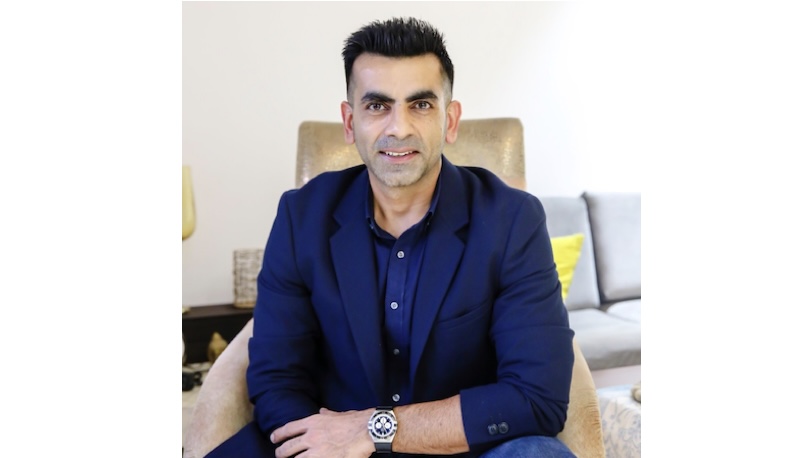
    NEW DELHI: Auto-tech platform CarDekho Group has named Tanuj Luthra as its chief business officer, (CBO) marking a significant leadership elevation for the digital veteran with over two decades of experience in media, digital, banking, and telecom.. 

    Luthra, who joined CarDekho in 2023 as vice president – new auto, has since April 2025 (when he was named CBO) has been overseeing  the group’s entire business strategy, revenue leadership, and partnerships. His remit includes driving growth across digital ads, branded content, SaaS offerings, and white-label IPs, while accelerating the company’s digital transformation journey in the automotive space.

    A business engineer-turned-marketer with an MBA and a senior management programme from IIM Ahmedabad, Luthra has previously held key roles at Network18 and Star India, The Walt Disney Co, and Citibank. Known for cracking Rs 100-crore+ deals and pioneering brand-led content integrations, he has worked with top-tier brands including Dabur, Coca-Cola, Patanjali, and Alibaba.

    Industry insiders say Luthra’s mix of deal-making prowess, strategic acumen, and deep client relationships puts him in the driver’s seat to unlock the next chapter of growth for CarDekho.

    (If you are an Anime fan and love Anime like Demon Slayer, Spy X Family, Hunter X Hunter, Tokyo Revengers, Dan Da Dan and Slime, Buy your favourite Anime merchandise on AnimeOriginals.com.)

  • Delhi High Court Orders Patanjali to Pause Negative Ads Targeting Dabur

    Delhi High Court Orders Patanjali to Pause Negative Ads Targeting Dabur

    MUMBAI: The rivalry between India’s leading Ayurvedic brands entered the legal arena this week, as the Delhi High Court ordered Patanjali Ayurved to halt all advertisements disparaging Dabur’s chyawanprash. The directive reflects the judiciary’s increasing scrutiny of advertising claims in the high-stakes wellness sector.

    The dispute began after Dabur, one of India’s oldest and most established names in Ayurvedic health, alleged that Patanjali’s recent campaigns not only targeted its flagship product, but also implied
    that competitors use inferior or artificial ingredients—claims Dabur described as misleading and potentially damaging to consumer trust.

    In its preliminary order, the court noted that while comparative advertising is allowed, it cannot cross into unfair or baseless disparagement. The judges observed that advertising should inform, not
    mislead, and must avoid statements that unjustly tarnish the reputation of rival products.

    The interim order requires Patanjali to suspend all negative advertisements against Dabur chyawanprash until further notice. The case will proceed for detailed examination of the ad content and
    industry standards.

    The legal intervention underscores the fierce marketing competition in India’s booming Ayurvedic and natural health market, where trust and authenticity are prized by both brands and consumers. Industry experts say the ruling sends a clear signal to marketers: fair play remains essential in the fight for health-conscious buyers.

    The matter is scheduled for further hearing in the coming weeks, when the court will assess the factual basis of Patanjali’s claims and address the broader issue of responsible advertising in the wellness
    sector. For now, both companies—and the wider industry—are watching closely, aware that the outcome could set the tone for brand battles in India’s fast-growing consumer market.

    (If you are an Anime fan and love Anime like Demon Slayer, Spy X Family, Hunter X Hunter, Tokyo Revengers, Dan Da Dan and Slime, Buy your favourite Anime merchandise on AnimeOriginals.com.)
     

  • Patanjali Dant Kanti Fresh Active Gel launches #FullFullFresh TVC

    Patanjali Dant Kanti Fresh Active Gel launches #FullFullFresh TVC

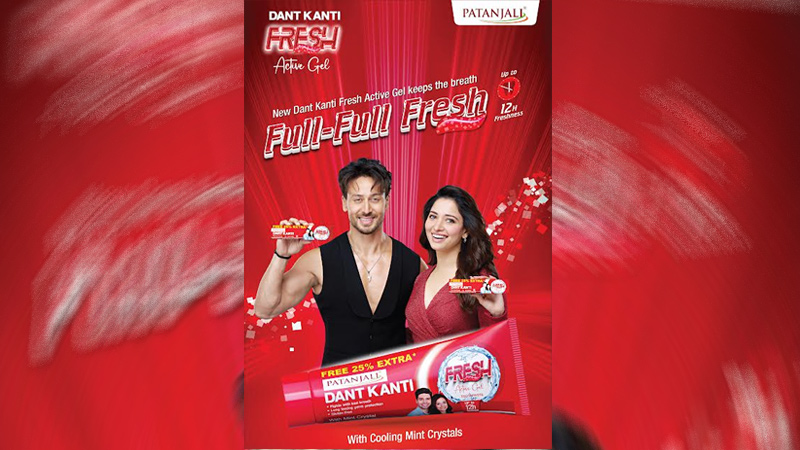
    Mumbai: Patanjali Dant Kanti has launched a new Dant Kanti Fresh Active Gel with actors Tiger Shroff and Tamannaah Bhatia in #FullFullFresh TVC. Patanjali has now entered the foray of toothpaste that is focused on cooling and freshness with Dant Kanti Fresh Active Gel after transforming the toothpaste industry with Ayurveda. This category is dominated largely by youth, so the communication and media strategy shows the stars grooving to the catchy jingle in the TVC.

    Patanjali Dant Kanti Fresh Active Gel has natural ingredients such as cooling mint crystals, clove, cinnamon, anise, mentha, eucalyptus, and black pepper which are effective in long-lasting freshness. The freshness quotient is well captured in this campaign. It has a refreshing look that compliments the product’s proposition and promise.

    The campaign ‘FullFull Fresh’ encourages a fresh and healthy lifestyle. Considering the daily routines of today’s youth, who are constantly on the go. The campaign aims to influence them to adopt better oral care habits and add the essence of mint’s freshness to their lives. It communicates that the gel’s mint crystals keep one ‘Full-Full Fresh’ for up to 12 hours. It also promotes the idea of maintaining the same energy level, boosting confidence, and staying active all day, when one uses Patanjali Dant Kanti Fresh Active Gel with mint crystals.

    Patanjali CMD Ram Bharat speaking about the campaign, said: “Patanjali Dant Kanti chose Tiger Shroff and Tamannaah Bhatia as flawless fits. We are thrilled to have the two as part of the Patanjali Dant Kanti Fresh Active Gel journey; personas with youthful energy and a health-consciousness perception. Their captivating performance and smiles has breathed a ‘full-full freshness’ to the ad commercial”.

  • Self-certification of ads: A deeper legal perspective

    Self-certification of ads: A deeper legal perspective

    Mumbai: The Indian advertising industry, like any other market of the world, plays a significant role in shaping consumer sentiment towards products and services available in the market. Correspondingly, it is essential to have adequate regulation and supervision of the sector for ensuring that advertisements do not result in manipulation of consumer behaviour based on fallacious claims. The supreme court recently in Indian Medical Association vs Union of India addressed concerns surrounding misleading advertisements in the case where Indian Medical Association (IMA) filed a petition accusing Patanjali Ayurveda of issuing misleading advertisements and passing critical remarks against allopathy. The court highlighted the responsibility of both advertisers and endorsers in instances of misleading advertisements.

    Advertisements, misleading advertisements, related terms and concerns

    Advertisements: An advertisement, under Advertising Standards Council of India (“ASCI”) code for self-regulation of advertising content in India, is defined as a paid-for communication, addressed to the public or a section of it, the purpose of which is to promote, directly or indirectly, the sale or use of goods and services to whom it is addressed. Any communication which in the normal course may or may not be recognised as advertisement by the general public, but is paid for, or owned or authorised by the advertiser or their advertising agency would be included in the definition.

    The Consumer Protection Act, 2019 (“CPA”) defines an advertisement as any audio or visual publicity, representation, endorsement or pronouncement made by means of light, sound, smoke, gas, print, electronic media, internet or website and includes any notice, circular, label, wrapper, invoice or such other documents.

    According to the Central Consumer Protection Authority’s  (“CCPA”) Notification dated June 2022:

    a. “advertiser” means a person who designs, produces and publishes advertisements either by his own effort or by entrusting it to others in order to promote the sale of his goods, products or services and includes a manufacturer and service provider of such goods, products or services.

    b. “advertising agency” means a person or an establishment providing services in designing and production of advertisements or other related services for a commission or fee;

    Misleading advertisements: A ‘misleading advertisement’ is an advertisement that contains false, inaccurate and deceptive claims and representations about the product/service being represented, in a manner that is likely to accord to a potential buyer/consumer incorrect understanding about the product/service, thereby wrongfully influencing their purchase and usage decisions. Section 2(28) of the CPA defines misleading advertisement as any product or service which—

    (i) falsely describes such product or service; or

    (ii) gives a false guarantee to, or is likely to mislead the consumers as to the nature, substance, quantity or quality of such product or service; or

    (iii) conveys an express or implied representation which, if made by the manufacturer or seller or service provider thereof, would constitute an unfair trade practice; or

    (iv) deliberately conceals important information

    Celebrities and endorsers: ASCI defines a celebrity as anyone who (a) gets compensated Rs 40 lakh or equivalent value annually for appearing in advertisements or campaigns on any medium and any format; or (b) has a social media followership of 500,000 or more on any single social media handle. Celebrities or influencers (an individual or a group or an institution) who make endorsement of any goods, product or service can be  defined as endorsers. An endorser has the power to affect/influence their audiences’ purchasing decisions or opinions about a product, service, brand or experience, because of their authority, knowledge, position, or relationship with their audience, and also accord credibility and reliability to the brand in view of their association therewith.

    Under the current legal framework, the penalties for taking part in creation and publication of misleading advertisements are:

    1.  A first offence under the Drug and Magic Remedies (Objectionable Advertisements) Act (DOMA), 1954 could lead to imprisonment for six months and/or a fine. For subsequent offences, the punishment may extend to one year.

    2.  The CPA imposes stricter consequences, with a potential imprisonment term of upto two years and a fine of around Rs 10 lakh for violations. Repeat offences escalate to a five-year imprisonment term and a fine of approximately Rs 50 lakh.

    In view of the alarming rise in misleading advertisements in the market, the supreme court as well as various governmental and private bodies have issued regulations and guidelines directed towards endorsers/influencers, advertisers and advertisement agencies in relation to publication to advertisements. A glimpse of such directions, guidelines and regulations have been provided below.

    A.  Guidelines issued by courts for endorsers concerning misleading advertisements:

    The bench of Justices Hima Kohli and Ahsanuddin Amanullah in the aforementioned Patanjali case stated that “advertisers/advertising agencies and endorsers are equally responsible for issuing false and misleading advertisements. Such endorsements that are routinely made by public figures, influencers, celebrities etc. go a long way in promoting a product. It is imperative for them to act with a sense of responsibility when endorsing any product and take responsibility for the same …”.

    The bench further stated that persons who endorse a product should have adequate information or experience with such specific product to be endorsed, and it must be ensured that it must not be deceptive. Celebrities and social media influencers will be equally liable for misleading advertisements, if they endorse any deceptive product or service.

    Concerning misleading advertisements, the court issued the following directions:

    1  Broadcasters or print media have to file a self-declaration form before carrying any advertisements, assuring that the advertisement to be carried on its platform complies with Cable Network Rules, Advertising Code etc.

    2  Ministries were directed to set up a specific procedure which will encourage the consumer to lodge a complaint and for the said complaint to be taken to a logical conclusion instead of simply being endorsed or marked.

    3  Persons who endorse a product should have adequate information or experience with specific product to be endorsed, and it must be ensured that it is must not be deceptive.

    4  Celebrities and social media influencers will be equally liable for misleading advertisements, if they endorse any deceptive product or service.

    5  The ministry of consumer affairs, was ordered to file a fresh affidavit on action taken by CCPA on false or misleading advertisements,

    B.  Guidelines under various statutes and governmental and private bodies

    1.  ASCI self-regulation guidelines for endorsers and advertisers

    ASCI, established in 1985, is committed to the cause of self-regulation in advertising, ensuring  protection of the interests of consumers. It seeks to ensure that advertisements conform to its code for self-regulation, which requires these to be legal, decent, honest and truthful, and not hazardous or harmful, while observing fairness in competition. Some core tenets of ASCI guidelines with reference to celebrities in advertising are–

    1    Advertisements with celebrities should not violate any guideline of the ASCI code.

    2    It is an obligation of the advertiser to make a celebrity aware of the code.

    3    Representations by a celebrity must be genuine and must be based on adequate information or experience.

    4    Due diligence necessary by the celebrity to ensure that representations made in the advertisements are objectively true and are not misleading or deceptive.

    5    Celebrities should not participate in any advertisement of products that are prohibited for advertising under the law. Examples include products under the Drugs and Cosmetic Act 1940.

    6    A celebrity should not endorse a product for which a health warning is required to be issued.

    7    A celebrity may seek ‘advertising advice’ from ASCI on potential violations by an ad.

    In a bid to address misleading advertisements and safeguard consumers from unfair trade practices, especially arising out of celebrity endorsements, ASCI has laid out certain guidelines for celebrities/ influencers listing out their responsibilities while involving themselves in such marketing campaigns.

    The guidelines (dated July 13th, 2023) lay down the following –

    1  Celebrities endorsing products must adhere to the ASCI codes. Testimonials and endorsements should genuinely reflect the individual’s current opinion, grounded in sufficient knowledge or experience with the advertised product or service.

    2  It’s upon the advertisers and agencies to ensure that celebrities are well-informed about these codes. Celebrities must rigorously verify the accuracy of claims and comparisons in advertisements they endorse, ensuring they’re objectively substantiated and not misleading.

    3  They must abstain from endorsing products prohibited under the Drugs & Magic Remedies Act or requiring health warnings, as mandated by the Drugs & Cosmetics Act.

    4  Celebrities have the option to seek endorser due diligence (EDD) from ASCI to be compliant with the ASCI code and other relevant legal statutes, to protect themselves from any potential violations or litigations down the line.

    However, ASCI being a private self-regulating body, lacks the authority to compel businesses to adhere to the ASCI guidelines in a meaningful manner.

    2.  Central Consumer Protection Authority (CCPA)’s guidelines on false or misleading advertisements

    CCPA, unlike ASCI does have that power to compel businesses to adhere to their guidelines and their guidelines for misleading advertisements and endorsements, 2022 (“guidelines”), state the following-

    1  These guidelines obligated, inter alia, businesses to comply with stringent regulations governing misleading advertisements.

    2  The guidelines require that the endorsement in an ad must reflect the genuine and reasonably current opinion of the endorser, that includes celebrity or influencer, and must be based on adequate information about, or experience with, the identified goods or service and should not be deceptive.

    3  Adherence to the guidelines is essential for celebrities and influencers to maintain transparency and authenticity with their audience. Not only is this supposed to hold the endorsers responsible but also helps the consumers make informed decisions.

    The guidelines state that individuals or groups who have access to an audience and the power to affect their audiences’ purchasing decisions or opinions about a product, service, brand, or experience, because of the influencer’s or celebrity’s authority, knowledge, position, or relationship with their audience must disclose to the audience if the endorsement is a result of benefit or incentive from the advertiser. That is, if the endorser (including celebrities and influencers) is endorsing a product for which they have received some monetary/non-monetary compensation or any other form of sponsorship from the advertiser, the endorsement must clearly and prominently disclose the same. Following are the specific requirements and mandates to be followed by endorsers and influencers:

    i With respect to different formats used for endorsement, the guidelines stipulate the following rules for disclosure:

    1. For images: disclosures should be superimposed over the image enough for viewers to notice. 
    2. For videos: disclosures should be placed in the video and be made in both audio and video format.
    3. For live streams: disclosures should be displayed continuously and prominently during the entire stream.

    ii The disclosure must be made in simple and clear language.

    The disclosure must be made in simple and clear language. Terms such as “advertisement”, “sponsored”, “collaboration” or “paid promotion” can be used. Further, the disclosure should be made in the same language as the endorsement. Also, disclosures should not be mixed with a group of hashtags or links. The Guidelines specify that individuals must not endorse any product or service that they have not personally used or experienced or in which due diligence has not been done by them.

    iii Endorsers are liable for legal action if they do not disclose endorsement.

    The endorsers will be liable for legal consequences if they fail to disclose any material connection and/or upon non-compliance with the CPA and the associated rules. A material connection is any connection between an advertiser and endorser that may affect the weight or credibility of the representation made by the endorser. Material connection could include but is not limited to benefits and incentives, such as monetary or other compensation, free products with or without any conditions attached including those received unsolicited, discounts, gifts, contest and sweepstakes entries, trips or hotel stays, media barters, coverage, awards or any family or employment relationship, etc. According to Section 21 of the Act–

    (2) Notwithstanding the order passed under sub-section (1), if the Central Authority is of the opinion that it is necessary to impose a penalty in respect of such false or misleading advertisement, by a manufacturer or an endorser, it may, by order, impose on manufacturer or endorser a penalty which may extend to ten lakh rupees: Provided that the Central Authority may, for every subsequent contravention by a manufacturer or endorser, impose a penalty, which may extend to fifty lakh rupees.

    (3) Notwithstanding any order under sub-sections (1) and (2), where the Central Authority deems it necessary, it may, by order, prohibit the endorser of a false or misleading advertisement from making endorsement of any product or service for a period which may extend to one year: Provided that the Central Authority may, for every subsequent contravention, prohibit such endorser from making endorsement in respect of any product or service for a period which may extend to three years.

    3. The ministry of consumer affairs’, guidelines – endorsements know-hows!’ for celebrities, influencers and virtual influencers on social media platforms)

    The ministry of consumer affairs on 20 Jan, 2023, issued its guidelines (titled endorsements know-hows!’ for celebrities, influencers and virtual influencers on social media platforms) specifically pertaining to celebrity/ influencer endorsements.

    1  It emphasizes on the requirement of providing clear disclosures of any material connection with advertisers and straightforward language in endorsements; whereby, ‘material connection’ is deemed to be any connection between an advertiser and endorser that may affect the weight or credibility of the representation made by the endorser; and could include without being limited to benefits and incentives, such as monetary or other compensation, free products with or without any conditions attached including those received unsolicited, discounts, gifts, contest and sweepstakes entries, trips or hotel stays, media barters, coverage, awards or any family or employment relationship, etc.

    2  Terms like “advertisement” or “sponsored” should denote paid promotions. Endorsers must avoid promoting products they haven’t personally used.

    3  Aligned with the CPA, the guidelines prohibit misleading advertisements and outlines responsibilities for manufacturers, service providers, advertisers, and agencies.

    4  It reinforces guidelines for valid advertisements and addresses celebrity and endorser responsibilities.

    4.  The ministry of information & broadcasting’s advisory to endorsers on restriction on promoting, advertising, endorsing, even through surrogate marketing, offshore betting and gambling

    The ministry of information and broadcasting, on 21 March, 2024, issued an advisory directed towards endorsers and online influencers, restricting them from promoting, advertising, endorsing, even though surrogate marketing, offshore betting and gambling to the consumers, especially the youth. It states that –

    1  Emphasizing the significant financial and socio-economic implications, particularly on youth, the advisory also warns online advertisement intermediaries against targeting Indian audiences with such content.

    2  Social media platforms are urged to sensitize users and abstain from hosting such promotions.

    3  Non-compliance may result in actions under the CPA, including removal of the impugned post or account as well as penal measures.

    4  While Section 79 of the IT Act, 2000 exempts intermediaries from liability, failure to promptly remove unlawful content upon notification can restrict application of this exemption.

    5  The directive aligns with the CCPA’s previous guidelines, expressing concerns over endorsements of betting/gambling platforms by celebrities and influencers, subjecting such advertisements to stringent scrutiny.

    Not only in recent times, but celebrities have been under the scanner even in the past for being part of misleading advertisements. For instance, in 2015, a resident of Delhi filed a complaint in the District Consumer Disputes Redressal Forum of Central Delhi about the ‘Fair and Handsome Cream’, (world’s number one Fairness Cream for Men) being manufactured by Emami.  

    The complainant contended that he had used the product as per directions for use mentioned on the labelling and packaging of the product, but it had failed to show any results as claimed. He also argued that Emami had been using Shahrukh Khan as its brand ambassador for the promotion of the product and made false claims and promises that the product provides fairness in just three weeks.  The court ruled that the advertisements by Shahrukh Khan were misleading and directed Emami to pay an amount of Rs. 15 lakhs as punitive damages to the consumer welfare fund. It also directed the company to pay the complainant a sum of Rs.10,000 and withdrawal of the advertisement.

    Apart from this, there have also been many media reports of cases filed against celebrities like Amitabh Bachchan, Madhuri Dixit, and Preity Zinta for promoting Nestle’s Maggi Noodles when the product was banned when found to contain taste enhancer MSG and the chemical lead beyond permissible limits, which are harmful to humans.

    A controversy regarding a pan masala advertisement occurred in 2016 when the former James Bond actor, Pierce Brosnan, appeared in an advertisement for Pan Bahar, a pan masala brand popular in India. Pan masala is a mixture of specific kinds of nuts, seeds, and spices, often chewed for its stimulating effects, but it has been associated with health risks, including oral cancer. Pierce Brosnan was severely criticized for endorsing a product that adversely affected health. Brosnan later clarified that he was misled about the nature of the product, believing it to be a breath freshener or tooth whitener rather than a tobacco product. He also stated that his contract specified that he was promoting a “breath freshener/tooth whitener,” and he felt betrayed by the company’s use of his image to promote a pan masala product. The celebrities and media agencies were requested not be a part of surrogate advertisements of tobacco in the name of pan masala, tea, elaichi or other goods as these are prohibited under section 5 of the Cigarettes and Other Tobacco Products Act (COTPA), 2003 (“COPTA”). COPTA bans all kinds of direct and indirect advertisements of tobacco products. The controversy sparked discussions about celebrity endorsements and ethical considerations regarding the endorsement of Indian products that could be harmful to health, irrespective of the nationality of the endorser.

    5  Ministry of information & broadcasting (MIB) mandate to advertisers/advertising agencies to furnish a ‘self-declaration certificate’  before airing or publishing any advertisement

    The Supreme Court, in furtherance to abovementioned guidelines for the endorsers, has issued a directive in its order dated 7 May 2024 whereby all advertisers and advertising agencies are mandated to furnish a ‘self-declaration certificate’ before airing or publishing any advertisement. The MIB has published a press release announcing a new feature facilitating self-declaration by advertisers and advertising agencies from print, broadcast as well as digital media starting 18 June  2024 (“Press Release”).

    This certificate, signed by an authorized representative of the advertiser or advertising agency, must be submitted through designated portals, as stated by MIB in an official recent press release. The supreme court took note of the absence of a “robust mechanism” to oversee whether advertisers are fulfilling the obligations stipulated under the guidelines released by the CCPA. The supreme court further clarified that these directions were to be treated as the law declared under Article 141 of the Constitution of India. The supreme court in Sahara India Real Estate Corp Ltd. v. SEBI stated that the Constitution of India contemplates, that law declared by it, is binding on all courts within the territory of India. It also mandates, that an order made by the supreme court, is enforceable throughout the territory of India.

    Such self-declaration certificate shall be submitted through a designated portal activated on 4 June, 2024. The MIB  has introduced a new feature on the Broadcast Seva Portal of the MIB for TV and Radio Advertisements and on Press Council of India’s portal for print and digital/internet advertisements. The self-declaration certificate is mandatory for all advertisers/advertising agencies for all advertisements going live 18 June 2024 onwards, to be provided before broadcasting/publishing of such advertisement. For sake of clarity, the directive by Supreme Court and the following press release is not retrospective in nature and shall not be applicable on the advertisements that are already live. The salient aspects and observations in relation to the mechanism of self-declaration are provided hereinbelow:

    i Roadmap to Self-Declaration Certificate

    a. An authorized representative of the advertiser/advertising agency must sign and submit the self-declaration certificate, ensuring accountability and authenticity of the certificate.

    b. The authorized representative is required to provide comprehensive information about the advertised product or service, including advertisement title, description, script, and proposed date of first broadcast/publishing.

    c. The said submission of the certificate necessitates a letter of authorization, full advertisement script, video/audio file, and, if available and applicable, GST details and a CBFC certificate. The letter of authorization shall mandatorily be on the company letterhead of the advertiser/advertising agency and should be signed by the head of the company along with company seal.

    d. The certification includes affirmation of compliance with relevant regulatory guidelines, including those in Rule 7 of the Cable Television Networks Rules, 1994, and the Norms of Journalistic Conduct of Press Council of India and aims to ensure that advertisements do not contain any misleading claims.

    e. The Advertisers are required to ensure accuracy and completeness of the details, before uploading the self-declaration certificate.

    f. The successful submission of the details generates an acknowledgment receipt.

    g. Advertiser shall be required to provide proof of uploading the self-declaration certificate to the relevant broadcaster, printer, publisher, or electronic media platform for their records. As per the supreme court’s directive and the press release, no advertisement will be permitted to run on television, print media, or the internet without a valid self-declaration certificate.

    ii Elucidation required by MIB on the Self-Declaration requirement:

    Among several obscurities in the Press Release, listed below are few major concerns:

    a.  Ambiguity on terms used in the press release by MIB:

    No clarity has been given either in the order or the press release, as to who will be considered as an ‘advertiser’ or an ‘advertising agency’. However, in the absence of clarifications, reliance is being laid on the definitions given under the guidelines. Furthermore, MIB requires a self-Declaration certificate to certify that the advertisement does not contain “misleading claims”, but the press release lacks clarity on what is considered as a “misleading claim”. Reference could be drawn from the CPA, and the definition of “misleading advertisement” included therein as mentioned hereinabove. However, based on assumptions, one cannot be certain if avoiding a “misleading advertisement” would fulfil the criteria of not being considered as a “misleading claim”.

    b. Ambiguity on requirement of  separate certificates for uploading one advertisement in different languages:

    There is no clarity on this aspect, however, drawing an analogy with CBFC certification, where a different CBFC certification is required when a movie is to be released in a different language, so that the committee can examine if any translated dialogue would fall foul of its earlier criteria for certification, it would be prudent for advertisers to procure separate self-declaration certificates for different languages of the same advertisement.

    c. Ambit of the MIB press release and question over inclusion of social media

    According to the order and the press release, digital/internet-based advertisements would also require a self-declaration certificate. Digital media is defined as a means of communication that can be transmitted over the internet or digital networks and includes communication received, stored, transmitted, edited or processed by a digital media platform. Digital Media includes but not limited to (i) internet (advergames, sponsored posts, branded content, promotional blogs, paid-for links, gamification, in-game advertising, teasers, viral advertising, augmented reality, native advertising, connected devices, influencers, etc.); (ii) On-demand across platforms including near video on demand, subscription video-on-demand, near movie on-demand, free video. On-demand, transactional video on demand, advertising video on demand, video on demand, pay per view, etc.; (iii) Mobile broadcast, mobile, communications content, websites, blogs, apps, etc. / Digital TV (including digital video broadcasting handheld and terrestrial), etc.; (iv) NSTV (non-standard television); (v) DDHE (digital delivery home entertainment); (vi) DTT (digital terrestrial television)

    Although the MIB press release is not free from ambiguity on its applicability to social media such as Instagram, Facebook, X, YouTube, etc., it would be sagacious to adhere to the directives and the Press Release to avoid potential legal repercussions in future, and ensure that there is no scope for claims to arise, in instances where the content so created and exploited constitutes an advertisement as per the foregoing definitions.

    iii Exclusions and Exceptions to the Self Declaration Requirement

    It was directed by the supreme court that no advertisements would be permitted on relevant channels (assuming channels on TV and radio), print media, or the internet without a self-declaration certificate. However, the MIB carves out exceptions for classifieds, personal advertisements, statutory advertisements, public information notices, tenders, and advertisements related to public functions. However, with respect to classifieds, classified advertisements directly related to consumer products and services will come under the ambit of self-declaration certification. Additionally, the MIB press release is not retrospective in nature and shall not be applicable to ongoing advertisements currently. The new advertisements (which are to be published after 18 June, 2024 whether made prior to 18 June or made after 18 June) would require a self-declaration certificate.

    Conclusion

    Celebrity endorsements offer increased brand visibility, credibility, and influence over consumer behaviour, often affecting sales and revenue of the brand in relation to the product/service advertised. However, legal liabilities arise if endorsements are misleading, as per several guidelines, statutes and judicial precedents. The recent Patanjali judgment highlights the responsibility of both advertisers and endorsers in combating misleading advertisements. The court’s stance on the liability of celebrities and social media influencers for endorsing misleading ads underscores the importance of ethical advertising practices and prioritizes consumer welfare. The order in this case, therefore, may widen the ambit of liability for endorsers such as celebrities or influencers, and thereby, result in greater due diligence required by such endorsers, to avoid falling foul of the law. The supreme court’s directive requiring self-declaration certificates from advertisers and advertising agency before airing advertisements on all modes is a measure to combat misleading advertisements and safeguard consumer interest, however, it shall increase the burden of compliance for various companies and brands engaging in advertisements. Lack of proper monitoring mechanism for such compliance especially for a vast space like digital media, it would be interesting to see how the ministries would ensure adherence of the directives by the advertisers and advertising agencies.

    Mukherjee is a senior associate and Verma is an associate with law firm ANM Global. The views expressed in this article are entirely their own and Indiantelevision.com need not subscribe to them.

  • TAM report: SBS Biotech was the leading advertiser during Q’1, Q’2 and Q’3 of 2023

    TAM report: SBS Biotech was the leading advertiser during Q’1, Q’2 and Q’3 of 2023

    Mumbai: TAM AdEx India has released a quarterly advertising report on FMCG sector for Jul-Sept’23.

    TV:

    Ad volumes on television for the FMCG sector witnessed growth in Apr-Jun’23 and Jul-Sept’23 by four per cent and three per cent over Jan-Mar’23. Also, Jul-Sept’23 observed growth of two per cent in ad volumes over Jul-Sept’22 for the FMCG sector.

    May’23 had the highest share of ad volumes of 12 per cent for the FMCG sector. Whereas, Feb’23 had the lowest share of ad volumes on television advertising for the FMCG sector.

    Toilet Soaps, Toilet/Floor Cleaners and Washing Powders/Liquids retained their first, second and third positions respectively in Jul-Sept’23 compared to Apr-Jun’23. Tea and Mosquito Repellents were the only new entrants in the top 10 category list during Jul-Sept’23 over Apr-Jun’23. The top 10 categories collectively added 47 per cent share of ad volumes on TV for the FMCG sector.

    Hindustan Unilever and Reckitt Benckiser (India) retained their first and second positions throughout first, second and third quarters of year 2023.

    Together, the top 10 advertisers covered 71 per cent share of ad volumes on TV advertising for the FMCG sector. The top seven advertisers present in all the quarters of the year 2023 i.e. Jan-Sep. Britannia Industries and Nestle India entered the top 10 advertisers list and secured ninth and tenth positions compared to their 12th and 11th positions in Apr-Jun’23.

    The top 10 brands collectively added the highest share of ad volumes of 17 per cent in Apr-Jun’23. Out of the top 10 brands present in Jul-Sept’23, five of them belonged to Reckitt Benckiser (India), four belonged to Hindustan Unilever and one belonged to Wipro. Dettol Toilet Soaps ascended to first position in Jul-Sept’23 compared to its fourth position in Apr-Jun’23. Santoor Sandal and Turmeric, Lifebuoy Toilet Soap and Surf Excel Easy Wash were the new entrants in the top 10 brand list in Jul-Sept’23 over Apr-Jun’23.

    GEC channel genre was majorly preferred by the FMCG sector advertisers in Jul-Sept’23 with 37 per cent share of ad volumes. The top two channel genres i.e. GEC and Movies together accounted 63 per cent of the ad volumes’ share for the FMCG sector during Jul-Sept’23.

    Feature films is the most commonly used genre for promoting FMCG brands on television with 28 per cent share. The top two program genres i.e. feature films and drama soap together added 43 per cent share of ad volumes on TV.

    Prime time had the highest advertising share on TV followed by afternoon and morning time-bands. Prime time, afternoon & morning time bands together accounted for 72 per cent share of ad volumes.

    Advertisers of the FMCG sector majorly preferred 20 – 40 secs ad size on TV with 70 per cent share of ad volumes followed by <20 secs ads.

    Print:

    Ad space in print medium for FMCG sector witnessed growth of six per cent and 12 per cent during both the quarters Apr-Jun’23 and Jul-Sept’23 respectively. Also, Jul-Sept’23 observed growth of seven per cent in ad space for FMCG sector compared to Jul-Sept’22.

    The highest share of ad space on print medium was observed in Aug’23 with 13 per cent and the lowest share of ad space was in Feb’23 with nine per cent for FMCG sector.

    During Jul-Sept’23, the range of OTC products ascended to first position with nine per cent share of ad space compared to its third position in Apr-Jun’23. Tooth pastes and range of food products were the new entrants in the top 10 category list during Jul-Sept’23 over Apr-Jun’23. The top categories together contributed 47 per cent share of ad space in Jul-Sept’23.

    SBS Biotech was the leading advertiser during Q’1, Q’2 and Q’3 of Y 2023. It had 14 per cent share of ad space during Jul-Sept’23. The top 10 advertisers together added 41 per cent share of ad space in Jul-Sept’23. Divya Pharmacy was an exclusive advertiser that entered the top 10 advertiser list and secured third position compared to AprJun’23. Hindustan Unilever, Dabur India, and K P Pan Foods were the new entrants in the top 10 advertisers list in Jul-Sept’23 over Apr-Jun’23.

    The top 10 brands in Jul-Sept’23 together added the highest share of ad space of 20 per cent. Patanjali Divya OTC products was an exclusive brand that entered the top 10 list and secured first position in Jul-Sept’23 over Apr-Jun’23. Dr Ortho Oil descended to the second position in Jul-Sept’23 compared to its first position in Apr-Jun’23. Patanjali range of products, Patanjali Dant Kanti and Pushp Tikha Tadka Mirch Powder were the entrants in the top 10 brand list in Jul-Sept’23 over Apr-Jun’23. Out of the top 10 brands present in Jul-Sept’23, four of them belonged to SBS Biotech and two belonged to Patanjali Ayurved.

    In the period of Jul-Sept’23, Publication with the Hindi language dominated by securing a 51 per cent share of advertising space. The top five publication languages together accounted for 85 per cent share of ad space.

    North Zone was the leading territory for advertising with 36 per cent share of ad space during Jul-Sept’23 for the FMCG sector. Mumbai & Kolkata were the top two cities in Pan India during Jul-Sept’23.

    Sales promotion for ‘FMCG’ sector accounted for 18 per cent share of ad space in the print medium. Among sales promotions, volume promotion occupied 39 per cent share of the pie followed by discount promotion with 22 per cent share in Jul-Sept’23.

    Radio:

    The FMCG sector observed growth in ad volumes on Radio Medium by 12 per cent and 19 per cent during Apr-Jun’23 and Jul-Sept’23 respectively. Compared to Jul-Sept’22, ad volumes of the FMCG sector observed growth of 48 per cent in Jul-Sept’23.

    May’23 and Aug’23 had the highest share of ad volumes of 13 per cent on radio medium for the FMCG sector. Whereas, Jan’23 & Feb’23 had the lowest share of ad volumes of nine per cent.

    In Jul-Sept’23, Pan Masala category retained its first position with 14 per cent share of ad volumes compared to Apr-Jun’23. Range of Hair Car was a new category that entered the top 10 category list and secured seventh position in Jul-Sept’23 over AprJun’23. The top 10 categories together added 59 per cent share of ad volumes during Jul-Sept’23. Edible oil and rubs and balms were the new entrants in the top 10 category list in Jul-Sept’23 over Apr-Jun’23.

    Vishnu Packaging secured first position in the first three quarters of Y 2023. Together, the top 10 advertisers added 46 per cent share of ad volumes in Jul-Sept’23. Compared to Apr-Jun’23, Vishnu Packaging and SBS Biotech retained their first and second positions with 11 per cent and 8 per cent share of ad volumes in Jul-Sept’23. DN Global Marketing and Lakshmi Snacks were exclusive brands that entered the top 10 advertiser list in Jul-Sept’23 over AprJun’23.

    Vimal Pan Masala was consistent in securing the first position during the first three quarters of the year 2023. Jan-Mar’23 had the highest collective ad volume share of the top 10 brands with 35 per cent for FMCG category. There were four exclusive advertisers present in Jul-Sept’23 compared to Apr-Jun’23. Glaxo Smithkline entered the top 10 list in Jul-Sept’23 and secured third position, compared to its 34th position in Apr-Jun’23.

    Gujarat was the leading state with 24 per cent share of ad volumes on Radio for the FMCG sector. The top three states occupied 56 per cent share of ad volumes for the FMCG sector.

    Advertising for FMCG was preferred in the evening followed by morning time-band on the radio. Together, evening and morning time bands added 70 per cent share of ad volumes on radio advertising for FMCG sector.

    Digital:

    Ad impressions on Digital medium for the FMCG sector witnessed growth of 29 per cent during Apr-Jun’23 compared to Jan-Mar’23. Whereas, Jul-Sept’23 observed a de-growth of six per cent over Jan-Mar’23. Also, ad impressions decreased by 29 per cent in Jul-Sept’23 compared to Jul-Sept’22.

    In digital medium, Apr’23 & Jun’23 both had the highest monthly ad impressions of 14 per cent, whereas Feb’23 and Jul’23 had the lowest share of ad impressions i.e. nine per cent.

    Corporate-pharma/healthcare ascended to first position with 11 per cent share of ad impressions compared to its second position in Apr-Jun’23. Out of the top 10 categories, five of them were new entrants in Jul-Sept’23 compared to Apr-Jun’23. The top 10 categories together added 45 per cent share of ad volumes during Jul-Sept’23.

    Hindustan Unilever ascended to first position in Jul-Sept’23 with seven per cent share of ad impressions compared to its third position in Apr-Jun’23. Out of the top 10 advertisers present in Jul-Sept’23, four of them were new entrants compared to Apr-Jun’23. The top 10 advertisers together accounted for 48 per cent share of ad volumes on radio in Jul-Sept’23 for the FMCG sector.

    Hear.Com retained its first position in Jul-Sept’23 compared to Apr-Jun’23.

    The top 10 brands of Jan-Mar’23 and Jul-Sept’23 had the maximum share of ad impressions i.e. 28 per cent. Fortune Xpert Total Balance and Britannia Nutri Choice Seeds were exclusive brands present in Jul-Sept’23. Out of the top 10 brands present in Jul-Sept’23, seven of them were new entrants compared to Apr-Jun’23.

    Programmatic (86 per cent) was the top transaction method for digital FMCG advertising based on impressions during Jul-Sept’23. Programmatic and ad network transaction methods together captured 94 per cent share of FMCG ad impressions on digital.

  • TAM report: Kia Seltos entered the top 10 list of brands in Jul-Sept’23

    TAM report: Kia Seltos entered the top 10 list of brands in Jul-Sept’23

    Mumbai: TAM AdEx India has released a quarterly advertising report on print for Jul-Sept’23.

    Print advertising experienced a six per cent increase in ad space from Jan-Mar’23 to Apr-Jun’23. However, from Jul-Sept’23, there was a two per cent decline in ad space compared to Jan-Mar’23. Additionally, during Jul-Sept’23, there was an 11 per cent reduction in ad space compared to the same period in 2022 for print advertising.

    The services sector claimed the top spot, capturing a 16 per cent share of ad space in Jul-Sept’23, surpassing its position in Apr-Jun’23. Computers emerged as the sole newcomer in the top 10 sectors, securing a two per cent share of ad space in Jul-Sept’23 compared to the previous quarter. Together, the top 10 sectors added 82 per cent share of ad space in Jul-Sept’23.

    During Jul-Sept’23, coaching/competitive exam centre descended to ninth position with a three per cent share of ad space compared to its first position in Apr-Jun’23. Whereas, in Jul-Sept’23, public issues ascended to fourth position with five per cent share of ad space compared to its tenth position in Apr-Jun’23. Additionally, the top 10 categories collectively added 44 per cent share of ad space in Jul-Sept’23.

    Maruti Suzuki India was the leading advertiser during Jan-Mar’23 and Apr-Jun’23. During Jul-Sept’23, the top 10 advertisers together covered 13 per cent share of ad space. SBS Biotech ascended to first position in Jul-Sept’23 compared to its second position in Apr-Jun’23. 38k plus exclusive advertisers were present in Jul-Sept’23 compared to Apr-Jun’23.

    Kia Seltos entered the top 10 list of brands in Jul-Sept’23 and secured first position compared to its 78th position in Apr-Jun’23. 47k+ Exclusive Brands were present during Jul-Sept’23 compared to Apr-Jun’23. Patanjali Divya OTC Products was an exclusive brand in Jul-Sept’23 compared to Apr-Jun’23. Also, the top 10 brands covered six per cent share of ad space in Jul-Sept’23.

    Public issues among categories witnessed highest increase in ad seconds with twofold growth followed by cars with 29 per cent growth during Jul-Sept’23 compared to Apr-Jun’23. In terms of growth percentage, the corporate-IT category witnessed the highest growth percentage among the top 10 i.e. four times in Jul-Sept’23.

    Sales promotion advertising covered 29 per cent share of ad space in Print during Jul-Sept’23. Among sales promotions, multiple promotion secured first position with 52 per cent share of ad space followed by discount

    promotion with 34 per cent share. The top two promotions covered 86 per cent share of ad space during Jul-Sept’23.

  • Ruchi Soya to merge with Patanjali Ayurved under the name ‘Patanjali Foods’

    Ruchi Soya to merge with Patanjali Ayurved under the name ‘Patanjali Foods’

    Mumbai: Baba Ramdev-led Ruchi Soya Industries on Monday stated it will evaluate the most efficient mode to merge Patanjali Ayurved Ltd’s food business with itself and further decided to change the name of the company to Patanjali Foods Ltd.

    Ruchi Soya recently raised Rs 4,300 crore through a follow-on public offer (FPO).

    In its regulatory filing, Ruchi Soya apprised that the board of directors, in the meeting held on Sunday, “gave in-principle approval to evaluate the best way to amalgamate the food business of Patanjali Ayurved Ltd. “

    The board authorised the officials of the company to negotiate, finalise and conclude the terms and conditions of the proposed deal.

    Last month, Baba Ramdev announced that in the upcoming months, Patanjali Ayurved will transfer all food business to Ruchi Soya. Patanjali Ayurved would operate in the non-food, traditional medicine, and wellness space.

    Patanjali Group acquired Ruchi Soya in 2019 for Rs 4,350 crore through insolvency proceedings.

  • The pros and cons of Barc’s ADRS for news genre

    The pros and cons of Barc’s ADRS for news genre

    Mumbai: After a gap of nearly 18 months, Broadcast Audience Research Council (Barc) India resumed the ratings for individual news channels with the release of data for Week 10 ‘2022 on 17 March. Following an industry-wide consultation process, the ratings agency developed the Augmented Data Reporting Standards (ADRS) for news and special interest genres, as per which audience estimates for these genres will be released based on a four-week rolling average, every week.

    The new system was devised to address the problem of smaller sample size, technically ‘incidence,’ which makes the news and niche genres prone to error and rigging. The four-week rolling average thus provides more robust and reliable viewership estimates with lower levels of error as compared to the earlier weekly reporting standard. 

    While the technicalities seem to be in place, stakeholders including broadcaster, advertisers and media planners though largely welcoming of the ADRS, have expressed certain reservations regarding it, ranging from downright disapproval to a ‘good for now’ and ‘wait and watch’ approach. 

    Insubstantial as it returns

    By and large, the ‘return of the ratings’ was welcomed by the industry; it was celebration for some, and vindication for others. And yet there were players who refused to accept it altogether.  Just days before the ratings resumed, a leading news broadcaster pulled out of Barc citing the changes offered as ‘alarmingly insubstantial.’ It was apparently displeased with the ratings agency’s unwillingness to work on its sample size which, it thought, was inadequate to ensure a measurement process free from manipulation.  

    A person from the authority tells IndianTelevision.com with a condition of anonymity that while the sample size of nearly 40,000-50,000 that Barc works with is fairly adequate, what really makes the data prone to both error and rigging is the “comparatively miniscule viewership of news and special interest genres.”

    “Statistically speaking because the ‘incidence’ – which is inversely proportional to the level of error – is far lower as compared to other genres, increasing the sample size will not impact the efficacy or sanctity of data/ratings in any way. The well-thought transition to the ADRS (four-week rolling average) is therefore the best approach to providing the most accurate estimates for news and niche genre viewership,” he says.

    Impact on media planning

    Sharing his thoughts at a panel discussion organised by IndianTelevision.com last month, Omnicom Media Group India managing partner and head of investment Yatin Balyan says that weekly data helps understanding how their investments on a particular programme have performed, and to develop a learning base for making a futuristic recommendation. “While we take a long-term view on a four-week, eight-week or 13-week average basis, weekly ratings are important because not every event that we buy has a longer format,” Balyan tells. 

    Patanjali Ayurved COO – media and communications Anita Nayyar too highlights that owing to high volatility in programming in the news space regular reporting of ratings is important. “Unlike GECs, there is no reason why a newcomer cannot top the charts in the news genre because it is completely dependent on the content and the pulse of the audience the channel touches upon,” she adds. 

    However, for exactly the same reasons as mentioned above, an average will give a better understanding of viewership for a news channel, the expert points out. “The ADRS ought to be welcomed by the media planners for it makes life much simpler for them by reducing the disparity in planned and actual GRPs delivered on a campaign. There’s also the fact that news programming can only be altered so much, whatever the TRPs.”

    Advertisers speak  

    Maruti Suzuki India executive director (marketing and sales) Shashank Shrivastava is quite content with the new ratings standards. “Since we usually run regular and slightly longer campaigns for both sustenance and brand launch on news channels our media planning will not be affected as much as someone’s who goes for shorter, one off investment,” he shares. 

    News is a crucial genre for Maruti, speaking of impact and affinity among its TG. The automaker employs GECs for reach. “We generally prefer only the top three channels in any vertical, be it business, English, Hindi or vernacular news, and analyse it by market. Our experience and the ratings that have now been released also shows that there has not been much fluctuation in these rankings,” remarks Shrivastava.

    Dabur India head Rajiv Dubey is happy that the ratings are back and the trend that has emerged, justifies his marketer’s instincts that assumed increased relevance during the blackout days. Dabur is prominent advertiser on news channels, particularly Hindi and regional. The genre comes second after GECs for the FMCG major. 

    Commenting on the likely impact of the new reporting standards on his media strategy, he says, “I do not see it as having a significant impact, as media plans are not made or changed on a weekly basis. We consider a four to thirteen-week average for it.” 

    That being said, Dubey expects to have more weekly and granular data from Barc going ahead. “It is important to have a common standard across genres for comparative planning and to understand the viewership trends for special events/programming on news channels where my campaign may appear,” he insists. Expressing concern over “Barc’s rather secretive approach to a particular genre,” Dubey says he will continue using other sources like Zapr, data from DTH platforms and the company’s own internal survey which became his mainstay during the blackout. 

    It may be of interest here to note that Barc has capped the ‘Customised Events Reports’ (CER) available for broadcasters “to meet their commercial needs” at 12 for a financial year. 

  • Patanjali Dairies head Sunil Bansal succumbs to Covid

    Patanjali Dairies head Sunil Bansal succumbs to Covid

    MUMBAI: Sunil Bansal, who headed the dairy business of Yoga guru Ramdev’s Patanjali brand, died of Covid-19, the company said on Monday, adding it had no “role in his allopathic treatment.” Bansal was vice president in the Dairy Division of Patanjali Ayurved Ltd and died on 19 May. He was 57.

    A specialist in dairy science, Bansal joined Patanjali’s dairy business in January 2018 when the company announced its plans to sell packaged cow milk and other milk-based products including curd, buttermilk and cheese.

    “He died of Covid-19 on 19 May in Rajasthan Hospital, Jaipur where his wife is a very senior health official of Government of Rajasthan,” the Haridwar-based consumer packaged goods said in a statement, adding, “It’s very unfortunate to have lost a young energetic colleague who was taskmaster.”

    His death comes at a time when Ramdev is courting controversy over his comments dissing allopathic medicines and Covid-19.

    “Patanjali didn’t have any role in his allopathic treatment which was largely coordinated by his wife,” it said. “However we were concerned and used to ask for his well-being from his wife.”

    On Sunday, Ramdev was forced to withdraw a statement made in a viral video clip in which he is heard saying that “lakhs have died from taking allopathic medicines for Covid-19.” He is also heard questioning some of the medicines being used to treat the disease.

    The statement led to vociferous protests from the Indian Medical Association (IMA), which demanded that the Health Ministry take strong action against the yoga guru Ramdev for allegedly misleading the public through his statements. Following this, union health minister Harsh Vardhan asked Ramdev to withdraw the statement which he said was “extremely unfortunate”.

  • Honeygate: A sweet tale turns bitter for brands

    Honeygate: A sweet tale turns bitter for brands

    KOLKATA: Honey is one of the most loved home remedies or immunity booster in Indian households. With the onset of Covid2019, the sweet miracle has attracted more Indian consumers, even global buyers. But a plot-twist has changed the narrative, as top brands in the category are allegedly adulterating the product with the addition of sugar syrup.

    An investigation by the Centre for Science and Environment (CSE) has found that leading brands sell honey which doesn’t meet purity standards. Dabur, Patanjali, Apis Himalaya, Baidyanath, Zandu failed to clear the Nuclear Magnetic Resonance Spectroscopy (NMR) test. What’s more concerning is the fact that the business of adulteration has evolved to hoodwink stipulated Indian tests.

    “The honey category stands stirred and shaken. Sugar syrup is sure an adulterant. The next time a consumer reaches out for a jar of honey, there is going to be suspicion around. And rightly so. The brand equity of the category is stirred,” Harish Bijoor Consults Inc. brand guru and founder Harish Bijoor said.

    Will brand reputation and business suffer?

    As the brand reputation of honey is based on health benefits, the controversy is not going to bode well for manufacturers. Brand consultant Shubho Sengupta stated that the category is very close to Indian families, unlike new age brands. Certainly, the consumers will be disappointed, thereby impacting the brand equity. Consumers might look at it as “tampering with Indian tradition,” remarked Sengupta adding that there are many emotions at play. However, it is hard to make out what would be the impact on sales.

    Business strategist Lloyd Mathias echoed the sentiment, and noted that the addition of sugar syrup is damning, because consumers buy honey for its health benefits and some of the prominent brands like Dabur, Jandu, Patanjali being on the list is disheartening.

    “Honey, as an overarching category, promises purity. If that purity comes under question, then it is a huge blow on the brands that are failing the test. Today, a lot of consumers must be thinking about what they are buying. It impacts large brands very badly. Last time when something like this happened, brands like Pepsi, Maggie had a tough time coming back,” pointed out Naresh Gupta, co-founder & chief strategy officer at Bang In The Middle. He added that food is a very high involvement category and consumers will not be quiet if they found anything wrong with what they consume.

    Will this cause a long-term impact?

    However, Alchemist Brand Solutions founder and managing partner Samit Sinha differed slightly. He went on to explain that many of these brands have a wide portfolio and honey is not their flagship product and not even the biggest contributor to their revenues. Moreover, the brands in the rejected list are very large, established, and riding on strong momentum. Hence, they have the ability to ride out the storm.

    Moreover, a lot of developments happen but they are restricted to the intellectual community, and it is not certain if this one will actually reach the target consumer – the middle-class Indian housewives, he noted.

    “Our expectations on substantiating claims and superior products have been historically far-fetched and the attitude on the ground has been more like 'adjust karlenge'.  Also, the impact on the category will be short-term as the consumer mindset is like 'aisa toh sab karte hain' (everyone does this), so it is a possibility that people will get over it,” Sinha added.

    Mathias, too, held the view that while the report may cause a bit of a hub-bub now, public memory is short-lived. But if these brands don’t go and correct themselves, they will continue to lose in terms of consumers’ faith.

    “The only good thing is the brands will hopefully address the issue and will make sure they are not adulterating natural honey,” he said. Sinha’s also optimistic that one good thing that will emerge from the incident is that the brands will no longer sell fabricated products but superior products.

    However, after a huge face loss, the brands have started defending themselves. According to Gupta, these companies cannot debunk the claim just by releasing an ad saying “I am pure,” because the whole report has been covered widely across media. They will have to put their money where their mouth is to win back the consumers’ trust.

    While the experts agree that CSE is a reputed organisation which has carried similar movements in the past, Sengupta mentioned that consumers will, unfortunately, believe the brands’ claims because brands like Dabur will spend huge to kind of own the narrative. Very few consumers will care about an NGO report unless the competitors promote it.

    Will it help the brands that passed the test?

    You can count on one hand the number of brands that passed the quality test, among them being – Marico’s Saffola Honey, Markfed Sohna and Nature's Nectar. These products will jump in to maximise the impact, acknowledged Sengupta. Mathias concurred, adding that it is a positive endorsement for those brands. “Those two-three brands will be preferred hugely and they might come up with campaigns. That will bring a systematic change in the category. It’s a category dominated by heritage players for a very long period but suddenly the category will change,” Gupta commented.

    Saffola lost no time in tooting its horn and advertising the fact that it “has launched the best quality honey in its purest form” in India.

    “Every batch of Saffola Honey is tested using NMR (Nuclear Magnetic Resonance) technology, which is one of the most advanced tests in the world, in the best in class laboratories to ensure that it is 100 per cent pure, free from added sugars and free from any form of adulteration. Saffola Honey is produced at a USFDA registered plant with state-of-the-art technology ensuring robust quality checks and controls. Saffola Honey is also compliant with each of the quality parameters mandated by FSSAI,” a Marico spokesperson said.

    Right now, the biggest brands producing honey are like the magician whose best trick has been suddenly exposed for what it is – a sleight of hand. It will be interesting to see how the magic syrup makes its comeback.