Tag: PAT

  • Zomato revenue hits Rs 5,657 million in Q3 while PAT shrinks to Rs 59 million

    Zomato revenue hits Rs 5,657 million in Q3 while PAT shrinks to Rs 59 million

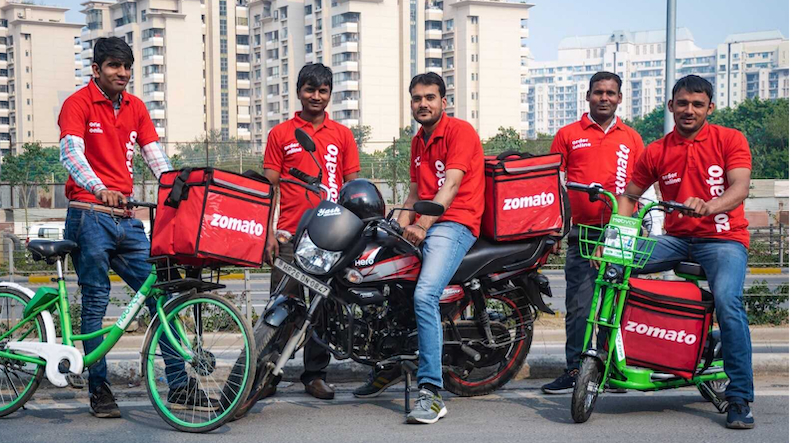
    MUMBAI: Zomato, the poster child of India’s food-tech revolution, has released its Q3 FY25 results, revealing a fascinating mix of growth and persistent challenges. Founded by Deepinder Goyal, a man who turned his restaurant review dream into a billion-dollar reality, Zomato’s journey from a niche startup to a household name is nothing short of inspiring. Today, the company boasts a market valuation of over Rs 50,000 crore, but the path has been far from smooth.

    In a bid to outpace competitors like Swiggy and Zepto, Zomato has aggressively expanded its portfolio. From acquiring Blinkit, which revolutionised its quick commerce game, to launching ‘Zomato District,’ an experimental dining experience platform, the company is firing on all cylinders. However, this rapid growth hasn’t come without its challenges. The acquisition spree and investments in new verticals have added significant strain to its financials. And let’s not forget the Rs 803.4 crore GST-related setback from Maharashtra —talk about an unexpected delivery charge!

    With consolidated revenue hitting Rs 5,657 million, up from Rs 3,507 million a year ago, the numbers tell a story of resilience and reinvention. But as profitability continues to slip through its grasp, the burning question remains: can Zomato strike the elusive balance between growth and financial sustainability? Or is it simply running faster on a treadmill of rising costs? Buckle up, because this food-tech giant’s journey is far from over.

    Consolidated Results

    In Q3 FY25, Zomato’s consolidated revenue from operations surged by 54 per cent year-over-year to Rs 5,405 million, with additional income of Rs 252 million pushing total income to Rs 5,657 million. While these numbers showcase growth, they come with a hefty price tag—rising costs that seem as persistent as your favourite food app’s notifications.

    Employee benefits expenses climbed to Rs 689 million, which makes one wonder: are delivery executives being given gold-plated scooters? Advertising and sales promotion costs held steady at Rs 421 million, showing Zomato’s relentless pursuit of eyeballs and appetites. Meanwhile, delivery-related charges hit a whopping Rs 1,450 million—proof that staying ahead in the food-tech race isn’t a cheap sport.

    But here’s where the humour fades. Despite revenue growth, Zomato’s profit before tax tumbled to Rs 124 million, a notable dip from Rs 237 million in the previous quarter. The consolidated profit after tax (PAT) followed suit, shrinking to Rs 59 million, down from Rs 176 million last quarter. Even EBITDA, the trusty metric of operational health, showed only marginal improvement. Is this growth, or are we just running on a treadmill of expenses?

    Adding spice to the financial mix, Zomato’s segment performance revealed contrasting flavours: Hyperpure, its B2B vertical, grew a sizzling 94.5 per cent YoY, while Quick Commerce revenue rocketed 117 per cent YoY, contributing Rs 1,399 million to the top line. But profitability? It’s still playing hard to get—a romance worthy of a Netflix drama.

    So, what’s the takeaway here? Is Zomato on a path to future dominance, or is it stuck in a never-ending balancing act between growth and margin woes? Investors, grab your popcorn, because this plot just keeps thickening!

    Standalone Results

    The standalone results painted a slightly brighter picture—a rare dessert in a financial menu filled with rising costs. Revenue from operations for Q3 FY25 climbed to Rs 2,226 crore, up from Rs 1,782 crore in the same period last year. Including Rs 311 crore in other income, total income reached Rs 2,537 crore, offering some much-needed cheer to investors. Who doesn’t love a surprise topping?

    But let’s not pop the champagne just yet. Employee benefits expenses rose to Rs 333 crore—are we paying delivery riders in Bitcoin now? Meanwhile, delivery-related costs surged to Rs 941 crore, showing that keeping up with a booming market comes at a steep price. Despite these headwinds, Zomato managed to serve up a standalone profit before tax of Rs 574 crore, a healthy increase from Rs 385 crore in Q3 FY24. The standalone PAT came in at Rs 494 crore, proving that even amidst turbulence, there’s room for optimism.

    So, can Zomato keep delivering these sweet surprises, or are rising costs about to steal dessert off the table? Investors, stay tuned!

    Operational Highlights

    1.  Segment Growth:

    Food delivery revenue grew by 21.6 per cent YoY to Rs 2,072 million.

    Hyperpure, Zomato’s B2B vertical, surged by 94.5 per cent YoY to Rs 1,671 million.

    Quick commerce, a new darling, contributed Rs 1,399 million, up from Rs 644 million last year.

    2. Acquisitions: Zomato’s acquisition spree continues to bear fruit. The recent addition of Wasteland Entertainment Private Limited (WEPL) and Orbgen Technologies Private Limited (OTPL) underscores its focus on diversification.

    3. Regulatory Challenges: The company faced a GST-related setback, with demands totalling Rs 420 crore from Maharashtra and West Bengal authorities. While management remains optimistic, these disputes add another layer of complexity to its financial landscape.

    Zomato’s results reflect the growing pains of a company caught between scaling operations and achieving profitability. While the rapid growth in Hyperpure and Quick Commerce shows plenty of promise, the company’s ballooning costs and pesky regulatory hurdles resemble hurdles in a marathon where the finish line keeps moving.

    So, what’s the final verdict? Is Zomato writing the next big food-tech success story, or is it cooking up a recipe for endless spending? As India’s food-tech landscape becomes more cutthroat, the stakes for Zomato couldn’t be higher. The question isn’t just whether they can deliver food on time but whether they can finally deliver profits to investors. One thing’s for sure: this is a journey worth watching—and it’s bound to be as spicy as a midnight biryani craving!

    Key Financial Highlights

    . Consolidated Revenue: Rs 5,405 million for Q3 FY25; Rs 14,410 million for nine months.

    Standalone Revenue: Rs 2,226 million for Q3 FY25; Rs 6,425 million for nine months.

    PAT (Consolidated): Rs 59 million for Q3 FY25; Rs 488 million for nine months.

    EBITDA Margin: Improved slightly but remains constrained by rising costs.

    Segment Growth: Hyperpure surged by 94.5 per cent YoY, Quick Commerce up by 117 per cent YoY.

  • NDTV group Q1 FY23 revenue at Rs 113.70 crore; PAT at Rs 23.2 crore

    NDTV group Q1 FY23 revenue at Rs 113.70 crore; PAT at Rs 23.2 crore

    Mumbai: The NDTV group reported its first quarter results for financial year 2023. The company’s revenue stood at Rs 113.70 crore up by Rs 18 crore versus the corresponding quarter last year. The company’s profit after tax (PAT) stood at Rs 23.2 crore up by Rs 9.25 crore.  

    The group’s TV arm recorded a profit of Rs 12.5 crore. Its digital arm NDTV Convergence has recorded a PAT of Rs 13.7 crore.

    According to the company’s statement, it should be noted that Q1 last year included an exceptional item (sale of an investment). If that were to be excluded, the revenue has improved by Rs 24.5 crore over last year and profit has improved by Rs 13.7 crore over last year.

    The group’s external liabilities are down by Rs 6 crore including bank borrowings in the quarter and by Rs 206 crore including bank borrowings from three years ago (as of March 2019).

  • Shemaroo op revenue down due to COVID2019 impact

    Shemaroo op revenue down due to COVID2019 impact

    BENGALURU: Indian content creator, aggregator distributor, specifically in the media and entertainment industry and now television broadcaster, Shemaroo  Entertainment Ltd (Shemaroo) reported 39.7 percent drop in consolidated operating revenue at Rs 86.2 crore for the quarter ended 30 June 2020 (Q1 2020, quarter or period under review) as compared to the Rs 143.03 crore  for corresponding year ago quarter Q1 2020. Consolidated operating revenue for Q4 2020 was Rs 122.74 crore. However, the company reported a lower consolidated loss of Rs 12.81 crore for the period under review as compared to the loss of Rs 14.07 crore for the immediate trailing quarter (Q4 2020). The company had reported consolidated profit after tax (PAT) of Rs 16.38 crore in Q1 2020.

    Shemaroo revenue from traditional media in Q1 2021 declined 44.5 percent to Rs 52.3 crore from Rs 94.30 crore in Q1 2020. Revenue from traditional media in Q4 2020 was Rs 76.9 crore. Shemaroo’s revenue from digital media also fell in Q1 2021 to Rs 33.9 crore from Rs 48.7 crore in Q1 2020 (y-o-y decline of 30.4 percent) and Rs 45.8 crore (q-o-q decline of 26 percent) in Q4 2020. However, contribution to revenuefrom digital media has been increasing over time says the company. In Q1 2020, digital media revenue’s contribution to overall revenue was 34.06 percent, which increased to 39.33 percent in Q1 2021. In FY 2020, the contribution of revenue from digital media to operating revenue grew to 38.55 percent from 16.94 percent in FY 2016. Please refer to the figure below:

    Sheamroo says in an investor presentation for Q1 2021 that the nationwide lockdown due to COVID2019 coupled with the overall sluggishness in the Indian economy impacted consumption and hence advertisingspends by brands. It says that during the quarters, deals were either deferred or re-negotiated which had an impact on the margins and cash flows. The company says that since it had alreadyundertaken cost rationalization measures even before the lockdown, it helped the company to tide over this pandemicoperationally. However, Shemaroo says that is cognisant of the external environment and has thereby undertaken several measures to optimize the operations andrationalize thosebusinesses that have been severely impacted.

    Shemaroo’s consolidated operating EBITDA for Q1 2020 was negative Rs 4.89 crore as compared to consolidated operating profit of Rs 31.91 crore for the corresponding year ago quarter. For Q4 2020, Shemarro had negative EBITDA of Rs 3.08 crore.

    Let us look at the other numbers reported by Shemaroo

    Consolidated total income (operating revenue plus other income) for Q1 2021 declined 39.8 percent y-o-y to Rs 86.55 crore from Rs 1543.87 crore in Q1 2020. Consolidated total expenditure for Q1 2021 reduced 15.6 percent y-o-y to Rs 99.82 crore from Rs 118.32 crore in Q1 2020. 

    Consolidated operating costs for the period under review declined 19.1 percent y-o-y to Rs 71.16 crore from Rs 87.91 crore in Q1 2020. Employee benefit expense in Q1 2021 was almost flat (reduced by 0.2 percent) y-o-y at Rs 15.72 crore as compared to Rs 15.75 crore in Q1 2020, Finance costs in Q1 2021 increased 18.9 percent to Rs 6.86 crore from Rs 5.77 crore in Q1 2020. Other expenses in Q1 2021 reduced 43.6 percent y-o-y to Rs 10.22 crore from Rs 7.46 crore in the corresponding year ago quarter.
     

  • Despite revenue drop ZMCL EBITDA up in FY 2020

    Despite revenue drop ZMCL EBITDA up in FY 2020

    BENGALURU: The Essel Group’s News media arm Zee Media Corporation Ltd (ZMCL) reported an eight percent decline in revenue from operations to Rs 631.75 crore for the year ended 31 March 2020 (FY 2020, year or period under review) as compared to Rs 686.92 crore reported for the previous year FY 2019. ZMCL reported a loss of Rs 1.6 crore for FY 2020 as compared to a loss of Rs 0.03 crore for the previous year.

    Due to provision for impairment loss to the extent of Rs 332.92 crore for its entire investment of non-convertible and non-cumulative redeemable preference shares in respect of its investments in Diligent Media Corporation, the company reported a negative total comprehensive income (TCI) of Rs 272.72 crore for the year under review as compared to a negative TCI of Rs 6.35 crore for the previous year.

    ZMCL’s EBITDA for FY 2020 increased 5.1 percent to Rs 182.5 crore (28.5 percent of operating revenue) as compared to Rs 173.64 crore (24.9 percent of operating revenue) for FY 2019.

    Operating revenue break up

    More than 90 percent of ZMCL revenue was advertisement or ad revenue during the year under review. Ad revenue for FY 2020 declined 5.3 percent to Rs 583.5 crore (92.4 percent of operating revenue) from Rs 616.13 crore (89.7 percent of operating revenue) in the previous year. Subscription revenue for the period under review declined 19.5 percent to Rs 38.16 crore (6 percent of operating revenue) from Rs 47.37 crore (6.9 percent of operating revenue) in the previous year. Other sales and services revenue decreased 56.9 percent in FY 2020 to Rs 10.09 crore (1.6 percent of operating revenue) from Rs 23.4 crore (3.4 percent of operating revenue) in FY 2019.

    Let us look at the other numbers reported by ZMCL

    ZMCL’s total expense in FY 2020 declined 4.3 percent to Rs 561.23 crore from Rs 586.68 crore in the previous year. Operating costs in FY 2020 declined 3.7 percent to Rs 109.52 crore from Rs 113.77 crore in FY 2019. Employee benefits expense for FY 2020 increased 4.7 percent to Rs 159.41 crore from Rs 1522.19 crore in FY 2019. Finance costs in the period under review increased 33.3 percent to Rs 24.01 crore from Rs 18.01 crore. Marketing, distribution and business promotion expenses in FY 2020 declined 35.8 percent to Rs 52.41 crore from Rs 81.61 crore in the previous year. Other expenses during the year under review declined 22.8 percent to Rs 127.91 crore from Rs 165.71 crore.

  • Jio juggernaut marches on with 62 percent bottomline growth in Q3 2020

    Jio juggernaut marches on with 62 percent bottomline growth in Q3 2020

    BENGALURU: Mukesh Dhirbhai Ambani’s largest start up in the world, Reliance Jio Infocomm Limited (Jio) reported 62.5 percent growth in standalone profit after tax (PAT) for the period ended 31 December 2019 (Q3 2020, period or quarter under review) as compared to the corresponding year ago quarter Q3 2019 (y-o-y). The company reported standalone PAT of Rs 1,350 crore for Q3 2020 as compared to Rs 831 crore for Q3 2019. The company’s standalone EBIDTA (including other income) expanded 38.2 percent y-o-y to Rs 5,601 crore in Q3 2020 from Rs 4,053 crore. Jio says that it became a net recipient of access charges within 2 months of implementation of IUC tariffs, with outgoing traffic in overall offnet traffic reducing to 48 percent by end of quarter.

    Further, the company’s standalone revenue from operations for the period under review grew 28.2 percent y-o-y to Rs 13,968 crore from Rs 10,884 crore in Q3 2019. Total income in Q3 2020 grew 28.5 percent y-o-y to Rs 13,986 crore from Rs 10,885 crore.

    Jio reported a subscriber base of 37 crore as on 31 December 2019. Gross subscriber additions were 3.71 crore with a net subscriber addition of 1.48 crore during Q3 2020. The company says that the 2.2 crore subscribers that were lost were primarily excessively heavy voice users, and exited owing to implementation of IUC tariffs due to regulatory uncertainty. ARPU during the quarter was Rs 128.4 per subscriber per month Jio says that customer engagement continues to be robust with average data consumption per user per month of 11.1 GB and average voice consumption of 760 minutes per user per month.

    Let us look at the other expenses reported by Jio

    Amongst the major expenses incurred by Jio in Q3 2020 were network operating expenses, access charges, license fees and spectrum charges and net finance costs.

    Jio’s standalone network operating expenses increased 38.7 percent y-o-y in Q3 2020 to Rs 4,423 crore from Rs 3,190 crore in the corresponding year ago quarter.  Standalone access charges reduced 4.2 percent y-o-y during the period under review to Rs 1,442 crore from Rs 1,506 crore in Q3 2019. Standalone license fees and spectrum charges increased 30.5 percent y-o-y during the quarter to Rs 1,483 crore from Rs 1,136 crore. Standalone net finance costs in Q3 2020 increased 79 percent y-o-y to Rs 1,953 crore from Rs 1,091 crore in Q3 2019.

    Standalone employee benefit expense in Q3 2020 declined 26.3 percent y-o-y to Rs 314 crore from Rs 426 crore. Standalone selling and distribution expense in Q3 2020 increased 20.3 percent y-o-y to Rs 356 crore from Rs 296 crore. Standalone other expenses in the period increased 32 percent y-o-y to Rs 367 crore from Rs 278 crore.

    Company speak

    Reliance Industries Limited (RIL) chairman and managing director Ambani said; “Jio has continued on its unprecedented growth journey receiving overwhelming customer response for best in class mobile connectivity services. We are delivering on our promise to be the driver of digital revolution in the country. Jio is also determined to redefine the wireline infrastructure, home entertainment and enterprise market in India with its FTTx services which bundle best-in-class connectivity with bouquet of digital content and services. To drive the next leg of growth, a truly transformational and disruptive digital services company has been set-up which will bring together India’s No.1 connectivity platform, leading digital app ecosystem and world’s best tech capabilities, for creating a truly Digital Society for each Indian.”

    Jio Platforms Limited

    Jio says in an earnings release that Jio Platforms Limited will hold all digital platforms including the connectivity platform i.e. Reliance Jio Infocomm Limited. Total capitalisation of Jio Platforms Limited is Rs 1,70,000 crore. The release says that the capital and organisation structure of Jio Platforms Limited has been benchmarked with global technology players.

    The Jio release also states that it has been developing and fostering a vibrant digital ecosystem through various digital applications, tools and platforms spanning self-care, information, entertainment, chat, utility tools etc. The release further states that Jio continues to focus on technology enabled emerging digital platforms that enable and accelerate digital society – healthcare, education, agriculture, commerce, gaming, government to citizen services, and many more. The company says that the platforms are also backed by investment in next-gen technologies like blockchain, AI/ ML, AR/ MR, edge computing.

  • Den Networks reports profitable Q3 2020

    Den Networks reports profitable Q3 2020

    BENGALURU: Indian cable network and broadband company Den Networks Ltd (Den) reported consolidated profit after tax (PAT) of Rs 12.28 crore for the quarter ended 31 December 2019 (Q3 2020, quarter or period under review) as compared to a loss of Rs 31.21 crore for the corresponding year ago quarter (Q3 2019, y-o-y) and 28.9 per cent higher than the Rs 9.53 crore for the immediate trailing quarter (Q2 2020, q-o-q). Consolidated EBITDA for the quarter at Rs 58.28 crore was 21.2 per cent higher y-o-y than Rs 48.1 crore and was 20.1 per cent higher q-o-q than Rs 48.51 crore.

    Den reported consolidated operating revenue of Rs 318.08 crore, which was 3.1 per cent higher y-o-y, but was 4.3 per cent lower q-o-q than Rs 332.42 crore.

    Segment revenue

    The company has two segments – Cable Distribution Network (Cable) and Broadband.

    Cable revenue increased 3 per cent y-o-y in the quarter under review to Rs 300.46 crore from Rs 291.59 crore, but declined 4.6 per cent q-o-q from Rs 314.92 crore. Cable segment operating result for Q3 2020 was 6.23 crore as compared to a loss of Rs 8.95 crore for Q3 2019 and a loss of Rs 21.14 crore for the immediate trailing quarter.

    Major revenue heads for the Cable business are Subscription, Placement, Other operating income and Activation. Cable Subscription revenue in Q3 2020 increased 10 per cent y-o-y to Rs 189 crore from Rs 172 crore and increased 6 per cent q-o-q from Rs 178 crore. Placement revenue increased 8 per cent y-o-y to Rs 87 crore from Rs 81 crore but declined 1 per cent q-o-q to Rs 88 crore. Other operating income in Q3 2020 declined 52 per cent y-o-y to Rs 6 crore from Rs 13 crore and declined 68 per cent q-o-q from Rs 19 crore. Activation revenue declined 29 per cent y-o-y to Rs 18 crore from Rs 25 crore and declined 39 per cent q-o-q from Rs 29 crore.

    Broadband revenue increased 4.7 per cent y-o-y in Q3 2020 to Rs 17.62 crore from Rs 16.82 crore and increased 0.7 per cent q-o-q from Rs 17.50 crore. The segment reported a lower operating loss result for Q3 2020 at Rs 5.4 crore and a loss of Rs 6.6 crore for Q3 2019 and a loss of Rs 5.1 crore for Q2 2020.

    Let us look at the other results posted by Den for Q3 2020

    Consolidated total expenses for Q3 2020 at Rs 321.63 crore was 4.8 per cent lower y-o-y than Rs 337.84 crore and was 11.9 per cent q-o-q lower than Rs 365.27 crore. Consolidated content costs in Q3 2020 declined 4.7 per cent y-o-y to Rs 141.60 crore from Rs 148.65 crore and was 11.2 per cent lower q-o-q than Rs 159.45 crore.

    Consolidated placement fees at Rs 1.08 crore during the quarter under review was 89.2 per cent lower y-o-y than Rs 9.99 crore and was 76.2 per cent lower q-o-q than Rs 4.54 crore. Consolidated employee benefits expense for Q3 2020 at Rs 23.72 crore was almost flat (down 0.3 per cent y-o-y and down 0.2 per cent q-o-q) than Rs 23.8 crore in Q3 2019 and Rs 23.8 crore in Q2 2020.

    Consolidated finance costs during the quarter decreased 9.7 per cent y-o-y to Rs 4.38 crore from Rs 13.88 crore and declined 30.6 per cent q-o-q from Rs 6.31 crore. Consolidated other expenses in Q3 2020 increased 19.9 per cent y-o-y to Rs 93.39 crore from Rs 77.87 crore but declined 2.9 per cent q-o-q from Rs 96.15 crore.

  • Airtel Digital TV revenue and profit up as Bharti Airtel reports record loss

    Airtel Digital TV revenue and profit up as Bharti Airtel reports record loss

    BENGALURU: Indian telecom major Bharti Airtel reported 17 percent y-o-y increase in revenue for its Digital TV Services for the quarter ended 30 September 2019 (Q2 2020, quarter or period under review) as compared to the corresponding year-ago quarter Q2 2019. The company says that with the adoption of IndAS 116, effective 1 April 2019, the results and ratios of periods commencing 1 April  2019 are not comparable with previous periods.

    Further, pursuant to reporting changes in DTH effective April 1, 2019 (content cost becoming a Pass through expense) on comparable basis, the y-o-y revenue growth for the period ended 30 Sep 2019 is 17 percent (Quarter ended) and 16 percent (six months ended). EBITDA/ Total revenues is 43.3 percent for the quarter ended 30 Sep 2019 and 42.8 percent for the six months ended 30 Sep 2019 adjusting for the reporting changes.

    Without taking into accounting the adoption of IndAS 116, Airtel’s Digital Services revenue declined 22.9 percent y-o-y to Rs 789.3 crore in Q2 2020 from Rs 1,024.2 crore. Operating profit or EBIDTA for Airtel’s Digital TV Services increased 41.6 percent y-o-y in Q2 2020 to Rs 560.7 crore from Rs 396 crore. EBIT for the period under review increased 70 percent y-o-y to Rs 3,243 crore from Rs 1,905 crore.

    The company reported 14.2 percent increase in capex for Q2 2020 at Rs 205.2 crore as compared to Rs 179.7 crore in Q2 2019.

    Digital TV Services subscription numbers

    Airtel Digital TV Services subscribers increased 9.7 percent y-o-y in Q2 2020 to 1.62 crore from 1.48 crore in Q2 2019. Airtel Digital TV Services had 1.6 crore subscribers in the immediate trailing quarter Q1 2018. The company reported net additions of 181,000 Digital TV subscribers in Q2 2020. Average revenue per user (ARPU) in Q2 2020 increased to Rs 162 from Rs 157 in the immediate trailing quarter, but was far lower than the Rs 232 in Q2 2019. In US$ terms, the company reported ARPU of $2.3, $2.2 and $3.3 for Q2 2020, Q1 2020 and Q2 2019 respectively. Monthly churn in Q2 2020 was higher at 1.6 percent as compared to 1.0 percent in the immediate trailing quarter Q1 2020 and 1.3 percent in the corresponding year ago quarter.

    Bharti Airtel Numbers

    Bharti Airtel consolidated revenues for Q2 2020 at Rs 21,131 crore grew 6.9 percent y-o-y (reported increase of 4.9Percent) on an underlying basis. India revenues for Q2 2020 at Rs 15,361 crore increased by 5.7 y-o-y (reported increase of 3.0percent) on an underlying basis. Mobile revenues witnessed a y-o-y growth of 7.1 percent. Mobile data traffic has nearly doubled to 4,497 PBs in the quarter as compared to 2,478 PBs in the corresponding quarter last year. Mobile 4G data customers increased by 56.9 percent to 10.31 crore from 6.57 crore in the corresponding quarter last year. Digital TV revenue witnessed a growth of 17.1 percent y-o-y on an underlying basis (decline of 22.9 percent on reported basis due to reporting changes in DTH pursuant to the new tariff order). Airtel Business has sustained its performance on ay-o-y basis.

    Bharti Airtel’s consolidated EBITDA at Rs 8,936 crore increased 40.9 percent y-o-y. Consolidated EBITDA margin increased by 10.8 percent to 42.3 percent in the quarter as compared to 31.5 percent in the corresponding quarter last year. Consolidated EBIT increased by 85.2 percent y-o-y to Rs 1,993 crore. Consolidated Net Loss before exceptional items for the quarter was  Rs 1,123 crore. The consolidated net loss after exceptional items for the quarter was Rs 23,045 crore.

    Company Speak

    Bharti Airtel MD and CEO Gopal Vittal said in a press release, “Despite being a seasonally weak quarter, we witnessed positive revenue growth in Q2 on the back of various initiatives aimed at providing superior differential services through our Thanks platform. We continue to witness strong data traffic growth of approximately 81 percent y-o-y and added about 0.8 crore 4G customers on our network during the quarter. We remain committed to strengthening our network and providing a superior experience to our customers. On the AGR verdict of the Hon’ble Supreme Court, we continue to engage with the government and are evaluating various options available to us. We are hopeful that the government will take a considerate view in this matte given the fragile state of the industry.”

  • P&G ups ad expenses as profit hit by slowing economy

    P&G ups ad expenses as profit hit by slowing economy

    BENGALURU: FMCG player Procter & Gamble Hygiene and Health Care Ltd (P&G) reported 7.6 percent year-on-year (y-o-y) growth in revenue from operations for the quarter ended 30 September 2019 (Q1 2020, quarter or period under review) as compared to the corresponding year ago quarter Q1 2019. P&G’s financial year is between 1 July and 30 June, hence the quarter ended September 30, 2019 is Q1 2020 in the case of P&G.

    During a period in which the world is witnessing economic sluggishness, the company increased its advertising and sales promo spends for the quarter under review by 25.6 percent y-o-y to Rs 104.46 crore from Rs 83.2 crore. The company reported 5 percent y-o-y decline in Q1 2020 in Net profit after tax (PAT) at Rs 136.84 crore as compared to Rs 144.11 crore. EBITDA for the quarter under review declined 5.4 percent y-o-y to Rs 173.55 crore (20.4 percent of operating review) as compared to Rs 183.53 crore (20.2 percent of operating review).

    P&G revenue from operations for Q1 2020 increased to Rs 852.14 crore from Rs 791.80 crore in Q1 2019. Total Income including other income increased 5.9 percent y-o-y in Q1 2020 to Rs 863.16 from Rs 815.36 crore.

    Let us look at the other numbers reported by P&G

    Total Expense in Q1 2020 increased 14.6 percent y-o-y to Rs 681.78 crore from Rs 594.73 crore. Expenses towards costs of raw materials and packaging materials increased 28.5 percent y-o-y to Rs 334.88 crore in Q1 2020 from Rs 260.51 crore. Purchase of traded goods declined 89.2 percent y-o-y to Rs 11.27 crore from Rs 104.27 crore.

    Employee Benefits Expense in Q1 2020 increased 17.5 percent y-o-y to Rs 42.07 crore from Rs 35.81 crore. Finance costs declined 14.3 percent to Rs 0.36 crore from Rs 0.42 crore. Other Expense increased 25.6 percent y-o-y to Rs 185.91 crore from Rs 148.04 crore.

    Company speak

    The company says in a press release that in a challenging market environment, its Feminine Care business registered strong double-digit growth in the quarter, while its Health Care business grew ahead of the market.

    P&G managing director Madhusudan Gopalan said, “In a challenging macro-economic environment our focus on raising the bar on superiority, improving

    productivity, and strengthening the organisation culture has enabled us to deliver sustained growth during the first quarter. We will continue to remain focused on these strategies in line with our aim to drive balanced sales and profit growth.”

  • Eros International reports lower numbers for Q1 2019

    Eros International reports lower numbers for Q1 2019

    BENGALURU: Indian film and media company Eros International Media Ltd (Eros) reported a 15.9 percent decline in consolidated net sales/income from operations (Op Rev) for the quarter ended 30 June 2019 (Q1 2020, quarter or period under review) as compared to the corresponding year ago quarter Q1 2019 (y-o-y). Eros reported consolidated Op Rev of Rs 183.52 crore and Rs 217.93 for Q1 2020 and Q1 2019 respectively. The company’s consolidated simple operating EBITDA fell 64.7 percent to Rs 32.91 crore (17.9 percent of Op Rev) in Q1 2020 from Rs 93.33 crore (42.8 percent of Op Rev) in Q1 2019. Consolidated Profit after tax (PAT) during the quarter under review declined 54.9 percent y-o-y to Rs 27.05 crore from Rs 59.95 crore. Total comprehensive income or TCI declined 77.9 percent y-o-y to Rs 22.3 crore from Rs 100.91 crore in Q1 2019.

    Eros consolidated Total Expenditure in Q1 2020 increased 16.8 percent y-o-y to Rs 170.99 crore from Rs 146.45 crore. Consolidated Films rights costs including amortisation costs declined 25.8 percent y-o-y to Rs 66.93 crore in Q1 2020 from Rs 90.15 crore. Consolidated Employee Benefits Expense in Q1 2020 declined 19.8 percent y-o-y to Rs 10.86 crore from Rs 13.54 crore. Consolidated net finance costs declined 9.3 percent y-o-y to Rs 17.68 crore from Rs 19.50 crore. Consolidated Other expenses for the period under review more than tripled (increased 264.5 percent) y-o-y to Rs 69.81 crore from Rs 19.15 crore in the corresponding year ago quarter.

    It must be noted that this report is purely a numbers report based only on the company’s consolidated financial results.

    The last traded price of Eros International Media Ltd on the NSE was Rs 9.50 per equity share of face value of Rs 10 each on 12 August 2019. The 52 week high/low prices were Rs 133.50/Rs 9.50.

  • Shemaroo revenue up in first quarter

    Shemaroo revenue up in first quarter

    BENGALURU: Indian content creator, aggregator and distributor, specifically in the media and entertainment industry, Shemaroo  Entertainment Ltd (Shemaroo) reported 15.9 percent year-on-year (y-o-y) growth in revenue from operations at Rs 143.03 crore for the quarter ended 30 June 2019 (Q1 2010, quarter or period under review) from Rs 123.36 crore for the corresponding year ago quarter. Total revenue for Q1 2020 increased 16.4 percent y-o-y to Rs 143.87 crore from Rs 123.58 crore.

    Profit after tax or PAT for the period under review declined 16.2 percent y-o-y to Rs 16.38 crore from Rs 19.55 crore in Q1 2019. Total comprehensive income for Q1 2020 reduced 15 percent y-o-y to Rs 16.15 crore from Rs 19.01 crore in Q1 2029. Operating EBITDA for Q1 2020 declined 17.9 percent y-o-y to Rs 31.92 crore (22.3 percent of operating revenue) from Rs 38.90 crore (31.5 percent of operating revenue) in the corresponding year ago quarter.

    Total expenditure for Q1 2020 increased 28.6 percent y-o-y to Rs 118.32 crore from Rs 91.99 crore. Cost of materials consumed during the quarter under review increased 28.4 percent y-o-y to Rs 87.91 crore from Rs 68.45 crore. Employee benefits expense in Q1 2020 increased 41.9 percent y-o-y to Rs 15.75 crore from Rs 11.10 crore. Finance costs in Q1 2020 declined 5.9 percent y-o-y to Rs 5.77 crore from Rs 6.13 crore. Other expenses in Q1 2020 increased 51.6 percent y-o-y to Rs 7.46 crore from Rs 4.92 crore.