Tag: Partho Mitra

  • “I believe in inspiration but not in adaptation” : Kaushik Ghatak

    “I believe in inspiration but not in adaptation” : Kaushik Ghatak

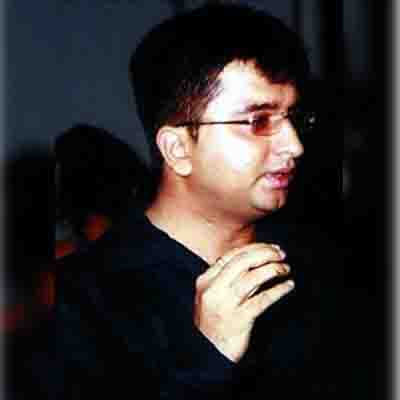
    Just 29, Kaushik Ghatak is already a veteran director on Indian television. A hundred episodes of Kyunkii Saas Bhi Kabhi Bahu Thi, a few of Sanskriti and Sshhh.Koi Hai under his belt, Ghatak has now taken on Sanjivani, the new hospital series on Star Plus.

    Hailing from a small town in West Bengal, Ghatak honed his directorial skills under several veterans in the field after migrating to Mumbai in the 1990s. For the last four years, he has tried his hand at ad films as well, a fact that probably helps him add the element of gloss and sophistication to his assignments as a director of TV serials. Ghatak spoke to Gurpreet Tathgur and Hetal Adesera about his initial days and talks about Sanjivani, his latest and most prized assignment till date. Excerpts from the interview.

    What drew you towards direction?
    I used to write, do photography and visualize a lot of things – but was yet hunting for a means of expression. Filmmaking, I believe, is the art of all arts. With a background in photography, I started out as a cameraman. At the Noida institute where I enrolled for a course in photography, the dean himself recommended that I should take the one on direction instead. He nearly brainwashed me into taking up the direction course.

    How did you come to Mumbai?
    I came to Mumbai after finishing my course. Mumbai was as foreign to me as New York, but I have had very pleasant experiences here although I did struggle a lot initially. Anurag Basu, whom I assisted initially, is almost like a godfather to me. I assisted him on Raahat for Zee. Later, I assisted Partho Mitra for Coffee House, Gautam Mukherjee on ads like Dettol, Casper, Complan, Oscar, and Khaitan. I assisted Gaurav Pande for Star Bestsellers and even made small ads for Raj Travel and Tours.


    Ghatak with the cast and crew of Sanjivani

    What was your directorial debut?
    It was a Bengali serial for Alpha Bengali called Amra Povashi. For Hindi television, it was Kyunki, which I took over from the 35th episode and went on till the 155th episode.

    Do you believe in sticking to certain genres or do you believe in experimenting?
    Kyunki was a family drama and so was Sanskruti. After that, I got an offer to do Sshh…Koi Hai. I took up the offer not because of money or excitement but because of the experience and experimenting it asked for. After doing two family dramas, I didn’t want to be stuck with that label, so I took up Shhh Koi Hai as a challenge. Directing a thriller was not a new thing to me as I had assisted Anurag in X-Zone. Yes, I do believe in experimenting.

    What kind of themes generally interest you?
    Presently Sanjivani is my main project. I believe direction is not only about story telling, but is full of moments. Thrillers and horrors are ok but they are not my kind. I shouldn’t be saying this because I have done those genres before, but my inclination is more towards human relations and the moments they are made of.

    Thrillers and horrors are ok but they are not my kind

    ______________

    Has Sanjivani been inspired by any soaps or movies?
    Many series have inspired me, like ER, Chicago Hope and Dhoop Kinare. Also, movies like Anand have motivated me. But I have not copied or adapted from these. There are similarities but nothing has been lifted. I believe in inspiration but not in adaptation.

    What kind of research do you do before commencing any venture? Research is very important. A common man knows very little about the subject of your serial so you can’t mislead him with wrong information. My aim is firstly to entertain, then inform and lastly to educate. I agree that while making serials, there is a slight lack of authenticity as it is very difficult to be accurate but I try to be as genuine as possible. For Sanjivani, we read 800 case studies, visited several hospitals to see how the doctors work, how patients react on various occasions, and interviewed a few doctors before making a rough outline for the serial.

    Are you satisfied with your work?
    No, I’m never satisfied with my work. At the end of the day, I always feel that there is something lacking and that I probably am in the wrong profession. I feel like running away and doing something else, but when I sit down to think about it, I realise that if I leave this field there is nothing else I can do or rather, nothing else that I want to do.

    Direction is not only about story telling, but full of the moments in between.

    Who are your favourite actors?
    There are many. I have learnt a lot from many actors, so I don’t want to name all of them.

    What work schedule do you follow?
    We are currently shooting daily till 6 pm and sometimes have a night shift too if we have to complete the episodes and there’s nothing to bank on. But after we can a couple of episodes, we will shoot 16 days a month as each episode takes around four days to complete. I need my time; the maximum I do is one shift. I believe in the quality of the work and I don’t mind doing just two scenes in a day. I want perfection in whatever I do.

    What do you think makes for a good director?
    A director literally breathes his work. There has to be involvement, hard work and an ability to convey something to an audience. You have to work with a premise that your audience does not know anything about the subject you are dealing with, and that you are solely responsible to inform them. Once you have this in mind the rest just flows.

    Who is your favourite director?
    It is very difficult to answer this. But a few names that come to my mind are Satyajit Ray, Raj Kapoor, Guru Dutt, Sooraj Barjatya, Yash Chopra and Shyam Benegal.

    Do you want to direct movies?
    I plan to get into mainstream films but not into art films.

    You have to work with a premise that your audience does not know anything about the subject you are dealing with, and you are solely responsible to inform them.

    A still from Sanjivani

    What has been your happiest moment?
    My happiest moment was on 14 February 1998, the day Anurag Basu allowed me to stand on the sets and assist him. Then of course the day I got the offer to direct Kyunkiwas also a very important day and I could not believe that I was being offered to direct the current number one serial in the country.

    Where do you see yourself ten years down the line?
    When I was a kid, I used to spend Rs 3.75 to watch a film and then dream of myself directing that kind of film. And now, here I am, directing television serials! Ten years hence I see myself at the same place, directing television serials or maybe even films.

    Which are your favourite Indian serials?
    There are lots but to name a few there’s Malgudi days, Hum Log, Neem Ka Ped and Ajeeb Dastan.

    How would you define Kaushik Ghatak – the person?
    Ohh. a very fun loving person, who loves music, computers and prefers sitting with his wife after a long day of work rather than watching TV.
  • TV is not a medium for fiction, it’s more conditioned for news and current affairs programming. : Partho Mitra

    TV is not a medium for fiction, it’s more conditioned for news and current affairs programming. : Partho Mitra

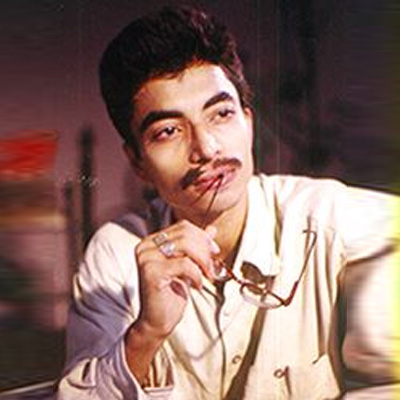
    If popularity is the index of a director’s success, Partho Mitra should surely rank as one of the best directors on TV today.

    Partho, who started his career on television with Shanti, Indian TV’s first daily soap, went on to direct Banegi Apni Baat, Ghar Ek Mandir and is now directing Sansaar. For someone whose passion was still photography, Partho has come a long way as director. Partho’s work is marked by his absolute commitment towards all aspects of filmmaking. He takes a personal interest in casting, oversees the development of the storyline and is particular about maintaining a high level of production values.

    He comes across as a very frank person, at ease in speaking his heart out. We present excerpts of a no-holds-barred interview he gave to indiantelevision.com’s correspondent, Amar.

    What brought you to direction?
    In my college days, I was very passionate about still photography. After college, I assisted Deepak Roy, a documentary filmmaker for some time, before getting an opportunity to learn filmmaking at the Columbia School of Cinema, Los Angeles, in 1988. Two years later, I was on internship with the Jewish TV Network and covered the Gulf War. All this led to my coming home in 1991 and doing a couple of small budget films in Delhi. A couple of years later I moved to Mumbai and my first major project was the daily soap Shanti.

    What factors do you keep in mind before starting a new project?
    TV is essentially a writer’s medium, so I consider the script most important. Even in the script, I essentially look for powerful characterisations that can leave an impact. I took up Patang, mainly for the character of Niki Aneja who plays a woman shattered by marriage.

    A daily is more of a production exercise than a direction exercise. It’s more about how many scenes you can squeeze in a day, rather than the quality of the content.
    __________

    As a director, how involved are you with the storyline?
    Tremendously. I won’t do a project if I don’t have a tab on the storyline. Even when I am shooting extensively, I insist that one-liners of the screenplay of future episodes are sent to me first, only after I have read and approved them does the writer go ahead and write the entire script.

    Do you have any favourites among writers?
    My favourite writer is Sutapa Sikdar. She does most of my writing.

    Who are your favourite producers?
    I have an excellent personal equation with Adib Contractor and enjoy working with him. I have also enjoyed working with Raman Kumar and Vinta Nanda. What I find best working with them is their level of faith in me and the freedom I get to execute my ideas.

    What are the changes in temperament one has to make between shooting a daily and a weekly?
    From a director’s point of view, I have found a daily to be more of a production exercise than a direction exercise. It’s more about how many scenes you can squeeze in a day, rather than the quality of the content. Dailies are more verbose – the thrust is more on the dialogues rather than on the screenplay. I would, in fact, equate the nature and feel of a daily with a radio programme.

    But you’ve done well directing dailies too- Shanti and Ghar Ek Mandir?
    Shanti was India’s first daily soap. It was truly a challenge to make the concept a success. Even with Ghar Ek Mandir and Bandhan, I was the director of the early episodes only. I was entrusted the responsibility of establishing these serials successfully, which I believe I did. Another reason I did these dailies was because all of them were shot with a multi-camera set-up which made work smoother. But beyond a point, a daily did not give me the freedom and initiative I look for, so I quit.

    How much of an actor does a director have to be?
    I don’t feel a director needs to be an actor himself. It is important that he understands the nuances of acting and the chemistry of the actor he is dealing with. Personally, I don’t believe in enacting scenes as a method of instructing the actors. What happens with this is that actors who are new and lacking in confidence become very conscious and start aping you without applying their minds.

    Most directors feel that TV is a very limiting medium. Do you agree?
    I believe TV is not quite a medium for fiction, it’s more conditioned for news and current affairs programming. I say this because, invariably it makes for passive viewing. Even the best made programs are not received so well because unlike in the cinema halls where your sole concentration is on the screen, at home you tend to do other things simultaneously- receive calls, prepare meals etc. This is one of the reasons that bring about disillusionment. Besides, budgetary constraints and the pressure of meeting deadlines also create some unpleasantness about the medium.

    So are you also planning to join the movies bandwagon?
    I am certainly working on the script of a movie. Hopefully in the next six months, the complete script will be ready.

    A director needs to be an avid reader- one who has a wide point of view and one who is not bogged down by fixed notions.
    _____________

    What are the natural instincts required of a successful director?
    A director essentially needs to have the sensibility to understand varied emotions and situations. A director needs to be an avid reader- one who has a wide point of view and not one who is not bogged down by fixed notions. Being the captain of the ship, he has to be stern and authoritative, yet effective man-management also requires him to be a diplomat.

    What are the qualities you would look for in a person before taking him under your wing?
    Essentially it would be his keenness to learn in a very humble way. I would look for a basic level of technical expertise also. But that would be secondary. It’s the attitude that is more important.

    Today, would you recommend a specialized course or training under somebody for a person who wants to be a director?
    I would believe training hands-on is the best form of learning direction. A specialized course does endow you with better skills of film appreciation and helps you understand cinema better, but personally I feel there can be no substitute to training under somebody.

    What are the factors you never compromise on as director?
    I’ve already told you about the importance of the storyline in my scheme of things. That apart, I am also very particular about the technicality, maintaining high production values and the casting.

    Who are your favourite actors?
    Irfan Khan, Surekha Sikri and Niki Aneja.

    Have you modelled yourself on any particular director?
    Not consciously, though I have been inspired by the stylistic elements of a few renowned directors. I have been inspired by the script sense of Hrishikesh Mukherjee, the visual finesse of Guru Dutt and overall by the impeccable genius of Satyajit Ray.

    What makes Partho Mitra different from the crowd? What is it about his work that makes him stand apart?
    I believe I have evolved a style of working of my own wherein I can take important decisions very fast, without compromising on the quality and where I am at utmost ease with my actors. All this does lead to a certain feel about my creations, which is distinctive and essentially mine.

    How do you unwind?
    With music. When I am not shooting, I spend as much time as possible with my family. In fact, that is the reason we have shifted to Pune. When I am not shooting, I am in Pune.

    Which has been the happiest moment of your career?
    That’s difficult to answer. I would say it’s been all those occasions when I have started work on a project. I have felt extremely charged up, optimistic and full of energy on these occasions.

  • “Educated young urbanites are moving to foreign networks” :  Hemal Thakkar

    “Educated young urbanites are moving to foreign networks” : Hemal Thakkar

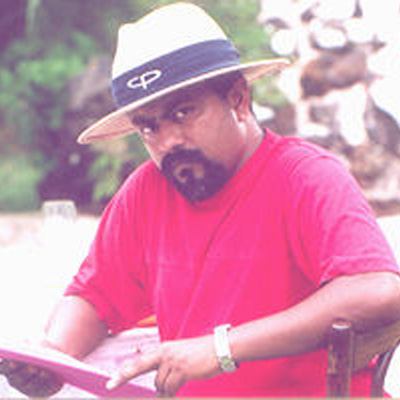
    Actor Hemal Thakkar, along with good friends Paresh Raval and Anand Mundra has recently ventured into TV production under their banner Playtime Creation. Their first project – a rib tickler called 'Shubh Mangal Savadhan' premiered on Sahara TV on 15 July. 

    At a time when veteran TV producers are finding the going tough, Playtime has taken to production with the effortless ease with which Raval churns out his hilarious one-liners on the big screen. Close on the heels of this comedy, are four other serials that the group is working on. That the task is by no means a cakewalk is evident from the Raval's observation that turning producer has been a more arduous struggle than making it as an artiste.

    Excerpts of an interview in which Thakkar discussed his plans with indiantelevision.com correspondent,Amar.

    How did you get into television?
    I've been actively involved with theatre as an actor in my younger days. Later, I worked as creative director with a TV production house called AIN TV. The desire to create quality programmes I enjoy watching was always there. I have wanted to turn producer for some time. In fact some two years ago, I had a pilot shot for a youth series called 'Josh' which never went on air. So, getting a serial on air has been a natural outcome towards which we had been working for some time.
     
    How and when did you team up with Paresh Raval?
    Pareshbhai and I have known each other for years now, right from our theatre days. Pareshbhai and I have a tremendous meeting of minds and we had been thinking on similar lines – that is of producing TV software for sometime. There is an amazing level of mutual trust and respect between us. .
     
    "It's the norm here to put the onus of a project's failure on the writer"
     
    How was 'Shubh Mangal Savadhan' conceived?
    'SMS' was conceived by me almost four years ago. In those days, I had a great deal of difficulty in deciding whom to marry. Whenever I would meet a girl, I would wonder – is she the one for me? Many a time, I would believe that a girl is my type only to be disappointed later. I guess, that is a stage many people go through when they reach marriageable age, are under pressure to settle down and yet have no idea of who would a suitable mate. Marriage is a serious matter and yet the desperation of finding the right person to marry can lead to funny situations. This is the idea on which 'SMS' is based.
     
    What was the criterion in opting for Sahara TV?
    Well, Sahara I believe, is a truly upcoming channel and in future things are only going to get better for it. Besides, they were very comfortable with our creatives and we got along superbly. 'SMS' was approved by another channel also, but Sahara was quicker in taking decisions. We shot the pilot in December last year and it was approved within weeks.
     
    Does having a renowned actor like Paresh Raval help? Don't the channels want to oblige him just in case they might want him to do a show for them?
    Well, Pareshbhai's presence helps, but only in getting a good reception from the channels. Perhaps we are called for meetings more promptly. Besides that, I don't think any channel would want to oblige him because no channel today wants to take even the slightest of risks when it comes to the kind of programmes they want.

    Pareshbhai had himself said in the launch conference that turning producer was a more cumbersome process than his struggle to make it as an actor. Even though he said it in a lighter vein, the fact is we have struggled a lot. We have been working on concepts for nearly two years now. In fact, some of our concepts were shelved after having worked very hard on them. So, having Pareshbhai hasn't really made things that easy.

     
    As a production house, which genres are you looking at?
    I am basically looking at programmes that would appeal to the mass audience. See, as far as the educated young urban population is concerned, they are fast moving over to foreign networks like the Discovery channel and other movie channels because apart from a very few handful of serials, there are no good shows that can keep them rapt. So, we want to tap this audience share and would like to bring out innovative serials appealing to them. Right now, we are also working on four other serials- a never before religious thriller, a detective series, a soap and another comedy.
     
    What exactly do you mean by a religious thriller?
    See, most problems in India have to do with misconceptions relating to religion and the way it is exploited by politicians for their gains. So, the serial will deal with these issues but the story will be presented in a thriller format. Beyond this, I wouldn't like to say anything at this stage.
     
    Do you prefer producing weeklies or dailies?
    At this point of time, I would go for dailies simply because in the last two years or so, the audience has got so used to dailies that weeklies, no matter how good they are, are not being received so well. Besides, channels also tend to market and promote dailies better.
     
    " Pareshbhai's presence helps, but only in getting a good reception from the channels "
     
    At this stage, how many on-air serials do you feel you can handle effectively?
    We wouldn't like to have more than five serials on air at any given time because then we would not be able to maintain a personal supervision on quality.
     
    Do you find channel EPs' interference in your work an impediment?
    I don't know. It's all about hitting it off with them. There have been times when they have raised so many objections and at other times they have solidly backed us. Actually, it's all about their liking the concept. If they like it, things move quite smoothly.
     
    Do you agree with the statement that TV is a writer's medium?
    Absolutely, a writer is like the first Brahmin from whom the process of learning starts and plays the most crucial role in the way a project shapes up.
     
    Why is the contribution of a writer least acknowledged then?
    See, it's the norm here to put the onus of a project's failure on the writer. Ideally, I would like a writer to work only on my projects because that helps him to concentrate fully on a few projects and because you are always interacting with the same team, it leads to better understanding, minimizing the scope of error. But then the budgets that we get don't allow for such a provision.
     
    Who are your favourite directors?
    Anuraag Basu, who shot a pilot for me, was just amazing. Partho Mitra is another of my favourites. The Kulkarni brothers- Sameer and Sachin are also very good.
     
    Between Paresh Raval and you, how do you divide work responsibilities?
    Well, we have a small team with just one project on air right now. So, the need for a strict segregation of workload does not exist at this point. Both of us are involved with all aspects. But it is understood that Pareshbhai will have a final say on creative aspects, whereas I am expected to get head on with the execution part- handling the marketing and production. Both of us are however closely involved with the scripting. In fact, even when Pareshbhai is abroad, we are constantly in touch and whenever possible, Pareshbhai takes time out to personally come for channel meetings.
     
    How do you foresee programming trends in future?
    There will be a greater variety of serials catering to disparate genres without dismantling the TV viewers' staple diet- family drama soaps.
     
    How do you see Playtime Creation evolving in the future?
    We want to develop Playtime into an art corporation. Apart from producing serials and later on films, we plan to extend our services to other areas that involve creative talent. We would like to help market Indian paintings and handicrafts internationally. We would like to help promote Indian folk music.