Tag: Partho Dasgupta

  • The Ad Club re-elects Partho Dasgupta as president

    The Ad Club re-elects Partho Dasgupta as president

    MUMBAI: Advertising, Marketing and media industry’s apex body – The Advertising Club today announced the Managing Committee for the current fiscal i.e. FY 2020-21 at its sixty sixth annual general meeting. Its current president Partho Dasgupta has been re-elected to lead the body. Under his able leadership, in the past one year, TAC has covered new grounds especially in the area of learning and development, enabling Indian advertising industry to imbibe global best practices, innovate and garner global recognition. He has also come out in support of the industry in these unprecedented times by proactively refunding entry fees for the ABBY Awards 2020.  

    The Ad Club president Partho Dasgupta said, “It has been an honor to serve and be re-elected as the President of one of the most prestigious Advertising Clubs in the country, and I am truly humbled by the faith and trust that my Industry peers and seniors have bestowed upon me. This is a difficult year for all of us and I look forward to doing our best for the Club in the forthcoming year. As expressed in the beginning of the year, the committee has gone beyond our Marquee events and tried to do new things this year. Initiatives like Leadership Development Programme is something we would like to push forward this year too.” 

    The below members were elected unopposed. 

    The Office Bearers of The Advertising Club for 2020-2021 are: 

    ·         Partha Sinha: Vice President 

    ·         Dr. Bhaskar Das: Secretary   

    ·         Aditya Swamy: Jt. Secretary   

    ·         Shashi Sinha: Treasurer 

    Managing committee members include the below-mentioned industry leaders who will play a decisive role in driving synergies and ensuring the success of all The Advertising Club initiatives. These include – Vikas Khanchandani, Pradeep Dwivedi, Sonia Huria, Mitrajit Bhattacharya, Sidharth Rao, Punitha Arumugam, and Raj Nayak. 

     Here is the list co-opted industry professionals Ajay Kakar, Rana Barua and Sabbas Joseph 

    The below list of leaders will continue to bring value to The Advertising Club through their expertise and deep understanding of the respective industry segments. These include Debabrata Mukherjee, Avinash Pant, Ajay Chandwani, Kartik Sharma, Asha Kharga, Rathi Gangappa, Sapangeet Rajwant, Namrata Tata, and Sanjay Adesara. 

    Vikram Sakhuja will continue as a member of the managing committee as the immediate past president for the ensuing year. 

  • BARC India COO Romil Ramgarhia resigns

    BARC India COO Romil Ramgarhia resigns

    NEW DELHI: BARC India COO Romil Ramgarhia has decided to move on from the ratings provider. He joined the organisation in 2014 as a chief business officer and was elevated to COO role about two years back.

    “Romil Ramgarhia has resigned from the services of BARC India effective 31 July 2020,” shared BARC India.

    Ramagarhia was one of the founding members of BARC India. In his previous stints, he had worked with Zee Entertainment Enterprise as CCO, Viacom18 Media as head of the commercial, Bharti Airtel as manager and at Asian Paints as an account executive.

    An affable executive, Ramgarhia was instrumental along with former CEO Partho Dasgupta to help establish BARC as the de facto viewership ratings standard in India.

    It was only last year, that BARC had roped in Sunil Lulla as  CEO to replace Partho Dasgupta who resiged to set up his own venture. It is not known where Ramgarhia is headed, at the time of writing.


  • The Advertising Club and AAAI announce communication program to fight violence towards women

    The Advertising Club and AAAI announce communication program to fight violence towards women

    MUMBAI: The Advertising Club (TAC) and the Advertising Agencies Association of India (AAAI) have once again come together to launch an important and much-required communication program that will address the issue of violence against women in society. The special campaign will be a part of the upcoming edition of India’s biggest and most inclusive Advertising and Marketing festival Goafest 2020. It will inspire the best advertiser and creators to design high impact behavior change campaigns to aid the fight against violence towards women. The winning campaign will be crowned with the newly instituted special award “The Red Abby” that celebrates the woman and her spirit.

    Speaking about the initiative, AAAI president Ashish Bhasin said, “Violence against women is an issue that has been a significant area of concern. It is critical that we as an industry that is responsible and renowned for driving awareness and building perceptions, use our collective capabilities for the betterment of society. We hope that this initiative will help us put together a high impact campaign that will empower women and help change mindsets.”

    The Advertising Club president Partho Dasgupta further added, " Addressing the Indian Merchants Chamber, I spoke on this very critical issue and committed the support of the Advertising Club to try and see how communication can be a force for good and help change things for the women in our lives.  I strongly believe that it is imperative that everyone from the industry comes together and leverages our circle of influence to bring about positive social change. “

    The most effective and impactful campaign will be recognized through a special award at the coveted ABBY’s 2020.  Leveraging the media linkages of The Advertising Club and AAA’s of I, the winning campaign will be amplified across media ensuring reach and impact. 

  • Partho Dasgupta quits BARC India; Sunil Lulla named CEO

    Partho Dasgupta quits BARC India; Sunil Lulla named CEO

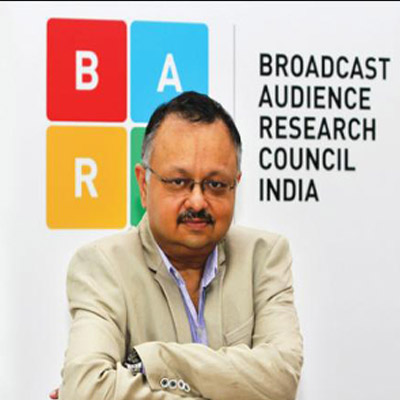
    MUMBAI: Partho Dasgupta, the first chief executive officer of BARC India, a joint industry company between broadcasters, advertisers and agencies, today announced his plan to relinquish his position and move on.

    In a statement he said, “It has been a tremendous journey to setup the worlds largest audience measurement company with the least investment and in the quickest time. Having set it up, expanding the panel and introducing new insight products for news, sports, music and OOH genres, I thought its time to move on and do new things. I have enjoyed setting up new businesses and brands and turning them around both in media and consumer space and its time to explore new domains”. He added “I would like to thank board members and Techcomm members, specially Punit and Shashi for the tremendous support and guidance.”

    Sunil Lulla, who brings over 35 years of media and marketing experience and an  industry veteran is being appointed as chief executive officer of BARC. “I am delighted to lead BARC as its grows its footprint, in coverage, scope and services, in the fast growing and rapidly evolving TV and digital industry. Things are changing fast and audience measurement has to keep pace with all these. I thank Partho for bringing the company to where it is and wish him a great time ahead.”

    BARC India chairman Punit Goenka, said “I welcome Sunil to BARC. He has been a board member before and is familiar. I would also like to thank Partho for steering BARC through tough times, building a great team and establishing the technology architecture that BARC is proud of. Winner of several awards, BARC India is now considered a benchmark by the global measurement community. We wish him the best for his career ahead.” Speaking on the transition, Punit added “Partho and Sunil are working with the teams for a smooth transition in the weeks to come.”

  • Industry gives mixed views on BARC India’s decision to separate pay and FTA viewership

    Industry gives mixed views on BARC India’s decision to separate pay and FTA viewership

    MUMBAI: BARC India’s decision to split its reportage of pay and FTA viewership has received mixed reviews from the industry. While some believe that this will be beneficial to both broadcasters and advertisers in channelising their resources, others believe that it has no meaningful objective.

    Welcoming the move by BARC India, Times Network president – strategy Vivek Srivastava said, “It aids both broadcaster and advertisers to better channelise their resources. Advertisers need audiences who can spend and there is no point paying for audiences who are on the free platform and don't have the propensity to consume. Advertisers wanting premium audiences, typically news and English, can now better optimise the price they pay to different platforms and not waste marketing monies on non-premium audience from free platforms. Consequently, broadcasters will also stop over-relying on one platform just to get numbers and premium content will get its due.”

    From week 27 of 2019, BARC India decided to report viewership from free and pay platform separately. The new variables are offered over and above the current urban and rural cuts that are reported by BARC India. It is made available to all the subscribers for planning and analysis through its proprietary BARC Media Workstation Software and is also published on the website for select genres.

    News Nation Network president – sales & marketing Abhay Ojha is of the view that the decision could be of benefit to all stakeholders. He said, “From a broadcaster’s perspective, we can better optimise our organisational resources towards strategising GRP requirements as per the revenue strategy of the network. Alternatively, a planner in an agency can further zero in on the quality of GRP required, depending upon their brand’s core competence and DPOs will get better clarity on ROI of paid and FTA channels. Therefore, holistically it’s a welcome move.”

    On the other hand, Ojha noted that for Hindi news channels, it hardly mattered which platform was giving viewership, because national Hindi news channels are most widely distributed and are very dynamic, depending on everyday events. He further pointed out, “Most of the news channels are now being taken for frequency builders rather than reach builders, therefore the pie of revenue is mostly leftover after consumption on GEC, movies, niche, vernacular channels, etc.”

    While announcing its move, BARC India CEO Partho Dasgupta had said, “There has been a strong demand from the market for separate reporting of viewership from homes with pay and free connection. We have taken the market feedback in consideration with the changes that have come about in the ecosystem post the implementation of the TRAI tariff order. We believe this move is a step in the right direction to empower the industry in understanding the distinct consumption patterns of this segment and plan more effectively.”

    BARC believes that reporting viewership from pay and free platform separately would enable focussed targeting. Advertisers can plan more effectively by placing insertions on the channels available on their platforms in the respective regions. It will also enable the broadcasters to make more informed decisions related to content and distribution.

    A broadcaster on the condition of anonymity said, “DD Free Dish has a presence across markets both in urban and rural and across demographics. Segregation of free and pay by a single platform will suit a few networks. It has no meaningful objective that will help the advertiser or broadcaster.”

    Dentsu Network, SVP Mayank Bhatnagar said, “From a media planner’s view my audiences are watching a certain set of channels whether they are in pay or FTA platform. This will help us to look at data in a slightly different manner and we will get one more cut now because earlier there was only urban and rural now there are pay and FTA platforms also. It will impact the media planner’s life because they will continue to chase TG which is targeted. From a broadcaster’s point of view, it will give one more dimension in the data cuts to see how they are performing.”

    He further said, “Lot of advertisers are looking at FTA channels and they are performing well. So if I have to do a relative comparison only on the pay platform, it will be easier for me to check which are performing well there and I can do a related shift. But otherwise, it’s not going to make any major changes.”

    With time, the industry will be able to make better estimations as to the effectiveness of this move.

  • BARC to report viewership from free & pay platforms from week 27

    BARC to report viewership from free & pay platforms from week 27

    MUMBAI: BARC India on Monday announced that it would start reporting viewership from free & pay platforms separately starting week 27 (29th June – 5th July), confirming what Indiantelevision.com had reported first on 5 July.

    The systems at BARC India always evolve basis feedback from the industry. In the past 4 years BARC India has enabled granular reporting cuts basis feedback from various stakeholders to better understand viewership habits.

    The new Pay & Free platform variable will be offered over and above the current Urban & Rural cuts that are reported by BARC India. It will be made available to all the subscribers for planning & analysis through its proprietary BARC Media Workstation Software. It will also be published on the website for select genres.

    A Free Connection is one where the household incurs only a small one-time fee for installing the set top box. The major player in this area is DD Free Dish. The household does not pay any monthly subscription fee. Whereas a Pay connection is one where the subscriber invests an initial amount for installation and an on-going monthly subscription fee.

    In the Hindi Speaking Markets, 2 out of 10 homes are Free Homes, accounting for almost 140 Mn TV viewing Individuals. The Pay & Free viewer differs significantly not only in terms of demographics, but also their characteristics, values, lifestyle and psychographics. A study done in these homes by BARC India explicates the personas of these two audience types.

    Reporting viewership from Pay and Free platform separately would enable focussed targeting. Advertisers can plan more effectively by placing insertions on the channels available on these platforms in the respective regions. Broadcasters can also make more informed decisions pertaining to content and distribution. 

    “There has been a strong demand from the Market for separate reporting of viewership from homes with Pay & Free connection. We have taken the market feedback in consideration with the changes that have come about in the ecosystem post the implementation of the Tariff Order. We believe this move is a step in the right direction to empower the industry in understanding the distinct consumption patterns of this segment and plan more effectively” says BARC India CEO Partho Dasgupta.

  • GST cut on advertising & smartphones, focus on AI are M&E industry’s expectations from Union Budget 2019

    GST cut on advertising & smartphones, focus on AI are M&E industry’s expectations from Union Budget 2019

    MUMBAI: The interim budget of 2019 bolstered the preface of a ‘Digital India 2030’ with measures to aid the spread of digital technologies in India, getting positive responses from the industry insiders. With the budget announcement for the year today, the industry is now expecting the Modi government to extend the focus on these technologies and a reduction in the tax slab on electronic products to accomplish the digital-first mission efficiently.

    The ad world is expecting a tax cut on ad spends. Madison World executive director Lara Balsara Vajifdar is expectant of a boost to the economy. “Many sectors of the industry are reporting a slowdown, which is not good for the industry in particular and India in general. Hope the budget proposes active proposals to boost the economy. Whilst sops for the weaker sections are necessary, the only long term and sustainable solution is to have a fast-growing economy,” she said.

    Havas Group India CEO Rana Barua says, “Like all industries the media and entertainment industry is also looking forward to some key announcements that will give it a boost this year, like reduction of GST across mediums. An added focus on schemes to increase digital penetration in India (IT infrastructure improvement, fibre optic cable deployment, so that the last mile village also gets digitally connected). Special incentives for certain categories like automobiles, which are huge advertisers but have been seeing a slowdown for the last many months would also help boost these categories.”

    Dentsu Aegis Network CEO greater south and chairman & CEO India Ashish Bhasin wants the new budget to be growth-oriented, which can put more money in the pockets of the rural and urban consumers to propel spending. “Advertising is a very sentiment-driven business in India. Anything that drives GDP growth drives advertising growth even more. In fact, the rule of thumb is that for every 10 per cent growth in GDP, advertising grows by 1.5 per cent.”

    He adds, “Further, there is an urgent need for tax reforms. Direct tax rates for both corporate and individuals need to be brought down noticeably and immediately. GST on advertising at 18 per cent is just too high. It needs to be rationalised at 12 per cent and the process and procedures need to be simplified as they are cumbersome, unproductive and wasting a lot of time.”

    The broadcasting industry is very positive towards the provisions expected to be announced by Nirmala Sitharaman on 5 July.

    Times Network MD and CEO MK Anand shares, “We expect some clear signals from the government to improve credit growth and investment cycle. There are signs of a slowdown which we expect this budget to address. That includes increased outlay on infrastructure and addressing a distressed farm sector urgently. The new tariff order has a positive impact in the long term. But in the immediate term consumers are complaining of change in price: value equation. There may be a case to look at reducing GST for a year. This will be a great solace to consumers and the industry.”

    BARC India CEO Partho Dasgupta mentions, “Over recent years, the broadcast sector has been experiencing dynamic changes. It has also become an aspirational sector for the youth of this country. Given the nature of the changes and the rising digitisation, we hope the investments by the government will not only result in creating jobs in the M&E sector but will also boost long-term growth for the industry which will also indirectly aide the social fabric of the economy. Additionally, being an insights company that works closely with big data, investments in R&D is an ongoing practice and therefore we are hopeful that provisions for exemptions are made since it will also fuel growth across the sector.”

    9X Media chief revenue officer Pawan Jailkhani says that the overall economic slowdown in the economy for the past 3-5 months calls for rationalisation of GST on advertisers spends, which in turn will help the broadcasting sector. “If the GST (on advertisers’ spends) goes down from 18 per cent to 12 per cent, it will encourage them to spend more,” he said.

    Jaikhani adds, “I also think that there should be some reduction and some relief on corporate tax. Another vertical should be that the government itself should allocate budget for promoting its own schemes and PSUs.”

    He also wants the government to infuse some economic growth steps to turn consumer sentiments positive as advertising is largely based on sentiments.

    Vertoz founder and chairman Hiren Shah is looking forward to newer policies from the government to encourage digital India and smart cities. He adds, “With the current discussions revolving around data security and data localisation, especially the Personal Data Protection Bill 2018 now in the spotlight, India will need to create a better digital infrastructure for the storage of the huge volumes of data. We hope that the upcoming budget encapsulates the importance of better digital infrastructure along with their focus on AI and big data.”

    He expects these moves will directly benefit the digital advertising sector as well, propelling the growth of programmatic as the go-to solution provider for the industry.

    ADOHM chief executive officer Kuldeep Chaudhary also feels the same. “I believe that the presence of technologies based on artificial intelligence can further increase the interaction between consumers and companies. The advertising industry is capable of fostering the growth of other sectors, and they are interconnected. Regarding the 2019 Budget, I hope to see an increase in incentives for the national program in artificial intelligence, at the same time an increase of points of Wi-Fi connection, making it possible to bring new users, then customers, to Indian companies. Also, discuss angel tax provisions in order to bring transparency into the angel funding process, something very important for startups, like us.”

    White Rivers Media chief executive officer and co-founder Shrenik Gandhi adds, “The government has realised the value of investing in digital technology for India to spearhead the ‘Industry 4.0’ globally. Increased fund allocation towards AI, robotics, and machine learning during the interim budget reflected the same. Budget 2019 should now specifically address the application of these accelerators across sectors, be it agri-tech, digi-payments, smart cities or digitised villages. Parallel to Digital India, tax reforms should be looked into to promote mobile manufacturing as it has been a key accelerator of the Make in India program and is also of strategic importance to develop India as a digital superpower."

    Vertoz founder and CEO Ashish Shah is also expecting the GST on mobile phones and laptops to be lowered from 12 and 18 per cent respectively. “Today, a mobile phone is no longer a luxury. It has rather become more of a necessity. Moreover, mobiles and laptops are fundamental digital touchpoints. With the government stressing on transforming India into a “Digital India”, we are expecting the GST rates on these products to be lowered in order to make them more affordable. This will help increase the mobile penetration in rural and semi-urban areas, which will in turn help realise the recently announced vision of digital villages.”

    Gaana CEO Prashan Agarwal is extremely positive of the newly appointed government's vision and efforts to give impetus to the OTT industry in India. “With a greater emphasis on artificial intelligence and lower data costs in the interim budget, this step in the right direction will nudge home-grown brands to launch disruptive products and services. Given the online user-base for music streaming is expected to reach 400 million by 2021, this potential influx of a wider set of internet users will encourage more advertisers to employ OTT platforms for audience segmentation and targeting to drive higher revenue.”

    He too shares the view that provisions to lower GST rates on mobiles, laptops, and related products would translate into more smartphone sales, thus providing significant impetus to Indian entrepreneurs working on digital-first products and boosting our digital economy at large.

    1702 digital group head legal, finance and human capital Aamir Aziz notes, “To make good on the promise of a ‘Digital India’, everyone needs to not only have access to but also be able to afford the services. If the GST rates on mobiles, laptops, as well as other related devices are slashed in this budget, the cheaper prices would be directly proportional to an increase in the sales of these devices and would attract more spending on the digital platforms. Slashing the GST rate is necessary as it would definitely help businesses in times of slow growth rate.”

    Tonic Worldwide CEO Chetan Asher says, “With Modi government’s second term there is hope that the focus on spurring economic growth will be strong. Economic growth will directly affect the growth of the advertising industry. I am also optimistic that we will see a renewed focus on growing digital infrastructure and smart cities. This will lead to faster digital adoption. Lastly, I wish taxation would be further simplified and angel tax is removed completely and there's enough provision to help India become the start-up capital of the world.”

    The industry’s main demand is a GST cut on equipment like mobile phones and laptops to facilitate digital penetration in India and boost growth.

  • BARC India launches PrimaVU to measure premium homes viewership patterns

    BARC India launches PrimaVU to measure premium homes viewership patterns

    MUMBAI: India’s sole TV viewership measurement company and the world’s largest audience measurement service, BARC India, today announced the launch of its new product “PrimaVU” which is aimed at measuring viewership from premium homes.  Through “PrimaVU”, BARC India also introduces the industry first concept of “Viewing Minutes” which is basically sum of all individuals watching an Event basis the time spent by them. Also, PrimaVU is a separate product and not part of the currency panel measurement.

    It is a product that caters to audience measurement solutions exclusively for premium homes. PrimaVU was launched by BARC India to meet the demands of the industry to measure what premium homes watch. There has been a demand from both broadcasters and advertisers to understand this segment and how to deliver advertising to them. In the past, very few attempts have been made to measure this exclusive set of consumers, and now with PrimaVU, this demand is being addressed.

    The PrimaVU universe consists of the top 3 per cent of the socio-economic strata in the six megacities of the country. A household is defined as a premium home when it meets the following criteria set by the industry: they need to qualify as a NCCS A1 home, they must own a home with minimum three rooms as well as a kitchen, the home needs to have centralized or AC in 2 rooms, the household must own a laptop/desktop or smartphone/tablet, they must have a private car or own a 4-wheeler worth Rs 10 lakh or more and finally, they must have travelled to a premium holiday destinations.

    Data insights & dashboard will be provisioned for PrimaVU subscribers who will have access to in-depth demographic & program level data as well as critical insights for the viewership trends of the economically affluent population of the country. The panel will currently measure TV viewership habits and will gradually move to capture viewership habits across devices. Agencies subscribing to PrimaVU will also be able to plan using a module in BMW.

    “We are extremely pleased to be a thought leader once again with a product like PrimaVU. This product will not only help observe if the viewership patterns of premium homes are different from that of other homes but also provide in-depth insights into this unexplored world. The industry has been very patient and valuable with their suggestions for this product. It will allow the industry to qualify the untapped upmarket audience segment better and get a stronger fix on affluent viewers.” says BARC India CEO, Partho Dasgupta.

  • BARC India integrates TV and OOH measurement

    BARC India integrates TV and OOH measurement

    MUMBAI: Broadcast Audience Research Council (BARC) India is integrating TV and out of home (OOH) TV viewership in its BARC India Media Workstation (BMW) software, starting this year. It has also expanded the coverage of its OOH TV viewership measurement service to 120+ urban towns and cities beyond the launch phase of Delhi, Mumbai and Bangalore.

    This also comes at a time when BARC India has expanded its panel to 40,000 metered homes within the committed timeline of March 2019.

    This integration of in-home and OOH TV viewing will allow BARC India subscribers to understand the overall viewership garnered on TV and the combined impact of the two mediums.

    BARC India CEO Partho Dasgupta said, “Innovation is a part of our DNA at BARC India and it has always been our resolve to empower the industry with deeper and sharper insights into the TV viewing habits of Indians, irrespective of the screen or pipe. Our latest OOH offering is one such endeavor and we are sure that it will unlock great value for the entire broadcast ecosystem with big-ticket events like Cricket World Cup and Indian Premier League coming up.”

    The service will allow broadcasters and advertisers uncover more value and insights into the TV viewing behaviours both inside and outside the home. The data will also be available in the planning module for agencies to plan effectively and account for this audience.

    An establishment study conducted for OOH measurement revealed that of the 836 million TV-owning individuals, at least 10 per cent prefer visiting restaurants and eateries at least once a week. It was also observed that 13.5 per cent of these TV viewing individuals visit said social eateries on a Sunday. The new TV + OOH measurement will enable tracking the TV viewing drive of such individuals from their homes to these social hot-spots.

  • Social govt ads, toilet soaps most advertised during festival

    Social govt ads, toilet soaps most advertised during festival

    MUMBAI: While spikes in viewership could be fuelled by unplanned happenings and topical events, there are special events where television plays the role of a common entertainer for the entire family through collective television viewing.

    Broadcasters on their part, make these days attractive for the viewers through compelling and clever programming and scheduling. Increase in viewers results in increase in advertisers as well. 

    Festivals form a part of India all through the year, but the September to December period is the euphoric period for Indians when most festivals are celebrated. There is Ganesh Chaturthi in Maharashtra, Durga Puja, Navratri and Dussehra celebrated across the country. Also, Diwali and Christmas have an additional bonus of kids’ vacations in most parts of India. There is a culture of buying new things, gifting to family and friends and communication on latest offerings, deals are welcomed by consumers in these festive months. The advertisers love this spending period and loosen their purse strings too. 

    Advertising volume during some of the important festival days always have more ads than the rest. Festivals which are celebrated at home with family gain more ad duration than the ones which are celebrated outside of home.

    As we step into the festive season, BARC India has launched its report on advertising during festivals that throws light on how the viewers and advertisers have evolved during festivals especially in the high decibel festival season between 2015-2018 for September to December. 

    The report shows that television viewership has been rising over the last three years where the average weekly viewership of ads in India is growing steadily each year. From 2016 to 2018, the advertising impressions have increased by a phenomenal 45 per cent from 521 billion to 755 billion with 2018 yet to witness its festive season.

    The growing viewership has seen endorsement from the advertising fraternity with average weekly advertising volume clocking 31 million seconds from January to August 2018

    The peaks in advertising coincides with planned tentpole events related to sports or national interest topics like budget and elections, or with the festive season.

    There is a definite impact of festivals on weekly advertising duration. India is a land of diversities and this diversity reflects in the way we Indians celebrate festivals too. Some are longer, bigger, brighter, high on fun quotient while others are a tad subtle.There are distinct trends in terms of quantum of advertising as well as viewership emergence depending on various factors like the duration of a particular festival or whether it is celebrated indoors or outdoors with family and friends.

    Online shopping, auto, telecom and chocolates sector continue to be the mainstays of the festival season where contribution of categories like internet services, jewellery, paints grow over the years and jewellery emerged as the close second category for the 2017 festive season, just below online shopping. 

    Online shopping portals now advertise all around the year and hence have reduced dependency on the festive season alone. Consumer durables maintains status quo with not much movement in advertising seconds across all years. 

    With more and more advertisers jostling for viewers' eyeballs, mind space and attention the festive season witnesses more and more action across years and the contribution from the usual suspects of festive advertising is reducing over the years.

    The broadcasters also strategically use the festive period for announcing special programming, blockbusters, festival omnibuses in addition to the regular programme line up. 

    But where does the viewership come from? Hindi! Most of the viewership on festival days comes from major Hindi speaking markets (HSM) across the year where Maharashtra, UP/Uttarakhand followed by Gujarat / D&D / DNH and MPCG and are the biggest contributors to viewership on festival days. Festival viewership is on the rise in 2018 as compared to 2017. For 2018, Holi and Janmashtami viewership in HSM markets have increased by 19 per cent and 29 per cent respectively.

    Hindi is the most preferred choice in the Hindi speaking markets on festival days too with over 70 per cent viewership coming from Hindi channels. But with the growing advent of regional channels, improvement in programming quality and television penetration growing in the bottom of the pyramid, there is an increased focus on regional language channels.