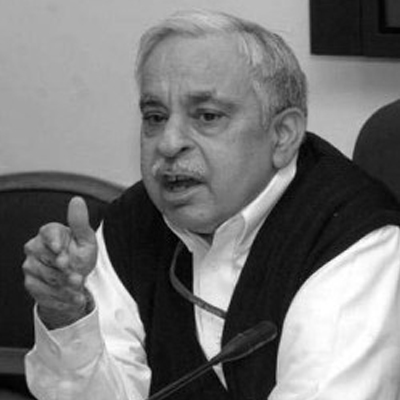
Tag: Partho Dasgupta

  • BARC could consider different ratings frequencies for different genres

    BARC could consider different ratings frequencies for different genres

    MUMBAI: The long tail gets an unfair deal – be it in television viewership ratings, print media readership surveys or radio audience research.  The long tail, in marketing, refers to the large number of products and services that are not consumed by the masses, like niche television channels and specialised publications.


    The small number of television channels or print publications that are consumed on a large scale always get more than their fair share in the audience or readership measurement systems.


    This was the general consensus at a panel discussion on “Measurement Miasma, TVTs, Readerships, Clicks and Such: The Great Love/Hate Epic” on the concluding day of the FICCI Frames 2014 on Friday.


    Not all measurement currencies can have the same frequencies, said Provocateur Advisory Principal Paritosh Joshi, who anchored the discussion. The results of measurement currencies are just data points.


    The need for different frequencies for measurement currencies was felt as different products have different consumption patterns.


    This prompted Entertainment Network India’s  Executive Director & CEO Prashant Panday suggest that the Broadcast Audience Research Council (BARC) consider different frequencies for different genres of television channels.


    Broadcast Audience Research Council CEO Partho Dasgupta responded by saying that BARC may look at having different frequencies for different genres.


    So, when BARC launches its television ratings service towards the end of 2014, we could see only the ratings for larger genres like the general entertainment channels (GECs) being released on a weekly basis and for the niche television channels less frequently.


    “We are trying to go beyond” (what the TAM Media Research provides). We will have different kinds of products and different slices,” elaborated Dasgupta.


    HDFC Life Sr Executive VP Sanjay Tripathy said there was a problem with TAM ratings because the sample size was not appropriate.


    He said research may not always give the right results and the advertisers need to tell the broadcasters that the measurement data is just a reference point.


    Pandey told the audience that they had two researches on radio audience in Delhi and the audience size put out by the two researches was hugely divergent. One research said the audience in Delhi is forty lakh and the other said it is over one crore.


    He said in television, 95 per cent of the channels are small and not captured correctly and that advertisers should be demanding better currencies.


    Google India  Director, Agency Business, Punitha Arumugam said there is a need for external validation of the result of any measurement currency.


    The discussion veered around the futility of validating the process of a measurement currency and that the validation should be of the result of the measurement currency. The result of a measurement currency should be explainable with external data.


    One of the panelists said when BARC issues its first ratings, and Star Plus, the undisputed number one channel under the current ratings currency, does not turn out to be the number one, there could be criticism of the ratings results. Star which is a member of BARC may decide  to disagree.


    HDFC Life’s Tripathy said advertisers need some data to justicy. “We spend so much.”


    In early days of television there was just Doordarshan and then came Zee. It was easy to choose the channel to advertise on. Today there are more than 200 channels.


    Tripathy said, “Media habits have now fragmented. We will have to chop… We will try to reach the target audience in the cheapest way.”


    There is also the issue of who will invest in a measurement system that will give the best measurement results. Partho said the cost of a television currency is mainly split between the broadcasters and advertisers.


    The need for a measurement currency is felt by everyone in the entire value chain across television, print and radio. Everyone in the value chains need to share the costs of robust measurement systems.

  • 14 years of Indiantelevision: What industry has to say

    14 years of Indiantelevision: What industry has to say

    MUMBAI: This day fourteen years ago, the idea of Indiantelevision.com was born. It became the one-stop information resource for the blossoming television industry and also for its surrounding ecosystem.

    Indiantelevision.com has witnessed the evolution of the television entertainment business in India and it growing into a Rs 17,000 crore industry today.

    Indiantelevison.com chronicled the rise of Rupert Murdoch’s Star in 2000 with the grand success of Amitabh Bachchan-hosted ‘Kaun Banega Crorepati’ and the emergence of dominance of Ekta Kapoor shows in 2003, to the game-changing events of 2013 – digitisation in the top 42 cities, 12-minute per hour cap on advertisements, and the setting up of Broadcast Audience Research Council, a joint initiative of all the stakeholders for their own television ratings service.

    Before we entered our fourteenth year, the Indiantelevision.com website was re-launched, giving it a new look to be in tune with the prevailing times.

    Innovation has been the only constant at Indiantelevision.com and it will continue to be.

    On our 14th anniversary, this is what the industry leaders have to say about the journey of Indiantelevision.com so far…

    Life OK, general manager, Ajit Thakur 

    It has been an incredible 14 years for the television industry. Indiantelevision.com is a great place for people like us to stay up-to-date on what is happening. A few things that come to my mind when it comes to Indiantelevision.com are that it is driven by Mr. Anil Wanvari who is one of the most influential and knowledgeable people in the industry on television. Also, the website stays abreast with any news in the industry and you can rely on Indiantelevision.com to report it. Most importantly, the journalists are very insightful and they know what is happening 24*7. 

    Everest Brand Solutions, president, Dhunji S Wadia

    Indiantelevision.com is the most comprehensive and speedy information site, especially the MAM section which is most relevant for our industry.  No other site covers the all aspects in this detail.


    Hathway Cable & Datacom, chief executive officer, Jagdish Kumar

    Indian Television Dot Com is an integral part of the television growth story in India. The first thing that every professional in this sector does is log on to the Indiantelevision.com’s website to get the update on what is happening in the industry. I wish that the website continues with the good work.

    Indian Film and Television Producers Council, co-chairman JD Majethia

    Indiantelevision.com is a pioneer. I wish great success to the entire team. It’s a good source, where people can get day-to-day updates and we are incomplete without Indiantelevision.com. The team working there is doing a fabulous job.

    NBA president and NDTV executive vice chairperson K V L Narayan Rao

    Indiantelevision.com is a very good site. It has grown at the same pace as the industry has. It has done a great service to keep the industry updated and has been a reasonably important voice from the point of view of influencing people.

    BARC, chief executive officer, Partho Dasgupta

    Congratulations to Anil and the whole team for this landmark achievement. I enjoy the level of detail that goes into every story. There is aggression in the team to get the stories. The website has been really helpful for the entire ecosystem.

    Provocateur Advisory, principal, Paritosh Joshi

    For a lot of communications industry professionals, Indiantelevision.com has been a daily port of call for as long they can remember. Whether it is staying abreast with the latest news particularly that which impinges on the sector or understanding the views of well-regarded opinion leaders, the site provides a quick digest of critical information. Novices to the industry find an endless mine of learning while thoroughbreds too take away fresh inspiration. Indiantelevision.com has led innovation in trade journalism focused on the communications industry and spawned several copycats too. But then imitation is flattery so that can’t be bad!

    Dish TV, CEO, R C Venkateish

    Indiantelevision was the first such portal that gave information on major industry developments. Over the years it has evolved to be a definite destination for people who want to keep up with all the goings on in the industry and also a valuable source of information and opinion on a lot of things. It is fast off the block in terms of being able to provide latest and quick developments. Wish you all the best for years to come.

    Colors, CEO, Raj Nayak

    Indiantelevision.com started in front of me. I remember the days when Anil used to report and write the copies himself. He has come a long way from where he started. It is a story to be told.

    IBF, secretary general, Shailesh Shah

    I have dealt with Anil Wanvari and five other journalists working at indiantelevision.com.  Their enthusiasm and energy are invigorating.  Their youthful brazenness gives the team the right to call themselves a “free-speech-user” of the fourth estate.  I think the time has come to become a mature participant in the industry, showing responsibility without losing the enthusiasm, energy and youthful brazenness.

    Madison World, chairman and MD, Sam Balsara

    Over the years Indiantelevision.com has played a very useful role in the lives of advertising and marketing community. I wish the team all the very best for the next 140 years!

    DEN Networks CEO, SN Sharma

    I congratulate indiantelevision.com family on successful completion of 14 years of service. Indiantelevision.com has been one of the oldest and a one of a kind source for disseminating information and promoting the cause of the media and broadcasting industry. I am sure that you will carry on with the good work and wish you all the best for your future endeavors.

    AXN Networks India, business head, Sunil Punjabi


    Indiantelevision is my everyday destination for the most precise, relevant and trustworthy media and entertainment news. My best wishes to them for celebrating success and credibility for the last 14 years and many more to come.

    Sony Pix, EVP and business head Saurabh Yagnik


    Congratulations to Indiantelevision on completing 14 years of impactful reporting. The team believes in delivering resonating stories which aptly represents the television industry. Each story dwells on the topic long enough to provide wholesome and holistic information on that particular topic. I wish them the very best and hope they continue with the wonderful work they are doing. Indiantelevision.com gives a good insight in to the Indian TV industry. Also, the way the company explored in other areas is also a very commendable thing. Wish you guys all the best. May you scale greater heights…


    (There is no harm in self-flattering, once in a while, Thank you for the support)

  • 14 years of Indiantelevision: What industry has to say

    14 years of Indiantelevision: What industry has to say

    MUMBAI: This day fourteen years ago, the idea of Indiantelevision.com was born. It became the one-stop information resource for the blossoming television industry and also for its surrounding ecosystem.

    Indiantelevision.com has witnessed the evolution of the television entertainment business in India and it growing into a Rs 17,000 crore industry today.

    Indiantelevison.com chronicled the rise of Rupert Murdoch’s Star in 2000 with the grand success of Amitabh Bachchan-hosted ‘Kaun Banega Crorepati’ and the emergence of dominance of Ekta Kapoor shows in 2003, to the game-changing events of 2013 – digitisation in the top 42 cities, 12-minute per hour cap on advertisements, and the setting up of Broadcast Audience Research Council, a joint initiative of all the stakeholders for their own television ratings service.

    Before we entered our fourteenth year, the Indiantelevision.com website was re-launched, giving it a new look to be in tune with the prevailing times.

    Innovation has been the only constant at Indiantelevision.com and it will continue to be.

    On our 14th anniversary, this is what the industry leaders have to say about the journey of Indiantelevision.com so far…

    Life OK, general manager, Ajit Thakur 

    It has been an incredible 14 years for the television industry. Indiantelevision.com is a great place for people like us to stay up-to-date on what is happening. A few things that come to my mind when it comes to Indiantelevision.com are that it is driven by Mr. Anil Wanvari who is one of the most influential and knowledgeable people in the industry on television. Also, the website stays abreast with any news in the industry and you can rely on Indiantelevision.com to report it. Most importantly, the journalists are very insightful and they know what is happening 24*7. 

    Everest Brand Solutions, president, Dhunji S Wadia

    Indiantelevision.com is the most comprehensive and speedy information site, especially the MAM section which is most relevant for our industry.  No other site covers the all aspects in this detail.


    Hathway Cable & Datacom, chief executive officer, Jagdish Kumar

    Indian Television Dot Com is an integral part of the television growth story in India. The first thing that every professional in this sector does is log on to the Indiantelevision.com’s website to get the update on what is happening in the industry. I wish that the website continues with the good work.

    Indian Film and Television Producers Council, co-chairman JD Majethia

    Indiantelevision.com is a pioneer. I wish great success to the entire team. It’s a good source, where people can get day-to-day updates and we are incomplete without Indiantelevision.com. The team working there is doing a fabulous job.

    NBA president and NDTV executive vice chairperson K V L Narayan Rao

    Indiantelevision.com is a very good site. It has grown at the same pace as the industry has. It has done a great service to keep the industry updated and has been a reasonably important voice from the point of view of influencing people.

    BARC, chief executive officer, Partho Dasgupta

    Congratulations to Anil and the whole team for this landmark achievement. I enjoy the level of detail that goes into every story. There is aggression in the team to get the stories. The website has been really helpful for the entire ecosystem.

    Provocateur Advisory, principal, Paritosh Joshi

    For a lot of communications industry professionals, Indiantelevision.com has been a daily port of call for as long they can remember. Whether it is staying abreast with the latest news particularly that which impinges on the sector or understanding the views of well-regarded opinion leaders, the site provides a quick digest of critical information. Novices to the industry find an endless mine of learning while thoroughbreds too take away fresh inspiration. Indiantelevision.com has led innovation in trade journalism focused on the communications industry and spawned several copycats too. But then imitation is flattery so that can’t be bad!

    Dish TV, CEO, R C Venkateish

    Indiantelevision was the first such portal that gave information on major industry developments. Over the years it has evolved to be a definite destination for people who want to keep up with all the goings on in the industry and also a valuable source of information and opinion on a lot of things. It is fast off the block in terms of being able to provide latest and quick developments. Wish you all the best for years to come.

    Colors, CEO, Raj Nayak

    Indiantelevision.com started in front of me. I remember the days when Anil used to report and write the copies himself. He has come a long way from where he started. It is a story to be told.

    IBF, secretary general, Shailesh Shah

    I have dealt with Anil Wanvari and five other journalists working at indiantelevision.com.  Their enthusiasm and energy are invigorating.  Their youthful brazenness gives the team the right to call themselves a “free-speech-user” of the fourth estate.  I think the time has come to become a mature participant in the industry, showing responsibility without losing the enthusiasm, energy and youthful brazenness.

    Madison World, chairman and MD, Sam Balsara

    Over the years Indiantelevision.com has played a very useful role in the lives of advertising and marketing community. I wish the team all the very best for the next 140 years!

    DEN Networks CEO, SN Sharma

    I congratulate indiantelevision.com family on successful completion of 14 years of service. Indiantelevision.com has been one of the oldest and a one of a kind source for disseminating information and promoting the cause of the media and broadcasting industry. I am sure that you will carry on with the good work and wish you all the best for your future endeavors.

    AXN Networks India, business head, Sunil Punjabi


    Indiantelevision is my everyday destination for the most precise, relevant and trustworthy media and entertainment news. My best wishes to them for celebrating success and credibility for the last 14 years and many more to come.

    Sony Pix, EVP and business head Saurabh Yagnik


    Congratulations to Indiantelevision on completing 14 years of impactful reporting. The team believes in delivering resonating stories which aptly represents the television industry. Each story dwells on the topic long enough to provide wholesome and holistic information on that particular topic. I wish them the very best and hope they continue with the wonderful work they are doing. Indiantelevision.com gives a good insight in to the Indian TV industry. Also, the way the company explored in other areas is also a very commendable thing. Wish you guys all the best. May you scale greater heights…


    (There is no harm in self-flattering, once in a while, Thank you for the support)

  • BARC’s blueprint for audience measurement to be ready by March-end

    BARC’s blueprint for audience measurement to be ready by March-end

    MUMBAI:  A blueprint for India’s own architecture for measuring television viewership is likely to be ready by the end of next month.


    Broadcast Audience Research Council has started the process of having in place the design for the last of the pieces required to build a television viewership ratings infrastructure and be able to start churning audience measurement data from October 2014.


    BARC on 13 February issued a request for proposals for Playout Monitoring and Database Measurement designs, which is the last of the pieces necessary for having in place a television audience measurement system.


    “Our (technical and commercial) committees will go through the proposals and decide the vendor. We intend to close the entire process by March-end,” BARC CEO Partho Dasgupta told Indiantelevision.com.


    Explaining the role of Playout Monitoring, Dasgupta said, “The household panel component is designed to generate data of ‘who’ is watching and ‘what’ is being viewed. ‘Who’ defines the audience that is viewing TV at any point in time. ‘What’ is the channel that is being viewed at that particular point in time.”

    BARC has already appointed French audience measurement company Médiamétrie as it’s ratings technology partner and will be using audio watermarking technology for generating information on television viewership.


    “The signals coming into a panel home are captured and relayed (along with the viewership data) to the server. It is necessary to have an independent playout monitoring system which checks the actual telecast of each channel, captures the content at every point in time, and links it back to the ‘what’ part of the audience measurement system,” he added.


    Playout Monitoring and Database Management, according to Dasgupta, measures, maps and creates a ‘time-accurate’ database of all creative, commercial, promotional and any other content telecast on different TV channels.

    BARC has laid down several criteria for the prospective bidder for Playout Monitoring and Database Measurement design. These include:


    •Software solution to download, store and map all content of the channels to be monitored
     

    •Ability to deliver the content files within 4-5 hours of day-end
     

    • Infrastructure of any solution to download and view/monitor channels and of data centres for mapping and storing content.
     

    • Apart from the above, the bidders would also need to demonstrate their capability in other infrastructure, human resources and security systems for mapping and storing data and software. 


    BARC had on 2 February issued RFPs for Design, Quality Control and Analytics. “The response for the RFP has been very encouraging. We have received responses from organisations and specialists from India and across the world, including USA and Europe,” said Dasgupta. 

    BARC is running on aggressive timelines.  “We intend to close this process also by March-end,” he concluded.


    BARC had set the ball rolling for installing a television viewership measurement system in January 2013. It had then called for information on state-of-the art television audience measurement systems from players across the globe.

  • BARC  issues RFP for playout monitoring and DB system

    BARC issues RFP for playout monitoring and DB system

    MUMBAI: The Broadcast Audience Research Council (BARC) appears to be reaching the final stretch of putting together its vendors for its TV ratings measurement system. Today, it issued another Request for Proposal (RFPs) – this time for Playout Monitoring and Database Systems.


    BARC has stated that it could have its house in order by October 2014, and would start churning out its ratings by then.


    BARC had earlier on 2 February issued the RFP for Design, Quality Control and Analytics. According to sources, about eight RFPs from national and international players have been received by BARC so far.


    “In fact, we had started getting a few RFPs for Playout Monitoring and Database Systems even before we announced the RFPs,” the sources said but declined to give names of companies which have submitted their proposals so far.


    The vendors for Design, Quality Control and Analytics will be responsible for designing the panel, ensuring highest standards of quality and applying correct weights and relevant statistical rigour at cell levels to generate final data for subscribers


    French audience measurement company Médiamétrie, which has been named as BARC’s ratings partner, will also be BARC’s official technology partner. Médiamétrie will licence to BARC its TV metering system.

  • BARC assures that its TV rating system will be credible

    BARC assures that its TV rating system will be credible

    MUMBAI: Television ratings agencies seem to be the flavour of the season. On the one hand, Kantar Research, one of TAM Media’s major shareholders, has moved the Delhi HC against the Union Government’s new guidelines on cross holding restrictions. While on the other, up-and-coming ratings agency Broadcaster Audience Research Council (BARC), slated for a 1 October launch, has announced a tieup with France-based Mediametrie for technology services and licensing of a TV metering system.


    BARC CEO Partho Dasgupta and BARC Technology Committee member Paritosh Joshi spoke to CNBC TV18 about what to expect in the new set up.


    “The ratings agency is the one which will own the data and put it out – which is BARC in our case. So there will be ways of getting the information such as technology, panel etc. but it will all be owned and put out by BARC,” said Dasgupta, implying that the final agency will have to be free of cross ownership although its suppliers could have any type of ownership.


    Joshi revealed that  two big chunks of work had already been completed – that is assessing panel homes and technology within them. “The panel will emerge out of the Indian Readership Survey (IRS), which is out now. The people meter devices will be built on retail hardware that can be bought from Mumbai’s Lamington road and not proprietary equipment. Now, we only need a panel management agency,” said he, pointing out they had already received offers for the same.


    Asked about the credibility of BARC, Dasgupta said they have an adequate system in place. “We have broken the piece up into panel management people, who know homes but don’t have the visibility of data that comes through GSM lines straight to our servers. We have technology people, who have visibility to data but they don’t know the homes, just the ID. What we are trying to achieve is that the right hand does not know what the left hand is doing. From the integrity point of view, we are not taking any chance,” he clarified.


    However, BARC has not yet got a system to address the issues of niche channels. “The World over niche channels have not been measured like we do it here. But we may do it differently,” said Dasgupta ambiguously in the interview to CNBC TV18.


    As things stand, the industry has been yelping and running for cover fearing  a ratings’ blackout. But Information and Broadcasting Minister Manish Tewari says that a ratings-dark period should not be a cause for alarm. 


    “This isn’t the first time that ratings have been suspended. Even before, it has happened because the industry wanted it,” said the minister candidly when probed on this during an interview to CNBC TV 18.


    He pointed out that one of the main reasons for digitisation was to reduce dependency on advertising revenue and increase subscription revenue. “With the technology now, the STBs have the capability. A little engineering is needed and then you can reach 15 crore homes by putting a small chip that will let you know who is watching what in real time; be it satellite, IPTV, DTH or terrestrial,” he informed.


    Tewari was also critical  of the way TAM has been operating. “The way the arrangement was working – where you are the advertiser as well as the broadcaster and you are also taking out ratings. This conflict needed to be addressed,” he stressed.

  • BARC meets today, set to appoint Mediametrie as its rating partner

    BARC meets today, set to appoint Mediametrie as its rating partner

    MUMBAI: The French audience measurement company Médiamétrie will be the ratings partner for the Broadcast Audience Research Council (BARC). Though multiple vendors, both Indian and international had thrown in their bids to be the one who would power BARC’s ratings, sources reveal that the council has opted for the French research agency. Apparently, the final decision was taken over the weekend wherein the — members of BARC met along with Mediametrie reps to sign on the dotted line.


    Mediametrie will be using audio watermarking tech to monitor TV consumption by its 20,000 strong panel. It involves inserting an identifying  mark inaudible to the human ear into the channel’s feed which is delivered to TV homes.. The technology enables different reception modes to be used to measure a TV programme’s audience.

    Médiamétrie features in the world’s top 25 market research firms’ list.


    The formal announcement is expected to be made later this month.  Sources have confirmed that deadline set by BARC such as launching the ratings service by mid-2014 will be met.


    The meeting which went on for two hours in the BARC office also discussed the financial aspects of the ratings, but another meeting is slated to be held for the same.


    BARC CEO Partho Dasgupta did not confirm the finalisation of the appointment of Mediametrie. Responding in an email he said:  “The board of BARC met today to decide on technology and the path ahead. There was unanimity in deciding on a leap in technology to be used in television measurement.  The board approved the management and the technical and commercial committees to go ahead and finalise with a couple of international companies for this. The team will be completing the pilots and will start deployments soon. The board also decided on the funding mechanism and is encouraged by the response received from banks for funding the project.”


    But sources indicate that it is indeed Mediametrie which will get the go ahead.


    According to sources, BARC will start the field trial of meters from January 2014. While the seeding of meters will start from June, the commercial data will be available in the market from October. While initially 20,000 meters will be seeded, BARC will seed 25,000 boxes by 2014 end.

  • BARC begins nationwide roadshow with Bengaluru

    BARC begins nationwide roadshow with Bengaluru

    BENGALURU: In what was the first of four to five open houses that BARC intends to hold in India, the apex body shared details about the way forward at Bengaluru last week. Principal Provocateur/Advisor Paritosh Joshi, who represents the broadcasters interests in the 12 member technical committee on BARC spoke at length about the council’s plans on the new audience measurement system. In attendance were about 100 professionals from the broadcast and ad ecosystem, and BARC CEO Partho Dasgupta and VP Mubin Khan.


    Some of the points that were clarified at the Bengaluru Open House include:


    For what is said to be the largest tender ever floated for audience measurement anywhere in the world, BARC has received expressions of interest from significantly big technology companies that wish to be a part of the tender. The tender terms state that each vendor would have to work with whomsoever BARC wants it to work with. “Since multiple vendors are likely to be involved, system integration was crucial and there was a possibility of a blame game when something didn’t work out,” Joshi said, explaining why BARC will play a pivotal role.


    Of the 32 expressions of interest, 27 companies from across the world had been asked to submit proposals. Because of the huge diversity of devices on which television style content could be consumed, TV content was now more and more agnostic to screen as well as time. Consumption of TV and television type content was not only being space-shifted, but also time-shifted. BARC has made it clear in its RFPs’ that it wanted a screen and technology agnostic measurement.


    BARC expects to complete the awarding of contracts by end September or early October and the new ratings system could be out by the summer of 2014.


    Value added reselling of data is another possibility for the future. As much of the process that can be automated will be automated – simply because BARC wants to minimise human intervention.


    The ratings body has not yet fixed periodicity of dispensing data because it would vary within the structure of the sample. Joshi explained, “Based on the current situation and sample size, probably getting weekly data is all that could be possible initially. This is not an emotive issue of weekly, fortnightly or quarterly reporting, BARC would look at the data and decide. It must be remembered that the higher the frequency that one seeks, the larger the sample size must become to be able to find statistically significant sized audiences. BARC recognises that there are some channels that we cannot report on a weekly basis, and so these channels could be reported quarterly, BARC will give unduplicated quarterly reach since there is no other number available for these channels.”


    Explaining how BARC picked up the establishment study size, Joshi said, “The most critical element of an audience measurement system is defining the establishment and the way people and the type of people (the consumer classification) who consume television. The establishment study which is already in the field will help BARC to prioritise and enable it to determine the segments of the population that are important and cannot be missed. To pick up a sampling size of 2.4 lakh for the establishment study, BARC used the census of India and electoral rolls, since there was no other database available, maybe in the future Aadhar could be used to provide a sampling frame. The establishment study will essentially run continuously, BARC will be able to re-estimate the underlying universe with far higher frequency than has probably been done until now.”


    “One of the big things that BARC is working with the RFPs is that it is defining what the relative error is, what the confidence is. Today the stakeholders are not aware about what the relative errors or the confidence of the numbers are. They are working with the numbers as if they were the absolute truth, which they aren’t. BARC will define the statistical boundaries within which the numbers are to be interpreted. Numbers that don’t fall within those bounds will not be reported,” said Joshi.


    Clarifying the role of the technical committee, Joshi said, “Besides evaluation of the proposals for the new audience measurement system, the BARC technical committee will carry out due-diligence exercises on a regular basis once data starts flowing. Since audience measurement research is not stationary, it is evolving continuously, the technical committee will drive the evolution.”


    “The technical committee is autonomous of the BARC board. The BARC board cannot decide what the technical committee does. The technical committee decides what the research needs. For the board to override a decision that the TechCom has made requires it to have a 75 per cent majority. 60 per cent of the voting share at BARC is with the broadcasters and 20 per cent each with the advertisers and the agencies,” explained Joshi further.


    Throwing light on what the BARC was not, Joshi said, “People somehow feel that BARC will replace TAM. That now you have TAM and later you’ll have BARC. TAM Media is a for-profits research venture. In the current scheme of things it is a vendor owned vendor managed system. We don’t know much about establishment study that they do, they do issue a summary every year, but they don’t tell you the details of the study. BARC is not a research company and it will never be a research company. It is a joint industry body that will be designing, commissioning, supervising and owning India’s broadcast audience research. That does not mean that it will be conducting that research itself. BARC commissions research which means that somebody else will actually conduct it. Therefore BARC is not a replacement of TAM. TAM could be potentially a vendor to BARC as could be a whole series of other kinds of companies and various other sorts of entities.”


    Sharing details about the new systems that were in place globally, Joshi said, “In the UK and some European countries, Canada and US, in Japan inventory is being sold on the basis of VOSDAL+7 (Viewed on Same Day as Live) – seven days of audience data are cumulated to actually determine the ratings for a show and this will grow as currency in other parts of the world. So you’re not only measuring the primary TV consumption, but also in all other forms. BARC may not be able to measure it at the start, but it should be able to do so in a year and a half from now.”

  • BARC begins nationwide roadshow with Bengaluru

    BARC begins nationwide roadshow with Bengaluru

    BENGALURU: In what was the first of four to five open houses that BARC intends to hold in India, the apex body shared details about the way forward at Bengaluru last week. Principal Provocateur/Advisor Paritosh Joshi, who represents the broadcasters interests in the 12 member technical committee on BARC spoke at length about the council’s plans on the new audience measurement system. In attendance were about 100 professionals from the broadcast and ad ecosystem, and BARC CEO Partho Dasgupta and VP Mubin Khan.


    Some of the points that were clarified at the Bengaluru Open House include:


    For what is said to be the largest tender ever floated for audience measurement anywhere in the world, BARC has received expressions of interest from significantly big technology companies that wish to be a part of the tender. The tender terms state that each vendor would have to work with whomsoever BARC wants it to work with. “Since multiple vendors are likely to be involved, system integration was crucial and there was a possibility of a blame game when something didn’t work out,” Joshi said, explaining why BARC will play a pivotal role.


    Of the 32 expressions of interest, 27 companies from across the world had been asked to submit proposals. Because of the huge diversity of devices on which television style content could be consumed, TV content was now more and more agnostic to screen as well as time. Consumption of TV and television type content was not only being space-shifted, but also time-shifted. BARC has made it clear in its RFPs’ that it wanted a screen and technology agnostic measurement.


    BARC expects to complete the awarding of contracts by end September or early October and the new ratings system could be out by the summer of 2014.


    Value added reselling of data is another possibility for the future. As much of the process that can be automated will be automated – simply because BARC wants to minimise human intervention.


    The ratings body has not yet fixed periodicity of dispensing data because it would vary within the structure of the sample. Joshi explained, “Based on the current situation and sample size, probably getting weekly data is all that could be possible initially. This is not an emotive issue of weekly, fortnightly or quarterly reporting, BARC would look at the data and decide. It must be remembered that the higher the frequency that one seeks, the larger the sample size must become to be able to find statistically significant sized audiences. BARC recognises that there are some channels that we cannot report on a weekly basis, and so these channels could be reported quarterly, BARC will give unduplicated quarterly reach since there is no other number available for these channels.”


    Explaining how BARC picked up the establishment study size, Joshi said, “The most critical element of an audience measurement system is defining the establishment and the way people and the type of people (the consumer classification) who consume television. The establishment study which is already in the field will help BARC to prioritise and enable it to determine the segments of the population that are important and cannot be missed. To pick up a sampling size of 2.4 lakh for the establishment study, BARC used the census of India and electoral rolls, since there was no other database available, maybe in the future Aadhar could be used to provide a sampling frame. The establishment study will essentially run continuously, BARC will be able to re-estimate the underlying universe with far higher frequency than has probably been done until now.”


    “One of the big things that BARC is working with the RFPs is that it is defining what the relative error is, what the confidence is. Today the stakeholders are not aware about what the relative errors or the confidence of the numbers are. They are working with the numbers as if they were the absolute truth, which they aren’t. BARC will define the statistical boundaries within which the numbers are to be interpreted. Numbers that don’t fall within those bounds will not be reported,” said Joshi.


    Clarifying the role of the technical committee, Joshi said, “Besides evaluation of the proposals for the new audience measurement system, the BARC technical committee will carry out due-diligence exercises on a regular basis once data starts flowing. Since audience measurement research is not stationary, it is evolving continuously, the technical committee will drive the evolution.”


    “The technical committee is autonomous of the BARC board. The BARC board cannot decide what the technical committee does. The technical committee decides what the research needs. For the board to override a decision that the TechCom has made requires it to have a 75 per cent majority. 60 per cent of the voting share at BARC is with the broadcasters and 20 per cent each with the advertisers and the agencies,” explained Joshi further.


    Throwing light on what the BARC was not, Joshi said, “People somehow feel that BARC will replace TAM. That now you have TAM and later you’ll have BARC. TAM Media is a for-profits research venture. In the current scheme of things it is a vendor owned vendor managed system. We don’t know much about establishment study that they do, they do issue a summary every year, but they don’t tell you the details of the study. BARC is not a research company and it will never be a research company. It is a joint industry body that will be designing, commissioning, supervising and owning India’s broadcast audience research. That does not mean that it will be conducting that research itself. BARC commissions research which means that somebody else will actually conduct it. Therefore BARC is not a replacement of TAM. TAM could be potentially a vendor to BARC as could be a whole series of other kinds of companies and various other sorts of entities.”


    Sharing details about the new systems that were in place globally, Joshi said, “In the UK and some European countries, Canada and US, in Japan inventory is being sold on the basis of VOSDAL+7 (Viewed on Same Day as Live) – seven days of audience data are cumulated to actually determine the ratings for a show and this will grow as currency in other parts of the world. So you’re not only measuring the primary TV consumption, but also in all other forms. BARC may not be able to measure it at the start, but it should be able to do so in a year and a half from now.”

  • TRAI seeks to define TV ratings guidelines

    TRAI seeks to define TV ratings guidelines

     NEW DELHI: Even as the government-mandated Broadcast Audience Research Council (BARC) has been working on getting its act together, the Telecom Regulatory Authority of India (TRAI) today expressed the need for urgency in finalising its regulations for TV ratings agency accreditation. In an Open House today on its consultation paper on “Guidelines/Accreditation Mechanism for Television Rating Agencies in India,” TRAI officials indicated that the system of rating agencies could be streamlined only through proper guidelines mandated by it.


    TRAI chairman Rahul Khullar, Principal Advisor (Broadcasting and Media), and other officials were present at the open house attended by about 30 stakeholders, including News Broadcasters’ Association head K.V.L, Narayan Rao, BARC CEO Partho Dasgupta, Paritosh Joshi, Indian Broadcasting Foundation (IBF) secretary general Shailesh Shah, among others.


    The stakeholders were generally in favour of a self-regulated mechanism through BARC which has committed to roll out TV ratings by Q2 2014.


    Most of the attendees agreed that TAM had failed in its task and any agency that takes over this work should be able to give a more rational coverage of viewership.


    Khullar at the meeting candidly said that even if BARC is progressing, he had been mandated by the ministry of information & broadcasting to start the consultative process on TV ratings which he was doing. He also said it was not clear who would be the regulating agency for the TV rating process in India: TRAI, I&B minsitry, or industry itself.


    Some participants of the Open House however expressed their fears that it is quite likely that TRAI will end up being the regulatory agency for the same.


    In an effort to put an end to controversies generated by TRPs, TRAI had on 17 April issued a paper to deal with issues such as establishing an accreditation mechanism for TV rating agencies and methodology of audience measurement to ensure transparency and accountability in the rating system.


    The consultation paper on “Guidelines/Accreditation Mechanism for Television Rating Agencies in India” also seeks to get the views of stakeholders on sample size; secrecy of sample homes; cross holding between rating agencies and their users; complaint redressal; sale and use of ratings; disclosure and reporting requirement; competition in rating services; and audit.


    The consultation paper has been issued at the behest of the I&B ministry, which had earlier received a report from the Amit Mitra Committee on the subject. IBF has since been working to set up BARC as an alternative to TAM.


    TRAI officials said incorrect ratings will lead to production of content which may not be really popular while good content and programmes may be left out. Therefore, there is a need to have an accurate measurement and representative television ratings for programmes.