Tag: Parliament

  • Delay in promotions in Prasar Bharati not due to central budgetary grants: MoS Rathore

    Delay in promotions in Prasar Bharati not due to central budgetary grants: MoS Rathore

    NEW DELHI: The government has told Parliament that the delay in promotions is not attributable to allocation of funds by the government to Prasar Bharati.


    Stating this, Minister of State in the Information and Broadcasting Ministry Rajyavardhan Singh Rathore told Parliament that a total allocation of Rs 2495.03 crore was given to Prasar Bharati for the current financial year at the budget estimates stage for plan schemes.


    This included salary and salary related expenses of Prasar Bharati, he said in reply to a question.

    Funds are allocated by the government to Prasar Bharati (Doordarshan and All India Radio) on the basis of budget proposals sent by this Ministry in consultation with Prasar Bharati.


    The budget proposals are finalised after due consultations with Prasar Bharati before being sent to the Government for allocation. 

  • No progress in Arasu application for MSO licence for DAS

    No progress in Arasu application for MSO licence for DAS

    NEW DELHI: There is no progress in the application of Tamil Nadu Arasu Cable TV Corporation Limited for the MSO licence, if one goes by the reply given in Parliament by Minister of State for Information and Broadcasting Rajyavardhan Rathore.


    He said the matter is being examined in the light of the recommendations of the Telecom Regulatory Authority of India (TRAI) regarding entry of government entities in the broadcasting and distribution activities.  TRAI had in reports in 2008 and early this year reiterated that government entities and political parties should not be permitted to enter the broadcasting sector.


    The Ministry had received a letter of 3 June 2014 from the then Tamil Nadu Chief Minister J Jayalalitha for grant of multi system operator registration to Arasu Cable TV Corporation Limited for operating in the Digital Addressable System (DAS) notified areas of Tamil Nadu.


    The Ministry has so far granted 129 permanent MSO registrations for operating in DAS notified areas. The details are available on the Ministry’s website www.mib.nic.in.


    “No licences have been granted in respect of DTH services during the last three years,” the Minister said. DTH licenses are granted under “DTH guidelines issued on 15 March 2001.”


    Under the Cable Television Network (Regulation) Act 1995, Cable Operators are required to get registrations from Post Offices. However, under the amendment in Cable Television Network (Regulation) Act 2011, the multi system operators are required to get registration from the Ministry for operation in Digital Addressable Systems (DAS) notified areas. 

  • Govt admits Pakistan TV signals available in border areas

    Govt admits Pakistan TV signals available in border areas

    NEW DELHI: Even as the government has been claiming for several years that it is giving priority to strengthen its communication towers on the borders to strengthen its signals, the Home Ministry and Prasar Bharati have admitted that the signals/coverage of Pakistan TV is available in the bordering districts of the country.


    However, Information and Broadcasting Minister Prakash Javadekar told Parliament that ‘no complaints have been received during the last three years regarding telecast of Pakistan TV in the bordering districts of the country.’


    He said strengthening of TV coverage of Doordarshan to counter the anti-India propaganda along border areas is an ongoing process. Doordarshan has been assigning priority for expansion of its coverage in the border areas of the country in various expansion plans formulated from time to time. Special packages for expansion and improvement of Doordarshan services in Jammu and Kashmir (J&K) have also been implemented in the past.


    At present, Prasar Bharati has informed that 112 TV transmitters of varying power are functioning in the districts near the Pakistan border.

    Javadekar said that to further strengthen TV coverage in J&K, a scheme was approved in the 11th Plan which includes projects of establishment of five high power TV transmitters in J&K (Kashmir region- 1; Jammu region-1; Ladakh region-1 besides 2 high power transmitters at Rajouri).


    These projects are expected to be completed in phases, in about two years, he added. 


    Meanwhile, DD sources told indiantelevision.com that all areas uncovered by terrestrial transmitters in border areas along with the rest of the country have been provided with multichannel television coverage through Doordarshan’s free-to-air direct-to-home platform Free Dish which can be received anywhere in the country with small sized dish receiver units.


    However, All India Radio and DD terrestrial coverage in the border areas in Jammu and Kashmir is being strengthened with an outlay of Rs 1 billion in the 11th Plan.


    A total of 273 TV transmitters of varying power are presently functioning in the border areas all over the country, DD sources told indiantelevision.com

  • ISRO earns over Rs 4 crore for supplying data received on Indian satellites and for leasing transponders

    ISRO earns over Rs 4 crore for supplying data received on Indian satellites and for leasing transponders

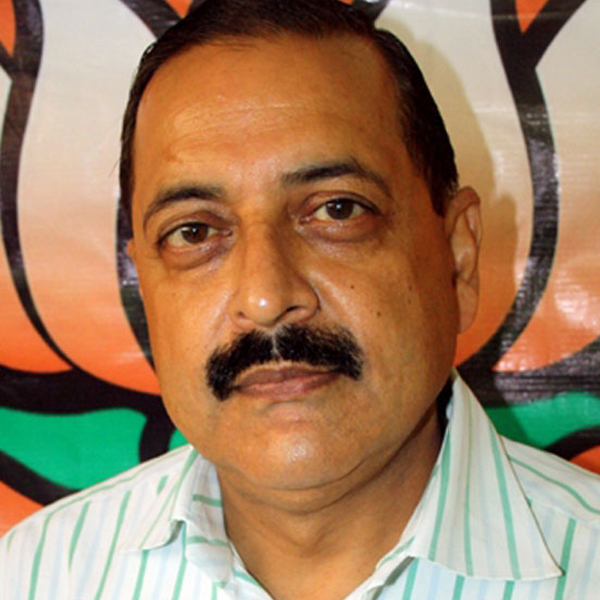
    NEW DELHI: Antrix, the commercial arm of the Indian Space Research Organisation, has earned Rs 4,408.07 crore since 1992 through various satellite launch missions by providing services on commercial basis.


    These services include marketing and direct reception of data from Indian Remote Sensing Satellites to national and international clientele and leasing of satellite transponders on-board INSAT/ GSAT satellites.


    In addition, ISRO has launched 40 satellites of 19 foreign countries on commercial basis under contract between respective foreign customers and Antrix and generated income of € 50.47 million and US $ 17.17 million. 

    Minister of State for Department of Space Jitendra Singh told Parliament today that the future course of action plan includes expanding the data and direct reception services of Indian Remote Sensing Satellites to international clientele, enhancing leasing of satellite transponders to Indian customers, increasing launch services for foreign satellites on-board Indian launch vehicles, and enhancing marketing of satellites and sub-systems. 

  • Centre ready to accept proposals from states to encourage film tourism

    Centre ready to accept proposals from states to encourage film tourism

    NEW DELHI: A proposal of the Chhattisgarh Government, ‘Producing Tourism Documentary Film and TV Commercials’, has been prioritised by the Tourism Ministry for grant of Central Financial Assistance (CFA) during the financial year 2014-15. 


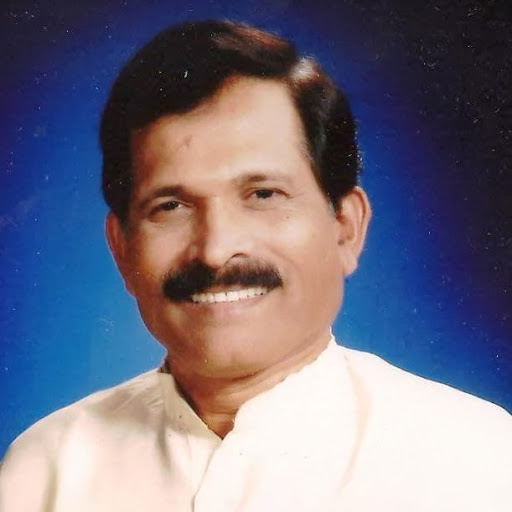
    Culture and Tourism Minister Shripad Yesso Naik told Parliament that the Ministry has recognised films as a powerful tool for promotion of tourism destinations and locations and has taken several steps to promote Film Tourism as an important Niche Tourism product. 


    The Ministry formulated guidelines for extending financial support to various State Governments/Union Territory (UT) Administrations, for promotion of Film Tourism.


    Under these guidelines, Central Financial Assistance (CFA) of Rs 2 lakh per film can be extended for a maximum of five films which include Feature Films, Documentaries, Tele-films and Television Serials during each financial year to every State Government/UT Administration. The CFA is granted for meeting the costs of space hiring/filming charges, facilitation fee etc. payable by the Filming Unit to the State Governments, UT Administrations, Government agencies etc.


    The films for CFA are selected based on the potential exposure they can provide for promotion of tourism destinations and locations. These guidelines have been circulated to all State Governments/UT Administrations and have been uploaded on the official website of the Ministry of Tourism.

    The Information and Broadcasting and the Tourism Ministries had signed a Memorandum of Understanding in February 2012 to establish India as a preferred filming destination and promote Film Tourism. The aim is to promote Cinema of India as a sub brand of “Incredible India” at various international film festivals and markets abroad, develop synergy between tourism and the film industry and provide a platform for enabling partnerships between the Indian and global film industry. 


    The Ministries jointly participated in the Cannes Film Festival and Market, International Film Festival of India (IFFI), Goa and Film Bazaar, Goa in 2013-14. 

    In January 2012, the then Tourism Minister wrote to the Chief Ministers of various State Governments/Administrators of various UT Administrations to recognise the potential of Film Tourism and constitute special bodies/cells to facilitate filming in the States/Union Territories. 

    The Tourism Ministry instituted a National Tourism Award in 2012, “Most Film Promotion Friendly State/UT”, to encourage the State Governments and Union Territories to facilitate filming in their State/UT. 

  • Lok Sabha passes TRAI amendment bill

    Lok Sabha passes TRAI amendment bill

    NEW DELHI: The appointment of former Telecom Regulatory Authority of India (TRAI) chairman Nripendra Misra as principal secretary to the Prime Minister got legislative sanction in the Lok Sabha when it passed the amendment to the TRAI Bill to remove the clause which bars appointment of former TRAI officers in government posts.


    The amendment was passed despite protests by the Congress. The Nationalist Congress Party which is an ally of the Congress had over the weekend said that it would support the amendment as this was not the first case of a retired government servant being re-employed in the government. The Trinamool Congress which had initially said it would oppose the bill decided to support it.


    The Bill replaces the ordinance issued on 28 May by the Bharatiya Janata Party which said it was based on merits while the Congress has criticised the government for showing undue haste in bringing a person specific ordinance.


    Under Parliamentary procedures, any ordinance has to be replaced by an Act within six weeks of the session that commences after the promulgation of the ordinance.


    The government strongly defended the move. Law and Telecom Minister Ravi Shankar Prasad said the government is in “full power to bring the bill” and the effort was to bring TRAI on par with other similar organisations like the Competition Commission.


    Misra, a 69-year old 1967-batch Indian Administrative Service officer of Uttar Pradesh cadre who retired in 2009, joined the Prime Minister’s Office the day the ordinance was promulgated. Before the Ordinance was promulgated, the TRAI Act prohibited its chairman and members from taking up any other job in central or state governments after demitting office.


    The TRAI Act 1997 says: “The chairperson or any other member ceasing to hold office as such, shall (a) be ineligible for further employment under the Central government or any state government or (b) not accept any commercial employment for a period of two years from the date he ceases to hold such office.”


    The amended section now reads: “The chairperson and the whole-time members shall not, for a period of two years from the date on which they cease to hold office as such, except with the previous approval of the Central government, accept “(a) any employment either under the Central government or under any state government; or “(b) any appointment in any company in the business of telecommunication service.”


    Although the BJP is in a minority in the Rajya Sabha, the Bill is expected to be passed in the Upper House as the Samajwadi Party and Bahujan Samaj Party apart from NCP and TMC are also supporting it.


    The bill will become a law after it is passed by the Rajya Sabha and assented to by the President.

  • Steps taken to prevent bullying of children on the internet, claims government

    Steps taken to prevent bullying of children on the internet, claims government

    NEW DELHI: About 18 per cent of children have said that they have been victims of bullying on internet.


    This is revealed by a survey report ‘Cyber Crime -2013 – Kids (India),’ published by software company Symantec which covered a sample size of just 203 kids.


    Parliament was told this week that a website (secureyourpc.in) for children, home users and elderly is available for safeguarding their computer systems and learning the risks on internet. 


    Communications and Information Technology Minister Ravi Shankar Prasad said there had been some media reports that children are becoming victims of depression because of cyber bullying.


    The Home Ministry had issued an Advisory on Preventing & combating Cyber Crime against Children on 4 January 2012, advising States/Union Territories to specifically combat the crimes in the forms of cyber stalking, cyber bullying, child pornography and exposure to sexually explicit material etc. 


    The Information Technology Act, 2000 has provision for dealing with cyber crimes targeting children. 

    The government has implemented Information Security Education Awareness (ISEA) programme including the programmes conducted by Confederation of Indian Industry (CII), Internet & Mobile Association of India (IMAI) and Data Security Council of India (DSCI) for security awareness and training in the area of information security.


    Specific workshops have been conducted for school children on making them aware about risks on internet and adopting safe internet browsing practices. In these programmes around 710 workshops have been organised across the country covering large number of organisations, schools, students and teachers. During the workshops, awareness kits have also been distributed. Security awareness material like posters, DVDs, cartoon/animation videos have also been developed and widely distributed.


    A dedicated website for information security awareness (www.infosecawareness.in) has also been developed and content is available in English and Hindi language. 

  • Interim Budget: Communications and Information Technology Ministry

    Interim Budget: Communications and Information Technology Ministry

    NEW DELHI: The budgetary allocation in the vote-on-account for 2014-15 for convergence, communications and strategic electronics in the Communications and Information Technology Ministry has gone up to Rs 27 crore.


    In the interim budget (vote-on-account) for 2014-15 presented in Parliament for the first four months of the new year 2014-15 in view of the general elections later this year, the amount set aside in this sector which includes broadband and broadcast convergence has gone up from Rs 15.75 crore in the revised estimates but is marginally lower than the budgetary allocation of Rs 28 crore in the 2013-14 budget.


    An explanatory note says this includes supporting research and development in convergence communications, broadband technologies and strategic electronics. The indigenous efforts are aimed at facilitating developments in emerging, next generation convergence communication, broadband, broadcast and strategic technologies for inclusive and sustainable growth in the country.


    In addition, there is budgetary allocation of Rs 7 crore for Media Lab Asia, which is far less than the revised estimates of Rs 12.75 crore for 2013-14. Media Lab Asia is a Section 25 company aimed at bringing the benefits of the most advanced information and communication technologies to the common man and the needy people.


    Keeping in view large-scale incidents of hacking or damaging websites, the budget for cyber security has gone up three times from Rs 36.87 crore in the revised estimates for 2013-14 to Rs 114 crore.


    The explanatory note says that cyber security is gaining adoption in all types of products for a variety of reasons including national security and appreciation of the consequences of insecurity, and the grants to the Indian Computer Emergency Response Team (Cert-in)

  • Ministry of home affairs spikes FDI hike in telecom, media

    Ministry of home affairs spikes FDI hike in telecom, media

    Mumbai: The Telecom Regulatory Authority of India’s proposal to increase foreign direct investment in the information and broadcasting and telecom sectors may never see the light of day.

    The reason: the ministry of home affairs has not agreed to increase FDI caps and/or entry routes in respect to “aviation, telecom and information and broadcasting sectors on account of their sensitivity and security concerns,” Minister of State for Home R P N Singh said in reply to a written question in parliament today, according to agency reports.

    Singh said the Home Ministry has also raised issues pertaining to “investments of concern” and in respect of different categories of investors and investments; source of investments and instruments of investment.

    Trai had earlier this year recommended hiking FDI caps for news television (TV) and private FM radio services to 49% from the current 26%. It had also proposed a FDI hike to 100 per cent (from 74 per cent currently) in distribution and carriage services such as direct-to-home (DTH) TV, cable networks and mobile TV.

  • TRAI among other regulators to be answerable to Parliament

    TRAI among other regulators to be answerable to Parliament

    MUMBAI: The winter session of the Parliament seems to have seen the passage of one important bill. The Regulatory Reform Bill 2013 has been approved by the Prime Minister Manmohan Singh making all sector regulators (except finance) directly accountable to the Parliament. According to reports, the draft bill gives powers of licensing to regulators, which it is not currently with them.


    The cabinet note of the draft bill says that regulators will be legally accountable to the parliament and will have to present a report at the end of every fiscal year regarding work done in the previous year and agenda for the next year.


    The note was suggested by the Planning Commission. Two functions of regulators mentioned in the draft copy are “to protect the interests of all consumers, by ensuring quality of service and lowering of costs and to promote competition, efficiency and economy and prevent market domination, cartelisation and anti-competitive behavior and for orderly growth of the relevant public utility industry.


    On being passed, this bill will put the Telecom Regulatory Authority of India (TRAI) directly under purview of the parliament.