Tag: Parliament

  • Central government  drives Bind scheme with Rs 2,539 crore push

    Central government drives Bind scheme with Rs 2,539 crore push

    NEW DELHI: India’s public broadcasters are in the middle of their most ambitious revamp in decades. The government told Parliament this week that its Broadcasting Infrastructure and Network Development (Bind) scheme — approved for 2021–26 with an outlay of Rs 2,539.61 crore — is advancing on schedule, with close to Rs 981 crore already spent.

    The five-year programme is designed to modernise Doordarshan and Akashvani (All India Radio) with digital transmission, high-definition studios, new FM towers and a wider footprint in border, tribal and left-wing extremism–affected regions. The ministry said no major funds have lapsed, though procurement delays occasionally slowed spending, now being addressed through tighter monitoring.

    One of Bind’s biggest successes is the expansion of DD Free Dish, India’s only free-to-air DTH service. Channel count has surged from 104 in 2019 to 510 today, including 92 private broadcasters, 50 Doordarshan services and 320 educational channels. Popular Akashvani stations such as FM Gold, Rainbow and Vividh Bharati are also available on the platform, making free access to information and entertainment more widely available.

    Akashvani’s terrestrial coverage now spans 90 per cent of India’s geography and 98 per cent of its population. Alongside its traditional FM network, more than 260 AIR channels are now accessible through the NewsonAIR mobile app. To further strengthen reach, 59 new FM transmitters have been approved under the scheme.

    In parallel, Prasar Bharati has entered the OTT space with Waves, launched in 2024. The digital platform aggregates infotainment, news, education and cultural content, and integrates feeds from Doordarshan and AIR. Officials say Waves is helping extend public broadcasting to younger, mobile-first audiences and to Indians overseas.

    The Bind scheme, covering all states, represents an attempt to reposition public service broadcasting in a hyper-fragmented media market.

    For New Delhi, the strategy is as much about access as it is about influence — ensuring that public broadcasting reaches underserved communities while competing with private players on technology and content.


  • Double trouble for broadcasters as Supreme Court green-lights twin tax hit

    Double trouble for broadcasters as Supreme Court green-lights twin tax hit

    MUMBAI: The Supreme Court has delivered a one-two punch to India’s broadcasters, ruling on Thursday that they must cough up both service tax and entertainment tax on their activities. The decision ends years of legal wrangling over whether television companies could dodge the double whammy.

    A bench led by justice B V Nagarathna and justice N K Singh declared that parliament and state legislatures both have the constitutional chops to levy their respective taxes. The 321-page judgment—longer than most television programmes—essentially told broadcasters they cannot have their cake and eat it too.

    “The two taxes target different aspects of the same activity,” the court explained, rather like taxing both the recipe and the meal. Parliament’s service tax under the Finance Act hits the broadcasting service itself, whilst states’ entertainment tax treats television as a luxury under Entry 62 of the Constitution’s List II.

    The judges were having none of the broadcasters’ arguments that they should pay only service tax to the central government. “No entertainment can reach viewers unless broadcasters transmit signals,” justice Nagarathna noted. “There are two aspects: transmitting signals and providing entertainment through set-top boxes that decrypt them.”

    This legal drama began with a clutch of cases from various high courts, with Kerala versus Asianet Satellite Communications taking the starring role. Broadcasters had argued they were merely in the signal-transmission business, not the entertainment game. The Supreme Court was not buying this technicality.

    The ruling overturns a 2012 Kerala high court decision that had favoured cable operators over DTH (direct-to-home) providers, calling such discrimination unconstitutional. The Supreme Court said this earlier judgment got it wrong—both cable and DTH operators are in the entertainment business and should be taxed accordingly.

    For India’s broadcasting industry, already grappling with cord-cutting and streaming competition, this represents yet another headache. The ruling makes clear that technological differences in how entertainment is delivered do not exempt anyone from the taxman’s reach.

    The court’s message is unambiguous: whether you beam signals from satellites or snake cables through neighbourhoods, if you are in the business of keeping Indians glued to their screens, you will pay through the nose for the privilege.

  • Government announces draft bill on personal data protection; proposes penalty of up to Rs 500 cr

    Government announces draft bill on personal data protection; proposes penalty of up to Rs 500 cr

    Mumbai: The ministry of electronics and information technology (MeitY) has formulated a draft bill, titled “The Digital Personal Data Protection Bill 2022.” In a press release published on Friday, the ministry invited feedback from the public on the draft bill. According to the statement, the draft is open for public comment till December 17.

    As expected to be presented in the next session of parliament, the purpose of the draft bill, as stated in the official statement from the ministry, is to provide for the processing of digital personal data in a manner that recognises both the right of individuals to protect their personal data and the need to process personal data for lawful purposes and for matters connected therewith or incidental thereto.

    In addition to this, the ministry has further stated that it has raised the penalty amount to up to Rs 500 crore for violating the provisions proposed under the draft bill. The draft bill, released in 2019, proposed a penalty of Rs 15 crore or four per cent of the global turnover of an entity.

    The proposed bill comes in place of the Data Protection Bill, which was withdrawn by the ministry in August this year. The draft proposes to set up a Data Protection Board of India, which will carry out functions as per the provisions of the bill.

    “The Digital Personal Data Protection Bill”

    The Digital Personal Data Protection Bill frames out the rights and duties of the citizen (Digital Nagrik) on the one hand and the obligations to use collected data lawfully of the data fiduciary on the other.

    In an explanatory document issued by the MeitY, seven principles around the data economy have been listed on which the bill is based:

        The first principle is that organisations must use personal data in a way that is legal, fair to the individuals involved, and transparent to individuals.

        The second principle of purpose limitation is that the personal data is used for the purposes for which it was collected.

        The third principle of data minimisation is that only those items of personal data required for attaining a specific purpose must be collected.

        The fourth principle of accuracy of personal data is that reasonable efforts are made to ensure that the personal data of the individual is accurate and kept up-to-date.

        The fifth principle of storage limitation is that personal data is not stored perpetually by default. The storage should be limited to such a duration as is necessary for the stated purpose for which personal data was collected.

        The sixth principle requires that reasonable safeguards be put in place to prevent the unauthorised collection or processing of personal data. This is intended to prevent personal data breaches.

        The seventh principle is that the person who decides the purpose and means of processing personal data should be accountable for such processing.

        These principles have been used as the basis for personal data protection laws in various jurisdictions. The actual implementation of such laws has allowed the emergence of a more nuanced understanding of personal data protection wherein individual rights, public interest, and ease of doing business, especially for startups, are balanced.

    Financial penalty:

    “If the board determines at the conclusion of an inquiry that non-compliance by a person is significant, it may, after giving the person a reasonable opportunity of being heard, impose such a financial penalty as specified in Schedule 1, not exceeding rupees five hundred crore in each instance,” stated the draft.

    Other obligations included are:

        The draft bill has proposed a graded penalty system for data fiduciaries that will process the personal data of data owners only in accordance with the provisions of the act.

        The same set of penalties will be applicable to the data processor — which will be an entity that processes data on behalf of the data fiduciary.

        The draft has proposed a penalty of up to Rs 250 crore in case the data fiduciary or data processor fails to protect against personal data breaches in its possession or under its control.

        The draft has also proposed a penalty of Rs 200 crore in case the data fiduciary or data processor fails to inform the board and data owner about the data breach.

    Furthermore, in the draft issued by the MeitY, there is a provision to allow entities to transfer the personal data of a citizen outside the country in cases where the processing of personal data is necessary for enforcing any legal right or claim, the performance of any judicial or quasi-judicial function, the investigation or prosecution of any offence, or the data owner is not within the territory of India and has entered into any contract with any person outside the country.

    “The central government may, after an assessment of such factors as it may consider necessary, notify such countries or territories outside India to which a data fiduciary may transfer personal data,” it added.

  • Why did government retract Data Protection Bill

    Why did government retract Data Protection Bill

    Mumbai: Union IT Minister Ashwini Vaishnaw has withdrawn the Data Protection Bill from Lok Sabha on 3 August 2022. The centre will review the policy and come up with a ‘comprehensive legal framework’ for regulating online data privacy. The new regulation on data protection will help the overall internet ecosystem, safeguard against cybercrime, and secure non-personal data.

    The Data Protection Bill was first introduced on 11 December 2019. The bill was referred to the Joint Committee of the Houses for examination on 16 December 2021 & later, the committee presented the report in the Lok Sabha. The joint parliamentary committee raised concerns and provided 93 recommendations that explain why the government cannot invade one’s privacy. The government will introduce the new regulation during the winter session of the parliament this year.

    Why did political parties oppose the bill?

    In 2019, the opposition parties such as Congress and Trinamool Congress vehemently protested against this bill as it violated the fundamental rights of the citizens. The opposition believed that the bill provided power to the government to access the personal data of individuals, and it lacked transparency and was opaque.

    It is imperative to provide adequate protection to people on their privacy rights. Currently, India is the fastest growing data-generation nation in the world with over 700 million Internet users and more than 400 million smartphone users.

    Which data can the government have access to?

    Data is usually generated through four sources such as personal data, bank accounts data, medical records and employment data. Other data is generated from web searches and visits to any web portals. The data helps to understand and identify people’s choices, preferences and histories.

    It is also generated through a cache that comes from social media posts, tweets, phone calls, emails and videos. It is also generated through coordinates from the real-time location. Stacks of data are also collected from one’s spending patterns when an individual purchases online, via modes of payment used, and transactions made through payment gateways.

    It is that personal data many individuals would like to keep private and the government exercising control on accessing it- is a serious matter of concern. There needs to be a mechanism and policy in place to process such data without breaching people’s trust and protecting its safety & security.

  • Prasar Bharati’s DD Network sees a decline in its gross unique viewership

    Prasar Bharati’s DD Network sees a decline in its gross unique viewership

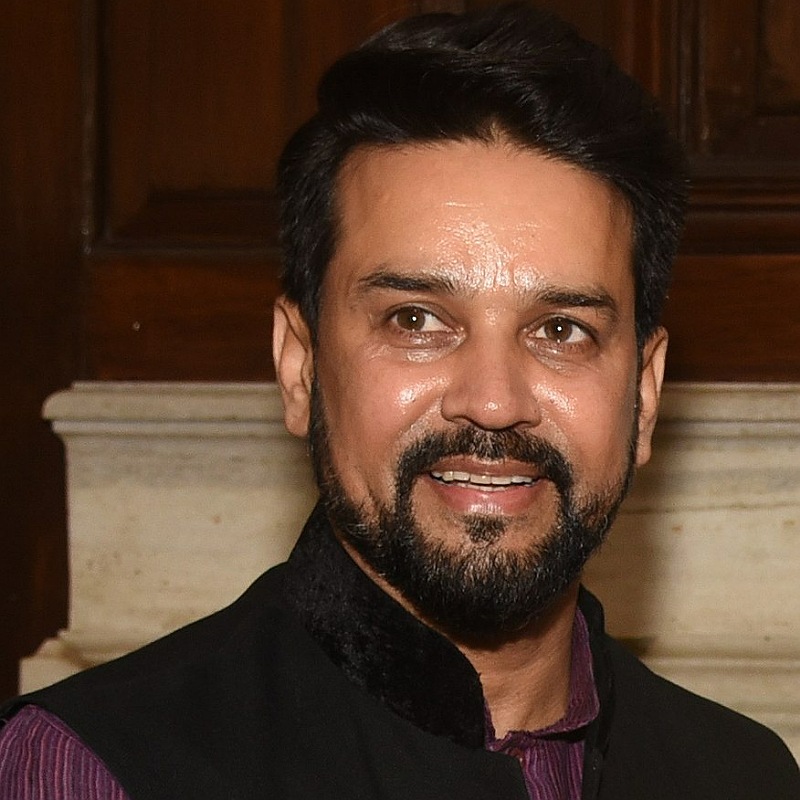
    Mumbai: Prasar Bharati has overall maintained the same position in their genres vis-a-vis private channels in the last three years, as per Broadcast Audience Research Council (BARC) ratings. As per BARC data for the subscribed DD channel, the gross unique viewership across the network for the past three years has declined and for the current year (till the second week of July i.e. upto week 28) has reached 633 million. The I&B minister Anurag Thakur informed the Lok Sabha on Tuesday.

    Public sector broadcaster Prasar Bharati’s Doordarshan (DD) Network’s gross unique viewership in 2021 was at 684 million as compared to 2020, which was at 747 million views. A total of 760 million views were registered in 2019, as per the BARC’s TV viewership data. This viewership data is also for DD News and DD India till 2 October 2020 and between December 2021 & March 2022.

    Currently, the government is taking corrective measures to increase the viewership of DD channels. It is focusing on improving the quality of programmes and providing relevant content to the viewers.

    In response to a question on whether the government is improving the quality of programmes telecast on the Doordarshan and facing competition from the private TV channels, the minister said, “Prasar Bharati is the public broadcaster and its primary duty is to carry out public broadcasting services to inform, educate and entertain the public and to ensure a balanced development of broadcasting on radio and television. Its purpose is not solely commercial but to reach those areas where no private broadcaster would venture.”

    The minister added, “Doordarshan is committed to quality content and has accordingly taken several steps to produce and acquire high-quality programmes for its network.”

    He mentioned that Doordarshan has also launched the ‘Content Sourcing Portal’ for submission of suo-moto proposals under the Direct Assignment Process (DAP) by production houses. Doordarshan Kendras across the country are upgraded with the introduction of the latest equipment video walls for quality production. The quality of program production, post-production and broadcast has improved with modernization and upgradation.

    Mentioning the Broadcasting Infrastructure and Network Development (BIND) scheme, Thakur said that the public broadcaster was allocated a total of Rs 593 crore under the scheme out of which the total expenditure was Rs 653 crore. The fund was used for the modernisation and augmentation of the capital infrastructure of Doordarshan and for improving the quality of transmission & programmes.

    In the financial year 2021-22, Prasar Bharati was allocated a fund of Rs 175 crore out of which the expenditure was Rs 162 crore. A total of Rs 183 crore was allocated in the financial year 2020-21 and the expenditure was Rs 202 crore. However, the allocated fund was Rs 234 crore in the financial year 2019-20 with an expenditure of Rs 289 crore.

  • Govt unlikely to set up media commission to check irregularities: Anurag Thakur

    Govt unlikely to set up media commission to check irregularities: Anurag Thakur

    The government is unlikely to set up a media commission that will facilitate checking the irregularities in print, electronic and digital platforms, the Union Minister of Information and Broadcasting, Anurag Thakur told Rajya Sabha while responding to a query raised in the Upper House of the Parliament on Thursday. 

    In its twenty-seventh report, the Parliamentary Standing Committee on Communication and Information Technology has recommended it. The committee proposed setting up a Media Council with statutory power in December 2021.

    “The government regularly holds consultations with stakeholders 

    and utilises data & information available from various sources for policy formulation, building strategies, etc. The setting up of a media commission is not considered necessary at present,” Thakur said in a written response to the parliament. 

    The parliamentary committee is headed by Senior Congress Leader Shashi Tharoor.

  • Sansad TV’s YouTube channel restored after alleged hacking attempt

    Sansad TV’s YouTube channel restored after alleged hacking attempt

    Mumbai: The YouTube channel of Sansad TV ran into trouble on Tuesday after its telecast was suspended due to an alleged hacking attempt. According to the statement issued by Sansad TV, the YouTube channel got compromised due to ‘unauthorised activities by some scamsters’ on 15 February at 1 am, which also affected its live-streaming.

    Viewers who tried to watch the streaming were greeted with a disclaimer from YouTube stating, “This account has been terminated for violating YouTube’s community guidelines”.

    However, the channel was restored later in the evening. “Sansad TV’s YouTube channel has been restored. You can get back to all your favourite programmes on the channel,” it announced on Twitter.


    According to a statement issued by Sansad TV earlier in the day, the channel name was also changed to ‘Ethereum’ by the attacker. “SansadTV’s social media team promptly worked on it and got the channel restored by early morning around 3:45 hrs,” it stated.

    Indian Computer Emergency Response Team (CERT-in), the nodal agency for responding to cyber-security incidents in India had also reported the incident and alerted Sansad TV. Later on YouTube also started fixing the security threats permanently, the channel stated.


    The channel was launched by prime minister Narendra Modi in September last year after merging Lok Sabha TV and Rajya Sabha TV, and shows the live streaming of the Parliament sessions.

  • Budget 2022: A clear push towards a digital economy, start-ups

    Budget 2022: A clear push towards a digital economy, start-ups

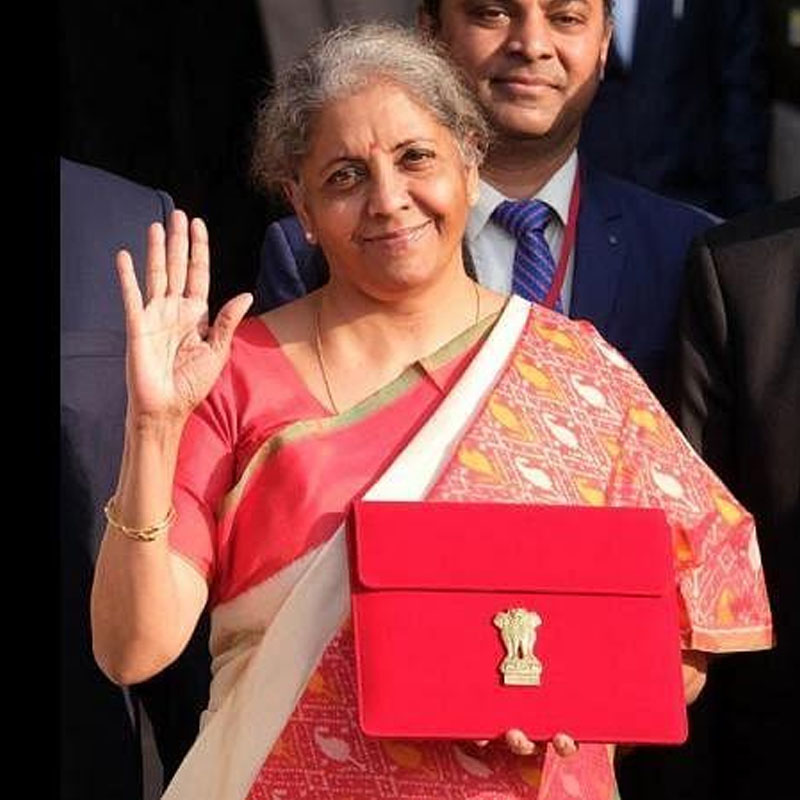
    Mumbai: Finance minister Nirmala Sitharaman on Tuesday presented the Union Budget 2022 in Parliament. The minister said that the country is set to clock an economic growth rate of 9.2 per cent in the current financial year, in what was her shortest Budget speech yet. While the budget made no tax concessions for the salaried class, some of the key areas it focussed on was a push towards a digital economy, and start-up ecosystem.

    The FM proposed a 30 per cent tax on income from transactions of cryptocurrencies and other virtual assets. Also, to bring such assets under the tax net, Sitharaman proposed a one per cent TDS (tax deducted at source) on transactions in such asset classes above a certain threshold, while also including gifts in crypto and digital assets in the to-be taxed list.

    Sitharam also said that the Reserve Bank of India (RBI) will launch a ‘Digital Rupee’ based on blockchain technology in 2022-23. The Central Bank Digital Currency (CBDC), according to the finance minister, will provide a significant boost to the digital economy and lead to a more efficient and cost-effective currency management system.

    The FM also announced the extension of the Emergency Credit Line Guarantee Scheme (ECLGS) that provided additional credit to over 1.3 crore MSMEs till March 2023. Additionally, its guarantee cover has been expanded by Rs 50,000 crore to Rs 5 lakh crore. Apart from this, in a year riddled with mental health well-being concerns amid the pandemic, FM Sitharaman announced the launch of a ‘National Tele Mental Health Programme’ for better access to quality mental health counselling and care services, in a move that signifies the normalising of mental health as a legitimate area of focus for us as a nation.

    Industry reactions on the Union Budget have been pouring in, and most of the industry stakeholders saw the twin announcements of the digital rupee and the taxation on “virtual digital assets” as a focused drive from the government to regulate the crypto space. Some felt that regulating a decentralised space is a paradox in itself, and took the cautious approach by saying how this plays out needs to be seen.

    Here is what the industry experts had to say:

    CoinSwitch founder and CEO Ashish Singhal who is also the co-chair of Blockchain and Crypto Assets Council (BACC) welcomed the government’s decision to introduce central bank digital currency (CBDC) to accelerate digitisation. Calling it the ‘the gateway to the future decentralised world, aka Web3.0’, he said, “The budget provides clarity on taxation and shows the government’s intent to take a business-friendly approach while protecting the interest of consumers and the exchequer. The regulatory guidance on tax from the government furthers the mainstreaming excitement of this emerging asset class with over $6bn worth of investments in India. Hopefully, this will induct more digital-savvy Indians into the financial ecosystem willing to explore newer forms of investing and wealth creation.”

    OKX.com CEO Jay Hao believes that India is slightly lagging in the digital currency race mainly due to the regulatory hurdles and reluctance in accepting the growing popularity of digital assets/digital currency around the world. “If we look at the global scenario, central banks around the globe have already launched or are about to launch their digital currency,” said Hao, adding that he hoped the announcement made regarding CBDC is implemented without any further delay as it will give a much-needed push to the blockchain industry in India. He also asserted that higher taxes may discourage investors from choosing crypto as an investment avenue and delay the mass adoption of crypto assets in India.

    CoinDCX co-founder and CEO Sumit Gupta hailed taxation of Virtual Digital Assets or Crypto as a step in the right direction. According to him, this will give a much-needed clarity and confidence to the industry. The introduction of CBDC sends a clear signal of India being a digital-first, efficiency-driven, and transparency-led system, he added.

    Mudrex CEO and co-founder Edul Patel also termed it as a progressive step towards boosting crypto adoption in the coming years. The sentiment was shared by other industry executives who felt the government legitimatised crypto assets in India in an indirect way by coming out to tax the same.

    Dentsu India chief client officer Narayan Devanathan said the budget is “future-focused, aiming at the distant vision of India@100”, instead of being focussed on the present. Expressing dismay over the omission of much-needed concessions in critical sectors like health, Devanathan said, “A punishing 2021 for the aam aadmi with more-than-usual expenditure on health and sustenance meant the general populace was looking for immediate relief that would place more cash in their household budgets. That did not happen. Nor was there any extraordinary investment in relieving the healthcare expenditure burden. Even the MSME sectors were only handed a slightly longer lease of life with the extension of the ECLGS, but there was no real move to stimulate consumption by placing more cash at consumers’ disposal, for example, extending LTA claims to restaurants (and not just accommodation).”

    According to Blink Digital co-founder and COO Rikki Agarwal the government sent mixed signals with its proposed announcement of a new digital rupee powered by blockchain technology and taxing digital assets. While the move has cleared the impending ambiguity around the cryptocurrencies in India, signifying its acceptance as an asset and legalising it to boost the economy, imposing heavy taxes on digital assets is an indication that the government intends to discourage the same, he says, adding, “We will wait for more clarity on the regulations.”

    Wunderman Thompson South Asia CEO Shams Jasani said the budget highlighted that government is finally recognising that digital is getting to be bigger and bigger. “With so much talk on digitisation I think the digital revolution has already come in India. And the sheer push on digital infrastructure in the country will help a lot more content consumption and a lot more content creation as well. Also, the reach of the medium is going to grow into the rural areas and smaller towns & cities,” he said, adding that, “Governments across the world are going to ultimately get into the digitalisation of currencies, backed by Crypto technology or blockchain technology, and that is the future of currencies. So that is going to take off and that will also legitimise the whole idea of cryptocurrencies in India.”

    DDB Mudra Group chief operating officer and chief financial officer Anurag Bansal opined that the Union Budget looks neutral, with no major changes in taxation, adding that the launch of digital Rupee based on blockchain technology is a big move to bring in official cryptocurrency in India. Managing the Fiscal deficit while pushing for growth and investments is a great balancing act taken on by the government, he feels; one that will give a boost to capital investments and infrastructure development.

    White Rivers Media CEO and co-founder Shrenik Gandhi termed the budget as ‘fairly balanced’ in that there is sufficient emphasis being laid on up-skilling, and making right investments in tech which is the need of the hour. Speaking of the expected benefits, he added, “Let’s not forget that this is India’s #Budget and not a Big Bazaar scheme announcement. So, the immediate benefit may not be seen right now but considering the long-term narrative, it is a fairly established budget.”

    According to Publicic Groupe South Asia CEO Anupriya Acharaya, the Budget was positive, growth-oriented and with reforms in the right direction. “The advent of 5G is sure to transform communications – for our industry it will help the creation of better AV, voice and AR/VR experiences. It will also fuel digital payments, streaming entertainment, gaming, e-commerce, tele-medicine etc which in turn will aid more Unicorns! From e-passports, to battery swapping for electric vehicles, setting up of optic fiber in villages, setting up of a digital university and skilling through an e-portal, the big push is for technology, digital infrastructure and empowerment,” she added.

    Parle Products senior category head Mayank Shah said putting money in the hands of consumers really helps, so they go out and buy products. “So that was more on the front of ensuring that the demand remained robust given that we have gone through two years of pandemic. That was something that industry expected, either by tax cut, or by increasing the slabs tax brackets or by probably increasing the standard deduction limit. Those were the things that we expected but not much has been done there.”

    Thomas Cook (India) MD Madhavan Menon said the budget was disappointing from a Travel & Tourism perspective. “The Budget made no reference to the industry’s recommendations to aid revival, including rationalisation of taxes (a complete GST holiday, exemption of TCS on outbound tours, reduction in indirect taxes), removal of SIES benefit capping of Rs 5 cr,” he said.

    Mad Over Donuts ED Tarak Bhattacharya also rued that the budget gave no attention to the hospitality industry in particular. “Our industry continues to bear the brunt of the pandemic, probably more than a lot of other sectors. We were hoping for some relief or some measures that would help the industry in the months and years to come,” he said.

    Food and Beverage startup Wat-a-Burger co-founder & CEO Farman Beig said the government has been supportive towards the F & B sector and did announce some steps to help the sector bounce back by shifting the GST compliance onto online food delivery partners on behalf of the restaurants. “However, some relief in terms of ITC (Input tax credit) would have further catalysed the recovery of the sector which otherwise is on the bleeding end. Currently, when the industry is struggling to manage the fixed cost with GST, it requires immediate boost, and cutting down ITC would have worked wonders,” he added.

    TCL India head of marketing Vijay Kumar Mikkilineni welcomed the FM’s increased focus on the consumer electronics industry and formation technology. “The 2022 Union Budget allocated 1.97 lakh crore ($26 billion) for PLI projects, notably electronic components, which are among the 13 vital sectors that would undoubtedly help our economy expand. Furthermore, reduced customs taxes will encourage electronics manufacture, which will benefit the electronics industry,” he said.

    CEO of SPPL – exclusive licensee of Thomson in India Avneet Singh Marwah said, “This budget has been more like announcements and slogans. I’m surprised how FM missed on health and education, which are two main pillars of the economy, despite the pandemic. On one hand the government talks about how electronics will contribute one trillion to the economy and on the other for consumer electronics no major announcements, no roadmaps have been given to the industry.”

  • MIB took action against 139 cases of obscene/violent TV content since 2018: Anurag Thakur

    MIB took action against 139 cases of obscene/violent TV content since 2018: Anurag Thakur

    Mumbai: Since 2018, the ministry of information and broadcasting (MIB) has taken action against 139 cases on content related to obscenity and violence on TV, I&B minister Anurag Thakur told the Parliament on Tuesday during the winter session.

    “For Television, all TV Channels are required to adhere to the Programme Code under the Cable Television Networks (Regulation) Act, 1995, including that programmes should not contain anything obscene, defamatory, deliberate, false and suggestive innuendos and half-truths,” said the minister, adding that, “the government takes action in appropriate cases where violation of the codes are found. It also issues advisory from time to time to the media to adhere to the laid down codes.”

    For digital news publishers, the government had notified the Information Technology (Intermediary Guidelines and Digital Media Ethics Code) Rules, 2021 under the IT Act, 2000 on 25 February which inter alia provides for a Code of Ethics for adherence by digital news publishers.

  • Prasar Bharati developing next generation broadcast solution

    Prasar Bharati developing next generation broadcast solution

    Mumbai: Prasar Bharati has entered into an MoU with IIT Kanpur to develop next generation broadcast solution/roadmap for digital terrestrial broadcasting consistent with emerging standards such as 5G broadcast.

    “The sanction for the Proof of Concept (PoC) of next generation broadcasting has also been conveyed to IIT Kanpur,” the minister of information and broadcasting Anurag Thakur told the Lok Sabha on Tuesday. “The selection of an appropriate next generation broadcast technology and Digital Terrestrial Transmission (DTT) roadmap of Doordarshan depends upon evaluation of this PoC.”

    Speaking at the CII Big Summit last month Prasar Bharti CEO Shashi Shekhar Vempati had also stressed upon the need for convergence across infrastructure and content creation.

    He said that if the collaboration with IIT Kanpur is successful it will be possible to directly receive broadcast signals on smartphones in future. “In the event of a high-viewership event like the Indian Premier League (IPL), there is no reason why millions of users need to receive that content on a unicast mode through the internet. If this works, all of the content can be delivered directly on broadcast frequencies to people on their smartphones or smart TVs,” he said.

    The public broadcaster is already working on bringing convergence across TV and radio so that a lot of exclusive radio content can be made visually rich and available for TV audiences. PM’s ‘Mann Ki Baat’ was the first such example. Prasar Bharati is following the same format where a camera is put up in the studio all-day long for another show ‘Rangoli’.