Tag: Parle Products

  • Biscuit maker Parle Products sets foot in packaged wheat flour market

    New Delhi: Known for its biscuits, snacks and confectioneries, Parle Products is now expanding its portfolio with the launch of ‘Parle G Chakki Atta’.

    The owner of famous biscuit brand Parle-G is tapping into the flour category with an aim to capture urban and rural markets with 100 per cent wheat atta. The distribution of atta has already begun in northern & western parts of the country under three categories – 2kg, 5kg and 10kg with competitive pricing, it announced on Monday.

    According to the food company, Branded atta segment has gained momentum since the pandemic outbreak. With movement restrictions in place, Parle’s venture into the new category is in the lines of being agile on marketing strategies while also capitalizing on hygiene and convenience factors that has become a priority in today’s environment.

    Being a staple in most households, the atta is being launched under the brand name ‘Parle G’ to build on this established faith by consumers and enable them to feel secure about their buying decisions. “Parle G Chakki Atta is a wholesome product which can provide tasty and healthy rotis with assurance of six hours softness,” said the company.

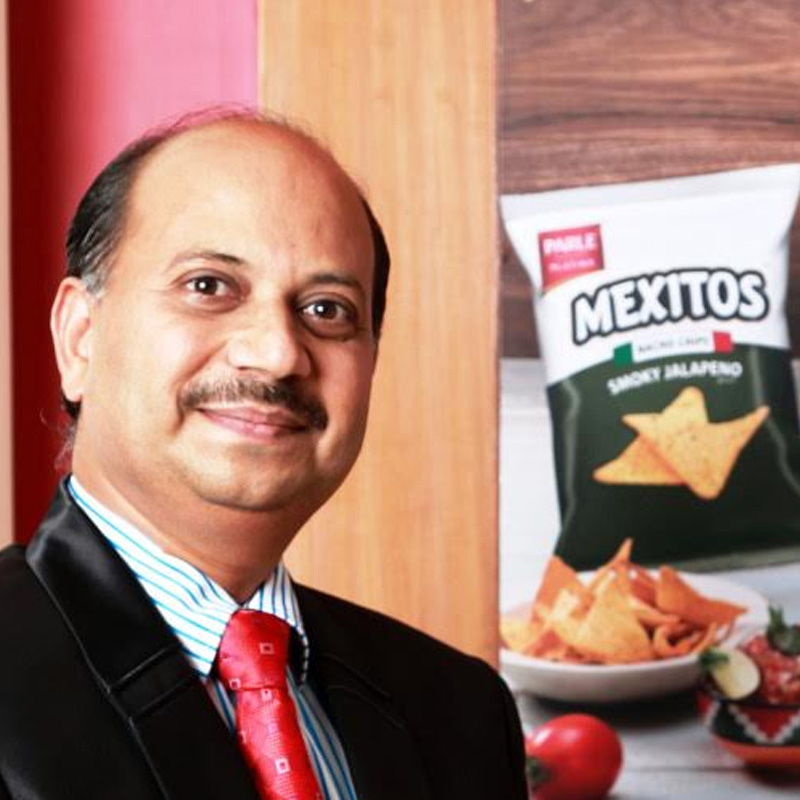
    Parle Products, senior category head, Mayank Shah, highlighted that branded wheat flour is one of the largest segments in the foods industry and the majority of the demand is currently being met by local mills or neighbourhood chakkis.

    “The urban markets lead in the consumption of packaged atta making it largely an urban phenomenon. But with the onset of the pandemic, the need for hygienically ground wheat flour and an assurance of trusted brand is driving consumers in the Tier 2 and Tier 3 cities to switch to Branded Atta. We aim to reach the remotest household in the country to provide hygienically ground atta and help consumers switch to hygienic

    Options,” he said.

    According to Shah, Parle G Chakki Atta will be a game changer in the market. “Being a pioneer in the food business, it is our responsibility to consumers to provide nutritional, credible and quality products. We look forward to continuously evolving into a brand that puts consumer well-being first,” he added.

  • How will BARC’s decision impact news channels?

    How will BARC’s decision impact news channels?

    KOLKATA: L'affaire TV ratings continues.  In an unprecedented move, the Broadcast Audience Research Council (BARC) India has decided to cease giving out ratings  for individual news channels as it goes about improving the way it does its measurement and improves security. The twonews  industry associations expressed diamterically opposte views on BARC's decision. While the NBA welcomed it, the NBF expressed its disappoinment at not being consulted. 

    A key question that begs asking is: will the absence of ratings  impact the way marketers, media planners and buyers buy air time on the news genres?

    BARC data, the only currency to measure what is being watched on TV in India,  plays a major role in the decision-making process of advertisers and agencies. Many news broadcasters are perhaps chewing on their fingernails, fretting over the impact this may have on their revenue.

    Some experts from media agencies believe news channels sales folks needn't worry; there may be very little change.

    Read more news on BARC

    An expert from a large media agency stated, on the condition of anonymity, that the media-rating blackout is not a brand-new experience. Back in the TAM regime, when linear TV was a much stronger medium, the industry survived without any ratings on several occasions, sometimes for as long as a couple of months. He added that advertising never got impacted due to issues regarding jurisdiction.

    Another media executive expressed that there might be a marginal movement of ad dollars to other genres in the short run. "News being a high impact genre can’t be ignored under any circumstances. Further, he cautioned that channels should take note in improving the content quality given the increasing negative sentiment among a part of advertisers as well as viewers," he said.

    Parle Products  senior category marketing head BK Rao believes that ratings are not the only inputs that drive buying decisions for TV. "Besides ratings, brands consider other inputs too, such as speaking to distributors, the programming line-up, and time bands," he shared. More importantly, Rao feels  that now the focus will shift to quality, rather than quantity. “Advertisers will be forced to look at the quality aspect. They will have to speak to shareholders to understand the consumption pattern. In general or business news, content will be considered as a key factor. Quality analysis of news will play a major role. Overall, news networks will definitely suffer revenue-wise. Advertising people will shift their revenue to other genres,” he theorised.

    Some analysts are playing the waiting game, unwilling to leap to any conclusions. “It is too early. As the situation is evolving, it is difficult to predict now. Everybody is evaluating right now as the scene is unfolding gradually,” said Dentsu India CEO Anand Bhadkamkar.

    A senior industry veteran opines that news channels should start leaning towards a subscription  model. "As a group if they decide to go pay and don't break that pact, they will find enough viewing cohorts nationally to help them have a viable business model," says he. "Advertising will then be the cream on top, and not their lifeblood. They will then be able to go about being the fourth estate of society without any worries about the stances they take."
    Are the new channels head honchos listening?

  • Parle-G records highest-ever sales during Covid2019 lockdown

    Parle-G records highest-ever sales during Covid2019 lockdown

    NEW DELHI: Popular Indian biscuit brand, Parle-G, has recorded its best sales in eight decades during the lockdown period.

    As per media reports, Parle Products category head Mayank Shah said, “We’ve grown our overall market share by nearly five per cent, out of which, 80-90 per cent of this growth has come from Parle-G sales. This is unprecedented.”

    Parle-G's Rs 5-pack biscuits came in handy for many migrants who walked back home. Even during this difficult time, when all major factories were closed and supply chain was hampered, Parle Products was swift to resume operations to reach maximum sales.

    The company also restocked its distribution channels within a week to ensure the availability of the product during the lockdown.

    Its’ been over 80 years since Parle-G was first introduced in India and it has over 130 factories across the country out of which 120 are continuously producing units.

    Here’s how netizens celebrated the news on Twitter.

  • How Parle G tackled distribution challenges during lockdown

    How Parle G tackled distribution challenges during lockdown

    MUMBAI: Distributing food supplies during a pandemic can be very challenging. While the central government has exempted biscuit manufacturers from the restrictions of the lockdown, Parle G was facing issues in some parts of the country as local authorities have not allowed transport of raw materials.

    Animation Xpress.com organised a virtual roundtable conference on the theme ‘The changing dynamics of brands amid the pandemic’. The insightful discussion was moderated by indiantelevision.com founder CEO and editor-in-chief Anil Wanvari. During the roundtable, Parle Products senior category head of marketing Krishnarao S Buddha spoke at length about the challenges faced while distributing Parle products during the pandemic.

    Buddha says that post 20 March, April and May has been a roller coaster ride. At Parle, hand sanitisers are a small segment; biscuit and snack business formed part of the main business.

    He says, “Since day one we were clear that most of the Parle products came under essential services. It was a very tough time till April; from May onwards we are relatively better.”

    About the challenges the company faced while kick-starting the distribution pipeline and supply chain, Buddha said, “We formed a small combat team and the whole objective was to see how we can bring things back to normal. First and foremost, we spoke to our partners, contract manufacturers.  There are ten mother units which are owned by Parle and 120 manufacturers spread across the country. So, the idea was to activate them; it didn’t really take a lot of time to do that.”

    Convincing CnFs (carrying and forwarding agent) was very difficult. They were quite hesitant in the beginning as they believed the company was not doing a right thing by sending the out, when the entire situation is so scary. But somehow the company managed to get them working as well.

    According to Buddha, the last and the most important leg in the business were distributors. According to him, initially they were not willing to step out. It took a lot of convincing and motivation, communication for maintaining hygiene. All guidelines were sent to manufacturing locations, CnF’s distributors, and most importantly, distributors to start functioning.

    In the meantime, the company’s decision of giving away Rs 3000-crore worth biscuit packets was taken up really well by the government.  It helped it get a lot of permissions to start their factories at 50 per cent capacity.

    He added, “Forget about 50 per cent capacity we were struggling to get 20 per cent of our workforce. Most of the migrant workers have already gone away and we were struggling. Somehow, we managed to start our wheels in the factories and then the challenge was to get raw material and packaging materials. For example, we needed print ink for food lamination. So, we sent letters to vendors stating that Parle food is an essential part and it would require you all to provide raw material and packaging materials.”

    The initial few days the company was struggling with 20 per cent of capacity, but today Parle is working with over 70 per cent of the capacity.

    The next challenge was to get the transportation. He points out that the drivers were not willing to come; families were not willing to send them. They had to incentivise at every level. “So, we incentivised factory workers, transporters, and vendors to provide raw materials. They were not willing to go to the containment zones. Eventually over a period of time we overcame that,” he says.

    The last leg was in the system of distributors, who were quite panicked about the whole situation.

    Gradually, distributors started going out to the market. They were to cover about 60 shops a day. Buddha mentioned that their main focus was to safeguard their lives. Distributors were advised to maintain all the norms and guidelines: wearing masks, gloves and maintaining social distancing.

     “There was reciprocation from our channel partners and another aspect was we asked our distributors for counter selling. People had started to hoard food due to the Covid2019 outbreak. By the end of March the shelves on the shops were empty. We thought there was so much demand because of people hoarding and buying stuff in panic. So we told our distributors to start calling retailers and take appointment orders and accordingly keep the stock ready.”

    He added, “If they don’t do online payment, we told them to take an appointment in different time slots to collect the payment. So, it becomes much easier and much planned. That is how we overcome this whole situation.”

    Parle G is bread and butter of so many people in India. To help the needy, Parle products started routing three crore packets to the government authorities. Buddha says, “It is not like we have done this for the first time. We sent truckloads of Parle products during earlier calamities also. We never speak about it, but now it is important to do. This enlightened the authorities, commissioners, and district magistrates.  That is where things eased up.”

  • Parle Milk Shakti delivers solution to every mother’s concern over child’s milk intake

    Parle Milk Shakti delivers solution to every mother’s concern over child’s milk intake

    MUMBAI: Parle Products, India’s leading manufacturer of biscuits and confectionery has launched an engaging campaign featuring three ad films for its biscuit brand – Milk Shakti. The campaign depicts the age-old battle of child versus glass of milk. This plays out every morning at breakfast tables across the country, with the mother playing the role of an enforcer. As each generation gets smarter with their milk avoidance tactics, Parle Milk Shakti coheres that sweet spot between mother, child and milk.

    Commenting on the campaign, Parle Products senior category head Mayank Shah said, “This campaign addresses every mother’s greatest worry – how to get her child to drink milk. Interestingly, while milk is part of folklore in every part of the country, there is a milk tale unique to every region, be it Patna or Puducherry. In this campaign we have captured the regional idiom. Which is why the regional campaign precedes the national rollout of the campaign. Fortified with seven vitamins and two minerals, Parle Milk Shakti is every parent’s answer to managing their child’s nutritional requirements in a smarter way.”

    Thought Blurb, the creative agency behind the Milk Shakti campaign, has conceptualised these engaging TVCs in Hindi and regional languages to showcase the unique mother-child-milk triangle. The films strike a chord with all of us because they are inspired by familiar scenes from every household – mothers dealing with milk-tantrums, cheeky responses from the child and children in a hurry to grow up.  But what truly brings the films alive are the catchy local phrases, and cultural nuances that makes them enjoyable, and creates a strong connection with the region.

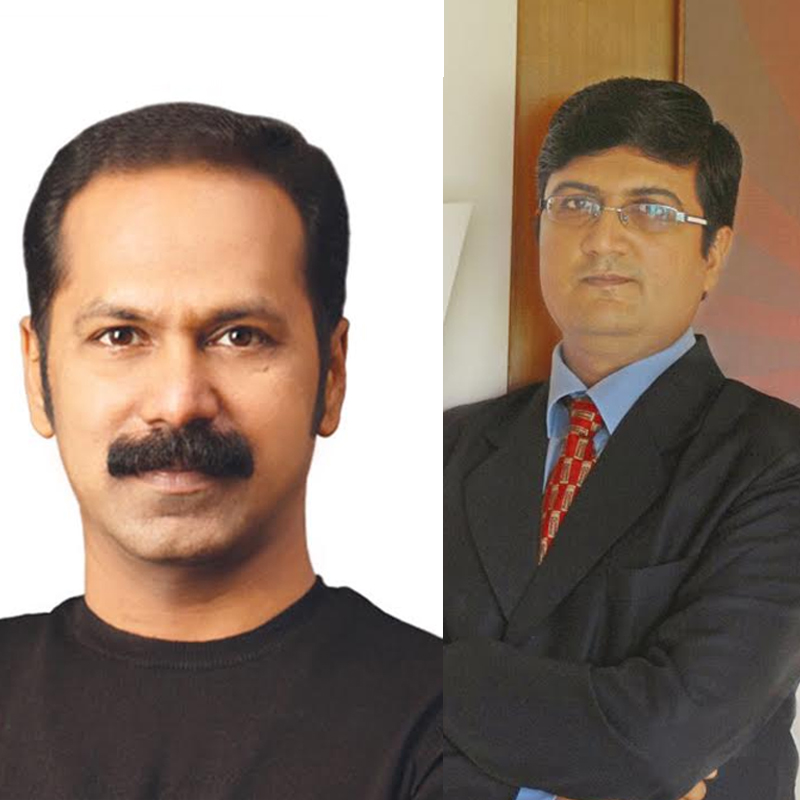
    Thought Blurb CCO and managing partnerVinod Kunj said, “We didn’t have to look far for inspiration for this campaign, because milk-battles are a struggle we’ve all lived through. Playing around with regional flavours allowed us to create films that resonate in every part of the country. They are catchy, they are fun, they celebrate the mischief of the child and sympathise with the parent’s concerns. At the end of the day, Parle Milk Shakti is a win-win for both parents and children, and that’s exactly what our films establish.”

    Keeping the brand message intact, Parle Products has been constantly changing the way it interacts with the consumers, the latest being interacting massively through social media channels. By adapting to changing times and digitalization, Parle has set an example of effective brand-consumer relationship through various campaigns.

  • Parle Products rallies for a cause this Holi with ‘Holi Ke Mazelo’ campaign

    Parle Products rallies for a cause this Holi with ‘Holi Ke Mazelo’ campaign

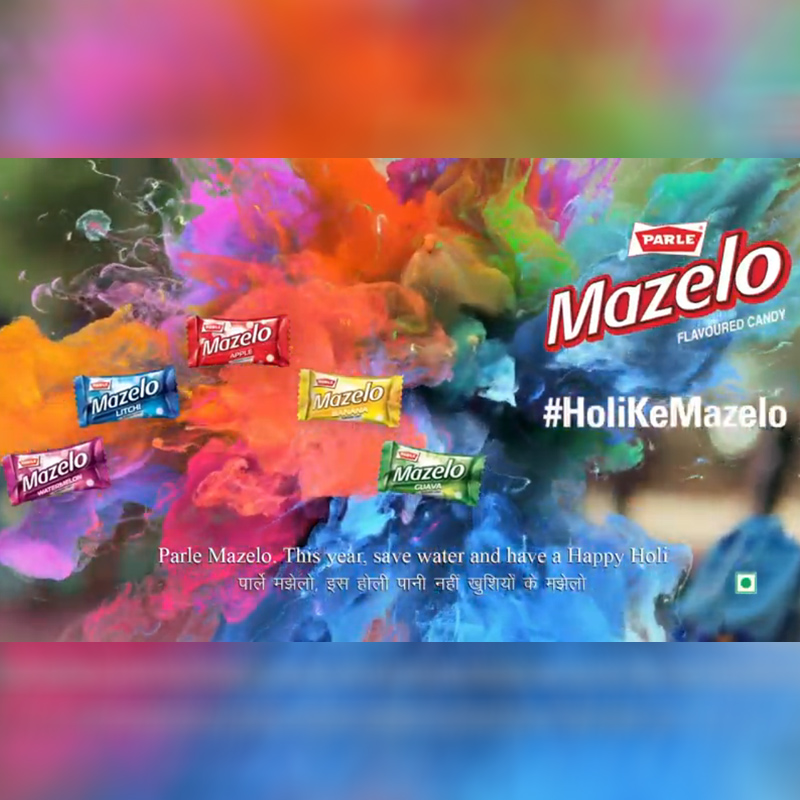
    MUMBAI: Parle Products has launched a new digital film on the occasion of Holi titled ‘Holi Ke Mazelo’. The digital film carries the crucial message of water conservation during the festival and features its popular fruit flavored candy Mazelo. The film aims to sensitise people to the fact that the festival of colours can be celebrated with equal fun and gusto while being environmentally conscious at the same time.

    The film opens on a playful and fun note with two children discussing how they plan to celebrate Holi this year and unfolds to reveal their resolve to conserve water during celebrations due to its scarcity. The digital film carries a message that if children understand the necessity to save water during Holi then why not everyone else. The film closes with the tagline ‘Iss Holi Paani Nahi, Khushiyon Ke Mazelo’.

    Speaking about the campaign, Parle Products senior category head Krishna Rao said, “Holi occupies a special place in each of our hearts. We all cherish such exciting memories of the fun we would have with colours during the festival while growing up. This year, our objective was to stir up the nostalgia that we all have around playing Holi and simultaneously remind everyone that the essence of the festival lies in the fun that’s shared while playing it rather than how it is played. From there, it was only apt to bring Mazelo into the picture, being the popular and colourful and fun filled brand that it is.”

    Director Hardik Patel and producer Trupti Kataria who have both been associated with advertising for 10 years now, were really excited when approached for the Parle Mazelo film. “It’s a great initiative by Parle! We wanted to create a film that not only encourages people to conserve water during Holi but also keeps the spirit of the festival intact. In today’s day, this connect is absolutely necessary and is, ultimately, for the greater good.”

  • Parle Products launches campaign as tribute to Indian armed forces

    Parle Products launches campaign as tribute to Indian armed forces

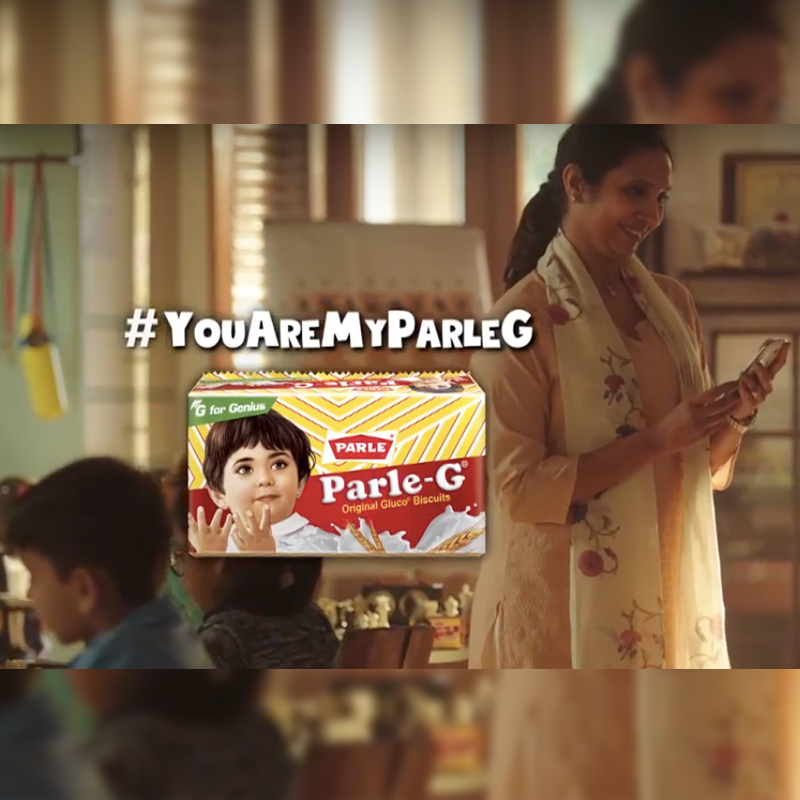
    MUMBAI: Parle Products, India’s leading manufacturer of biscuits and confectionery launched the new campaign #YouAreMyParleG with a digital film depicting the life of an Indian soldier. The film is a tribute to the Indian armed forces on the occasion of Independence Day from Parle G. The film features an emotional story of a soldier and his family and is inspired by consumer response for You are my Parle G TVCs.

    The five series digital films have been inspired by real life incidences shared by consumers. Parle Products have shortlisted these stories from several entries that Parle Products received on its digital platforms when they launched the TVC in May 2018. The consumers will be gratified with these films being made based on best entries received. Each of the digital films will showcase the importance of meaningful relationships that form an integral part of everyone’s life but are seldom acknowledged. Parle – G forms a vital part of the narrative.

    Parle Products Category head Mayank Shah said, “For the longest time, we always positioned Parle G as a staple but our consumers changed this perception. An internal consumer survey revealed that consumers believe that Parle G evokes a sense of happiness and nostalgia that is difficult to explain in words. The phenomenal response that #YouAreMyParleG TVCs received also reinstated our confidence about Parle G’s strong emotional recall. This led to the inception of #YouAreMyParleG digital films”

    “The second leg of the campaign launched around Independence Day recognises the Indian armed forces for their sacrifices for the greater good. It is a humble tribute from Parle Products recognising the importance of its loyal customers and their strong association with Parle G,’’ he added.

    Speaking about the campaign, Thought Blurb managing partner Vinod Kunj said, “Parle G as a brand appeals to every generation and section of our society. Yet each person perceives the brand in their own unique way. Like human relationships, they are not as elementary as love, gratitude, friendship or devotion. They would be reciprocal, layered and multi-faceted in intensity. We may understand these emotions, but we are never fully conscious of them at all times. We focused on the point in a relationship where that realisation dawns. This was the insight with which we initiated the communication.

    The first film will release around Independence Day, followed by the second film towards the end of the month and three films towards next month.

  • Parle’s bid to overthrow Britannia’s Nutrichoice

    Parle’s bid to overthrow Britannia’s Nutrichoice

    MUMBAI: The digestive cookies range in India is dominated by Britannia Nutrichoice range of biscuits. The market is huge and every brand now sees opportunity in the segment due to increased awareness and healthy eating choices of the consumers.

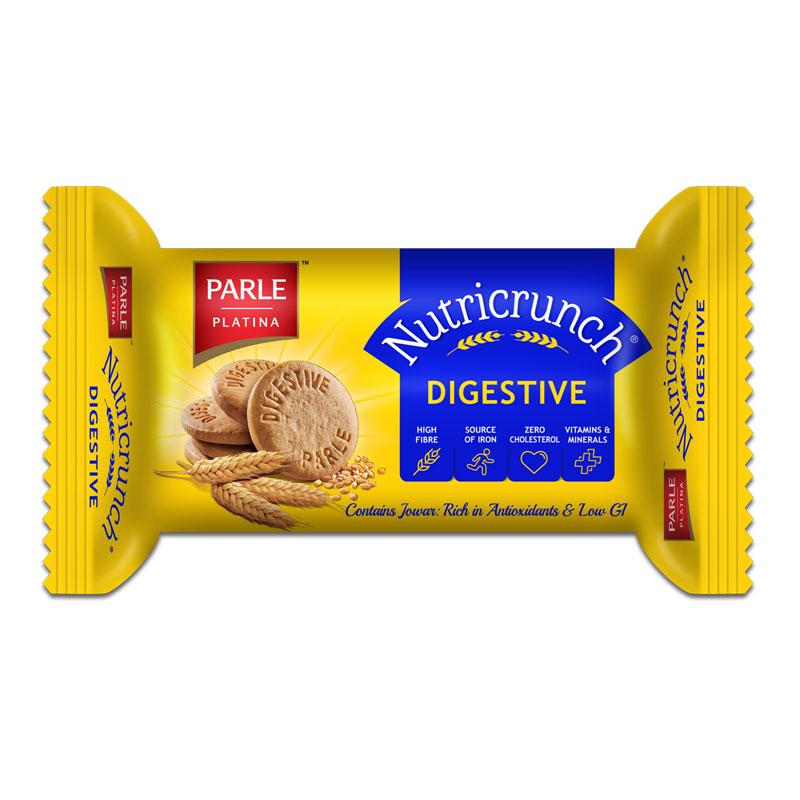
    In a bid to compete and make its mark in this sector, home grown brand Parle Products has launched its own range of digestive biscuits under the umbrella of NutriCrunch. The launch of the healthy range of biscuits  is inspired by the growing demand for healthy snacking options among Indian consumers and will include products like Nutricrunch Digestive, Nutricrunch Honey & Oats, Nutricrunch Digestive Marie and Nutricrunch Lite Cracker.

    This is the second innings for brand Parle in the health category. The company has decide to phase out its older health biscuit offerings that was sold under the Simply Good brand name. While the production of Simply Good has been completely stopped, Parle Products now wants to complete switch and focus on NutriCrunch. The sheer reason for Simply Good not being so “simply good” was due to lack of effort and focus on the product’s marketing as a healthy alternative to regular biscuits and Parle Products does not want to repeat the same again.

    Priced at a sweet spot of Rs 20, the confectionary and biscuit giant wants to capture a sizeable share of 15 per cent in the 1200 crore health segment in India. The company, however, faces stiff completion from Britannia Nutrichoice that occupies a major 70 per cent premium health biscuit category followed by ITC’s Sunfeast range of Famlite biscuits and McVitties Digestive biscuits.

    For Parle Products, it’s important to diversify its portfolio into more premium products as a majority of its revenue – both in value and volume terms – still comes from its mass market brand Parle G. While that segment is growing steadily, premium offerings will bring in better margins and faster growth in future. The Platina division is just a year old but is already growing in the high double-digits.

    Indiantelevision.com spoke to Parle Products category head for biscuits Mayank Shah to understand insights into launching the product, competition with Britannia, scope in the market and much more.  

    Why did you decide on launching health products at this point in time?

    It was the right time for us to enter the market as we see huge potential in this category. Consumers of health category are divided into those who are actively seeking healthier options and those that passively consumer healthy products once in a while to reduce the guilt of leading an unhealthy lifestyle. A primary reason why we didn’t want to get into health segment was because a larger pool of consumers were passive health-conscious but that is increasingly changing. The active health conscious consumers will not consider the price of a product while purchasing a product, whereas passive consumers only tend to buy when there are offers or the products are available at a cheaper price.

    But why did you decide on launching NutriCrunch? What happens to Simply Good then?

    We were already present in the health category but we didn’t really focus on those products and rather focused on our other products. We didn’t really see a huge value in Simply Good products as well. That why our focus was limited. However, we have seen an increasing traction in the health category. Soon after we launched the Platina category last year, health segment was always going to be our next focus.

    What kind of consumer research behind the product launch? You much have had a lot of pressure on getting it right the second time?

    We conducted extensive research this time. We reached out to consumers across India and asked them what kind of product would they like to have. Our research revealed that most consumers were looking at healthier alternatives with low sugar and multigrain biscuits.

    What kind of growth opportunity do you see in the sector?

    The health segment in India is growing in double digits. It is growing at the rate of 15-17 per cent per annum. There is a shift in consumer’s trend where they are actively seeking healthier products. There is a large quantum of consumers that seek healthier options out of guilt and we see a large scope there and want to tap those consumers.

    What is your distribution plan like for the new range of products?

    It’s launched under the Platina range and so will be well distributed across metros and mini metros. We are looking at selling it to more than 1 million towns over the next two-three months.

    What about online sales? Will that also be your focus to get the product out in the market?

    Online and modern trade will be an important channel for us. We will be available across all leading e-commerce platforms.

    Why did you launch this new category under Platina umbrella?

    Simply because Platina is skewed towards modern trade and online channels. Also because it has a natural fit with the distribution channel and the consumers. Platina consumers are relatively evolved and modern who don’t mind spending some extra bucks for a quality product.

    What are your revenue expectation with this product?

    There is a huge potential and scope in this segment. The health segment market is currently valued at Rs 1200 crore and we want to corner a 15 per cent share of it by 2019 (by the end of first year of operation for Nutricrunch).

    Don’t you think it is a super competitive market for you to enter in? There are already established players in the market…

    Yes, it is a super competitive market but it is an extremely growing category as well and there is a scope for more players to participate in it. Its because of the entry of multiple players coming in and more buzz around the category.

    What kind of investment went into the launch of this new product line?

    We cant really reveal the numbers but yes, we did invest heavily into the R&D for these products and getting them right. It took us a year and half to design the product.

    What were your biggest barriers while entering into the category? What sort of challenge do you see in the market?

    Our biggest challenge right now is to make the product available across India at the earliest and have a strong distribution muscle. The biggest challenge initially was supplying the products to retailers due to the recent transport strike. We were all ready and geared up for the launch but had to push it due to the transport strike. Our next challenge will be to ensure that we have enough conversions from passive health product custumers to active consumers. We will have to make consumers relatively price insensitive and ready to pay a fair price for these products.

    When will you launch your campaign to advertise and market these products?

    Once we roll out the products entirely, which should be done by mid September, then we will look at launching the campaign in August.

    Will you look at having a brand ambassador for the category since you also have Twinkle Khanna for Platina?

    No, we are not looking at having a brand ambassador at the moment.

    What will be your marketing strategy for product marketing?

    It will definitely be a 360-degree campaign with an increased focus on digital.

    Lately, a lot of brands are looking at cutting down sugar and salt in the products. Will Parle Products also look at going the same route?

    Our new range of products is a step towards cutting down sugar and salt content in products and we will increasingly look at how we can improve the quality of our existing line of products without changing the taste of quality.

  • Parle 20-20 tickles a funny bone to reward positive thinking

    Parle 20-20 tickles a funny bone to reward positive thinking

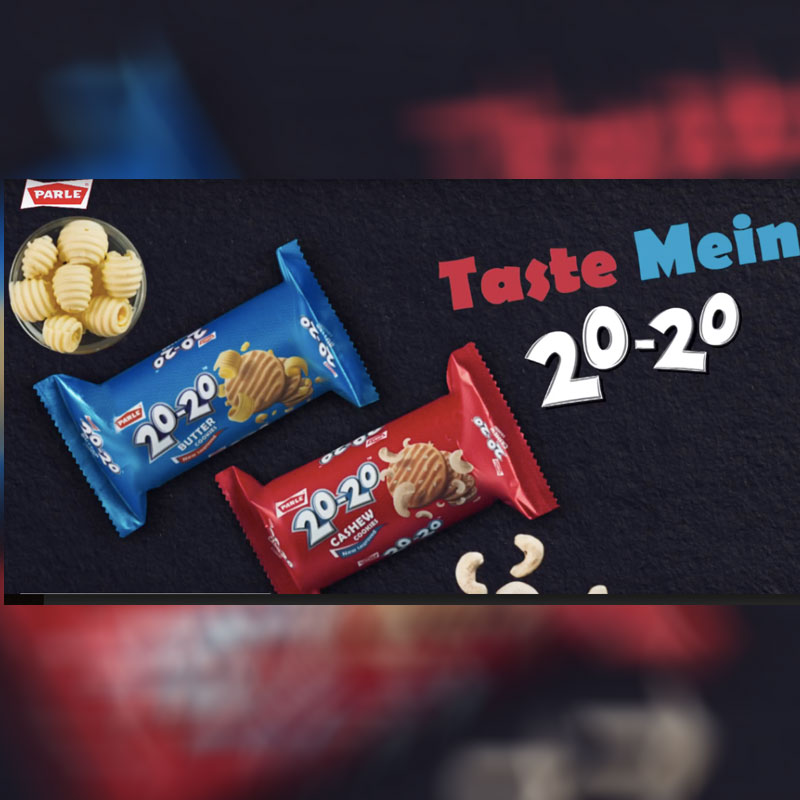
    MUMBAI: Parle Products, India’s favourite FMCG brand has launched a new campaign titled, ‘Taste mein 20 out of 20’ for its leading cookie brand, 20-20. 

    The campaign is an honest effort from Parle to showcase everyday situations that today’s youth encounter while dealing with redundant traditional norms. It metaphorically connects forward-thinking values to 20 -20 cookies by giving full marks to characters that behave positively to unconventional thought process.

    Conceptualised and crafted by Everest Productions, the campaign features five TVCs. All five TVCs display an entertaining event involving social situations affecting young adults – a mother encouraging her daughter to dress as she pleases, a father supporting her teenage daughter to travel with boys, a landlord bonding with a potential tenant from another religion, a modern twist to arranged marriages and a real estate agent supporting a live-in couple looking to rent out a house in the city. Parle’s 20-20 cookie features as an integral part of the narrative applauding each character that has moved ahead with times and is taking baby steps to gradually change orthodox social values.

    Parle Products category head Mayank Shah says, “Parle 20-20 cookies was created by Parle Products for the young adults. This audience is self-aware and is re-inventing social values to make the world a better place. As we celebrate Parle 20-20’s 10 years of existence, we want to appreciate individuals who encounter these young adults and don’t judge them for their choices. We also wanted to build a strong consumer franchise by positioning 20-20 as a brand that supports this new-age thought process which is free of prejudice and extremely inclusive of change.”

    Everest Brand Solutions executive creative director Pramod Sharma adds, “The brief was to create a narrative for today’s youth by keeping Parle 20-20 core values at heart. We have incorporated both these elements with a humorous twist to showcase a progressive society and positioned Parle 20-20 cookies as a reward to those who adapt to positive change easily. We hope the audience like the TVCs and it makes a good impact towards social change.”

    Cookies as a category promises indulgences and delight to consumers, thought to be occasion specific snacking. With a six per cent annual growth, Parle 20-20 cookies has been successful in making consumption of category occasion independent and more frequent. Parle 20-20 cookies are available in cookies cashew, cookies butter and cookies butter-jeera variants. 

    The TVC will be released in 11 languages and will be sustained through a digital campaign.

  • Parle-G’s new campaign celebrates the unsung hero of biscuits

    Parle-G’s new campaign celebrates the unsung hero of biscuits

    MUMBAI: Parle Products, India’s leading manufacturer of biscuits and confectionery, has partnered with Taproot Dentsu, the creative agency from Dentsu Aegis Network India, to launch a series of five films for its flagship brand Parle-G.

    In all its humility and unchanged goodness over the decades, Parle-G has remained the largest selling biscuit brand across the world. However, in the face of constant expansion in the biscuit category, the brand somewhere seems to have become a default, taken for a granted pick, instead of an active, desired choice. Consequently, Taproot Dentsu’s task here was to move Parle-G right up in the emotional consideration set of consumers, thereby reminding them of what Parle-G really is — the unsung hero of biscuits!

    Taproot Dentsu Mumbai executive creative director Pallavi Chakravarti says, “Parle-G is a staple. Quite like our rice and pulses. It is like that one person everyone has in their life who has always been there, albeit on the side-lines. This campaign is a celebration of relationships that we seldom acknowledge but without which life isn’t quite the same. It’s a message that only a brand as iconic as Parle-G can give. Because come to think of it, everyone has eaten one and everyone has a human equivalent, if they just take the time out to think of it.”

    “The idea is based on the human tendency to take the familiar for granted. This campaign uses this tendency to point out how invaluable the familiar in our lives is while making a compelling connection with the brand Parle-G,” adds Taproot Dentsu Mumbai head of strategic planning Shashank Lanjekar.

    Speaking about the campaign, Parle Products category head Mayank Shah mentions, “Over the years, Parle-G was strongly positioned as a staple given that it is associated with health and nutrition. However, a consumer research that we conducted recently revealed that Parle-G has moved beyond being a staple and is now an emotion. Through this campaign, we want to celebrate that emotion and the bond a consumer has with Parle-G by showcasing how there are relations in our life which are never acknowledged but have played a significant role in making us who we are.”