Tag: Parle Products

  • JioCinema welcomes record 18 sponsors for TATA IPL 2024

    JioCinema welcomes record 18 sponsors for TATA IPL 2024

    Mumbai: JioCinema, the official digital streaming partner of TATA IPL 2024, has reported a record number of 18 sponsors and over 250 advertisers for the upcoming season. Notably, this season has not only witnessed advertiser interest for TATA IPL from conventional, digitally-inclined categories like automobiles, mobile handsets, banking, online broking & trading, credit card payment, and construction but also categories that typically invest in traditional mediums such as FMCG, evidencing shift in advertising dynamics in India. Last year, JioCinema booked a record digital ad revenue compared to that of any other live-streamed event previously.  

    JioCinema’s list of digital streaming sponsors for the 2024 TATA IPL season includes Dream11 as a co-presenting sponsor, while Tata Motors, PayZapp by HDFC Bank, SBI, Cred, AMFI, Upstox, Charged by Thums Up, Britannia, Pepsi, Parle products, Google Pixel, Haier, Jindal Steel, Vodafone, Dalmia Cements, Kamla Pasand and Rapido have joined hands as associate sponsors. Additionally, JioCinema is in advanced discussions with multiple other brands and more are expected to join before the first ball is bowled this TATA IPL beginning on 22 March.

    With the online fantasy gaming category leading the charge yet again this season, Dream11, MyTeam11, and My11Circle have put their faith in the power of live sport on digital streaming yet again to engage with the sports fans. In a striking shift, brands from the FMCG sector like Britannia, Parle products, Mars chocolates, Tata Consumer Products, and Havmor Ice Cream – typically known for their reliance on traditional channels, have enthusiastically embraced the digital wave as advertisers.

    Other major brands from the automobile category such as Maruti, Apollo Tyres, Ashok Leyland, and JK tyres are also driving in with JioCinema to maximize mileage on their advertising spend. In the competitive arenas of banking, payments, online trading, and credit card payments, brands like PayZapp by HDFC Bank, SBI, Cred, AMFI, ICICI Mutual Fund, and LIC are strategically placing their investments with JioCinema, leveraging the platform to connect with audiences in real-time.

    This year also marks the resurgence of the premium mobile handset category with upmarket brands like Google Pixel, Apple, Motorola, and Vivo, all poised to dial up their marketing endeavours to unprecedented heights. In the beverage category, the platform has witnessed increased spend this year with Coca-Cola taking the energy drinks category and PepsiCo locking out the cola category.

    The sharp increase in interest for advertising on digital not only stems from increased efforts by JioCinema to remove major barriers to advertising, but also its world-class presentation of the marquee T20 league through a 12-language presentation, including Haryanvi joining the line-up this year. Apart from this, JioCinema will continue offering the league for free to viewers, thus creating a mouth-watering proposition for advertisers to access the length and breadth of the country, especially smaller towns which are now adopting digital as a primary viewing medium.  

    “While last year showed us digital came of age, this season of the TATA IPL is telling us a story that digital is going to be everyone’s primary choice, be it for viewing or advertising. It is beyond doubt that India now prefers watching the TATA IPL on their mobile devices and Connected TV’s and advertisers have skewed their spends towards where the consumers are,” said a Viacom18 spokesperson. “The aggressive innovation that we are bringing to the TATA IPL viewing experience, coupled with the efforts we have invested in removing barriers to advertising on digital and democratising it, promises digital ad spending to only head on an upwards trajectory from here every season.”

    Speaking on the association with JioCinema, Parle Products VP Mayank Shah said, “TATA IPL on JioCinema is a fabulous opportunity for brands like ours to drive unprecedented awareness in India. With a significant shift that’s happening towards digital consumption, and Cricket consistently staying the most engaging content in the country, this partnership will help us take our brands to consumers when they’re most receptive to our message. Our strategy is to delight viewers with our creatives and embed the habit of celebrating their favourite sport with our offerings.”

    Commenting on coming on board with JioCinema, HDFC Bank group head, CMO, head-direct to consumer business Ravi Santhanam said, “HDFC Bank is planning to launch an integrated campaign for its digital payments app, PayZapp in the upcoming IPL season. Cricket is a religion in India with extremely high levels of engagement with customers and JioCinema has played a key role in enhancing the reach of TATA IPL through its platform. PayZapp in its new avatar is a very strong offering in the payments space providing consumers the choice to pay in the way they want, in the place they want, with the type of payment they want and it is backed by the trust & reputation of HDFC Bank. JioCinema offers its viewers multiple choices in the way they want to watch the IPL, be it camera angles, languages, or more and hence we feel it is an ideal match to deliver our brand promise. It does offer huge reach across handheld, web and Connected TV which along with our presence on traditional channels will ensure that we reach the consumers across multiple touchpoints in their TATA IPL followership. Together with JioCinema, we intend to deliver an innovative campaign that not only resonates with fans but also establishes PayZapp by HDFC Bank as the best payments offering in the market.”

    Dalmia Cement (Bharat) Ltd COO Sameer Nagpal added, “We are thrilled to partner with JioCinema as an associate sponsor for the TATA IPL 2024. The TATA IPL is a national phenomenon, uniting millions through their love for the game. This massive platform provides us with a unique opportunity to educate crores of aspiring home owners in India, about the importance of RCF (i.e. roof, column, & foundation) in ensuring that their dream house lasts for generations to come.”

    Sharing thoughts about their partnership with JioCinema, Haier Appliances India president N S Satish said, “We are delighted to return as an associate Sponsor with JioCinema for the TATA IPL in 2024.  The tournament’s unmatched viewership and energetic atmosphere provide an ideal platform to connect with cricket fans across India. We are excited to come back for the second year of our partnership, to tap the power of TATA IPL on Connected TV, a rapidly growing viewing platform. This targeted approach allows us to create a truly engaging brand experience for the fans and further strengthens our commitment to innovation in the Indian market.”

    “As the excitement of TATA IPL electrifies the nation, Britannia is proud to be a part of this exhilarating journey. Our partnership celebrates the shared passion for excellence and enjoyment of all sports lovers,” said Britannia CMO Amit Doshi. “Through this collaboration, we are excited to showcase our latest campaigns, like ‘Hungry For Gold’, reaching audiences far and wide on JioCinema.”

    TATA IPL 2024 will commence on JioCinema with the southern derby as MS Dhoni’s Chennai Super Kings face off with Royal Challengers Bengaluru on 22 March 2024. Viewers will be able to catch the latest season for free in 4K across 12 languages introducing Haryanvi for the first time, multi-cam options including the much-hyped Hero Cam, and many more fan-engagement features including Jeeto Dhan Dhana Dhan.

  • Power of IPL on HD for brands

    Power of IPL on HD for brands

    Mumbai: The record-breaking growth of premium audiences on HD during cricket events drew a massive assembly of advertisers in 2023.

    The measurable growth of HD households and the viewership amassed by HD during major cricket events has given brands a clear choice this IPL. As per BARC, in just three years HD TV households have doubled from 36 million to a massive 71 million, accumulating over 215 million premium audiences. On the back of this growth, IPL 2023 on HD crossed the 100 million mark for the first time ever. HD drove a viewership of 113 million viewers, a spectacular 4X growth compared to IPL 2022. The towering growth was enjoyed by a plethora of brands targeting premium audiences. Both IPL and Cricket World Cup witnessed a massive turnout of brands like Mahindra Auto, Emirates, Visa, Blackberrys, Happilo, Renault, Skoda, Kent, and Spinny among others.      

    IPL on HD witnessed a massive growth in veritably young affluent cohorts:

    IPL 2023 on TV led by HD witnessed a massive influx of young and affluent cohorts as BARC reported a 37 per cent reach growth in Male A Urban viewers, 40 per cent in 15-30 AB Urban and 36 per cent in 15-30 AB 10 Lakh+ Cities. Additionally, the reach growth in English feed audience was an incredible 127 per cent on TV last year. The unmatched and seamless high-definition viewing experience that HD has dominated viewer preference. The scale of collective viewing that HD is a critical factor for premium advertisers and the improvement in key business goals of brands leveraging IPL on HD backs the choice.  

    Brands leveraging IPL and World Cup on HD in 2023 witnessed 4X uplift in business KPIs: Research Studies

    Digital BFSI brand: This brand was promoting a new premium offering and through its HD association with IPL on TV it witnessed a 35 per cent increase in top-of-mind awareness. To put that into perspective, it generated a 4.5X higher uplift compared to other mediums which claim to reach premium audiences. (Source: Hansa Research)

    Premium international brand: During the Cricket World Cup, the brand had launched a new campaign to solidify its position in the Indian market. A YouGov research showcased that the brand witnessed major uplifts across KPIs: ~2X uplift in awareness metrics, 3X uplift in daily active users on it’s app and a massive 4X growth in overall brand metrics compared to other mediums that claim to reach premium audiences. (Source: YouGov)

    Brands custodians on how they leveraged the power of cricket on HD

    Amit Doshi (Britannia) – “The good thing about live sports broadcasts is the multiple feeds that have been created, which are language feeds, HD feeds, and what it allows, brands to do today is to be far more intelligent, far more precise about how we’re using media. We’ve always seen good results.”

    Krishnarao Buddha (Parle Products) – In a recently concluded panel discussion, Buddha stated, “Last year during our association with Star Sports on IPL, while SD feed allowed us to instantly reach a large aggregation of masses, HD feed allowed us to reach a large sum of premium audiences. It became a great vehicle for us to reach the right audience for our premium offering Parle Platina.”  

    IPL on HD has showcased it can amass the largest gathering of affluent audiences in the shortest span, delivering scale with incredible efficiency. With cricket viewership on TV at an all-time high, IPL 2024 presents an unmissable opportunity for brands to drive high consumption among affluent audiences.

  • Parle-G’s latest ‘G Mane Genius’ TV campaign harps on inculcating values in children

    Parle-G’s latest ‘G Mane Genius’ TV campaign harps on inculcating values in children

    Mumbai: Parle Products, one of the leading biscuit brands in India has released its latest TV Campaign for its flagship product – Parle G. This TV Campaign is part of their brand’s G Maane Genius positioning. In 2022, Parle-G revealed an innovative version of its ‘G Maane Genius’ campaign. The proposition was elevated by touching upon the emotional quotient in children. The innate empathy of young children, devoid of personal benefit was the lynchpin of the campaign.

    Riding on the back of that campaign’s success, Parle has come out with a series of bite-sized films with the same messaging. The new set of five films created by Thought Blurb Communications has been carefully created to evoke the same emotion without the luxury of elaborate storytelling. The new 15-second format manages to balance the emotion elicited by the proposition with daily situations with children at home and play. The emphasis is on their interaction with parents, loved ones and friends.

    1. Dadaji:

    2. Musical Chairs:

    3. Puppet Show:

    4. Science Project:

    5. Toy Store:

    The series of films takes simple uncomplicated scenarios to demonstrate a child’s compassion. These are situations that a child may easily find themselves. The intuitive need to help others is encompassed in the signature thought, ‘Genius wohi, jo auron ke khushi mein paye apni khushi’.

    The simplicity of the films is key to the campaign’s effectiveness. These are situations that every child would have faced. The portrayal of sensitivity in the protagonist child is not shown as a moral lesson or a teachable moment. In fact, the protagonists are neither good, nor bad. The statement ‘Genius wohi, jo auron ke khushi mein paye apni khushi’ clearly defines the brand’s definition of a genius, in any child. These are the values that the ads seek to inculcate in children without speaking from a pulpit.

    For the parent in the room, the message is clear. Parle-G stands for a feeling of empathy and sacrifice in children. These attributes are the sublimation of uncorrupted compassion and the need to protect, help and make others happy. The shorter version of the campaign brings a new dimension to the concept of ‘genius’ and makes it an everyday demonstration of emotion in its purest form.

    “The core values expressed in this campaign are quite strong. Young children around the world have an effortless capacity for empathy, which gives them a facility for goodness born out of innocence. We equate this to a higher intelligence relatable to genius,” said Parle marketing – VP Mayank Shah. “We needed to see if the idea had legs to travel through different formats and media.” It was a challenge thrown to the advertising agency which Thought Blurb gladly accepted.

    Thought Blurb Communications founder & CCO Vinod Kunj spoke about his team’s approach to the campaign. “We immediately realized that we needed to throw out all our pre-conceived notions of scripting. The short format gave us little time to establish relationships and situations. The establishing shots would have to portray the conflict and solutions presented simply. Nothing overly convoluted would work.”

    Thought Blurb Communications national creative director Renu Somani explained, “Emotions are not slaves to duration. We rejected the concept of shorter edits of the master films and created fresh masters in the short format. Each story is born from the need for 15-second stories and not pared down versions of the longer ones.”

  • Parle Krackjack launches TV campaign with new sweet and salty avatars

    Parle Krackjack launches TV campaign with new sweet and salty avatars

    Mumbai: Parle Products, the largest selling biscuit brand has released its latest campaign for KrackJack. This latest iteration of the Parle Krackjack campaign adds to the legacy of a brand that has been loved by the nation for over half a century. It carries forward the same set of delightfully whacky ideas to a new generation of Krackjack connoisseurs.

    The three-film campaign created by Thought Blurb Communications tells stories of conundrums that are solved in hilarious ways by the two protagonists, Krack (played by Dharmesh Yelande) and Jack (played by Raghav Juyal). They have different sweet and salty perspectives, that brings alive the idea- “Sweet and Salty saath jab aaye, baat ban jaaye”.

    The over-the-top style of humour follows a legacy that was started in the 90s with Boman Irani and Vijay Patkar playing the titular roles. The torch then passed on to Swapnil Joshi and Gaurav Gera in the noughties, and after a decade, Krackjack has now found renewed vigour with Raghav Juyal and Dharmesh Yelande.

    Parle Products senior category head Mayank Shah has spoken about Krackjack and the direction it has taken over the years, “Krackjack is the first biscuit in India to find that magical spot in the consumer’s palate with a flavour that tickles sweet and salty taste buds. When the flavour is so out-of-the ordinary, how can its communication not be unusual? Over the years, the characters Krack & Jack, have endeared themselves to audiences across the country. Every new generation resonates with these sweet and salty characters. Dharmesh and Raghav are new age celebrities with a wide fan following among the youth. More importantly, we chose them because we felt they have a spontaneity in their repartee, which is key to the brand’s communication.”

    Thought Blurb Communications CCO & founder Vinod Kunj has echoed the sentiment and explained the challenges, “It’s a big challenge to work on a legacy brand like Krackjack with a high decibel legacy communication. When we got the brief we were clear that we have to carry forward the torch to the next generation of audiences across India. Not only do we have to appeal to a wide section of audiences across socio economic segments, we also had to touch their funny bone. Evidenced by the viewer responses we have received, the execution seems to have hit the bull’s eye. The dash of rollicking humour coating the films make them entirely enjoyable.”

    Joining in with her perspective on the creative execution, Thought Blurb national creative director Renu Somani added, “We started off with a product that is sweet but also has salty overtones. That kind of dictated the tone and tenor of the campaign. In one of the brain storming sessions when the strategy team came up with the idea of ‘contrarian views working towards a common goal’ we knew we had our campaign. This in turn finds resonance in the claim – ‘sweet aur salty saath jab aaye, baat ban jaaye’. The fun part was working with the film crew to get Dharmesh and Raghav to work in tandem to translate this strange combination of diametrically opposite views. We wanted the viewers to have fun, and I think that has come out quite well.”

    The campaign is released in 12 languages across mediums.

  • Why regional outreach is the way to go for brands this festive season?

    Why regional outreach is the way to go for brands this festive season?

    Mumbai: Historically, in India, during the three to four months of the festive season that stretches from August, starting with Raksha Bandhan, up until New Year’s eve in December, the marketing and advertising spending see their peak. This year, with the country nearly coming out of the pandemic hangover, the industry is buoyant and all set to launch an advertising blitzkrieg ahead of the celebrations. Brands are not only increasing their spending but are also aiming for deeper penetration and better engagement with their core consumers during this time. And towards this end, they are going beyond the metros to reach tier two and tier three towns to directly speak to them in a language they can relate to.

    Recently, Publicis Groupe-owned Leo Burnett India announced the launch of LB regional—a specialised division to help brands create localised content by understanding region-wise insights. The division that currently focuses on five languages—Tamil, Telugu, Malayalam, Punjabi, and Bengali—will have a team of creatives and writers who are experts in each of them to make content relatable and relevant. According to Leo Burnett India, the strategy and thinking are backed by an in-depth quantitative survey undertaken by the agency, spanning 10 states.

    “There is a growing demand for local, vernacular and Indianized content, which if done right, presents a big opportunity for brands to grow their audiences,” said Leo Burnett South Asia CEO & BBH India chairman Dheeraj Sinha, speaking about the launch of the division. “We have already created local level interventions for some brands and have seen great results in going region-up rather than national-down in our thinking and creation,” he added.

    Opportunities galore in regional markets

    The busy festive season serves as the perfect opportunity to tap into the regional market and cater to the needs of the customers. Speaking to a regional audience around a time that holds value to them helps brands grow their outreach. Digital reach and penetration have opened the doors for brands to reach out to a far bigger audience pool beyond metros. The growing popularity of online shopping in tier two and three towns of India too have made the top players sit up and explore avenues to further expand their consumer base into the country’s interiors, in time for the celebrations.

    Earlier last month, Parle Products launched three TVCs in Bengali to consolidate its position in the Bengal market. The new campaign, according to Parle, is in line with its belief in regional marketing, speaking in the voice of the local populace, using deeply relatable subjects, and in a tone that is immediately understood. Before that, in 2021, Parle launched three ads to celebrate their anniversary, and they were all in Marathi, targeting a specific audience.

    “In a nation as vast as ours, each region has its voice, values, and ideals,” said Parle Products senior category head Mayank Shah, weighing in on this subject. “A generic message addressed to the entire country may not always take root. Speaking to each consumer in his language, in idioms he understands, and in surroundings that he is familiar with, is a far better option.”

    It’s a known fact that a majority of consumer families are inclined to spend more during the festive season than during normal times, making it a no-brainer for brands to be in favour of investing greatly during this time of the year. This year’s festive ad spends are expected to range between 20-30 per cent of total annual spend for most product categories, with FMCG, e-commerce, lifestyle, and home improvement expected to be the top spenders.

    The festive season is the most cluttered time of the year for advertisers, and the need to measure ROI beyond just brand visibility is imperative for overall campaign efficacy, says BBH India VP strategy Radhika Burman. “Hyperlocal campaigns help brands reach out to captive audiences with high purchase intent and leverage these leads to push for conversions at a more affordable cost. Tools like Google My Business, geo-fencing, retargeted SMS/emailers, and push notifications help brands stay ahead of the curve.”

    Influencer marketing is gaining popularity

    Micro-influencer marketing is also changing the rules of brand outreach. “Going into the festive season, brands will try to break the clutter and maximise campaign efficacy by choosing regionally relevant content creators who create vernacular content that is seen as more authentic and credible. Across categories, brands are using platforms like TakaTak and Moj to leverage these micro-creator communities and reach out to younger consumers in a real, relevant and authentic way,” adds Burman.

    Reaching out to the right audience and brand connect remains a challenge for marketers. Often, marketing campaigns miss cultural nuances and appropriately generalised stereotypes of different communities. Region-specific marketing helps break this cycle and enables brands to think up appropriate content for each region.

    With influencer marketing on the rise, it has only helped brands further to be able to reach out to a more local and regional audience, which was not possible through conventional marketing. “This is quite evident from the fact that social media spends have surpassed TV media spends and are only going upwards here on,” opines DIZO digital marketing lead Sugandha Varshney.
    Furthermore, she says, “Brands have also started adopting more targeted campaigns instead of broadcast-to-all and hence it is boiling down to finding out and working upon the behaviours, demographics, and psychographics of the targeted market segment paired with the trends, attitudes, and perceptions of the customers towards the brand and the purchasing patterns of the consumers.”

    She adds that now either they target themselves or tie up with influencers or partner with other distribution networks who have already amassed relevant audiences for them to reach their targeted customers in a more connected fashion.

    Brands adopts hyper-local marketing strategies

    Brands have been actively including the vernacular aspect in a bid to reach out to the right audience set, corroborates Puretech Digital senior vice president-digital marketing, Kamaljit Saini. On the marketing strategies being adopted by brands to go hyper-local, he says, “Especially on connected TV or digital content publication mediums which allow to segment the audience based on consumption pattern and preferences far better than traditional TV approach, brands are consciously being vernacular in disseminating the message.”
    Be it in traditional TV commercials, connected TV ads, or content/commercial messaging on YouTube, Facebook, Instagram, etc., sharing the information in the language the audience understands has given brand adoption a boost. While this has helped in reaching out to audiences beyond the tier one and tier two circles, Saini believes brands can go one step ahead by not just incorporating vernacular adaptations but also being more regional. For instance, he says, simply dubbing the message in a regional language is not enough to create the connection.
    “Considering the overall persona of your audience at large, bringing in the cultural and human aspects is also critical for a much stronger brand connection.” The way personalisation in connecting with the audience is taking shape, in no time we will see information dissemination with a more precise regional and cultural mix, he adds.

    According to White Rivers Media creative director – design Bhushan Kadam, instead of just connecting with audiences pan-India in languages like Hindi or English, brands have started paying attention and money to campaigns that talk to people across areas by creating region-specific vernacular content and campaigns. “Investments in such vernacular campaigns have roughly increased by 20–30 per cent in the past few years.” When advertising for a festival specific to a particular region, regional campaigns pave the way for connections and conversations in a language that the people understand. It is an easy and effective way to build trust and brand recognition in regional or local parts of the country.

    However, Kadam believes the use of smartphones or access to the internet is still a challenge in small towns or rural parts of the country. But one thing that is still a big hit in these areas is television, he says. “Thus, creating TV ads for specific regions instead of just social media content makes sense for brands. It increases visibility by catering through a medium that is accessible there-TV. Advertisers are increasingly customising localised ads for regional markets because if spoken to customers in a language they understand, it’s a hit!”
    As for the ROI from investing in regional marketing so far this year, results are encouraging through the impact of localisation in one’s marketing mix. “We have seen encouraging numbers for early adopters. ROI is a direct function of how competitive the market is. Since the market is still opening up beyond metros, I’m sure brands who are early adopters and consciously taking steps towards localisation, will see greater ROIs than later comers,” says Saini.

    Optiminastic Media’s business development manager Aditya Pandey agrees and says, “ROI is one of the paramount metrics that a marketer relies on. The reason there has been a great shift of ad spending from national-level campaigns to regional says it all. Agencies and brands are working together to create regional content and integrate their brands organically.”

    The kind of outpour from the audience during the recent festivals like Eid and Raksha Bandhan have clearly shown how advertising during this season has increased sales volume and consumer loyalty, he adds.

    Today, 70 per cent of our total population lives in rural areas, with a substantial portion living in tier two, tier three, and tier four cities. They are the audience that makes or breaks a brand. Brands and marketers have understood the strength of regional audiences and how they can change the dynamics of a brand’s products and services.

    Increasing ad spends among brands

    “Brands have increased their marketing spend from 10 to 20 per cent and concentrated on regional audiences. 64 per cent of the rural population has access to connectivity and is spoilt for choice of content and offerings from the brand, says Pandey. According to Google, India will have 745 million internet users, with only 199 million of them speaking English. The rest of the consumer base is a big chunk where brands have shifted to advertise, Pandey adds.

    With the introduction of region-specific advertising, brands are consciously working towards targeting the various stratas of society as well as breaking the ideological and language barriers. Brands have understood the power of local reach and how making them happy would get them maximum reach and engagement. Taking cue, brands are not leaving any stones unturned to rope in regional content creators to engage with their consumers for relatability and promote new and old products alike.

    Ad films, social media posts, region-specific contests, campaigns, etc. are the various means that brands are using to reach out to regional audiences that comprise 70 per cent of India’s population. For instance, this Independence Day, we saw Prajakta Kohli, a social media influencer, in an ‘all Marathi’ reel with a subtle brand integration for Pepsi. “She has millions of followers on her social media handles and her YouTube channel, and that’s the reason Pepsi chose her for their brand,” says Pandey.

    “On the other hand, Diljit Dosanjh may not have been the main face behind Coca-Cola, but if you visit Punjab, you’ll see a lot of shops with his hoardings. And, as expected, the sales of the soft drink brand soared post-this association. That’s the power of regional marketing with the right stars,” he adds.

    Similarly, Parle leveraged the festive season by collaborating with Bombay Sweet Shop to create the special Geniusly Sweet Collection for Raksha Bandhan. Bhopal witnessed the highest sales during this time as they brought in sales worth Rs 20 crores in a week, according to Pandey.

    Marketers expect and anticipate a major uptick in consumer demand this holiday season as the country comes out of the pandemic. Most industry experts agree that with sales targets and industry benchmarks seeing consistent growth, it’s safe to assume that in the upcoming festive season, offline and online sales will exceed the numbers from last year.

  • Parle Products rolls out three new TVCs for Bengali market

    Parle Products rolls out three new TVCs for Bengali market

    Mumbai: Parle Products has launched three new TVC’s for Parle Marie. The product consolidates its position as the soul of adda in its latest campaign for the Bengal market.

    The campaign is built on the Parle Marie brand’s foundations in the Bengal market.

    Designed and executed by Thought Blurb Communications, the three-film campaign addresses a broad demographic of young and old, men and women and are all represented in the films. It spans the width of the populace which has one thing in common. Held by the same social thread that ties and binds all ages & segments of society.

    Long before internet chat rooms were in vogue, the Bengali was devouring conversations, ideas and arguments in the form of ‘adda’. Parle Marie biscuits have always been a part of the tea-and-biscuits tradition that accompanies a good adda session. With the new campaign Parle Marie seeks to cement its relationship further.

    Parle Products senior category head Mayank Shah said, “In a nation as vast as ours, each region has its own voice, values and ideals. A generic message addressed to the entire country may not always take root. Speaking to each consumer in his individual language, in idioms he understands and in surroundings that he is familiar with, is a far better option. The new campaign is in line with Parle’s belief in regional marketing, speaking in the voice of the local population, using subjects that are deeply relatable, and in a tone that is immediately understood.”

    Thought Blurb Communications chief creative office & managing director Vinod Kunj added, “The strategy is as elegant as it is simple. Insert the brand into the social fabric and become part of the consumer’s conversation. Then you can accompany him through his life’s journey with occasional brand reinforcement. Too often, we have to confront the consumer and try to change his preferred brand and habit. But in this case, we are simply building another storey over a home with a strong foundation.”

  • Parle launches digital campaign to show gratitude to fathers

    Parle launches digital campaign to show gratitude to fathers

    Mumbai: Parle Products is nudging upon relationship dynamics with the launch of a digital film to celebrate Father’s Day. Conceptualized by creative agency, Please See, the film showcases 8 people aged between 18 to 30 years old with their fathers, expressing gratitude along with sharing their most cherished memories with their father.

    The social experiment shows children conveying their feelings to their fathers for the first time, which is overwhelming, nervous but also filled with the warmth of a father – child relationship.

    The social experiment film is aimed at urging people to bring forth all that they leave unsaid to their fathers and take the opportunity of father’s day to communicate what they feel.

    Addressing the communication gap between fathers and children, the film captures unscripted conversations between real duos of father and children to display raw emotions, and their heartfelt regard for the complex yet cherished relationship. The campaign focuses on  gratitude and celebrating the  presence of fathers in our life.

    Speaking on the campaign, Parle Products senior head category Krishnarao Buddha said, “In everyday life, we often talk about the love, dedication and sacrifice of mothers, but there is not much conversation around the love and sacrifice of fathers, which is equally dear to a child. Very few talk about fathers who go above and beyond for their children, that too, without being able to fully express themselves. A father is the most important man in a child’s life, yet the relationship dynamic makes children hesitant to communicate their love and appreciation to their fathers as easily as they would do their mothers. There is so much that we want to thank them for, but often don’t.”

    The purpose of this experiment was to give children the opportunity to convey gratitude and share the various occasions that made them proud, inspired, and grateful because of their fathers. By launching this campaign, we hope that our audiences will be able to identify and resonate well with the sentiment and be inspired to tell their fathers the three little words that we all need to say more often – ‘Thank You Dad!’


  • After branded atta, Parle Products now forays into cereal category

    After branded atta, Parle Products now forays into cereal category

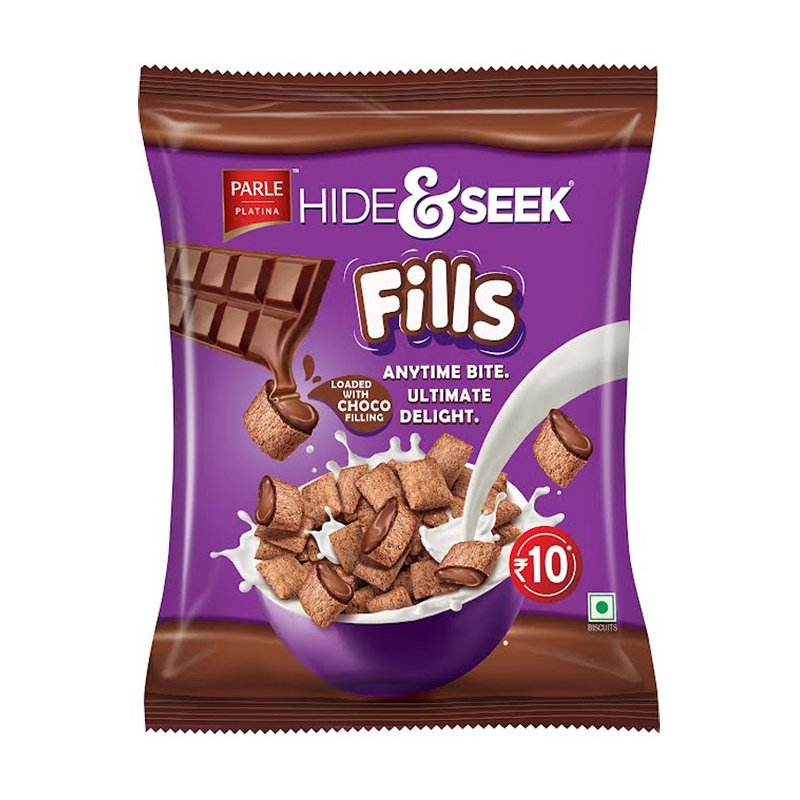
    Mumbai: After making its foray into the branded atta segment, Parle Products which specialises in biscuits, snacks, and confectionery has now announced its entry into the cereals category with the launch of ‘Hide & Seek Fills’.

    The company aims to produce highly nutritious cereals for an energising breakfast and strengthen its product portfolio for consumers in all age groups. The new product will take advantage of opportunities in the kids snacking market by providing 50 per cent premium chocolate filling to satisfy hunger pangs, serve as an immediate breakfast, and provide a quick sumptuous snack.

    According to the company, ‘Hide & Seek Fills’ will continue the rich chocolaty experience established by ‘Hide & Seek’, a kind of Chocolate Chip Cookies, which debuted in 1996. The company’s premium ‘Platina’ range will bring the new mix of healthy and indulgent offerings into the newly launched segment. With the new category introduction, Parle Products will bring innovation to the line of breakfast cereals while providing affordable products to customers without compromising on health or taste. Hide & Seek Fills, offered at Rs. 10 packs across India, is the first step in expanding the cereal category, it said on Thursday.

    Parle Products senior category head Krishnarao Buddha said the company’s deep knowledge of consumer behaviour and patterns has enabled it to meet the consumers where they are today. “Our understanding indicated that a lot of people prefer breakfast cereals as healthy options for themselves and their kids. By extending Parle’s portfolio, our goal is to provide consumers with choices on quick and healthy breakfast. Our entry into the niche breakfast cereal industry will give a fresh perception of the values and character represented by the ‘Parle Products’ name,” he said.

  • Parle Marie sets mood for ‘Adda Baazi’ with Maharashtra-focused TVCs

    Parle Marie sets mood for ‘Adda Baazi’ with Maharashtra-focused TVCs

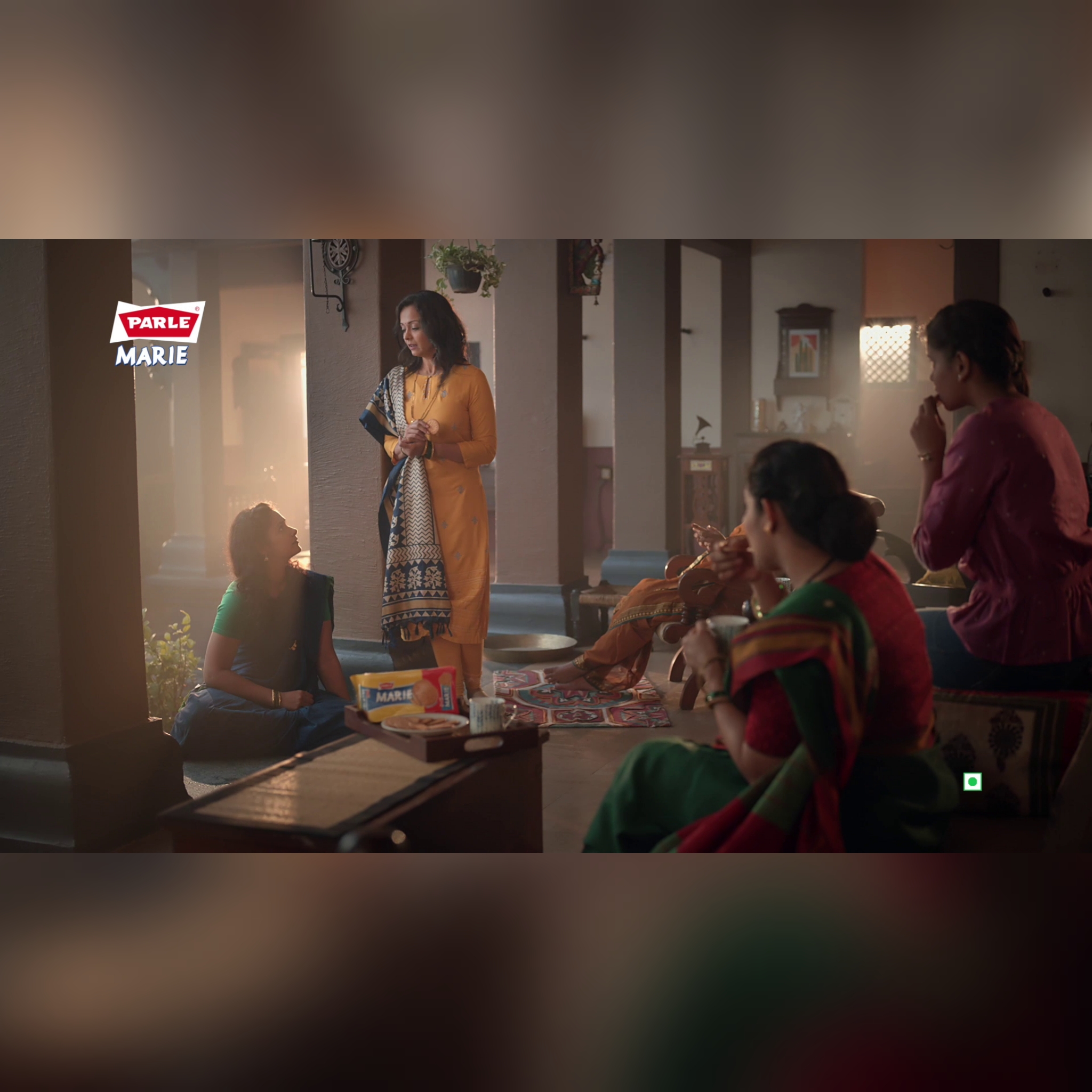
    Mumbai: Parle Products, one of India’s leading biscuits, snacks and confectionery manufacturers, has launched three new TVCs in Maharashtra for Parle Marie biscuit. This new localised campaign is part of the company’s regional marketing strategy designed to drive engagement and build relationships with Parle. 

    “By targeting multiple generations to showcase the true spirit of the local people and their cultures, Parle Products aims to achieve success in different regions with focused campaigns for customers,” the company said in a statement.

    The regional campaign “Jithe Story Thithay Parle Marie” resonates with the quintessential Maharashtrian experiences across generations and evokes the fun and frolic nature of ‘Adda Baazi’ (casual everyday gatherings).

    The ad films are tailored to connect with the culture of Maharashtra, capturing everyday tete-a-tete in close-knit communities.

    The first ad film depicting a mother and daughter bonding moment uses a play on a local Marathi proverb like ‘Gharogharimatichya Chuli’ and introduces a modern take ‘Gharoghari Fashionable Muli’ to bridge the gap between generations. The Matheran-based film showcases the traditional Marathi Powada (poetry) used for a modern-day proposal while the Anniversary film shows a lively discussion amongst women on their dream gift involving Narayanpethi, Nauvari, and Paithani sarees. The films beautifully marry the archetypal Maharashtrian stories to give them a modern twist.

    Speaking about the campaign, Parle Products’ senior category head Mayank Shah said, “Parle Products as a brand has its roots deeply embedded in cities and rural areas alike and as we grow in new regions, we want our communications to be reflective of the people’s traditions, way of life and the local spirit. Every Indian has their own way of jibing, bonding and internal-puns, which is very much coincidental to their way of living and culture. This campaign has been tailored keeping in mind the Maharashtrian way of life nuancing cultural codes and traditions of Maharashtra. This will make consumers relate and bond with the brand.”