Tag: Parle Agro

  • Parle Agro partners Posterscope for Frooti rebranding campaign

    Parle Agro partners Posterscope for Frooti rebranding campaign

    MUMBAI: When Parle Agro decided to introduce a refreshingly new visual identity for its legendary mango drink ‘Frooti’, it vested the responsibility with Posterscope India for its Out-of-Home (OOH) communication.


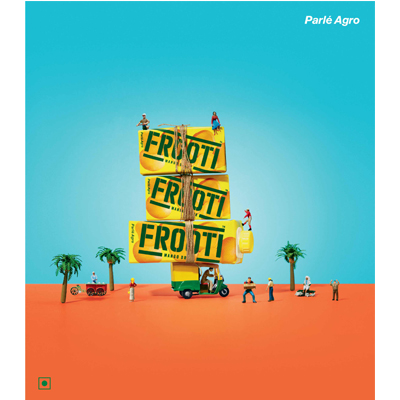
    The new Frooti campaign is designed to be impactful with bold graphics and vibrant colours, wherein the communications focus is entirely on the visuals of the new packs that are depicted to be larger-than-life.


    The task put forth by the Parle Agro team to Posterscope India was to create a buzz about the brand’s new look and leave a lasting impression on the consumer’s mind such that it would support and boost its on-ground visibility.


    Posterscope conceptualised and created an outdoor implementation strategy for Frooti that was nothing less than omnipresent. It delivered month-long visibility to the brand across 100+ markets pan India to address the objective of establishing the product as a leader and as the voice of authority in its category. The campaign was not just high impact, juxtaposed against sustained visibility, but also exhibited high cost efficiency.


    Using its novel research study – Outdoor Consumer Survey (OCS), Posterscope conducted an analysis to target consumers wherein it identified the most relevant touch-points and high footfall locations across market segments. Further, with the help of its proprietary ‘Prism’ suite of tools, Posterscope created a judicious mix of impact, reach, frequency and intrigue by using a combination of large and small format media units.


    Meticulous planning was undertaken for appropriate media selection and media placement at key high traffic locations, arterial roads, congregation points, product consumption locations, hangout places and transit places. While the largeness was provided through billboards, the differentiation was created by the right kind of media mix that encapsulated more than 20 different outdoor media formats including street furniture and transit media. 


    To stand out and create differentiation in the cluttered metro markets, Posterscope created media clusters. For this, a combination of multiple media touch points were rolled-out within close proximity to create ‘The Frooti Life Zone’.


    The challenge for the Posterscope team was to get the campaign live almost simultaneously across a humungous geographical spread of metros, state capitals, tier 1 and tier 2 towns, tourist locations and national highways.


    Additionally, there were multiple creatives manifesting “The Frooti Life” that had to be used prudently to offer visual freshness to the campaign. It required extensive implementation, planning and flawless coordination from the Posterscope teams across regions to achieve this herculean task.


    Parle Agro JMD and CMO Nadia Chauhan said, “We are employing a differentiated marketing strategy with the entire brand revamp and new positioning for Frooti. With our new campaign, we want to make the brand relevant and appealing to consumers across generations and build higher aspirational values around it.”


    Posterscope APAC regional director Haresh Nayak added, “We are glad to be associated with the brand-revamping exercise of Frooti ensuring the creating of high impact visibility with the wide spread outdoor campaign.”


    Consequent to the task undertaken, the result was an extremely visible outdoor media campaign that was delivered seamlessly across 100+ markets and entailing nearly 2000 media units – all implemented in record time. 
  • Parle re-brands Frooti; to launch Rs 70 crore pan-India marketing campaign

    Parle re-brands Frooti; to launch Rs 70 crore pan-India marketing campaign

    MUMBAI: Marking 30 years of Frooti, Parle Agro has given its flagship a brand revamp and has launched a new identity and visual language. The rejuvenated visual identity, including logo design and packaging aims to demonstrate Frooti as bold, fearless and iconic along with establishing its equity amongst a much larger audience to help it acquire a wider consumer base.

    This summer, Parle Agro is completely set for a national launch of the new Frooti packaging designs accompanied with pan-India marketing campaign introducing ‘The Frooti Life’ to all its consumers.

    Frooti has always been way ahead of its time since its inception in 1985. Be it the launch of the first ever Tetra Pak, PET bottles, TCA triangular packs or Bottle Packs, it has always strived to remain relevant to the youth.

    However, considering the huge popularity of Frooti as a kids drink, the only way to break away from the past was to undertake a radical brand makeover. The move is in line with the brand’s vision to make in-roads into new consumer groups especially amongst the 15-30 year old young adults.

    While Frooti has always held a dominant market share in the TetraPak category particularly amongst kids, the launch of fruit drinks in PET bottles in India expanded the target consumer base to teenagers and young adults.

    In today’s time, the acceptance of PET and its growth is one of the fastest in beverage industry and contributes to 50 per cent of the overall Rs 6,000 crore mango drink market.

    Keeping this at the core, the time was right to re-launch Frooti in a bold new look to be able to establish a strong foothold in the PET segment. With this, a new structural design for Frooti PET has been developed to provide better strength, superior grip and a larger label area for branding. The drink’s formulation has also been enhanced by increasing the food pulp so as to provide a more mouthful experience to the consumers.

    The new packaging design, which was rolled-out in mid-January for select SKUs alone has shown a growth of 60 per cent and seen a 80 per cent boost in visibility as of today.

    Speaking on Frooti’s relaunch, Parle Agro JMD and CMO Nadia Chauhan said, “Since the brand has been an integral part of everyone’s growing up years, it was important to shed the traditional Frooti image and give it a bold and contemporary look to make it relatable to the youth of today and tomorrow. It is really encouraging to see markets response to the brands new visual identity, as also evident from its positive sales impact. We are extremely confident of achieving our brand and business objectives through this strategic move.”

    Parle Agro collaborated with design and creative consultancies Pentagram for Frooti’s packaging makeover and Sagmeister & Walsh for Frooti’s summer campaign. The decision to engage with international firms was strategically planned to ensure that the makeover was advanced with a fresh perspective. A new approach towards the brand was crucial to be able to break away from its traditional personality.

    While Pentagram developed the new logotype, label design and PET bottles for Frooti, which is a fusion of modern functionality, mango and Indian culture, Sagmeister & Walsh conceptualized the brand’s summer campaign to introduce the new Frooti packaging in a fresh, bold, and playful manner.

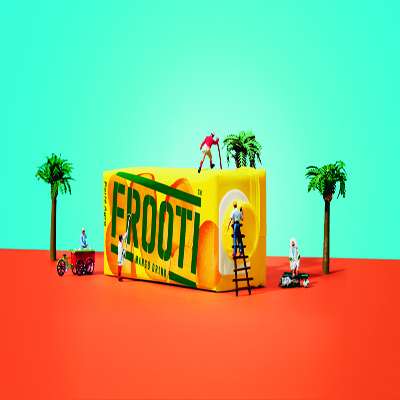
    An integrated marketing communication campaign will deliver the message of ‘The Frooti Life’ where consumers will be exposed to a miniature world where everything from people to plants are small in size. The only thing that is in real life scale is Frooti and the mango to position it as the crux of the campaign.

    Spends to the tune of Rs 70 crore have been invested across a strategic mix of media vehicles that appeal to teenagers and young adults. Television will play the role of the lead medium for the campaign, where the TVC featuring Shah Rukh Khan, shot in stop motion style animation will offer a delightful visual experience. Amit Trivedi and Amitabh Bhattacharya have added a strong musical element to the TVC. The TVC can be viewed at:

    It will be followed by an aggressive focus on digital brand building wherein the medium will be leveraged to maximize TVC views and lead visitors to Frooti’s new microsite. The microsite will showcase delicious Frooti recipes, dynamic games and much more. Frooti is also building its presence on Instagram and has launched its handle @TheFrootiLife.

    The campaign will also be supported in full thrust by print, outdoor and cinema ads. Additionally, large spend will be dedicated to on-ground visibility through strategic In-shop branding, shop boards and other semi temporary point of sale material. Association with events and prominent properties will also be an important facet in Frooti’s brand building endeavours.

    Being the market leader in mango drinks category, it was important that Frooti breaks through the clutter and conventional category codes with a packaging redesign and a 360 degree marketing approach to ensure maximum brand visibility and reach in newer markets and consumer segments. With this move, Frooti is determined to get a 50 per cent growth in sales and reinforce its leadership position in the market.

  • Shocked by the retrograde budget proposal, says Indian Beverage Association

    Shocked by the retrograde budget proposal, says Indian Beverage Association

    MUMBAI: Taking a cue from Health Minister Dr Harsh Vardhan, who has been pushing for higher tax on tobacco products, the Finance Minister Arun Jaitley took a step further from not only increasing excise duty on tobacco, but targeted the aerated drinks as well.


    With an eye oncreating a healthier India, the FM has taxed aerated drinks containing sugar, while exempting fruit juices and other aerated drinks like soda.


    “I also propose to levy an additional excise duty at 5 per cent on aerated waters containing added sugar. These are healthy measures and I hope everyone would welcome them from the point of view of human and fiscal health,” Jaitley said in his speech.


    However, the move hasn’t gone down well with the industry.


    On the hike,  an Indian Beverage Association (IBA) spokesperson says, “We are extremely shocked by the retrograde budget proposal of a 5 per cent hike in excise duty on aerated drinks with added sugar.”


    The players point out that the soft drinks industry is already one of the highest taxed categories in the country. The combined impact of CENVAT and state VAT rates reaches 34 per cent in eight states in the country. “Coming on top of the current 12 per cent rate, the additional 5 per cent duty increase will be tantamount to a 40 per cent increase in the central excise duty which would hit the industry hard and cause a major slowdown at a time when demand growth for the industry has been sluggish,” elaborates the spokesperson.  


    The IBA rebuts the increase by saying that the carbonated soft drinks (CSD)  industry is a key segment of the food processing sector in India. It is a significant user of agri products and, with its high labour intensity, contributes significantly to agricultural growth and employment. With a ratio of direct to indirect employment of 1:4, similar to that of the software industry, the industry’s developmental impact is not adequately appreciated. Currently, it employs over 300,000 people, and if there is a conducive environment for growth the industry has the potential to grow at double digit rates and can contribute more than a million additional jobs over the next decade.  


    “It must also be understood that in a country where options of safe, convenient and hygienic beverages are rather limited, CSDs play a very important role in meeting the hydration needs of people. With this hike in excise duty, the industry will have no option but to increase the price of its products. An increase in price will also fuel the growth of beverage options from the spurious and unorganised sector which, on the one hand, pose significant risk to public health and on the other, will take away tax revenue from the government,” adds the spokesperson.


    Parle Agro CMO and JMD Nadia Chauhan says, “In the wake of current hike, we will be evaluating our cost efficiencies for Cafe Cuba, whilst closely observing the change in dynamics of the CSD market. Our immediate focus is to work out a strategic approach that works best in serving consumer interest as well as maintaining the organisation’s operational cost. Whether we will be adjusting our price points, reworking volumes or fine-tuning marketing expenses is a key decision that will be taken basis analysis of all the key factors that determine our pricing strategy.”


    As per a report by Euromonitor International, soft drinks off-trade value sales continued to record further growth in 2013 in India. The year also recorded many new launches in flavours across categories including juices, powder concentrates, and carbonates. Leading companies such as Coca-Cola India and PepsiCo India introduced various new flavours across the year. Smaller domestic companies including Hector Beverages and Pioma Industries also followed the suit.


    The IBA has urged the government to reverse this hike as it will retard the progress of an industry which can have a significant positive impact on India’s development, particularly in the changed governance scenario in the country.

  • Parle Agro introduces revolutionary ‘bottle pack’

    Parle Agro introduces revolutionary ‘bottle pack’

    MUMBAI: Parle Agro, a pioneer in the Indian beverage industry is associated with many firsts that have changed the dynamics of the industry. Known for innovative packaging formats, Parle Agro is all set to raise the bar higher with the launch of its Frooti and Appy beverages in unique Tetra Brik Aseptic 250ml Edge paper-based cartons. Aptly called bottle packs, the cartons offer a perfect blend of the functionality of a bottle and the benefits of carton packaging. This differentiated SKU will revolutionise the way Frooti and Appy are consumed in India.

    Joining hands with Tetra Pak, the world leader in food processing and packaging solutions, Parle Agro will be setting new standards globally. The company‘s vision in creating the 250ml ‘bottle pack‘ is to complete its Tetra Pak packaging portfolio so as to provide wholesome beverage offerings at various price points to customers. The bottle pack‘s superior ‘gulp-from‘ or ‘pour-from‘ experience along with a fully re-sealable screwcap makes for a refreshing, hassle-free and convenient consumer option.

    Commenting on the launch, Parle Agro joint MD and CMO Nadia Chauhan, said, “We take immense pride in being trendsetters in the beverage industry in India. Today, being the first ones to introduce Frooti and Appy in 250ml bottle packs in the entire world will further strengthen our Tetra Pak leadership in the category.”

    Tetra Pak south Asia markets MD Kandarp Singh said, “The introduction of the Tetra Brik Aseptic 250ml Edge cartons (bottle pack) in the country marks the growing need for innovative packaging solutions that offer convenience and a superior drinking experience. We are proud to build on our partnership with Parle Agro and are certain that the new packaging format will help strengthen the positioning of their brands.”

    Parle Agro has been one of the largest customers for Tetra Pak in India since the world leader introduced paper-based aseptic carton packaging in the country and enjoys a market share of 66 per cent in the Still Drinks category in Tetra Pak packaging. Pioneering in the introduction of new packaging formats in the market, Parle Agro had in 2004 adopted the Tetra Classic Aseptic carton for its Frooti brand.

    The 250 ml Frooti and Appy ‘bottle packs‘ are primarily targeted towards on-the-go drinkers. The new pack is priced at Rs 15 and will be launched in Delhi, Haryana, Punjab, Rajasthan and Jammu & Kashmir. It will soon be made available pan-India. Consumers will now have the comfort to choose from various paper-based Tetra Pak packaging options at price points such as Rs 5, Rs 10, Rs 12 to Rs 15.

  • Creativeland Asia only Indian entry shortlisted in Creative Effectiveness Lions

    MUMBAI: Creativeland Asia Mumbai is the only creative agency that has got its entry shortlisted in the Creative Effectiveness category of Cannes Lions 2012.

    The agency has been shortlisted for its work done for Parle Agro’s Hippo Baked Munchies, titled Plan-T.

    Hippo Baked Munchies was launched by Parle Agro in the Indian Snacks Market in January 2009, and was followed by a communication launch in January 2010.

    According to the brief, Hippo’s unconventional packaging and universal philosophy of ‘Fight Hunger, Fight Evil’ made it a runaway success. Hippo’s growth hit a roadblock when consumers’ demand for it far exceeded the supply of the brand as consumers were being greeted by empty shelves in 400,000 retail stores, across India. This overwhelmed the nascent sales and distribution team as they found it challenging to track and replenish stocks quickly.

    The company needed an alternative inventory tracking system that was quick and cost-effective and found the answer in the platform of Twitter and invented ‘Plan-T’.

    Through Hippo’s twitter account, Creativeland Asia Mumbai made him interact with his followers, urging them to tweet to him in case they found empty racks in stores. A core cell was set up to monitor, analyse and pass on information collected from the tweets to local distributors in respective areas, who then replenished the stocks in 24 hours. In a country dominated by traditional media, connecting with Hippo’s supporters through Twitter made the impact.

    Plan-T drove consumers to report empty shelves on-the-go, across 400,000 stores, in about 53 cities and towns across 18 Indian states, all this within a span of six months. Plan-T, along with the existing sales and distribution team, helped Hippo post a 76 per cent increase in sales within six months.

  • ‘2009 was our defining year’ : OMD India managing director Jasmin Sohrabji

    ‘2009 was our defining year’ : OMD India managing director Jasmin Sohrabji

    It was in 2007, when global marketing communications holding company, Omnicom, entered India with its media planning and buying network OMD.


    Jasmin Sohrabji, a double post-graduate in Economics and Business Management who had spent 16 years with MediaCom, was taken on board as managing director and the agency went on to make a fortunate start with clients like Ambuja, Parle Agro and J&J in its kitty.


    2009 was almost a defining year for OMD as it took up quite a few biggies under its banner, expanded footprints to Delhi and Chennai and set up new offerings in analytics and digital.


    And now it’s kicked off 2010 on a high note too. It has bagged businesses like Sony Network, Ferrero and Reliance.


    In an interview with Indiantelevision.com’s Anindita Sarkar, OMD India managing director Jasmin Sohrabji speaks about her company’s growth plans at large.

    Excerpts:

    In comparison to the other agencies, OMD is still a new player in the Indian market. Has it been a tough journey so far?


    OMD launched in India in early 2007, and the experience has been exciting, challenging and gratifying ever since! We kicked off with a very sound base (Ambuja, Parle Agro and J&J) and have built consistently and successfully since. 2009 was OMD India’s defining year where we established ourselves as a strong, top player at a national level.

    Being a new entrant, was facing up with the slowdown heat in the Indian market more challenging to gain clients?


    We were very fortunate to have our best year in 2009. We had a record number of wins (HP, Henkel, VISA, Danone, Nissan, etc); we set up two new offices (Delhi, Chennai); we launched our Analytics and Digital offer and we closed the year with global awards and recognition.

    Can you revisit the time when you started off in the Indian market and the transitions that you witnessed through time?


    Gosh, I have spent two decades in this industry and witnessed too many changes and transitions! One of the most striking of all has been in the area of availability of research and access to data; technology…both in the medium itself as well as in accessing and interacting with media and consumers; the other noteworthy change has been the shift in the role and definition of what media agencies provided as a service…we moved from a very simple ‘planners and ops executives’ managing client budgets to a much evolved, technologically sophisticated and consumer-centric thinking and creative solutions.

    What has remained consistent through the decades is ‘never having enough talent’!

    How has the first half of the year fared for the OMD in terms of revenues and clientele?


    Very well. We kicked off 2010 with the Sony Network win, and followed up with Unilever’s digital biz. More recently we won Ferrero and Reliance, among others. We hope to maintain the growth momentum we have been experiencing through the remainder of 2010.

    Has it been better than last year?


    Given the operation is just over three years old, the growth over last year has been extremely high.

    How is dealing with the Indian clients different from the others globally?


    Clients differ depending on their needs and experiences with agencies; they differ in the level of interaction and involvement with their agency partners, and on many such and other parameters. However, I really do not have a strong point of view of difference between Indian and global clients. Among our global clients, we have some who operate largely within the local environment and strategic needs; and there are those who are very much aligned to global strategies and/or processes. In fact, we recently won an award (The Internationalist, UK) for best local execution of an international campaign…so it really does not matter how different the client style is, what’s important is whether the teams at OMD India have a keen appreciation for individual working styles and are able to deliver standout strategies and solutions to the briefs we are given.

    We moved from a very simple ‘planners and ops executives’ managing client budgets to a much evolved, technologically sophisticated and consumer-centric thinking and creative solutions. What has remained consistent through the decades is never having enough talent!

    How are your other divisions of OMD faring?


    Our most successful offer outside traditional is digital. In addition to existing full service clients, we added digital only clients (Unilever, ICICI, HCL, etc). Additionally, we set up Analytics, which has now started gaining momentum. We have two new offerings starting up later this year.

    CPRP is often the final clincher for a pitch and the sole aim for all to target and deliver. Do you see any new change in this methodology?


    Not sure why we are focusing on a change in methodology…we should be looking at value adding to the metric with more engaging qualifiers. If the job of the metric is to compare cost to cost, CPRP does its job. If we are looking to add new dimensions of effectiveness to the cost of contact, then let us evaluate other metric options, not just methodology.

    While above 50 per cent of investments for brand building is made towards above-the-line activities, advertisers are also making investments in below-the-line activities. How do you perceive this medium?


    Below the line activities have always been a relevant part of the recommended mix. The issues around these activities were largely to do with measurement and scalability. What began as ad-hoc and experimental, has now become a critical piece in the communication mix. One is, and will continue to see a lot more action in this space. The biggest advantage of BTL activation is it allows for flexibility and does not have to be templated. The scale, the message, the execution can be customised to the budget, the market and the core TG!

    Which advertising platform is expected to show the maximum growth?


    While digital and radio have the potential to scale up on their currently smaller bases, TV itself will offer newer platforms of addressability and technology through DTH, etc. Radio has never really seen its potential in this market, while digital has already made small dents in traditional media budgets! TV continues to hold out in its traditional avatar…and keeps re-inventing its offer – through content, scale and technology/addressability.