Tag: Paritosh Joshi

  • BARC begins nationwide roadshow with Bengaluru

    BARC begins nationwide roadshow with Bengaluru

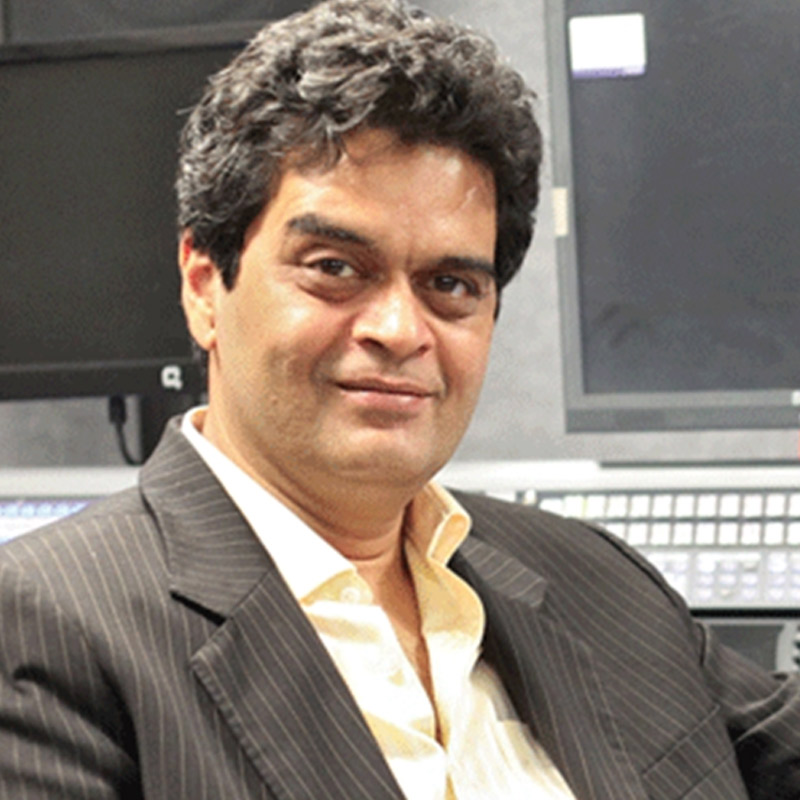
    BENGALURU: In what was the first of four to five open houses that BARC intends to hold in India, the apex body shared details about the way forward at Bengaluru last week. Principal Provocateur/Advisor Paritosh Joshi, who represents the broadcasters interests in the 12 member technical committee on BARC spoke at length about the council’s plans on the new audience measurement system. In attendance were about 100 professionals from the broadcast and ad ecosystem, and BARC CEO Partho Dasgupta and VP Mubin Khan.


    Some of the points that were clarified at the Bengaluru Open House include:


    For what is said to be the largest tender ever floated for audience measurement anywhere in the world, BARC has received expressions of interest from significantly big technology companies that wish to be a part of the tender. The tender terms state that each vendor would have to work with whomsoever BARC wants it to work with. “Since multiple vendors are likely to be involved, system integration was crucial and there was a possibility of a blame game when something didn’t work out,” Joshi said, explaining why BARC will play a pivotal role.


    Of the 32 expressions of interest, 27 companies from across the world had been asked to submit proposals. Because of the huge diversity of devices on which television style content could be consumed, TV content was now more and more agnostic to screen as well as time. Consumption of TV and television type content was not only being space-shifted, but also time-shifted. BARC has made it clear in its RFPs’ that it wanted a screen and technology agnostic measurement.


    BARC expects to complete the awarding of contracts by end September or early October and the new ratings system could be out by the summer of 2014.


    Value added reselling of data is another possibility for the future. As much of the process that can be automated will be automated – simply because BARC wants to minimise human intervention.


    The ratings body has not yet fixed periodicity of dispensing data because it would vary within the structure of the sample. Joshi explained, “Based on the current situation and sample size, probably getting weekly data is all that could be possible initially. This is not an emotive issue of weekly, fortnightly or quarterly reporting, BARC would look at the data and decide. It must be remembered that the higher the frequency that one seeks, the larger the sample size must become to be able to find statistically significant sized audiences. BARC recognises that there are some channels that we cannot report on a weekly basis, and so these channels could be reported quarterly, BARC will give unduplicated quarterly reach since there is no other number available for these channels.”


    Explaining how BARC picked up the establishment study size, Joshi said, “The most critical element of an audience measurement system is defining the establishment and the way people and the type of people (the consumer classification) who consume television. The establishment study which is already in the field will help BARC to prioritise and enable it to determine the segments of the population that are important and cannot be missed. To pick up a sampling size of 2.4 lakh for the establishment study, BARC used the census of India and electoral rolls, since there was no other database available, maybe in the future Aadhar could be used to provide a sampling frame. The establishment study will essentially run continuously, BARC will be able to re-estimate the underlying universe with far higher frequency than has probably been done until now.”


    “One of the big things that BARC is working with the RFPs is that it is defining what the relative error is, what the confidence is. Today the stakeholders are not aware about what the relative errors or the confidence of the numbers are. They are working with the numbers as if they were the absolute truth, which they aren’t. BARC will define the statistical boundaries within which the numbers are to be interpreted. Numbers that don’t fall within those bounds will not be reported,” said Joshi.


    Clarifying the role of the technical committee, Joshi said, “Besides evaluation of the proposals for the new audience measurement system, the BARC technical committee will carry out due-diligence exercises on a regular basis once data starts flowing. Since audience measurement research is not stationary, it is evolving continuously, the technical committee will drive the evolution.”


    “The technical committee is autonomous of the BARC board. The BARC board cannot decide what the technical committee does. The technical committee decides what the research needs. For the board to override a decision that the TechCom has made requires it to have a 75 per cent majority. 60 per cent of the voting share at BARC is with the broadcasters and 20 per cent each with the advertisers and the agencies,” explained Joshi further.


    Throwing light on what the BARC was not, Joshi said, “People somehow feel that BARC will replace TAM. That now you have TAM and later you’ll have BARC. TAM Media is a for-profits research venture. In the current scheme of things it is a vendor owned vendor managed system. We don’t know much about establishment study that they do, they do issue a summary every year, but they don’t tell you the details of the study. BARC is not a research company and it will never be a research company. It is a joint industry body that will be designing, commissioning, supervising and owning India’s broadcast audience research. That does not mean that it will be conducting that research itself. BARC commissions research which means that somebody else will actually conduct it. Therefore BARC is not a replacement of TAM. TAM could be potentially a vendor to BARC as could be a whole series of other kinds of companies and various other sorts of entities.”


    Sharing details about the new systems that were in place globally, Joshi said, “In the UK and some European countries, Canada and US, in Japan inventory is being sold on the basis of VOSDAL+7 (Viewed on Same Day as Live) – seven days of audience data are cumulated to actually determine the ratings for a show and this will grow as currency in other parts of the world. So you’re not only measuring the primary TV consumption, but also in all other forms. BARC may not be able to measure it at the start, but it should be able to do so in a year and a half from now.”
  • TRAI seeks to define TV ratings guidelines

    TRAI seeks to define TV ratings guidelines

     NEW DELHI: Even as the government-mandated Broadcast Audience Research Council (BARC) has been working on getting its act together, the Telecom Regulatory Authority of India (TRAI) today expressed the need for urgency in finalising its regulations for TV ratings agency accreditation. In an Open House today on its consultation paper on “Guidelines/Accreditation Mechanism for Television Rating Agencies in India,” TRAI officials indicated that the system of rating agencies could be streamlined only through proper guidelines mandated by it.


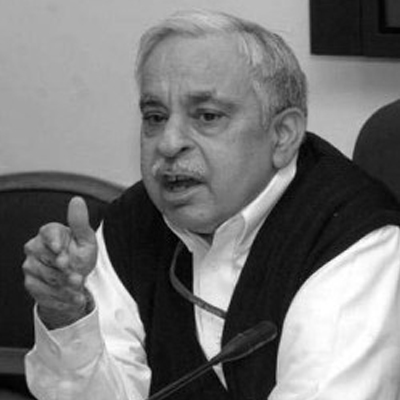
    TRAI chairman Rahul Khullar, Principal Advisor (Broadcasting and Media), and other officials were present at the open house attended by about 30 stakeholders, including News Broadcasters’ Association head K.V.L, Narayan Rao, BARC CEO Partho Dasgupta, Paritosh Joshi, Indian Broadcasting Foundation (IBF) secretary general Shailesh Shah, among others.


    The stakeholders were generally in favour of a self-regulated mechanism through BARC which has committed to roll out TV ratings by Q2 2014.


    Most of the attendees agreed that TAM had failed in its task and any agency that takes over this work should be able to give a more rational coverage of viewership.


    Khullar at the meeting candidly said that even if BARC is progressing, he had been mandated by the ministry of information & broadcasting to start the consultative process on TV ratings which he was doing. He also said it was not clear who would be the regulating agency for the TV rating process in India: TRAI, I&B minsitry, or industry itself.


    Some participants of the Open House however expressed their fears that it is quite likely that TRAI will end up being the regulatory agency for the same.


    In an effort to put an end to controversies generated by TRPs, TRAI had on 17 April issued a paper to deal with issues such as establishing an accreditation mechanism for TV rating agencies and methodology of audience measurement to ensure transparency and accountability in the rating system.


    The consultation paper on “Guidelines/Accreditation Mechanism for Television Rating Agencies in India” also seeks to get the views of stakeholders on sample size; secrecy of sample homes; cross holding between rating agencies and their users; complaint redressal; sale and use of ratings; disclosure and reporting requirement; competition in rating services; and audit.


    The consultation paper has been issued at the behest of the I&B ministry, which had earlier received a report from the Amit Mitra Committee on the subject. IBF has since been working to set up BARC as an alternative to TAM.


    TRAI officials said incorrect ratings will lead to production of content which may not be really popular while good content and programmes may be left out. Therefore, there is a need to have an accurate measurement and representative television ratings for programmes.

  • Television Audience Measurement: What next?

    Television Audience Measurement: What next?

    Yesterday, BARC took a decisive step forward. Punit Goenka in his role as Chairman, BARC announced the issuance of a Request for Information or RFI from entities worldwide who might be interested in participating in the forthcoming Request for Proposal stage.

    While the television rating system in India has shown great durability and adaptiveness, the pace of growth and change in the television landscape has consistently outstripped it. BARC is premised on finding and adopting best-in-class tools, technologies and processes that will not just close the gap, but create a constantly evolving and, thus, future ready audience measurement infrastructure.

    Here are the challenges that the new system will be expected to meet and overcome.

    1. Comprehensiveness: Television reaches very nearly two-thirds of all households in India. As economic development continues apace and more people have discretionary income, entertainment and information start assuming increasing prominence in their scheme of things. A cable-connected television is, and will remain, the least expensive single-point source of meeting this need, and new consumers waste little time in acquiring it.

    The household is now exposed to content but also to advertising that becomes a potent driver of new demand for a range of previously unknown products and services. Over the last decade, almost 10 million new households have entered the television footprint every year and the number doesn’t appear to be slowing down yet. A comprehensive measurement system must be able to recognise these burgeoning television households and keep them in the sights of broadcasters, advertisers and advertising agencies.

    2. Accuracy: There has been talk over the years of making broadcasters more accountable for audience deliveries. A number of deals are done on the basis of cost-per-rating-point (CPRP) but broadcasters have, rightly, complained that fair valuation of their inventory would have to be based on cost-per-thousand (CPT) or, as the print media call it, the mille rate. The current system falls some ways short of being able to facilitate the change from CPRP to CPT. Marketeers and broadcasters are looking forward to a system where actual audience deliveries in a defined target audience can be accurately quantified so that accountability for audiences can be fixed and reciprocally paid for.

    3. Adaptiveness: We still talk of single television homes as being the dominant model in India. Apparently, we are oblivious of the emergence of second and third screens that are being used by the younger demographic for consuming what was previously available exclusively on the television in the family room. The emergence of the smartphone and more recently of new devices like tablets (or even more recently, the rather inelegantly named ‘phablets’) has placed new content consumption devices in the hands of millions of young consumers. Content is now available to be consumed not just at a location but while on the move. Just like cellular telephony transformed communication from locational to personal, these screens and a constantly improving wireless broadband infrastructure are transforming television. The imminent arrival of 4G and crashing tablet prices will place highly mobile content consumption devices in millions of hands. The audience measurement system must be able to capture such mobile content consumption and stay adaptive with every future transformation of the television environment.

    4. Auditability: Being owned and managed by BARC, a joint industry body (or JIB in the pro parlance), stakeholders will have audit rights over the system that can ask searching questions about every aspect of the process, thus ensuring its integrity and ethical standards. All the key stakeholders are represented within BARC and this will ensure that the system remains always true, fair and transparent.

    These are not challenges unique to India but are faced universally by every television audience measurement system. Responses to the RFI will unearth a great body of valuable knowledge that the BARC can use to start building a gold standard system in India.

    It is good to finally say this: BARC has BITE.

  • Paritosh Joshi joins India TV as strategist

    MUMBAI: News broadcaster India TV has appointed Paritosh Joshi as strategist and will be responsible for its revenue and business development.

    Joshi‘s earlier stint was as CEO of Star CJ Network India, a joint venture between Star Group and CJ O Shopping of South Korea. He resigned from the post in April 2012.

    In his new role, Joshi will be primarily responsible for optimising and leading the revenue function of India TV‘s existing businesses. He will also look at the company‘s business development for future ventures.

    Apart from working with the management at the strategic level, as a mentor Joshi will also actively connect and engage India TV‘s business teams including sales, new media and brand.

    India TV MD and CEO Ritu Dhawan said, “Immensely experienced Paritosh will be a tremendous resource in formulating the strategy for our new, ready to roll business plans. While we look forward to his contribution in taking Independent News service to the next level, we feel delighted in welcoming Paritosh on the team. With his outstanding record, we are confident that he will be making most significant contributions in increasing our lead over competition as the most profitable media company.”

    Joshi said, “I have had the pleasure of knowing Mr. Rajat Sharma as a senior industry colleague and fellow IBF Board member for the last six years and we have had many lively conversations on the television business. It is from such a conversation earlier this year that the idea of this engagement began. With a solid revenue engine already in place supported by a talented sales team, India TV is poised for even bigger achievements. It is a privilege to be invited to participate in this exciting journey and I look forward to a stimulating, inspiring assignment.”

    Joshi has 27 years corporate experience. He has worked in sectors like FMCG ( P&G, ITC , the Maharaja Organisation) and media (Business Standard and STAR, Advertising). He has also worked briefly at Lintas, Commodity Futures and Industrial Perfumery at Quest International.

  • Star CJ Alive rolls out a new TVC for festive season

    Star CJ Alive rolls out a new TVC for festive season

    MUMBAI: Home shopping channel Star CJ Alive has come up with a new TVC aiming at attracting more shoppers during the yearend festive season.

    The film is conceptualised and created by Metal Communications while Rowdy Rascal has produced and Siddharth Sikand has shot it.

    The TVC is launched with the idea to increase the shopping quotient with offers lined up, appealing every patron to increase their wish list for 2011, the channel said.

    Star CJ Alive CEO Paritosh Joshi said, “As the year comes to an end, everyone gets into the mood of celebration and shopping for loved ones as well as for oneself. People are always on the lookout for best offers and deals during Christmas season. This festive season, we have the best offers coupled with exciting prizes for our patrons. Our aim is to encourage our viewers to experience the comfort of home shopping with our range of thrilling offers.”

    The TVC begins showcasing the post-independence era in the typical black and white setting, highlighting the protagonist‘s delivery of dialogues in the most typical nasal and lilting voices, reminding one of the yesteryears. In a hospital, it shows a doctor slowly removing the bandage from a girl‘s eyes. As the girl begins to focus on her surroundings, the people around her bed, she suddenly starts talking about wanting to travel to Europe, Singapore and wear designer jewelry. Her parents and the doctor are worried and puzzled at her behaviour. The girl then asks them to move aside as they are blocking her view of Star CJ Alive on the TV set in her room. 

    The transformation that Star CJ Alive brings into one‘s life is then shown as the protagonist suddenly moves into the modern world and begins shopping from the comfort of her home.

  • Star CJ Alive announces special deals for December

    Star CJ Alive announces special deals for December

    MUMBAI: As the year draws to an end, the festivities increase in tempo and so does the shopping. Providing shoppers lucrative deals and exciting offers, Star CJ Alive, the 24 hours shopping channel, has introduced ‘50 Biggest and Best Offers of 2011‘ where it will air 50 episodes with the best of offers.

    The merchandise on sale ranges from LCD and LED TVs to laptops and mobiles and cameras, fashion and jewellery, to home linen, kitchen ware and food. The brands on offer include Samsung, LG, Whirlpool, Videocon, Nokia, Reebok, Puma, Tanishq, Sia and Welhome among others. 
     
    Apart from the offers, the channel also has an ongoing contest where it will award some of their biggest shoppers in the month of December on the basis of total purchase value for that month. These shoppers stand to win prizes like a 4 nights / 5 day trip to Europe, a 3 nights / 4 day trip to Singapore, a 32″ LED TV, LG Touch Screen Phones and Reebok watches.

    “As the year comes to an end, everyone gets into the mood of celebration and shopping for loved ones as well as for oneself. People are always looking for the best offers and deals and the ‘50 Best Offers of 2011‘ on STAR CJ Alive is an irresistible proposition,” Star CJ Alive CEO Paritosh Joshi explains.

  • ‘What we are telling the regulator is that the sheer volume of content this industry generates is impossible to police’ : Paritosh Joshi – Star India advertising, sales and distribution president

    ‘What we are telling the regulator is that the sheer volume of content this industry generates is impossible to police’ : Paritosh Joshi – Star India advertising, sales and distribution president

    It’s nigh on one-and-a-half years since Star India brought in a “media outsider” Paritosh Joshi as president – advertising sales & distribution, thereby consolidating the two major revenue streams of India’s lead broadcast network under one position.

    That it’s not been exactly hunky dory for Joshi since his induction is putting it mildly. His arrival has coincided with the return to the ratings reckonings for the former number one Hindi entertainment network Zee TV while on the distribution side the story has been one of the sector regulator’s increasingly watchful eye on the industry. There is also the government mandated CAS rollout timetable that Star has stated it will fully support.

    Joshi spoke at length on this and a number of other issues in an evening tete-a-tete with Indiantelevision.com.

    Excerpts:

    It’s close to one-and-a-half years since you joined Star. What have you done and managed that made a difference?
    Well, for one my coming to Star challenged many notions, since I had no prior media experience. But it had its advantages in that I came on board carrying no baggage and no preconceived notions.

    Interestingly, your induction also coincided in a time frame sense with Sameer’s pet theory that the entertainment business operates in a four-year cycle…
    The real reason for Sameer’s continuing success is that not only does he challenge his own beliefs but he encourages others to challenge his beliefs.

    As for me, my task was to look at both sides (distribution and ad sales) from above and approach revenue in a derisked sense. What we have realized is that the different parts of our business are not functioning as silos but have a number of linkages that need to be tapped into in a more holistic manner. This involves making decisions on a continuous basis.

    The converged new world is what it sounds like. Could you expand on that?
    We are developing a new understanding of the TV ecosystem. How do all these work in tandem is what we are trying to get a grip on. There are interactions across the businesses as well as new opportunities.

    For instance, we have put in Nanette D’Sa as head of licencing and merchandising; there is the branded entertainment division we have launched.

    Then there is our internet play. We have the online rights for ICC cricket and we’ve launched iccchampionstrophy.indya.com. We will soon be bringing myspace to India. Ajay Vidyasagar is actively involved there.

    On the mobile front we have the 7827 shortcode that works across all networks. A lot is happening on that front, which is Viren Popli’s baby.

    What are the principal challenges that you are confronting?
    There is an extremely complex regulatory environment in place.

    One could say there was hardly any worthwhile regulation earlier, so it’s about time.
    You have a point, but from no regulation to over regulation in one shot is also not the best way to do it either.

    We will have to demonstrate by behaving right that we are willing to work on a collaborative model than an antagonistic model

    Well, if you were to place the kind of content that is put out on our networks before Britain’s Ofcom for instance, I am sure virtually all channels would have quite a few questions to answer.
    That’s not really a correct comparison. We (the Indian television industry) have had to grow from infancy to adulthood in one dozen years while it is a 50-year-old story in Britain. The government should make some allowance for that.

    What we are saying is that we will work with you (the government) in each part of the business to get the system in order. What we are also telling the regulator is that somewhere along the line, the sheer volume of content that this industry generates is impossible to police.

    Look at it this way. We (Star) produce 12 hours of original content every day. And there is virtually no time lag between production and delivery. If our degrees of freedom are circumscribed, our ability to deliver a quality product to our constituency gets diminished.

    Agreed, but the flip side is that whenever you try to bring order into what has been a free-for-all, there will be some amount of pain and chaos involved. That has been shown when PAN cards were introduced, as too VAT. As long as the intent is not malafide, shouldn’t industry leaders be taking the long term view?
    We’ve got too much at stake to think in the short term. And I am sure the same applies for the other big networks like Zee and Sony. The big networks should be and can be trusted to do the right thing.

    We will have to demonstrate by behaving right that we are willing to work on a collaborative model than an antagonistic model. Dialogue across constituencies is important and I am actively involved on this front.

    How many know that Star has substantially contributed to the working of the content code?

    Coming to the specifics of your network, where do you see the biggest upside on revenues coming, going forward?
    DTH will be truly it, over the next couple of years, though in discontinuous spurts. By this time next year we should be looking at between 2.5 to 3 million subscribers between the two networks (Tata Sky and Dish). Even at the Rs 27 per sub that we have been forced into agreeing to (as per the TDSAT order), you can do the math.

    That’s assuming that all subscribers will take your offering.
    As far as our current crop of channels go, we will be on the basic packages across all services so would expect to get those numbers.

    What about addressable cable. Isn’t that where the real big numbers are? More so with CAS getting rolled out?
    The addressable cable rollout is unclear as to its shape at this juncture. I think that what will happen is that while there may be some false starts, it will all settle down in due course.

    If addressable cable rolls out well, then great. We are platform agnostic on addressable systems so it can only benefit us.

    Speaking of CAS, how do you see that impacting revenues?
    We are close to signing all our CAS contracts. Star is ready to roll on CAS. The IBF will work together with other stakeholders to facilitate this in any way we can.

    Another difficulty that has hit both Star Movies and HBO is on the issue of certification of films. The Festival season is here, is there any resolution in sight there?
    We expect some solution but it will take time. We’ve basically written it off for this quarter.

    What does that mean in percentage terms?
    That would mean a write-off of about one third of the revenues we would normally have expected for the quarter.

    The most recent addition to your bouquet has been Neo Sports. Word is that you have committed a massive MG to Harish Thawani.
    I can’t comment on the size of the MG but we have to work on the fundamental premise that cricket played in India will get viewership like nothing else can, which is why Harish made the punt he did…

    What about the regional language story?
    In Bengali, we have already started our activity with a two-hour entertainment band in the afternoons on Star Anando (news channel). You could say that is the test run though we are yet to fix a date on a full fledged Bengali entertainment channel launch.

    We’re looking at the Telugu channel sometime early next year. Probably March or April.

    Are you considering the acquisition route for the Telugu channel?
    Not at all. We will be launching a completely new channel from ground up.
    On the advertising front, what are the issues that are worrisome?
    With no disrespect to LV (Krishnan, CEO of Tam India) meant, considering the heterogeneity of the country, the present ratings system is inadequate. In India we have 5,000 meters, there are 18,500 in the UK where the population is much more homogenous.

    I’ll end this by saying, ‘As providers of content real estate, our value proposition has been reduced to the absurdity called CPRP that determines and assesses everything. We would argue that this obsession with one single metric destroys value rather than creates it.’

  • ”Economically sensible model is a combination of CPT and correction of income growth’ : Paritosh Joshi- Star India President

    ”Economically sensible model is a combination of CPT and correction of income growth’ : Paritosh Joshi- Star India President

    It’s now a known fact that HLL has pulled its advertising off the Star India Network, but whether a non co-existence and exchange between the biggest advertiser on television and the top rated television network in the country is a healthy proposition for either of the two parties, is the moot point?


    Even though TRP rates have declined across the network by 1-1.5 per cent after the implementation of Cas, it is also true that the television universe has grown drastically. And the truth is, Star has been singled out, leading one to question if there is a larger issue at stake here between the two mammoth corporations in this face-off that kicked off in March this year.


    Star president advertising sales and distribution Paritosh Joshi says that it is more than just an individual client issue but part of a larger debate for which the industry cannot behave like a cartel because that is unethical.


    Presented here are comments made to Indiantelevision.com on the matter by Star India president Paritosh Joshi. Additonally, relevant comments made in earlier interactions with Indiantelevision.com by HLL GM – Media Services Rahul Welde and Zee Network executive V-P Joy Chakraborthy have been provided in an attempt to offer a more rounded overview of the issue.

    Excerpts:

    How do you propose to address the issue that HLL has put the forth through its boycott of the network and rejection of Star’s advertising rate card?
    A solution to this will emerge as a fallout of the understanding of two dramatic developments in television. First the growth in television homes in the Hindi speaking markets of the East, West and North but not the South that is already saturated.

    Secondly, the GDP, which is estimated to grow by 8.9 per cent year on year. However, there is a disproportionate income increase in which the top 60 per cent of the population absorbs this growth. Out of the 120 million TV homes, 70 million are C&S, therefore with the kind of growth in disposable incomes that the country is seeing, the number of C&S homes will grow by twice that rate.

    The aggregate value of television ad sales is likely to see 20-22 per cent Y-O-Y growth. If this is not reflected as an industry then we are under monetized.

    Is CPT is the answer?
    I believe an economically sensible model is a combination of CPT and correction of income growth.

    Should broadcasters be united on this front?
    The industry cannot behave like a cartel because that is unethical. We have to, as individual broadcasters, explain this to the client in a sensible manner and get them to recognize and find merit in the argument.

    But how then do you fill up the bulk of your inventory?
    The Cricket World Cup has in some ways contributed to clients looking for a more reliable, robust and stable inventory. With April to June being a buoyant period with new category launches and the new financial year, there are enough interested clients. We are seeing high activity from the skin care sector, bottled beverages, refrigerated foods and air conditioner brands.

    XXXXXXXXXXXXXXXXXXXXXXXXXXXXXXXXXXXX

    Money is shifting from the big to the small or from the leaders to the challengers

    With HLL always known to be television heavy, what happens in the case of mass channels and niche channels, what strategy would you follow in that case?

    Well, we do spend on niche and mass channels, but with the whole area of fragmentation of audiences with multiple channels emerging, where stickiness is a challenge and competition is high. Now what it really means for us is that segmentation and multiplication of channels provides the opportunity to peg note and talk to the consumer.

    Unfortunately, the costs have increased and given that the overall advertising pie is fixed. The ad pie doesn’t grow because there are more channels, but what is happening is money is shifting from the big to the small or from the leaders to the challengers.

    The growth of channels, we will see an increase in the number seconds, but what is often interpreted is that spends are also increasing in the same proportion. It is of course a big challenge as fragmentation makes the task of planning even more difficult, where agencies will produce software and optimizers making the process more sophisticated. This scenario is good for segmentation, bad for costs. Thus I don’t know whether to call it a ‘happy situation’ because after a point of time your returns become sub-optimal when costs are high. Then that becomes a worry.

    XXXXXXXXXXXXXXXXXXXXXXXXXXXXXXXXXXXX

    The big news currently seems to be around how Hindustan Lever is significantly increasing spends on your network. You have even been on record as saying you are looking at a growth of at least 100% on Lever spend in FY08 over FY07? How do you justify that optimism?
    Levers is the biggest client in the television space and we have channels across all genres, Levers is a good client for consumption also because they are perennial clients. There has been rate correction but we have also given them big properties. At the same time, Levers buying process over the last two years has changed, initially they used to buy slots that appeared at a particular time band but now they have started buying quality as well so they would necessarily have to pay for that. Therefore, there has been a jump in ad sales rates this year over the previous year.

    When you say ‘rate correction’ – what do you mean?
    The Zee network itself is very under-priced, so we are continuously correcting our rates. I have over my tenure here (which is two years) revised my rates three times, but no rate correction is very drastic, it’s really a gradual correction.

    After all we are still in a World Cup year and although India is out of the tournament, we will see loads of other cricket action as well?
    As a network, we haven’t suffered at the hands of cricket. However a lot of money is diverted there. But thanks to cricket and sport, I believe that the overall PUT (people utilizing television) will also increase, because of World Cup TV sales will also increase, so the whole space is only going to expand.

    It will eventually benefit us also, but my only concern and what I see as a challenge this year is that the unofficial currency is cost per rating point (CPRP), which has to move cost per thousand (CPT). CPT is more important and with Tam’s expanded panel the absolute number of people watching has increased by 50 per cent and we as an industry should be paid for that. Even more, if you are a listed body you also should subscribe to the CPT model, which will happen sooner or later.

    But how soon do you think the transition from a CPRP model to CPT model will take to materialize?
    The IBF and AAAI have already met on two occasions, the next one is in April. But at the end of the day this shift will benefit all of us. It’s not that it is unfortunate for the client alone, as the television medium continues to grow the cost of programming, distribution, marketing and manpower is increasing every day. With the CPT model the ad rates will go up, infact most agencies buy on CPRP and give it to the client on CPT, but after expansion the minimum rate has increased. The recommendations of these two industry body’s should materialize within a month’s time.

    It has been previously stated that Cas impact only accounts for a 1- 1.5% drop in C&S 4+ level across TV. However, with moves to extend Cas to cover the full metros and then possibly go into other cities and towns this argument cannot be sustained for much longer. How does Zee view this situation and how do you plan to use it to your advantage?
    Cas is here to stay but the thing is that Cas growth was marginal, across the Zee network the drop accounted for 2.5 per cent, which is very less in comparison to the kind of growth that we are experiencing.

    With Cas rolling out further, the pressure from media buyers on rates is only going to go up? Do you see the possibility of many channels, including entertainment channels, going FTA to protect advertising revenues? For instance, Peter Mukerjea’s Hindi entertainment channels will be FTA when it launches…?
    Sometime we really wonder whom the media buyers really work for, the channel or the client. They will always pressurize us. Do you think they deal with rate hikes easily? They will fight for each rupee just as we fight for the same. But that is what makes our relationship so lasting.

  • Star India appoints Vijay Singh as president, strategy & corporate development

    Star India appoints Vijay Singh as president, strategy & corporate development

    MUMBAI: Following the exit of its corporate CEO Peter Mukerjea as of 1 February, and the pending departure of its operational CEO Sameer Nair next month, Star has made the first executive announcement regarding the leadership team that will lead it in the next phase of the network’s evolution.

    Star India announced today the appointment of Vijay Singh, former CEO of Sony Music and currently Tata group company Tetley Tea’s managing director – developing markets, as president, strategy and corporate development. Singh will report to Star Group CEO Paul Aiello, who is currently holding additional charge as Star India chief executive.

    In what the broadcast major terms a newly created role, Singh will be responsible for developing business directions for Star India while taking an active role in the company’s venture businesses in India. He will oversee corporate functions including strategic planning, business development, human resources, legal, government affairs, MIS, administration and corporate communications. A point of note here is that there has been a position of president corporate affairs lying vacant since Nitin Atroley resigned a year ago.

    Singh will join Star in April, soon after the departure of Nair, whose last working day as head of India’s lead broadcaster is 26 March.

    With the public announcement of Singh’s appointment, Star now officially has two presidents. Paritosh Joshi is president, advertising sales and distribution.

    Commenting on Singh’s appointment, Aiello said, “Vijay is a veteran executive with a huge breadth of experience and we feel very fortunate to have attracted him to join Star India. His business acumen and unique insights into India and other developing markets will be invaluable as Star India readies itself for its next phase of growth and expansion.”

  • Star to form JV with Balaji for Telugu channel

    Star to form JV with Balaji for Telugu channel

    MUMBAI: Television content production house Balaji Telefilms Ltd. will get into broadcasting through a joint venture with Star Group. The two companies will be launching a Telugu channel with Star as a majority partner.

    “We will be partnering with Balaji for the Telugu channel. We will have majority stake in the joint venture,” Star India advertising, sales and distribution president Paritosh Joshi tells Indiantelevision.com.

    For the Bengali general entertainment channel, Star will continue its joint venture arrangement with the Ananda Bazar Group (ABP) but the corporate structure has not been frozen yet. In Media Content & Communications Services India Pvt. Ltd (MCCS), the company which owns and operates Bengali news channel Star Ananda, Star has a 26 per cent stake while ABP holds the balance 74 per cent.

    A separate joint venture for the Bengali general entertainment channel is being considered. Star has the flexibility of holding a higher stake in the JV while in news uplinking regulation restricts it to have a maximum 26 per cent stake.

    “The shareholders have been under discussion but nothing has been finalised as yet regarding the corporate structure for the Bengali general entertainment channel,” says Joshi.

    A two-hour entertainment band in the afternoons on Star Ananda is likely to be introduced in June. “The process has got slightly delayed but we are aiming to come up with the two-hour band in June. We will monitor its success and a full fledged Bengali entertainment channel could come up towards the end of the calendar year,” says Joshi.

    The Telugu channel is expected to be launched in August-September. “We have started work on the content strategy and are in the process of formalising the joint venture for the Telugu channel,” says Joshi.

    Balaji has the option of partnering with Star in the southern-language channels. This formed part of the agreement when Star acquired a stake in Balaji Telefilms. But it excludes Vijay TV as Star bought out UTV’s stake in the Tamil channel before the deal with Balaji was struck.

    Balaji has had to weigh several factors like its existing business with Sun TV Ltd. where it gets healthy revenues. In the last two quarters ended 31 December 2006, Balaji had revenues of Rs 158 million from the Sun network channels.