Tag: Paranjoy Guha Thakurta

  • Election Commission wants ban on opinion polls: Quraishi

    Election Commission wants ban on opinion polls: Quraishi

    NEW DELHI: The Election Commission is in favour of banning opinion polls in media.

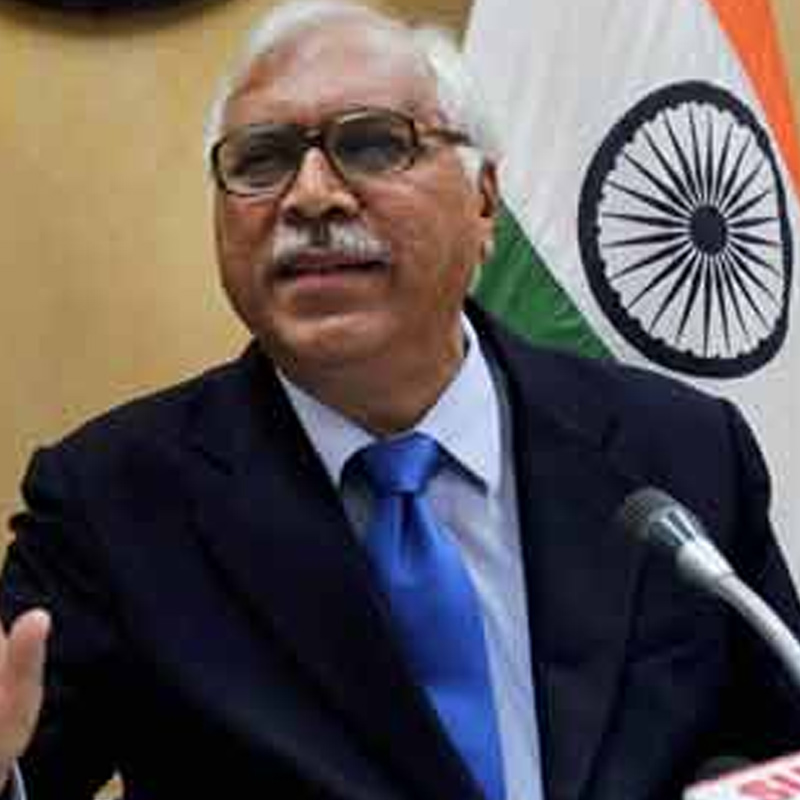
    Chief Election Commissioner S Y Quraishi said that the Election Commission would like to press for the ban as the Exit Polls could be as misleading.

    He refuted charges that a ban on opinion polls amounted to an attack on the freedom of expression. It was equally erroneous to say that Article 19 (1) (a) did not apply to social media.

    Releasing the book ‘Media Ethics: Truth, Fairness and Objectivity – Making and Breaking News’ by noted media commentator Paranjoy Guha Thakurta, he said the recent elections threw up 112 cases of paid news in Uttar Pradesh.

    Speaking on the occasion, ‘Outlook’ Editor Vinod Mehta said it was natural for mediapersons and editors to be opinionated or have prejudices and biases. However, these should not reflect in news and should be voiced only in editorial comment.

    He said media in India was facing its most major credibility crisis since 1975 when the National Emergency had been imposed.

    But media should realise that it is not a player on the national scene: it merely has the best ringside seats to watch, report and comment.

    He felt that demands for self-regulation were a hoax since experience had shown that even editors seldom wanted to come forward to make clean confessions of mistakes made. The editor being the custodian of a publication has to be above board. There was imperative need for a Code of Conduct.

    Rajdeep Sardesai of CNN-IBN said it was interesting that the media was facing a vigorous credibility crisis at a time when it was the most powerful but commanded the least respect – unlike the early years of Independent India when the media was not so powerful but commanded respect.

    Agreeing that television news channels had become entertainment, he said that the primary external threat to the media was the business model where the editor had to bow to the proprietor or the marketing people. He also said the carriage fee demanded from TV channels – which he claimed was like underhand payment – was also a major problem.

    The primary revenue of TV was from advertisements and not subscriptions since the people were unwilling to pay. He said it was natural, therefore, that channels resorted to telecasting programming like that of Nirmal Baba, who paid for his time. He hoped the situation would change after digitisation.

    The internal threats were sensationalism instead of sense and jingoism instead of journalism, since competition had taken away the ‘moral compass’.

    He was happy that the self-regulatory bodies of the news and general entertainment channels were ‘naming and shaming’ the culprits in the eyes of their peers, since that would bring a semblance of sanity.

    Thakurta regretted that the Press Council of India was toothless and the scant respect given by the Government to the recent report on Paid News was an example of this. He also wondered why private radio was not being permitted to telecast news.

    Mazhar Khan of the Oxford University Press which has published the revised and enlarged edition of the book noted that OUP had completed one hundred years in India.
  • Press Council chief wants TV to be under its ambit

    Press Council chief wants TV to be under its ambit

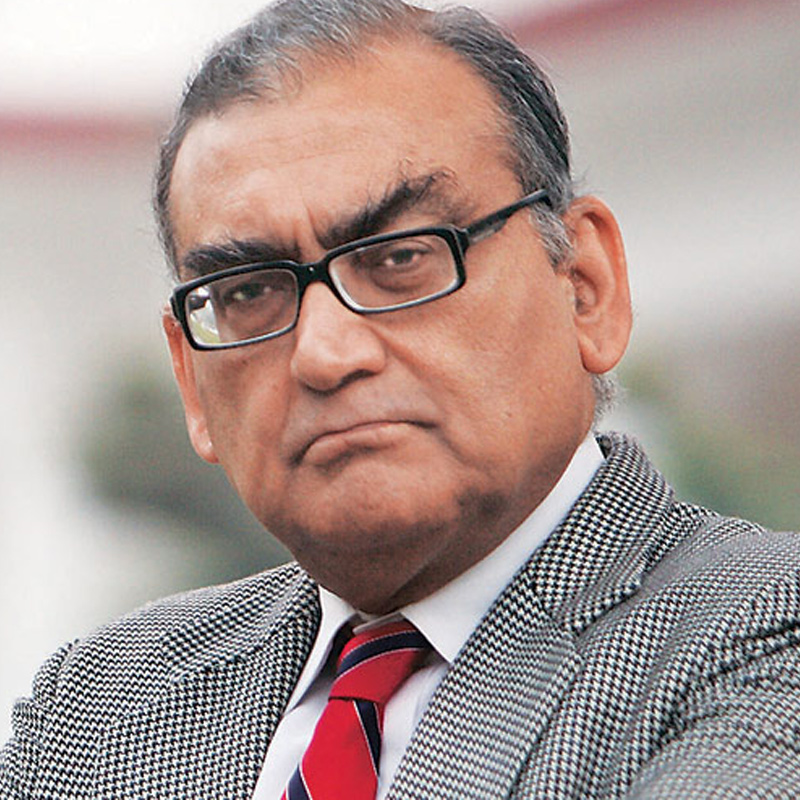
    NEW DELHI: Justice Markandey Katju, the new chairman of the Press Council of India, has urged Prime Minister Manmohan Singh that the electronic media should be brought under the purview of the Council.

    Reiterating a demand made over a decade earlier that the Press Council of India should be renamed Media Council of India, he has also sought more penal powers, though, he said these powers would be used sparingly.

    He has received a reply from the PMO that the matter is “under consideration”, and it is learnt that the letter has been forwarded to the Information and Broadcasting Ministry for comment. 
       
          
    The former Supreme Court judge has also asked the union government to defer its move to amend the rules relating to renewal of license for TV news channels for violating the Broadcasting Code.

    Among other things, he wants powers to stop government advertisements and powers to suspend the licence of a news media for some time if it behaves in an ‘obnoxious‘ manner.

    In an informal chat with newspersons, he said he had also met Opposition leader Sushma Swaraj who felt that there could be a “consensus” on the demands.

    Asked if this would not mean a threat to the freedom of the media, he said, “Everybody is accountable in a democracy. No freedom is absolute. Every freedom is subject to reasonable restrictions.”

    He expressed the view that TV debates were frivolous, and there was no discipline among panellists. He candidly said he had a very poor opinion of the media.

    But “harsh measures” against the media should be resorted to only in extreme situations.

    He wanted the Council to discuss the issue relating to renewal of licences of news channels.

    Meanwhile, the the 71-page report of the Press Council Committee of Paranjoy Guha Thakurta and Sreenivas Reddy on paid news had been uploaded on the website of the PCI following the directions of the Central Information Commission. But the Council had added the disclaimer that it had rejected the report. 

  • Election Commision wants minimum punishment of 2 years in cases of paid news

    Election Commision wants minimum punishment of 2 years in cases of paid news

    NEW DELHI: The Election Commission of India has asked the Centre to impose a minimum punishment of two years to anyone found guilty of indulging in the malaise of paid news.

    Chief Election Commissioner SY Qureshi said during a discussion here that the Commission could only act if it was given sufficient proof. He said the Commission had set up a Media Monitoring and Media Certification Committee to keep a check on the media during elections.

    He also said new guidelines had been issued for publications owned by people associated with political parties.

    He said there was also a proposal to ban government-sponsored advertisements relating to its achievements at least two months before the elections.

    Qureshi was speaking at a discussion on ‘Paid News’ organised by the Public Service Broadcasting Trust after the screening of the hour-long film ‘Brokering News’ by Umesh Aggarwal exposing this malaise.

    The film shows examples of how news is bought and sold in both the print and the electronic media by politicians, corporate houses, sportspersons, and even film personalities. It blatantly shows the link of some of the mediapersons to Niira Radia by screening clips of the telephonically conversations, apart from showing how TV channels help the stocks of certain corporate houses to rise by the way they present the programmes. There is also an example of the same article about a politician appearing on different days in different newspapers under different names.

    The film also showed the case of Kurukshetra based print mediaperson Rakesh K Sharma who had been forced by his Hindi newspaper to collect money in the name of interviews or advertisements from politicians for almost six years, but quit his job to expose cases of paid news. Both Aggarwal and Sharma were present.

    Others who took part in the discussion included Mint editor R Sukumar, Prasar Bharati Chairperson and former editor of Dainik HindustanMrinal Pande, and NDTV managing editor, special projects, Pankaj Pachauri, The Hoot editor Sevanti Ninan, which is a media watchdog publication.

    Initiating the discussion, PSBT Managing Trustee Rajiv Mehrotra said the Trust gave full freedom to the filmmakers and did not interfere with the films once the script was given approval.

    Senior journalist Paranjoy Guha Thakurta who was one of the two-member panel of the Press Council which went into the malaise, regretted that only a five-page statement had been issued to the media on the 71-page report.

    Doordarshan Director General Tripurari Sharan said this film was very important for the public service broadcaster which would telecast the film. He said this may make people realise the importance of a public service broadcaster.

    Pande applauded the courage of the filmmaker and said the real problem lay in the ownership pattern of the newspapers – particularly when the proprietor was himself the editor. She said there were also cases in Hindi publications of the editor holding shares in the publication, which automatically meant his first loyalty was to the shareholders.

    She said part-time journalists or stringers were crucial to the malaise of paid news since their real loyalty did not lie with the newspaper.

    Pachauri admitted that self-regulation did not work, and felt cases of political paid news was worse than business paid news. The media had been hijacked by corporates and politicians, and the media had become a political party in itself. He cited the case of a sting operation run by a channel at the behest of the largest opposition party.

    He felt the need of an independent Press Commission in the country to check such issues.

    Though not very impressed by the film, Sukumar admitted that there were cases of paid news in the corporate sector but wanted more checks and balances. He regretted there was no law to prevent advertisements coming in the name of news, and admitted to huge advertisement pressure on business newspapers.