Tag: Paramount Pictures

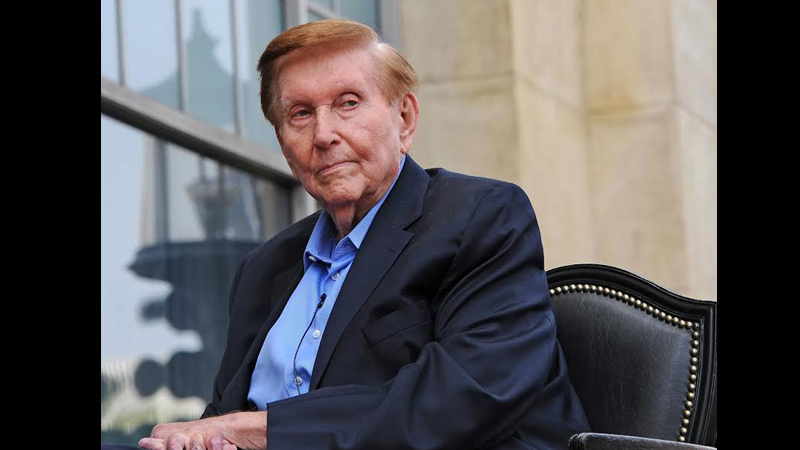
  • Media mogul Sumner Redstone passes away at 97

    Media mogul Sumner Redstone passes away at 97

    Mumbai: Sumner Redstone, the influential US media mogul who owned CBS and Viacom, passed away at the age of 97, as confirmed by his family on Tuesday. Redstone had been a central figure in the entertainment industry for decades, serving as chairman of the board of directors for both CBS and Viacom until stepping down in 2016 due to declining health. His resignation followed internal family disputes over the companies’ control, with his family maintaining a majority stake.

    In late 2019, CBS and Viacom were merged into one entity, managing some of the most well-known television networks and film studios in the world, including CBS, MTV, Comedy Central, Nickelodeon, Showtime, and Paramount Pictures. This consolidation placed the company in the same league as other major U.S. media corporations such as Disney, Time Warner, and 21st Century Fox.

    Born Sumner Murray Rothstein in Boston in 1923, Redstone changed his surname in 1940 to Redstone. He graduated from Harvard University and served in U.S. military intelligence during World War II. In 1954, he joined his father’s business, which he later transformed into National Amusements, one of the largest cinema operators in the United States.

    Redstone survived a near-fatal fire in 1979 and went on to play a pivotal role in shaping the media landscape throughout the 1980s and 1990s. He fought fiercely to gain control of Paramount Pictures and later took over Viacom, which owned MTV and CBS. Viacom and CBS merged in 2000 but split again in 2006.

    Redstone’s remarkable career left an indelible mark on the entertainment industry and his legacy continues through the companies he built and reshaped.Sumner Redstone

  • Paramount Global get $11 billion buyout offer from Apollo Global

    Paramount Global get $11 billion buyout offer from Apollo Global

    MUMBAI: Even as the dust is settling on the $517 million Viacom18 television stake sale deal between Reliance and US media behemoth Paramount Global, comes the news that the latter itself is the target of a a buyout offer. The Wall Street Journal has reported that private equity firm Apollo Global Management, has made a $11 billion offer to the buy the film and television studio. 

    This is not the first acquisition offer that a reluctant controlling shareholder Shari Redstone has received. Earlier, the David Ellison-controlled production company Skydance Media had  proposed to buy Paramount parent National Amusements and fuse it with his firm as a whole. Skydance had bid in excess of $4 billion for a 70 per cent stake. Ellison’s offer – which plans to keep all the studio  assets but sell off the rest – is still on the table.

    Paramount Global’s assets include Paramount Pictures, broadcaster CBS, Viacom cable networks including MTV as well as PlutoTV. The media conglomerate has a current valuation in excess of $7.7 billion. 

    Earlier this month, Paramount’s chief financial officer Naveen Chopra had dismissed any move towards selling the company at a Morgan Stanley media conference. “From management’s perspective, we are focused on execution. And we believe the continued execution of our plan will unlock value. We’re very conscious of the fact that our job as management is to create value for all of our shareholders…To the extent that there are other alternatives, we’ll be diligent about exploring them,” he had said. 

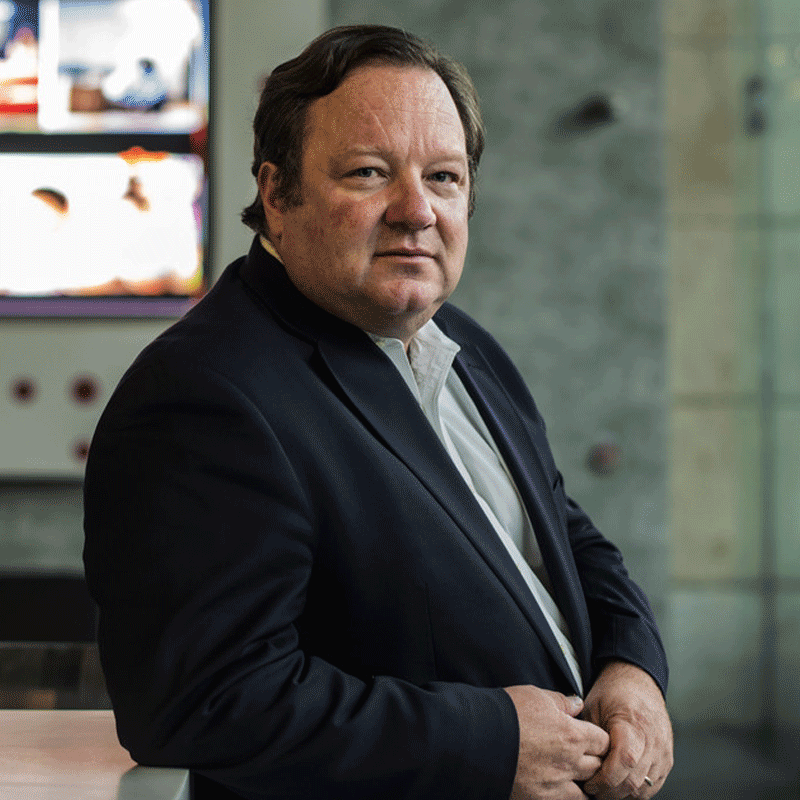
    The company has been grappling with the changing dynamics of content consumption under CEO Bob Bakish. In its latest quarter overall revenue shaved six per cent year-on-year to $7.64 billion, worse than an expected $7.9 billion. TV media revenue and filmed entertainment revenues respectively fell 12 per cent to $5.17 billion and 31 per cent to $647 million. The saving grace was direct to consumer revenues which rose 34 per cent to $1.87 billion.

    “Our disciplined execution and strong content offering drove our results in 2023, as we continue to evolve our business for profitable growth in 2024 and beyond. In Q4, Paramount+ revenue increased 69 per cent,  direct to consumer adjusted Operating income before depreciation and amortization (OIBDA) improved for the third consecutive quarter, and we now expect to reach domestic Paramount+ profitability in 2025 – a significant milestone,” Bakish had told shareholders at the time of the earnings release. “Looking ahead, we continue to be focused on maximizing the return on our content investments and scaling streaming, while transforming the cost base of our business. And I couldn’t be more thrilled with the early momentum we’ve had across every platform in 2024, demonstrating the power of our strategy and assets.”

  • Brian Robbins to lead Paramount Pictures as chairman & CEO: Reports

    Brian Robbins to lead Paramount Pictures as chairman & CEO: Reports

    Mumbai: ViacomCBS Inc, the parent company of Hollywood-based Paramount Pictures, is expected to name Brian Robbins as next chairman and chief executive officer of the film studio. Currently serving as ViacomCBS’ president of kid and family entertainment, Robbins will succeed Jim Gianopulos, who has run the company since 2017, reported The Wall Street Journal.

    In addition to leading the studio, Robbins will reportedly retain his roles at Nickelodeon and Paramount+ streaming service.

    The move comes as ViacomCBS is bolstering its presence in online streaming against the likes of Netflix, Hulu, Disney+, Amazon Prime Video, HBO Max, etc. Paramount+ currently has 42 million subscribers and aims to have a subscriber base of 65-75 million by 2024.  According to media reports, Gianopulos will stay aboard to assist with the transition of the leadership team.

    Robbins took the reigns of Paramount’s kids channel Nickelodeon as president in 2018. Prior to that, he served as president of Paramount Players, a production division of the studio that develops, produces and markets feature films from original source material and in collaboration with Viacom flagship brands Nickelodeon, MTV, Comedy Central, and BET.

    Paramount is likely to announce the change soon.

  • Paramount names Michael Ireland & Daria Cereck co-presidents of production

    Paramount names Michael Ireland & Daria Cereck co-presidents of production

    MUMBAI: Paramount Pictures has named former New Line Cinema executive Daria Cercek and former 20th Century Studios executive Michael Ireland as co-presidents of production at the studio.

    Both Cercek and Ireland will report to Paramount motion picture group president Emma Watts. Ireland joined the studio in late November, and Cercek begins her position effective from 11 January.

    “I’m thrilled to be working again with both Daria and Mike,” Watts said in a statement. “The key to success is having the right team, and having watched Daria and Mike grow over the years, I am quite confident their combined creativity, enthusiasm and extensive talent relationships will be a huge windfall for Paramount. They believe passionately in people and projects, which makes for better films.”

    Prior to joining Paramount, Cercek worked in New Line Cinema, where she served as executive vice president of production and development. In her role, she oversaw Olivia Wilde’s upcoming next film Don’t Worry Darling starring Florence Pugh, Harry Styles and Chris Pine.

    “I am absolutely over the moon to be joining the incredible team at Paramount, and working again with some of my most esteemed and beloved friends and colleagues,” Cercek said in a statement. “It is truly an honor to step into this role alongside Mike at such a historic studio, and to continue the legacy of making top-notch movies with world-class talent.”

    Cercek was formerly senior vice president of production and development at Twentieth Century Fox (now 20th Century Studios), having risen through the ranks after starting as a creative executive in 2010.

    Ireland, began his career as a network executive at MTV in 2003.

  • ShareChat gets Wavemaker’s Ajit Varghese as chief commercial officer

    ShareChat gets Wavemaker’s Ajit Varghese as chief commercial officer

    NEW DELHI: ShareChat has appointed Ajit Varghese as its chief commercial officer. Varghese brings in a track record of 25+ years of leading large-scale business transformations and building diverse and successful businesses around media, creative, digital, data, content, sports, and performance.  

    Prior to joining ShareChat, Varghese was the global president at WPP group’s Wavemaker, known among the world’s top five media networks with clients ranging from industry giants like Vodafone, L’Oreal, Huawei, IKEA, Paramount Pictures, Chanel, Xerox, Netflix, Chevron, Beiersdorf, and Tiffany.  

    In his new role at ShareChat, he will be pivotal in expanding and strengthening the platform’s revenue efforts and building a robust monetisation approach with the strategic content partnership. He will also spearhead its marketing functions, to be inclined towards brand elevation, aligned with business centricity. He will be reporting into ShareChat COO & co-founder Farid Ahsan. 

    This key appointment announcement comes amidst Sharechat witnessing exponential growth in the past few months. The upward curve not only mirrors the new user growth and higher user engagement on the platform but also reflects an increased interest among B2C brands, for leveraging Bharat internet audiences. 

    Farid Ahsan said, “Brand marketing and monetisation is going to be the core focus of ShareChat and we will direct our efforts towards elevating the brand positioning through strategic communications approach. Ajit, with his leadership capabilities and expert knowledge of the media, marketing and advertising domain, will play a critical role in further building brand awareness, deepening relationships with our business stakeholders and driving ShareChat toward the next phase of growth.”  

    Ajit Varghese said, “Having previously worked and transformed several global organisations, it has always been a hidden desire to contribute towards transforming an Indian organisation to global repute. I believe ShareChat in the next few years will evolve as the default partner to every brand, homegrown and global, who intends to engage with the internet-first population. As the digital advertising landscape awaits the inclusion of over 400 million new internet users, mostly inclined towards native languages, ShareChat will stay at the forefront of unveiling a new digital era. This will be an exciting journey for me as I look forward towards contributing to ShareChat’s growth and building a win-win relationship with our community of users, partners and business stakeholders.” 

    An alumnus of Xavier Institute of Management, Bhuvaneshwar, and a graduate in agriculture engineering from Orissa University of Agriculture and Technology, Varghese has worked across India, Singapore and London. With years of leadership positions across globally-reputed media organisations like Wavemaker (WPP), Maxus (WPP), Madison World, he has been recognised as a Global Media Leader with a track record of turning around organisations, leading rapid growth, and gaining market dominance. 

    Over the past few months, ShareChat has been strategizing to become a future-ready organisation by delivering an immersive social experience to its users and building a global product. The platform has collaborated with leading music labels in India and across the globe, set up ‘ShareChat Labs’ in Silicon Valley, and driven content partnerships with various news and entertainment organisations. Over 150 B2C brands have partnered with ShareChat to explore its strength in engaging with Bharat (language-first) internet audience on the platform. 

  • Elizabeth Raposo exits Paramount Pictures

    Elizabeth Raposo exits Paramount Pictures

    MUMBAI: Paramount Pictures president of production Elizabeth Raposo has exited the studio. This move comes after Emma Watts has taken the leadership of the motion picture group.

    Raposo had served in the top role for three years. Her departure from the company was announced in a note to staff authored by Emma Watts, the studio's newly installed motion picture group president under Paramount CEO Jim Gianopulos.

    Raposo played a pivotal role in movies like  Rocketman, A Quiet Place, Mission: Impossible—Fallout and Bumblebee. She has also been part of the latest Star Trek films and the upcoming Top Gun: Maverick. She took over as production president following the exit of Marc Evans.

    "With her great taste and incredible talent relationships, Liz has been instrumental in many of the company’s past and recent successes," Watts wrote in a note to staff that referenced the many films Raposo has been involved with. "We thank Liz wholeheartedly for her many years of service and countless contributions to the studio, and wish her the very best," Watts continued.

    Raposo has been part of the studio for 15 years. Prior to this, she worked at Darren Aronofsky's Protozoa Pictures as director of development.

  • Martin Scorsese joins Apple TV’s Hollywood roster with multi-year deal

    Martin Scorsese joins Apple TV’s Hollywood roster with multi-year deal

    MUMBAI: Award-winning filmmaker Martin Scorsese will produce film and TV projects for Apple Inc’s streaming service under a multi-year deal, the company said recently. This move comes after digital video platforms battle for Hollywood’s top talent.

    Scorsese, the maker of Netflix’s The Irishman and director of other classics like Goodfellas, Taxi Driver will produce the projects through his company Sikelia Productions.

    He joins Oprah Winfrey, Alfonso Cuaron, Ridley Scott, Julia Louis-Dreyfus and others who have reached agreements to make programming for Apple TV+, the iPhone maker’s dollar 5-a-month subscription streaming service.

    Apple had previously announced it would produce Scorsese’s upcoming drama Killers of the Flower Moon starring Leonardo DiCaprio and Robert De Niro. The movie will appear on Apple TV+ after it is distributed in theatres by Paramount Pictures, a unit of ViacomCBS Inc.

    Apart from this, the company has recently done deals with production companies and talent, including Leonardo DiCaprio and Jennifer Davisson's Appian Way and Idris Elba's Green Door Pictures.

    Apple TV+ also earned its first Emmy nominations last month, with nominations for The Morning Show, Central Park, Defending Jacob, The Elephant Queen, and The Beastie Boys Story.  

    Follow Tellychakkar for the consumer facing news & entertainment

  • MX Player inks content deal with Paramount Pictures, Sony Pictures Television India

    MX Player inks content deal with Paramount Pictures, Sony Pictures Television India

    MUMBAI: MX Player, a home-grown OTT platform, has inked a content deal with international studios like Paramount Pictures and Sony Pictures Television India, becoming the first platform to do so. 

    The titles available from the Paramount Pictures catalogue are Transformers: The Last Knight, XXX: Return of Xander Cage, G.I Joe: Retaliation, Baywatch, Jack Reacher: Never Go Back featuring leading actors like Dwayne Johnson, Mark Wahlberg, Vin Diesel to name a few. And Sony Pictures Television India will give access to fan favourites like Spiderman: Homecoming, Baby Driver, The Emoji Movie, The Dark Tower, Blade Runner 2049 and many more. The content will be available across Hindi, Tamil and Telugu.

    MX Player content acquisitions head Mansi Shrivastav said, “Films have been an integral part of the Indian content consumption pattern. Curating global content in languages and expressions they understand has always been MX Player’s vision and forte. Staying committed to our consumers, we are proud to have partnered with international studios like Paramount and Sony Pictures. This is the first time in India, that leading Hollywood studios have collaborated on an AVOD partnership.”

    With 280 million MAUs globally & 175 million MAUS in India, MX Player has emerged as the #1 entertainment app of 2019 in India, according to the annual FICCI Report- ‘The Era of Consumer A.R.T’. Enjoy its large streaming library of 150000 hrs of content along with music and games, FOR FREE.

  • Rewind networks expands Philippines presence with launch of Hits Movies on cignal

    Rewind networks expands Philippines presence with launch of Hits Movies on cignal

    SINGAPORE/MANILA: Rewind Networks has launched HITS MOVIES on Cignal, Philippines’ premier DTH satellite provider. The channel is available on Channel 58. HITS MOVIES joins sister channel HITS, which has been on the platform since October 2016. HITS MOVIES will be available for free to all Cignal subscribers for the first three months of the launch.

    Across Asia, HITS MOVIES is available on major pay-TV platforms in Singapore, Malaysia, Indonesia, Myanmar and Sri Lanka. The Cignal launch comes shortly after three major milestone launches for Rewind Networks in just the first two months of 2020: the launch of HITS on Tata Sky in India and the launch of HITS MOVIES in CANAL+ (Myanmar) and Astro (Malaysia). The launches signal a growing demand for the channel among leading pay-TV operators in the region.

    “We are delighted to expand our partnership with Cignal and bring HITS MOVIES to their viewers in the Philippines,” said Avi Himatsinghani, CEO of Rewind Networks. “We are confident Cignal subscribers will enjoy HITS MOVIES’ blockbuster line-up of top-rated Hollywood movies from the ‘60s to the ‘90s, just as they have enjoyed its sister channel HITS.”

    Guido R. Zaballero from Cignal said: “The launch of HITS MOVIES on Cignal is a testament to our commitment in giving our subscribers the best viewing experience with awesome curated entertainment. We look forward to working with Rewind Networks to replicate the success of HITS on Cignal with HITS MOVIES. We will have a three-month blowout to all Cignal postpaid, prepaid and SatLite after which, it will be made available to all postpaid plans as well as prepaid load 300 and up and SatLite 299.”

    HITS MOVIES celebrates the best blockbuster films ever made from the ‘60s to the ‘90s. The channel’s slate includes hot favorites like The Sound of Music, Sister Act, Magnificent Seven, Freaky Friday (1976), Mary Poppins, Teen Wolf, Conan The Barbarian, Halloween, Wall Street, French Connectionand Three Men and a Baby. The channel features a carefully curated selection of hit films from Hollywood majors such as The Walt Disney Company, 20th Century Fox, MGM Studios, Paramount Pictures, Lionsgate, Warner Bros and Sony Pictures and will be progressively introducing more titles from other leading studios.

  • Bob Bakish on turning around Viacom, tie up with CBS, company’s culture and future

    Bob Bakish on turning around Viacom, tie up with CBS, company’s culture and future

    MUMBAI: Viacom CEO Bob Bakish describes his tenure at the giant company using two words – turnaround and evolution. At the end of 2016, Paramount Pictures was coming off a year where it had lost half a billion dollars and consumed another billion in cash. There was friction with distributors with the company’s cable networks not performing as they should have. It highlighted a trend line that was moving in the wrong direction. Cut to 2019, Paramount has delivered an earnings improvement in seven straight quarters with earnings improvement. The studio produced films that matter and made money on them. The television business delivered 400 million dollars in revenue, putting out nine series. Bakish has scripted one of the most fascinating times in the media and entertainment world with his work as CEO of Viacom. At CES 2019, he sat down for a fireside chat to reveal how we made it happen. Here are the excerpts of that insightful conversation with Variety.

    You’ve been on record recently saying Viacom doesn’t require a transformational deal. In this environment there were companies even bigger than yours are consolidating. How is that position tenable?

    Look, we and I, continue to believe there’s a lot of value in the assets we already own. In 2016 people thought that MTV was dead and buried but today it is the fastest growing network in television. Its audience is up again, in the current quarter, in double digits and we are already beginning to benefit from that resurgence from a monetisation standpoint… there’s a lot of value to the assets we already own. We, unlike most media companies, are truly a global operating media company, we don’t just have sales forces outside the US, you know we own the number one broadcast network in Argentina, we are major broadcaster on Channel 5, we are making content all over the world. We own half of the leading Indian media company called Viacom18 which owns the Colors brand. There’s a lot of value there and if you think about the transition we are in from an industry standpoint. Back in February of ’17 we started talking about something we call a flagship brand which was partially about prioritisation but it was also about unlocking opportunities through multi-platform expression. If you look at MTV, it’s only not only a linear cable network with substantial programming slate, but it also has a piece of the Paramount film slate. We started a digital native division called the Viacom digital Studios which produces original content in short form for distribution both in front of the wall social and other places… that has dramatically taken us from number 22 in space into top 10. There’s a lot of opportunity and when we got to our fourth fiscal quarter of ’18 we saw our company to return to growth, something that hasn’t been the case since ’14. So, we think there’s a lot of growth ahead.

    And relative to some of our peers, we are further along in making this transition. Look at the ad business, it’s not all 30 seconds up. We got an advanced ad business with significant branded content assets, significant data-driven assets. We can insert dynamically in 90 per cent of the VoD homes in the US. Something nobody else we can do. We have been doing M&A, we have been doing what I call accelerant deals. We bought a company called Whosay, a branded content company, which clearly increased our capabilities in the lower-end of the branded content space from a price perspective which is important. We also bought a company called Vidcon which is ground zero for social influencers… it has really strengthened our legacy with young-adult audiences and associated talented and it is also an extension of our experiential business, we most recently bought a company called Awesomeness which people think of as a web company and it’s true that they are an expert in marketing content on web but it’s also true it’s a studio in its own right. And increasing our participation in creation of content including for third parties is a big push we are making as a company and that Awesomeness has produced among other things “To All the Boys I have Loved Before”, which was amongst the most watched shows on Netflix.

    But these are very small deals. Are you going to look at making bigger deals or are you looking at more of the same smaller deals?

    Scale is very much in vogue, vertical integration is very much in vogue. If you look at the history of the industry in certain media vertical integration doesn’t tend to work, bigger is not always better. I don’t think that is the necessary path. What is really important is that you have a plan and you know where you are going and you’re executing against and you are achieving growth and that’s exactly what we are doing.

    Let’s address the elephant in the room. There’s a plenty of speculation that Viacom and CBS can be combined this year. How do you manage for you know an uncertain future? Do you have a distinct vision that you are planning for Viacom with smaller acquisitions or are you trying to build for a bunch of different possible futures?

    I’m a huge believer in having a plan. Our plan is fundamentally based on the assets we have because that is the only thing I can bet on for sure. We got to focus, we got to play through, we got to execute, we got to grow because there’s only one thing I know for sure that at the end of the year you are going to be talking to me or you are going to be talking to somebody else. What you don’t want to have to say is that ‘well yeah we had this opportunity but we got distracted and we didn’t get it done’. So our mission continues to be focussed on the assets that we have, focus on execution, look broadly to capture value and opportunistically see what else happens, and that’s what we do day in and day out and that’s what we’ll keep doing.

    However, in this climate where the pay-TV business is challenged, you guys are dealing with your tensions with some of major distributors. That could end up dropping key channels. How do you manage the future?

    You have to make sure you’re adding values. Point one and two is that you have to recognise how the world is changing. To the first point, talking about what we are doing in distribution, we broadened our ability to add value for our mutual benefit, both our partner’s benefit and Viacom’s benefit and certainly our whole extension to advanced advertising, what we call AMS, is fundamental to that.

    The second thing I would say in terms of how the world is changing is the fundamental thing is going on is fragmentation in terms of how people access content. In the television space 85 per cent people had the same product and that was big basic and that was very nice structure. Today, that’s no longer true and it continues to fragment. So you have a vast majority of the people in the highest priced segment, but you got people at 45 dollars, that price is starting to creep up as people are trying to make economic businesses there. We have people in teens, people around 10 bucks in terms of the SVoD space, then you have some single digit numbers and then you have free, the AVoD mode. So, that world is not going to change, that’s the world we are going to live in, and what’s important is that we take these called flagship brands and we make sure that we participate in all those levels. The big basic levels, that’s fairly obvious… you know we are active in VMVPD in the OTT space, we are also active in the SVoD space through our third party production business.

    Are those deals in the future big enough?

    We are in the state of transformation of our industry. You can either view that as glass half full or half empty. I view it as half full. Global distribution really is the catalyst that will turn this whole decline of television argument on its head because you have 3G, soon 4G, never mind 5G as 5G is more about fixed broadband. It will eventually be handset. If you have 500 million pay TV homes outside the US at the high side, probably 300 million quality ones, if you take out India and China. These kinds of deals where you bring in product either products that look like exactly what you get on television so that’s Telefonica and aggregated product that combines a lot of different things under one brand.

    We are in Indonesia with a mobile carrier that has 160 million subscribers. We have Nick Play and Nick Junior Play apps which provide access to that product on an on-demand basis. Some of these are through a third party intermediary, you could think Amazon channel store, and some of these are called B2B2C deals with carriers. You could think about Telefonica or Telenor or Telecom Cell. Now in this kind of hybrid economy of distribution, unfortunately, everybody doesn’t get the same thing, people are getting different products bigger bundles or smaller bundles.

    So you look at the difference between Sling and Dish in the US. For us we are carried on both, but all the Sling ads are dynamic, we can insert a specific ad to a specific person based on specific data. On the Dish platform we can’t do that, for obvious reasons, it’s a DTH going down, we can’t do it because of some technical work but that is another big move forward in terms of our ability to create values and we are in the super early days of that.

    So your focus will be more and more on production now, and what’s interesting about that is if there is a double edged sword to the success there. Doesn’t it make it harder for you to get eyeballs because people are watching your content on Netflix or Facebook? Doesn’t it hurt your core business?

    No, it doesn’t. For two reasons, one is whether we make a show for Facebook or not it’s not going to influence whether they have shows on their platforms. Point two is the most important thing from a consumer perspective and that is to continue to have our flagship brand on top for consumers that think about entertainment. And that entertainment might be going to see a movie in a theatre, on your flat screen watching pay video bundle or access to product on an app. Out of the extended ecosystem of entertainment experience associated with these brands that cross this fragmented environment is what it’s all about. It provides great solutions for advertisers. It’s all about being able to get reach to say men 18-34, which is not easy to reach these days, it is harder than ever. Use a cross-section of platforms, leveraging our linear distribution, adding our app distribution, adding our over the top distribution, adding our Viacom Digital Studios product, in branded content, in a programme that synchronised to reach that 18-34 group.

    How did you energise thousands of employees especially at Viacom, because looking at their world, there is pessimism, there is negativity. How did you get people going?

    You have a plan and you have to make sure people understand what it is and how they fit in and both you and they can understand if you are making progress and if so it is the path you want to take. Or if you are not making progress in one year you can see if you want to take some different direction. If you talk to people at Viacom they fundamentally believe in our plan. That we are actively participating in places that we haven’t before including providing original content on a day-in-day-out basis to the AVOD digital stratosphere and that we are acting in advance. In total, we actually grew the earnings of the company and all of that is the culture of content. Whether you make short-form, long-form, feature-length or event, whether you are on the creative side, monetisation side, or sports side, they all are working in this culture of content and they see the progress we’re making. I know because I talk to them, at least quarterly, I talk to them on Facebook live and take questions and ask them do you see the progress. Because at the end of the day people are pretty simple, it comes down to what’s in it for them and that is the future.

    Here at Las Vegas with CES you are spending a lot of time. What are the kind of technologies that are catching your eye?

    If you think about the fundamentals of our business there are kind of two things we are working on. One is we get the consumers to spend more time, that’s important, and two is that you are getting paid for it. If you have those two things, everything else can sort itself out. And if you look at the arc of consumption, I remember because I’ve been in this business 30 odd years when second TV sets starting showing up in scale in kids’ bedrooms and other places and that drove more minutes. That was a good thing and then more reasons like computers with infrastructures started to show up in places like offices and that wasn’t really in the heavy video space but there were more impressions and of course much more recently you get into over the top and you get into mobile and that’s much more ton of a product. There are two things that are coming like a freight train. One is the continuing acceleration of broadband infrastructure both in the name of 5G which is definitely coming as you all know, maybe its fixed broadband first but that’s going to flood in and all the wireless carriers when you talk to them all they say we need use cases and certainly entertainment is a use case and the other thing that’s got less press at CES is 10G and that’s the cable industry talking about their next length. They are delivering 1G now and their next push is to deliver 10x that which will be five years or something. 5G autonomous cars that people don’t have to drive is also coming. So just like adding a TV set to a bedroom or adding mobile on the go, the last vestige of video free consumption is automobile.