Tag: Papri Das

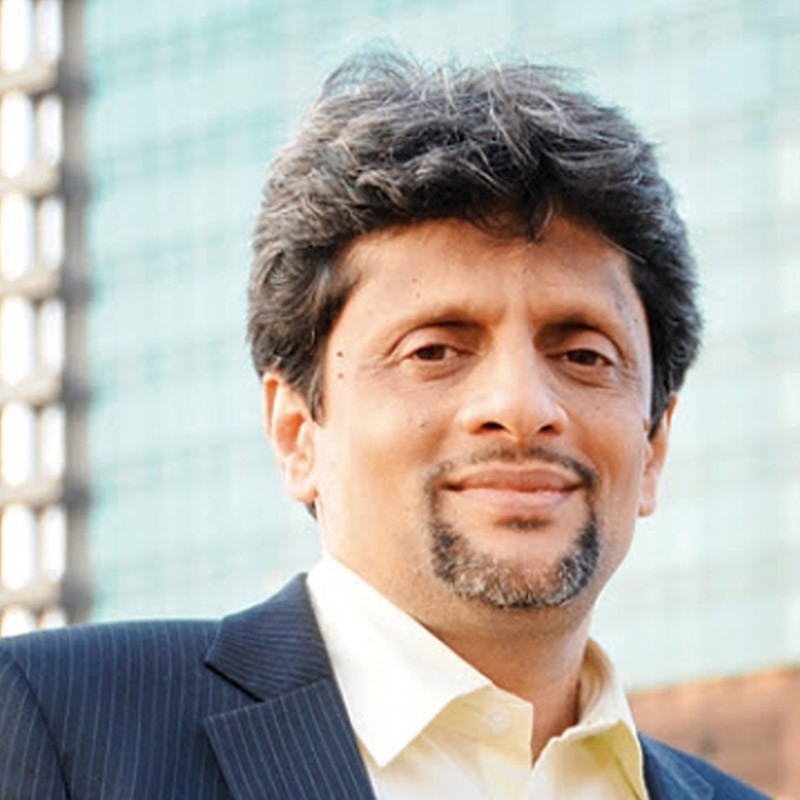
  • “We plan to double staff in a year in pace with client growth”: Vizeum India MD Shripad Kulkarni

    “We plan to double staff in a year in pace with client growth”: Vizeum India MD Shripad Kulkarni

    Shripad Kulkarni is man on a mission. The mission is to transform Vizeum India digitally, not with just an add-on digital arm but from within. Thereafter, establishing the agency as an indispensable AoR partner for clients seeking real measurable value addition from its media management. And the last few account wins including Warner Bro. and TCL show that he is on the right track.

    The agency is believed to handle Rs 200 crore worth of media businesses spread across all its clients, of which the last quarter has been a significant contributor.

    But these numbers are not fruits of labour of just the past few months. Its foundation was laid when Kulkarni had joined Vizeum India as the managing director in 2015 from Percept Allied Media (where he was the CEO), following Dentsu Aegis Network (DAN) Ashish Bhasin’s laying out of his vision for the agency.

    It will be an understatement to say that the soft spoken professional had taken that vision seriously. It’s been a little over a year, and Kulkarni is already confident that the agency will double itself around the end of next financial year.

    In a freewheeling conversation with indiantelevision.com’s Papri Das, Kulkarni delves into his grand plans to realise this target, and more.

    Excerpts:

    What were your personal benchmarks in the last one year of working for Vizeum?

    I have kept a very ‘people first’ approach to my targets within the company since I joined almost a year back. The large team that operates in Delhi is undergoing its digital training  and familiarisation with the tools available within the agency and the group. The last quarter has given us a positive indication that the strategy is working. We have got Warner Bros, we have Panasonic as a client and just recently signed up as the media agency for TCL Corp.

    Given the momentum, I see a significant increase in our client portfolio in the coming few years. We want to double our staff strength in 12 to 18 months to handle this increase in new businesses and our entire budget planning is being worked out to favour this development.

    The one P&L structure that DAN follows is best in terms of getting integrated marcom planning done, and getting various specialists in verticals to work for a brand. The fact that a very high proportion of the revenue of the group comes from digital says a lot about DAN  as a future facing agency.

    Every media agency is ramping up to be the ‘all rounder’ these days. How differently is Vizeum positioned in the market?

    One has to understand that digital is changing your customers, and their linear behaviour in the purchase cycle; the classic AIDA (Attention, Interest, Desire, Action) is no longer working. Now that is a fundamental shift that we must align everyone to, even if one is planning for television. Based on this, we are remodeling Vizeum, to keep our clients up to date.

    At the core of the remodelled Vizeum, with its refreshed approach to traditional media with digital outlook, we believe that media can directly make a difference to business. Media can add value to businesses because of this entire disruption digital is doing across all media, and this significant value addition will be measurable.

    Has this fundamental shift impacted how television planning and buying happens?

    To start with, these days you have to look at video and not television, when doing planning for television, because there is a good chunk of the audience that watches TV on the Internet. There are youngsters who enjoy binge watching or as and when they want to. They are hardly watching television the way we know it. So that is changing the entire paradigm so that even the medium that was classically entirely outbound and spewing messages at its audiences is now changing.

    Another interesting aspect of this paradigm shift is how technology has made TV media more target-oriented. Technology now allows advertisers  to target people who have viewed their ads on television. We have experimented with this technology with a few of our clients where we have embedded certain beacons on their TV ads, and identified which  of the consumers had their smartphones around. Now these consumers could be reached digitally as well, now that we have made sure they had seen the TVC.

    We will soon see that technology and data is going to alter the way the entire marcom industry functions. It will require us agencies and clients as well to understand the complete customer decision journey, and accordingly reach out to them with specific messages at certain stages of the customer purchase journey.

    Do most of your clients come to you keeping a specific media in mind or do they have a specific outcome in mind, regardless of where the spend goes?

    Well of course a client has an outcome in mind to begin with. But the way the industry, and actually media itself, is getting more and more fragmented, advertisers too are seeking specialised use of media — some are looking at digital agencies, some are looking at mainline agencies, some are looking at agencies that are good at search engine optimisation, some are preferring social media only agencies and some are even doing it in house. I think the missing piece is a strategic direction across all media vehicles towards the outcome.

    Sounds like a massive level of unlearning and relearning on the part of the planners and buyers….

    Absolutely. In fact we are currently training every single planner under Vizeum with digital knowledge and skill sets. A planner classically handles mainstream media, and he can plan for digital. But we are aiming to make each one of them experts in digital. Every planner must know digital strategy on a par with an agency squarely into digital marketing. We plan to achieve this within one year, and there will be continuous refresher courses to keep them up to date.

    We have already initiated since a few months ago. It has picked up momentum and we should be able to see some of its results by the next quarter. The ultimate goal is to get all staff, irrespective of the department to be digital savvy. It is a DAN initiative.

    How do you measure a certain campaign’s performance? Is there any yardstick that Vizeum follows?

    Campaign performance must be measurable from day one, and it must be definitive and making a difference to the business. To achieve this, we look at performance in a three by three metric — three minutes, three weeks and three months of the  time spent on a campaign, where each time period gives us specific and significant measure of the campaign’s effectiveness. Certain tools that  we have developed using Facebook data, or Youtube data, or Google data, give us instant feedback on how a campaign is fairing.

    To start with, we can have this performance measure of all digital campaigns running for a few minutes to a day or, as we put it three  minutes to a day.. It will give an instant idea of what is working and what isn’t, which allows creatives to tweak a campaign. For example, if you have six campaigns or creatives running on Youtube, we can now tell which one is performing well, keeping a brand and campaign in mind.

    We make a second assessment after a campaign runs for a week, when we have significant data on it. For certain categories, this time period can extend to a month to be able to gather reliable data.

    The third assessment is made around the three month mark that leaves a planner with a lot of data to play with and analyse keeping quantitative results in mind. This assessment can give us insights on the brand health. In other words, we keep monitoring different measures at different entry points of a campaign within different parameters. We are heading towards an arrangement where we ask for compensations based on such performances.

    Where do you think the media management industry is headed in the next few years and what factors will impact it?

    We are doing a study called India 2020, where we are trying to understand the trends across the world and try and predict the entire media ecosystem of 2020 in India. We believe this disruption is going to stay for a while and lead to digital spends growing by leaps and bounds. As of now we are looking different simulations of different scenarios. We have narrowed down to three such scenarios for the time being based on how quickly high speed data will be available in our country. Whether it is brought about by Reliance Jio or the government, it doesn’t matter, but high speed internet is a deciding factor in the simulations. It will also need to be affordable and services will be free is what I believe. Open wifis will also be a huge thing.
  • “We plan to double staff in a year in pace with client growth”: Vizeum India MD Shripad Kulkarni

    “We plan to double staff in a year in pace with client growth”: Vizeum India MD Shripad Kulkarni

    Shripad Kulkarni is man on a mission. The mission is to transform Vizeum India digitally, not with just an add-on digital arm but from within. Thereafter, establishing the agency as an indispensable AoR partner for clients seeking real measurable value addition from its media management. And the last few account wins including Warner Bro. and TCL show that he is on the right track.

    The agency is believed to handle Rs 200 crore worth of media businesses spread across all its clients, of which the last quarter has been a significant contributor.

    But these numbers are not fruits of labour of just the past few months. Its foundation was laid when Kulkarni had joined Vizeum India as the managing director in 2015 from Percept Allied Media (where he was the CEO), following Dentsu Aegis Network (DAN) Ashish Bhasin’s laying out of his vision for the agency.

    It will be an understatement to say that the soft spoken professional had taken that vision seriously. It’s been a little over a year, and Kulkarni is already confident that the agency will double itself around the end of next financial year.

    In a freewheeling conversation with indiantelevision.com’s Papri Das, Kulkarni delves into his grand plans to realise this target, and more.

    Excerpts:

    What were your personal benchmarks in the last one year of working for Vizeum?

    I have kept a very ‘people first’ approach to my targets within the company since I joined almost a year back. The large team that operates in Delhi is undergoing its digital training  and familiarisation with the tools available within the agency and the group. The last quarter has given us a positive indication that the strategy is working. We have got Warner Bros, we have Panasonic as a client and just recently signed up as the media agency for TCL Corp.

    Given the momentum, I see a significant increase in our client portfolio in the coming few years. We want to double our staff strength in 12 to 18 months to handle this increase in new businesses and our entire budget planning is being worked out to favour this development.

    The one P&L structure that DAN follows is best in terms of getting integrated marcom planning done, and getting various specialists in verticals to work for a brand. The fact that a very high proportion of the revenue of the group comes from digital says a lot about DAN  as a future facing agency.

    Every media agency is ramping up to be the ‘all rounder’ these days. How differently is Vizeum positioned in the market?

    One has to understand that digital is changing your customers, and their linear behaviour in the purchase cycle; the classic AIDA (Attention, Interest, Desire, Action) is no longer working. Now that is a fundamental shift that we must align everyone to, even if one is planning for television. Based on this, we are remodeling Vizeum, to keep our clients up to date.

    At the core of the remodelled Vizeum, with its refreshed approach to traditional media with digital outlook, we believe that media can directly make a difference to business. Media can add value to businesses because of this entire disruption digital is doing across all media, and this significant value addition will be measurable.

    Has this fundamental shift impacted how television planning and buying happens?

    To start with, these days you have to look at video and not television, when doing planning for television, because there is a good chunk of the audience that watches TV on the Internet. There are youngsters who enjoy binge watching or as and when they want to. They are hardly watching television the way we know it. So that is changing the entire paradigm so that even the medium that was classically entirely outbound and spewing messages at its audiences is now changing.

    Another interesting aspect of this paradigm shift is how technology has made TV media more target-oriented. Technology now allows advertisers  to target people who have viewed their ads on television. We have experimented with this technology with a few of our clients where we have embedded certain beacons on their TV ads, and identified which  of the consumers had their smartphones around. Now these consumers could be reached digitally as well, now that we have made sure they had seen the TVC.

    We will soon see that technology and data is going to alter the way the entire marcom industry functions. It will require us agencies and clients as well to understand the complete customer decision journey, and accordingly reach out to them with specific messages at certain stages of the customer purchase journey.

    Do most of your clients come to you keeping a specific media in mind or do they have a specific outcome in mind, regardless of where the spend goes?

    Well of course a client has an outcome in mind to begin with. But the way the industry, and actually media itself, is getting more and more fragmented, advertisers too are seeking specialised use of media — some are looking at digital agencies, some are looking at mainline agencies, some are looking at agencies that are good at search engine optimisation, some are preferring social media only agencies and some are even doing it in house. I think the missing piece is a strategic direction across all media vehicles towards the outcome.

    Sounds like a massive level of unlearning and relearning on the part of the planners and buyers….

    Absolutely. In fact we are currently training every single planner under Vizeum with digital knowledge and skill sets. A planner classically handles mainstream media, and he can plan for digital. But we are aiming to make each one of them experts in digital. Every planner must know digital strategy on a par with an agency squarely into digital marketing. We plan to achieve this within one year, and there will be continuous refresher courses to keep them up to date.

    We have already initiated since a few months ago. It has picked up momentum and we should be able to see some of its results by the next quarter. The ultimate goal is to get all staff, irrespective of the department to be digital savvy. It is a DAN initiative.

    How do you measure a certain campaign’s performance? Is there any yardstick that Vizeum follows?

    Campaign performance must be measurable from day one, and it must be definitive and making a difference to the business. To achieve this, we look at performance in a three by three metric — three minutes, three weeks and three months of the  time spent on a campaign, where each time period gives us specific and significant measure of the campaign’s effectiveness. Certain tools that  we have developed using Facebook data, or Youtube data, or Google data, give us instant feedback on how a campaign is fairing.

    To start with, we can have this performance measure of all digital campaigns running for a few minutes to a day or, as we put it three  minutes to a day.. It will give an instant idea of what is working and what isn’t, which allows creatives to tweak a campaign. For example, if you have six campaigns or creatives running on Youtube, we can now tell which one is performing well, keeping a brand and campaign in mind.

    We make a second assessment after a campaign runs for a week, when we have significant data on it. For certain categories, this time period can extend to a month to be able to gather reliable data.

    The third assessment is made around the three month mark that leaves a planner with a lot of data to play with and analyse keeping quantitative results in mind. This assessment can give us insights on the brand health. In other words, we keep monitoring different measures at different entry points of a campaign within different parameters. We are heading towards an arrangement where we ask for compensations based on such performances.

    Where do you think the media management industry is headed in the next few years and what factors will impact it?

    We are doing a study called India 2020, where we are trying to understand the trends across the world and try and predict the entire media ecosystem of 2020 in India. We believe this disruption is going to stay for a while and lead to digital spends growing by leaps and bounds. As of now we are looking different simulations of different scenarios. We have narrowed down to three such scenarios for the time being based on how quickly high speed data will be available in our country. Whether it is brought about by Reliance Jio or the government, it doesn’t matter, but high speed internet is a deciding factor in the simulations. It will also need to be affordable and services will be free is what I believe. Open wifis will also be a huge thing.

  • ‘There is a ‘church and state’ line between editorial and advertising’ :Sunita Rajan

    ‘There is a ‘church and state’ line between editorial and advertising’ :Sunita Rajan

    MUMBAI: Time and again news media, especially broadcast has come under scrutiny for compromising its editorial because of advertisers. Paid news and native advertising aren’t new to the industry and neither is the eternal debate between editorial and advertorial. Because the fact remains that the industry is heavily dependent on advertisers, and while selling content on entertainment channels is a task by itself, when it comes to news channel or other news media, it’s a completely different ballgame.

    While people are quick to point fingers and accuse media for being ‘sold’ and its content being ‘paid news’, they seldom look at it from the shoes of those who perform the tough balancing act of editorial and advertising sales and keep the machine running so more news is produced and reported.

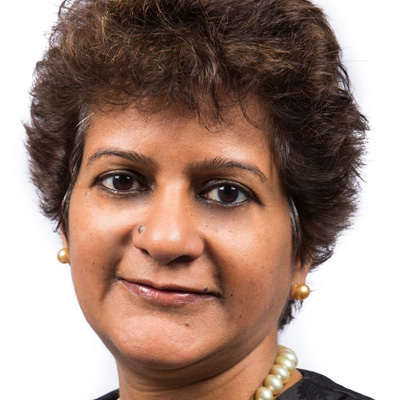
    To understand how a popular mainstream media goes about doing its ‘business’ while ensuring that its editorial credibility is intact, indiantelevision.com’s Papri Das got in touch with CNN International advertising sales asia pacific VP Sunita Rajan to get some expert insight.

    A key member of the CNN International team, Rajan has been tasked with setting the business strategy to drive advertising revenue for CNN’s global portfolio of multi-platform products among Asia Pacific based advertisers. With an emphasis on integrated advertiser solutions across the full range of CNN’s linear and non-linear properties, she is responsible for managing strategic relationships and brand partnerships. 

    Excerpts from the interaction:

    With broadcast news being heavily dependent on advertising revenue, how does CNN go about creating news content without falling prey to native advertorials?

    I would like to break the response down in three parts. Firstly, as an advertising sales person, I don’t manage or control editorial. That’s part of the business agreement. My role is to run the business which is advertising and sales across the Asia pacific region. I think the best analogy to describe how we look at this is that there should be church and state lines between editorial and advertising. CNN is very clear about it. There is no blurring of those lines. 

    We have maintained that we keep our audiences at the heart of what we do. Our editorial ensures that every piece of content that we produce is of value to the audiences. We don’t make the news, we report the news. 

    Even in the features, long form and analysis pieces that we do, we are mindful and also extremely stringent about selecting the stories that we believe are of value to the audiences. For example, our series on Silk Route, or even a lifestyle series.

    Can you explain the business model for CNN international?

    Our business model for CNN international is of ad sales and content sales. The other stream of revenue is business development which we have initiated in the last couple of years. The three key pillars of all streams of revenue are distribution, content and ad sales.

    What happens when a piece of editorial content has a conflict of interest with an advertiser?

    I wouldn’t say there is a conflict of interest because we are not kept informed of what editorial does. Marketing and ad sales never get into the editorial meets. The only space where there’s a discussion or interface it is with the number of features content that we do special seasons or theme weeks. There are times when the editorial highlights or showcases a particular country. We have a number of franchises, like On The Road, which is focusing on India this time as its relevant to our audiences. India is being talked about and with Modi’s Make In India falling into place, the youth and their aspiration need to be looked at.

    What brings advertisers to CNN?

    We go and talk to brands and partners, we build commercial partnerships. What we sell to clients and what we bring to the conversation is the brand proposition. We talk about our audiences, scale and size, texture and profile and a bit of what these audiences care about and why they consume content on CNN, how they come to CNN for its unique content and CNN as a platform. To be honest, what brands are buying is the quality of the audience, the profile of the audience, and that’s what we showcase when we going for a pitch.

    How do you react to advertisers wanting to get an editorial favour as part of an advertising deal?

    We don’t promise the clients editorial coverage if that is what you are asking. I think the reason the clients come into conversations with CNN is because they recognise the value of the brand and they recognise the principles that CNN as an international platform adheres to. They come to us because of that integrity and the value we bring to the table, and not because they think they can influence the editorial. There are a number of channels that do operate with that market behaviour probably

    From the ad sales point of view, for me and my team, it is our job to identify themes and content relevant to the client. For example we have CNN Money, which is an online vertical that CNN operates and that’s our business proposition as well. It’s about how we present to our audience, what is unique about the content for brands and advertisers, the differentiation between how we capture the story and how others do it. Because we are not just focused in the stock markets, we go beyond that and talk about the aspirational values of stories and stories on finance and wealth etc.

    How different is advertising sales in news channels from that of other entertainment broadcasters?

    Ad sales for news, whether it’s international market or local news is very different from general entertainment channels and sports channels. Those brands and their content are very much a point of view. News, on the other hand is a must have; a daily habit. You dip in and out of it but it’s 24 by 7. It’s less about the specific show. Yes, we do have content on a specific time, be it daily weekly or monthly.  We do offer certain programs for sponsorships, everything except for news and current affairs and business as it can’t be sponsored in Europe like everywhere else. We don’t necessarily take one program to the market and ask for a sponsor for it. That’s because’ when you are buying news, you are buying the brands reach and not its audience at 7 pm or 9 pm like entertainment channels. Now advertisers may choose to place their advertisement at a specific time of the day. That’s where I come in and recommend what the media schedule will look like and which programming would be more relevant to the brand. 

    But there are editorial events such as Heroes which is a very popular franchise and is in its 10th year this year. Or a republican debate, which we do sell as a big point of view. It has specific time bands and exclusives with CNN, so an occasion such as that is sold as a standalone property.

    How important is TV viewership ratings to you from an ad sales perspective? 

    Whole news brands and channels always had a good proportion of viewership command, it is not always that a news broadcaster focuses its ad sales or the opportunity to associate with brands just based on television ratings. We don’t sell on ratings but the reach of the channel across a week and also the context or the value of the environment. It is very much a brands sale than ‘how many people are watching or engaging with the channel.’

    Both in India and in other markets, it is also about brands looking for an international platform and reach. I am not saying that we are not getting the BRAC ratings, but we are not selling on just the BARC ratings. We also very much have a multiscreen and multiplatform presence, be it on TV, desktop or the mobile or through a responsive website. 

    There are a number of digital platforms in India that have started aggregating short form video content on news that audiences can consume on demand. Are they competition to conventional news broadcasters when it comes to the digital footprint?

    From a business owner perspective and media owner perspective, one needs to be able to be where the audiences are, be it on an investment scale or technology scale that drives one’s content. And to be where the audiences are, you need to serve where they consume the content. Rather than concentrating on just creating programming, it is important to recognise who your audiences are, where are they consuming content and what kind of content they prefer. Not forgetting your primary audience on television, it is also increasingly necessary to evolve so that you have as many touch points with your audiences as possible.

    As far as CNN is concerned we look at it positively. It comes as an advantage to have worked in a global market. We own the content we produce and showcase so we work with a number of platforms and partner with them, whether it’s Facebook, Youtube or Snapchat. While we see our content through such platforms, we also aggregate our own content, providing it to enrich the user experience, and driving audiences. So a number of these technology platforms have recognised the value of working with CNN. We don’t see them as threats but as opportunities. 

  • ‘There is a ‘church and state’ line between editorial and advertising’ :Sunita Rajan

    ‘There is a ‘church and state’ line between editorial and advertising’ :Sunita Rajan

    MUMBAI: Time and again news media, especially broadcast has come under scrutiny for compromising its editorial because of advertisers. Paid news and native advertising aren’t new to the industry and neither is the eternal debate between editorial and advertorial. Because the fact remains that the industry is heavily dependent on advertisers, and while selling content on entertainment channels is a task by itself, when it comes to news channel or other news media, it’s a completely different ballgame.

    While people are quick to point fingers and accuse media for being ‘sold’ and its content being ‘paid news’, they seldom look at it from the shoes of those who perform the tough balancing act of editorial and advertising sales and keep the machine running so more news is produced and reported.

    To understand how a popular mainstream media goes about doing its ‘business’ while ensuring that its editorial credibility is intact, indiantelevision.com’s Papri Das got in touch with CNN International advertising sales asia pacific VP Sunita Rajan to get some expert insight.

    A key member of the CNN International team, Rajan has been tasked with setting the business strategy to drive advertising revenue for CNN’s global portfolio of multi-platform products among Asia Pacific based advertisers. With an emphasis on integrated advertiser solutions across the full range of CNN’s linear and non-linear properties, she is responsible for managing strategic relationships and brand partnerships. 

    Excerpts from the interaction:

    With broadcast news being heavily dependent on advertising revenue, how does CNN go about creating news content without falling prey to native advertorials?

    I would like to break the response down in three parts. Firstly, as an advertising sales person, I don’t manage or control editorial. That’s part of the business agreement. My role is to run the business which is advertising and sales across the Asia pacific region. I think the best analogy to describe how we look at this is that there should be church and state lines between editorial and advertising. CNN is very clear about it. There is no blurring of those lines. 

    We have maintained that we keep our audiences at the heart of what we do. Our editorial ensures that every piece of content that we produce is of value to the audiences. We don’t make the news, we report the news. 

    Even in the features, long form and analysis pieces that we do, we are mindful and also extremely stringent about selecting the stories that we believe are of value to the audiences. For example, our series on Silk Route, or even a lifestyle series.

    Can you explain the business model for CNN international?

    Our business model for CNN international is of ad sales and content sales. The other stream of revenue is business development which we have initiated in the last couple of years. The three key pillars of all streams of revenue are distribution, content and ad sales.

    What happens when a piece of editorial content has a conflict of interest with an advertiser?

    I wouldn’t say there is a conflict of interest because we are not kept informed of what editorial does. Marketing and ad sales never get into the editorial meets. The only space where there’s a discussion or interface it is with the number of features content that we do special seasons or theme weeks. There are times when the editorial highlights or showcases a particular country. We have a number of franchises, like On The Road, which is focusing on India this time as its relevant to our audiences. India is being talked about and with Modi’s Make In India falling into place, the youth and their aspiration need to be looked at.

    What brings advertisers to CNN?

    We go and talk to brands and partners, we build commercial partnerships. What we sell to clients and what we bring to the conversation is the brand proposition. We talk about our audiences, scale and size, texture and profile and a bit of what these audiences care about and why they consume content on CNN, how they come to CNN for its unique content and CNN as a platform. To be honest, what brands are buying is the quality of the audience, the profile of the audience, and that’s what we showcase when we going for a pitch.

    How do you react to advertisers wanting to get an editorial favour as part of an advertising deal?

    We don’t promise the clients editorial coverage if that is what you are asking. I think the reason the clients come into conversations with CNN is because they recognise the value of the brand and they recognise the principles that CNN as an international platform adheres to. They come to us because of that integrity and the value we bring to the table, and not because they think they can influence the editorial. There are a number of channels that do operate with that market behaviour probably

    From the ad sales point of view, for me and my team, it is our job to identify themes and content relevant to the client. For example we have CNN Money, which is an online vertical that CNN operates and that’s our business proposition as well. It’s about how we present to our audience, what is unique about the content for brands and advertisers, the differentiation between how we capture the story and how others do it. Because we are not just focused in the stock markets, we go beyond that and talk about the aspirational values of stories and stories on finance and wealth etc.

    How different is advertising sales in news channels from that of other entertainment broadcasters?

    Ad sales for news, whether it’s international market or local news is very different from general entertainment channels and sports channels. Those brands and their content are very much a point of view. News, on the other hand is a must have; a daily habit. You dip in and out of it but it’s 24 by 7. It’s less about the specific show. Yes, we do have content on a specific time, be it daily weekly or monthly.  We do offer certain programs for sponsorships, everything except for news and current affairs and business as it can’t be sponsored in Europe like everywhere else. We don’t necessarily take one program to the market and ask for a sponsor for it. That’s because’ when you are buying news, you are buying the brands reach and not its audience at 7 pm or 9 pm like entertainment channels. Now advertisers may choose to place their advertisement at a specific time of the day. That’s where I come in and recommend what the media schedule will look like and which programming would be more relevant to the brand. 

    But there are editorial events such as Heroes which is a very popular franchise and is in its 10th year this year. Or a republican debate, which we do sell as a big point of view. It has specific time bands and exclusives with CNN, so an occasion such as that is sold as a standalone property.

    How important is TV viewership ratings to you from an ad sales perspective? 

    Whole news brands and channels always had a good proportion of viewership command, it is not always that a news broadcaster focuses its ad sales or the opportunity to associate with brands just based on television ratings. We don’t sell on ratings but the reach of the channel across a week and also the context or the value of the environment. It is very much a brands sale than ‘how many people are watching or engaging with the channel.’

    Both in India and in other markets, it is also about brands looking for an international platform and reach. I am not saying that we are not getting the BRAC ratings, but we are not selling on just the BARC ratings. We also very much have a multiscreen and multiplatform presence, be it on TV, desktop or the mobile or through a responsive website. 

    There are a number of digital platforms in India that have started aggregating short form video content on news that audiences can consume on demand. Are they competition to conventional news broadcasters when it comes to the digital footprint?

    From a business owner perspective and media owner perspective, one needs to be able to be where the audiences are, be it on an investment scale or technology scale that drives one’s content. And to be where the audiences are, you need to serve where they consume the content. Rather than concentrating on just creating programming, it is important to recognise who your audiences are, where are they consuming content and what kind of content they prefer. Not forgetting your primary audience on television, it is also increasingly necessary to evolve so that you have as many touch points with your audiences as possible.

    As far as CNN is concerned we look at it positively. It comes as an advantage to have worked in a global market. We own the content we produce and showcase so we work with a number of platforms and partner with them, whether it’s Facebook, Youtube or Snapchat. While we see our content through such platforms, we also aggregate our own content, providing it to enrich the user experience, and driving audiences. So a number of these technology platforms have recognised the value of working with CNN. We don’t see them as threats but as opportunities.