Tag: Panorama

  • Garbage, A gritty socio-political drama directed by Q,the only Indian film, to premiere at Berlinale 2018

    Garbage, A gritty socio-political drama directed by Q,the only Indian film, to premiere at Berlinale 2018

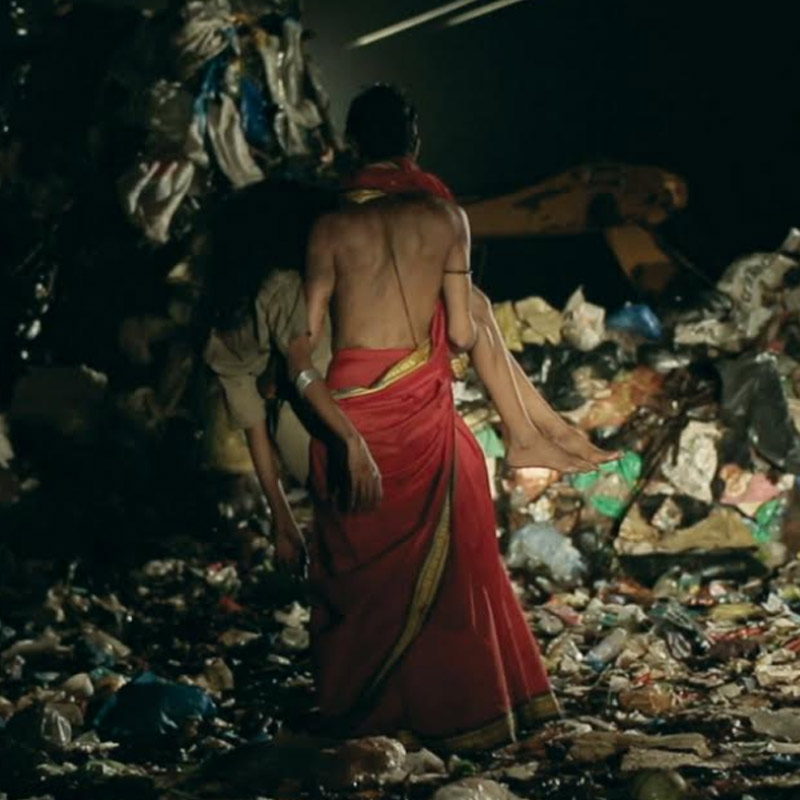
    A political drama that reflects the times we are living in, Garbage, Q’s new directorial venture will be premiering at Panorama, Berlinale this year.

    Produced by Shaailesh R Singh and Hansal Mehta of Karma Entertainment & Media LLP, and Q of ODDJOINT, the film tells the story of Phanishwar (Tanmay Dhanania), Nanaam (Satarupa Das) and Rami (Trimala Adhikari), who are lost in their own dark worlds, and come together only to inflict damage on each other.

    Phanishwar is a taxi driver in Goa, living with a mysterious girl, Nanaam, who he keeps in chains. When Rami, a medical student, and a victim of revenge porn leaked online by an ex-boyfriend, seeks refuge in Goa, she stumbles into the strange but placid lives of Phanishwar and Nanaam.

    What ensues is an intricate, steely drama between the characters, questioning and confronting the prevalent concepts of gender, freedom and faith, as is in India, today.

     “I see garbage as a strong metaphor of human existence. I am shocked at the level of violent patriarchy and general apathy around me. India has been changing, and sucking itself into an abyss of misunderstanding and delusion, aided strongly by mainstream religious sentiments. There’s an imminent threat of the fragile social fabric imploding and affecting everyone. Garbage is my way of trying to understand the tension’ says Q.

     “I really liked what Q narrated to us and with Garbage being the only Indian film at Panaroma Berlinale, Hansal and I are proud of our association with the film. We hope it will be liked”, says Shaailesh R Singh.

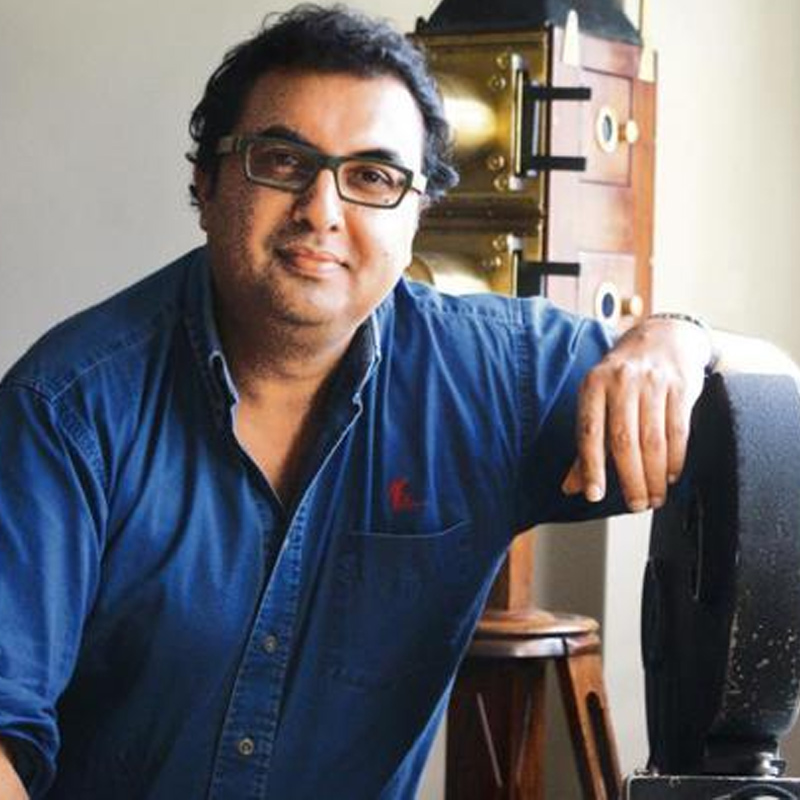
     In the world of independent cinema, Q is well known for his subversive storytelling and controversial cult films that question the established status quo. Q’s experiments with filmmaking started with vivid and potent tales of contemporary Bengali culture, both fictional and non-fictional, back in 2009. Since then his films have explored the fringes of popular culture, collaborating with producers and actors across the globe. Seven years after Gandu, one of his most well known works, Garbage is all set for its world premiere at Panorama, at the Berlin International Film Festival, which seeks out new impulses in the prevailing trends and in cinematic creation, from across the world.

  • Panorama & Pen buy theatrical distribution rights of PNC’s ‘Mastizaade’

    Panorama & Pen buy theatrical distribution rights of PNC’s ‘Mastizaade’

    MUMBAI: Panorama Studios and Pen Movies have acquired the all India rights of theatrical distribution of Pritish Nandy Communications’ upcoming films Mastizaade


    The film stars Sunny Leone, Tusshar Kapoor and has a special appearance by Ritesh Deshmukh. It has been directed by Milap Zaveri. 


    Panorama Studios has recently distributed films like Pyaar Ka Punchnama 2Gabbar Is Back, Aloneand Singham Returns. The company has produced films like Special 26, Drishyam and the Pyaar Ka Punchnama franchise.


    Panorama Studios managing director Abhishek Pathak said, “2015 has been a great year for us at the box office. Acquiring Mastizaade for all India theatrical distribution is going to be great start for us in 2016.”


    Pen Movies managing director Dhaval Gada added, “We are very happy to be associated with this film. It is a sure shot box office success and I am sure that Sunny Leone will make a big brand of Mastizaade, which till date would be her biggest.”

  • Directorate of Film Festivals ropes in Sabu Cyril as art director for IFFI 2015

    Directorate of Film Festivals ropes in Sabu Cyril as art director for IFFI 2015

    NEW DELHI: The Directorate of Film Festivals of the Information and Broadcasting (I&B) Ministry, which organises the International Film Festival of India (IFFI) has roped in four-time National Award winner production designer Sabu Cyril to design all the sets for different components of this year’s festival. 


    The 46th International Film Festival of India will be held from 20 – 30 November, 2015.


    Right from the motif of the peacock as the logo for the festival to creating an appealing ambience at different event venues for delegates at Panaji in Goa, he will be bringing alive cinema in different shades at the IFFI.


    With a career spanning over two decades, Cyril has been associated with some of the landmark films in Hindi, Telugu, Malayalam, Kannada and Tamil cinema.


    Speaking about his association with IFFI 2015, Cyril said, “I am very pleased to be a part of one of the biggest film festivals of Asia. In a commercially competitive world of filmmaking, the International Film Festival of India is doing a great job of promoting aesthetically rich Indian films, which are no less than a masterpiece in the context of cinematography and art direction. It feels good to handle the creative responsibilities of one of the prestigious film festivals in the world. IFFI is a great platform for aspiring as well as established filmmakers to showcase their talent to global audience and let them experience the creativity of Indian cinema.”


    Directorate of Film Festivals director C. Senthil Rajan added, “Saby Cyril is a perfect combination of great credentials and imaginative skills and has been a part of some of the best and globally renowned Indian films. Under his creative guidance, I am sure the 46th IFFI would be a wonderful journey of visual opulence that will impress the film lovers across the globe.”


    Cyril began his production designing career in 1988 and till date has directed more than 2500 advertisements, three tele-serials and 115 feature films in various languages. In 1996, he directed the stage design for the Miss World beauty pageant.


    IFFI will showcase movies across sections including Indian and International Panorama, Indian and Foreign Retrospectives, tributes, special focus, workshops, short films, Master Classes and the Film Bazaar.

  • P.K. Nair gets rare honour at Kyiv even as ‘Celluloid Man’ wins award

    P.K. Nair gets rare honour at Kyiv even as ‘Celluloid Man’ wins award

    NEW DELHI: Celluloid Man directed by Shivendra Singh Dungarpur, a film is based on the life of P.K. Nair (father of film archiving in India).

    Nair has won the "Nestor The Chronicler" (A man who keeps history of world cinema) award at the Kyiv International Documentary Film Festival in Ukraine which concluded recently.

    The film, which has earlier won a National Award, was in competition at the festival.

    Nair, the founder-director of the National Film Archive of India (NFAI) was conferred the Order of ‘Maestro‘ at Kyiv.

    The Order is given for personal contribution to the development and promotion of world cinema.

    Celluloid Man has been selected for the Panorama section of the upcoming Shanghai International Film Festival, which is also screening The Bright Day and Barfi!).

    The documentary film on Nair has been released in Cochin at PVR, Lulu Mall, for one week from 31 May in a rare tribute to the archivist.

  • India-based British documentary wins second prize in Audience Awards at Berlinale

    India-based British documentary wins second prize in Audience Awards at Berlinale

    NEW DELHI: Salma, an India-based documentary by British filmmaker Kim Longinotto, has received the second place in Panorama Audience awards at Berlinale.

    Salma chronicles the life of a woman from south India who was locked by her parents on reaching puberty and decided to fight her way back to the outside world twenty-five years later. She is now a well-known poet.

    The Panorama Audience Award has been given since 1999. During the Berlinale, movie-goers were asked to rate the films shown in the Panorama section and over 28,000 votes were cast and counted altogether. This year the Panorama presented 52 productions from 33 countries, of which 20 were documentaries.

    The 63rd Berlin International Film Festival will come to a close on February 16 with the presentation of the awards.

    The first prize for documentaries went to The Act of Killing by Joshua Oppenheimer which is a Denmark/Norway/Great Britain collaboration. The third prize went to A World Not Ours by Mahdi Fleifel (Lebanon/Great Britain/Denmark).

    In fiction, the prizes went to: The Broken Circle Breakdown by Felix van Groeningen (Belgium/Netherlands); Reaching for the Moon by Bruno Barreto (Brazil) and Inch‘Allah by Ana?s Barbeau-Lavalette (Canada/France).

  • Digital technology facilitates filmmaking

    Digital technology facilitates filmmaking

    NEW DELHI: Students of different film schools feel digital technology has made their work easier but agree that the main challenge still remains: finding good content that will move the viewers.

    Some of the students who interacted at the Open Forum organised by IDPA and FFSI were also nostalgic about the celluloid and said they would always want to keep at least one print of their film since digital technology.

    The students belonged to the Film and Television Institute of India, the Satyajit Ray Film and Television Institute, The AJK Mass Communication Research Centre of Jamia Millia Islimia, and the MGR Government Film School whose films are being screened in a separate section of Student Films and a section of Fifty Years of FTII.

    Ashim Paul whose film ‘Birds of Passage’ is in the non-features of the Indian Panorama said that digital technology did not pose a problem as young people were familiar with it, but celluloid held its own charm. He said one like to feel the product. In any case, it was important to preserve it in celluloid for archival purpose as digital technology could only save a film as a file. A film is tangible material, he said. He said while answering a question that content would not be affected by going digital,

    He said cinema was an art form and not a technology driven form and celluloid is a pious form.

    Kaushal Oza whose ‘Afterglow’ is also in the Indian Panorama said technology is an enabler and not the be-all and the end-all. The final product will still be in the hands of the creator. He did not agree with the view that digital will drive film out of the theatres, and said it could be viewed in all mediums.

    Prince George who was involved as music director of ‘Allah is Great’ which is also in the Panorama said technology was king for him as it had made his job very easy. He said digital technology had given him another advantage – he had been able to compose music for a film made by a filmmaker in Oman without that person coming to India or him having to go there.

    Govind Raju whose film ‘Golden Mango’ figures in the FTII package said the shift to digital was not too easy initially and took some time, but it has a lot of advantages. However, it would erroneous to say digital films are easier to make as they take the same effort. He also did not agree that films would disappear from theatres with digitisation.

    Kabil Dev M whose film ‘Rajini’ is in the Students Package said he felt very comfortable using digital technology for his films. But he felt that theatrical exhibition may be affected with so many other mediums.

    Arun said the movement from celluloid to digital was still in a transitional phase and it may take time for all to accept this new technology. Digital technology he said was pocket friendly but may affect theatrical exhibitions. He was also of the view that a film made on a small camera is fit for the small screen.

    Vandana said new media has brought forward a new way for promoting films, and said it was not true that the new media like YouTube did not pay for the content. But she agreed there was a romance in celluloid as one could keep and feel the product one produced.

    Suparna said digital technology also required discipline and so the filmmaker was important. She also wondered about problems faced by filmmakers for finance.

  • BBC’s ‘Panorama’ to expose unsavoury deals at Fifa

    MUMBAI: A British football chief has revealed how a Fifa VP asked him to pay Football Association money into his own personal bank account.

    The former chairman of the Scottish FA, John McBeth, has told UK pubcaster the BBC’s show Panorama that a top Fifa executive Jack Warner asked him to make the match fee cheque payable to him personally, following an international match in Edinburgh.

    It is one of a series of suspect dealings involving Fifa. Panorama asks why Fifa’s ethics committee – run by Lord Sebastian Coe – is not taking action.

    Other questions about foul play directed at world football’s governing body include:

    Why a FIFA official, branded a liar by an American judge, is now Fifa General Secretary; why no-one has been prosecuted after falsifying documents in the same case – a crime punishable by up to five years in prison; and why a Fifa executive committee member was allowed to pay his national team players only £500 each for their participation in the World Cup, despite securing lucrative sponsorship deals – and then blacklisted them from the national team when they complained.

    Panorama asked Lord Coe why the ethics committee was not looking into these issues. He declined to answer or give any details of his job, referring all queries to Fifa, the body he is supposed to be monitoring.

    McBeth first expressed concerns about corruption in Fifa after being chosen to fill Britain’s post on the Fifa executive committee in May this year. He pointed the finger at football officials in Africa and the Caribbean – but was dropped just days before starting his new job amid accusations of bigotry and racism from Vice-President Warner.

    However, he is adamant that this was a merely a smokescreen and that he was sailing far too close to the truth for some Fifa members. McBeth says, “There are one or two people on that executive committee that I wouldn’t trust as far as I could throw. I was talking about the football people that I’ve met and dealt with in Africa and the Caribbean. It was football people I was talking about. I wasn’t talking about the nation. I’m not a racist bigot and I think it probably says more about Jack and him trying to deflect away the criticism that I was making of corruption.”

    Speaking for the first time on the subject, McBeth has revealed how Warner, who represents Fifa in North and Central America and the Caribbean, asked him to pay a match fee directly into his personal account.

    Previously, Warner was found guilty by Fifa’s ethics committee of touting thousands of World Cup tickets through his family travel company in Trinidad. Yet he escaped with nothing more than a slap on the wrist. He was also accused of “ripping off” Trinidad and Tobago’s players following last year’s World Cup.

    The Panorama investigation has also found that some of Fifa’s actions in relation to a sponsorship deal amounted to criminal activity, punishable by up to five years in prison in Fifa’s home nation, Switzerland.

    FIFA attempted to drop its sponsor MasterCard and replace it with Visa, contrary to a long-standing agreement, and was taken to court in New York by MasterCard, where the judge condemned its actions.The man who led FIFA’s marketing team, Jerome Valcke, admitted lying to both MasterCard and Visa.

    The BBC adds that despite the serious nature of the case, Lord Coe’s ethics committee has took no action. And when Panorama asked Lord Coe why he was not looking into this case he declined to talk. Warner and Valcke also declined to comment.

  • BBC’s show ‘Panorama’ reveals the problem of online gambling in the UK

    BBC’s show ‘Panorama’ reveals the problem of online gambling in the UK

    MUMBAI: UK pubcaster the BBC says that its show Panorama has uncovered figures which show that an average of 5.8 million people a month visited online gambling sites from April to September 2006. The show airs this weekend in the UK.

    The statistics from the internet media and market research company Nielsen/Net Ratings show that in May there were more than six million visitors to online gambling sites.

    Independent research commissioned by the Government claims that there are only 1 million regular UK online gamblers. Professor Jim Orford, an addiction expert, tells Panorama the Government is being ‘naive’ and ‘playing dice’ with people’s health over its plans to liberalise gambling laws.

    He has predicted that up to one million people a year could become hooked on internet gambling because of the Gambling Act 2005. The Act becomes law in September 2007.

    Professor Orford, who works at Birmingham University, told Panorama, “Gradually we’re going to realise it’s a much bigger problem than we thought. More people are going to know friends and family members who’ve got problems. Health authorities are going to be under pressure to provide treatment.

    “We could be talking about a million people affected by it in any one period of 12 months, and that begins to put it on a par with drug addiction problems.”

    UK Minister for Sport Richard Caborn said, “We have, I believe, acted responsibly in bringing an Act onto the statute book, which has three basic principles on which it is based; protecting the vulnerable, keeping it crime free and making sure that those who have a bet will be paid out and it’ll be a fair bet. That is what it is predicated on because we believe that gambling is now part of our leisure industry.”

  • Sandy Smith the new editor of BBC’s flagship current affairs show ‘Panorama’

    Sandy Smith the new editor of BBC’s flagship current affairs show ‘Panorama’

    MUMBAI: UK pubcaster the BBC has announced that Sandy Smith is the new editor of Panorama which is BBC One’s flagship current affairs series.

    He will take over the post in September. The appointment comes after the former Editor Mike Robinson announced in March this year that he was to step down and retire from the BBC.

    Sandy has worked at the BBC since 1988. The majority of that time has been spent producing and directing programmes for the corporation’s current affairs department but since August 2005, he has been editor of the BBC ONE programme Watchdog.

    BBC director of news Helen Boaden said, “Sandy has great flair in making creative television that delivers provocative, challenging and serious journalism to wide audiences. His energy and commitment will invigorate and refresh our most important current affairs programme.”

    BBC head of current affairs George Entwistle says, “Sandy is an exciting addition to Current Affairs’ strong senior editorial team. His commitment to original journalism and creative programme-making will ensure Panorama tells the biggest and most relevant stories of our time in an accessible and engaging way.”

    Smith said, “I am delighted to take over at Panorama which despite its long and illustrious career still has its best years ahead of it. I have enjoyed my time at Watchdog and will be very sad to part company with such a talented, young team but I am very much looking forward to the challenge ahead.”