Tag: Pankaj Krishna

  • Rampant cord cutting on cable continues: Chrome Data Study

    Rampant cord cutting on cable continues: Chrome Data Study

    Mumbai: The new findings from Chrome Data Analytics and Media’s July Subscriber Establishment Survey (SES) reported a significant drop in cable and satellite (C&S) homes, where the subscriber base has dropped from 201.2 million to 165.1 million households since 2019.

    This is based on a pan India ground survey that was done between January and July 2022; the sample included one out of every 175 households and included over 219 million TV households across the nation.

    Chrome DM surveys regularly, and it plays an important role in shaping our understanding of the changing TV landscape.

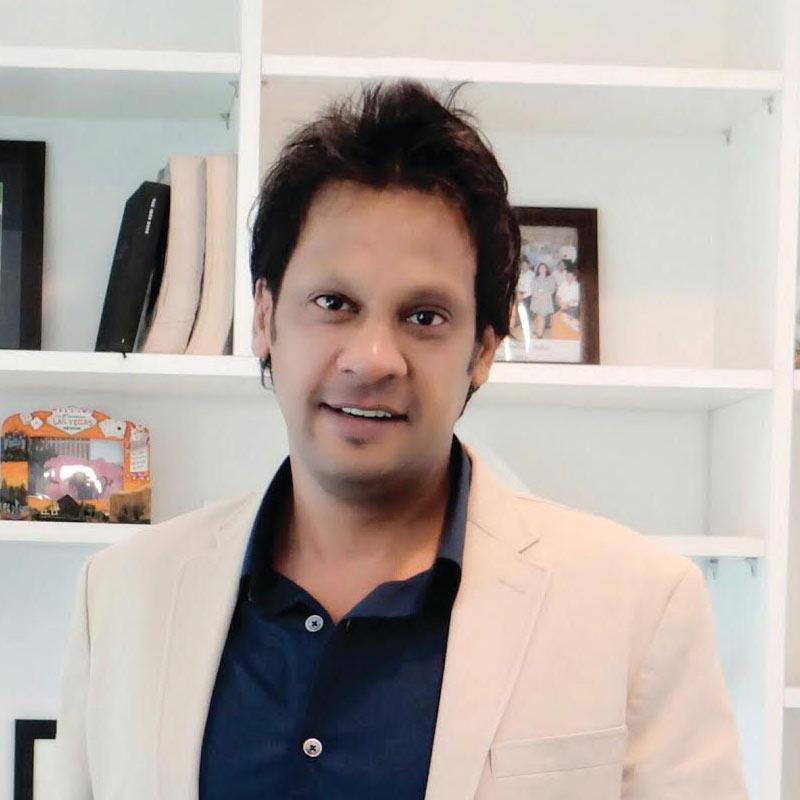
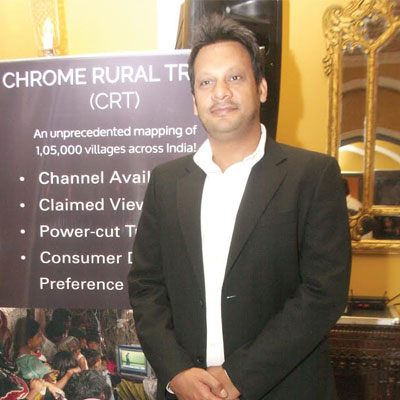
    Speaking on these findings, Chrome DM CEO and founder Pankaj Krishna said, “The reason for the decline is that the medium is changing. In television, in terms of content, it will keep booming, but the modes of consumption are changing so it is affecting Cable and Satellite (C&S) homes.”

    He further added, “This is the great race to entertainment, and OTT looks to be the reigning champion. I believe this trend will continue till ‘streaming’ is cemented as the new alternative in this turn of transition.”

    Pankaj believes with 5G coming in, we will witness a lot of disruption as well on how people consume content. “So the reason for the decline in cable and satellite homes is that the homes are wired through a cable and satellite connection but the overall consumption is increasing through the broadband internet (Connected TV) consumption. TV shows are increasing as well,” he added.

    Pay DTH and digital cable

    According to the Chrome Data Analytics and Media July report, pay DTH has a market share of nearly 38 per cent and digital cable is close to over 37 per cent.

    Digital cable experienced a significant decline of 18.5 per cent, whilst Pay DTH experienced a more restrained decline of 5.1 percent in the same findings. Pay DTH continues to have a significant presence in southern markets, where Andhra Pradesh reigned supreme with considerable share growth of 11.9 per cent.

     In terms of its total subscriber base, Tamizhaga Cable TV Communication (TCCL) was the leading gainer by a sizable margin of 33.2 per cent.

    Covid Impact

    The report stated that it would be an understatement to say that Covid-19 disturbed the market economy. The pandemic ushered in a new period of hesitation and unpredictability when any fleeting sense of assurance was purchased on the cheap.

    The markets fell, and the major players warned that the economy was on the verge of a devastating downturn.

    According to the report, the commercial sector was completely destroyed by the Covid-19 outbreak, and the cable and satellite industries were just one of the numerous victims.
     
    Before the first economic downturn, the profits appeared to be guaranteed, but after Covid, it served as a foreshadowing of what was to come. The numbers foretold the end of this once-dominant sector.

    The pandemic caused changes in social and cultural dynamics, which quickly followed as the economy began to slow down in the backdrop. The lockdowns forced a lot of migratory workers to return to their small rural villages, which caused a huge flood of subscribers to leave urban marketplaces, the report mentioned.

    The report found that to combat rising inflation and the economic slump, many people unsubscribed to curtail domestic expenditure, which includes keeping a TV set and paying for cable subscriptions.

    Freedish

    Freedish was the only one to experience a positive increase of 5.4 per cent while continuing to ascend north in rural areas.

    The other transmissions were impacted by the pandemic’s dwindling market share, but Freedish managed to hold onto its lead while the others did not.

    Again, this was largely the result of it being provided for free and having a substantial market share in rural India, which was untouched by the migrant issue. Odisha continued to be a top gainer, with its rural market growing by only about 16.8 per cent throughout this time.

    OTT impact

    Similar to this, urban residents were losing interest in cable TV and rapidly shifting their viewing preferences online. Many people have joined the growing number of cord-cutters and are now satisfying their watching needs online. Thus, the cord-cutting epidemic has ushered in a streaming-era digital revolution.

    The report stated that cable and satellite subscriptions have consistently decreased as viewers’ interest in traditional linear TV has declined, but a further rise in streaming usage is increasing.

    According to the survey, many cord-cutters still find this to be an appealing alternative because they don’t want to pay extra for the cable or digital subscriptions that are usually included with standard TV equipment.

  • Chrome DM data validates RepublicTV’s leadership claims

    Chrome DM data validates RepublicTV’s leadership claims

    Mumbai: “Opportunity To See” or OTS is a measure in advertising media that denotes the number of times the viewer is most likely to see the brand (In the below table brands denote TV channels). This term is used by marketers and analysts to differentiate between the total audience in the universe and the percentage of the total audience that has access to see your brand/ channel. The larger the percentage the higher is the availability of the channel converting into consumption/reach.

    The following OTS analysis over the last four years (2017-2020) within the Indian television market points at

    •  As seen the Republic TV OTS in urban homes has been higher than Times since 2019 making it the largest available English brand in Urban Homes in India.
    •  Republic TV OTS has been higher than Times NOW since 2018. The distribution and availability of the channel has been extremely high in comparison to any other channel in the genre. 
    •  The gap has widened into “Reach” in 2019 and 2020 as the TRAI implemented the new tariff order (NTO) making sure Republic TV’s free to air offering in English increased its footprint across homes through India. 
    •  The share of news genre got expanded from 2017, post the entry of Republic TV.
    •  The channel was launched in 2017 and since then its growth trajectory has always been on the rise. The other channels have also either grown albeit slowly vis-à-vis Republic or remained semi stagnant.

    OTS (Opportunity to See) – India Urban – Avg. of 2016 to 2020

    Source: Chrome Live, Mkt- All India Urban, 2017-2020

    Year

    Republic

    Times Now

    Difference

    Avg. of 2017

    61%

    65%

    -4%

    Avg. of 2018

    66%

    63%

    3%

    Avg. of 2019

    91%

    53%

    38%

    Avg. of 2020

    86%

    60%

    26%

    Source: Chrome Live, Mkt- All India Urban, 2017-2020

    Speaking to Republic World, ChromeDM founder and CEO Pankaj Krishna said, “After a point and irrespective of genre, the key differentiator amongst players within the genre boils down to the availability of content. Considering the fact that distribution is still contingent on a 1000+ variables (DPOs/ CNOs) and is one of the biggest cost centres for running a linear TV channel – unless of course, it is a hugely appointment-led genre, for instance for Hindi GEC.

    Most of the genres – be it news (Hindi and English), music, infotainment, the time spent per viewer limits to less than ten minutes a week and is mostly driven by channel surfing or flirting, if I may call it. A differentiator of 15-20 per cent on distribution between any two-three players within a genre would probably be the factor deciding the lead in the consumption / viewership / ratings within the genre.

    LCN (logical channel number), placement (where your channel falls), neighbourhood (the channel that precedes you), the packages that you are on (whether your channel reaches 100 per cent audiences and the penetrations of the packages that your channel is a part of) – all of these factors determine the OTS (Opportunity to See) or the availability of a channel which is the primary key factor in determining the dominance of one over the other.

    I don't have any inclination to any channel or newsroom or point of view- but after a certain level and with the proliferation of content, it does become a commodity – where-in the availability of content plays a bigger role than the content itself…"

    Republic Media Network group CEO Vikas Khanchandani said, “Republic Network has focused and delivered the largest reach platforms in its respective genres. The above data from Chrome is yet another data point that reflects on the growth and leadership that our brand enjoys. There are multiple data points like the engagement of Republic TV on social media which is also highest within its genre reflecting the stickiness of our brand and reflective of high TSV that the brand enjoys. We have similar data points for our humongous consumption on OTT as our brand has very wide availability on connected devices and I am more than confident that we will continue to bring the largest English and Hindi news platforms for consumers and advertisers.”

    The data for analysis was provided by Chrome DM.

    Chrome DM is a technology-driven market research firm with a pan-India on-ground presence. As of September 2017, the organization had a team of 650+ field staff, 150+ managerial staff and 450 tele-callers speaking over 22 languages to gather data from 3300+ towns. With a presence in over six lakh villages, Chrome DM also has an unprecedented reach into rural India.

  • TRAI tariff order: Topline projections for broadcasters, MSOs

    TRAI tariff order: Topline projections for broadcasters, MSOs

    MUMBAI: In what is probably the acting collaboration of the year, Aamir Khan teamed up with Pankaj Tripathi for an infomercial for broadcasting behemoth Star. The 1 minute 22-second video, available both on TV and digital platforms, is an ad for Star’s new bouquet of channels, with the tagline“#Sachmein?”.Created to take the new TRAI tariff order ruling head-on, the ad seems to sum up the urgency broadcasters must be feeling to be ahead of the curve on this issue.

    The ad also starkly displays customers being at the mercy of cable and DTH providers for a fair offer. The new tariff order, however, will change this by favouring consumer choice and bringing in transparency, equitable distribution and parity. That the broadcaster had to call out the big guns (Khan, Tripathi) to make their point is a fair reflection of how seriously they expect the TRAI order to affect the television industry. And, all things considered, this might be the next revolution in the industry, one that will put consumers firmly at the centre of the ecosystem.

    The background

    In the past, negotiation took place between the rates channels agreed upon with the DPO and those that reached the consumers. The customers were never clear how much they were paying for which channels. Now, broadcasters will be creating fair bouquets, which the distributors have to package attractively in order for customers to subscribe to them.

    What the tariff order is all about:

    ·         All channels are offered on an a-la-carte basis.

    ·         Channels must be declared as pay channels or FTA-free to air channels and cannot be mixed in a single bouquet.

    ·         Distributors have to offer a base pack consisting 100 FTA channels in which 26 channels from Doordarshan are mandatory.

    ·         A bouquet of pay channels cannot contain a pay channel exceeding MRP Rs19.

    ·         The prices of bouquets and a-la-carte channels will be uniform across distribution platforms. No regional pricing is allowed.

    All stakeholders will finally be at par

    1. For the broadcaster: An obstacle to be worked around

    The broadcaster will now have to announce the MRP of each channel individually and set reasonable a la carte prices.

    They have to decide how much they can corner from advertising, subscription revenue and engage in intelligent pricing. They are even allowed to indulge in promotional pricing twice a year for up to 180 days in total. For broadcasters, opportunities need to be identified within the given framework. Those displaying good content will benefit while those used to bundling channels with no demand will take a hit.

    Our research shows that broadcasters may take a substantial hit, but strictly only in an ideal a la carte scenario. If we accept the ideal scenario, the Chrome Content Consumption Index shows that consumers will choose, on a national average, six pay channels. So apart from the basic cost of Network Capacity Fee (Rs 130), plus one flagship channel (~Rs 19) and five secondary channels (5*Rs 3), the new ARPUs stand at Rs 164, down from the current average of Rs 208.

    However, this needs to be tempered by the fact that most consumers will go for bouquets instead of ordering a la carte channels, largely due to the ease of ordering in one go, and if this is the case, the numbers need to be reworked. Broadcasters will sell their first bouquet for Rs 49 (led by driver/mass entertainment channel), the second for Rs 25 (led by a secondary driver/mass entertainment channel) and the 4 remaining channels (4*Rs 3), which will together amount to 86 rupees. In addition to the existing network capacity fee of Rs 130, the new ARPU is placed at Rs 216, an increase in the current ARPUs.

    Over the next few months, how it plays out, remains to be seen.

    2. Distributors and last mile operators (LMOs)

    Broadcasters will now be directly linked to end consumers and the intermediaries have the most to lose. In the past, they used to gain out of leakages and from money, which was not accountable. With the tariff order bringing in transparency, money can be tracked and the government will receive its due taxes.

    On the other hand, broadcasters will no longer coerce the distributors either. Rather than fixed deals between the two, which occurred in the past, the order will bring in objective, transparent deals based on content. They will now be able to create bouquets from different broadcasters at prices declared by them and can incentivise customers to purchase the same.

    Distributors and LMOs have to sign an agreement for revenue sharing on a mutually agreeable percentage share. If they both do not reach an agreement then recommended revenue share will be distributor at 55 per cent and LMO at 45 per cent.

    3. The audience: empowering consumers across the nation

    The belief is that the customer is the same everywhere.

    Overall prices are to be brought down through transparency of the pricing structure. The unfair advantage held by broadcasters will finally be dismantled as the consumers gain freedom to cherry pick their content and pay for the same. Not only is the price of each channel known, but viewers can also pro-actively, economically choose content from a wide range of choices. 

    What remains to be seen…

    Many have hailed the new regime as the right way forward where service providers and consumer interests are balanced. A fair deal is negotiated between broadcasters, distributors and the consumers as per the tariff regulations. However, its successful implementation remains to be seen and operational difficulties are being predicted.

    In terms of advertising, that second revenue pillar of broadcasting, the new order should render sampling quite obsolete, especially with more than 50,000 variations in packages. This will be the time when distribution data will become ‘oil’ for the industry. Channel availability, and not sampling, will drive media buying in the short to middle term.

    Industry topline projections

     The conclusion

    In the end, this is a much-needed step in the right direction, although the ideal scenario of 100 per cent a-la-carte channels might still be an improbability. The tariff order promotes transparency, empowers the audience, and plugs the revenue leakages, thereby increasing accountability of the key industry stakeholders. 

    (The author is chief executive officer and co-founder, Chrome DM. The views expressed here are his own and Indiantelevision.com may not subscribe to them) 

  • Guest Column: Content is king, but is distribution still God?

    Guest Column: Content is king, but is distribution still God?

    A linear channel goes through multiple layers of distribution intermediaries on ground. 

    The resulting viewership entirely depends on the on-air and off-air status of the channel. The on-air includes the content, break pattern and on-air presentation, whereas the off-air hinges on the marketing and distribution ground connectivity of the channel. With the former being constant much of the linear channel’s performance depends on the latter.

    The recent dip in the performance of the Asia Cup 2018 on Star Sports, great content coupled with the non-availability of Star channels across a major chunk of C&S homes (~52.6 million) in India, is a case in point.  The Asia Cup 2108 was a great king (content) but governed by a poor God (distribution). 

    • 10 per cent drop vis a vis 2016 and an overall drop in audience of 54 million on Star Sports1 
    • 5 per cent drop vis a vis 2016 and an overall drop in audience of 24 million on Star Sports 2 

    The Asia Cup 2018 saw an overall drop of ~45 per cent in viewership compared to Asia Cup 2016, despite seeing a TV universe growth from 168 million to 195million according to Chrome DM’s recently concluded SES survey (Sep 2018). 

    To simply compare the last two tournaments (2016 vis-à-vis 2018) for on-air, there will be ticks for all the factors (table below), indicating that the Asia Cup 2018 was no less a king than it was in 2016 from a content perspective.

    Striking the right balance between content curation and distribution can be a real challenge for broadcasters. Though decisions can be made basis the verdict of the selected barometered homes, however, in-depth studies of ground realities are much required to facilitate strategic decision making.

    Good content, whether in the form of print or TV will always inspire viewers to engage. The audience will always pause to consume, understand and perhaps even comment, like or share provided it reaches the right audience at the right time.

    The author is CEO, Chrome DM. The opinions expressed hereare his own and Indiantelevision.com may not subscribe to them.

  • Chrome DM services help optimise viewership ratings: Pankaj Krishna

    Chrome DM services help optimise viewership ratings: Pankaj Krishna

    As you walk into the Chrome Data Analytics & Media’s office on the outskirts of Delhi, you see the company chief executive Pankaj Krishna ‘talking to himself’ in the wide-glass paned conference room. Only after being ushered in, you realise, he’s actually holding a business conversation with his colleague in the Mumbai office whose live images also appear on the big TV screen placed in the room. “This connection is always ‘live’ so any issue can be discussed asap,” he informs languidly, pushing back the chair’s backrest to the maximum.

    For a technology-driven market research and advisory firm with a pan-India on-ground presence and a list of clients that include Indian and global companies, apart from a prominent political party, Krishna looks less like a chief executive and more like a person out on a beach holiday. His hair pulled back in a casual pony-tail, and clad in a stylishly crumpled linen shirt, cotton trousers and kohlapuri chappals, he seems out of place in an office that’s buzzing with activity and some serious data analytics. “Just returned to office some time back after being up the whole night in the office with the masons, plumbers, etc. trying to get the main washroom relocated and refurbished according to Vaastu (the Indian system of architecture),” the man offers an explanation apologetically. Huh!!?? Probably, that’s also an indication of the nature of the person that he likes to get involved in even the smallest details of business.

    As of late 2017, the organisation had a team of big team of field staff, 150+ managerial staff and 450 tele-callers speaking over 22 languages to gather data from over 3,000 towns. With a major presence in villages too, Chrome DM also has a fairly expansive reach into rural India. That’s what the company website states. Krishna adds that there could be some small changes in those numbers as the company forays into new verticals (human resources placements, for example) and targets new avenues to monetise the huge amount of data that’s collected on a daily basis. So, you can very well be India’s Cambridge Analytica, one asks him cheekily. Without batting an eyelid, Krishna guffaws and counters: “Yes certainly, but minus the data leaks. We are very particular about data protection.”

    Chrome DM’s office on the eight floor of a building overlooking the expressway connecting the industrial hub of Noida to Delhi offers a great view, especially from Krishna’s personal office adjacent to the conference room. The vastness of the view also compares with the vision with which the company had been set up to do research, offer advisory and indulge in data crunching for an expanding list of clients — many of them from India’s billion-dollar broadcast and cable sectors.

    Indiantelevision.com engages Krishna, a first-generation entrepreneur, on a variety of issues ranging from TV audience-related research, dual LCNs, piracy of TV signals, India’s ongoing digitisation of TV services and data analytics. Excerpts from the interview:

    How would you describe what Chrome DM does?

    Chrome DM is a tech driven primary research and data analytics advisory catering to over 450 clients (broadcasting, FMCG, policy, government organisations, etc.) with over 1,000 data collection executives (field and tele-calling) covering 3,300 towns and 315,000 villages in India.

    Chrome DM has two major verticals: broadcast and media solutions (B&MS), and consumer and brand analytics (CBA). B&MS operates in real-time distribution tracking and monitoring and content research. CBA offers quantitative and qualitative research to brands in the form of primary surveys, retail audits, focus groups and campaign assessments.

    Is the company also into TV audience and viewership measurement?

    The company acts as an advisory for its broadcasting clients to optimise viewership ratings through efficient distribution practices and qualitative content research through its proprietary tools.

    How is the company different from BARC India, which measures what India watches and its numbers are used as benchmarks?

    Chrome DM is not in the viewership ratings space, but in the advisory space to enhance the same. We provide actionable data into optimising distribution, content and FPC practices, which have a direct bearing on ratings. Additionally, there are fundamental differences in sampling methodologies from what BARC India follows. Chrome operates in real time tracking through its proprietary Chrome Boxes, installed at respondents’ homes, offered to broadcasting clients as Chrome Live. However, that does not mean we do not respect what BARC does.

    Are all the services paid-only services?

    Chrome DM’s products are a mix of subscription services and one-time cost offerings.

    What are the new services/initiatives being launched by the company?

    Chrome DM is launching Chrome Live, an unprecedented service that lets broadcasters watch what the audience is watching while they are watching it. The technology, developed in-house, uses proprietary ChromeBox (patent is pending registration) installed at the respondent end that enables access to the respondent’s TV screen. This live access to the screen is complimented by advanced data analytics to create a one-stop, fully automated broadcasting solutions. The same is used as part of the advisory B&M services, which help in optimising channel spends towards maximising ratings 

    How does live tracking work and in what way such data would benefit a TV channel or a subscriber of the service?

    Live tracking lets broadcasters know in real time the effect of their distribution practices, content planning and air presentation on audiences. It also helps TV channels to identify areas where piracy is being done and helps taking precautionary measures. It could also help government organisations in understanding how’s and when’s of piracy of TV signals and other maladies prevalent in the industry and help them in cracking the regulatory whip for the benefit of the industry at large.

    (A demo given during the interview showed how on a particular day around 12.45 pm, a popular Hindi GEC was being aired illegally to the subscribers of a cable network in a Bihar town. After the LCO had been switched off by the broadcaster owing to some differences, the LCO was downloading signals of the said TV channel from a DTH platform and illegally relaying it on his network for its subscribers. Even the logo of the DTH platform could be seen on the TV screen via the ChromeBox installed on consumer premises. The routine was repeated for another GEC and this time the piracy was happening in a small town of Uttar Pradesh.)   

    If the owners and managers of the two TV channels shown for your benefit here could get hold of such an information on real time basis, then it would help them a lot in identifying the trouble spots and take corrective measures immediately.

    Has live tracking service being formally commissioned and how many clients are there at present?

    Chrome Live has just been launched and already been subscribed by some of the major broadcasting companies across genres. We are also in the process of closing negotiations with the remaining existing clients. As a value proposition, Chrome Live is the future of distribution, content and on-air- presentation (OAP) monitoring.

    Are Chrome DM data services mobile app based or can be tracked/accessed by a client in a traditional way on his/her desktop?

    The service comes in the form of a comprehensive web dashboard as well as an Android and iOS technology, as we prefer to call them. The technology is just one of the interfaces our clients can access Chrome Live on. Incidentally, the tech itself is a global first, and a mix of proprietary software and hardware. Clients can log on to the web dashboard at chromelive.in and access the technology on Google Playstore too.

    Is the analysis of data done in-house or outsourced to a third-party vendor? How is data protection ensured considered Chrome would be sitting over huge amount of consumer data?

    The analytics division is 100 percent in-house with a 150+ strong data analytics team. All data collected is anonymous and securely encrypted. The data is also collected with the express consent of respondents so nobody can accuse of mining data illegally.

    How is generating and analysing TV-related data different from, say, data/analysis done for a political party?

    While the nature of projects remains very different, the guiding principle of reducing human error and turn-around time by introducing technology remains the same. Often, learning from one leads to procedural improvements in the other.

    What, according to you, are some of the ills affecting the distribution of TV services in India?

    A lack of transparency, even after the introduction of digitisation, remains the foremost concern. In analog feeds, we have seen under-declaration of subscribers. Piracy remains rampant. Multiple subscriber management systems in the digital MSO space, akin to keeping two books of records, is also witnessed. 

    Hasn’t ongoing digitisation of TV services brought about more transparency in the whole eco-system or is the system still as opaque as before?

    Yes, and no. Chrome Live registers some 34,000 fluctuations every week on the ground. These could be anything from LCN change to channels being switched off/on. But we also see majorly analog markets, like Tamil Nadu and parts of Andhra Pradesh, along with smaller pockets of other states, which have so far resisted the digitisation process.

    As many TV companies and even distribution platforms now have in-house anti-piracy units, do you think the practice of piracy has gone down?

    Curbing piracy will always be a function of effective monitoring of the feed at the audience end. Chrome DM monitors 3,300 unique feeds on a daily basis, and we see that piracy remains a consistent practice. In a recent week, we had 173 instances of piracy being caught by our data collection team.

    How rampant is the use of dual LCN?

    According to Chrome Live, there were some 1,433 instances of dual LCN across all genres across the country in our Week 28, for example. Of these, TV channels falling in the genre of tele-shopping, Hindi GEC, Hindi movie, Hindi news and kids were the top five genres where dual LCNs were employed.

    Did regulator TRAI’s ban on employing dual LCN impact the industry?

    As stated earlier, with 1,433 instances of dual LCN in a single week, the practice is obviously prevalent. The objective of dual LCN is to monetise the simplest law of probability on the ratings. Of the over 1,250 channels we monitor, the fight is for the 106 channels in analog or approximately 300 in digital realm. This difference in supply and demand is made worse by dual LCNs. The practice is mostly seen during blockbuster events like presentation of Union Budget (for business news genre) and during new launches as part of the channel’s marketing exercise. 

    As the data that the company generates relating to TV services are based on sample sizes, how many boxes are actually seeded in the market?

    Chrome operates on a census-based distribution monitoring service — there are over 3,400 unique cable feeds (parent + child) — and we monitor each and every one of them. Of the 183.7 million cable and satellite TV households (Urban+Rural, ChromeTrack 2.0, May 2018), Chrome DM covers 119.8 million households.  

    Are there plans to ramp up number of boxes as the total number of TV HHs have gone up?

    Absolutely. As I mentioned, this is a real time track of distribution, OAP and programming. We have a long way to go, and the seeding process will continue going strong in the foreseeable future.

    Are the Chrome Boxes made in India or imported from East Asian countries like most other such boxes?

    Majority of the boxes have been indigenously created, with small parts being sourced from markets like Taiwan and China.

    How much of the tech in the boxes proprietary?

    The software and hardware have been designed and developed in-house and third-party vendors have been commissioned for manufacturing of boxes for large-scale seeding.

    As the company expands, investments are needed. How are funds being raised and how much does the company plan to invest in the current FY on expansion, technology and manpower?

    The business itself is hugely profitable, so we have enough working capital being generated. Most of the major investments have been into R&D, technology, including setting up and expanding the in-house tech team, and shoring up infrastructure like the seeding of boxes. These investments have been promoter driven.

    Are there any plans to take the company public?

    At the moment, there are no conscious plans of doing it. But we are not averse to the idea of exploring the option at the right time.

    Are Chrome DM services available only in India or are they available in other countries too?

    Chrome DM services can be replicated in any market in a cost-effective manner owing to the wealth of experience the team brings in. We’re actively looking at several markets other than India to expand into. Apart from bagging our first international client in the Q3 of last year (Trivago, Germany, for our media planning tool Chrome Optimal), we’re looking for suitable markets in the Middle East, South East Asia and Australia/New Zealand. 

  • Unethical viewership enhancing has spiralling effect, leads to carriage fee hike, says Chrome DM

    Unethical viewership enhancing has spiralling effect, leads to carriage fee hike, says Chrome DM

    MUMBAI:  Whether or not a measuring agency or a ratings body approve of members who indulge in unethical means of doing business? Whether or not the business is doing well is only their mandate – however.

    MIB has directed BARC India to stop generating ratings of those channels that use landing pages to boost viewership through high sampling and reach for their channels. On earlier occasions, when a broadcasters body had sought BARC to stop measuring a new channel’s ratings, the platform-agnostic measurement agency did not heed the advice.

    Going by the past trends, broadcasters have been actively using landing pages to boost viewership. The logic is simple – a landing page ensures higher probability of the channel being watched, much like a supermarket where higher visibility of a product leads to impulse buying. Similarly, the channel with higher availability increases the chances of higher visibility, which eventually increases viewership.

    Commenting on MIB’s decision, Chrome Data Analytics & Media CEO Pankaj Krishna said: “We support MIB’s decision of preventing channels using unethical routes to enhance their viewership, for e.g., if a channel opts for dual LCN, the others are compelled to follow it to safeguard their numbers, consequently causing the spiralling effect of increased carriage fees. However, a landing page is purely a promotional exercise. As long as a channel is not running on dual LCN, there is nothing unethical about the concept of channels using landing pages.”

    As per the Chrome DM Landing Page Report- Week 36, 2017, there are over 400 landing pages active as on 05-09-2017 and are spread across channels and genres all over cable and DTH platforms.

    Source: Chrome DM Landing Channel Report, Wk-35, 2017
    Source: Chrome DM Landing Channel Report, Wk-35, 2017

    Dual LCN denotes a channel running on two separate LCN#s within the same cable operator’s/DTH platforms feed.

    He further added, “A channel’s presence on the landing page does not denote it being present on Dual LCN. All landing pages do not constitute dual LCN.”

    Typically, there are, according to Chrome, three cases of landing pages that can arise:

    CASE 1: Channel LCN as a landing page – So for e.g. if a channel is running on LCN #234 – and the set-top box switches on to LCN#234 hosting that Channel, the channel becomes the landing page.   

    CASE 2: Dual LCN with one LCN being a Landing Page – If a channel is running on LCN#234 – but the set-top box initiates a switches on to another LCN#, e.g. LCN#001, also hosting the same channel (as the landing page), that constitutes to a Dual LCN.

    CASE 3: Dual LCN with neither being a Landing Page – When a channel is present on two different LCN#s e.g. LCN#234 & LCN#675 within different genres of the EPG, where neither is a landing page.

    Chrome DM believes that there could be a concern in the latter 2 cases – as they constitute to Dual LCNs leading to an unsustainable model of boosting viewership through higher sampling and reach for these channels.

    Landing pages are simple marketing exercises – mirroring an FMCG company placing its products at the entry/exit cash counters to boost sales. We believe MSOs have been monetizing landing pages as a source of additional revenue stream by running promos and commercials.

    As per the Chrome DM Distribution Investment Index – “The yearly generated revenue ranges from Rs 50 million to as high as Rs 200 million for major MSOs and is all accounted for.

    What is more important as an industry endeavour is to focus more on achieving 100 per cent digitisation in India, which missed its 31 March, 2017 deadline. Interestingly, analogue signals continue to be carried out in many parts of the country, indicating a lack of addressability and transparency that only digitisation can solve.

    It will be interesting to see how BARC India, armed with software to primarily measure viewership for television channels and programmes in different geographies, will deal with the diktat to detect viewership from a particular distribution platform.

  • Ashok Venkatramani joins Chrome Data Analytics & Media

    MUMBAI: Ashok Venkatramani, the former CEO of ABP news Network, has joined Chrome Data Analytics & Media Private Limited as a director in a consulting capacity. He brings with him an experience of over 25 years in sales, marketing and general management roles in the FMCG and broadcasting sectors.

    Chrome DM has been a pioneer for over eight years in broadcast distribution audits and primary media research in India. Over the years, the company has built strengths across big data and primary consumer research & analytics. In his role, he will be working closely with the group’s leadership team.

    Chrome DM has recently launched a new “Consumer & Market Research Services” vertical.

    This business vertical leverages Chrome’s nationwide field force and proprietary technology tools for primary consumer research. Within a short span of six months, it has already bagged accounts of leading brands & a wide spectrum of clients. Venkatramani’s engagement would further strengthen this initiative. While he would be based out of Mumbai, he would be equally involved with the Delhi team.

    “Chrome has witnessed unprecedented growth over the years, and is today an accepted currency for over 600+ TV channels,” said Venkatramani.

    Commenting, Chrome Data Analytics & Media founder & managing director Pankaj Krishna said, “As a young company, Ashok’s years of experience make for the perfect fit for us. He has been the driving force in his previous roles at Unilever and ABP, and we’re looking forward to the value he will add with his inputs.”

  • Landing page a promotional tool, works only for a finite period, says Chrome DM CEO

    In the television news ecosystem, the latest battle that has burst out is that of landing pages on distribution platforms such as DTH and cable TV operators being hijacked by older rivals for promotional feeds. Chrome DM founder and CEO Pankaj Krishna spoke to indiantelevision.com (excerpts):


    After Dual LCNs, channels taking over landing pages seems to be the latest trend. Your take?

    If you look at historical trends, broadcasters have been actively using landing pages to garner trials and thereby viewership for years together. The idea was that higher the availability, the greater the chances that the channel would attract repeat viewing. Until about a year back, MSOs had been monetising landing pages as a source of additional revenue stream by running promos and commercials. But broadcasters taking over landing pages in totality had actually started as a deal between a major broadcaster and a big MSO, and was quickly replicated by others.

    In more recent times however, it is the media coverage of the competition in the English News genre which has actually brought it to the forefront.  

    What we have also seen is that there seems to be an effort to achieve Dual LCN through the surrogate route of being present on the landing page, and then again at the channel’s usual point of placement. I would also like to add that, strictly speaking, a channel’s mere presence on the landing page does not automatically denote it being present on Dual LCNs. In other words, all landing pages do not constitute dual LCN.

    How does taking over a landing page increase viewership?

    According to Chrome OAP, when you switch on your TV, it takes an average time of 43 seconds to arrive at the desired programme or the channel, thus potentially adding to the landing page’s viewership under the present ratings system.

    In terms of trends, where is the landing page phenomena going/headed?

    According to the Chrome Landing Page Report (LPR), in Week 22 between 27th May and 2nd June, the Teleshopping genre has the highest instances of landing pages at 178 counts, followed by Hindi GEC and English News.

    public://111111111111111111111_0.jpg

    Source: Chrome LPR, Wk-22 (27th May to 2nd June)

    If you compare this data with data from the past few weeks, I am glad that there has been a considerable fall in the number of landing pages across genre s. Furthermore, if we examine data region-wise, compared to metro cities, the landing pages have been most visible in smaller market segments. For example, UP with a 1-10 lakh population segment has witnessed maximum instances of landing pages followed by Maharashtra and Goa. Interestingly, Kerala in its 10-75 lakh market category had the third largest number of headends with instances of landing pages. If we go a step further and make a content-wise assessment, it is teleshopping which emerges as the top genre with instances of landing pages followed by Hindi GEC and English News. Yet the over-all trend seems somewhat inconsistent in view of the fact that the landing pages on channels for kids had shot up almost three times in the 22nd week before taking a drastic plunge in the third week. Moreover,

    public://222222222222222222.jpg


    Telugu channels have been relatively flat through the three weeks.


    public://33333333333333333.jpg

    Source: Chrome LPR, Wk-22 (27th May to 2nd June)

    But, wouldn’t MSOs be the bigger beneficiaries here?

    It is certainly an additional source of revenue generation for the MSOs considering that the landing page is priced on the higher side. For broadcasters on the other hand, they get to increase their viewership as well as the OTS (Opportunity-to-see). Based on a back-of-the-envelope calculation, on DTH platforms, it could run into almost Rs. one crore a day!

    How ethical is it to resort to landing pages to increase viewership?

    From the broadcaster’s standpoint, the concept of landing page as of now is open-ended. Otherwise, this would amount to a clear distortion of market stemming from exorbitant biddings offered to Multi system operators (MSOs) and the DTH Operators, who control landing pages.

    Given the tricky nature of the subject, it’s a matter of subjectivity and only the designated regulators can take a call, one way or another. I would say that taking over landing pages to boost viewership should not be used as it would force others to follow suit thus eventually triggering a bidding war.

    As a matter of fact, landing page is a promotional tool which works only when it is utilised for a finite period. If allotted to broadcasters, it would make no sense as it would amount to converting a neutral advertorial space to a full-time channel effectively, unfair for the rest of the competition.


  • “Dual LCNs is not the best thing to do” — Chrome Data CEO Pankaj Krishna

    The dual and multiple LCNs issue has sparked off a furore with English news television channels after Republic TV announced eye-popping numbers in week one of its launch.  The media has been buffeted with leaked complaints to the regulator by news channels against one another and the viewership monitoring agency – the Broadcast Audience Research Council of India (BARC India).

    Chrome Data  Analytics & Media has been monitoring cable TV and DTH networks with its own household panels. And, its founder & CEO Pankaj Krishna has been on the frontlines where the action is. We got in touch with him to get his views on the English news channel fracas and what it all means.

    Excerpts from the interview:

    Q. What’s your take on Republic TV’s distribution?

    As per the Chrome data released on 15 May, Republic had already managed the highest OTS at 65 per cent as per Chrome track 2.0, in Week 19 (6 May – 12 May), All India Urban Market, in the English News genre.

    TABLE

    MARKET

    REPUBLIC TV  

    CNN NEWS 18  

    INDIA TODAY  

    TIMES NOW  

    NDTV 24X7  

    ALL INDIA Urban

    64.7

    64.7

    61.0

    61.8

    59.3

    Source: Chrome Track 2.0, Week 19, Market: All India Urban

    Further, if you were to factor in the impact of distribution on the BARC Reach/Coverage – as per our predictive DPi (a Chrome proprietary tool which gives the direct impact of distribution on channel trials) taking into account Chrome Data released on Monday, that is, 15   May, 2017, Republic TV was well headed to take on the number one slot across India on the ratings panel.

    Chrome Predictive DPi


    OTS (%)

    Conversion

    Reach (%)

    Times Now

    61.8

    4.9%

    3.01

    Republic TV

    64.7

    5.6%

    3.64

    NDTV 24*7

    59.3

    1.89%

    1.12

    India Today

    61.0

    1.78%

    1.09

    CNN News18

    64.7

    1.54%

    1.00

    Source: Chrome Predictive DPi, Market: All India (Urban), TG: All 22+ Male ABC, Wk 19’17

    In fact in the current week 20, with a Dual LCN count 43 headends, translating to dual OTS viewer, OTS of 68.2 per cent (Part data captured Chrome OTS Data till Thursday, 18 May, 7 PM), Republic TV is well on its way to making trade headlines for week 20 as well (Saturday 13 to Friday 19 May).

    According to you, does dual LCN help channels increase their viewership?

    Yes, it does. The objective of dual LCN could be to monetise the simplest law of probability on the ratings. For example, if you were to visit a supermarket, higher visibility of a product leads to impulse buying. Similarly, the channel with higher availability increases the chances of higher visibility, which eventually escalates viewership.


    public://republic_0.jpg

    Source: Chrome SES, Week 20 (13 May-19 May 2017)

    So, is it ethical?

    Whether it is ethical or unethical is a call that should be taken by the regulators. It is beyond our purview. Looking at the larger picture, I probably would say it is not the best thing to do because if one channel opts for dual/multiple LCNs, others are compelled to follow it to safeguard their numbers, consequently causing a spiralling effect on the carriage fees. We track 1277 channels as on 18  May, 2017 (available for downlink in India), however, in linear TV, the operators can carry only 106 channels on analogue, and approximately 300 on digital – resulting in a gap in supply and demand. Dual LCNs add to this gap by further blocking LCNs.

    What else is Republic doing to escalate viewership?

    There are primarily two ways of impacting channel trials – consumer pull led by content affinity, and broadcaster push led by distribution initiatives. Republic TV had made it in both. So yes, dual LCNS do have a direct positive impact on the viewership. Consumer pull clubbed with strategic distribution planning has a huge impact on the overall performance of a channel.

    There are several other factors that boost ratings of a channel, such as the content, on-air-presentation and many more. As per Chrome OAP track (anchor delivery, graphical interaction with expert panel members, treatment to live coverage, type of stories, screen-packaging etc.), Republic TV has outscored its competition average. 

    Chrome OAP Parameters

    Republic TV

    Average of Top 3 Channels

    Anchor Affinity

    7.24

    5.19

    All day Stories covered

    5.53

    5.41

    Screen Look & Feel

    5.62

    5.25

    Breaking News & Packaging

    6.86

    4.96

    Source: Chrome On-Air Presentation Track

    Period: 6 to 11 May 2017

    Sample: 9,874

    Market: All India Urban

    Chrome OAP is a proprietary tool that helps broadcasters to optimise factors determining viewers’ behaviour and engagement with on–air screen elements. The scores are given on a scale of 1 to 10.

    As per your findings, who all are engaged in dual/multiple LCNs?

    To a great extent, it happens across the industry including all the genres. Whether a broadcaster does it, or it happens on-ground by a cable operator to fill the blank LCNs is beyond our audits.

    However, owing to bandwidth constraints, the former seems to be more likely. A number of TV channels across India are seen available on dual LCNs to reach out to more audience. Dual/multiple LCNs are mostly seen during blockbuster events (such as budgets for the business news genre) and during new launches as a part of the channel’s marketing exercise.

  • Budget ’17: Encourage digital economy to make tax system globally competitive

    Budget ’17: Encourage digital economy to make tax system globally competitive

    MUMBAI: Various industry sectors are of course expecting the budget to ease stress in the business environment with tax rebates, restructuring of slabs or incentives. The advertising and communication industry is seeking some incentive announcements to further popularise the digital initiatives of the government. In the backdrop of demonetisation, every addressable transaction may be charged which may ideally move in the direction of becoming a zero-tax nation.

    Pulp Strategy Communications Founder & MD Ambika Sharma says, “The upcoming budget announcement I hope will focus on providing incentives such as better tax slabs to ‘Make in India’ companies in the technology space. A relaxation in the corporate tax rate will give a great boost to the startups in the tech sector in India, and will encourage tech companies to contribute more actively to the vision of ‘Digital India’.”

    She recommends that “Provisions must also be made for carry forwarding losses to be set off against any future income.”

    Sharma feels, “The growth in smartphone penetration and better internet connectivity means that more consumers are now leveraging the online channels of media consumption. However, players in the segment currently have to deal with different taxation slabs, leading to multi-layered problems such as effective tax rates, dual tax levies, and multiplicity of indirect taxes. This calls for a standardisation of tax and implementation on online media in the latest budget. Implementation of the tax should be standardized and made simpler with all players following a standard structure with no ambiguity.”

    Vertoz Media CEO and founder Ashish Shah says, “There is hope that there will be some incentive announcements to further popularise the digital initiatives of the government. Being a pure AdTech firm, we are very optimistic on the government’s vision of ‘Digital India’. We expect to see a growth oriented budget.”

    “The government has been encouraging entrepreneurship among the younger generation with its flagship initiative – ‘Startup India’ and keep up the momentum this time as well. More entrepreneurs in the ecosystem will drive sustainable economic growth and generate more job opportunities,” Shah added.

    Dentsu Aegis Network chairman & CEO – South Asia said, “A Union Budget that is growth oriented and puts more money in the pocket of the common man will benefit the advertising industry. Research has shown that, as a rule of thumb, every percentage point added to the GDP growth adds 1.5 – 2 per cent points to the advertising Industry growth. So, I hope that there is a growth oriented budget, which in turn spurs economic growth all around in India, particularly in the rural areas.”

    He is forthcoming on the fact that “the advertising industry doesn’t really mind paying legitimate taxes. It is actually the on-ground implementation and the complexities of the taxation system that causes huge amounts of productive time to be wasted in unproductive red-tape. In that context, any simplification of the taxation processes, both in the direct and in the indirect tax areas will be welcome. Even GST, which was supposed to simplify indirect taxation, is likely to inadvertently make it much more tedious for the services sector. The Government needs to address this urgently. Service tax on advertising is already very high at 15 per cent, including surcharges. I hope, particularly given the slowdown caused due to demonetisation, the finance minister will consider not taking it up any further and reducing it if possible.”

    Chrome Data Analytics & Media MD Pankaj Krishna says, “Post-demonetisation, the government would be looking at increasing demand, hence we can expect people-friendly measures being introduced in this budget. There will also be a focus on more spends on infra, utilizing the gains from demonetisation. The prime minister’s laudable schemes, including smart cities and digital India should stand to gain more fund allocation. Rural connectivity too will be in focus, given the govt.’s push towards cashless transactions.”

    Krishna feels, “This is an ideal time to see a cut in corporate tax, given the unprecedented collections for banks, to the tune of Rs 14 lakh crore. Personal taxes too should see a cut and a more simplified structure. The exchequer would generate it from charging a percentage per transaction, since these will be addressable transactions. Ideally, this will be a move in the direction of becoming a zero-tax nation.”

    moneycontrol editor Santosh Nairbelieves, “Due to the buoyant tax collections — both direct and indirect, the numbers for the current fiscal are likely to be healthy. Most economists expect the fiscal deficit target of 3.5 per cent to be maintained.”

    He feels, “The big challenge for the FM is going forward is to forecast revenues and spending without a clear handle on the impact of demonetisation.”

    “To help create more jobs without adding to its own wage bill,” he opines, “the government is likely to announce incentives for start-ups by way of friendly tax structures and fewer approvals to set up a business.”

    Viacom18 group CEO & CII media and entertainment committee chairman Sudhanshu Vats is expectant of a high-impact budget, as he says, “This budget will be a ‘transformational’ budget. The government has already showcased its commitment to alter the status quo by changing the classification of expenditure, subsuming the rail budget and advancing the date of the announcement.”

    He says, “I have always maintained that as an industry, we have a lot to gain from an economy that is buoyant in the aggregate sense. This year’s budget will enable just that – a revitalized economy that’s raring to go. Demonetisation is sure to expand the tax base in the medium term. I am certain that the government will use this added fire-power in a prudent manner. Hopefully, we’ll get to hear policy measures that encourage the digital economy, make India’s tax system globally competitive and put more money in the hands of Indians. As the saying goes, ‘the best is yet to come’.”

    SABGROUP CEO Manav Dhanda says, “From a media industry perspective, I feel that a change in the definition of industrial undertaking for the services industry as well as a push to define the GST roadmap would be sector-positive. There is a landmark attempt in the budget to simplify the tax administration, which should herald a friendlier tax regime.”

    “Not increasing the service tax,” he said, “is a positive, particularly for the advertising and media sector.” “The general expectation will be that service tax may go up in anticipation of higher GST rates. Controlling the fiscal deficit and several steps to invigorate the rural economy and rural consumption are positive signals. A rural consumption revival will help the economy and the advertising and media sector tremendously,” he feels.

    There will an expectation based on what the finance minister said in the past, that the corporate tax rate would come down, Dhanda said.

    In balance, there seems an expectation of a mixed bag budget with a positive bias.

    “Digitisation, in my opinion,” he said, “is the most important factor for the broadcast sector — change in excise duty changes proposed for set-top-boxes might help in the last mile infrastructure of Digital Addressable System (DAS).”

    “The proposal for a more conducive excise duty regime for STBs and other ‘entertainment-access devices’ would be welcome,” he said.

    Jack in the Box Worldwide president Kaizad Pardiwalla says,”I hope this budget is a growth-oriented budget, one that incentivises consumption. If GST comes in that will also aid India Inc. and will hopefully see an upswing in media spends. Digitalisation is and should remain a priority for the government as it is leading to an opening up of the economy and driving profitable growth.”

    Contiloe COO Anup Vijai says, “I think there will a reduction in the overall tax rate. And also, GST was supposed to be implemented come 1 April, but now they are talking about 1 July. So we are expecting a road map around that. Right now, the GST slab rates have come up.”

    “Going forward,” he said, “we are expecting the rates of movie tickets to go down say by 15 to 20 per cent in the state of Maharashtra where we have a very high entertainment tax. Moreover, high rates of entertainment tax and lack of uniformity in tax rates across different states, is adding on. A uniform taxation across product categories will benefit the entertainment sector on the whole,” he added.