Tag: Panel Discussion

  • TCH 2022: Experts discuss the significance of technology to create authentic content

    TCH 2022: Experts discuss the significance of technology to create authentic content

    Mumbai: The media & entertainment sector is facing an adverse effect of the Covid 19 pandemic crisis. During the lockdown period, most of the film production and entertainment houses had to shut down, in such a scenario, technology played an imperative role in generating quality production work by functioning virtually. The pandemic has accelerated the adoption of technologies. The introduction of virtual productions, VFX, and game engines changed the film production business. The creation of content is improved by technological development and adapting to new trends.

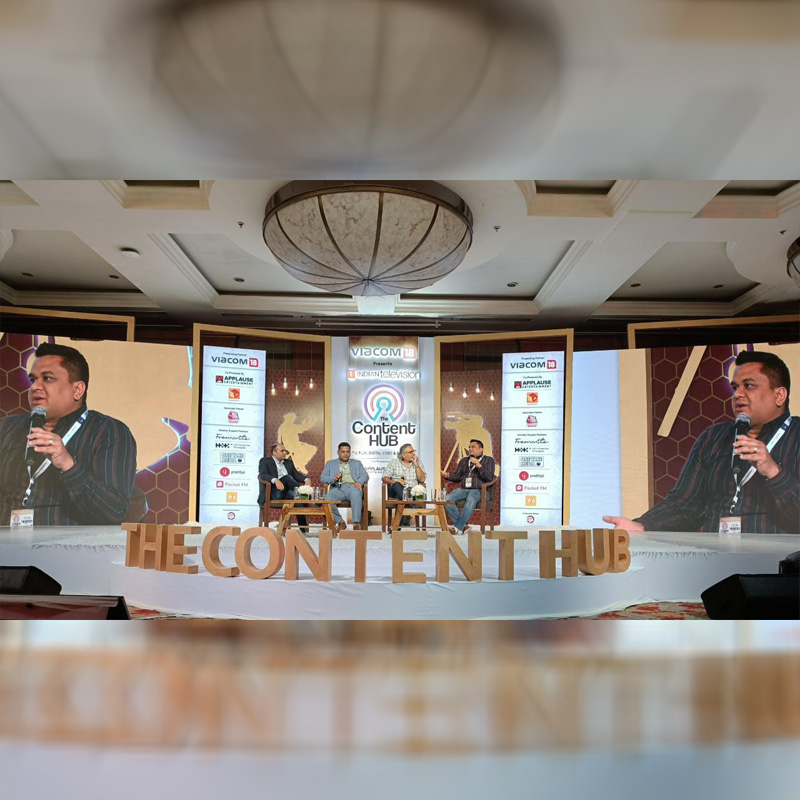
    On the sixth edition of Indiantelevision.com’s The Content Hub Summit 2022 held in Mumbai recently the media and entertainment industry experts shared their insights on the topic, ‘Tech-celeration of content: where have we reached?’

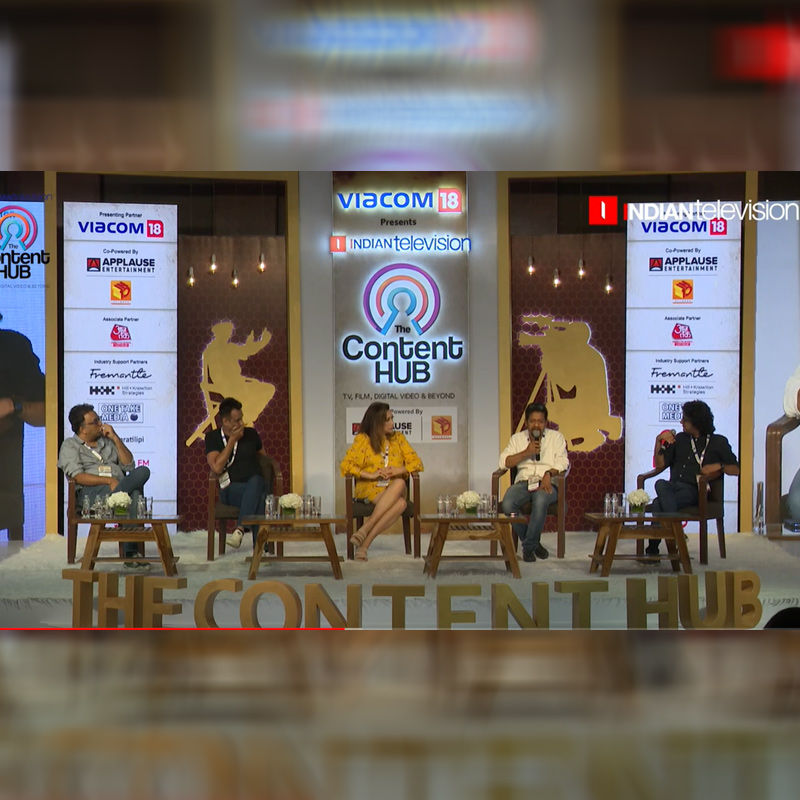
    The session had the presence of Eros Now chief technology officer Lokesh Chauhan; Contiloe Group CFO and Illusion Reality Studios CEO Nitin Dadoo; EPIC ON & Stream-Sense chief operating officer Sourjya Mohanty. 

    The panel deliberated views on the development of tools and techniques for creating incredible content experiences. There has been immense development on the tech front that is changing the way content is consumed. Cutting-edge content is transforming the media & entertainment sector every day. Virtual production capabilities are becoming a key differentiator for content creators. 

    During the Covid-19 pandemic, the entertainment segment leveraged technology throughout the entire virtual production life cycle to enhance the way content is created. It helped to improve production planning, increase shooting efficiency, and reduce the number of expensive reshoots.

    The panel was also moderated by Plug and Play Entertainment media consultant & co-founder Anuj Gandhi.

    The summit was presented by Viacom18, and co-powered by Applause Entertainment and IN10 Media Network. Aaj Tak Connected Stream is the association partner. Industry partners are Fremantle India, Hill+Knowlton Strategies, One Take Media, Pratilipi, Pocket FM and The Viral Fever. The Indian Motion Pictures Producers’ Association (IMPPA) is our community partner.

    Understanding the significance of technology for generating content was the starting point of the conversation.

    When asked, Is content & technology limited to OTT and theatre? What has happened to the good old TV? Dadoo said, “I don’t think that technology is only restricted to OTT! Rather, it is highly helpful to all types of storytellers.” He explained that “the use of new technologies like Unreal and Cam, which provide DOP directors camera tracking as well as onset information with an unreal virtual background, has drawn viewers back to television. The amount of time spent has increased during the past three months.”

    In addition, he also remarked on the availability of talent to handle such technologies, “The talent aspect is quite difficult. We came to the conclusion that we needed to hire a foreign crew since Indians are unprepared for these kinds of technologies. After a month or two of preparing the Indian crew for the new technologies, we had another difficulty: keeping them employed when other opportunities in the market were available.”

    Another member from the panel, Mohanty added, “The problem is omnipresent. There is always a talent crunch in the industry.”

    Chauhan also mentioned, “OTT platforms’ journeys are very distinct from those of traditional platforms.” He continued, “All of these systems, including LG, Samsung, Android, and iOS are constantly evolving. There are continually more changes occurring; these are not coming to an end. There will be immersive experiences that will necessitate the complete rebuilding of many of these services, many of which we currently consider to be quite stable. In light of this, you must constantly develop your skills and learn new things, unlike many other technologies.”

    Sharing his view on the impact of technology on the creative side of the business, Mohanty said, “Today is the era where machines decide what we need to think and what we need to do. The basic recommendation engine which is driven by AI and ML decides the content that audiences would like to watch.”

    Regarding the monetization aspect, Chauhan stated, “Right now in India, there aren’t enough individuals utilising these sites. Most of them run in the red. Players on OTT platforms are attempting to optimize their journey. The ugly truth is that Indian OTT services don’t have as much money as Netflix and Amazon do.” 

    Watch the full session:

  • TCH 2022: How can Indian content woo the world?

    TCH 2022: How can Indian content woo the world?

    Mumbai: Indian cinema and entertainment has been gradually gaining a share in the global market, with audiences around the world being more receptive to Indian content now than they have been in the past. Spurred, no doubt, in part due to the increased accessibility of the content on online streaming platforms. Despite this, India is yet to score a global hit like Parasite or Squid Game, with a worldwide impact and appeal. How can Indian content woo global audiences better, transcending boundaries and barriers to tell stories that connect with audiences worldwide? Are global co-productions the way forward?

    At the sixth edition of Indiantelevision.com’s The Content Hub Summit 2022 held at Mumbai’s JW Marriott on Wednesday, industry stakeholders explore these questions, while sharing their views and insights on how Indian content can play a bigger role in the global cinema & entertainment landscape. The session, “Made in India, For the World” was moderated by film critic, journalist and author Mayank Shekhar and comprised of Friday Filmworks chief executive officer Devendra Deshpande, The Foundry creator-in-chief Vekeana Dhillon, International Media Acq Corp chairman & CEO Shibasish Sarkar, Indian Film Producer Sunir Kheterpal as panelists.

    The summit was presented by Viacom18, and co-powered by Applause Entertainment and IN10 Media Network. Aaj Tak Connected Stream is the association partner. Industry partners are Fremantle India, Hill+Knowlton Strategies, One Take Media, Pratilipi, Pocket FM and The Viral Fever. The Indian Motion Pictures Producers’ Association (IMPPA) is our community partner. 

    Mayank Shekhar kicked off the session by asking the panellists whether any of them had attempted creating anything on a global scale, or content that’s meant for a more global audience. He noted as well that it’s not as though Indian content has not travelled across the world, it just hasn’t broken in the West.

    “I don’t think that when we develop a story for a film, we look at the international audience as the primary audience,” Film Producer Sunir Kheterpal responded to Shekhar’s query. In fact, nowhere in the world, except maybe Hollywood or China, do they create movies for international audiences- they just happen, he further said. “So, most of the stuff I end up developing and that goes into production, is for the mainstream Indian audience. And if something comes out of it, great,” he added.

    When it comes to storytelling and content, India is just not there yet, where enough people outside (the country) would look to us for original stories, Kheterpal noted.

    The DNA of what one looks for in a story is “universal appeal”, said Friday Filmworks chief executive officer Devendra Deshpande, adding that it can be further broken down into whether the story has ‘curiosity’ and ‘awe’. “It’s not about ‘A audience’ or ‘B audience’. Whether it breaks boundaries or not, then depends on various parameters like execution, distribution etc.”

    Talking about what international broadcasters are looking for, The Foundry’s Vekeana Dhillon said, “a hyperlocal story with a universal theme, that’s specific but not niche.” Where Bollywood falls into a potentially problematic zone, Dhillon adds, is the ‘Goldilocks zone’- that is, the story can’t be “too hard”, or “too soft” and it has to be just right. Because it doesn’t necessarily mean that we are getting the best product. It means we are getting a product that’s a levelled out, synthesised version of something that’s not quite hyperlocal.

    “We develop a lot of content in-house. And one of our stringent rules is to flesh out characters- create human tornados of angst, love, dilemma and complications,” she says, adding that is something that’s going to get you the global gaze.

    According to International Media Acquisition Corp’s Shibasish Sarkar, when you write a story, regardless of which country you are from, your first approach is how much audience you want to reach. The great news is that over the last four to five years the ecosystem has evolved and the whole medium of storytelling can now reach an audience, regardless of money, distribution capability or marketing capability.

    Post-pandemic, there’s a clear demarcation in audiences’ minds today on what they want to watch in a theatre and what they wish to watch at home, said Sarkar.

    When you look at the kind of money that goes into making the kind of movies that Hollywood is known for, is it that they can afford it only because they have an audience across the world. Is that the threshold that India cannot afford to cross, that unless you spend that kind of money you cannot have such a huge market, asks Shekhar of the panel.

    The industry experts agreed that the Indian movie industry was more into trying to find stories that would work across the country, rather than targeting a global audience.

    “I think we have a bigger battle to win within our country, said Khetarpal. “Even after we cover the Hindi-speaking belt, our next challenge is how do we take our film into the Tamil-speaking and Telugu-speaking audiences.

    Devendra Deshpande agreed with Khetarpal, remarking that there’s no metrics which says that spend “X” and you will get “Y” audience. It’s just a matter of time before Indian content goes global, as with technology two major barriers have been breached- One is time- as one can access anything as per convenience. And second is distribution, he noted.

    We have to figure out what is our unique selling point (USP), asserted Dhillon. “Bollywood is a brand, however, Indian cinema is far more expansive than that. We have seen the success of the South so we know that. There’s far more vibrancy, far more unique tangents that we can revel in and enjoy across the board as entertainment,” she said.

    The industry experts agreed that taking Indian content global is a huge opportunity, because the language has become agnostic today. People have got used to watching content with subtitles, and are consuming it across every other language, be it Indian or any other. With OTTs, Content has acquired an ability to travel, which was not there earlier in the film world.

  • TCH 2022: The art of telling authentic brand stories using content

    TCH 2022: The art of telling authentic brand stories using content

    Mumbai: There’s a lot of content available to consumers that is vying for their attention. Brands are finding it difficult to leave a deeper mark on the consumers’ minds with plain vanilla advertising. The mode of brand storytelling has evolved from 30 seconders and one-minute advertisements to creating owned media platforms and content to form an association with the consumer which lasts.

    Brands cannot jump blindly into the content-making exercise. First, one has to identify the brand purpose and where the brand is standing with its content. Content is a powerful way to increase the mind share of the brand but if executed poorly it can also go wrong.

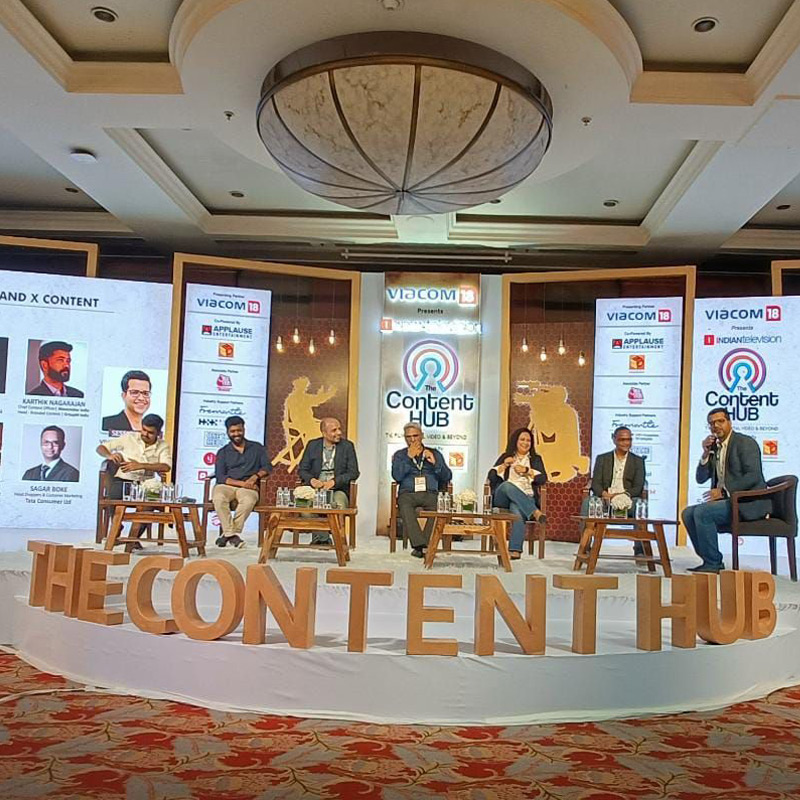
    At the sixth edition of Viacom18 presents Indiantelevision.com’s The Content Hub Summit 2022 held on Wednesday leading marketers spoke about the role of content in their brand strategy. The session was joined by Dentu international The Story Lab country head Deepak, Godrej Industries and Associate Companies AVP corporate brand and communications Michelle Francis, GroupM India head – branded content and Wavemaker India chief content officer Karthik Nagarajan, Tata Consumer Products head shoppers and customer marketing Sagar Boke, PhonePe director and head of brand marketing Ramesh Srinivasan and OPPO India chief marketing officer Damyant Singh Khanoria. The session was moderated by Viacom18 head branded content Vivek Mohan Sharma.  

    The industry event is co-powered by Applause Entertainment and IN10 Media Network. Aaj Tak Connected Stream is the association partner. Industry partners are Fremantle India, Hill+Knowlton Strategies, One Take Media, Pratilipi, Pocket FM and The Viral Fever. The Indian Motion Pictures Producers’ Association (IMPPA) is our community partner.  

    “We have a smartphone launch every second week. When you need to make the consumer realise the unique features of each product there’s a lot of content creation that needs to happen,” remarked OPPO’s Damyant Singh Khanoria. “We solved this problem by enabling creation in the larger community of creators and influencers.”

    Another aspect that OPPO realised was to stop looking at its brand ambassadors as celebrities who are endorsing a product but rather as actors to leverage in a storytelling narrative.

    “I think it is important to have a healthy appetite for risk as a brand. We started commissioning projects that break the artificial boundaries of how we advertise,” said Khanoria.

    OPPO had partnered with the infotainment channel National Geographic to create a series called OPPO Superfactories that turned out to be an excellent piece of branded content, he added. “We want content to be natural and authentic to our brand. An ad is no longer about showing a consumer visiting a store, asking about a product in a three-minute film.”

    When Godrej wanted to change its perception to be associated with lifestyle, the challenge, observed Godrej’s Michelle Francis, was that it was perceived as a legacy brand that had been around for many decades. “We thought that we needed to build a community that would advocate for the lifestyle brands of the Godrej group. That’s how we came up with Godrej L’affaire.”

    The platform launched a nine-episode web series with actor and comedian Jamie Lever with a seamless integration of Godrej brands. “The content was so authentic that it did not look at branded content in terms of integration,” said Francis.

    Whether a brand decides to create its own content is not an either, or question, explained Tata Consumer Products Sagar Boke. He believes it depends on the object and life cycle of the brand. There are advantages to branded content which takes a bit more time to build but connects deeply with the audience. “If you want to build a community around your brand, there’s nothing better than building your own content,” he said. “If you use someone else’s content or a celebrity, it is not going to work.”

    Boke further said that if data is part of a brand strategy, then building your own platforms makes a lot of sense to gather first party data on your consumer.  This helps the brand create more targeted and sharper advertising communication.  

    PhonePe’s Ramesh Srinivasan concurred with Boke stating “As a brand we’re trying to cater to India at large. That means we need to be placed where India is in terms of culture. Branded content captures the consumers’ mind space when they want to consume communication. It creates the right context which is key.”

  • VidNet 2022: How can Indian OTTs reach 100 million subscriptions?

    VidNet 2022: How can Indian OTTs reach 100 million subscriptions?

    Mumbai: In 2021, OTT paid subscriptions in India touched the 70-80 million mark, according to the latest report by Boston Consulting Group. The subscriber numbers remain in flux with high levels of churn and potential marketing efforts are required to generate and acquire new users. The streaming giant Netflix has also reported a decline in its subscriptions for the first time in a decade. The company recently reported that it lost 0.2 million subscribers in the first quarter of 2022. In such a scenario, what can OTT platforms do to drive new subscriptions and reach the magic 100 million subscribers in India?

    That was the agenda for the panel discussion at IndianTelevision.com’s VidNet Summit 2022 held on Wednesday. The two-day summit was supported by technology partners Dell Technologies and Synamedia, summit partners Applause Entertainment and Viewlift, industry support partners Gupshup, Lionsgate Play and Pallycon, and community partners Screenwriters Association and Indian Film and Television Producers Council and gifting partner The Ayurveda Co.

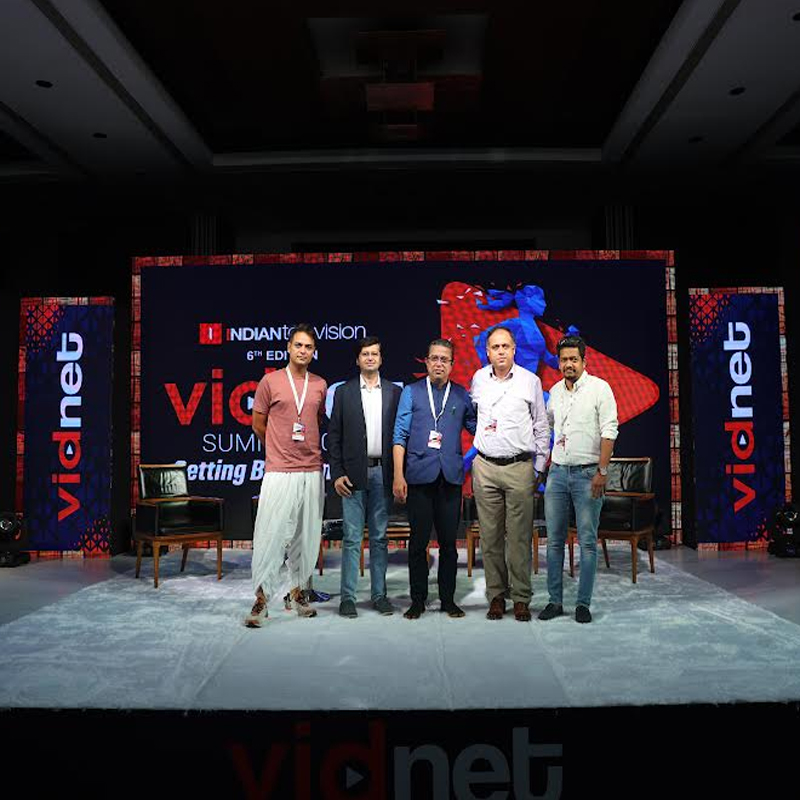
    The conversation was joined by Endemol Shine India CEO Abhishek Rege; International Media Acquisition Corp chairman and CEO Shibashish Sarkar; Swastik Productions and One Life Studios founder and chief creative officer Siddharth Kumar Tewary and Mzaalo (Xfinite Global Plc) COO Vikram Tanna.

    Speaking in this context, Abhishek Rege pointed out that the 100 million is merely an arbitrary number and what OTTs should look at is the revenue model. To entice new customers OTT platforms are offering free trial subscriptions, non-paywalled content and lowering the price of subscription plans, which is eating into their bottom line.

    He gave the example of Amazon’s Kindle device and added, “There was a Kindle available for $79 that served ads and then you paid a little bit more to get the ad-free version. That’s the kind of space we need to look at as OTT players and content creators if we want to land up at better revenues.”

    Mzaalo’s Vikram Tanna observed that for a long time the consumption of media in India has always been subsidised by advertising. The trend continues today with devices like DD Free Dish that offer TV channels for free. “When you look at the mass audience the solution to the problem lies in technology. They are the future consumers for us all. I believe we need to figure out how to make free content profitable. Can you reward the community for consuming content and return a part of the revenue that you earn back to them?” he pointed out.

    Mzaalo is a part of Xfinite Global Plc, which is a decentralised entertainment ecosystem. They have a digital token called XET that is listed on the cryptocurrency exchange. Tanna stated, “We believe in equal distribution of value creation among stakeholders of the ecosystem. Since content drives commerce and we all remember moments rather than the entire content piece, we tried to figure out if you can buy, sell and resell NFTs of content. Of course, they will have multiple other utilities.”

    Tanna concluded his remarks by adding that to reach the magic 100 million target the two pillars that will drive the growth of OTTs will be content and technology.

    Speaking from a content standpoint, Swastik Productions’ Siddharth Kumar Tewary said, “We’re just at the tip of the iceberg of what’s going to happen in terms of content. Content is the biggest driver of subscribers on OTT platforms and he felt that one piece of content doesn’t necessarily reach 100 million people. Platforms need to give the audiences all varieties of content to consume, similar to TV. The only difference is that content consumption on TV was led by appointment viewing and now people can watch anytime they want.”

    He added, “Every platform is different and serves a different audience. While the numbers will come, whether it is SVOD or AVOD, not every platform may be necessarily targeting 100 million subscribers.” Sharing a metaphor, Tewary noted that there are brands that cater to the masses and brands that cater to the classes across categories and we don’t compare them purely by the numbers to understand how big they are. So why should we judge OTTs that way?

    Commenting on whether the growth of OTTs is being driven by content or distribution partnerships, Rege also stated, “The content that we have served to OTT audiences is scaled up and has succeeded not to an extent, though not as much as we’d like.”

    He added, “Content on OTT is certainly different from mainstream TV. Over time an audience that is used to TV needs to be slowly nudged to OTT with simpler content. For them, jumping into OTT content that is nuanced will not get absorbed quickly. However, there is a demand for different types of content on OTT platforms compared to TV.”

    International Media Acquisition Corp’s Shibashish Sarkar believes that compared to 100 years of print, more than 30 years of TV, OTT which is only six years old is still a nascent media and will continue to grow, defying expectations. He questions the way audiences are segmented and served content across platforms.

    “Historically, on TV, we like to segment the audiences as tier 2 and tier 3. These descriptions of audiences don’t hold anymore,” he affirmed. “Going back six months, three out of four blockbusters were South Indian dubbed films. They were attracting audiences in a small town in Rajasthan as well as in Nariman Point in Mumbai. Divisions like language barriers, genres and other content divisions have become redundant,” Sarkar added further.

  • CAMM Summit 2022: ‘Technology no longer just a vehicle to transmit content’

    CAMM Summit 2022: ‘Technology no longer just a vehicle to transmit content’

    Mumbai: Technology has evolved from a support system to an enabler and finally a driver of content consumption in the modern media landscape. Content and technology have become inextricably intertwined with the role of technology becoming more important in the media industry. At the Content-Tech, Ad-tech, Mar-Tech and More (CAMM) Summit and Exhibition 2022 organised by IndianTelevision.com co-powered by PubMatic and industry partner Adjust, the publishers, technology partners and marketers were part of a panel discussion on ‘managing content infrastructure to create a seamless content experience.’

    The session was led by CupShup co-founder Sidharth Singh, who was joined by Network18 Media and Investments group chief technology officer Rajat Nigam, Rezolve chief executive officer – India Sunder Madakshira, Korra founder and CEO Gaurav Nabh, Yotta Infrastructure vertical business head Jollydeep Kaur, and Rackspace Technology managing director Asia Pacific/Japan Sandeep Bhargava.

    Network18’s Rajat Nigam started the discussion by highlighting the constant pressure on publishers to keep innovating in terms of content. “Creativity is a continuous challenge and we need to keep being different. Society has become a co-producer of content. This has opened the field up to multiple players. Our focus is on two areas which are increasing creativity and reducing costs,” he said.

    Rackspace Technology’s Sandeep Bhargava spoke about tools that help brands control costs and innovate by leveraging data. “We use the term data gravity. Similar to how a denser planet has a greater gravitational pull, the more data that you have, the more costs build up and it becomes difficult to make sense of it. At Rackspace, we have a media accelerator that helps our clients optimise data, lowers the cost of keeping data and finds ways to monetise it,” he shared

    The discussion veered towards technical integration in content and dos and don’ts for marketers. “My first advice is to only look at technology as an enabler. It’s not about which technology is best but how you use it,” explained Korra’s Gaurav Nabh. A lot of clients ask me why we’re missing out on NFTs, metaverse or any new technology. But the question they should ask themselves is whether this technology is relevant to their business and is generating RoI.”

    Over the years the perception of technology has changed. “Technology is not just a vehicle for transmitting content but it can actually help the industry generate better insights and create better content,” remarked Yotta Infrastructure’s Jollydeep Kaur.

    Rezolve’s Sunder Madakshira observed that evolving technology must also be accompanied by better metrics to understand consumer behaviour. He noted, “Earlier, marketers used to measure performance in terms of market share. Then it became share of wallet. Today, we talk about share of attention because there is so much content out there that it has created clutter. Similarly, when we talk about revenues, we no longer speak in terms of ownership but in terms of subscription.”

    In a subscription economy, it’s no longer relevant to look at app downloads as a metric for success, according to Madakshira. “There’s no point if the app has become a dormant platform. The focus then should be on retaining attention,” he affirmed.

    Watch the panel discussion here:

  • CAMM Summit 2022: ‘Ad-tech to allow brands to take control of consumer experience’

    CAMM Summit 2022: ‘Ad-tech to allow brands to take control of consumer experience’

    Mumbai: Facebook rebranded to Meta in October last year and threw the marketing world into a frenzy by coining a new buzzword ‘metaverse.’ Marketers are often quoted saying that technologies such as AR/VR, blockchain, cryptocurrency, non-fungible tokens (NFTs) will have a transformative effect on the advertising industry but the implementation of these technologies at scale still has ways to go.

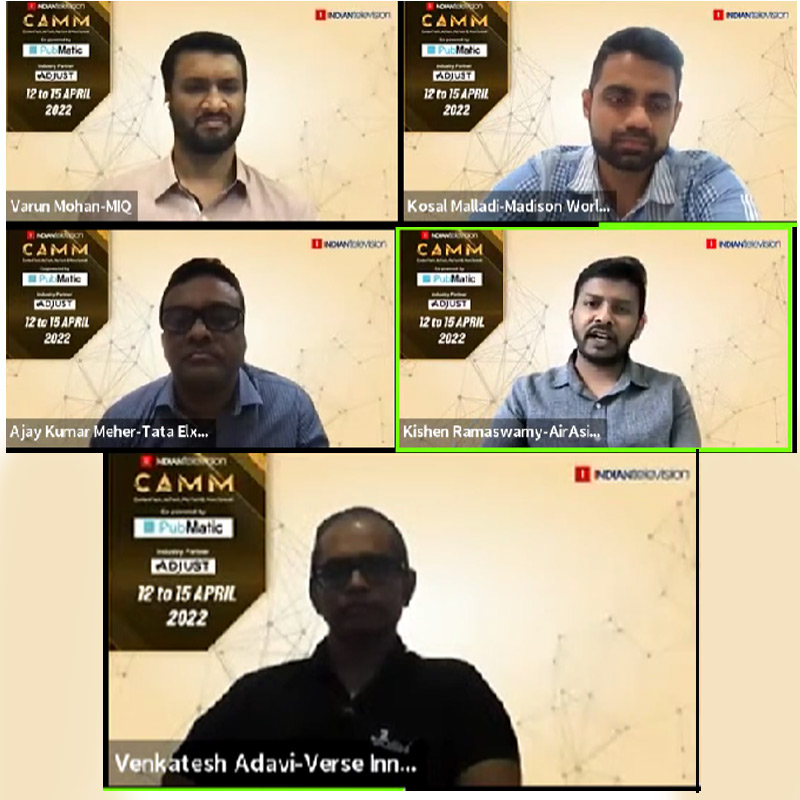
    “In digital media, we’ve been comfortable talking in terms of reach, frequency, leads but suddenly there is a challenge that we’re all facing,” said Madison World vice president Kosal Malladi during a panel discussion held recently. The discussion was on ‘new technology experiences in content-tech, ad-tech and mar-tech’ organised by IndianTelevision.com during its Content-Tech, Ad-Tech, Mar-Tech and More (CAMM) Summit and Exhibition 2022. The virtual event was co-presented by PubMatic and industry partner Adjust.

    The challenge we’re facing, explained Malladi, is that while there are a lot of people giving ‘gyaan’ about the metaverse, blockchain and everything associated with it, they don’t know how to implement it. “Adtech and martech is evolving so quickly that if we don’t keep pace with the change, we’ll become dinosaurs.”

    The discussion was joined by eminent marketers, technologists and media strategists including AsiaAsia India lead product marketing and brand communications Kishen Ramaswamy, Tata Elxsi global practice head for media and new media Ajay Kumar Meher, Verse Innovation vice president monetisation, growth strategy and partnerships Venkatesh Adavi and MIQ India and SAARC head of growth and revenue Varun Mohan.

    Starting off the discussion on the applications of blockchain technology, Tata Elxsi’s Ajay Kumar Meher said, “There are people who’re asking the fundamental question of what is the practical use of a blockchain.”

    “Blockchain is a shared immutable ledger,” he explained. “It is a process of recording transactions that is unchangeable. It also helps in tracking assets that may be digital assets such as NFTs. Should the asset only be digital in nature? Not necessarily. The sale of a house may be recorded and registered on a blockchain so that the owner can be defined. This would prevent the same property from being sold multiple times to different people.”

    In the media and entertainment industry, “blockchain can manage content micropayments. Suppose a broadcaster is buying the rights to a movie and an artist has recorded a song that is played in the movie, then that artist can be paid a specific micropayment every time the movie is played,” said Meher.

    He added, “If a content owner would like to sell the rights to his content to various stakeholders via the blockchain then he will be able to track whether the content is being used as stipulated in the agreement. Another level of usage are royalty payments where we can define all the stakeholders in the piece of content and precisely know what is to be paid for a particular usage.”

    “Artists who are creating a lot of digital assets may leverage NFTs to define their ownership of that asset,” Meher further said.

    Meher shared several use cases on how blockchain could be deployed in the media industry including creating a blockchain-based exchange between advertisers, agencies and publishers to measure exactly how many ads are displayed on the publisher side.

    “The wastage of media will be controlled with far more engagement opportunities unlocked by ad-tech,” remarked MiQ India and SAARC head of growth and revenue Varun Mohan. “Ad-tech will play a vital role on the measurement side. Today, If I take the FMCG category as an example, they are facing a lot of challenges in monitoring data that is coming from offline channels. With ad-tech, brands will take ownership of consumer behaviour and engagement via multiple touchpoints that will help them plan their media activation.”

    Next Verse Innovation’s Venkatesh Adavi spoke about the use cases for AR/VR in India. He said, “AR is quite ahead in terms of adoption compared to other technologies. It is being used by both people who consume content as well as marketers and media companies who want to talk about their brands and products.”

    He added, “VR still suffers from issues such as proliferation of equipment, bandwidth and network coverage that needs to be there to enable the ecosystem. There’s still some heavy lifting required in terms of development of VR content and from an access point of view.”

    “AR technology is growing fast as there is a processor and camera in everyone’s hand via the smartphone. What we see on short video app Josh is that users live creating content that can be layered on AR. Brands are also catching up. We get a lot of brands who want to create AR effects, so that they can be a part of the content that consumers create.

    “The holy grail of marketing is engagement and AR gives a canvas to marketers to enable their products to be utilised in the videos that consumers are creating. If millions of consumers create videos using brands’ AR effects, then you get so much earned media,” surmised Adavi.

    AirAsia’s Kishen Ramaswamy spoke about potential use cases of the metaverse in the airline industry. “Metaverse is a combination of AR/VR but with a real-world economic model. Today, in general, people are more open to having virtual meetings over physical ones, especially in the corporate segment. This opens up people to have experiences outside the workplace. That is important for us as a brand and we’ve been focusing on creating experiences that our audiences would appreciate,” Ramaswamy said.

    “For a first-time flier booking a ticket, checking-in and picking your seats can be an intimidating experience,” he stated. “Why not create a metaverse experience where our customers can explore doing those things and learning on their own. For a brand, it is an opportunity to show what they can expect. We expect this use case to become a reality in the near future.”  

    Watch the panel discussion here:

  • Connected TV: A growing market in India

    Connected TV: A growing market in India

    Mumbai: Connected TV has an audience base of 45 million in India, according to Madison Advertising Report 2022.

    The segment contributes eight to ten per cent of the digital audience currently. In the last five years, it has grown nine times and is expected to grow by another four times to reach an audience base of 120 million by 2025. It is expected that connected TV audience base contribution will surge by 15 per cent in future.

    The audience base of CTV is growing mostly due to the increase in demand for smart TVs. In 2021, CTV shipments accounted for 84 per cent of overall TV shipments as compared to 64 per cent in 2020.

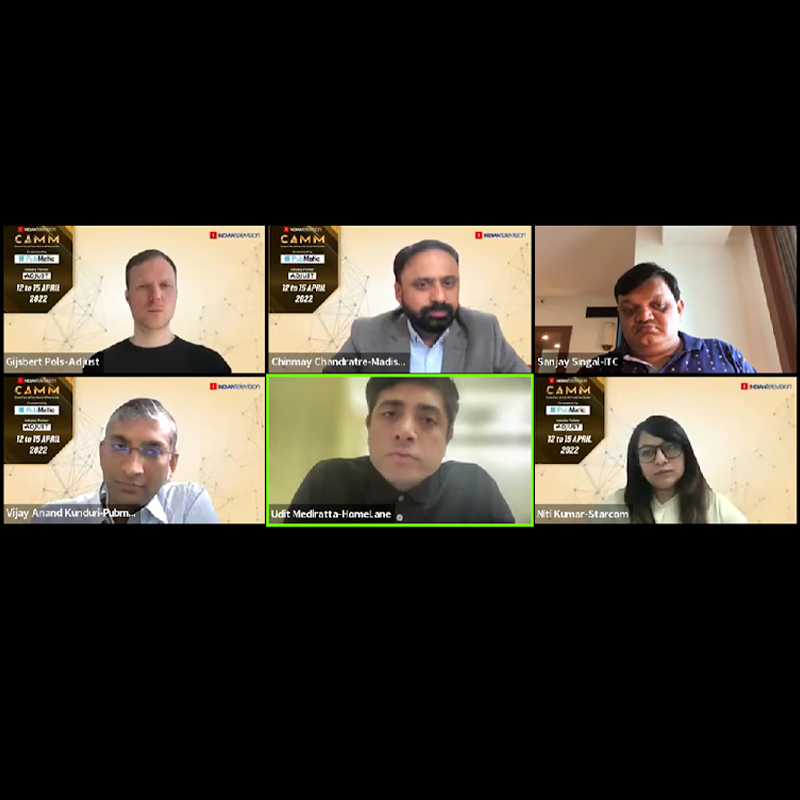
    These data points were presented by Madison World’s general manager Chinmay Chandratre who moderated a panel discussion at Indiantelevision Dot Com’s four-day event ‘Content-Tech, Ad-Tech, Mar-Tech and More (CAMM) Summit’ co-powered by Pubmatic and Industry Partner Adjust held on Tuesday.

    The discussion was joined by legacy and new-age brand marketers, media planners and technology providers such as Adjust lead product strategist Gijsbert Pols; Starcom chief operations officer Niti Kumar; ITC Limited chief operating officer – dairy and beverages Sanjay Singhal; HomeLane chief marketing officer Udit Mediratta and Pubmatic’s regional vice president (OTT and CTV) Vijay Anand Kunduri.

    Watch the full session.

    The discussion kicked off by understanding how a legacy brand like ITC looked at the opportunity of CTV. “Typically, the way you build huge categories like biscuits and snacks is through mass advertising,” explained ITC’s Sanjay Singhal.

    “As consumer tastes have evolved, we have found that there is a need to slice and dice consumer segments whose needs cannot be met by traditional products and communication on mass media platforms. There is a need for targeting cohorts of consumers that TV cannot do efficiently,” said Singhal.

    “There is only so much that may be communicated in a 30-seconder ad on TV,” he added.

    Singhal, “When there is a need to explain certain benefits of products to the consumer, a more engaging medium with a higher frequency build-up is required.”

    No doubt ITC is a large spender on TV but a large proportion of ad spends are moving to new age mediums for their brands that are targeting younger audiences, alluded Singhal.

    He added, “It’s not just our brands such as ‘Bingo’ and ‘Yippee’ which are youth-oriented that are moving towards digital but also our atta brand ‘Ashirvaad’. That’s the power of high frequency.”

    While legacy brands are leveraging a mix of traditional TV and CTV, new-age brands such as HomeLane are comfortable advertising only on digital and CTV platforms.

    As Udit Mediratta puts it, “As a digital-first brand, our target audience is largely millennials who are ‘cord-cutters’ and hence CTV is the new TV for us. There are inherent strengths in CTV whose visuals and formats are similar to traditional TV while at the same time it is also targeted and measurable. The only disadvantage at this point is scale because there are only 20 million CTV households. However, this base is expected to increase by four times in the next three to four years.”

    From a media planning perspective, CTV allows brands to reach incremental audiences, states Starcom’s Niti Kumar. “When you look at CTV and what it brings to the table, it is the largeness of TV in terms of screen size and format coupled with the biggest advantage of digital i.e., targeting/precision. CTV should be included in media plans based on two criteria – where’s the consumer and the brands’ business outcomes.”

    “In terms of inventory that is available and targeting, CTV in India is still in its nascent stage as compared to what a YouTube or Disney+ Hotstar can provide. There’s a lot of development that is needed in the technology but it can be layered onto media plans from an incremental reach perspective,” she adds.

    The rise of CTV also implies that publishers must be more conscious of hygiene factors while displaying an ad that negatively impacts the user experience. “What we’ve seen is a movement from the small screen to the big screen,” observed Pubmatic’s Vijay Anand Kunduri.

    “In most of the Indian market, digital penetration is largely due to mobile but in the last 24 months, we’ve seen the transition from ‘me’ to ‘we’ viewing largely in front of CTV. On the broadcaster side, the trend where the content was first being created for linear and then streamed on OTT as catch-up has reversed. Now, content is being streamed on OTT-first followed by linear telecast,” Kunduri added.

    “Parallel to CTV there’s also the emergence of free ad-supported TV (FAST) or advertising video-on-demand (AVOD) and publishers must take into account that when their ad is playing on CTV it should not face technical issues such as buffering, back-to-back ad reels and showing competitor product ads consecutively as this creates a bad user experience,” he added.

    Adjusts’ Gijsbert Pols mentioned that in terms of measurability, CTV measurement on digital platforms is just like Facebook and YouTube, however, there is an important caveat that marketers and planners must be aware of.

    He said, “Across the world, performance marketers are entering the TV space via CTV because it has become measurable. I don’t think we are far away from a fully digitalised way of measuring performance and branding as the technology and data are there. The problem is implementation which is a tough cookie to crack.”

    “While you can measure CTV in the same way you measure other digital channels, it does require you to adjust key performance indicators (KPIs). CTV is more upper-funnel as there are no clicks. For the last decade, digital marketers have been used to measure digital looking at last touch data, however, CTV requires you to adopt a multi-touch approach when it comes to measurement,” he concluded.

  • Kashish 2021 announces panel discussion on same-sex marriage rights

    Kashish 2021 announces panel discussion on same-sex marriage rights

    Mumbai: The 12th edition of Kashish Mumbai International Queer Film Festival – South Asia’s biggest LGBTQIA+ film festival, is underway from 19 August to 5 September, screening 221 films from 53 countries over three weekends. During the weekdays the festival is programming several interesting panel discussions and filmmaker Q&As.

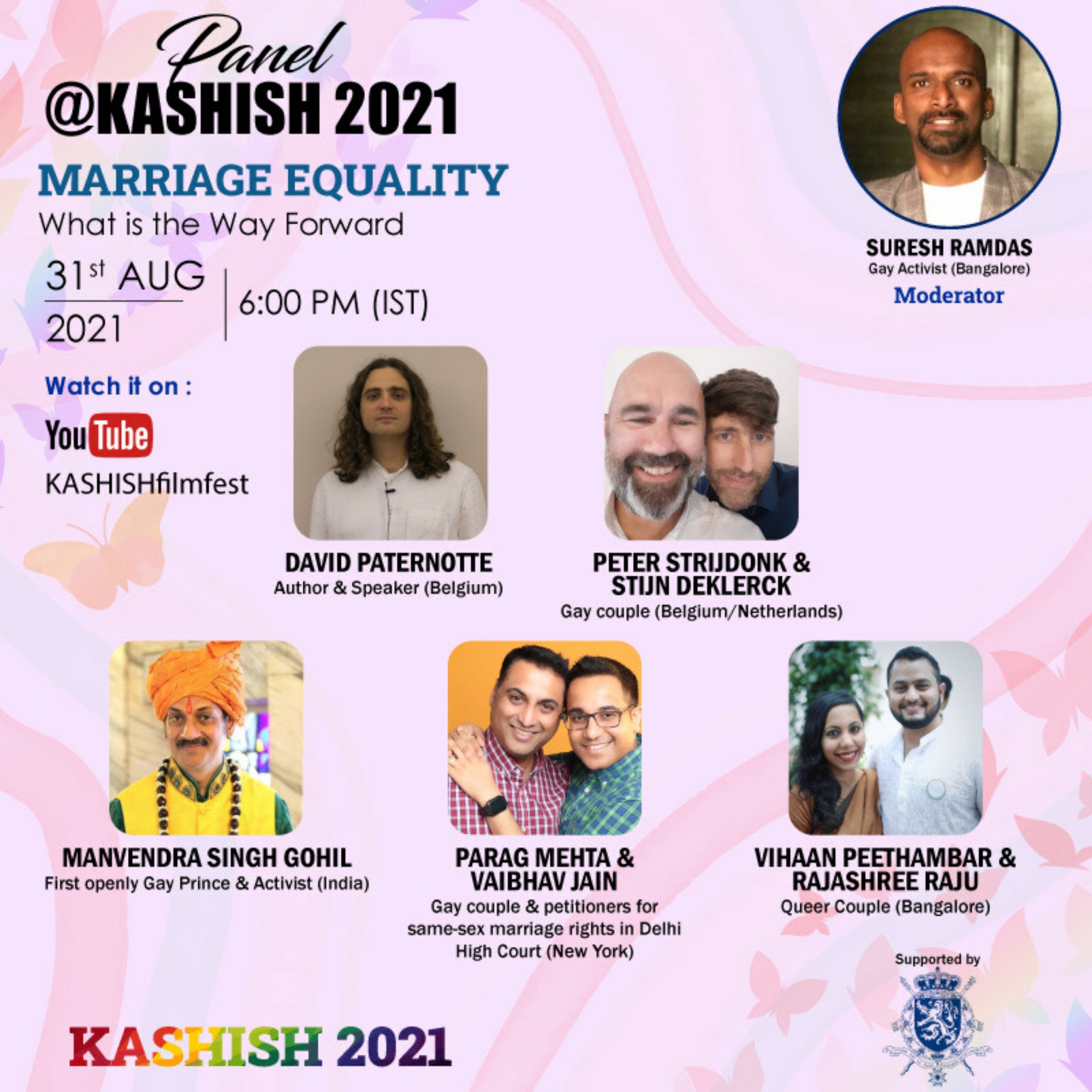
    On 31 August at 6 p.m, the panel is set to discuss ‘Marriage Equality – What is the Way Forward’. The topic is especially relevant to the current times in India when the petition for same-sex marriage rights is being heard in the Delhi high court. 

    Speakers at the panel include first openly gay prince & activist Prince Manvendra Singh Gohil, gay couple & petitioners for same-sex marriage rights in Delhi HC Parag Mehta & Vaibhav Jain, transman activist Vihaan Peethambar & his wife Rajashree Raju, gay couple from Belgium Peter Strijdonk & Stijn Deklerck, and renowned Belgian author & speaker David Paternotte. The panel is moderated by former Mr Gay India and activist Suresh Ramdas.

    “It is said that marriages are made in heaven and I’m very positive that we will see heaven in India with marriage equality getting accepted and we will definitely win and I’m very optimistic about it,” said Manvendra Singh Gohil.

    “I was thinking about how in 2015 when marriage equality came to the US, it came in the evening, there was a Supreme Court judgment and president Obama had asked the White House staff to illuminate the entire building with pride colors. So I remember going with 1000s of people gathering there and cheering and it was so exciting and I looked at Parag and I said, do you think Rashtrapati Bhavan, the presidential palace in India, would ever light up like this. And he said, you know we’ll make it happen; and that’s what we’re trying to do and we hope we succeed,” said Vaibhaj Jain partner of Parag Mehta, both of whom are plaintiffs in a landmark court case before the Delhi HC which seeks to legalise same-sex marriage for 1.4 billion people in the world’s largest democracy.

    “I think for trans people in India we view marriage like everyone else. You want to marry for companionship, you want to marry for security, for stability, but above all as a means for social acceptance from a society that does everything to suppress your rights,” said transman Vihaan Peethambar who married his partner Rajashree Raju in 2019 in Kerala.

    “No one would have expected so many countries to adopt same-sex marriage in 20 years, and now it’s about 30 countries. So, the good news is that these countries are increasingly diverse – from Argentina to Taiwan and South Africa to Belgium. So these countries have nothing in common. Which means that tomorrow if India wants to adopt same sex marriage it’s possible,” said David Paternotte, renowned author from Sweden who has written books on marriage equality.

    “I really wanted to get married and I had to ask Stijn four times basically before he said yes. For me it was a celebration of love, and the thing for me was also important because I’m much older than him and I was concerned about what will happen when I’m not there anymore, so I wanted also to have the legal status, to be equal to everybody else,” said Peter Strijdonk who met his partner Stijn Deklerck in 2005, and they got married in 2011 in Antwerp, Belgium.

    “Hoping yes I wish I can have this as well, but should I go outside India to have this or can I have this in India and now that seems to be coming into some sort of reality,” said Suresh Ramdas.

    The panel is supported by the consulate general of the Kingdom of Belgium in Mumbai. The panel can be watched at http://www.youtube.com/user/KASHISHfilmfest.

  • Mira Nair to speak at Kashish 2021 panel

    Mira Nair to speak at Kashish 2021 panel

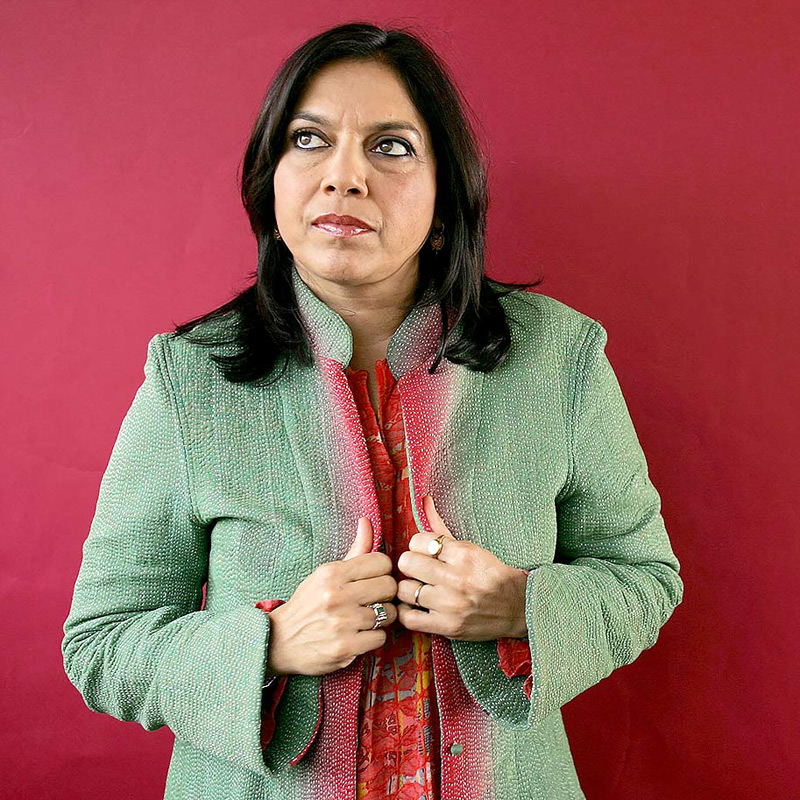
    Mumbai: The Academy-Award nominated director Mira Nair will be a speaker at a panel discussion titled ‘Books To Screen – Lost & Found in Translation’, being organised as part of the 12th edition of Kashish Mumbai International Queer Film Festival, South Asia’s one of the biggest LGBTQIA+ film festival. The panel will be streamed on the Kashish YouTube channel on 24 August at 6 p.m.

    This impactful panel that discusses how books are adapted into feature films or web series, will also feature well-known Swedish author & director Jonas Gardell (Don’t Ever Wipe Tears Without Gloves), Sahitya Akedemi winning playwright Mahesh Dattani (Mango Souffle, Morning Raga), and transgender actor & author Living Smile Vidya (I Am Vidya), and will be moderated by author Raga D’Silva (Untold Lies).

    “While the pandemic put the brakes on Kashish being held on-ground physically at a theater in Mumbai, the benefits of a digital festival has opened new doors,” said festival director Sridhar Rangayan. “We have been able to invite some extraordinary speakers at the panel discussion and also filmmakers from across the world at the filmmaker Q&As. We are blessed to have such eminent personalities as Nair and Gardell speak at our panels. Virtual is the new normal.”

    Speaking about her recent mini-series “A Suitable Boy” based on Vikram Seth’s epic novel of the same name, Nair shared, “I think Vikram Seth deeply understands and wrote in A Suitable Boy, the depth of this unconditional love, the friendship between Maan (Ishaan Khattar) & Firoz (Shubham Saraf). For me, it encompassed all kinds of love. We had to do a lot in very little time, but I think you feel this extraordinary drama of their friendship and the jealousies, and also how the fathers eventually bring the sons back together. It’s a beautiful quartet that Vikram wrote and I wanted to do that justice. Life is about all sorts of love, but it is love. There’s nothing to put it in a box about.”

    Gardell said, “I’m 58 years old now and I have been out and proud since I was 15, so that’s almost 40 years. When my first novel came out in 1985, the critics actually wrote that they almost vomited when they read it since it was a gay love story. Time has passed and now when I write my novels, they are mainstream, they are bestsellers in Sweden.”

    Speaking about the need for greater representation of queer narratives, Mahesh Dattani said, “We need more LGBTQIA+ people involved in the arts, in storytelling. We need stories that concern the LGBTQIA+. We need LGBTQIA+ characters in films that are not talking about LGBTQIA+… I think it is hugely important that we also have characters that are there because they are part of a bigger story, and it doesn’t always have to be a personal story. “

    Living Smile Vidya spoke about her book ‘I Am Vidya’ that has been turned into a feature film “Naanu Avanalla Avalu” which won two National Awards, but her main passion is theater. “I wanted to be in the cinema, but as I grew up, I saw theatre has more space and more acceptance and I found my place. Being on the stage is where I feel like one giant tree where I get all the power in the best possible way,” she said.

    This panel discussion is being supported by the Consulate General of Sweden, who is also supporting the screening of two documentary features “Prince of Dreams” and “Always Amber”.

    While the film festival is screening 221 films from 53 countries over the 12 days of online screenings spread across three weekends, Kashish 2021 will continue to engage audiences during weekdays with 10 panel discussions and 42 filmmaker Q&As streamed on their YouTube channel.

    On 23 August at 6 p.m, panel discussion ‘Teach Them Young! – Qualitative Queer Narratives emerging from Indian Film Schools’ is being streamed featuring speakers from leading film and media institutions like Film & Television Institute of India (FTII), Sophia SCM, Pearl Academy, Satyajit Ray Film & Television Institute (SRFTI) and Whistling Woods International, which is also supporting this panel discussion.

    Rounding off the first week of panel discussions, on 25 August at 6 p.m, the festival will host the first-ever chat with siblings of queer persons. Titled ‘Unlocking Acceptance With Siblings’ the panel features gay, bisexual, and transgender persons along with their sisters and brothers.