Tag: Pandey

  • Indian creative people need to get out of the comfort zone to create benchmarks: Pandey

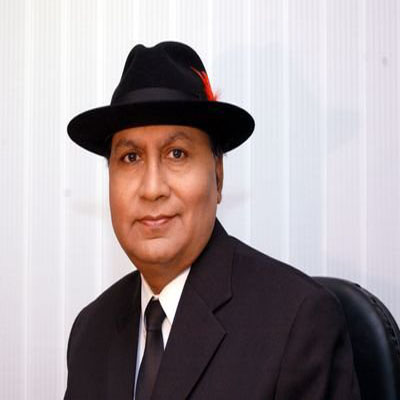
    MUMBAI: Yesterday morning’s ad symposium organised by AAAI, saw Ogilvy chairman and NCD, Piyush Pandey talk about pushing the creative boundaries. He expressed disappointment that India was not producing enough of the kind of work that might be expected form a country that has so many talented people.

    “In India there are lots of excuses for poor communication work. One of them is that my sales are good. The other is that my client servicing guy is an idiot. The third is that the client does not know anything. We need to look at life differently instead of resorting to the same old clichés. This means moving outside the comfort zone even if it means talking ten times to the client. It is worth it if you really believe that your idea will make a difference to how the client’s work gets projected.”

    To illustrate his point, he gave examples from previous decades starting from 1955 from different countries. In one ad for Chevrolet, a couple is seen as moving smoothly across rough terrain enjoying a comfortable ride. The vehicle is not seen. The brilliance of this is that it is only at the end does one realise that the smooth ride was made possible because of Chevrolet. “I wonder whether car brand marketers have ever thought about showing the smooth ride that their product gives customers without actually showing a car. Unfortunately, the notion is that viewers always want to see the inside of a car.”

    Another example of looking at a product differently was a Pepsi commercial. The aim was to show how big a one litre bottle is. The cliché is to show a group of hyperactive youth having a blast. This ad though showed a young child struggling to cope with the bottle. First he finds it difficult to handle. Then he uses a straw but things only improve when he sits on a very high chair. “I am sure that there are creative people sitting in this room and saying to themselves “Hey, I could have done that.”


    An idea can be pretty simple. It needs lots of passion to see it through and before that alertness and a willingness to be less lazy, says Pandey.He adds,.”After all in previous decades creative people would have had less resources at their disposal. Another innovative ad is a classic example of looking at life differently. In the TVC a boy takes a mint from his pocket. He pretends to offer it to a baby elephant but as the baby elephant approaches the boy naughtily put the mint in his mouth. When the elephant is grown up he sees the boy who has grown into a man put a mint in his mouth and chew it. The elephant gives the man a whack across the face. After all elephants can remember.Unfortunately, brand managers are more concerned about what is in the mint”

    One ad that broke clichés according to Pandey was a whiskey ad. Usually whiskey ads always show a reunion between friends and there is this big balcony. This ad though, showed one man sitting with a whiskey bottle. As soon as he takes a sip he breaks into a song. The ads for the US beer brand, Budweiser, which coined the catch phrase ‘What’s Up’ were another bold stab at looking at things differently.

    Basically ,a man phones someone while drinking a beer and watching a match on TV. When the phone is picked up he yells,” What’s Up.” This activity is then repeated among a group of people. “This kind of creative work is possible if we shake ourselves out of a state of complacency and indifference. To use a cricket phrase we must look beyond the 30 yard circle if we want to reach the boundary.”

     
    Meanwhile, Phillips consumer business head, D. Siva Kumar, spoke about brands and factors they need to keep in mind for the future. He said, that the meaning of a brand which is being a time saving device and a simplified choice in a crowded market has not changed. However, the way of looking at how brands should be managed has changed. At one time business people in the late 1980’s and early 1990’s became greedy. “Consumers were taken for granted and cost inefficiencies were parked next to brands. Today things are very different. There has been a cost inefficiency shakeout in every brand. Premium on brands have been cut. Marlboro cut its prices around a decade back by 40 per cent.New business models have come in. Computer maker, Dell, for instance has cut out the middleman. It is imperative that brands do not play around with quality. That is why Hersheys has been such a strong performer in Standard and Poor’s indices over the decades.”

    He also said that changing technology is proving to be a challenge. There are cases where mobile phones are equipped with cameras which are rarely used. As the cost of technology goes up you will companies cooperating in joint efforts like the Phillips and LG JV in Korea. There is also the unique challenge for consumer electronic makers like DVDs, colour TVs. This is that there has been a steady price erosion. DVD prices in India have been halved in the past few years, colour TVs have come down by 33 per cent. This means that every day, brand premiums have to be reevaluated. Supply chain has to be precisely managed. Wrong stock planning can lead to stock devaluation. In the future, you will have at one end purely customized brands. This means that they are exclusive and there is huge desire for them. At the other end is the confident no worries choice brand. It is about value superiority and being ethical. There wil increasingly be fashion utility crossovers. For instance fashion is already being built into cars.

    In the future, trust will command a brand premium. This will have to be gained from advertising, PR,is what the net says. Also what NGOs and financial people have to say will be important. The fact that what is good for NGOs may not be good for financial planners and vice versa is something that brand markets will have to cope with. Perhaps what is the important thing for brands in the future is that they anticipate what the consumer is thinking.

    Basically be proactive instead of reactive. Products will do themselves a huge favour if they can anticipate the needs and aspirations of the consumers. He gave the example of the Nokia user interface for mobile phones as an example of a company staying ahead instead of only reacting after listening to the consumer.
  • Sahara to pump in Rs 2 billion in media business

    Sahara to pump in Rs 2 billion in media business

    NEW DELHI: The Subrata Roy promoted Sahara group is all geared up to effect another restructuring to its media business. This time around the thrust is on launching new TV and print medium products and beefing up the distribution of its news channels.
     
    The group is also planning to pump in an additional Rs 2 billion (Rs 200 crore) in its media business, spread over a period of 18-24 months.

    Speaking to Indiantelevision.com at length, Sahara India Media and Entertainment’s senior vice-president Ambikanand Sahay said that the new game plan is to weed out old products that are not delivering results and start new ones with a “fresh outlook.”

    “In this process fresh capital would be needed and the process is on to finalise the modalities of investment, including the time period over which it would be injected,” Sahay informed.

    Apart from targeting launch of two news channels this month-end, including one for the Delhi region (project name is D1), Sahara is looking at starting English and Hindi language dailies from 27 cities. Niche magazines too are within the launch radar.

    “We have dailies in Hindi and Urdu and weeklies in English and Hindi, but the group is looking at new launches with an aim to corner niche advertising market,” Sahay said, pointing out that some existing products, like the weeklies Sahara Samay and Sahara Times, may be phased out over a period of time.

    The niche magazines that are being proposed would relate to fields of politics and Parliament, health and lifestyle, sports and entertainment and business and finance.

    “If plans go as scheduled, some of the new offerings from the Sahara group would see the light of the day before the end of this year,” Sahay said.

    As far as overhauling of the existing news channels and new ones go, the new mantra would be to have a synergy amongst editorial content, marketing and distribution.

    Admitting that distribution and network development has been one of the weakest links in Sahara’s media venture, Sahay explained, “Sincere attempts are being made to have a mid-course correction and tested professionals like DK Pandey (who’ll head marketing and all news bureaus) and Tapas Roy (national distribution head) have been brought in from other companies to beef up the existing set up.”

    Without mincing words, Sahay also remarked that Sahara’s distribution team had “let down” the channels in the past. The new appointments are being made with an eye on these aspects.

    Pandey, for example, has worked in companies like Zee Telefilms, Siti Cable and Reliance Infocomm, while Roy has had successful stints at Star, BBC World and Siti Cable. In fact, along with the likes of Amitabh Srivastava, who now heads Disney’s distribution activities in India, Roy is considered one of the top few distribution whizzes in the country.

    That some sort of thinking is going on within the group to strategise for the future, gets amplified when Sahay says that 80-odd cities are being identified where the content on the respective regional channels would be tailored for “appointment viewing”.

    It just needs to be seen whether this time round Sahara manages to get its act right, unlike most times in the past when efforts have failed to bring desired results. For example, Sahara One entertainment channel is present on almost 80 per cent of the cable networks, but in over 60 per cent such networks, it’s nowhere near prime or tuneable bandwidth. Result: fuzzy signals and irritated viewers.


  • Reddy asks Karnataka Govt to sort out film ban mess

    Reddy asks Karnataka Govt to sort out film ban mess

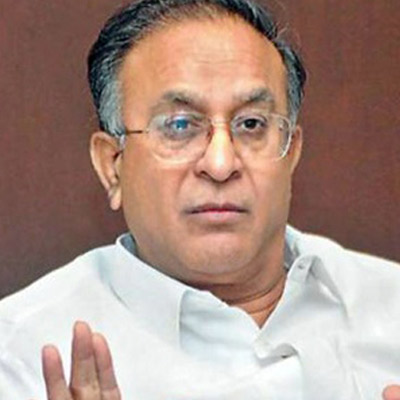
    BANGALORE: Terming the present seven-week ‘ban’ more of a ‘law and order’ problem than a legal one and an emotive issue, Union information and broadcasting minister Jaipal Reddy has asked the Karnataka government to sort out the mess and to see to it that new non-Kannada films were not barred from being released in the State.

    The seven-week ban on non-Kannada films was imposed by the Pandey Panel comprising Kannada producers.

    Reddy was in Chennai yesterday to address an All-India conference on regional films organised by the Southern India Film Chamber of Commerce.

    Media reports say that “gentle pressure” was exerted by the Union minister when he spoke to Karnataka CM Dharam Singh. A meeting of the Pandey Committee has been convened on 13 September and the non-Kannada Film Exhibitors and Distributors Associations have decided to appeal to the panel to review its decision on the seven week moratorium on the release of non-Kannada films and to ask the government to roll back its decision to cut the entertainment tax on non-Kannada films from 70 per cent to 40 per cent.

    In the meantime, an unsigned faxed press release received by indiantelevision.com last week, attributed to minister HD Kumaraswamy, the son of former prime minister Deve Gowda and the president of the Karnataka Cinema Theatre Owner’s Association (KCTO), a statement mentioning that any film with which producer and director S V Rajendra Singh Babu is directly or indirectly associated would not be displayed in any theatre in Karnataka for the next five years starting 8 September, 2004 till 8 September, 2009.

    The release terms the statements as wild, derogatory, inflammatory, disturbing and provocative. It goes on to say that the disturbing remarks and utterances made against the KCTOA secretary Dhananjay KV on 4 September 2004 and also his continued assault against theatre owners have necessitated this step. The press release also states that the association had considered a life ban on Rajendra Singh Babu’s films. This release has been widely quoted in the media.

    Reacting to this, the producers association has demanded an apology from HD Kumaraswamy saying that comments against Rajendra Singh Babu were not just against one individual but also against all producers and directors of Kannada films.

    As per reports in the media, Kumaraswany has said, “No unsigned Press release issued in my name is valid. I am responsible only for press release signed by me.”

    Meanwhile,Prana and Yahoo, two new Kannada films, which were released yesterday, opened to a lukewarm response in Bangalore and have been termed a non-event by some sections of the local press. Four of the 68 theatres that announced closure have reopened to weak response. The theatres were screening re-runs of Kill Bill, Runaway Jury and new movies Out Of Time and Man Of Fire. The theatre owners state that they have not withdrawn support from the KCTOA but that they could not see their theatres closed and wanted to remind cine-goers to go to theatres.