Tag: Pandemic

  • Digital boom spells out recovery for the industry during festive season

    Digital boom spells out recovery for the industry during festive season

    MUMBAI: As the world adapts to the post-pandemic world, there’s been a significant shift in the way people shop, eat and look for entertainment among other things. With the festive season around the corner, there are massive expectations riding on digital media as brands experiment and figure out ways to reach their consumers effectively within the online space.

    The rapid expansion of the digital advertising space in India has opened up a promising avenue for businesses and brands amid the pandemic. According to Dentsu’s Ad Spend Report from June 2021, the digital ad spend in India has grown from 20 per cent in 2019 to 29.4 per cent in 2021. And while television remains the most popular medium for advertising, its growth was just 7.7 per cent, which goes to show that the digital advertising ad spend is fast catching up with TV.

    Advertising Standards Council of India (ASCI’s) ‘Trust in Advertising’ report interestingly revealed that it is not just the metro cities that are viewing ads online. The viewership of digital ads in rural centers, too, was found to be at par with the metros.

    “The consumer today is looking out for convenience, everything at the press of a button,” says Madison Media Ultra COO Jolene Fernandes Solanki. “Digital advertising is expected to be the driver for growth across businesses during festivals. With online being the only medium that has grown during Pandemic, digital ad-ex will gain momentum and further grow during this festival. With this significant growth, digital will maintain its second position and contribute a share of 32 to 35 per cent.”

    The online market is also seeing an upsurge in Direct-to-consumer players. D2C brands have seen a nearly 200 per cent growth in categories such as beauty, personal care, nutrition, and small electronics, as per industry experts.  Brands such as Mamaearth, MyGlamm, SUGAR Cosmetics, Lenskart, Licious, Zivame, Epigamia, BoAt, Wow Skin Science, Country Delight, among others are establishing a strong presence in the D2C arena, fulfilling customer demands despite the challenges thrown in by the Covid-19 pandemic.

    With the digital revolution that is connecting customers and businesses across the country, the rise of the usage of social media, apps, and instant messaging platforms has been witnessed. According to Admitad Affiliate India, head, eCommerce vertical Abhijit Banerjee, a lot of brands will be experimenting with digital platforms, which will not just be limited to promotion but will also be the preferred point of purchase. “Each year, brands are leveling up with different marketing strategies and choosing ROI driven marketing channels, coupon codes, deals, and discounts for their consumers,” he says.

    The spending skew in digital is growing steadily this time around since it is getting increasingly cluttered on traditional media to get consumer attention, feel industry executives. Apart from that, brands agree that it is much more efficient to tap into new geographies with digital rather than TV. Even as major players already dominate the online space, now smaller, regional players are realising the importance of the medium. Brand advocacy on digital has become quite important; brands are not hesitating to opt for the influencer marketing route like last year as their brand advocates in their campaigns.

    The gap between ad spends on TV and digital is narrowing every year. Digital at 35 per cent market share has overtaken print at 16 per cent and is closing the gap with television which stands today at 45 per cent, as per estimates by media agency GroupM. 

    According to Voiro founder and CEO Kavita Shenoy, online spending is on a steady upward trajectory and digital-first businesses are leaning on this trend to encourage customer consumption. This will see advertisers explore new ways of addressing target segments, across media inclusive of music apps, gaming, contextual commerce, and of course live events.

    “Marketing spends will be performance focussed and largely be focussed online as the world is still in lockdown and consumers are still wary of stepping out of home, but prefer to transact online, for everything from groceries to luxuries,” Shenoy says, adding, “The spends indicate that the addressable advertising audience is far more engaged online and that it is easier for brands to measure effectiveness and see ROI in real-time.”

    With e-commerce driving consumption, online advertising spends are likely to see a significant uptick this festive season. According to e-retailer Myntra, the adoption of digital channels for shopping continues to accelerate, and there is a continuous increase in the number of categories a customer purchases. The festive sales season which started last week will go on till Diwali and later Christmas and New Year’s, driven by purchases from tier 3 and 4 cities. 

     As per a recent study conducted by the HI + AI research division, ‘Gipsi’, eCommerce/ Online shopping now has become a habit and will continue to see a rise in spends during the festive season. Even the digitally-hesitant audiences who used to prefer digital shopping only during offers and sales are now shopping online as a convenient option, says Tonic Worldwide’s Unmisha Bhatt.

    While digital spends have been consistently rising for the past many years, the pandemic accelerated it to another level. Coupled with the issues with deliveries of newspapers during the extended lockdown, the percentage share of digital spends has spurted in the last year and a half, with digital spends now second only to TV.

     “This year, we are slowly seeing things going back to normal but changes in the marketing landscape might stay, ” says DViO Digital founder and CEO Sowmya Iyer.  “Brands see a good return on ROI with digital marketing and with the advanced technologies we have at our disposal today, it opens up a wide range of possibilities right from gamification to user-generated content. A lot of brands were seen collaborating with the OTT and gaming platforms for integrating their products and advertising purpose. Here, the targeting is very specific and we see more and more brands wanting to allocate their marketing budgets for OTT collaborations,” she adds. 

    Pandemic has indeed turned out to be a catalyst for digital transformation. “The non-adaptors of digital media (laggards and e-payment skeptics) were also forced to bite the bullet since physical shopping/ consumption was practically impossible during the lockdown. Digital has already taken a larger share in the media ad spend pie overtaking Print. It can now, in fact, be termed ‘mainstream,” says Havas Media India managing partner Saurabh Jain.


  • McKinsey examines COVID-19 disruptions in business

    McKinsey examines COVID-19 disruptions in business

    Mumbai: McKinsey has published an updated research ‘COVID-19: Implications for business’ examining when the pandemic might end and attempted to estimate when some pandemic-related disruptions could return to normalcy. The study details McKinsey’s latest perspectives on the coronavirus outbreak, the twin threats to lives and livelihoods, and how organisations can prepare for the next normal.

    Some parts of the world felt a surge of optimism in the spring, as vaccination rates were climbing and COVID-19 cases dropping. Those regions now face the disappointment of a reversal, thanks to the spread of the Delta variant. Such whiplash is starting to feel like a way of life for people everywhere, as well as for industries including shipping, retail, and healthcare.

    Among high-income countries, cases caused by the Delta variant reversed the transition toward normalcy first in the United Kingdom, during June and July of 2021, and subsequently in the United States and elsewhere. McKinsey’s analysis supports the view of others that the Delta variant has effectively moved overall herd immunity out of reach in most countries for the time being. The United Kingdom’s experience nevertheless suggests that once a country has weathered a wave of Delta-driven cases, it may be able to resume the transition toward normalcy. Beyond that, a more realistic epidemiological endpoint might arrive not when herd immunity is achieved but when COVID-19 can be managed as an endemic disease. The biggest overall risk would likely then be the emergence of a significant new variant.

    The research finds that while many of consumers’ pandemic-inspired digital habits are sticking, the acceleration into digital channels now seems to be levelling off in both Europe and the United States. Companies can build on their digital surge by creating strategies based on long-term value, investing aggressively in tech talent, and being smarter about how they work with data.

    US consumer spending recovered in the second quarter of 2021, driven by increasing vaccination rates, stimulus payments in March 2021, and the general reopening of the economy. Consumers’ pent-up demand and willingness to spend in some discretionary categories caused spending to grow at 20 to 30 per cent year over year, reaching four to seven per cent above pre-COVID-19 levels.

    One of the most economically pervasive pandemic effects is a boom in shipping costs. In a video explaining why container shipping prices have surged, McKinsey partners say that sending a container from Asia to Europe or North America cost roughly $2,000 before the pandemic and $12,000 or more today. Though demand should remain high in the coming months as retailers prepare for the holiday season, prices should begin to come down by the end of the year.

    McKinsey’s July survey of 100 large private-sector US hospitals revealed that amid returning patient volumes and continuing COVID-19 hospitalisations, challenges in clinical-support staffing remain high. 84 per cent of survey respondents report trouble with turnover and vacancies in their nursing staffs. This may only be the start of greater challenges, as 22 per cent of the nursing workforce reported in our Spring 2021 Future of Work in Nursing Survey that they may leave their roles providing direct patient care in the next year.

    Some of this week’s other key findings from the sector research:

    ·         The COVID-19 pandemic has triggered an acceleration of digital-payment adoption in the Middle East, as it has in other regions. Payments players with the right strategies can capitalise on this revolution in a region that is traditionally heavily dependent on cash.

    ·         Amid increased consolidation, digitisation, and specialisation in the insurance industry, private equity is investing in specialty-insurance carriers and brokers and benefiting from the long-term capital insurance companies provide.

    ·         Between September and November of 2020 alone, 178,000 women in the United Kingdom lost their jobs. In an interview with McKinsey, Smart Works CEO Kate Stephens said that the UK charity, which provides support to women who are job hunting, saw a corresponding 21 percent rise in the number of women seeking its services, many of which are now offered remotely.

  • It is time for Good News Today

    It is time for Good News Today

    Mumbai: Over the last year, people across the world have faced unprecedented challenges caused by the pandemic. All through this, television served as a window into the world, providing news of everyday events happening across the globe. The coverage across news channels documented the unsurmountable toll that the pandemic took on every aspect of our lives.

    Amid the gloom, there were stories of human sacrifice, hardships, and challenges that inspired people to step up and help others. Stories of Good Samaritans who delivered food to patients kept under isolation and mobilised oxygen supply to those who needed it the most. There were human-interest stories of dhabas that had been deserted during the pandemic and bounced back with the support of their ardent patrons.

    For the longest time, coverage of politics has taken precedence over other subjects for news channels. At a time, when the country is limping back to some sort of normalcy, perhaps it is these stories, that need to be told more than ever.

    “The trend in news media worldwide is to have a strong point of view and take a ‘stance’ in the country’s social-political scenario. That’s a classic way to get more eyeballs from the constituency the stance represents,” said renowned ad sales trainer and Marcom advisor to challenge brands, Shripad Kulkarni.

    There has always been a debate between giving what the audience wants over what you think they need. However, the chase for higher TRPs has led news channels into a rush for ‘breaking news’ and ‘sensationalist headlines’. Experts concur that over a long term, the content of news channels is largely responsible for attracting/ repelling audiences.

    The focus on negative stories also tends to create a bias towards a certain kind of worldview. Swedish statistician Hans Rosling demonstrated through tests that people believe the world is poorer, unhealthier, more dangerous than it actually is. He attributes this bias not to random chance but to a one-sided view of the world that is depicted in the media.

    “In-depth coverage and over the top coverage are not the same thing. There is a point by which too much becomes way too much. Honestly, I think Dilip Kumar (referring to his death) deserved more bandwidth than Raj Kundra – the young people need to know more about his story, from many different angles,” opined Social Access Communications’ founder Lynn De Souza.

    While the news genre continues to play the role of incremental reach builder/ frequency driver as per the structure of different markets, experts highlight that the recent changes in the news ecosystem have somehow diluted its attractiveness. Also, it is this nature of engagement with the news channels that the advertisers are also re-evaluating. 

    “Undeniably, content associations deliver the maximum value for advertisers but, the uncertain nature of content has made advertisers wary of associating with news as sponsors or as on-screen associates,” said Wavemaker India, chief strategy officer, Premjeet Sodhi, emphasising the need for more “regionalisation and localisation” in news coverage, as well as a need to appreciate the changes in mindsets of the small town/ rural consumers with their increased access to media.”

    In the era of the “attention economy,” each channel has created its own unique way of bringing news to the consumers and that may impact the viewers’ choice of channels. Maybe, it’s time, they explore good news as that differentiating factor to connect with their audiences.

    This also explains why the latest launch of channels like Good News from The India Today group offers a chance for the TV news genre to reinvent itself to bridge this widening gap. This also augurs well for brands and advertisers who are keen to invest in the news genre for maximum returns on value.

    “The ultimate product is the content and it is for the news channels to re-discover and re-define News and built their own unique approach to delivering news and analysis. And, this is something that has been done by these very channels in the past. The consumers’ expectations have changed; the market dynamics have changed and the news channels have to tune their strategic direction to the new reality,” added Sodhi.

    The latest example of that has been the coverage of India’s historic feat at the 2020 Tokyo Olympics. Stories that uplifted the morale of the nation in tough times, and gave them something to cheer about. It also drew attention towards the dreams and aspirations of Young India. There were so many backstories not just about Indian athletes but other treasured moments like the first joint gold that has not been properly featured on most of the news channels.

    “With respect to ROI for brands and advertisers, I think TV news is the genre that gives maximum return on value. News works out much more effectively because you can have a lot of frequency- and even in terms of CPR efficiency, nothing can come close to news so far. The only downside perhaps, is that a lot of planners think that you have reached stagnancy with the news. But we have experimented in the past that if you take the right path and expand your choice you can get an optimum reach with news,” says a senior media planner.

  • LMIL reverses salary cuts effective 1 September

    LMIL reverses salary cuts effective 1 September

    Mumbai: In a piece of good news for the employees at Living Media India Ltd (LMIL), founder and chairman Aroon Purie has announced the organisation’s decision to reverse the salary cuts imposed last year amid the pandemic.

    Apart from the over and above the Ex-Gratia Award given recently, the salary reductions for all the staff will be reversed, effective 1 September 2021, informed Purie in a letter written to the entire staff.

    Purie said the reduction of salaries in June 2020, was the “most painful decision” that he had to make in the 46 years he has worked in India Today, which is published by LMIL. “As you know, even before the pandemic, the magazine industry was under severe stress. With the economy contracting, advertising, our primary source of revenue, virtually collapsed, plus distribution was impacted due to corona lockdowns. The only way to survive was to reduce costs,” he wrote.

    Purie also thanked his employees for working through the crisis undeterred, and ensuring that the magazine did not miss a single issue, and maintain the quality at the same time.

    “You have shown courage, resourcefulness, forbearance and ingenuity. While we are nowhere near pre-COVID levels, or expect to be there in the foreseeable future, we must move on and adjust to a new reality. I have faith in our strong brands, content, our team’s belief in the magazine and our will to succeed,” he wrote.

    Purie highlighted that despite the churn in the media landscape, magazine stories have a profound and lasting impact. “Advertisers see that too. I hope more will. The good times will return. They have to. We will all then progress and prosper with our magazines,” he added. 

  • Dentsu Group records organic revenue growth of 15% for Q2

    Dentsu Group records organic revenue growth of 15% for Q2

    New Delhi: Dentsu Group has witnessed a significant rebound in performance for the quarter ended June, recording organic revenue growth of 15 per cent. The Group has announced its results for the first half as well as the second quarter of 2021.

    Dentsu Japan Network grew by 12 per cent while Dentsu International registered a growth of 17 per cent, showing strong sequential improvement over Q1 decline of 2.4 per cent.

    “As we pass the anniversary of the start of the pandemic, revenues continue to recover across all regions with strong growth in digital solutions. Client confidence is restoring with spending levels more resilient and predictable,” said the group in its earnings statement. “Operating margin improvement continues to exceed expectations, substantially ahead of the prior year, with Q2 improving by 370 basis points year on year, showing the gearing effect of higher revenue together with cost reductions being implemented.”

    The Group expects high single-digit organic growth for FY2021, with a line of sight to delivering the long held 2022 margin targets of 20 per cent for Dentsu Japan Network and 15 per cent for Dentsu International one year early. 

    “Dentsu Group delivered a strong second quarter performance, reflecting the growing consumer and client confidence we see across all regions. Underlying profit growth continues to be strong, exceeding our expectations, and demonstrates our commitment to our margin targets,” said Dentsu Group Inc, CEO and president, Toshihiro Yamamoto. 

    APAC (excluding Japan) recorded a growth of 3.6 per cent. The APAC region reported double digit growth in the second quarter driven by double digit growth from Australia, Indonesia, South Korea, Singapore and Thailand. EMEA reported 8.7 per cent organic growth in H1, FY21, and 22 per cent in Q2, FY21. 

    “Whilst the future path of the pandemic remains uncertain, our full year guidance confirms our confidence in the outlook for the second half of FY2021, as well as our ability to meet our medium-term targets by 2024,” added Yamamoto.

  • Advertisers demand good news on TV

    Advertisers demand good news on TV

    Mumbai: 2020 was a tough year for industries across the board, including media and entertainment.

    Most observers believed that television news would be immune to the killing nature of the novel corona virus. After all anxious TV news viewers were following minute-by-minute updates about Covid2019’s life threatening rampage and the scores of carcases that were piling up in hospital mortuaries or cemeteries and the by banks of the Ganges – in the virus’ wake. However, this quest for covid2019 updates died soon thereafter as depressed and disturbed TV watchers wanted some better tidings. But that was not to be: controversy after controversy made the top news on daily bulletins 24×7. Net result: viewership of news TV went down south, as did advertising.

    Freedom of expression is a cherished and valued fundamental right. Yet, certain news media outlets have often wielded it to cast aspersions, and run media trials and ended up portraying the accused as guilty, thus irking TV viewers even more. Then there are the high-decibel studio debates, which often end up with no conclusion except for some attention-grabbing visuals.

    Many a commentator, politician, socialite and influencer bemoan the dumbing down and degradation of TV news. As do a section of viewers.  Listen to what eye comfort and eyewear ecomm fim Lenskart, media head, Anupam Tripathi. has to say.

     “Negative programming on news channels is bound to affect a certain set of audience that is niche or more mature to an extent.”

    Berger Paints India, general manager – marketing, Sudhir Nair agrees that that the overly dramatised content catalysed viewers to  cut down on TV news during the pandemic, and it was the lack of new content that actually made them switch to digital and social media outlets for the latest. 

    So what is the way out? One way out is to present developments in a positive way, talk about the good that is going on in society and government, focus on how life is getting better, not worse, points out Tripathi.

    “Unlike the DD days when everyone in the family was glued to a television set for any form of content, the younger lot now has the option to switch to another screen. So if the news channels do not take up the challenge of making their programming more positive and interesting, they might lose this audience. It is important to remember that today the competition is not with other genres, it’s with every other device that is selling news,” adds Tripathi.
     
    Nair goes as far as to say that it’s about time that the TV news sector reinvents its programming and the way it approaches news stories. “it would be great if we could see more positive and inspiring stories,” he adds.

    According to most marketers, a news channel must also bear in mind that it too is a brand which has to take care of its goodwill and credibility and provide a safe environment for TV commercials.  In the past there have been examples where advertisers have either individually or collectively announced that they would refrain from advertising on channels that got into unnecessary controversies. Hence the importance of responsible programming.

    Hence, says a marketer, that it’s interesting that some news networks have announced that the new offerings from their stable will present news through a positive lens, not just a critical, doubting one.  Droom CMO Mohit Ahuja welcomes this trend, adding that “news media is among the top three advertising mediums because of its high reach and affinity among our target group.”

    That should be good news for those who are coming up with channels offering good news.

  • National Esports Championships 2021 to kickstart on 6 August

    National Esports Championships 2021 to kickstart on 6 August

    Mumbai: The Esports Federation of India (ESFI) is all set to roll out the 2021 edition of the National Esports Championships (NESC), scheduled for 6-22 August.

    Owing to the Covid-19 pandemic, the nationals will be held virtually with top athletes from across the country competing and showcasing their skills and strategies. Popular games DOTA2, Tekken7, PES 2020 will be part of the event alongside CS:GO, said the statement.

    The NESC 2021 will be played in a double-elimination format with the last date of registrations being 19 August (PES2020 & Tekken7), 5 August (DOTA2), and the registrations dates for CS:GO will be announced soon. The matches of popular esports titles PES 2020 and Tekken 7 will be played between 21-22 August, while the multiplayer online battle arena video game, DOTA2 is scheduled for 6-15 August.
    “For the Indian esports industry, this is our time in the sun. The increasing interest for esports in our country currently is encouraging us to push the envelope and give the athletes and the audience something new and exciting each time,” said the director of ESFI and VP of the Asian Esports Federation, Lokesh Suji. “We are extremely thrilled and excited to announce NESC 2021, it is a great opportunity for gamers to not only showcase their talent, strategies, and skills in competitive gaming but also make the country proud. While esports is now going to be a medal event at the 2022 Asian Games as well as few other Asian championship events and is expected to be included in Olympics in the near future, we are committed to develop, support and grow the esports ecosystem in India.”

    The winners of the NESC 2021 will be selected to represent India at the 13th Esports World Championship by IESF; these athletes will progress through the online regional qualifiers scheduled in September-October to the global finals which will take place in Eilat, Israel between 14-19 November. The air travel expenses and accommodation of the athletes traveling to Eilat will be covered, the organisation said.

    “As tournaments like these become bigger and grander, we are continuing to see a growing interest among the Indian youth to take up esports professionally,” said IESF secretary-general Boban Totovski. “We’ve got some of the world’s most recognised competitive games in the tournament that is being mastered by highly skilled, motivated, and talented virtual fighters. We can expect an edge-of-the-seat thriller in this season of NESC 2021. This is a very interesting time for esports in India and tournaments like this will fuel their ambition to become the powerhouse of esports.”

    With Artsmith – Concepts & Visions as the communication partner, the championships will be streamed live on ESFI’s official YouTube & Twitch channel and Facebook page.

  • Digital marketing really worked for us during the pandemic: Super Plastronics’s Avneet Singh Marwah

    Digital marketing really worked for us during the pandemic: Super Plastronics’s Avneet Singh Marwah

    When the second-generation entrepreneur, Avneet Singh Marwah took over the reins of the company, it was still known for manufacturing plastic injection moulds which it started in the 1970s and 80’s. He slowly steered it into what it is today – one of the country’s largest TV manufacturing firms and the exclusive India licensee of global brands such as Kodak, Thomson televisions. It has recently also tied up with the German consumer electronics brand Blaupunkt.

    He started his journey in the company as an assistant manager and made his way through, before taking over the reins of the company from his father, Amarjeet Singh Marwah, the founder chairman of the company. “I worked in almost all divisions – from moulding to assembly line to service, accounting, finance, and sales. I worked on the field itself and spent three to four months in each department,” Avneet said, “In those six-seven years I never had any office or anything.”

    From thereon, there was no looking back for Marwah who went on to change the game and turn the fortunes for Super Plastronics Pvt Ltd (SPPL). Under his leadership, SPPL has now become one of the leading smart TV and home appliance manufacturers, selling top-of-the-charts global brands in India’s booming e-commerce market, via Flipkart and Amazon. Under the brand’s aegis, the European consumer technology brand, Thomson is currently among the ‘Top Five selling online smart TV brands’ in India.  

    IndianTelevision’s Anupama Sajeet had an in-depth conversation with SPPL, CEO Avneet Singh Marwah on the brand’s journey from plastic moulding to being India’s largest contract manufacturing firm & the exclusive licensee of four renowned international television brands. He also spoke about spotting opportunities amid the pandemic gloom, and talked about what it means to be an online exclusive brand, and future plans.

    Edited excerpts:

    On the origins Super Plastronics and the journey so far

    It’s been 30-years since we forayed into black & white CRT, colour, LCD & now LED televisions. Before that, our work was limited to plastic moulding for television. Currently, we have a couple of LCD brands in our portfolio, about 550 service centres, 24 pan India offices, and 28 warehouses across India. There are three manufacturing plants located in Noida, Una, and Jammu. By the end of the year, we will be shifting to our new fully automated TV manufacturing plant in Hapur, Uttar Pradesh where the target set is 1.5 billion units a year. In fact, we have the second-largest manufacturing plant in India, after LG.

    We began with Kodak in 2016 and offered ‘global technology at competitive prices. In 2018, we launched the French consumer electronic brand Thomson. Now, we have four international brands on board, including the German consumer electronics brand Blaupunkt. SPPL has complete rights to these brands from manufacturing to sales to marketing. There are two parts to it – the first is providing the most affordable TV sets in India and the second category is premium TV sets.

    On what led to the brand’s expansion plans amid the pandemic gloom

    The pandemic actually presented a big opportunity to all the manufacturing units in India. Firstly, the government banned the import of LED televisions’ CBUs (complete build units) last year, which led to a huge spike in the market in terms of the television industry. Earlier, there were a lot of imports happening in televisions. With the decision to ban it, one had to manufacture and assemble them in India. Plus, globally everyone’s looking for an alternative to China. We see this as a great opportunity for us with the government taking a decision on manufacturing all appliances in India. So, apart from television, we are foraying into appliances.

    On the brand’s focus on e-commerce and its region-specific growth

    We are an online-exclusive brand to Flipkart and it’s one of the largest retailers of TV sets in India, with an approximate market share of 44 per cent currently. When we started out about three years back, we had a strong online presence in tier 1 and tier 2 cities, but now we see a huge surge of growth in tier 3 and 4 towns, as well. In fact, in the last one year the maximum growth has happened in tier 2 and 3 regions.

    To be region-specific, the online sales have grown in Tamil Nadu, Karnataka, Andhra Pradesh, Telangana, Delhi NCR and Uttar Pradesh. In the West, Gujarat and Maharashtra, where the latter is among the best-selling states with maximum consumerism in India. In the East, West Bengal is seeing a spike; Assam and Odisha again have a bright future for online sales.

    The advantage of being online-exclusive currently is that we are seeing a 100% YoY (year-on-year) growth for Thomson. Pandemic has led people to move from offline to online even for buying appliances and electronics.

    On SPPL’s marketing strategy to reach out to consumers

    We are primarily marketing through the digital platform- that has really worked for us. At first, we targeted the online customers where the intent of buying is high based on their searches, so the conversion to sales is high. Now, we have started focusing on the customers, who were buying offline to encourage them to buy online and we have seen a lot of first-time e-buyers in the last eight months. We get lots of traction from influencer marketing, social media, google ad words- we have a 360-degree ecosystem in digital marketing.

    Apart from that, our strategic partner is Flipkart and whenever there’s any ATL/ BTLs or TV campaigns during festive season periods they include the SPPL brand name as well – only on those particular days do we target TV. That includes print campaigns too, but the print is in the decline stage right now and we don’t get too many eye-balls via it; this was more so true during the pandemic when sales of newspapers took a hit.  

    On the impact on brand growth and revenue during the pandemic

    We have been an online exclusive brand for Flipkart since 2018. We have seen a 100 per cent year-on-year growth phase. Last year after the first lockdown there was a huge pent-up demand and the whole world was hooked to their screens due to WFH, online classes, and people shifting to OTT platforms due to lack of fresh content on the TV – all of which led to record sales for us. But after the hard-hitting second wave, because of low disposable income, people had reservations about spending on high-value items and electronics. But, there is a huge inflationary demand for televisions in the country that will continue. As soon as the consumer sentiment improves, we will again find a growth pattern.

    On the plans to be an online exclusive brand for high-value items like TV and washing machines, post pandemic

    We have seen once the customer starts buying online it becomes very difficult for him to come out of it, because of various factors- there are offers that run exclusively online. Both Amazon and Flipkart are creating an ecosystem around it. Plus, there’s a limitation of shelf space when one goes to buy offline, thus one will not find the complete product catalogue in one place, unlike online where you’ll find the complete package in terms of variety. Hence, I don’t believe it will be affected once the lockdowns and restrictions cease.

    We are covering almost every town and city pan India, and now all set to foray into the rural markets too. With regards to product diversification, right now we have introduced air-coolers, before that it was washing machines. We are working on a couple of more product categories that need to be finalised before they can be announced.

    On what sets the brand apart from other local players?

    There are very few brands in India which have a network of more than 550 service centres. In the next few years, we plan to take that number to 800, which will be one of the highest for any television brand in India. Thus, we have a well-established network, which we have developed over the last three years, which is a challenging task for any new brand or an existing Chinese smartphone brand. We cater to 2,300 cities and towns that contribute to over 85 per cent of sales.

    Additionally, we have about 28 warehouses across India, with a door-to-door service which is a huge factor when it comes to spare parts replacement. The delivery period is also drastically cut down when there’s local warehousing with spares, and this gives a huge advantage to customers. Plus, we are one of the few brands which have the capability of doing replacement of TVs from the customer doorstep- even in tier 3, tier 4 towns which most other brands struggle to do.

  • UP CM provides Rs 10 lakh aid to family of journalists who succumbed to Covid-19

    UP CM provides Rs 10 lakh aid to family of journalists who succumbed to Covid-19

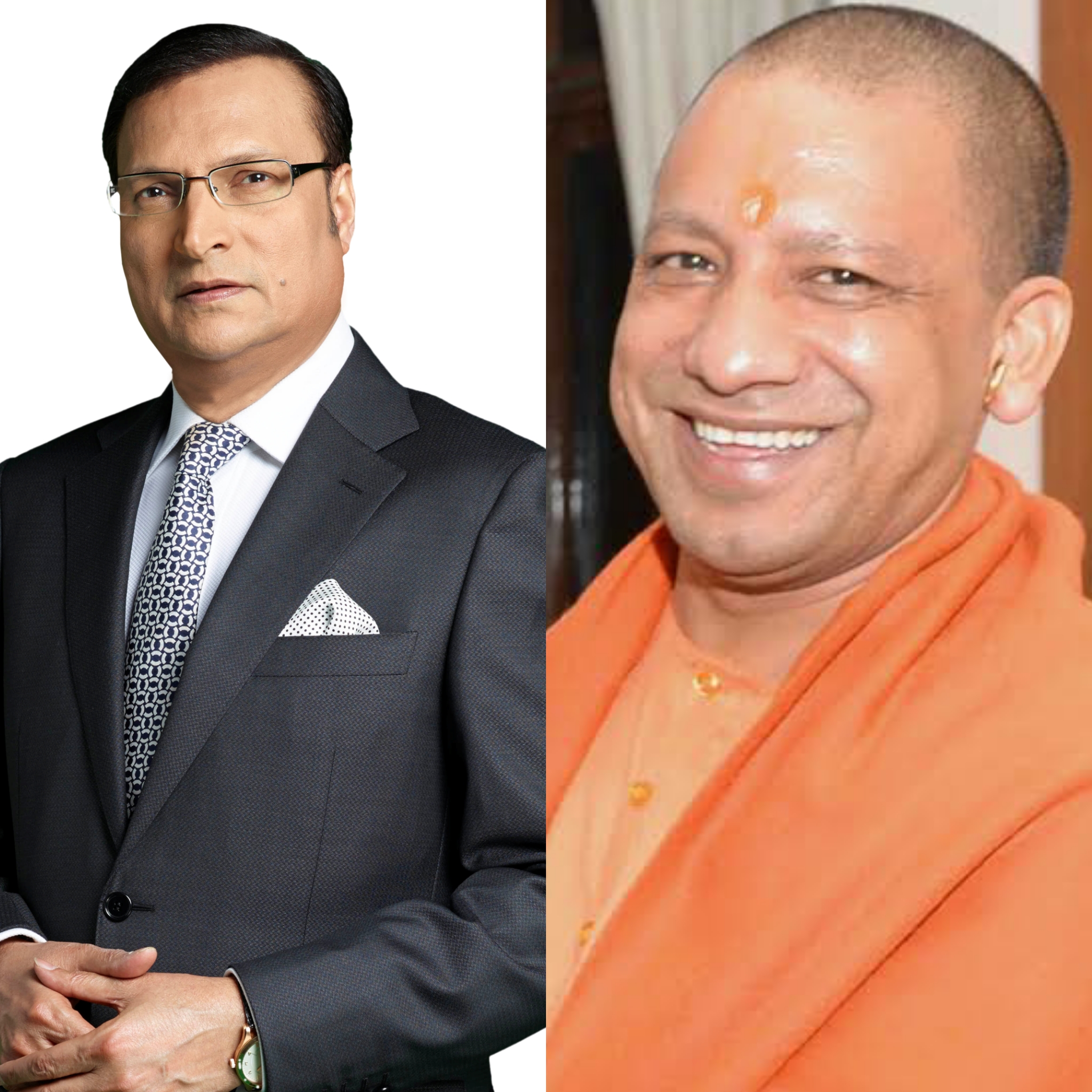
    Mumbai: Uttar Pradesh chief minister Yogi Adityanath has announced financial aid to the families of journalists who lost their lives due to the coronavirus pandemic. The families of scribes were provided a cheque of Rs 10 lakh each.

    Adityanath was accompanied by India TV editor-in-chief and chairman Rajat Sharma, who also paid tributes to the deceased journalists.

    “TV, print, digital journalists not only covered news during the lockdown, but they also worked as a bridge between the government and the common people. I am proud to say that people from the media fraternity faced the challenge bravely,” said Sharma, adding that there were also times when people stepped out of their homes but did not follow the COVID-19 protocols. “During such times too, our reporters and camera persons spoke to people and questioned them. Some even disrespected journalists upon questioning, however, they continued to do their job and even urged the people to wear masks and follow the coronavirus protocols.”

    Sharma said as the president of NBA, he had also urged the chief minister to provide vaccination for journalists. “The coronavirus pandemic is yet not over and those who have yet not received their vaccination jab should go for it at the earliest,” he added.

    “Over 25 thousand journalists were vaccinated during the drive,” said the chief minister Yogi Adityanath. During the second wave of the pandemic, many journalists across the country got infected on duty and lost their lives, leaving their families helpless, the UP government said.

  • upGrad highlights importance of online degrees in new ad film

    upGrad highlights importance of online degrees in new ad film

    MUMBAI: Edtech platform upGrad has launched a new ad film addressing the disenchantment experienced by the youth across the country due to the shutting down of institutes in the wake of the Covid-19 pandemic, as they stare at an uncertain job market and future unemployment.  

    Taking ahead its ‘Sirf Naam Ki Nahin, Kaam Ki Degree’ campaign, the film aims to highlight the edtech’s offering of online graduation courses from universities across the country.

    Conceptualised by The Womb, the film targets the youth disillusioned about their future amid the pandemic, especially those hailing from smaller towns lacking in reputed institutes. The video shot in a scenic location in the country’s interiors showcases a group of friends who harbour dreams of education in the big cities. They vocalise their misery of having to forgo those dreams in these testing times by means of a melancholic jingle.

    The creative aims to reassure the aspiring learners that while there may be no visible end to the pandemic on the horizon, all their hopes for a bright future need not be lost and that they need not give up on earning a suitable degree from a respected college. 

    upGrad chief executive officer – India Arjun Mohan said, “We have partnered with the leading universities to provide young India with UGC entitled, and WES recognised degree courses to give them a 360-degree university experience online. Post the course completion, we will also assist these learners with career services that involve a paid internship up to six months and placement support up to three years based on their performance.”

    The Womb co-founder Kawal Shoor added, “Now, with upGrad tying up with many universities to provide value-added under-graduate education online, there’s a new opportunity for young students to access high-quality education in their own hometowns, without having to leave to bigger cities as has been the norm. Our campaign borrows from the current reality but also is geared towards positioning online undergraduate education as a powerful alternative to trudging to a nearby big city to access quality education. And also, to nudge them to believe that even online graduation can lead to a ‘Kaam ki Degree’.”

    The commercial will be aired across 50 TV channels across geographies, along with 360-degree amplifications in other media channels.