Tag: Pandemic

  • GUEST ARTICLE: Performance based tracking platforms are ensuring customer centricity and empowering them to grow their business at scale

    GUEST ARTICLE: Performance based tracking platforms are ensuring customer centricity and empowering them to grow their business at scale

    Mumbai: Across geographies, the performance marketing ecosystem is constantly growing and has become more complex over time. It has witnessed fast-tracked growth on the sidelines of both the rise of SaaS platforms and the popularity of affiliate networks. According to Emarketer, total digital ad spending is projected to reach $526.17 billion by 2024, up from $332.84 billion in 2020. The onset of the pandemic made businesses take notice of monetary resource allocation like never before. As a result, in the post-pandemic era, new age tracking platforms enable businesses to make data-driven decisions and scale their operations at the most competitive price points. All this has been made possible by offering the highest level of automation, which continues to empower companies and ventures of all sizes with the tools they need to stay competitive and scale their business.

    Need for tracking platforms to put customers at the centre of all of their actions

    The current market offerings provide limited data insights and require substantial manual work. There are still ample numbers of cases where account managers spend a large extent of their working time conducting repetitive tasks such as approving offers, notifying clients, or creating Excel tables to derive insights. Performance tracking platforms need to listen to customer feedback and, based on that, build their technology stack. Equally important is to remember that every client has different needs and requirements, and they need to be provided with tools so that marketers can successfully measure and optimise campaigns at an affordable price.

    Understanding the four key ways of demonstrating customer centricity and its impact on business growth.

    Never before has it been more important for performance tracking platforms to give customers the freedom to adapt technology to their needs while also reacting to post-pandemic changing environments. This includes modifying, filtering, and enhancing events in real-time.

    Businesses should be given a broad range of tools instead of a one-size-fits-all solution. At the same time, providing clients with full control over their traffic to prevent fraud is indeed the need of the hour.

    Clients should have all their marketing needs in one platform. Automation is key to streamlining processes and giving clients more time to focus on high-value tasks that will grow their business.

    In this regard, performance tracking networks should make critical analytics consistently available on a marketer’s dashboard, making it easier and faster to view performance and take action when necessary. By ensuring customer data reliability through the platform’s comprehensive data display, tracking networks can enable agency partners to have all their data accessible from a single dashboard. They should provide customers with real-time information and innovative automation to give customers time to focus on analytics, strategy, and scaling their business.

    Tracking platforms should strive towards putting customer value at the centre of all of their actions. It is imperative to understand the needs of every customer in order to derive the potential value that they can expect from using the tracking platform.

    Last but not the least, right from onboarding to daily operations, offering customer support services at the highest standard is just as important as the innovative tools and technology that help businesses to scale. These are two sides of the same coin: the innovative technology needed to help businesses scale, and a support service that helps them get the most out of a tracking platform. The onboarding process should be personalised for each client, ensuring that they get the most out of the platform’s innovative tools. Separate dedicated onboarding sessions play a crucial role in helping customers get familiar with their way around the tool from the very beginning. Once clients get familiar with the tool, focus should be put on understanding their use cases to help reiterate key features (such as the automation engine and optimization features) that set the chosen platform apart from other market players. Providing short explainer videos that directly showcase certain features—from how to set them up to refining them for a client’s specific purposes and more – is yet another useful route.

    Time and again, it has been proven that a customer-centric approach empowers marketers to scale their companies, resulting in satisfied customers. If tracking platforms can continue to focus on innovating reliable technology while also putting in place excellent customer service, they can certainly help in accelerating their clients’ business growth.

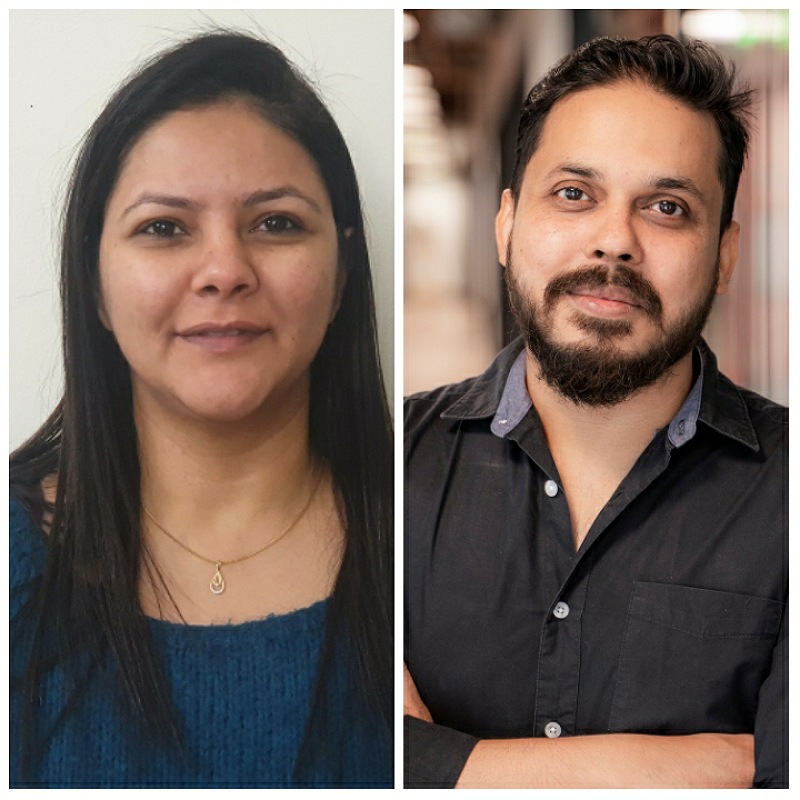
    The author of this article is Yogeeta Chainani, co-founder & chief executive officer (CEO), Swaarm.

  • Natpe announces its plan to file for bankruptcy under chapter 11

    Natpe announces its plan to file for bankruptcy under chapter 11

    Mumbai: The National Association of Television Program Executives (Natpe) has announced its plan to restructure its business affairs with the Bankruptcy Court under Chapter 11 of the bankruptcy code. It said, “Like many other professional organisations, Natpe has been adversely impacted by the Covid pandemic, which prevented us from holding events, which typically generate significant revenue. Natpe was forced to operate on its financial reserves, which now required it to reorganise its business structure.”

    “Natpe is looking at all possible options to restructure, including raising funds through strategic alliances and continuing to operate Natpe as a more streamlined and reorganised operation. For almost 60 years, Natpe has been the leading global professional association for content producers, distributors, developers, streamers, and buyers across all distribution platforms. Natpe is optimistic that it will emerge from the reorganisation process in the same position,” it said.

    The emergence of new Covid-19 strains at a time when infections were at their maximum led to Natpe being compelled to postpone its main conference and market activities in 2021 and 2022.

    In response to one of the largest rises in Covid infections, Natpe decided to cancel the in-person conference scheduled for January 2022 in Miami, Florida. Next year it will host an event in the Bahamas from 18-20 January instead of in Miami. It aims to return to Budapest in the summer.

  • Striking the right note: Clef Music Awards’22 unveils the winners in a glitzy ceremony

    Striking the right note: Clef Music Awards’22 unveils the winners in a glitzy ceremony

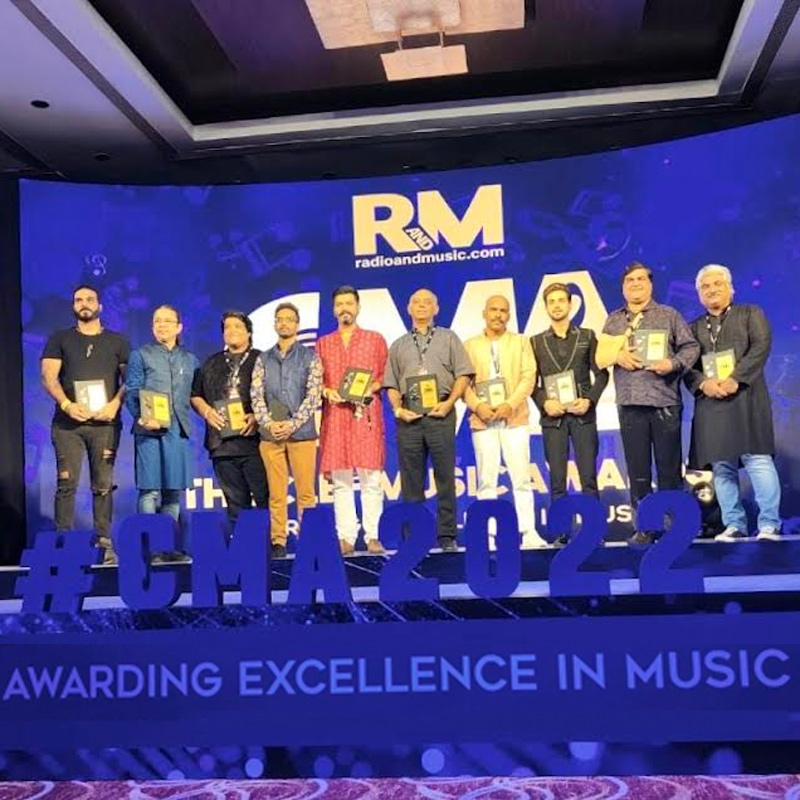
    Mumbai: It was a scintillating Saturday night at Mumbai’s Sahara Star hotel as the stars aligned to stage the second edition of Indiantelevision.com’s Clef Music Awards 2022.

    In India, one tends to associate music with films or Bollywood music, but there’s so much more out there waiting to be discovered. Raising a toast to all such independent musicians & original music creators, the CMA awards honoured musical accomplishments for the period August 2021 – August 2022 in a one-of-a-kind celebration held on 24 September. The first edition of the event took place virtually last year due to the restrictions imposed by the Covid-19 pandemic.

    This year’s event commenced with a poignant moment as the ITV founder and editor-in-chief Anil Wanvari posthumously recalled the contributions of the industry’s legends and music veterans, namely Bappi Lahiri, KK Menon, Bhupinder Singh, and the nightingale of India, Lata Mangeshkar, all of whom we lost in the past year.

    The Radio & Music Clef Music Awards (CMA) integrates musicians, lyricists, composers, bands, record labels, from the Hindi & English language music fraternity pan-India as it celebrates talent across the musical spectrum, classified into over 40 categories, ranging from Hindustani and devotional music to rap, folk, ghazal, sufi, pop, electronic, and rock music.

    The jury members included eminent names from the industry, such as Abhijeet Sawant, Amit Sana, Ankush Bhardwaj, Atul Churamani, Bhaskar Pal, Divya Kumar, Heena Kriplani, Mayur Puri, Prashant Ingole, Sanjeev Kohli, Santosh Nair, Shikhar Yuvraj Manchanda, and Sunnyy Vyas.

    Notable names from the world of music, such as Leslie Lewis, Amit Sana, Kavita Seth, and Sonu Kakkar, to name a few, also marked their attendance at the event.

    Here is the full list of the winners who took home the CMA trophies:

  • GUEST ARTICLE: Experiential marketing to thrive in the post-pandemic world

    GUEST ARTICLE: Experiential marketing to thrive in the post-pandemic world

    Mumbai: The immersive experience was popular earlier, but the Covid-19 pandemic accelerated its application by several companies, making it take centre stage rather than being offered as an add-on. Let’s see how the dynamics changed during the pandemic and the way forward.

    The world is seeing the light on the other side of the tunnel. The Covid-19 pandemic’s effect has weakened now and after two years of struggle and adversity, the world is slowly paving its way back to normalcy. As the world starts connecting in person once again, experiential marketing is seeing an uptick in demand from consumers. Before the pandemic hit, experiential marketing was well perceived by consumers, with marketers seeing the potential of immersive brand experiences and events. With a locked-down lifestyle of over two years, the demand for real-life experiences has now grown exponentially.

    Live events, which were seen in their element after a hiatus of over two years, got all the more creative and we could see they are now heavy on technology to bring out the personalised impact. Intimate experiences are what consumers in the modern day are striving for, and after the upheaval of the pandemic, wherein the uncertainty surged suddenly, people now want to live it to the fullest with their dear ones.

    Weddings have evolved to be upbeat and intimate. For that matter, destination weddings are slowly gaining standard status in India across all economic classes. From event companies to branded hotel chains, everyone has tailored their offerings to thrive in this space by providing exhilarating experiences at bespoke destinations with breathtaking natural views in the background. Customers are now looking beyond just what is basic. They want all that with their close ones, and ideally, only close ones will witness it all. The one big event inviting multiple people is not what patrons are looking at for multiple reasons, with the Covid-safe environment taking centre stage.

    People have been striving to immerse themselves in human interactions and in-person events for the longest time. Covid-19 kept them away from each other. Yet, the world somehow found ways to connect, though virtually. Events were being hosted online. Live events and destinations have started hosting virtual tours through the internet. Be it concerts, corporate events, car and bike expos, or destination conventions and trade shows, the brand value was kept alive online, but people longed to witness them again in person. Hence, marketers redefined how customers experience these events with an added value. For example, a tour and travel firm, during the Covid times, introduced a subscription-based VR experience to showcase to customers how they can sense various destinations. If they liked the appeal of a close-to-real experience, the customer could engage in a valuable package to travel to the destination once the lockdown was lifted.

    Real-life experiences create happy memories for the customers, and that has been shown to contribute a lot to increased conversions or sales. In the foodservice industry, many upbeat events saw drastic closures during the pandemic. Hotels turned into quarantine centres, and their restaurants remained confined to receiving delivery orders only. However, they conceived things differently. Instead of sending just the end products, hotels reimagined the live-kitchen experience of their award-winning restaurants at the patron’s home. Hence, the concept of DIY signature dishes was born. The hotel sent individual ingredients for the signature dishes, and patrons were guided on how to make the dish via a note or virtual live guidance from the executive chef. The results were lip-smacking. The hotels that practised this approach expressed an increase in customers visiting them currently who wanted to experience the signature dishes at the hotel in the ambience provided by the hotel.

    Experiential marketing has come a long way, and digitization has certainly helped people remain connected all the time. People are finding newer ways to stay connected, and experiential marketers are trying their best to make a point of how the patron is as immersed in the product or service as possible. While 4D in cinema dates back several years, the application of virtual reality and augmented reality has come a long way in the events sector too. From headphones-based beach parties to VR gaming zones, experiential marketing has revolutionised how people looked at events previously.

    The crux of the success of experiential marketing remains the feeling of ownership that it creates. People love taking control of things and using them for the best according to themselves, so experiential marketing creates just the environment. For example, the new-age apparel stores online are coming up with features wherein one can see how they will look in a particular outfit even before deciding to buy it. They sense how they would look in it and how it’d feel to own it. This can lead the customers to buy or choose another outfit. So, the feeling of ownership even before making the sale has led to the success of experiential marketing. In the case of events, people love to witness how their prospective event will look through a virtual environment. A virtual walkthrough of the event’s flow helps the customer visualise how their event will look before the day.

    Experiential marketing has come a long way in these years where it originally came as an ancillary service but has become a crucial element of the marketing mix for many corporates. It is in line with the evolving needs of customers, who are now savvy and demand more from brands and are well over the age-old advertising tactics.

    The author of the article is Hubble Entertainment co-founder and managing partner Hafiz Khan.

  • Create campaigns to increase engagement and attract customers:Disney+ Hotstar’s EVP & CMO S Shakdher

    Create campaigns to increase engagement and attract customers:Disney+ Hotstar’s EVP & CMO S Shakdher

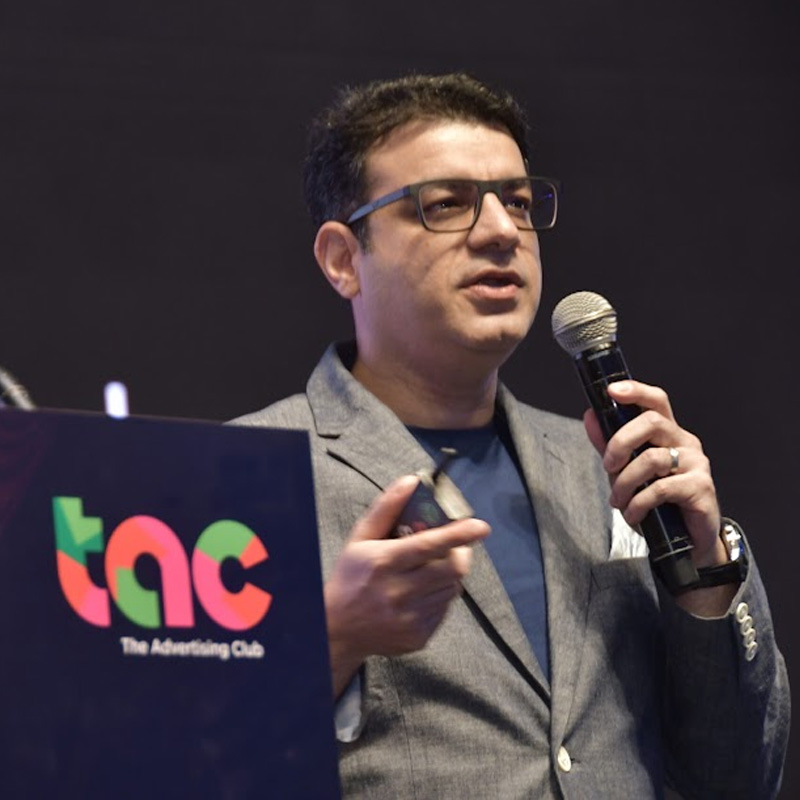
    Mumbai: In today’s world, creating the best marketing campaign means the company not only aims to attract consumers towards ads but engage them too, expressed Disney+ Hotstar executive VP and CMO Sidharth Shakdher. He was speaking at The Advertising Club’s third edition of D-CODE, held in Mumbai recently.

    He discussed the effectiveness of funnel marketing for Disney+ Hotstar, which led to the conversion of 95 million engaged viewers from an overall spike of 140 million viewers. In 2019, the viewership increased to 112 million.

    Shakdher further explained that in funnel marketing, a potential consumer goes from becoming aware of your brand to purchasing the goods or services.

    “While building a funnel, two things were important to us: to have a better experience and to maximise the spike. We wanted to reverse the narrative that digital drives people,” he said. “We created this funnel as there was a spike happening and the challenge was to convert them into engaged consumers.”

    “And every time a person got converted, they would negate, and then iterate the recommendations again and show him another set of recommendations so that he could convert from spiked to engaged,” he added.

    Sidharth further advised that in all marketing campaigns, advertisers have to be able to pivot the right objectives, so, if they’re looking at a conversion-based campaign then it is requisite that advertisers have an action-based campaign in place.

    “Your conversion could be a purchase, but your action could be an add to cart, reading a product retail page, or anything. Always know what works best for you in terms of conversion is concern,” he added further.

    Mentioning about the creative ads on Disney+ Hotstar, he highlighted the local superheroes advertisements that have Indian middle-class power. The professional campaign titled “Superheroes” was published in India in October 2020. Disney + Hotstar had built the creative where “superheroes” were shown as common people, and they were using superpowers to stop their friends from going out and watching a match with them. An interesting campaign indeed!

    He discussed further on ‘moment marketing’- a strategy for advertising that concentrates on reaching potential customers and where an advertiser takes advantage of ongoing events by delivering relevant and relatable content. Disney+ Hotstar reaped potential benefits matching it up during the IPL matches- an important cricket event. The broadcaster picked those moments on the controllable prioritisation matrix. The broadcaster prioritized its promotional technique based on trending things happening during the event and used social media to create connections and marketing opportunities.

    Shakdher mentioned that Disney+ Hotstar has built a prioritisation matrix and established 15 rules, which led to the incorporation of 15,000 dynamic creatives. In order to produce effective results, dynamic creatives optimise a variety of ad components (such as pictures, videos, titles, descriptions, and CTAs).

    There are instances, where a batsman is nearing a half-century of run, the other was a batsman’s strike rate went up above 150 percent , and there were two wickets falling in a row. In all the cases, ads used to appear automatically & matched with the situation when wickets were down, or batsmen were playing well & hitting sixes, which led consumers to click & engage with ads while watching matches.

    “We were able to serve up in real-time while the match was going on,” claimed Sidharth. “That led to a 200 per cent improvement in cost per click (CPC), and we were able to reach 80 million viewers.”

    Dynamic creative optimization (DCO), a real-time display advertising technology, was used by Disney+ Hotstar to personalise ads based on viewer information at the time of ad serving. Every time something similar occurs in a match, it appears on visual display, in static campaigns, performance marketing campaigns, or programmatic campaigns.

    “Always have practical objectives for the campaign. If your message is that a particular product serves a particular need, then we also have sub-segments like pricing, convenience, etc., so run these smaller campaigns within the larger campaign and find out the segments that gave the best result,” he concluded.

  • We keep talking about digital & technology, but at the end of the day it’ll always be about people: Dentsu’s Amit Wadhwa

    We keep talking about digital & technology, but at the end of the day it’ll always be about people: Dentsu’s Amit Wadhwa

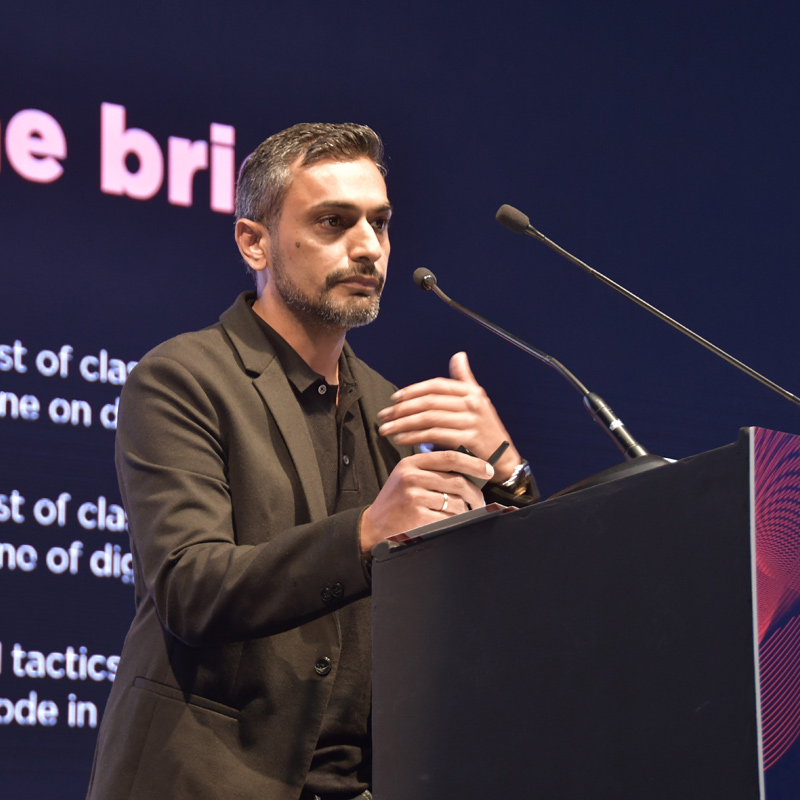
    Mumbai: The ever-changing digital ecosystem has altered the game of advertising and marketing as we once knew it. Digital marketing has developed into a significant platform for some profound work and brand case studies. Whether it’s digital or non-digital, every creative needs to emanate from a strong idea, said Dentsu Creative India CEO Amit Wadhwa, sharing his insights on the digital space and what works in the medium at the third edition of The Advertising Club’s D: CODE held recently in Mumbai.

    We keep talking about digital and technology, but this will always be about people at the end of the day, Wadhwa emphasised. “People are needed for ideas. People are needed to create technology. People are needed to run and understand the medium. That is the most important consideration.”

    At the Tac’s annual digital review, ten digital evangelists from the advertising and marketing fraternity shared key takeaways that brands and their digital custodians can make use of.

    Repersenting dentsu creative, the winner of the Agency Of The Year award at Cannes this year, Wadhwa shared the two pieces of work that stirred him. Or, in his own words, like a true advertising professional, he “stuck to the brief” – where the brief given was to showcase one best-of-class work from their own stable, along with one work that truly inspired them. He started with a creative coming from Dentsu’s stable, called The Protest March.

    Speaking about exactly why he chose this particular piece of work, Wadhwa said, “Who says protests have to be on the street… who says protests have to be violent or there has to be aggression? This is cricket and this is a protest-you can’t get a bigger and better idea.” More importantly, he added, this idea is digital at its core. The whole reason this is happening is that digital is there as a platform.

    Pointing out the third important element, Wadhwa said, “And I strongly believe in the third power—that’s purpose. I think it’s important for everything to have a purpose. And look at the purpose this one had. Taliban taking over, rights being taken away and I think you can’t have a stronger purpose than that.”

    Titled ‘The Protest Match’, the initiative recreated the Afghanistan women’s cricket team virtually, replicating the exact team that was unfairly banned from playing in real life. With an objective to pledge support and protest the injustice caused to the Afghan Women’s Cricket team, on 3 April 2022 – the day the ICC Women’s World Cup finals took place in New Zealand, Global eSports, in partnership with Isobar India Group, re-created the finals—one that could have happened.

    Talking about the next piece of work that inspired him, titled ‘Backup Ukraine,’ Wadhwa said, “When I went to Cannes this year, there was a team from Ukraine presenting this idea. And it hit me so hard that it remained with me.”

    The project was led by Virtue Worldwide, a Vice Media-owned creative agency, and centres on a digital and mobile platform that enables people in Ukraine to capture and digitally preserve 3D images of historical artefacts, monuments, and other culturally-relevant structures and objects at risk of being damaged or destroyed in light of the ongoing war with Russia. The tool employs technology developed by 3D imaging startup Polycam to create realistic digital replicas and store the digital blueprints of the artefacts they capture in the cloud.

    “I feel equally important to “what” we show on digital is “when” we show it. The timing is key,” Wadhwa said, adding that timing is key in any medium, but more so in digital.

    Wadhwa also mentioned how, nowadays, the brief itself states, ‘We want a stronger integration on digital.’ “I don’t think we need a stronger integration of digital—digital is all around us. If the idea is good, it will finally land on digital,” he asserted, adding that the moment you start trying too hard, you will see it going wrong somewhere.” Talking about the one thing that’s really spoiled us, Wadhwa says that with this medium, everything is possible, and that’s what the medium is all about.

  • 10 digital evangelists decode the digital mantra at The Advertising Club’s third edition of D:CODE

    10 digital evangelists decode the digital mantra at The Advertising Club’s third edition of D:CODE

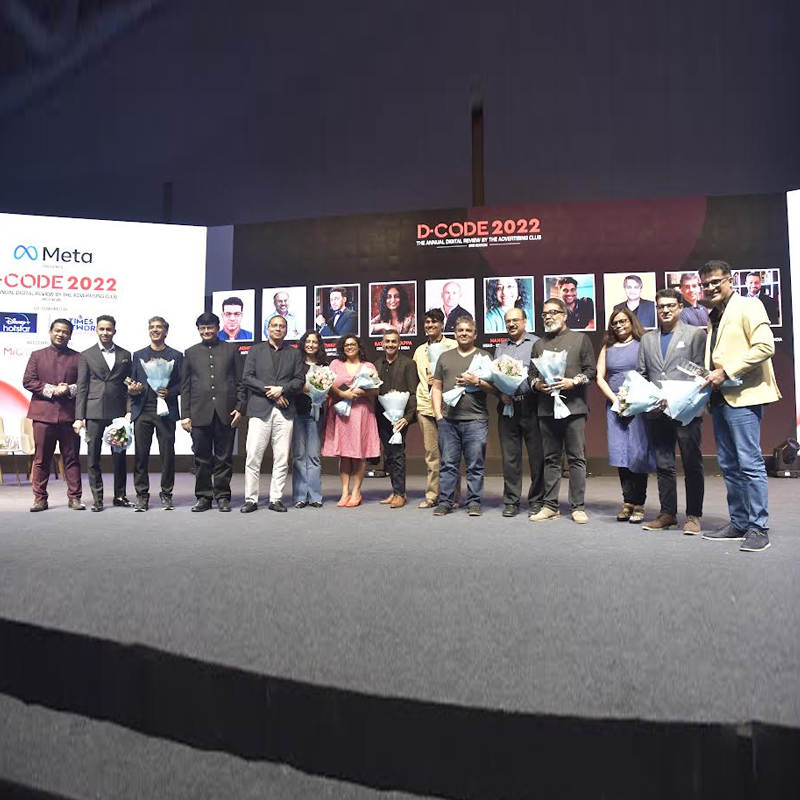
    Mumbai: Leaders from different digital domains, spanning publishers, marketers, new age digital companies, and creative and media agencies, gathered on 26 August at The Advertising Club’s third edition of D-CODE: The Annual Digital Review 2022 in Mumbai.

    The evening kicked off with tech professional turned stand-up comic turned compere for D-CODE 2022, Anshu Mor, who welcomed the attendees with a humorous anecdote narrating his real-life resignation story.

    Welcoming the attendees, The Advertising Club president Partha Sinha, emphasised how digital has become a game-changing medium for brands over the course of the last 10–15 years.

    Dentsu Creative CEO Amit Wadhwa kicked off the event as the first speaker, showcasing two case studies – ‘The Protest March’ and ‘Back Up Ukraine’—and prodded the audience to remember that we are still about people.

    S4 Capital CEO – APAC Michel de Rijk presented the Tata Tea example done for Independence Day and emphasised how the integration of data and content with technology enables agencies to create high-quality content overnight in just their own studio.

    ONDC chief business officer Shireesh Joshi articulated the vision and implications of the ONDC initiative for sellers, buyers, and every component and process along the e-commerce chain.

    Shedding light on the power of targeting and geolocation insights in campaigns, Jio Ads CEO Gulshan Verma enlightened the audience on the scale and solutions offered by JioAds.

    Talented founder P G Aditiya took the audience through the 55 steps that were involved in creating the Cannes 2022 Grand Prix winner, “The Unfiltered History Tour,” and emphasised the benefits of a long client-agency relationship in creating path-breaking campaigns.

    Following this was Disney+ Hotstar executive VP and CMO Sidharth Shakdher, who shared his thoughts on reversing the narrative of digital driving people apart by building a better consumer experience.

    YouTube India head of consumer marketing Mansha Tandon, spoke about shaping creativity with culture and trends in the digital space.

    Speaking next was luxury & lifestyle influencer Rizwan Bachav, who walked the audience through his journey, learning, and challenges in becoming an influencer.

    Sharing thoughts on how creativity can build brands, Starcom CEO Rathi Gangappa emphasised the need of being human in the age of digital transformation.

    Concluding the review, Meta marketing director Avinash Pant spoke about the evolution of social connections and the exponentially growing metaverse space empowering meaningful experiences.

    Addressing the evolving digital ecosystem at the third edition of D:CODE, Sinha said, “Digital marketing has gone on to become a game-changing phenomenon and the Advertising Club’s D:CODE is a testimony to our persistent efforts to create awareness and enhance the learning curve of the fraternity with insights and takeaways from the industry’s best digital minds. D:CODE has witnessed great case studies that have worked beyond the boardroom. As we move forward in this ever-evolving and competitive digital era, D-CODE will continue to become a significant platform with case studies that give profound experiences, transforming the way brand custodians especially approach their digital.”

    At the third edition of The Advertising Club’s annual digital review, the 10 digital evangelists from the advertising and marketing fraternity shared key takeaways that brands and their digital custodians can make use of.

  • D:CODE 2022 by The Advertising Club: Industry experts to share insights on rapid transformation of digital industry

    D:CODE 2022 by The Advertising Club: Industry experts to share insights on rapid transformation of digital industry

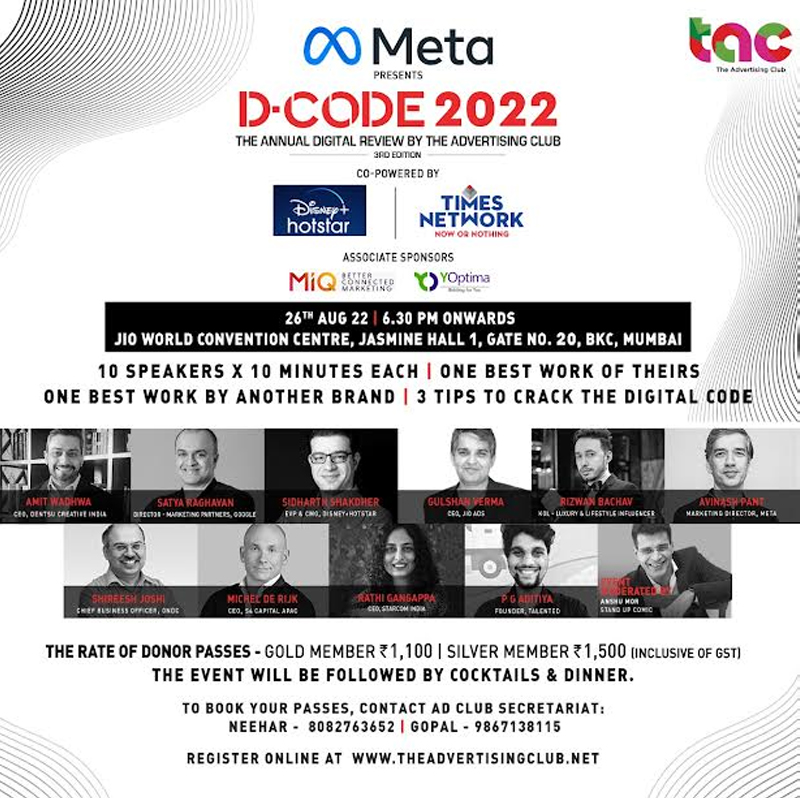
    Mumbai: The pandemic era which we passed through has seen an interesting shift in consumer behaviour towards small businesses and homegrown brands. This has fueled the need and importance of digital marketing as a platform to connect and reach out to more consumers. Owing to this accelerated business and rapid consumer shift towards digital, The Advertising Club is once again back with its third edition of D:CODE 2022, India’s Annual Digital Review.

    The Advertising Club’s third edition of D:CODE 2022, presented by Meta, will take place on 26 August 2022, at the Jio World Convention Centre in Mumbai, beginning at 6:30 p.m. Following the phenomenal success of the first two editions, the upcoming edition will see the best minds in digital, media, and marketing come together to address the evolving digital ecosystem.

    D:CODE 2022 will see the following 10 industry leaders, including Dentsu Creative chief executive officer Amit Wadhwa; Google director-marketing partners Satya Raghavan; Hotstar executive VP and CMO Sidharth Shakdher; Jio Ads CEO Gulshan Verma; Luxury & Lifestyle Influencer and I-banking professional turned KOL Rizwan Bachav; Meta marketing director Avinash Pant; ONDC chief business officer Shireesh Joshi; S4 Capital chief executive officer-APAC Michel de Rijk; Starcom CEO Rathi Gangappa and Talented founder P G Aditiya. They will cover three areas in 10 minutes each: their own work they are proud of; the work of other brands that inspired them; and tips to crack the digital code in the year ahead.

    Speaking about the third edition of the review, The Advertising Club president Partha Sinha, said, “The Advertising Club has been at the leading edge in driving several pioneering initiatives that truly define the current state of the media and advertising industry. With sustained efforts year on year, D:CODE has emerged as an engaging knowledge platform, providing a reason to “Inspire and be inspired”. We are excited to present our third edition of the show with leading industry stalwarts from India and APAC whose insights and learnings will continue to celebrate the rapidly changing dynamics of the digital industry. With D:CODE 2022, The Advertising Club looks forward to creating yet another benchmark in the Indian media and advertising landscape and paving the way to unleashing the true potential of digital.”

    D-CODE chairperson Punitha Arumugam added, “We are excited to continue with the 10 minute per speaker format at D-CODE 2022. Our 10 speakers will showcase, in total, 20 digital case studies done in the past year and provide 30 tips to crack the digital code in the year ahead—all this in just one evening! We hope it will be a truly educative and immersive experience for the audience.”

    “The D-CODE 2022 line up of speakers covers award winners from Cannes this year (Dentsu Creative, PG Aditiya), best of global digital publishers (Google, Meta, Disney+Hotstar, Jio Ads), new age orgs defining the future of digital agencies and e-commerce (S4 Capital, ONDC), digital forward media agencies (Starcom) and social influencers (niche KOL like Rizwan).  With these 10 speakers, D-CODE 2022 covers a relevant spectrum of all things digital; not to mention the laughs the audience will have with our compere Anshu Mor, a tech professional turned stand-up comic,” said D-CODE co-chairperson Avinash Pant.

    D-CODE 2022 is presented by Meta, co-powered by Times Network and Disney+Hotstar in association with MiQ & YOptima.

  • UFO Moviez expects the company will return to pre-pandemic level: Sanjay Gaikwad

    UFO Moviez expects the company will return to pre-pandemic level: Sanjay Gaikwad

    Mumbai: As long as there are no new pandemic-induced restrictions that would affect business operations, UFO Moviez founder and managing director Sanjau Gaikwad is optimistic that the company will soon return to the pre-pandemic level.

    Addressing shareholders in the annual report, he said that during the year, as a proactive measure amidst the second wave, the company raised equity funds to the tune of Rs 96.82 crore. It was primarily done to address any unforeseen events due to any further Covid-induced restrictions and to help the core business meet its immediate capital requirements as soon as the movies begin to release following the pandemic. The fundraising, he explains, has given the company a strong financial foothold. “We will prudently utilise these funds for business expansion and any short-term capital requirements until our core business regains normalcy.”

    He noted that the severity of the Covid-19 pandemic and ensuing restrictions continued to affect the business in FY22 as well. This, he explains, was due to the absence of big-budget releases during the first seven months of FY22, which was led by the closure of cinemas in most of the States due to the second wave of Covid.

    “The release of big-budget movies began only in November ’21 and continued thereafter. However, the widespread of the third wave of Covid-19 at the very beginning of January ’22 and subsequent restrictions led to another two months’ impact on the business operations as movies only started to be released again towards the end of February’22. As a result of the two lockdowns due to the second and third waves of Covid-19, the overall recovery in the business has remained subdued in FY22. However, as a result of a steady flow of releases in recent months and the strong support of movie-goers, theatrical revenues have rebounded swiftly while advertising revenue is gradually improving. This is expected to continue in FY23 subject to no further pandemic-induced restrictions.”

    The company’s AGM will take place on 23 August 2022.

  • Online advertisements influence 55% of health insurance buyers: WATPapers

    Online advertisements influence 55% of health insurance buyers: WATPapers

    Mumbai: Hybrid digital agency from Dentsu Creative India WATConsult has released its latest issue of monthly WATPapers titled ‘Consumer’s outlook towards health insurance.’ The report explores how the Covid-19 pandemic has transformed the consumer perception about insurance, as more individuals felt the need to have financial backup to meet unforeseen medical expenditures.

    According to the report, more than half of the respondents have purchased health insurance in the last six months. These policyholders belong to the age group of 25 to 35 years, residing in the top four metros as well as small metros.

    Most of them have purchased health insurance for themselves and their parents. With regard to the coverage duration, 32 per cent of the respondents have purchased health insurance for up to two years. 27 per cent of the respondents have opted for a health insurance plan for a year’s duration.

    For the record, in India, there are a plethora of benefits offered by health insurance policies. Most of the respondents say that their health insurance policy covers facilities like cashless treatment and maternity coverage followed by emergency room services, discounted treatment for COVID, and free health check-ups.

    The report further states that when it comes to purchasing health insurance policies online, the journey from assessing the need for a health insurance policy to purchasing one is very likely to start by watching policy reviews and videos online. This enables the consumer to get familiar with the brands and options available. They then visit the brand’s website or search for suitable policies on the internet. Post which, they are likely to compare websites and evaluate a suitable policy based on the benefits and features it offers.

    Commenting on the latest issue, Isobar India Group CEO Heeru Dingra said, “Since the pandemic, there has been an ever-growing demand for health covers because people have realised that huge medical expenses, especially when engulfed in uncertainty can take a toll on their financial and mental well-being. In such a situation relying on savings is not enough, hence, a health insurance policy is ideal as it covers facilities like cashless treatment, maternity coverage followed by emergency room services, discounted treatment, reimbursements, and free health check-ups. This issue of WATPapers is a must-read as it showcases the trends observed in the sale of health insurance plans and how policyholders today are shielding themselves against medical emergencies.”  

    WATConsult managing partner Sahil Shah added, “The pandemic has disrupted the industry by altering how people view health insurance for themselves, and their family members. This period of an extreme health crisis, with the pandemic looming over, has led more and more people to opt for health insurance. The future looks promising for the health insurance sector with changes in the regulatory framework, which will lead to changes in the industry conducting its business. Factors such as growing awareness, the need for health protection and inclusion in the financial planning of an individual, will drive the growth of the Indian health insurance sector even higher and further.”