Tag: Pakistan

  • CNN to air doc ‘Witness To War’

    CNN to air doc ‘Witness To War’

    MUMBAI: News broadcaster CNN International will air Witness to War on 1 August, 2 August and 3 August.

    While the documentary will be telecast at 12.30 pm and 10.30 pm on 1 August, it will be aired at 7.30 pm on 2 August and 7.30 am on 3 August.

    Witness to War sees a team of six CNN correspondents provide a first-hand account of the horrors of conflict – from civil war, to the war on terror and the recent offensive in the Swat valley – in the border region between Afghanistan and Pakistan.

    The one-hour documentary allows them to draw on their years of experience living and working in the region.

    They also investigate the human cost of conflict, discussing the stories they covered and the people they met that most profoundly affected them. They look at the reality of life in refugee camps, examine how children are impacted by the instability and discuss whether there’s any hope for the future.

  • India more lenient towards media’s coverage of economic downturn: Study

    India more lenient towards media’s coverage of economic downturn: Study

    MUMBAI: While the world stands to blame the media for keeping them blindsided to the severity of the economic crisis, about a third of Indian respondents do not rest all blame on media, reveals the latest 52-nation online survey conducted by The Nielsen Company.

    India figures ninth on the list of countries who disagree with the view that news media did not do a good job of informing them of issues that led to the economic downturn in India.

    The general consensus among consumers across much of the world is that the media did a poor job informing the public about the issues leading up to the current financial crisis. In India too, 45 per cent of the respondents agreed that media coverage was inadequate but the number of people who disagree is also quite large.

    The two regions where consumers were most dissatisfied were Europe and North America. Not surprisingly, these were the areas hit the most by the current economic crisis. On the other hand, consumers in many Asia Pacific nations, where the impact on the economy hasn’t been as harsh, were generally less critical of the media.

    “In the recent Nielsen Global Consumer Confidence study India was ranked third on confidence levels. The comparatively high level of confidence that Indians have in their economy might be a reason why Indians have shown more mercy towards media coverage during the downturn than the rest of the world. Also the fact that India didn’t face a full blown downturn helped the media to save itself from consumers’ ire,” said The Nielsen Company India associate director – consumer research Vatsala Pant.

    The study states that not only do fewer Indians blame media for its past coverage of the downturn, but with 70 per cent votes, India is ranked third in the list of countries who think that the current media is doing a good job in helping them understand the issues affecting the global economy. Indian respondents also agree that media is helping them to better understand what the governments are doing to solve the economic problems at hand (61 per cent – 6th highest globally).

    Attitudes about early media coverage were most positive in the Philippines, Pakistan, Indonesia, Venezuela and India, all of which scored above the global average.

    Factors that drove the failure to communicate were varied.

    Some critics have argued that the financial media was too close to those it covered. Moreover, the speed of negative events following the Lehman Brothers bankruptcy filing caught not only journalists by surprise, but also economists and government officials.

    Globally, many of the 25,000-plus consumers polled believe media performance has improved over time. In much of the Asia Pacific region, the public thought the media was doing a good job in providing information about what the issues are and what governments are doing to address them.

    57 per cent Indian respondents think that the amount of current news coverage of the global financial crisis is just about right for them, 23 per cent think it’s not enough for them and 20 per cent think there is too much coverage.

  • Seven FM radio stations slammed in Pakistan

    MUMBAI: Seven FM radio stations in Pakistan have been shut down on account of illegal operations.

    A directive from the federal government prompted the Charsadda District Administration to block the radio stations on Sunday (29 March).

    The radio stations were used as a medium to telecast speeches of religious figures. They were used in mosques and for various religious conferences.

    The stations were reported to be actively working for the last four years in areas of Hussainabad, Sharnab, Charsadda Town, Charsadda Bosakhail Station and Tangikhail.

  • ‘If there are large eyeballs to address with local content, we will do it’ : Sumantra Dutta – Star country head, Middle East, Africa and Pakistan

    ‘If there are large eyeballs to address with local content, we will do it’ : Sumantra Dutta – Star country head, Middle East, Africa and Pakistan

    Star is eyeing growth in Middle East, Pakistan and Africa. Which is why it has created the new post of country head for these three markets and appointed Sumantra Dutta, who has been in the News Corp family for 14 years, to take up this role from 1 July.


    Dutta rejoins Star from News Outdoor India (News Corp‘s out-of-home subsidiary), where he served as the company‘s managing director.


    Dutta was also involved in the FM radio start-up venture and successfully established Radio City as a strong brand with a revenue that fell just below market leader Radio Mirchi which had a seven-station presence compared with Star‘s four.


    Prior to this, Dutta led Star India‘s advertising sales and marketing teams.


    In an interview with Indiantelevision.com, Dutta talks of his new role and the company‘s growth plans in the three markets that he will spearhead.


    Excerpts:

    By creating the new post of a country head for Middle East, Africa and Pakistan, has Star identified these three as high growth markets?
    Middle East is emerging as the hot spot for growth. Pakistan is also expected to boom because of globalisation. Africa is an almost virgin market for us and there is scope in taking our channels to various countries there. The businesses in these three markets is under exploited. The task is to identify the opportunities, develop distribution, push ad sales.

    Will Star‘s effort include localising content for the Middle East market?
    India and the Middle East share similarities in TV content consumption. In India, Star Plus is the leader channel and the Star bouquet is very strong. The task is to aggressively grow the Star brand in the region. The need to develop connect with the larger audience base is always there. We will study the market and find the right profiling, language and content offering.

    Even Zee network had to experiment with local content for further growth. Is the advertising revenue skewed heavily towards local content?
    The television ad spend in Middle East is broadly in the region of $1.5 billion. The free-to-air (FTA) channels account for 90 per cent of the total ad pie and within this category, Arabic content gets the lion‘s share.

    So will Star get into local content with local partners?
    There is scope to grow ad revenues even within the pay-TV segment. The Middle East is booming – be it in real estate, tourism, or other areas of business. Star has clear plans in servicing the burgeoning demand in this market. If there are large eyeballs to address with local content, we will do it. But our first task is to study the market and identify the gaps.

    How challenging is the Middle East market to conquer?
    The challenges are similar to that of India. It is a highly competitive environment and has about 360 channels beaming into the region. The only differentiator is that media buying and planning is much more sophisticated in India. The idea is to put the learnings of this market in place in the Middle East.

    I have the added advantage of being associated with Star‘s start-up businesses. The size of the business is really in the opportunity that it throws open for the company to exploit

    Isn‘t the distribution scenario also a lot more different?
    Distribution is much more organised than in India. The region has DTH (direct-to-home) and FTA. In India, cable TV continues to be strong. The idea is to also find newer channels and revenue streams. The mobile telephony base, for instance, is big and Star has not tapped this segment.

    What is Star‘s strategy going to be in these three markets?
    It is too early for me to define that now. But we need to go into a higher growth trajectory. Faster, higher, stronger – that is the credo. We will play the same game but with more attitude. We will be growing the team – because you are only as good as your team. The idea is to go and knock the ball out of the park.

    Don‘t you feel that you are being continuously marginalised into businesses that are relatively smaller in size than what you were earlier handling being part of Star India‘s core team in the broadcasting arena?
    I have the added advantage of being associated with Star‘s start-up businesses. I moved from the high of television to the FM radio space. I was out not to just launch a FM radio station, but to kick-start the entire category. In the outdoor advertising business, the challenge was to bring respect to the category and get the local administration lease out long-term contracts. The size of the business is really in the opportunity that it throws open for the company to exploit.

    Since News Corp is globally getting out of the outdoor business, is the India part up for sale?
    I wouldn‘t like to comment on this.

    For somebody who has been associated with Star for such a long period, which are your most precious moments?
    The launching of Star News in 1998 and National Geographic Channel in 1999 were momentous events. But nothing beats the launch of the Amitabh Bachchan-hosted game show Kaun Banega Crorepati (KBC) in July 2000 as it changed the fortunes of Star in India.

  • ‘We are talking with global companies to set up a studio to develop content’ : Rohit Sharma- Zapak Digital Entertainment COO

    ‘We are talking with global companies to set up a studio to develop content’ : Rohit Sharma- Zapak Digital Entertainment COO

    With a war chest of $100 million (Rs 4 billion), Reliance Entertainment’s online gaming portal Zapak is looking to invest in infrastructure and expand even beyond the frontiers of India. The portal is going to launch in China, Pakistan and the UAE.


    In an interview with Indiantelevision.com’s Ashwin Pinto, Zapak Digital Entertainment COO Rohit Sharma talks about the global plans of the gaming portal and the steps that are being taken to reach there.


    Excerpts:

    When George Soros picked up a 3 per cent stake in Reliance Entertainment for $100 million, how big was Zapak as a valuation attraction?
    It was definitely a point of attraction as it is one of our oldest businesses. Since Zapak is one of the most successful internet companies in India, it gives value to investors. However, I cannot talk about valuations. The investment has helped us understand what our value is and how we can scale it up.

    How much is Zapak going to invest and what is the breakeven period?
    Since gaming is still at a nascent stage in this country, the breakeven will not happen before four to five years. We are investing $100 million over the next five years. In terms of operational expenditure, we have to invest in manpower, bandwidth and marketing activities. In terms of capital expenditure, we are investing in infrastructure as well as technology and content. Our costs will go up each year as the business grows.

    What are the lines of synergy Zapak is drawing with the other verticals of Reliance Entertainment?
    We have the movie business with Adlabs. A lot of content alliancing will happen here as we acquire content, produce and co-produce it. Zapak will also develop content based on these movies.


    There are strong synergies between Big Flicks and Zapak as both are located in the internet space. Bigadda is our social networking site and the audience is similar. So we do a lot of cross-promotional activities. And with our FM radio business, we use it as an advertising medium.


    Thus, if we take the gaming piece in the entertainment space, there is a lot of content syndication, retail syndication and advertising opportunities that are possible.

    What are the trends being seen in online gaming in India?
    Zapak is setting the trends here as there is no other online gaming player in India per se. We have a 70-75 per cent market share in terms of revenues and the number of users which is four million right now. We are also attracting good advertising and so we are witnessing an upwards trend.


    The learning for us is that the user wants compelling content. Therefore, publishers/developers like us need to invest in the right kind of content. The content, whether global or local, has to be high-end in terms of graphics, artwork, game play and design.

    The kids genre has done well for us. Zapak Girls also does well as do our action oriented games. But cricket is our biggest property

    Who comprises your TG?
    Surprisingly consumers have an equal ratio between the top cities and B, C towns and cities. Males in the age group 12-25 are the core TG. Having said that, however, youngsters below 12 are increasingly playing on Zapak. They are becoming stickier towards gaming.

    How does the market size for online games compare with mobile gaming?
    If you look at developed gaming markets like China, Korea and Vietnam, online gaming has surpassed mobile gaming. In countries that have a strong PC and online penetration, online gaming offers a better user experience. The best part about online gaming is that you can form communities that you cannot have on the mobile.

    Could you shed light on the strategy being followed to increase the product portfolio?
    When we started, we focused on casual games, which is the low hanging fruit. There is no point getting hardcore games to non-gamers. We brought in world-class casual games into the country. We work with over 50 studios globally.


    Having built a critical mass of gamers, we want to expose them to better content. We are going into the next phase which is to bring in casual hardcore games and hardcore games.


    Hardcore games are played in cafes and most cafes do not have the right PC specifications and infrastructure for this. This is why we started our gameplexes across the country. We will have almost 10,000 seats by the end of this year. We started our gameplex business in the big cities and towns. Now we have expanded to smaller places like Jaipur where we are also getting good traction.

    What have been your top five properties?
    The kids genre has done well for us. Zapak Girls also does well as do our action-oriented games. But cricket is our biggest property. You need to have a hybrid model. Generally, in business it is a 80:20 ratio where 20 per cent of content gives you 80 per cent of traction.


    However, in casual online gaming, the long tail is also important. A lot of people who come back, also want to check out the catalogue in addition to consuming the same content twice or thrice. Therefore, you need to build on your catalogue.

    Zapak has done activities to get women and children involved in gaming. What prompted this?
    The 12-25 male TG is still being built up. It has not been fully tapped. However, we have gone into early segmentation. We want every gamer in this country to relate with Zapak. We want to have a product and a service for everyone including a four-year-old kid. Therefore, we have been broad basing our offerings.

    Does Zapak also focus on game development?
    We have a small in-house team but we don’t do actual game development. We outsource it. We work exclusively with studios both in India and abroad. We drive the game ideation, concept and documentation. Then they do the rest. We work with our sister company Jump Games. We work with a Delhi-based company Saffronage. However, by and large, we work with studios outside India.


    There have been technological advances from a product point of view. Casual games are now incorporating social networking phenomena. Community features which are possible due to technology are growing in importance. The more features you have and the better customer relationship management setup you have, the better is the traction you will get.

    Is Zapak also looking at acquisitions in the gaming space?
    Yes! We will be aggressive in this regard both in India and abroad. Our targets would include game developers. In India, nobody has the competence to develop a game from scratch to finish. Besides acquiring content, we are also talking with global companies to set up a studio which could serve as a factory to develop content.

    What are the different revenue sources for Zapak and how important is advergaming in the mix?
    Advertising is our main revenue stream at the moment. Casual games are a portal business. We also get some revenue from our cafes and our cards business as well as events that we do. Subscription revenue will come in when we get into offering hardcore games. Users either purchase the product or subscribe on a monthly or a weekly basis. Our first product here will be three casual MMOG titles which will be launched in May and June.


    Could you give me examples where Zapak has done innovations for clients?
    With McDonalds, we did a deal where you buy a “Happy Meal” and get a product from Zapak. With Dominos, we did an innovation around a gaming pizza which was accompanied with goodies. We also tied up with MTV for games around their show Roadies.


    There is talk about how gaming is evolving into a social activity with massively multiplayer online games (MMOG). What is your view on this?
    If you look at countries like China and Korea, it is the stickiest social networking opportunity. Other entertainment options do not engage on a social level. In a virtual world, though, you live a virtual life. Already in our cafes, you see thousands of kids who live in a virtual environment.


    The BCCI is kicking off the IPL in April. Are you looking to work with the franchisees to develop properties?
    Yes! We are working with franchisees to develop properties that aim to reflect the sport.


    Does cricket work better than Bollywood for games?
    Yes! This is partly because cricket has gameplay built in. With film, you have to think about a strategy that can fit. We have worked with Bipasha Basu and Salman Khan. We also did successful games around the film Cash. However, even in Hollywood, games out of films are not generally successful. Spiderman was an exception, though. The challenge for us is to tailor Bollywood content so that it is suitable for gameplay.


    Apart from cricket, are you looking at other sports?
    We are looking at tennis and F1. We also feel that table tennis will translate well as an online game. We recently did a successful tennis game that Apollo sponsored. In terms of working with official sports bodies like Fifa, their licence fees are too high to justify a good RoI in India at this point of time.


    What is the way forward to combat the lack of skill sets in game development in India?
    Gaming has to be more widely accepted as an activity and profession. Companies from abroad have to come in and invest. We cannot grow this space all by ourselves.


    How did the concept of “Zapak Corporate Gamer Challenge” come about? Do you foresee a time when gaming will be viewed as a professional sport in India?
    We have a division called Zapak Live. This division organises conferences, events, tournaments, etc. We realised that a lot of casual gaming happens in the office. So it seemed like a good idea to take it to an offline level where corporates can take part. The response was good. I see no reason why gaming cannot be looked at as a sport in India a few years down the line.


    One of your recent marketing innovations revolved around offering people the chance to win cash by constantly playing. How was the response to that?
    It was a loyalty programme for the portal. For each activity done, participants got points. It was a three-week programme. We also do other marketing innovations. We had done a series of short films to create awareness for our e-mail product. We also do a lot of viral activities which have included spoofs on films like Sholay. We also did innovative stuff in loos in multiplexes.


    Finally, is Zapak looking at expanding abroad?
    We are looking to launch our portal in China, Pakistan and the UAE. You will see launches from the next quarter. Our USP is content that is not India-centric; it appeals to a global audience. It is a question of customisation from a language point of view.
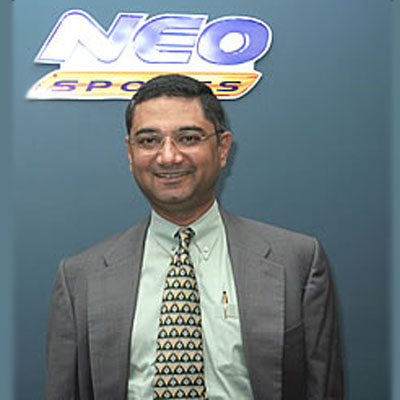
  • ‘Language feeds can get us 30 per cent more viewership’ : Shashi Kalathil – Neo Sports CEO

    ‘Language feeds can get us 30 per cent more viewership’ : Shashi Kalathil – Neo Sports CEO

    Neo Sports has had a testing time. The distribution deal with Star did not work out and the two channels – Neo Sports and Neo Sports Plus – did not find space on cable networks. This, in turn, impacted ad revenues.

    Now with Australia and Pakistan touring India, Neo is ramping up the distribution of its two channels. And it is hoping that strong content will drive in viewership and revenue.

    In an interview with Indiantelevision.com's Ashwin Pinto, Neo Sports CEO Shashi Kalathil reveals the gameplan for the company.

    Excerpts:

    Has Neo Sports gone through a rough weather ever since its launch almost a year back?
    The going has been tough. There was uncertainty on the regulation front. We had mandated Star to handle our distribution, but our channels had serious problems of being carried on cable networks. Cricket also went through its ups and downs, with the World Cup being the lowest point for the sport. There was a lot of media hype which made a not – so – good situation worse.

    What were the factors that made you terminate the distribution contract with Star and decide to do it on your own?
    We had an arrangement with Star. While I do not want to get into details as the matter is under arbitration, I will admit that we got almost zero delivery. We found that we would not be able to survive as a channel if we did not reach anyone. Besides, the payments that were contractually due to us were delayed – or never arrived.

    Did it also badly impact your ad revenue?
    Our ad revenue was hurt as a result of the Star deal. We got away with it to some extent in the Sri Lanka series by keeping ad rates high and through strategisation where some matches aired on Doordarshan. However, we could not fully exploit the Bangladesh Test series. That would have been worth at least Rs 70-90 million. We could not realise even one fifth of that.

    How have you worked out on your distribution strategy?
    We have covered one third of the cable networks. We went to the smaller towns first as there the declaration is much better. A lot of viewership comes from rural areas. We signed with direct-to-home (DTH) service provider Tata Sky. We expect to sign with Dish TV soon. We are also stitching deals with the south-based cable networks.We are now approaching the big multi-system operators (MSOs) like Incablenet, Hathway Cable & Datacom and Siticable. By the time the Australia series starts we will be in three fourths of cable & satellite (C&S) homes.

    Since the matches have to be shared with Doordarshan, doesn't it affect the kind of deals that Neo is able to strike with the cable operators?
    No! The sharing of feed has been going for a long time. The 2003 World Cup was shared. There are guidelines. Last year for a while, the Supreme Court had taken a view on this kind of activity. India-South Africa was a rare example where DD did not air the matches.

    We have a situation where the pubcaster does not bid for cricket but takes feed when it wants to do so. Besides, there is the issue of encryption.

    What was the write off that Neo Sports got from BCCI due to the non-encryption of DD's signals?
    DD's footprint extends from China to the Middle East. We had a protection clause in case of circumstances that dilute the value of our BCCI rights. If DD sends an unencrypted signal, then how can you sell the rights in those markets?

    Right now there are a lot of cricket rights coming up for grabs. Is Neo Sports going after any of these or are you first trying to justify the BCCI investment?
    It isn't a sequential process. If there are rights that are of value, we will bid for them. Right now what we are seeing is that the price appreciation for these boards has not been as high as what it was for the ICC and BCCI rights.

    If someone gets the BCCI rights which are huge, you will see polarisation happening around the ICC rights. These two rights are the definitive ones in the cricket world; nothing else comes close. About 70 per cent of cricket that India plays in the next 13 months will be on Neo. That is an awesome depth to have.

    For the Australia and Pakistan tours, in terms of coverage what are the kind of innovations being looked at?
    We are keen on language feeds. You can get 30 per cent viewer addition doing this. Traditionally, the South has been neglected in terms of the regionalised feed. Neo Sports Plus will be broadcasting the matches in Hindi, Tamil and Telugu while Neo Sports will have English language transmission.

    We are looking at virtual advertising and programming innovations. We are also looking at interactivity on DTH.

    How challenging is it to push up ad rates to match rising acquisition costs?
    The cricket market is well set up. There are certain clients who advertise heavily in it. The economy is opening up which will allow you to have better inventory utilisation. There are ways to exploit cricket like having multiple language feeds.

    There is also a proliferation of general entertainment and movies channels which is resulting in further fragmentation. This will make the monolithic viewership of cricket more cost effective for brands and more valuable. Break viewership is becoming a serious issue for advertisers. On movie channels, often the break might be too long and people surf. Cricket's format is built to counter this.

    You will eventually be able to do multiple visual feeds for advertising. Now, though, it is still expensive and messy. With addressable delivery platforms like DTH coming in, the dependence on advertising will gradually fall.

    'If someone gets the BCCI rights which are huge, you will see polarisation happening around the ICC rights. These two rights are the definitive ones in the cricket world'

    How would you describe the perception of cricket at the moment among viewers and advertisers?
    I don't think that it is changing. Yes, there is noise made in the media on perceptions of how India is faring. It has to do with the quality of the opposition, how they are perceived. However, I do not think that cricket viewership or ad revenues are as sensitive as what the media says it is. When India did not do well in South Africa last year, people said that the sport was in trouble. Then we did well at home against Sri Lanka and the same media said that this was the best team for the World Cup.

    There is huge interest in the Australia series as it takes place during the festive season. Cricket in media parlance offers viewership that other programming cannot match. This will not change.

    Which are the clients with whom Neo Sports has signed long term deals?
    Perfetti and Hero Honda are our anchor sponsors. The concept is to have someone who wants a long term relationship with cricket on board. We have predictability to our calendar. So a client knows that Australia, Pakistan England, South Africa or Sri Lanka will be visiting us. So if a client does media activity, he knows that a footprint is available.

    How many anchor sponsors do you want to have?
    Initially, we had thought of having four anchor sponsors. However, the media space is getting so competitive that we held back a little bit as we did not want to preclude a large media buyer. There are emerging segments like retail and financial services that will become large. We are waiting for the media environment to settle down before we make more long term deals. There is a risk and also a de-risk in long term deals. You might end up paying more. You might end up paying less. Management is about dealing with it.

    During the World Cup there was a lot of grumbling about the deluge of ads. Steve Waugh went public about it in a column. What is Neo Sports' gameplan to ensure that commercial considerations do not interfere with viewer enjoyment?
    Cricket has a certain format which allows you space for ads – between overs, when a wicket falls, and also during the lunch interval. I think that the World Cup was a situation where matches were going beyond midnight. So perhaps the broadcaster was trying to get in as many ads as possible in the first half as viewership would certainly drop precipitously during the second half.

    In terms of domestic cricket with the push that has been given to it by Neo Sports, has there been any increase in viewership?
    We have had a good experience with domestic cricket. Now that our distribution issues have been settled, we will do innovations around domestic cricket.

    We don't air every domestic match. Cricket is tiered at various levels. We broadcast the best part of it. I have heard arguments about having less matches and fewer teams which I will leave for the administrators to settle. But at the end of the day, a Ranji Trophy final has value. It is the question of packaging it. There is also an awareness issue. People have not gotten used to watching domestic cricket. However when they find that the coverage quality is as good as what you get for an international match, there is stickiness. Last year's data shows that domestic cricket has potential. It is for us to develop that.

    However, the ad fraternity does not seem to be getting on board domestic cricket. Is there a perception problem in the market?
    The product needs to be developed and defined. Once you do that and take it to the advertiser, it will draw interest. But it will not happen overnight. There is still work to be done.

    What is the status regarding your second channel Neo Sports Plus?
    One part of its identity is to be an adjunct to Neo Sports. So Neo Sports Plus airs cricket in local languages. We were clear at the beginning that we wanted to adopt a regional multi language feed for it.

    Neo Sports Plus also airs other sports like German soccer, Italian league. We have badminton, cycling, motorsports. We have also found that rugby got a strong niche viewership among males.

    Can we flesh out the definition of Neo Sports Plus to go beyond cricket? That is something we are working on. Other sports have a growing niche. In the long term, you can grow it to a mass level like what EPL has done. Activities were done that led to the product definition being unique. However, no other sport can substitute cricket. The assumption that if India does poorly, a cricket fan will watch another sport is wrong. Our research tells us that a lot of ODI watchers in India do not watch any other sport.

    Could you shed light on the investments made in technology?
    We are set to go live with broadcast management system ForeTV from MSA Focus. This follows the solution's recent implementation at Neo's Mumbai headquarters for $4 million. The Fore TV Broadcast management system allows Neo Sports the ability to efficiently manage the proliferation of new revenue streams that these rights will inevitably generate.

    Unlike traditional systems which treat each stream separately, ForeTV offers a consolidated solution for total revenue management, encompassing income from Internet Protocol Television (IPTV), advertising, sponsorship, pay-per-view (PPV), interactive (iTV) and video on demand (Vod). This system will be fully integrated into workflow of the channel, automation, editing and financial software allowing seamless process from acquisition, production and post production, transmission and billing at the end of the process.

    On the production front, we have installed Vizrt Virtual studio, a virtual studio for sport production. This allows Neo to create a number of different sets for each sport and change it at the flick of a button. There is no need for storing and changing physical sets. The advantages of using Vizrt virtual studio are flexibility in different backdrops, virtual monitors in the set and incorporation of sport results directly to the set. Vizrt Graphics are template based, allowing for rapid changes and are especially suited for the ever changing sport environment.

  • Pakistan foreign minister Khursheed Kasuri talk to Arnab Goswmai only on TIMES NOW

    MUMBAI: Pakistan foreign minister Khursheed Kasuri has rejected news reports of a possible Pakistan link to the Samjhauta blasts, saying that in South Asia investigations cannot always be taken at face value, because investigators often present facts keeping political factors in mind.


    Taking to TIMES NOW, Mr Kasuri was categorical in dismissing all initial leads and accusations, on who could be responsible for the tragedy.


    Mr Kasuri was appearing on the TIMES NOW show “Frankly Speaking” where he was talking to Arnab Goswami. Here’s the relevant excerpt:


    Arnab: There is talk of a phone call being made to Pak Occupied Kashmir (POK). Sources have been quoted as saying that there is some Pakistani link to the Samjhauta blast. We would like to know what you think about it?

    Kasuri: I would repeat what I said on the first day. It is totally counter-productive. To say that a Hindu or a Muslim or an Indian or a Pakistani (is responsible) you destroy the entire process of investigation. You know we live in South Asia, we know what our police and security agencies (are), you know the moment the leaders start saying something, you are supposed to produce results in consonance with what the leaders are saying. What I am saying is that lets hold our horses, let us wait for investigations to be completed let those details be shared with Pakistan and only then can we come to a conclusion.


    The Pakistan foreign minister also made it clear that whatever the findings of the Indian investigating agencies, they would have to be ratified by Pakistani agencies if his government is to take any action. This comment assumes great significance given India’s refusal to conduct a joint investigation into the Samjhauta blast, a unanimous demand of the National Assembly of Pakistan.


    Here’s the relevant excerpt.


    Arnab: What if evidence is given, what will you do with it?

    Kasuri: Well if evidence is given to us and our investigators come to the same conclusion then whosoever is involved will be punished.


    The Pakistan foreign minister also warned that the peace process will “fail” if it turns into a blame game or if India used it for “propaganda”.


    He said that now that India and Pakistan had turned over “a new leaf”the finger pointing must end, hinting at India’s constantly offering different forms of evidence about Pakistan supporting terror groups.


    Here’s the relevant excerpt.


    Kasuri: Both countries are suffering from terrorism. And let me tell you this (joint terror mechanism) will succeed for the simple reason that both countries have interest in it. And this is bound to fail if this is used for propaganda, for giving different swings, spins and twists.

    Arnab: What propaganda?

    Kasuri: Like ‘I gave you that name, you gave me that name and what have you done?”. Or saying that forty years ago that happened, or twenty years ago this happened. Nothing is going to work this way. You turned a new leaf when the two countries started talking to each other.”

    The interview with Pakistan Foreign Minister Khursheed Kasuri will be telecast on the show “Frankly Speaking with Arnab” at 2.30 pm and 8.30 pm on Sunday

  • Pakistan-South Africa ODI series live on ESPN STAR Sports from 4 Feb 2007

    MUMBAI: ESPN STAR Sports, Asia’s number one broadcaster, will telecast live and exclusive, the one day international series between South Africa and Pakistan starting February 4, 2007. The two cricketing giants will kick off the series with a Twenty20 international on February 2. The Asian powerhouse will play the Proteas in a five ODI series in the African continent.

    After a close fought and absorbing duel during the three test series the two countries will be looking to prepare for the upcoming World Cup and hoping for team camaraderie during the five ODIs scheduled till mid February. Pakistan will look to reverse the results of the last two ODI series between the two teams in South Africa, where the Afrikaans beat them 4-1 in 2002-03 and 3-2 in 2003-04. Overall the two teams have met 42 times with South Africa enjoying a 69 percent win record. The South African nation was also unbeaten for a 14 straight matches against Pakistan from 1995 to 1999.

    South Africa has named seven black players in their 15 man squad and these will be the likely 15 the Proteas will go with for the World Cup in the Carribean. Coach Micky Arthur had revealed earlier that the ODI series against Pakistan will be South Africa’s dress rehearsal for the World Cup. Pakistan on the other hand will want to put behind the disappointment of losing the Test series and embark on their preparations for the bouncy pitches in West Indies. The Asian team will be bolstered by the return of Shabbir Ahmed but their top order batting is still a worry for Coach Bob Woolmer.

    Catch the action live and exclusive on ESPN STAR Sports

    Date Time Event
    Feb 2, 2007 17:58 South Africa Vs Pakistan, Twenty20 Int, Johannesburg
    Feb 4, 2007 13:28 South Africa Vs Pakistan, First ODI, Centurion
    Feb 7, 2007 17:58 South Africa Vs Pakistan, Second ODI, Durban
    Feb 9, 2007 17:58 South Africa Vs Pakistan, Third ODI,
    Port Elizabeth
    Feb 11, 2007 13:28 South Africa Vs Pakistan, Fourth ODI,
    Cape Town
    Feb 14, 2007 17:58 South Africa Vs Pakistan, Fifth ODI, Johannesburg
  • SET Network to telecast all the Matches during ICC Cricket World Cup 2007

    This World Cup, don’t miss any of the matches: catch the Group stage matches on MAX, SAB & PIX. All Super Eight matches, Semis & Finals to be simulcast on MAX and SAB, in English and Hindi respectively.

    MUMBAI: This summer, viewers can get set for a grand cricketing feast from the 13th March to 28th April 07 as the SET Network announces the schedule for the telecast of the biggest event of the cricketing calendar in the last 4 years – The ICC Cricket World Cup 2007. Viewers will get to enjoy all 51 matches, as the SET Network will bring a world class feed of the ICC Cricket World Cup 2007 Live across its 3 channels – MAX, SAB and PIX.


    MAX will continue to blend the excitement of cricket with its inimitable dose of entertainment – “extraaa innings”. All the matches of the ICC Cricket World Cup 2007 will be telecast live. The coverage starts with “extraaa innings” from 5pm onwards on all match days on MAX and SAB.


    Kunal Dasgupta, CEO, SET India Private Limited said, “MAX has always garnered an unprecedented television viewership during Cricket tournaments. For the ICC Cricket World Cup 2007 we have made every effort to provide the viewers with unique access to live world class coverage and also ensuring that not a single match will be missed.”


    Rohit Gupta, Executive Vice President, Ad Sales & Revenue Management, SET India Private Limited said, “ICC Cricket World Cup is the biggest Television Event which happens once every 4 years and reaches out to nearly 80% of the C&S audience. And to make it even bigger this time around we will show almost all the matches on SAB in Hindi as well. Thus the platform for the ICC Cricket World Cup 2007 matches will be far bigger as we cater to a much larger and varied audience. It’s a huge value add for the advertisers since previously we only had 12 matches on SAB and now we will be airing all the matches. We are sure of a far greater reach with a bigger platform for ratings and viewership.”


    The upcoming cricket tournament in 2007 will feature 16 teams allocated into four groups of four. Within each group, the teams will play each other in a round-robin format and the top two teams will advance to the “Super Eight” round. The telecast schedule includes all group stage matches to air on MAX, SAB & PIX while the Super Eight Series matches and will be aired on MAX and simulcast in Hindi on SAB.


    Reliance & Nokia are the co-presenters for the broadcast of ICC Cricket World Cup 2007. Hero Honda, Maruti, ITC Foods, Pepsi, Videocon, LG and Aditya Birla Group are the associate sponsors.


    Schedule for the ICC Cricket World Cup 2007


    Date Max Sab Pix
    13th March West Indies v Pakistan    
    14th March Australia v Scotland Kenya v Canada  
    15th March Sri Lanka v Bermuda Zimbabwe v Ireland  
    16th March England v New Zealand South Africa v The Netherlands  
    17th March India v Bangladesh India v Bangladesh Pakistan v Ireland
    18th March Australia v The Netherlands England v Canada  
    19th March India v Bermuda India v Bermuda West Indies v Zimbabwe
    20th March New Zealand v Kenya South Africa v Scotland  
    21st March Sri Lanka v Bangladesh Zimbabwe v Pakistan  
    22nd March New Zealand v Canada Scotland v The Netherlands  
    23rd March India v Sri Lanka India v Sri Lanka West Indies v Ireland
    24th March Australia v South Africa England v Kenya  
    25th March Bermuda v Bangladesh    

    SECOND STAGE – SUPER EIGHT SERIES. Matches to be simulcast on Max and Sab.

    Date Match
    27th March D2 v A1 (West Indies v Australia)
    28th March A2 v B1 (South Africa v Sri Lanka)
    29th March D2 v C1 (West Indies v New Zealand)
    30th March D1 v C2 (Pakistan v England)
    31st March A1 v B2 (Australia v India)
    1st April D2 v B1 (West Indies v Sri Lanka)
    2nd April B2 v C1 (India v New Zealand)
    3rd April D1 v A2 (Pakistan v South Africa)
    4th April C2 v B1 (England v Sri Lanka)
    7th April B2 v A2 (India v South Africa)
    8th April A1 v C2 (Australia v England)
    9th April D1 v C1 (Pakistan v New Zealand)
    10th April D2 v A2 (West Indies v South Africa)
    11th April C2 v B2 (England v India)
    12th April B1 v C1 (Sri Lanka v New Zealand)
    13th April A1 v D1 (Australia v Pakistan)
    14th April A2 v C1 (South Africa v New Zealand)
    15th April B2 v D1 (India v Pakistan)
    16th April A1 v B1 (Australia v Sri Lanka)
    17th April A2 v C2 (South Africa v England)
    18th April D1 v B1 (Pakistan v Sri Lanka)
    19th April D2 v B2 (West Indies v India)
    20th April A1 v C1 (Australia v New Zealand)
    21st April D2 v C2 (West Indies v England)
    24th April Semi Final 1: 2 v 3
    25th April Semi Final 2: 1 v 4
    28th April Final
  • DTH services to launch shortly in Pakistan

    DTH services to launch shortly in Pakistan

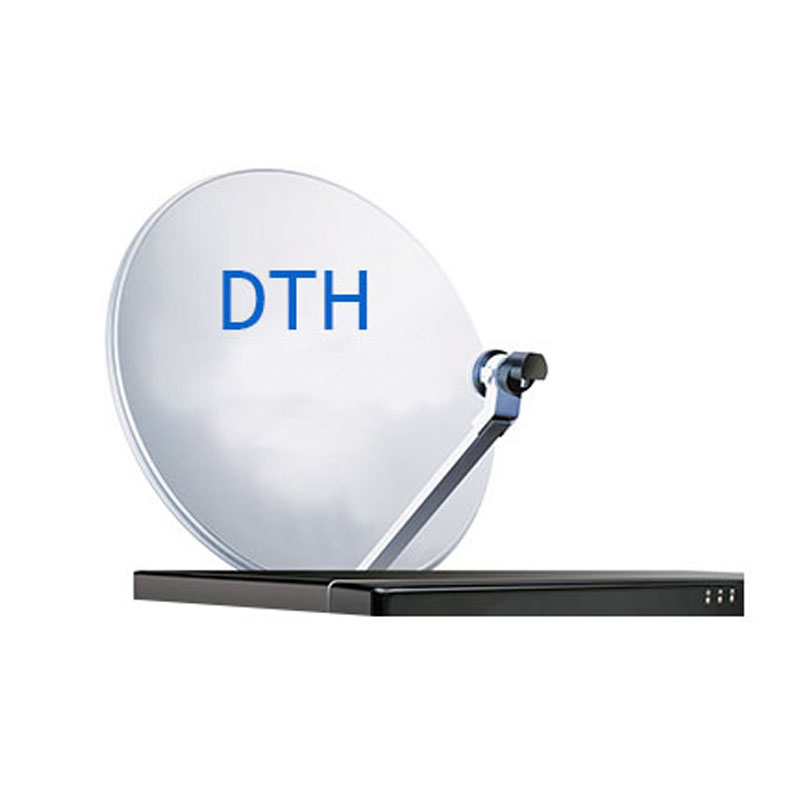
    MUMBAI: Pakistan will soon open its doors to direct-to-home (DTH). Pakistan’s minister for information and broadcasting and senator Muhammad Ali Durrani says that the ministry would soon launch DTH in collaboration with the private sector.

    Media reports state that he was addressing the participants of a capacity building course of Information Group Officers here at the Information Service Academy (ISA). Director General ISA Ghulam Hazoor Bajwa was also present.

    The minister, during his lecture, said the government believed in development of an independent media which is the most effective accountability tool.

    The government he says, believes in the development of an independent media, which is the most effective accountability tool. If the government policies are free of corruption, nepotism and malpractices, the independent media helps its functioning by making it more efficient and vibrant.

    He says that the government will fully facilitate the capacity building of the private media and the ministry is taking steps to ensure transmission launching of private TV channels from Pakistan.