Tag: Pakistan

  • Women’s World Cup hits record viewership highs

    Women’s World Cup hits record viewership highs

    MUMBAI: Cricket fever has turned into a full-blown phenomenon as the ICC Women’s Cricket World Cup India 2025 smashes viewership records faster than a boundary off a power hitter’s bat.

    Over 60 million viewers have already tuned in to the first 13 matches across Jiohotstar and Star Sports Network, a staggering five times more than the previous edition. Watch-time has also soared 12-fold to a jaw-dropping 7 billion minutes, proving that women’s cricket isn’t just winning hearts, it’s ruling screens.

    The India vs Pakistan showdown on 5 October bowled the world over, becoming the most-watched women’s international cricket match in history with a reach of 28.4 million and 1.87 billion minutes watched. The India vs Australia clash wasn’t far behind, hitting a record 4.8 million peak concurrent viewers on Jiohotstar, the highest ever for women’s cricket.

    Television audiences have been equally captivated. The India–Pakistan league game has become the highest-rated in Women’s ODI World Cup history, while the first 11 matches together reached 72 million viewers, marking a 166 per cent leap from the last tournament. Viewing minutes jumped 327 per cent to 6.3 billion, underscoring the growing passion for the women’s game.

    “The incredible viewership for the ICC Women’s Cricket World Cup India 2025 is a true testament to the growing interest in women’s sports in India,” said Jiostar head of viewership and monetisation initiatives – sports Siddharth Sharma. “Fans are embracing women’s sports like never before, and at Jiostar, we’re proud to be the platform powering this movement.”

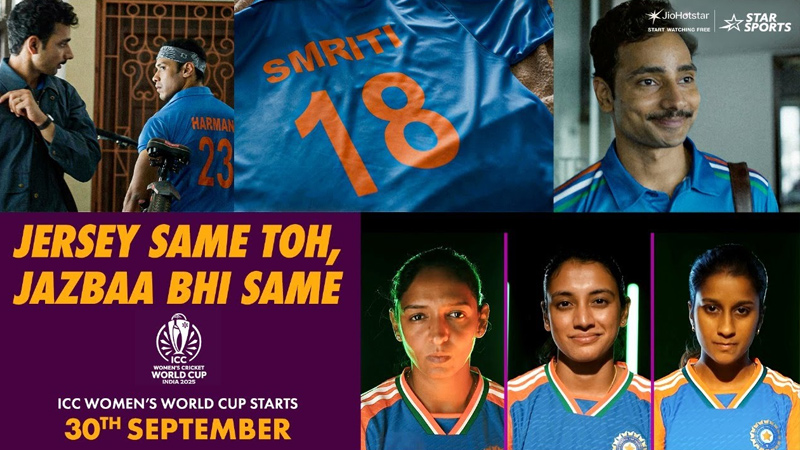
    Much of the success stems from a unified marketing push by the ICC and Jiostar, supported by the BCCI. The ICC’s global ‘Will to Win’ campaign and Jiostar’s emotionally charged ‘Jersey wahi toh jazbaa wahi’ have together sparked a national conversation and brought fans closer to the women in blue.

    The matches are being broadcast in five languages: English, Hindi, Tamil, Telugu, and Kannada, across Jiohotstar and Star Sports channels, with an Indian sign language feed introduced for the first time to make the game more inclusive.


  • Cricket body dangles south Asian media rights carrot

    Cricket body dangles south Asian media rights carrot

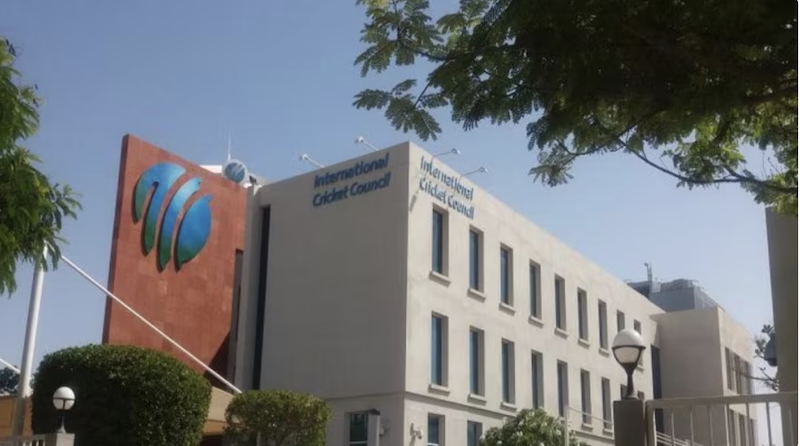
    LONDON: The International Cricket Council (ICC) has fired the starting gun on a potentially lucrative media rights auction, releasing tender documents for broadcasting deals across Bangladesh, Pakistan and Sri Lanka spanning 2026 to 2028.

    The prize package includes some of cricket’s crown jewels: the ICC Men’s T20 World Cup 2026 in India and Sri Lanka, and the Men’s Cricket World Cup 2027 across South Africa, Zimbabwe and Namibia. Women’s cricket gets equal billing with the T20 World Cup 2026 and the inaugural Women’s T20 Champions Trophy.

    Pakistan emerges as the most complex battleground, with the ICC carving up rights into five separate packages covering both men’s and women’s tournaments. Bangladesh and Sri Lanka each get streamlined single-package deals combining television and digital rights—a nod to the region’s rapidly evolving media consumption habits.

    Broadcasters and streaming platforms eyeing the action must contact iccmediarights2024-2031@icc-cricket.com to access tender documents. The ICC promises more invitation-to-tender releases for additional markets in the coming weeks, suggesting a coordinated global push to maximise revenues.

    The timing reflects cricket’s commercial renaissance, particularly in south Asia where the sport commands religious devotion and advertising premiums. Pakistan’s multi-package approach hints at the ICC’s confidence in extracting maximum value from a market where cricket broadcasts routinely deliver audiences in the tens of millions.

    The tender covers four men’s events and three women’s tournaments, underlining the ICC’s commitment to gender parity in its commercial strategy. For broadcasters, the stakes are clear: miss out now, and watch rivals corner one of sport’s most passionate fanbases until 2028.

  • JioStar’s ‘jersey wahi toh jazba wahi’ breaks gender norms, champions ‘Women in Blue’

    JioStar’s ‘jersey wahi toh jazba wahi’ breaks gender norms, champions ‘Women in Blue’

    MUMBAI: JioStar’s new women’s WC ’25 campaign film opens with the protagonist asking his partner a slightly awkward question, “But is it necessary to wear the women’s jersey?” after she suggests he put one on for a match screening at a friend’s place. His partner, exasperated by the lingering stigma, looks on in dismay, pitying the shame that still surrounds supporting women in cricket. Undeterred, he steps out the door wearing the jersey, hiding it beneath a jacket.

    On his way, he notices fellow Indians proudly donning women cricketers’ jerseys, from colleagues to even the office lift operator, who delivers the knockout line, “Virat khelein ya Smriti, jeetega toh India hi na” (whether it’s Virat or Smriti, India will win anyway). The moment sparks pride as the protagonist ditches the jacket and walks into the office with his Smriti Mandhana jersey proudly on display.

    With the ICC women’s cricket world cup India 2025 just around the corner, JioStar’s “Jersey Wahi Toh Jazba Wahi” (conceptualised by Bubblewrap Films) celebrates the unifying power of the India jersey. It sends a clear message: no gender norms can diminish the pride of wearing blue, and the joy of support far outweighs the question, “Who watches women’s cricket anyway?”  

    JioStar, head of viewership and monetisation initiative – sports, Siddharth Sharma said, “This tournament is more than cricket. It is about rewriting history and inspiring a generation. Our endeavour is to channel this moment into a campaign that unites the country, reminding fans to take equal pride in every Indian jersey.”

    The ICC women’s cricket world cup 2025, hosted across India and Sri Lanka, kicks off on 30 September in Guwahati with India facing co-host Sri Lanka. With matches lined up against Pakistan, Australia, England and others, the women in blue are chasing a trophy that has long eluded them.

    With the roar of home crowds and the momentum of this campaign, JioStar aims to capture a cultural shift: cricket pride is not about gender, it is about the jersey and every fan who wears it.

  • Sony Pictures’ Asia Cup campaign hits six for unity

    Sony Pictures’ Asia Cup campaign hits six for unity

    MUMBAI: Cricket advertising in India is a genre unto itself, but Sony Pictures Networks India may have just served up one of its most affecting innings yet. Its new Asia Cup promotional TVC, titled Asia Cup ka maha-muqabla, does not rely on pyrotechnics or overblown jingoism. Instead, it leans into something far more powerful: the lived reality of a billion-strong cricket nation. 

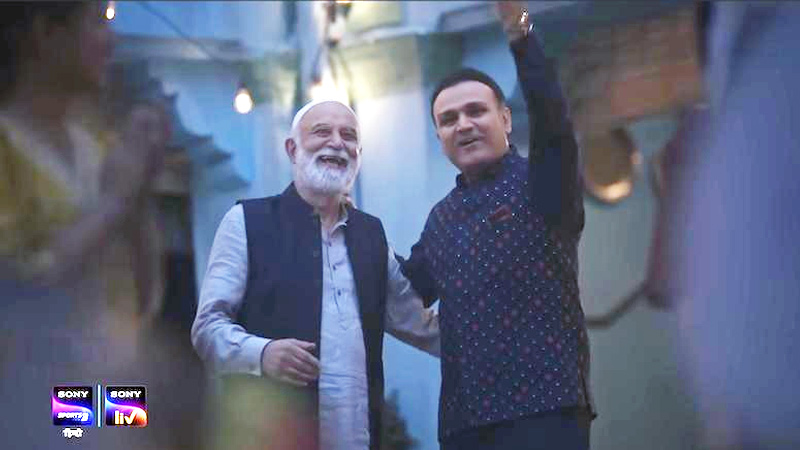
    The spot opens in a middle-class household, the sort instantly recognisable to viewers across India — compact, cluttered, warm. A multi-generational family, representing the classic Indian joint household, is gathered around a television set. Their emotions run the gamut from tense expectation to barely-suppressed hope. In their midst sits Virender Sehwag, the retired swashbuckler whose effortless stroke play once embodied India’s batting swagger. His presence is casual, yet symbolic: cricket is family. 

    On screen unfolds the ultimate cliché of Indian sport — a last-ball thriller against Pakistan. Suryakumar Yadav, known for his 360-degree stroke-making but carrying the weight of a poor run against Pakistan, takes guard against Shaheen Shah Afridi, Pakistan’s fiery left-arm quick. India need three off the final delivery. The room holds its breath. Yadav unfurls his trademark flick-sweep off his pads. The ball soars over fine-leg, lands in the stands. India have won. 

    The family erupts. So do, by implication, the millions watching at home across the country. The genius of the commercial is that the victory is not just India’s, not just Yadav’s redemption, not just a nod to the India–Pakistan rivalry that remains cricket’s greatest theatre. It is framed as a shared triumph of nationhood. 

    Sony has laced the narrative with subtle social cues. The family members are deliberately cast without overt religious markers — no heavy-handed signifiers of Hindu, Muslim, Sikh, or Christian identities. Instead, their togetherness suggests an anonymous universality, a blend of every Indian home. When one family member remarks, “God has listened to your prayers,” the phrase resonates across religions. It could as easily be said in a temple, mosque, church, or gurdwara. 

    This inclusivity crystallises in the closing voiceover: “When it comes to Team India, 140 crore hearts beat as one.” It is more than a tagline; it is an assertion of secular nationalism, packaged through the one institution that cuts across fault lines of caste, creed, and community — cricket. 

    The choice of Sehwag is inspired. His image has long been that of the approachable great: less demi-god than street-cricketer made good. Sehwag in a living room, laughing along with ordinary Indians, works as shorthand for the collapsing of boundaries between the game’s elite and its fans. In a country where cricket stars are often deified, here is one being human. 

    The film also plays on nostalgia. For decades, Indian households have arranged their routines around cricket matches. The image of families huddled before television sets — chai cups rattling, grandparents muttering prayers, children imitating shots in the cramped corridor — is imprinted in the national psyche. By invoking that memory, Sony makes the Asia Cup not just about live sport, but about reliving a tradition. 

    The timing of the TVC is astute. The Asia Cup kicks off on 9 September, with India–Pakistan ties expected to draw record ratings. This is also India’s first major tournament after the passage of the Online Gaming Bill 2025, which banned betting and fantasy sports with cash stakes but emphasised “safe online gaming” and esports as cultural exports. Sony’s film neatly dovetails with the government’s rhetoric: cricket as a unifying, wholesome national obsession rather than a site of division. 

    Advertising scholars will note how Asia Cup ka maha-muqabla breaks from older tropes. Previous India–Pakistan promos often thrived on antagonism: taunts, satire, chest-thumping. Sony, by contrast, softens the edges. The rivalry remains fierce — the six off Afridi is fantasy fulfilment — but the messaging is inward-looking. The focus is not beating Pakistan as much as celebrating India. 

    For a tournament where sport often becomes geopolitics, this is a nuanced turn. In less than a minute, the campaign positions cricket as faith, family, catharsis, and national glue. 

    That, in the end, is why the spot works. It is not simply flogging a match, or a tournament. It is selling the idea that India itself is best understood when a billion-plus citizens are praying for the same thing, shouting at the same screen, and rejoicing together when the ball sails into the stands.

    Watch the film here: YouTube link

  • Indian police crack cross-border TV piracy ring run via WhatsApp

    Indian police crack cross-border TV piracy ring run via WhatsApp

    MUMBAI: Indian authorities have dismantled an international television piracy network that streamed over 10,000 channels—including banned Pakistani networks—to customers via WhatsApp groups, in what investigators describe as the first fully exposed cross-border content theft operation.

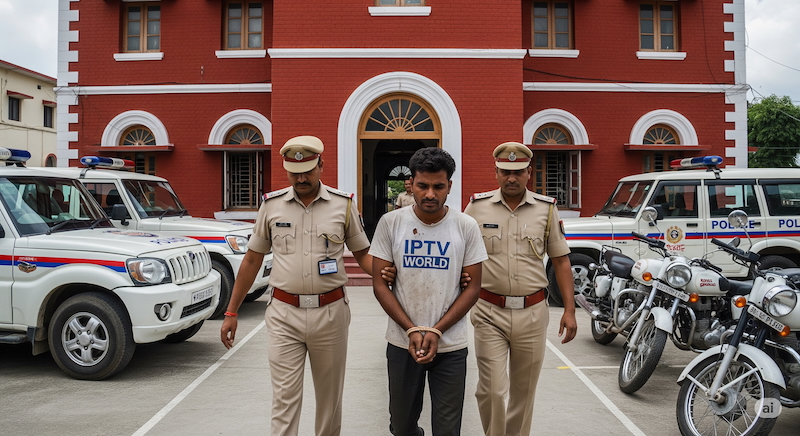
    Police in Ghaziabad registered a case against a 35-year-old businessman accused of running the illicit internet protocol television (IPTV) service in collaboration with handlers across the border, according to StoryBoard18, which first reported the investigation.

    The probe began when officers from Tilamod Police Station traced a suspicious WhatsApp group facilitating illegal access to premium television channels. The investigation led to the blocking of 53 domains distributing pirated content under the “IPTV World” brand name.

    According to the First Information Report filed on 27 July, the accused illegally streamed copyrighted content from JioStar India Pvt Ltd and its OTT platform JioHotstar without authorisation. The pirated catalogue included popular Indian channels such as Star Plus HD, Star Bharat HD and Colors HD, alongside Pakistani networks Hadi TV and Noor TV—the latter raising national security concerns.

    Investigators discovered the accused coordinated with a Pakistan-based pirate, paying in cryptocurrency to obtain copyrighted material. The service reached customers primarily through WhatsApp groups, with payments processed via UPI accounts.

    “The modus operandi of the accused was to provide services through WhatsApp groups, which became the key lead in our investigation,” said a senior officer involved in the probe.

    The complaint filed by JioStar accused IPTV World of bypassing technical protection measures and hosting pirated content on servers linked to providers including Hostinger and GoDaddy, violating copyright, information technology and criminal laws.

    The case represents a breakthrough in understanding digital piracy’s mechanics. JioStar’s John Doe lawsuit before the Delhi high court led to the voluntary appearance of the service provider’s owner, who agreed to a permanent injunction and disclosed the network’s complete operations, including business associates, 300 infringing URLs, and distribution platforms.

    These disclosures revealed coordinated cross-border collaboration, cryptocurrency payments, and systematic circumvention of content protection measures. The entire operation—from content sourcing to distribution via WhatsApp and Facebook—was organised from Pakistan.

    The investigation marks the first time authorities have fully mapped premium content piracy’s complete lifecycle, from origin to delivery. It exposes how digital platforms initially designed for communication have become conduits for large-scale intellectual property theft.

    The case highlights broader challenges facing India’s digital entertainment industry as streaming services proliferate. Content owners face sophisticated piracy networks that exploit encrypted messaging platforms and cryptocurrency payments to evade traditional enforcement mechanisms.

    In a related development, police in Rajasthan have registered a separate case against cable operator Hazi Ali for allegedly broadcasting JioStar channels without proper licensing. The ministry of information and broadcasting had cancelled his broadcasting licence in 2024 for regulatory violations, yet he reportedly continued transmitting copyrighted content.

    The crackdown reflects heightened enforcement efforts as India’s entertainment industry pushes authorities to tackle digital piracy more aggressively. With streaming revenues at stake and national security concerns over unauthorised Pakistani content, expect more coordinated action against cross-border piracy networks.

    Whether these enforcement successes can meaningfully dent the broader piracy ecosystem remains uncertain. As investigators shut down established networks, new operators typically emerge using evolved techniques to evade detection.

    The cat-and-mouse game between content owners and pirates continues, now with WhatsApp groups as the unlikely battlefield.

  • Firstpost goes full throttle with special edition on Operation Sindoor

    Firstpost goes full throttle with special edition on Operation Sindoor

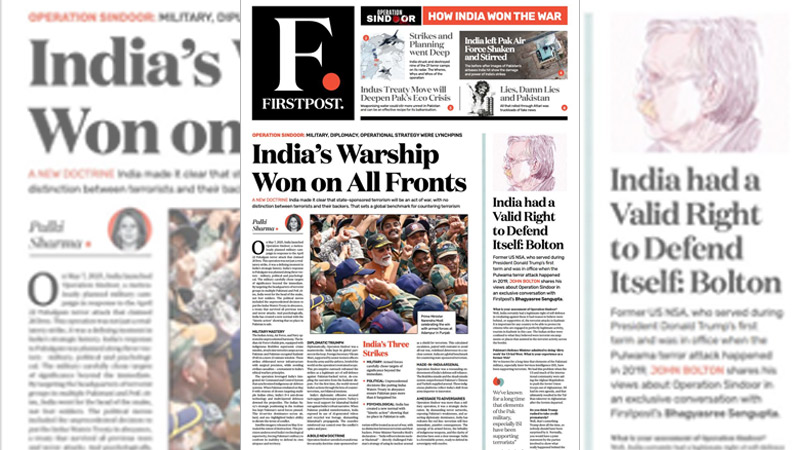
    MUMBAI – In a gutsy move both on ground and in print, Firstpost has dropped a collector’s edition digital broadsheet dedicated to Operation Sindoor—India’s audacious counter-terror strike that sent shockwaves across the region and rewrote the rules of military engagement.

    This slick, oversized digital spread dives headfirst into the mission that rattled Rawalpindi and reasserted New Delhi’s zero-tolerance stance on state-sponsored terror. From boots-on-the-ground bravery to geopolitical chess, the edition lays out the anatomy of the operation with forensic flair—packed with verified reports, exclusive interviews, and sharp strategic analysis.

    download first first Operation Sindoor editionThe shadow of Pakistan army chief-turned-field marshal Asim Munir looms large, as the edition probes the ideological flashpoints fuelling cross-border aggression and the Indian response that followed. No propaganda, just precision reporting.

    “While the magnitude of Operation Sindoor, and what it has achieved, is a compelling enough reason for Firstpost to bring out this special edition, the need to present facts amidst a flood of disinformation was a trigger too,” says Firstpost managing editor Palki Sharma.

    This isn’t just a recap of a military win—it’s a reframing of the global counter-terror playbook, with India leading the charge. Readers can scan the QR code to get their hands on this digital deep-dive—a timely tribute to grit, guts, and a nation drawing a red line no enemy dares cross.

  • TV news explodes as Operation Sindoor captures India’s attention

    TV news explodes as Operation Sindoor captures India’s attention

    MUMBAI: TV news viewership in India rocketed during the week of 3 to 9 May, driven by the high-octane drama of Operation Sindoor —a military blitz by Indian armed forces against terror hubs in Pakistan.

    Broadcast Audience Research Council (Barc) India reported a staggering 507 million viewers tuning into news content that week—the highest weekly total since 2022. Over the three critical days (7-9 May), news grabbed 16 per cent of total TV viewing, up from its usual 6 per cent slice.

    Hindi news channels led the charge, clocking 254 gross rating points (GRPs), smashing previous highs seen during the 2024 Lok Sabha election results and major state elections. Viewer engagement spiked, with the average time spent on Hindi news jumping to 60 minutes—a 67 per cent rise over pre-operation weeks.

    The frenzy peaked during ministry of external affairs (MEA) briefings on the operation. The first briefing on Wednesday sent viewership soaring by 509 per cent. Thursday and Friday briefings saw gains of 125 per cent and 242 per cent, respectively.

    Operation Sindoor also brought 65 million fresh eyes to Hindi news—viewers who hadn’t touched the genre in the previous month. Daily tune-ins nearly doubled, leaping from 73 million to 142 million.

    In the Hindi-speaking market (HSM 2+), the news genre’s share of TV content surged from three per cent to 13 per cent, with the 15+ age group soaring from four per cent to 15 per cent—outstripping the 2016 surgical strikes.

    Barc India said the data reaffirms television’s enduring role as the go-to medium for news during major national events, underscoring its unparalleled reach and influence.

  • ICC Champions Trophy 2025 smashes viewership records in India

    ICC Champions Trophy 2025 smashes viewership records in India

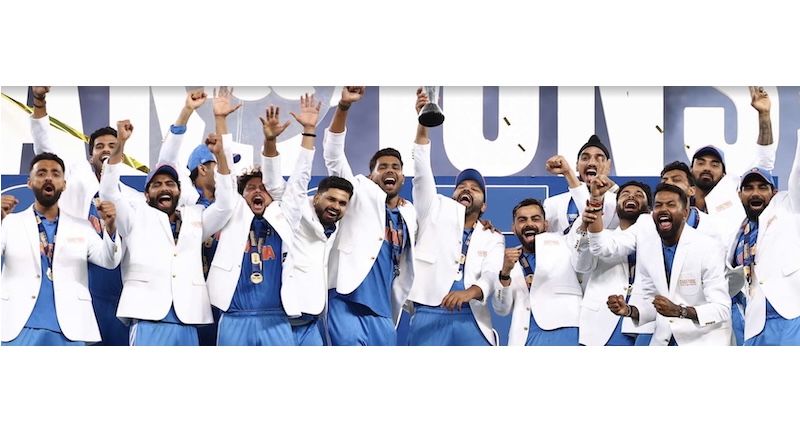
    MUMBAI: The ICC Men’s Champions Trophy 2025 has knocked previous cricket viewership records for six, becoming the most-watched multi-nation cricket tournament ever in India, the ICC declared in a press release issued on 21 March. The eight-team competition outpaced the ICC Men’s Cricket World Cup 2023 by a whopping 23 per cent in TV ratings.

    Indians devoured an eye-watering 250 billion minutes of cricket action across platforms during the tournament, with 137 billion minutes consumed on Star Sports and another 110 billion minutes on JioHotstar.

    The India-New Zealand final played in Dubai on 9 March drew an extraordinary peak concurrency of 122 million live viewers on television and 61 million on JioHotstar—the highest digital viewership ever recorded for cricket. The match became the second-highest rated ODI in TV history outside of World Cup matches, with 230 million viewers tuning in and 53 billion minutes of watch-time across all platforms.

    “The Champions Trophy made an amazing return after eight years and the viewership numbers from India have been overwhelming,” said an over-the-moon ICC chairman Jay Shah. “The incredible figures highlight the mass appeal that cricket has in India and how taking ICC events to audiences in different languages can significantly boost fan engagement.”

    The group stage encounter between arch-rivals India and Pakistan—cricket’s equivalent of a bare-knuckle brawl—became one of the most-watched ODI matches in Indian history. The match clocked over 26 billion minutes of watch-time on linear TV, besting the countries’ 2023 World Cup clash by 10.8 per cent.

    The Dubai contest on 23 February, which saw India maintain their hex over Pakistan in ICC tournaments thanks to Virat Kohli’s heroics, was watched by a staggering 206 million people on linear TV.

    Jio Star  chief executive for sports Sanjog Gupta couldn’t resist a bit of corporate chest-thumping: “This accomplishment is a result of the combined strength of the widest, most deeply penetrated multi-platform destination for sports, the fan-focussed story-telling approach of the JioStar ‘mega-casts’ and our superior technological capabilities.”

    The extraordinary viewership was bolstered by rights holders JioStar’s comprehensive coverage strategy. Matches were broadcast in English, Hindi, Tamil, Telugu and Kannada on Star Sports and Sports 18 channels.

    On digital platforms, the tournament was streamed across a record 16 feeds, including nine languages—English, Hindi, Marathi, Haryanvi, Bengali, Bhojpuri, Tamil, Telugu and Kannada—plus four multi-cam feeds, an Indian Sign Language feed and the Max View feed on JioHotstar.

    India’s unbeaten run to the trophy certainly didn’t hurt viewing figures, with fans glued to screens throughout the tournament. The marketing campaign, targeting “differentiated audience segments with distinct persuasions across devices,” appears to have hit the sweet spot of the bat.

    For advertisers who paid top rupee for spots during the tournament, the unprecedented viewership must feel like money well spent. For Indian cricket fans, it was simply another opportunity to indulge their national obsession—albeit in greater numbers than ever before.

  • Turkey and Pakistan strengthen media and communication ties

    Turkey and Pakistan strengthen media and communication ties

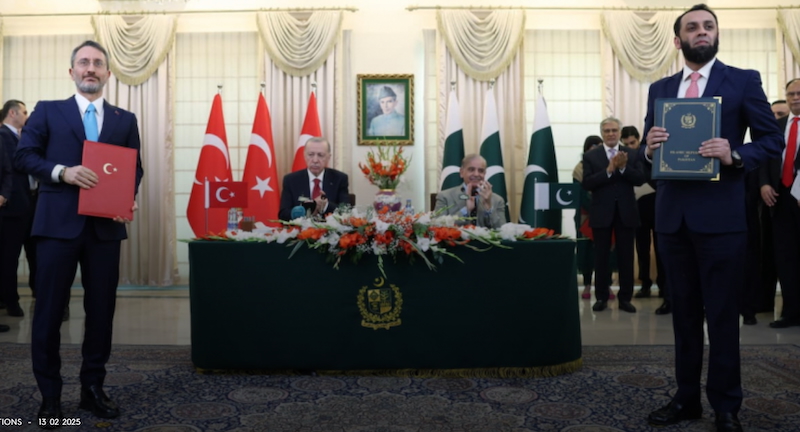
    MUMBAI:  Turkey and Pakistan have reinforced their strategic partnership with the signing of two Memorandums of Understanding (MoUs) aimed at enhancing cooperation in media, communication, and public relations. The agreements were signed in Islamabad during the visit of Turkish President Recep Tayyip Erdogan and his delegation for the seventh Turkey-Pakistan High-Level Strategic Cooperation Council meeting last week.

    Turkish presidency  head of communications Fahrettin Altun and Pakistan minister of information and broadcasting Attaullah Tarar formalised the agreements to deepen collaboration between the two nations in the fields of media, public diplomacy, and broadcasting.

    The “memorandum of understanding on cooperation in the field of media and communication” seeks to advance bilateral efforts in media and communication, fostering the exchange of expertise and best practices. 

    The second agreement, the “Memorandum of Understanding on Cooperation in Public Relations and Communication,” aims to enhance strategic communication and public relations between Turkey and Pakistan.

    Under the terms of these agreements, both countries will promote cooperation based on reciprocity and mutual benefit while adhering to their respective national laws and regulations. 

    The MoUs outline provisions for information exchange, joint initiatives, and collaboration on projects of shared interest. They also include training programmes, workshops, and leveraging technology to streamline citizen engagement.

    Effective immediately, the agreements will remain in force for three years, marking a new chapter in Turkey-Pakistan cooperation in the media and communication sectors.

  • ICC Cricket World Cup 2023 – Who is Your Favourite?

    ICC Cricket World Cup 2023 – Who is Your Favourite?

    The ICC Cricket World Cup 2023 is the biggest event in the cricketing calendar, and it will be held in India from October 8 to November 19. Ten teams will compete for the coveted trophy, which was last won by England in 2019. India, the hosts, and the two-time champions are widely regarded as the favorites for the title, as they have a formidable batting lineup, a balanced bowling attack, and a home advantage.

    However, who will win? Is your pick (or picks!) the undisputed favorites, or are there other contenders who can challenge them? In this blog post, we will analyze how each team fares and who is your favorite to win the title.

    India: The Hosts and The Favourites

    India is undoubtedly one of the strongest favorites of the betting app providers to win the World Cup, as they have a formidable batting lineup, a balanced bowling attack, and home advantage. Led by Rohit Sharma, India boasts of players like Virat Kohli, Shubman Gill, KL Rahul, Shreyas Iyer, Hardik Pandya, Ravindra Jadeja, and Jasprit Bumrah, who can dominate any opposition on their day. India has also been consistent in ICC tournaments, reaching the semi-finals or finals in six of the last seven editions. India has won the World Cup twice, in 1983 and 2011, and will be aiming to repeat the feat on home soil.

    India’s experience and leadership are also key factors that make them a formidable team. They have players who have played in many international matches and tournaments. They also have players who have won the World Cup before, like Virat Kohli, Rohit Sharma, Ravichandran Ashwin, and Bhuvneshwar Kumar. They have a calm and composed captain Rohit Sharma, who leads by example and motivates his teammates.

    Australia: The Five-Time Champions

    Australia is another team that cannot be taken lightly, as they have a history of winning the World Cup five times, more than any other team. Australia has a powerful batting lineup, featuring players like David Warner, Steven Smith, Glenn Maxwell, Marnus Labuschagne, and Mitchell Marsh. Their bowling unit is also formidable, with players like Pat Cummins, Mitchell Starc, Adam Zampa, and Josh Hazlewood. Australia has also been in good form recently, winning the ODI series against India and South Africa earlier this year. Australia will be looking to bounce back from their semi-final exit in 2019 and reclaim their glory in 2023.

    Pakistan: The Unpredictable Team

    Pakistan is a team that can surprise anyone with its unpredictable performances. Pakistan has a talented squad, with players like Babar Azam, Fakhar Zaman, Mohammad Rizwan, Shaheen Afridi, Haris Rauf, and Hasan Ali. Pakistan also has a reputation for performing well in ICC tournaments, as they won the Champions Trophy in 2017 and reached the final of the World T20 in 2009 and 2007. Pakistan has also won the World Cup once, in 1992, under the inspirational leadership of Imran Khan. Pakistan will be hoping to emulate their success in 1992 and end their long wait for another World Cup title.

    Babar Azam and Fakhar Zaman are likely to open the innings, followed by Mohammad Rizwan at number three. Shoaib Malik and Mohammad Hafeez can bat at number four and five respectively, while Imad Wasim and Faheem Ashraf can provide the finishing touches at number six and seven. Sarfaraz Ahmed can also be included as a wicket-keeper batsman who can bat anywhere in the order.

    England: The Defending Champions

    England is the defending champion of the World Cup, having won their maiden title in 2019 in a thrilling final against New Zealand. England has a dynamic batting lineup, with players like Jonny Bairstow, Dawid Malan, Ben Stokes, Jos Buttler, Liam Livingstone, and Moeen Ali. Their bowling unit is also impressive, with players like Chris Woakes, Mark Wood, Adil Rashid, and Sam Curran. England has also been consistent in ODI cricket in recent years, winning a series against India, Australia, South Africa, and Sri Lanka. England will be aiming to become the first team to win back-to-back World Cups since Australia in 2003 and 2007.

    New Zealand: The Dark Horse

    New Zealand is a team that has always punched above its weight in ICC tournaments. New Zealand has a balanced squad, with players like Kane Williamson, Martin Guptill, Devon Conway, Ross Taylor, Jimmy Neesham, Mitchell Santner, Trent Boult, and Tim Southee. New Zealand has also been in excellent form recently, winning the inaugural World Test Championship against India and reaching the final of the T20 World Cup in 2021. New Zealand has also reached the final of the last two ODI World Cups but lost both times to Australia and England. New Zealand will be hoping to go one step further in 2023 and win their first-ever World Cup title.

    They have players who have played in many international matches and tournaments. They also have players who have reached the final of the last two ODI World Cups, like Kane Williamson, Ross Taylor, Trent Boult, and Tim Southee.

    Conclusion

    The ICC Cricket World Cup 2023 promises to be an exciting and competitive tournament, with each team having its chance of winning the title. While India and Australia are the obvious favorites, Pakistan and England are also strong contenders, and New Zealand is always a dark horse. Who is your favorite to win the World Cup?

    Disclaimer: This article is a paid publication and does not have journalistic/ editorial involvement of indiantelevision.com. indiantelevision.com group or its websites does not endorse/subscribe to the contents of the article/advertisement and/or views expressed herein or any of the results of the products/services sold by the companies neither do we endorse the products as the publisher in any way.

    The reader is further advised that such investments can be highly risky. Indiantelevision.com group shall not in any manner, be responsible and/or liable in any manner whatsoever for all that is stated in the article and/or also with regard to the views, opinions, announcements, declarations, results, health outcomes, affirmations etc., stated/featured in the same. The decision to read hereinafter is purely a matter of choice and shall be construed as an express undertaking/guarantee in favor of indiantelevision.com (indiantelevision.com group) of being absolved from any/ all potential legal action, or enforceable claims. The content may be for information and awareness purposes and does not constitute any kind of investment advice from the website owners or the editorial team.