Tag: Paid news

  • I&B Ministry plans regulations for OTT platforms

    I&B Ministry plans regulations for OTT platforms

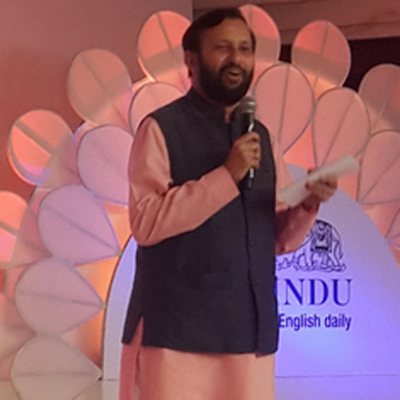
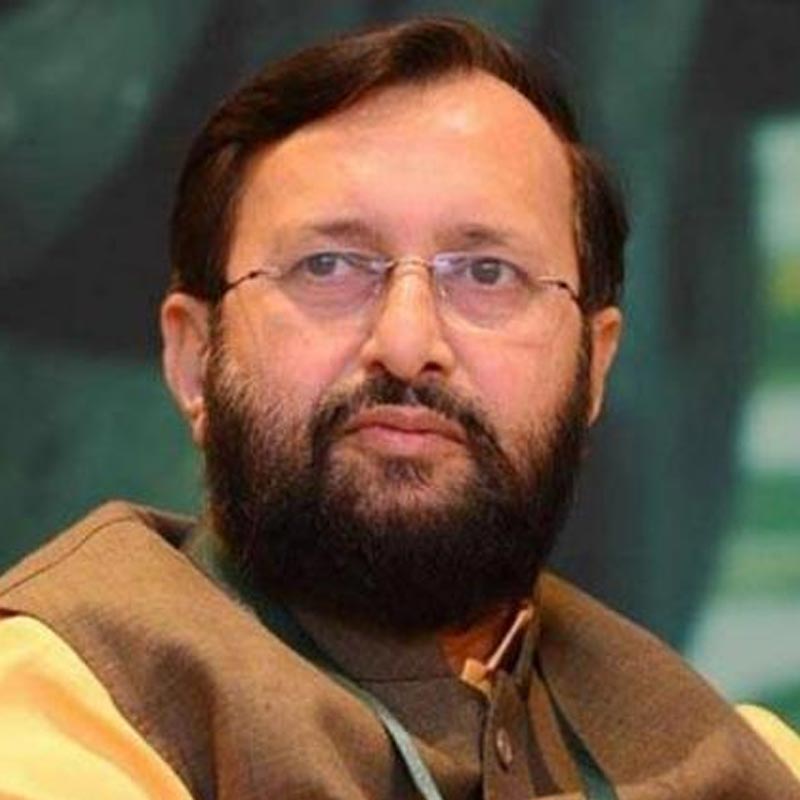
    MUMBAI: The Information and Broadcasting Ministry (MIB) is contemplating a regulation for OTT platforms on the lines of print and electronic media, according to a news article by the Press Trust of India. Minister Prakash Javadekar, however, said that the government will not be taking any step that will curb freedom of media. Some mainstream media outlets had relayed their concern to the government that OTT platforms are unregulated and so there can be no level-playing ground.

    He said, "I have sought suggestions on how to deal with this because there are regular feature films coming on OTT — good, bad and ugly. So how to deal with this, who should monitor, who should regulate. There is no certification body for OTT platforms and likewise news portals also.”

    All other media have a body that regulates their work but OTT is free.

    Regarding paid news, Javadekar said that the media should approach the government with suggestions on how to penalise those who indulge in the ‘unethical’ practice. He said that this was necessary to combat rising instances of fake news, which he claimed as ‘more dangerous’ than paid news. He also added that it wasn’t just the government’s job to tackle it but everyone’s.

  • No specific instance of paid news on private TV channels yet: MIB

    No specific instance of paid news on private TV channels yet: MIB

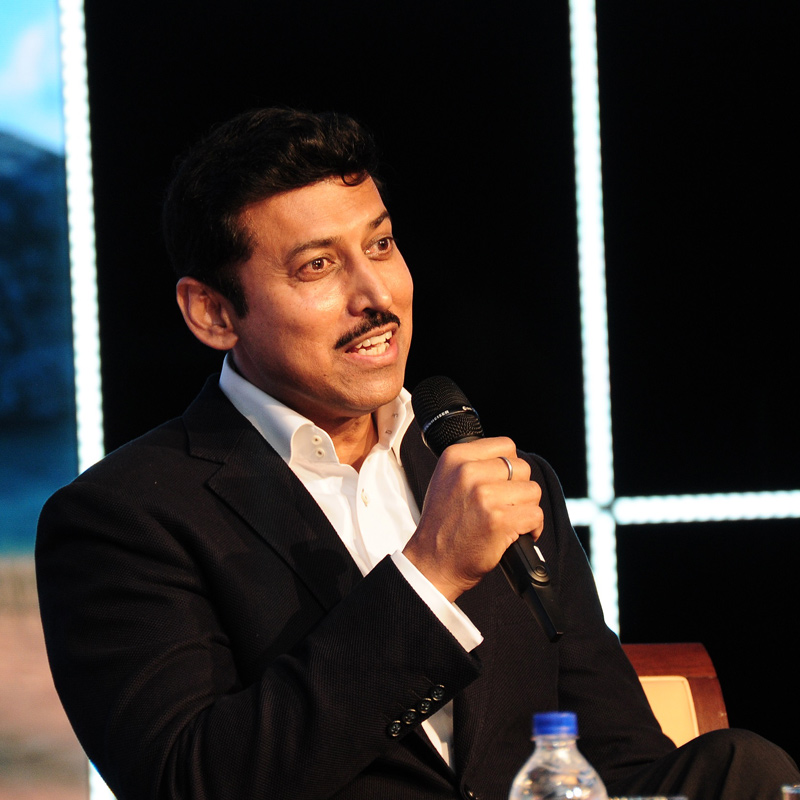
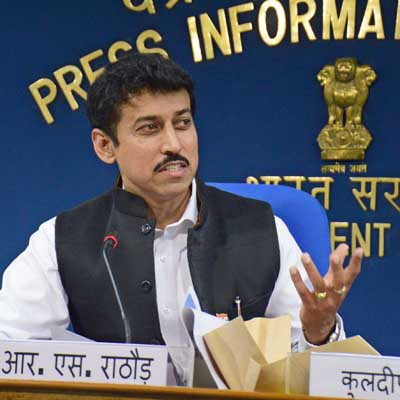
    MUMBAI: The Ministry of Information and Broadcasting (MIB) has not yet had to face the menace of paid news on news channels. In a reply to the Lok Sabha or Lower House of Parliament, junior minister of MIB Rajyavardhan Singh Rathore informed that no specific instance of paid news in electronic media (private satellite TV channels) has been brought to the notice of the ministry.

    He further added that instances of paid news during election time were directly dealt by the Election Commission of India under the Representation of the People Act, 1951. The existing provisions contained in the Programme and Advertising Codes (PAC) and the existing mechanism are considered adequate to regulate content on TV channels.

    The minister was speaking in response to questions raised regarding paid news on 24X7 news channels and the ministry’s action on the same. Rathore also stated that the existing rules under the Cable TV Network Rules of 1994 were good enough to ensure channels didn’t cross their lines and the act does not allow for pre-censorship, only penalty after telecast. “Action is taken against TV channels whenever violation of the PAC is established,” he said.

    The PAC contains a wide range of parameters to regulate programmes and advertisements on such TV channels including the content likely to pose menace of news sensationalism and breaking news culture. Rathore named a few rules:

    Rule 6(c) provides that no programme should be carried in the cable service which contains attack on religions or communities or visuals or words contemptuous of religious groups or which promote communal attitudes;

    Rule 6(d) provides that no programme should be carried in the cable service which contains anything obscene, defamatory, deliberate, false and suggestive innuendos and half-truths;

    Rule 6(e) provides that no programme should be carried in the cable service which is likely to encourage or incite violence or contains anything against maintenance of law and order or which promote anti-national attitudes;

    Also Read :

    MIB says fewer TV channels violating ad, prog norms

    Govt warned 55 violators of programme & ad codes in 3 yrs, says Rathore

    Prog & Advt Code violation: 30 channels faced action in 2015 & 2016

  • Paid news to be checked under amendments to Press & Registration Act: Rathore

    Paid news to be checked under amendments to Press & Registration Act: Rathore

    NEW DELHI: The Government will include provisions for checking the menace of paid news in the amendments to the Press and Registration of Books Act.


    Minister of State for Information and Broadcasting Rajyavardhan Rathore told the Lok Sabha that based on the recommendations of the Standing Committee on Information Technology, inclusion of provisions in the Act “would also be pursued as per extant guidelines”.


    In the amendments proposed to the PRB Act, the Ministry has also proposed inclusion of a section which says ‘paid news’ means publishing any news or analysis in the publication for a price in cash or kind as consideration.


    Earlier in November 2013, the Government had said it intended to bring ‘reproduction of any newspaper in electronic form’ within the ambit of the Act.


    The amendments, which have been placed on the website of the Ministry, also says that “facsimile edition” of a publication means an exact replica in full or in part of the original edition of a foreign publication ‘in so far as the contents concerned and may not include title,’ subject to the condition that any page is not published in part.


    The Government also proposes to establish a Press and Registration Appellate Board to be constituted by the central government, by notification in the official gazette, consisting of a chairperson and another member, to be nominated by the Press Council of India, established under Section 4 of the Press Council Act 1978 from among its members.


    It says that any dispute relating to registration of newspapers or publications would be referred to a “specified appellate authority” that may be prescribed by the central government.


    Under the amendments, publication means newspapers, magazines, journals or newsletters printed periodically and published in India ‘including its reproduction in electronic form or any syndication, facsimile edition, and Indian editions of periodicals published outside India.’

  • Three-tier committees set up by Election Commission to monitor paid news

    Three-tier committees set up by Election Commission to monitor paid news

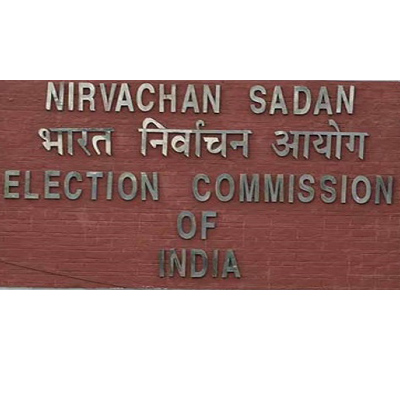
     NEW DELHI: Following the announcement of elections to the state assemblies of Jharkhand and Jammu and Kashmir next month, the Election Commission of India on 23 October said that it had put into force a mechanism to deal with the issue of ‘paid news’.


     The mechanism provides for three-tier Media Certification and Monitoring Committees (MCMC) at district, state and ECI level.


     It has also placed on its website eci.gov.in revised comprehensive instructions on paid news.


    Necessary instructions have been issued to the CEOs of the poll going states to ensure briefing of political parties and media in the districts about ‘Paid News’ and the mechanism to check paid news. The MCMCs of all states have been trained to do their job.


     With the model code of conduct coming into effect immediately, the Commission has made elaborate arrangements for ensuring their effective implementation and any violation of these guidelines would be strictly dealt with. The Commission re-emphasises that the instructions issued in this regard from time to time should be read and understood by all political parties, contesting candidates and their agents/representatives, to avoid any misgivings or lack of information or understanding/interpretation.


     The commission attaches great importance to preparation and implementation of a perfect communication plan at the district/constituency level for the smooth conduct of elections and to enable concurrent intervention and mid-course correction on the poll day.


    It has directed the chief electoral officers of the polling going states to coordinate with the officers of the Telecommunication Department in the state headquarters, BSNL authorities, the representatives of other leading service providers in the states so that network status in the states is assessed and communication shadow areas be identified. The CEOs have also been advised to ensure best communication plan in their states.


    All critical events will be video-graphed. District election officers will arrange sufficient number of video and digital cameras and camera teams for the purpose. The events for videography will include filing of nominations, scrutiny thereof and allotment of symbols, first level checking, preparations and storage of electronic voting machines, important public meetings, processions etc. during campaign, process of dispatching of postal ballot papers, polling process in identified vulnerable polling stations, storage of polled EVMs, counting of votes etc.


     Webcasting, videography and digital cameras will also be deployed inside polling booths wherever needed.


    CDs of video recordings will be available on payment to anyone who wishes to obtain a copy of the same.


     The elections will take place in five phases in both states from 25 November onwards and the counting will be done simultaneously on 23 December.

  • Media comes under attack from CEC and Law Minister on regulation and paid news

    Media comes under attack from CEC and Law Minister on regulation and paid news

    NEW DELHI: The media came under attack on issues of paid news and regulation at different forums in the capital over the weekend.


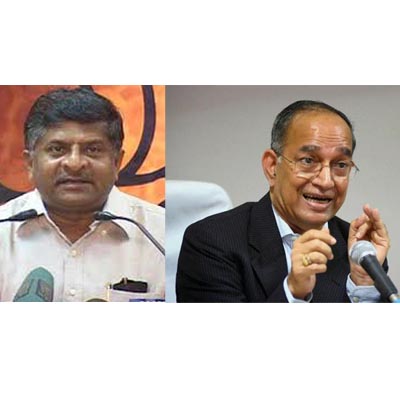
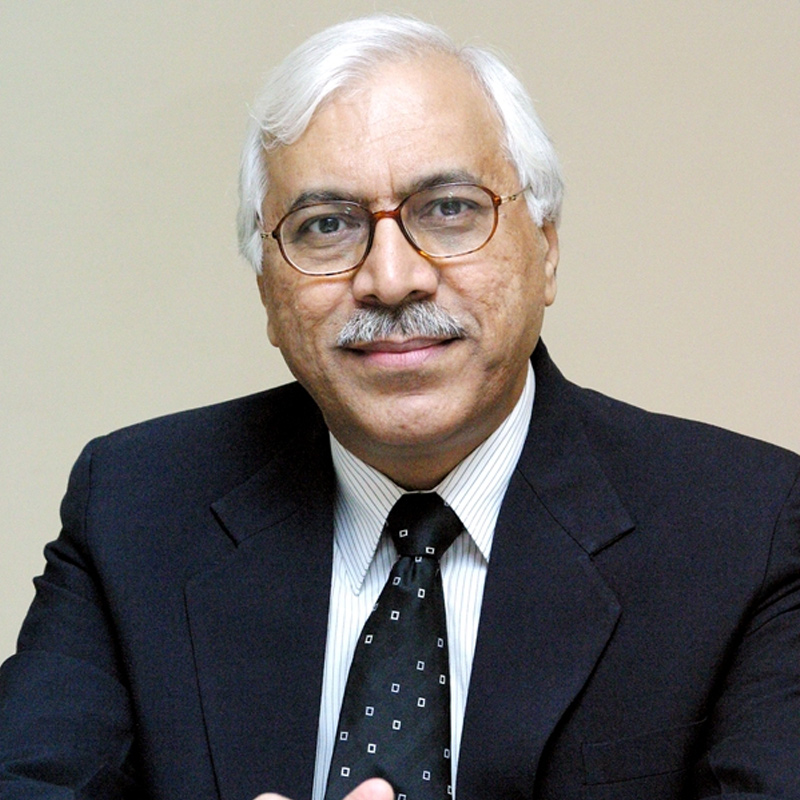
    Chief election commissioner (CEC) VS Sampath suggested that paid news should be made an electoral offence that attracts disqualification so that it acts as a deterrent, regretting that inadequacies in legal framework were not allowing the poll panel to effectively check this and other malpractices.


    He also said that there is a ‘crying need’ for a ‘well defined legislation’ governing expenditure of political parties during elections as its absence was allowing them and their candidates to circumvent the rules.


    Speaking at a session organised by the Law Commission, Sampath reckoned, “When the Election Commission looked into whether it had the powers to deal with paid news it found the answer was negative.”


    He also added that paid news in whatever form is presently not even an electoral offence. “If it is an electoral offence, it can eventually lead to the disqualification of the candidate. Whatever the difficulties of implementation, the very fact that if it is listed as electoral offence, it would act as a deterrent against people using it in the elections,” he further explained.


    The CEC revealed that a recommendation in this regard has been made to the Law Ministry.


    He also asked why government advertisements during elections should not be considered as paid news. “Since paid news is not an electoral offence, the Commission now tries to check this menace by invoking its powers related to candidates’ spending,” he added.


    “When they (candidates) file their expenditure returns, they always build a cushion for this. If Rs 40 lakh those days was the limit, invariably no candidate would file a return for more than Rs 25 lakh. That Rs 15 lakh will be the cushion for this,” Sampath stated.


    Sampath also revealed that while the Commission’s control over a candidate’s spending is only after he files his nomination, people make substantial election related expenses before that.


    He added that people start spending but the Election Commission is constrained ‘because of the law and the interpretation of the law.’


    The law states that EC can hold an election within the period of six months before the due date.  “We have been making proposals on so many occasions. Why should not the Commission have powers to ensure the purity of the election during this six-month period?” the CEC questioned.


    He noted that all limits for poll expenditure is for candidates and none for political parties.


    “We have seen political parties handling huge amounts of cash. We have seen political parties giving to the candidates’ huge amounts of cash. When it is caught they will say no, no it is not meant for him, it is meant for him to distribute to others in his district or in his state.


    “There is no regulatory framework governing these things.  There is a crying need for a well defined legislation governing political parties particularly political parties’ finance,” Sampath reckoned.


    The Commission had recently tried to come out with some transparency guidelines. He said in countries like the US, expenditure commissions only take care of the expenditure and how political parties raise finance.  He also called for a ‘well defined law’ relating to opinion polls conducted by TV channels.


    “There should be a well defined law regulating opinion polls also,” Sampath said, adding that there is a view that voters will not be swayed by opinion polls but added that that there were instances where candidates won by wafer thin margins. Later, he was asked why during elections when polling was on in one area, poll related news from other areas continued to be shown on electronic media or internet.


    Sampath also explained that there is a mismatch between law and electronic revolution. “On every poll day during this Lok Sabha election, this violation has taken place. It is because of mismatch between law and electronic revolution in the country. All our laws did not take in to account electronic revolution,” he said, adding that EC has to abide by the law as it exists.


    At another session, Law Minister Ravi Shankar Prasad said those in politics and government should recognise the right of the Press to ‘criticise, lampoon us.’


    Delivering the inaugural address at the National Consultation in Media Law organised by the Law Commission of India with the National Law University, Delhi, Prasad said the leaders in his government, including Prime Minister Narendra Modi, were those who fought for press freedom during the Emergency.


    Noting that the Indian media has matured during the comparatively short span of its existence, he spoke of his early years as a panellist on TV. “Earlier we used to outshout each other. Anchors spoke more, some still do it. But the process of maturing has started,” he said.


    “But if media freedom is necessary and important for the media, self-regulation must be the mode,” he added.


    “Paid news is sickening. Politicians have to realise that Indian voters are mature and cannot be swayed by aggressive promises alone,” Prasad stated.


    He said press freedom should be equally balanced with right to privacy, so also the right of the media should not hinder the freedom to conduct a fair trial.


    “My government recognises the importance of social media. We have no intention to curb this flowering of creativity. But there are reasonable restrictions prescribed under the Constitution, which will be used only in extreme, rare circumstances and with the complete approval of the higher authorities, that too only in serious issues threatening our national or communal framework,” the Minister explained.


    Speaking at a panel discussion on the topic media regulations, Kasturi and Sons Ltd Chairman (publishers of The Hindu) N Ram opined, “There was hardly any self-regulation for the Press today. He claimed that his newspaper had introduced the idea of a full-time news ombudsman independent of the editor. He said this practice however had not spread to other newspapers, and TV certainly did not have it.”


    He also added how even the Press Council of India was dominated by people from the newspaper industry and that an independent mechanism, which was also transparent, was crucial for self-regulation.

  • Delhi High Court stays EC’s paid news notice to Ashok Chavan

    Delhi High Court stays EC’s paid news notice to Ashok Chavan

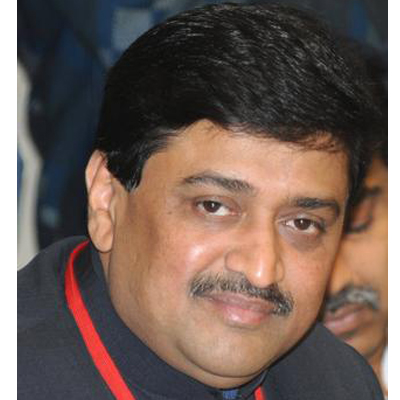
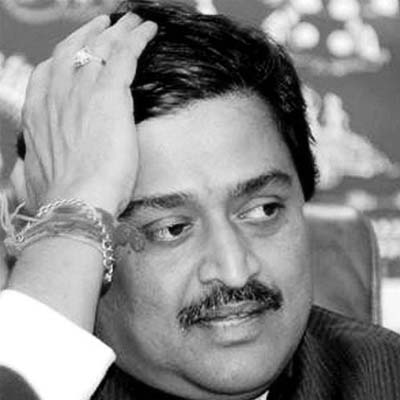
    NEW DELHI: Former Maharashtra chief minister Ashok Chavan has received an interim relief with Delhi High Court putting a stay on the show cause notice issued by the Election Commission to the Congress politician.


    The Court also issued notice to BJP leaders Mukhtar Abbas Naqvi, Kirit Somaiya and one independent candidate who had filed complaint against Chavan to the EC.


    The poll panel in the notice on 13 July had asked Chavan who had stood from Nanded in Maharashtra as to why he should not be disqualified for not giving correct details of his 2009 poll expenses.


    A fortnight ago, the Commission had set a 20-day deadline for Chavan to respond to the notice, saying he had “failed to lodge his account of election expenses in the manner required by the (Representation of the People) Act and rules.”


    Chavan had moved the court against the EC’s order, saying the panel had not followed the procedure laid out in the Representation of People Act prior to giving its findings.


    He had also said that the expenses that he had allegedly not declared pertained to some advertisements that were released in October 2009 regarding a meeting that was to be held between the members of United Progressive Alliance (UPA).


    Senior advocate Kapil Sibal appeared for Chavan and argued that the ex-CM did not know who had issued the advertisements.


    Chavan had won the 2009 assembly election from Bhokar in Maharashtra’s Nanded Lok Sabha constituency. He won the recent Lok Sabha polls from Nanded.


    It was contended that Chavan had incurred an expense of over Rs 16,000 for attending the UPA meeting that was advertised and that he had cited the same while filing his poll spends.

  • Law Commission to complete recommendation on paid news soon

    Law Commission to complete recommendation on paid news soon

    NEW DELHI: The Law Commission is expected to complete its recommendations relating to paid news during election soon. It is currently studying the laws related to election laws in entirety.


    Information and Broadcasting Ministry sources tell indiantelevision.com that recommendations for changes in laws relating to the Press Council of India and the Cable TV Networks (Regulation) Act would be taken up after a consultation with the Election Commission.


    Furthermore, based on the recommendations of the standing committee on Information Technology, inclusion of provisions in the ‘Press and Registration of Books and Publications Bill’ to check the incidents of paid news are being examined. 


    The Press Council of India has formulated ‘Norms of Journalistic Conduct’ to be adhered by the media. These norms prescribe that advertisements should be clearly demarcated from news by printing disclaimers. As far as news is concerned, it must always carry a credit line and should be set in a typeface that would distinguish it from advertisements. The council has also drawn up a set of guidelines that are applicable to financial journalism and also on reporting of elections.


    So far as electronic media is concerned, all private satellite TV channels are required to adhere to the Programme & Advertising Codes prescribed under Cable Television Networks (Regulation) Act, 1995 and the rules framed there under. 

  • Chavan unfazed by EC Notice, says it vindicates his stand

    Chavan unfazed by EC Notice, says it vindicates his stand

    NEW DELHI: Former Maharashtra Chief Minister Ashok Chavan remains unfazed by the show cause notice issued to him by the Election Commission.


    In fact, Chavan said this only vindicated his and the Congress’ stand that “there is no question of paid news.”


    “Our stand on the paid news issue has been confirmed by the Election Commission. Even the High Court and Supreme Court had taken a similar stand when our opponents had filed a petition. The courts had rejected their petition. Now this (EC) order is also very clear. There is no question of paid news,” Chavan told Press Trust of India over phone.

    Chavan claimed that he had himself pleaded with the Commission to give him an opportunity to file electoral expenses as required by law and he will now do this as notice has been issued to him.


    “There is a provision under which a notice can be served to us. We will reply to that. I have not seen the order in detail yet. But the issue of paid news is ruled out totally,” Chavan said.

    The notice relates to the election to the Maharashtra Legislative Assembly held in September-October 2009 wherein Chavan was the candidate from the Bhokar seat.

    The complainants who include rival contestant Madhavrao Kinhalkar, Bharatiya Janata Party vice president Kirit Somaiya, BJP MP Mukhtar Abbas Naqvi and five others had alleged in their submission made before the Election Commission that Chavan got several advertisements published in various regional newspapers during the poll campaign.

    The complainants had alleged that the advertisements which appeared in newspapers in the garb of news eulogising Chavan and his achievements as Chief Minister, were “paid news”.


    It was alleged by them that a huge expenditure was incurred or authorised by Chavan for getting those advertisements and the articles published as news, and that the expenditure incurred or authorised on the publication of those paid news was not included by Chavan in his account of election expenses maintained under section 77 of the Representation of the People Act, 1951. 

  • Centre not in hurry for 100 per cent FDI in news: Javadekar

    Centre not in hurry for 100 per cent FDI in news: Javadekar

    MUMBAI: While general entertainment channels enjoy the liberty of having 100 per cent Foreign Direct Investment (FDI), News channels are restricted to having just 26 per cent. With a new government at the center, all eyes are on the new Information and Broadcasting (I&B) Minister Prakash Javadekar to bring in some changes.


    A pertinent question asked by journalists to Javadekar was regarding the same. According to a PTI report, he is said to have assured journalists that his Ministry is busy collecting views of the stakeholders related to the issue of allowing 100 per cent FDI in News media.


    “We want to take the views of all the stakeholders before we take a final decision if we should give a go-ahead for the 100 per cent FDI in News media. We are not in a hurry to go for the same,” he said to PTI.


    On the sidelines, he also addressed the issue of paid news stating that a meeting of the council of ministers will be held soon to discuss the matter. Highlighting two types of paid news, Javadekar said, “The first one is related to the elections, the other one was directly connected to the privately-owned business newspapers.” He added that a final meeting of the committee on paid news will be held today of which he is also a member.

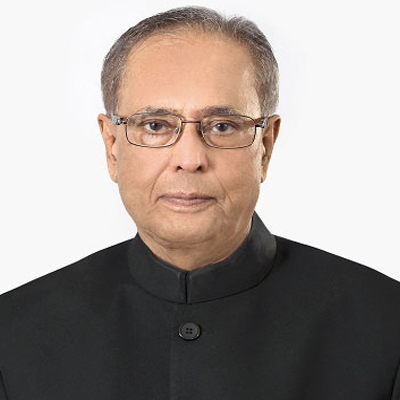
  • There is a need for self-correcting mechanisms in media: Pranab Mukherjee

    There is a need for self-correcting mechanisms in media: Pranab Mukherjee

    NEW DELHI: President Pranab Mukherjee today said there was need for self-correcting mechanisms to check ‘aberrations’ like the malaise of paid news in the media.


    Inaugurating the Platinum Jubilee celebrations of the Indian Newspaper Society (INS), the President said, “It is distressing to note that some publications have resorted to “Paid News” and other such marketing strategies to drive their revenues.”


    The temptation to “dumb down” news should also be resisted, he said, stressing that the nation faces critical challenges that go well beyond the pressure of ‘Breaking News’ and immediate headlines. While newspapers must continue to be effective raconteurs, they must also be visionary nation builders.


    But he said India’s ‘vast, varied and vibrant media is a national asset and the media as a whole not only keeps people informed but also performs a very crucial function of presenting ideas and alternatives in the domain of policy formulation and implementation.’


    The President said these are changing times and it is not possible for newspapers to be spared from the consequences of the evolution of ideas and the embrace of technology. It is essential for newspapers to be alive to the challenges of technology and to harness responsibly the opportunities that present themselves.


    He said the influence, credibility and quality of the Indian media is well recognised. Newspapers must be keepers of the conscience of the country. They have to be active participants in the continuing endeavour to nurture a democratic republic committed to achieving justice and fundamental freedoms for all citizens. Journalists must bring to public notice the array of ills and deprivations that continue to beset large numbers of our people – be it malnourishment, continuance of discriminatory practices against sections of society, particularly dalits, or the burdens and tragic consequences of indebtedness. They must shape and influence public opinion even as they provide objective and balanced coverage of news.


    He said the Indian Newspaper Society has over the years met the challenges of time even as it has represented the most influential of India’s newspapers and periodicals. “75 years ago, the world was a very different place. Newspapers of the time not only survived the shortages that war brought in its wake, but also engaged themselves in the difficult task of informing people of the momentous events of a contentious period in our history. It took resolve, vision and a sense of destiny on the part of the founding fathers to have formed a society that could take up issues of common interest for its members. INS members have played a vital role in nurturing a free Press which is a critical component of our democracy,” he added.


    The President stressed that over the years, INS members have informed society and promoted debate on the important questions that confront the nation. “Be it the ravages wrought by war or those inflicted by the man-made Bengal famine, the trials and tribulations of a nation torn by partition or the building of modern day India, newspapers have played a crucial role in educating Indians and giving expression to the diversity of views in our society, upholding thereby the fundamental right to freedom of speech and expression,” he concluded.