Tag: packaging

  • Nivea pushes face wash segment with refreshed packaging

    Nivea pushes face wash segment with refreshed packaging

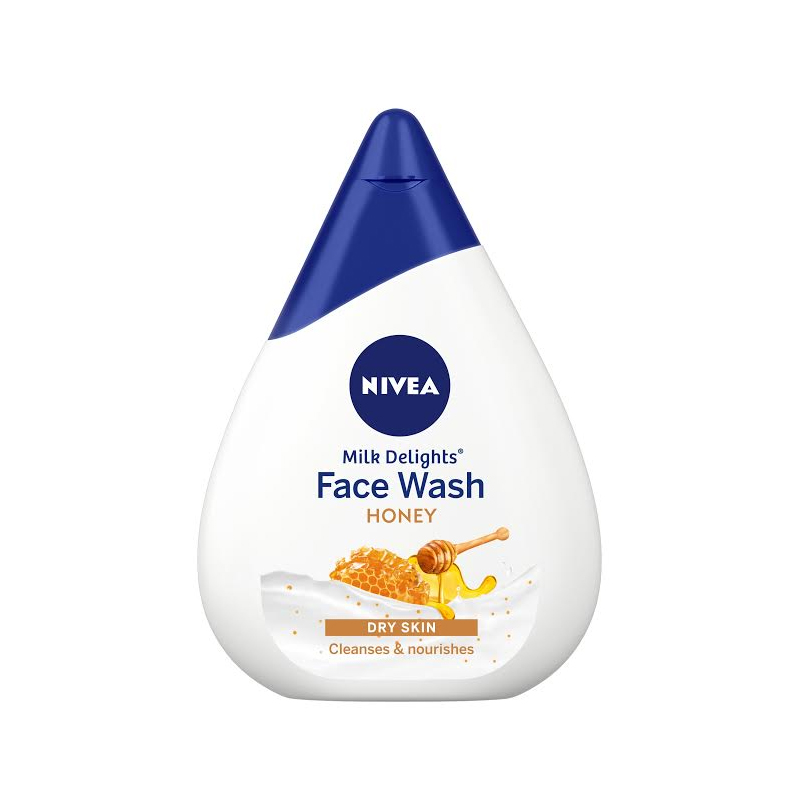
    MUMBAI:  Personal care brand Nivea is foraying into the face wash segment with its new range of Milk Delights Face Wash. With the launch of its latest campaign ‘Don’t Face Wash, Milk Wash!’ the body care label is encouraging consumers to not just wash their faces with generic cleansers but to use their product, enriched with the benefits of milk, for a natural healthy glow. 

    Milk is a natural cleanser that offers unmatched cleansing and keeps skin healthy and moisturised throughout the day. It is an ingredient that is traditionally revered for its healthy and nutritional properties. 

    Nivea’s Milk Delights range comprises four traditional variants: rose, besan (gram flour), saffron, and honey to address the needs of sensitive, oily, normal and dry skin with the goodness of milk and local home-remedy ingredients. The brand claims the product to be soap free, is pH-balanced, and suited for everyday use. 

    Adding another variant into the mix, the brand has also introduced the new Nivea Milk Delights Turmeric Face Wash. It has the goodness of milk combined with turmeric which helps reduce acne-causing bacteria.

    The new line of face washes is available in the market in a refreshed packaging and will be sold across India. The price of the product starts at Rs. 90.

    Nivea India marketing director Sachin Killawala said the brand has developed this range to suit every Indian skin-type.

    “A great cleanser is a one which has pH best suited to your skin. One such natural cleanser which has pH similar to your skin is Milk. We packed the goodness of milk into Nivea’s Milk Delights Face wash range, which cleanses the skin deeply to give you a natural healthy glow. With pH best suited to your skin Milk Delights Facewash isn’t harsh on your skin,” he said.

    German body care brand Nivea started its operations in 2006 in India. It recently forayed in the hand sanitisers segment during the lockdown after demand for the product went through the roof.  

  • Cadbury Bournvita Biscuits introduces new tiffin pack

    Cadbury Bournvita Biscuits introduces new tiffin pack

    MUMBAI: Mondelez India Foods is set to launch a new tiffin pack of its highly successful Cadbury Bournvita Biscuits with an aim to encourage consumers to make it a habit in the morning to have the biscuit.

    The company sees the morning snacking occasion as a big opportunity for a product that brings together taste and nutrition as Cadbury Bournvita Biscuits has been positioned as a purposive morning product that has the pro-health vitamins along with the goodness of Bournvita, a drink Indian consumers have loved for decades.

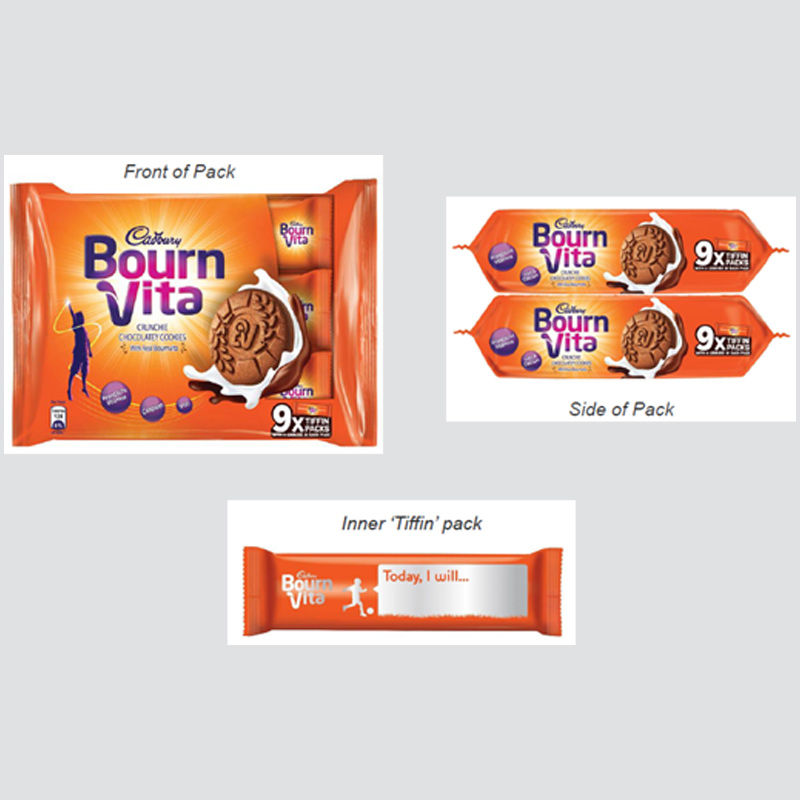
    The new tiffin pack aims to offer convenience, freshness and portion-control in serve size packs of six cookies (27.8) gm each, according to a company statement. The pack will have nine such tiffin packs.

    Cadbury Bournvita Biscuits is the company’s second brand in the biscuits category after Oreo, which was launched in 2011. Since its launch in April 2016, Cadbury Bournvita Biscuits has seen good response from consumers for its crunchy, chocolaty taste.

    Reinforcing its positioning of ‘Taiyyari Jeet Ki’, the inner tiffin packs come with a ‘Today, I will….’ section that allows mothers to write the pledge of the day for their children when they carry the pack for an out-of-home snack. The inner pack serves as a way to initiate a dialogue between mothers and children and for mothers to prepare their children for the challenges that the day brings along.

    Mondelez India Foods Biscuits India, marketing associate director Chella Pandyan said in a statement, “The morning consumption occasion is the single-largest consumption occasion for Biscuits in India. With the success of Cadbury Bournvita biscuits, the next step for us was to rollout the product in larger-pack sizes to further build on our play in the morning consumption occasion. We have also tried to build on a mother’s brand positioning of Taiyyari Jeet Ki (preparing for a win) through some interesting packaging innovation aimed at facilitating a fun interaction between mothers and children.”

    The tiffin pack has been priced at Rs. 60 and will be rolled out across India.

  • Cadbury Bournvita Biscuits introduces new tiffin pack

    Cadbury Bournvita Biscuits introduces new tiffin pack

    MUMBAI: Mondelez India Foods is set to launch a new tiffin pack of its highly successful Cadbury Bournvita Biscuits with an aim to encourage consumers to make it a habit in the morning to have the biscuit.

    The company sees the morning snacking occasion as a big opportunity for a product that brings together taste and nutrition as Cadbury Bournvita Biscuits has been positioned as a purposive morning product that has the pro-health vitamins along with the goodness of Bournvita, a drink Indian consumers have loved for decades.

    The new tiffin pack aims to offer convenience, freshness and portion-control in serve size packs of six cookies (27.8) gm each, according to a company statement. The pack will have nine such tiffin packs.

    Cadbury Bournvita Biscuits is the company’s second brand in the biscuits category after Oreo, which was launched in 2011. Since its launch in April 2016, Cadbury Bournvita Biscuits has seen good response from consumers for its crunchy, chocolaty taste.

    Reinforcing its positioning of ‘Taiyyari Jeet Ki’, the inner tiffin packs come with a ‘Today, I will….’ section that allows mothers to write the pledge of the day for their children when they carry the pack for an out-of-home snack. The inner pack serves as a way to initiate a dialogue between mothers and children and for mothers to prepare their children for the challenges that the day brings along.

    Mondelez India Foods Biscuits India, marketing associate director Chella Pandyan said in a statement, “The morning consumption occasion is the single-largest consumption occasion for Biscuits in India. With the success of Cadbury Bournvita biscuits, the next step for us was to rollout the product in larger-pack sizes to further build on our play in the morning consumption occasion. We have also tried to build on a mother’s brand positioning of Taiyyari Jeet Ki (preparing for a win) through some interesting packaging innovation aimed at facilitating a fun interaction between mothers and children.”

    The tiffin pack has been priced at Rs. 60 and will be rolled out across India.

  • CVNO Alert: Kolkata LMOs sign MoU with Meghbela

    CVNO Alert: Kolkata LMOs sign MoU with Meghbela

    KOLKATA: The Cable Virtual Network Operator (CVNO) in Kolkata is moving fast in order to meet its 15 December launch deadline. In the latest, more than 200 Kolkata based last mile owners (LMOs) have signed a Memorandum of Understanding (MoU) with city-based multi-system operator (MSO) Meghbela Cable & Broadband Services.


    The MoU, which will see Meghbela provide the infrastructure to the LMOs will be valid for 36 months.  


    “Yes, the MoU is signed and now based on this, we can initiate our work.  Around 205 LMOs have come together so far,” confirmed Cable Operators Sangram Committee general secretary Apurba Bhattacharya to indiantelevision.com.


    “Our brand name will be Meghbela, since the MSO is a DAS license holder. The watermarked logo of the MSO will also be displayed on the TV screen,” he further added.


    The nature of agreement is based on the Telecom Regulatory Authority of India’s (TRAI) regulations as well as on the demand and requirements of both the parties.


    The CVNO model, according to the LMOs will operate in all areas of Kolkata. “The MSO will levy a minimum price against every set top box (STB),” informed a LMO, who is part of the business model. 


    Talking on the cable TV tariff, Bhattacharya said, “While the package rates will be the same but the LMOs will have the freedom to allow discounts from their pocket to subscribers.”


    Meghbela Cable has already installed around 1.26 lakh STBs in Kolkata DAS I areas. While in places which fall under DAS III and IV like Haldia, Bankura, Arambagh and Hooghly, the MSO offers 9-10 lakh cable TV connections, majority of which is analogue.


    The CVNO model is set to empower LMOs to give their subscribers the choice of channels according to affordability.

  • Hathway’s googly; comes up with new Star packaging

    Hathway’s googly; comes up with new Star packaging

    MUMBAI: A month after Star India’s reference interconnect offer (RIO) deals came into effect in the DAS areas, multi system operator (MSO) Hathway Cable & Datacom has come out with its new pricing and packaging system.


    Hathway has been conducting meetings with operators in various areas, the last ones being in Aurangabad, Pune and Pimpri. As per cable operators, who were a part of the meetings, Hathway has said that it will be empowering and training the operators to run the business of collection from subscribers.


    Four new packs have been introduced. The first is the ‘Basic Pack’ for Rs 230 that will, along with other channels, have seven Star channels. These are: Star Plus, Life OK, Star Gold, Movies OK, Channel V, NGC and Star Pravah, for Marathi regions and Star Jalsha in Bengal. This will depend on the stronghold of Hathway in the states.


    The second pack is for Rs 289 and called ‘Popular Pack’. This will have, in addition to the above, a choice of one out of the two sports channels from Star Sports 1 or Star Sports 3. Both these channels show the same content in English and Hindi respectively.


    The third pack will be for Rs 349 and will have Star Movies, Star World, Movies Action and FX while the last ‘Premium Pack’ for Rs 419 will consist of an addition of its other niche channels such as Fox Crime, Nat Geo Music, Nat Geo Wild, Nat Geo People, Fox Life etc.


    Regional channels such as Asianet, Asianet Suvarna and Star Vijay have been kept out of packs and will be available on a-la-carte while all of Star’s channels will be available on a-la-carte as well.


    Hathway will embark on a big marketing campaign to inform viewers about this and viewers can immediately switch over to new packs. For now, the MSO is not disconnecting signals to its subscribers. 


  • “Star’s new RIO: The way forward for DAS”

    “Star’s new RIO: The way forward for DAS”

    The industry, even after the digitisation in phase I and phase II areas has not yet moved to complete addressability. Channels today are still being offered as a single bundle and negotiations have happened on one aspect only, and that is price. There is differential treatment of small and big operators. The concept of packaging has not been implemented yet and as a result of which the true benefits of digitisation have remained unlocked.

    In this scenario now, Star India has come up with a plan which has got everyone thinking. The new Star RIO promises flexibility to the operator to choose channels, and enables them to showcase channels as per consumer demand.  The offer for the distribution fraternity nationwide, is a single, transparent, non-discriminatory one – a standard offer that is open to all cable operators.

    The new RIO allows tiering of customers through a structure that does not push all channels in the base pack. Instead, it encourages operators to create packaging tiers based on consumer profile

    The network in order to align both the operators’ goal and its own aim has now come up with incentives, which allows discounts on all Star channels. The multi system operator (MSO), if agrees to take the incentives can get extremely high discounts on the base price of the channel.

    The incentive could also give benefits to the end-consumers. While currently, a consumer has to pay for all the channels, Star’s modified RIO enables the cable operator to offer his subscribers as per the customer profile / demand. This places the power in the hands of the consumers – they choose their required channel packages and pay only for those channel packages.

    The incentives, which vary for each channel, are non-discriminatory, pre-stated and available to all DAS cable operators. Operators are free to opt for incentives as per their discretion.

    The scenario now is that many MSOs have said they want to go with the old RIO and on an a la carte basis only.

    Indiantelevision.com speaks to Star India EVP distribution Krishnan Kutty on the whole Star RIO deal, the incentives and the reaction from the MSOs and distribution community on the new RIO deal.

    Excerpts:

    What are the salient points of the TDSAT order for your new RIO and MSOs? Are you happy with the order? Will you disconnect any MSO if it does not sign the new RIO?

    We are taking an unequivocal stand before the industry that we will behave in a completely transparent manner, which is why we filed the affidavit.

    Going forward, we will sign only the new RIO with all MSOs.

    We are attempting to create a structure which will lead to better choice for consumers, healthier overall industry economics and this a positive step towards the same.

    We believe the true value of digitisation will get unlocked for stakeholders including consumers, with this structure.

    In line with the TDSAT order, MSOs will have to sign the new RIO before 10 November, failing which we will be left with no choice but to switch them off. 

    Why do you think some MSOs are saying they will go with the old RIO?

    With anything new there will be a time of adjustment. A lot of the issues that have been raised is I think driven by a worry about the change. The change will need all stakeholders to make adjustments and readjust their business models moving forward.  We genuinely believe that this will lead to a far healthier digital ecosystem over a medium term.

    What are the issues Star India is facing in making the MSOs understand the incentive scheme? Why do you think they are facing issues with implementing the RIO?

    We have had positive discussions with a lot of operators and have been signing contracts at a steady pace.  I think the discussions that we have had in the context of this model have been the richest ones we have had for the longest time. It has been a genuine discussion about what is the best consumer offering to be created, what do consumers value and what should be the business design moving forward. There are of course concerns about the transition. Which we should all work towards solving.

    During a recent meeting of the MSOs, three crucial points were raised, that the incentives are unachievable and that there are technical challenges in meeting the RIO deal. What’s your reaction to all this?

    The scheme has been modelled on basis of the consumer demand for various Star channels; consumer profiling for each of the channels and the current economics of the cable industry. We believe the scheme is extremely realistic and achievable.

    As for the technical issues, one of the mandatory conditions of DAS implementation is that each individual consumer should be addressable – in essence, every MSO should be capable of administering changes in consumer account, including package/ channel addition or removal as required.

    DAS has been implemented two years ago, and we see no reason why there should be technical problems in implementing something which was to be done at the on-set of DAS itself. 

    MSOs are saying that the viewer’s cable bill will go up as now the MSOs will have to pay 100 per cent more to the broadcaster. Is this correct?

     We have already communicated to viewers that each of our entertainment channels are available like almost in the range of 30 paise per day, our sports channels are available like at around 50 – 60 paise per day. With the new incentives in place , these are likely to go down even lower. Compare this with the price that one has to pay for newspapers, or for a movie ticket or for attending a stadium for a live match.

    Then, why would the MSOs have to pay 100 per cent more to Star? Why would the cable viewer’s cable bill go up?

    Can you elaborate ways of creating packages, how your new RIO is platform-friendly, and how it will help MSOs to create viewer-needs-based offerings?

    It all depends upon the kind of packaging that the operator chooses to do.

    Typical Consumer Packaging Pyramid:

    Also in all this, how does a LCO benefit from the incentives that are being given to the MSO? Will there be talks between the broadcaster, MSO and LCO to ensure that the discounts are being passed at the LCO level as well?

    Star, as a broadcaster, has no direct role in the MSO- LCO deal/agreement. We believe that the key for both MSOs and LCOs is to establish the right value proposition for the consumers. This will be the key to the long term success of their business and we believe they will jointly drive towards the same.

    As a key stakeholder of the industry, we would be more than happy to help partner with both for truly unlocking the value of digitisation for all the stakeholders, including the end consumer.

    Do you think that if MSOs do not implement your new RIO fairly and do not inform their subscribers of the possibilities, it will cause viewers to move to DTH?

    We truly believe that ‘Consumer is the Queen.’ If not offered an appropriate value proposition (content & relevant pricing in this case) the consumer will opt for other service providers .

    We also feel that our new RIO will benefit all stakeholders, if  implemented fairly and in the true spirit of the offering.

    Why do you think are the MSOs opting for selling channels on a la carte basis only?

    We believe that many of the concerns are driven by the worry about change and how does it impact them and how will they transition into a consumer oriented model. We are confident that platforms when they give themselves time will come around and understand that this is for the long term health of the industry.

    While the leading MSOs have said that they would put all Star channels on a la carte, how have the independent MSOs and the newly formed cooperatives have reacted to the incentive scheme?

    We are happy to share that the independent MSOs have applauded the new RIO for its transparent and non-discriminatory offering sign-ups have already begun.

    How many deals have you signed from the time the TDSAT came up with its order? How many of these have opted for scheme?
    We have signed almost 33 per cent of the operators. About 10 per cent had already signed prior to the TDSAT order and will continue on those deals. Of the balance, all have opted for the new RIO incentive offering as it provides them with level playing field as well as flexibility to address their consumer’s needs.

    Star India CEO Uday Shankar had said that meetings will be held with MSOs in various cities to make them understand the whole system, is that happening? Which cities have you covered? Which is the next stop?

    We have had meetings with almost all the MSOs in the DAS markets, except the city of Vizag where we have had telephonic discussions with our customers. We have had one-on-one meetings to explain the new RIO incentive offering and its workings to all our MSOs.

    Star has said that the incentive system will be very transparent. But will the system be transparent to the extent of one MSO knowing the discounts the other MSO is getting by meeting all the criteria?

    This indeed and truly is a transparent system and Yes, one MSO can find out the discount that the other MSO will get by meeting all the criteria – A point to be noted is that, it’s uniform and non-discriminatory and hence the same yardstick applies to all MSOs, making it easy for them to establish and leverage their advantages by meeting all the criterias.


  • Focus Group changes channel packaging for more focus

    Focus Group changes channel packaging for more focus

    MUMBAI: Gearing up for a full fledged launch very soon, upcoming Hindi news channel Focus News has undergone a makeover. Dropping its earlier logo and colour combination, the channel has revamped with fresh colours of red and white.

    Ideated by JWT and executed by Clayground, the same logo format will be adopted for its other regional channels namely Focus Haryana, Focus Bangla, Focus Odisha, Focus NE and Focus Hi Fi, in the next two weeks. The on air look has also been changed, which has been done by an in house team.

    The new logo has the map of the world fitted inside the ‘o’. Speaking on the change, Focus Group CEO Neeraj Sanan says, “Red and white are the colours of news channels. We wanted a unique dimension with an interesting shade.”

    While the regional channels have been fully distributed, the national channel is currently available only on Videocon d2h, Tata Sky and from 1 November on DD Freedish. The group is awaiting its last leg of clearance from the Ministry of Information and Broadcasting for its satellite transfer request.

    Focus News is currently situated on Measat which makes it cumbersome while dealing with cable operators as it has to give a dish and IRD box for every operator. It is looking at shifting to Intelsat.

    Once the new satellite is confirmed, it will be available on cable platforms as well. Post getting its distribution fixed, the channel will embark on a marketing plan in the Hindi speaking markets. Sanan is aware that the channel so far has kept itself low on distribution with only a limited presence on the DTH platforms. Therefore the logo change will be noticed by most.

     “We are creating a brand for the future,” he concludes.


  • “Phase III and IV should be broken into three phases”: Ashok Mansukhani

    “Phase III and IV should be broken into three phases”: Ashok Mansukhani

    Having served as Indian Revenue Service Officer in the income tax department for 22 years, Ashok Mansukhani’s last government posting was as Doordarshan deputy director general (1992-96), during which DD metamorphosed from being a single channel broadcaster to a multilingual and multichannel regional entity reaching over 100 million homes in the country.


    Mansukhani’s association with the cable TV industry started in 1996 when he joined IndusInd Media and Communications Limited (IMCL), the media wing of Hinduja Ventures Limited (HVL), as director. Over the years, he became executive director and then president of Hinduja TMT before taking on the mantle of whole-time director of HVL.


    In his present capacity, Mansukhani is preparing IMCL for a future that is essentially about pay-per-view, video-on-demand and triple-play services, even as his contemporaries grapple with the initial phase of digitization. With his vision and experience, Mansukhani has also been appointed president of the MSO Alliance.


    In a t?te-?-t?te with indiantelevision.com’s Seema Singh, Mansukhani, who is just back from a week-long holiday, talks about the way the industry is moving in terms of digitisation, plans for IMCL, and the growing need for communication among its various stakeholders.


    Excerpts:


    IMCL underwent huge reshuffling a couple of months back. What was the reason behind it?


    There is a new digital era that has come in and the board and promoters may have felt that it would be good to bring in fresh talent, to get professionalism in the analogue regime as we transit to the digital era. And what has really been done is that a new team has been brought in that not only understands media but will be able to carry the media assets of the Hinduja group in the next 10 years. So, it is from that point of view that changes may have been made.


    The company recently got the licence for taking forward its Headend In The Sky (HITS) project. How far has the work progressed?


    Every possible step will be taken to meet the December 2014 deadline. There are certain permissions which are statutory in nature and which need to be taken. There could be perhaps a three to four week lag factor because of elections. But post 15 May, the process will get fast forwarded and personally, I would like to see it operational before the end of the year.


    Will HITS play a major role in phase III and IV markets? How will IMCL cope with these phases?


    Yes it will, because it is meant to really take advantage of the fact that in phase III and IV, there are hardly any MSOs that operate. But there are 6,000 independent operators and 60,000 LCOs and a majority of them are in phase III and IV. Now they will find it tough to meet digital regulations, quality of service norms, subscriber management system, conditional access systems and sourcing of STBs.


    It is a tough task for a small guy, but if he continues to be the proprietor of his network and is helped by a HITS platform to be able to supply high quality 300-500 channels in MPEG 4 capacity, then surely it will cause excitement. To add to it, it will be a prepaid model, having complete transparency.


    Yes, HITS will play a major role, but that doesn’t mean that Indigital will be left behind. From the group’s perspective, both will be developed and both are being developed.


    Incable exists in phase III, but not in phase IV. For phase III, there are already specific cities for which plans are being drawn up. Incable is also pioneering the concept of digital feeds, which is fibre optic based feeds. Because it may not make sense in a city like Udaipur to put up a digital headend of Rs 10 crore, but it may make sense to take a city like Bhopal and set up a headend and the rest of the state can well be served by fibre optic feed, because then the cost of transmission goes down.


    Incable anyways has thousands of kilometres of installed fibre optics of its own, which many others do not have. So we have the capacity and we will now utilize that. Even in phase II, we have digital feeds running through fibre optics. There have been regulatory issues like broadcasters having a different view, but our say to broadcasters is that in digitisation when every box is accounted for and every customer is paid for, then surely the mode by which we transmit should not be the problem of the broadcaster, but should be left to the MSO to work out the best cost effective model.


    Digitisation means that you can use a mix of both. Currently, fibre in India is to the colony gate and in the time to come, it will be to home and when that happens, there will be quadra-play. We will have cable telephony as well coming in, but these are far away, at least 3-4 years away.


     Will we see investments in IMCL as well by the group?


    IMCL is currently being funded by HVL through a preferential share capital based on its requirements for phase III and consolidation of phase II. IMCL will not suffer from shortage of money. That’s not the issue. The issue is that IMCL has to cope with change and with that change, whatever support is needed is available.


    SitiCable has launched local cable TV channels. Is IMCL treading that path? If you have to launch a channel, what kind of content will you have?


    We are the pioneers as far as local content is concerned. In Mumbai for example, we had In Mumbai channel which we started way back in 1995-96. It was operational for a couple of years and was very popular. It had a mix of news, local events, interviews and it was more of a city-specific channel. At one stage, almost every city that Incable was operating in had a local channel and even today there are local channels, but it has typically not been run by the company in the recent past, but has been run by people who had perhaps bought time on the channel or have agreed to share a part of their advertising revenue.


    So basically, they source the content and not the company, since our focus had shifted more on distribution. But today, with a fat distribution pipe being created and video on demand on the way, with two-way to happen with broadband, localization of content, in my view, has a strong public demand.


    It also helps in stickiness in terms of vast competition in MSOs and DTH. So at one stage, when In Mumbai was part of Incable, it was a reason that people stayed with us, because they wanted to watch it. Also we had In News which ran in five languages.


    Localisation, not on the Siticable model, but perhaps reviving the In Mumbai model, may take place.


    While news and sports are important, I feel localized content, like local events, regional events, festivals and community events, have been neglected. The vast progress that we have seen internationally is more of a mom and pop show in India.


    This area can undergo an upgrade, both in terms of quality and quantity. It is an interesting area to look at. Animation is again an interesting area that can be tapped.


    Content can be self generated, syndicated or can be brought in and then re-created. What we have seen recently is that there is enough competition in every sphere of television and yet there is scope. Therefore, our sister company in entertainment will look at it and take advantage. There are 30 million cable TV homes with boxes, another 100 million to follow. 2014 is an ambitious year. Even if we can achieve 50 per cent of this, there will be 80-90 million cable TV homes to tap. 24 hours of programming is needed. It is not easy to really supply that content, so perhaps it’s easier to create content or to source it and then re-purpose it for your own audience.


    The Telecom Regulatory Authority of India (TRAI) recently came out with its regulation on tariff rise in non DAS areas. How does it impact the business of MSOs?


    This simply means that the cost of television has gone up by 27 per cent. When the consultation had started, I had personally taken it up with TRAI and told them that the price shock, if it has to be given, must be in phases. It was expected and long due and in the long run, as long as packaging is sensibly done, a la carte channels are offered, it will benefit all the stakeholders.


    In the beginning, customers will be hit by the price shock, but after that, they will adjust.


    Time has come for MSOs to discipline themselves. The MSO today has to take a stand that it doesn’t make sense for a non-paying or a zero paying LCO to have the signal.


    Every change is resisted initially, but once it happens, things fall into place.  There is a need for more communication in the industry.


     When do you see gross billing starting in Mumbai for phase I? By when will digitisation of 38 cities in phase II be completed?


    There have been discussions and there are amendments in the entertainment tax acts, but the notification has not been issued as yet by the entertainment tax authorities. According to me, in whichever way gross billing has to happen, it will take a couple of weeks more.


    The 38 cities that comprise phase II should be completed by 30 June.


    When do we see packaging of channels taking place in phase I and II cities? Why is it taking so long? What kind of packages can one expect?


    The initial task of installing 30 million STBs was tough. Today, attention has shifted to packaging which will also be a function of the prices at which packages can be obtained from the broadcaster. There is disaggregation that will happen soon, which will lead to re-pricing of packages, possibly from July 1.


    Packaging has to be a joint exercise of broadcasters and MSOs. Currently, it is not. So that’s another aspect which needs to be kept in mind that at the end of the day, it is the product of the broadcaster and the distribution is ours.


    What if packaging teams were to be set up between MSO Alliance and IBF as an example? They could then get together and do a customer research and find out who wants to do what.


    New models for packaging need to come in. Why should I pay ‘X’ amount for sports throughout the year, when during the year, there will be only three times that we watch Sports channels,. So can’t we have variable pricing, say during the world cup?


    The second phase of digitisation will happen when the market will mature. And all this will happen in 2014-15 and 2016.


    DTH today has a much better hold on packaging, than the MSOs. Regional packages need great attention and especially for national MSOs. The need of a customer in Bengaluru is different from that of a customer from Gujarat. Packaging requires research and customer connect. The customer is being currently taken for granted and they do not like it.


    We still need to move to the CPS model and once that happens, the MSO can collect the money and pay the broadcaster. There are people who are still working with an analogue mindset in the digital era.


    One way is to sell the channels on an a la carte, the other way is to shrink the package and the third is to say that I will give you growth, but cannot give the growth you demand which has no relation with the actual size of my network.


    Why is there resistance from broadcasters, every time a new packaging model is suggested? 


    When status quo is disturbed, things change. Also when a particular channel is not available in a package offered to most, then the broadcaster may lose the advertisement support. But in time to come, we will move to a 50:50 regime, in subscription and advertisement.


    What is the impact of the TRAI regulation on disaggregation on MSOs?


    The regulation has given a great level playing field for independent MSOs like IMCL. So far, there has been clear favoritism towards MSOs who are owned by broadcasters and therefore, independent MSOs have had tough times or litigation times and that has taken away from further move to say digitisation. This is a welcome move and yet, sufficient safeguards have been given to the broadcasters. They have got 27 per cent tariff hike. The order should be accepted in the spirit. It is to increase digitisation and not to harm anyone.


    Are you looking at enhancing broadband services, like Hathway Cable & Datacom did recently?


    We have broadband services and that will be a key focus area in the years to come and what I personally look forward to is: pay per view, video on demand and triple play services. But these will take time. These services will be possible more in the prepaid era.


    We always have been operating broadband as we have the ISP licence.


    We don’t want to ape Hathway. They have their own focus point, we have ours. We want to develop digital best practices, keeping in mind what the customers want.


    How would you look at phase III and IV markets? Will Incable compete with HITS in these areas?


    It will be in phases. We will first concentrate on phase III, where we already have a reach, so we will see which cities to cover there. Then we have to decide which cities will be covered by the HITS platform. Which cities will have headend and which will have fibres. These are things that the IMCL management is working on.


    No, the two will not compete with each other, as the markets will be different. There could be synergies in best practices but not in market.


     Should phase III and phase IV of digitisation be taken at the same time? Do you think it can be completed within the deadline of December 2014?


    My view is phase III and IV should be broken into three phases. If it took two phases to do 30 million homes, how can one expect 100 million homes to be done in two phases? The statistics don’t work and then currently, there is no movement in phase III.


    While TRAI gave a start date for implementing digitisation, there is no need to give an end date. The regulator should incentivise those who digitise faster. Tax holiday or tax benefit or a better rate in terms of 42 per cent guideline of the Supreme Court, would work better than giving deadlines.


    Phase III and IV is huge and untapped. The industry needs to be recognised as a small industry. Also there is a need for bank financing, formation of cable cooperatives and associate ventures. This is the reason that IMCL has pioneered joint ventures which exist is smaller towns and cities.


    Dish TV launched its new Zing service in February; does it bother the MSOs in any way?


    90 per cent of cable TV homes in phase I and II remained with MSOs. While the customers may have switched MSOs, they largely stayed with being a cable TV home. And this, when everyone thought that DTH players will have a smooth walk in these cities. DTH is an expensive proposition.


    If DTH players think of launching something which is less expensive, it can lead to cannibalizing DTH itself and not necessarily an MSO. The MSO already has a sunken asset. We are just looking at stickiness of consumers and return on investment. Such moves will not affect MSOs.


    Post elections, there can be a regulation on the cable TV monopoly. Do you think that will impact MSOs?


    It may affect the regional MSOs, but not the national ones. These are proposals, but what comes out in the fine print will finally determine our way to look at it. I expect lighter facilitative and not restrictive regulations and I think TRAI is moving towards that.


    What are the biggest challenges for you today?


    The ability to harness the latest technology with the fastest way in which you can bring in specialty content at the cheapest possible cost in such a way that every member of the value chain is made happy with the money he retains after all taxes are paid is the real business plan challenge that industry needs to work on and which we are also working on. Ultimately, we should be able to run a profitable business.


    Do you see the ARPUs going up? If so, by how much, and when?


    The ARPUS will go up by 20 per cent in the next 12 months.

  • Bengaluru MSOs to start gross billing, packaging from April

    Bengaluru MSOs to start gross billing, packaging from April

    MUMBAI: The multi-system operators (MSOs) in Bengaluru are determined to do all that is needed to be in the good books of the Telecom Regulatory Authority of India (TRAI). The latest is that 12 MSOs met today in Bengaluru to discuss the status of consumer application forms (CAFs), gross billing, local cable operators (LCO) agreements and packaging to ensure compliance with TRAI regulations on digitisation.


    “This was a coordination meeting where we discussed about gross billing and also packaging,” informs a highly placed MSO who was present at the meeting.


    The group of 12 MSO will soon come out with a joint advertisement that will be published in Bengaluru newspapers and will inform the consumers about gross billing and packaging.


    The same was done in Delhi when the MSO Alliance jointly came out with an advertisement in local newspapers on the issue of gross billing.


    “We are looking at forming a joint committee in order to ensure that the guidelines set by TRAI can be followed,” informs the source.


    The timeline to start gross billing was also discussed in the meeting. “Gross billing in Bengaluru will start not later than April 2014,” informs Hathway Cable & Datacom MD & CEO Jagdish Kumar Pillai. Another important issue raised was that of the LCO-MSO agreement. “There were discussions on the revenue share for LCOs, the package rates etc,” adds Pillai.


    A Bengaluru-based MSO on the condition of anonymity informs, “The MSOs discussed on getting into a truce so that none of the MSOs infringe on each other’s subscribers. No decision has been taken on this though. The MSOs have asked for a couple of days to come to a final decision.”


    Another point discussed was that each LCO has to pay Rs 90 per subscriber per month to the MSO for using its services. “Discussions on packaging took place, which should be in place by April,” adds the Bengaluru based MSO.


    Earlier this week, Hathway, which has around eight lakh subscribers in the city, had switched off set top boxes of close to two lakh subscribers as they had not filled CAFs. “We had switched off 2.5 lakh STBs. This was to ensure that we comply with the TRAI guidelines,” concludes Pillai.