Tag: P. Chidambaram

  • India Today Conclave 2024 Mumbai is Back on 25th- 26th September, 2024

    India Today Conclave 2024 Mumbai is Back on 25th- 26th September, 2024

    Mumbai: The India Today Conclave 2024 Mumbai will feature a rich tapestry of influential voices from various sectors, reflecting India’s ongoing evolution amidst global challenges. India has demonstrated remarkable resilience and leadership in the face of dynamic disruptions, emerging as a confident and assertive global player.

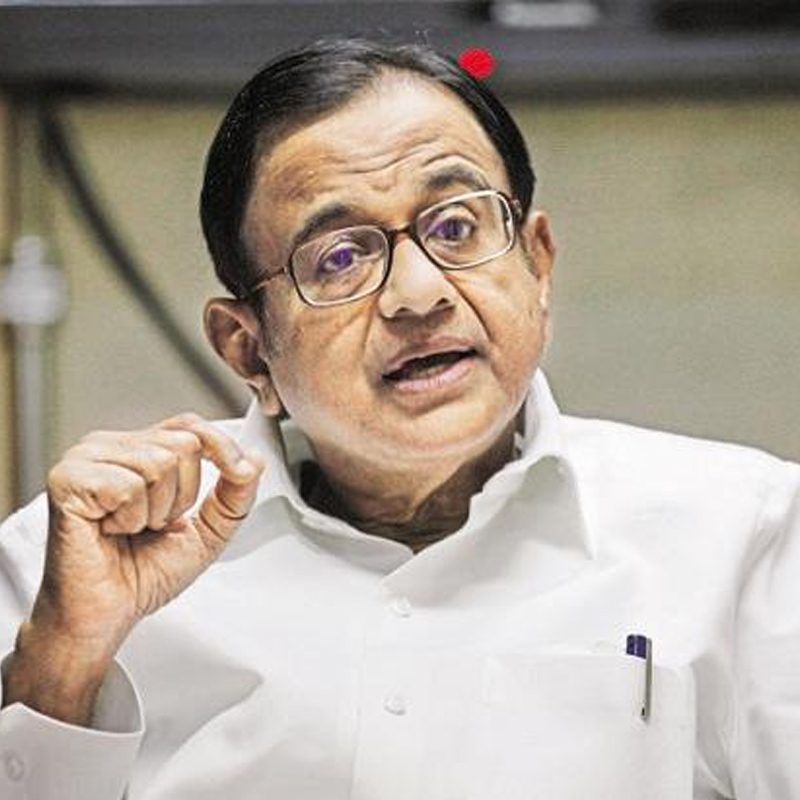
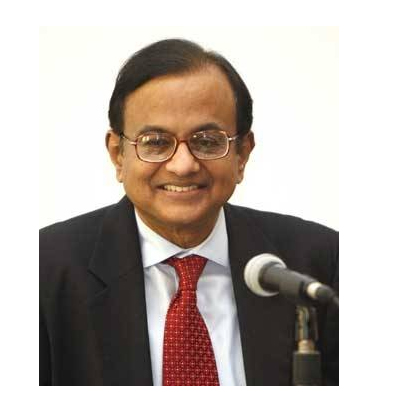
    Key distinguished speakers include Nitin Gadkari, Union Minister of Road Transport and Highways; Eknath Shinde, Chief Minister of Maharashtra; Chirag Paswan, Union Minister of Food Processing Industries; Devendra Fadnavis and Ajit Pawar, Deputy Chief Ministers of Maharashtra; P. Chidambaram, Member of Parliament, Rajya Sabha; and Aaditya Thackeray, President of Yuva Sena.

    Other notable speakers are Sri M, a Spiritual Teacher, Social Reformer, Educationist, and Author; Puneet Chhatwal, MD & CEO, Indian Hotels Company Limited; Darshan Mehta, President & CEO, Reliance Brands Limited; Saif Ali Khan, Actor; Manu Bhaker, Olympic Bronze Medallist; Kiran Rao, Producer, Screenwriter, and Director; Richa Chadha, Actor and Producer; Triptii Dimri, Actor; and Navya Naveli Nanda, Entrepreneur, Women’s Rights Advocate, and Podcaster.

    Register & Book your seat here- https://subscriptions.intoday.in/conclave/registration?utm_source=PR

    This assembly of key figures from politics, business, sports and entertainment is poised to shed light on the future direction of India’s position on the global stage.

    The list of speakers:

    Nitin Gadkari I Union Minister of Road Transport and Highways

    Eknath Shinde I Chief Minister, Maharashtra

    Chirag Paswan I Union Minister of Food Processing Industries

    Devendra Fadnavis I Deputy Chief Minister, Maharashtra

    Ajit Pawar I Deputy Chief Minister, Maharashtra

    P Chidambaram I Member of Parliament, Rajya Sabha

    Sri M I Spiritual Teacher, Social Reformer, Educationist, Author

    Saif Ali Khan I    Actor

    Gaurav Gogoi    I Deputy Leader, Congress Parliamentary Party, Lok Sabha

    Supriya  Sule I Member of Parliament (Lok Sabha), NCP—(Sharadchandra Pawar)

    Priyanka Chaturvedi I Member of Parliament, Rajya Sabha; Deputy Leader, Shiv Sena

    Milind Deora I    Member of Parliament, Rajya Sabha (Shiv Sena)

    Shambhavi Choudhary I Member of Parliament (Lok Sabha), LJP

    Tanuj Punia I    Member of parliament (Lok Sabha), INC

    Sasikanth Senthil I Member of parliament (Lok Sabha), DMK

    Sanjna Jatav I Member of parliament (Lok Sabha), INC

    Yaduveer Krishnadatta Chamaraja Wadiyar    I Member of Parliament (Lok Sabha), Bharatiya Janata Party

    Sunil Ambekar I Akhil Bharatiya Prachar Pramukh, RSS

    Aaditya Thackeray I President, Yuva Sena

    Ashish Shelar I President, BJP Mumbai

    Dr Raj Ragoowansi I Plastic & Aesthetic Surgeon

    Radhika Gupta I MD & CEO, Edelweiss Mutual Fund

    Naresh Arora I Co-Founder, Design Boxed

    Robbin Sharma I Founder Director, Showtime Consulting

    Meeran Chadha Borwankar I Former Commissioner of Police Pune and Chief of Crime Branch Mumbai

    Prabha Chandra I Senior Professor of Psychiatry and Dean of Behavioral Sciences, National Institute of Mental Health and Neurosciences

    Navneet Munot I  MD & CEO, HDFC Asset Management Company; Chairman, AMFI

    Manish Chokhani I Director, Enam Securities

    Puneet Chhatwal I MD & CEO, Indian Hotels Company Limited

    Darshan Mehta I President & CEO, Reliance Brands Limited

    Saurabh Kumar Sahu    I Managing Director & Lead – India Business, Accenture

    Savi Soin I President, Qualcomm India

    Rajendra Korde I President, Dharavi Redevelopment Samiti

    Rahul Shewale I Former Member of Parliament; Former Standing Committee Chairman, MCGM

    Manu Bhaker I Olympic Bronze Medallist

    Jaspal Rana I Asian Games Gold Medallist & Pistol Coach

    Avani Lekhara I Paralympic Medallist, Shooting

    Hokato Hotozhe Sema I Paralympic Medallist, Shot Put

    Navdeep Singh I Paralympic Medallist, Javelin

    Rakesh Chaurasia I Flute Maestro and Grammy Award Winner

    Kiran Rao I Producer, Screenwriter, Director

    Richa Chadha I Actor & Producer

    Guneet Monga I Producer

    Triptii Dimri I Actor

    Navya Naveli Nanda I    Entrepreneur, Women’s Rights Advocate, Podcaster

    Speakers: https://www.indiatoday.in/conclave-mumbai/2024/speakers
     

  • Karti told to move petition relating to INX Media in Delhi High Court

    Karti told to move petition relating to INX Media in Delhi High Court

    NEW DELHI: Karti Chidambaram, son of former Union Minister P Chidambaram, will have to go to the trial court or the High Court in Delhi with his petition seeking to quash a Central Bureau of Investigation FIR in a bribery case involving INX Media.

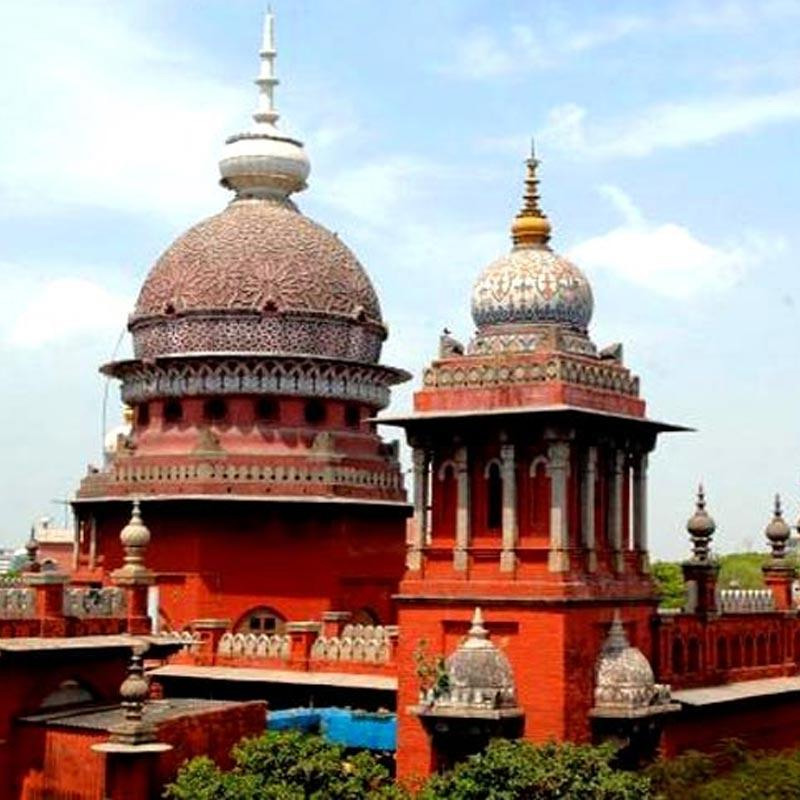
    The Madras High Court today said the case does not come under its jurisdiction and the Delhi High Court has territorial jurisdiction in this case.

    Karti had moved the court after a Supreme Court order asked him to appear before the CBI in its New Delhi office on 23 August, to help the investigating agency with its probe on the alleged kickbacks that his company, INX Media paid to get clearances from the Foreign Investment Promotion Board.

    Karti had told the Supreme Court that he is ready to appear before the agency today itself, but needs protection. While directing him to appear before the CBI, the SC told Karti to carry with him all documents necessary.

    The Madras High Court, in an earlier order this month, had stayed the Look Out Circular (LOC) issued against Karti and four others. The Supreme Court had later said that it would review the HC order cancelling the LOC issued by Foreigner Regional Registration Officer (FRRO).

    On 16 May, CBI raided the Chidambaram residence in Chennai, along with 13 other locations in New Delhi, Gurugram, Mumbai and Chandigarh. The raids were regarding a 2007 case in which INX Media had allegedly paid bribes to get an FIPB approval.

    While the clearance granted was only for Rs 40 million, the actual foreign investment was reportedly much higher. An FIR was filed against Karti, Indrani Mukherjee and Peter Mukerjea, who owned INX media.

  • TRAI jurisdiction: IBF plea dismissed, AIDCF impleadment decision on 22 Feb

    MUMBAI: Cable operators body may become interveners in the Item 7 case heard last Friday between television broadcasters and TRAI over tariff issues vis-a-vis international and Indian copyright laws in the Madras High Court. Indian Broadcasting Foundation’s plea to be heard in the case was however dismissed with leave to file fresh writ petition, if required. 

    After Star India and Vijay TV had moved the high court appealing against TRAI’s jurisdiction to draw guidelines over tariff and commercial matters where copyrights was involved relating to content, the regulator had moved the Supreme Court seeking succour.

    As far as AIDCF’s impleadment application and that of D2H are concerned, while the judges were convinced that the All India Digital Cable Federation, India’s apex body for digital multi-system operators, could be interveners, whether or not they could be impleaded will be heard in next hearing as, due to paucity of time, their submissions could not be completed. AIDCF president TS Panesar could not be reached.

    “There is no speaking order on AIDCF’s intervention yet,” STAR India’s senior VP – legal and regulatory Pulak Bagchi told www.indiantelevision.com. After Supreme Court hears the case on 20 February, it will come up in the Madras High Court, which will decide if AIDCF could implead or intervene, Bagchi said.

    The Madras High Court case has now been adjourned to 22 February for further arguments in the impleadment application. The judges also verbally indicated that their writ petition would be heard, and that, if impleaded, counters would need to be filed by AIDCF by 7 March. “We undertook to do so if impleaded,” an AIDCF representative told www.indiantelevision.com.

    As reported by www.indiantelevision.com on 1 February, 2017, MSOs had joined issue requesting the Madras High Court to hear their views too. AIDCF has sought to be impleaded in the case and urged the high court — hearing the Star India-Vijay TV case against TRAI over draft tariff guidelines — that, while disposing of the case, it’s viewpoints should also be heard and taken into account.

    Sources had indicated that the MSOs had moved the court as they apprehended the viewpoints of  distribution platforms of TV services in India, notably the MSOs, may not be heard; especially when they have views that don’t converge with those of the petitioners on all aspects of the petition.

    Industry observers had explained that the presence of distributors in the court made the case interesting as the IBF too had urged to be heard. The application of IBF however was yesterday dismissed by the high court with leave to file fresh writ petition, if required. www.indiantelevision.com could not reach IBF for comment and next strategy.

    However the apex court, while  directing TRAI that it could continue with its regulation-framing exercise and seek its nod before mandating guidelines, observed that the regulatory body should argue its case before the Madras High Court, declining to stay proceedings in the high court.

    The high court had asked TRAI to maintain status quo on tariff guidelines till full hearing of the case filed by Star India and Vijay TV. 

    With regard to the impleadment applications, Ar. L Sundaresan appeared on behalf AIDCF, Vijay Narayan appeared on behalf of D2H and A l Somayaji appeared on behalf of IBF. A counter-affidavit was filed by Vijay TV to AIDCF’s impleadment application. 

    Sundaresan made submissions in AIDCF’s impleadment application to which Chidambaram objected. The other senior counsel also made submissions in support of their respective impleadment applications which was also objected to. 

    P. Chidambaram appeared on behalf of one of the petitioners and P.S. Raman appeared for the other. They did not mention in which WP they were appearing in. And, P. Wilson appeared on behalf of the regulator TRAI. 

    Also Read:
    MSOs join issues with TRAI tariff plea at Madras HC

    Tariff order: Don’t notify without SC nod, TRAI told; Madras HC case to continue

    DAS Phase IV pace slack; MIB to meet Indian STB makers

  • CNN-IBN & IBN7 called the elections an hour before other channels

    CNN-IBN & IBN7 called the elections an hour before other channels

    MUMBAI: CNN-IBN and IBN7 concluded that the Nitish Kumar and Lalu Prasad Yadav led Grand Alliance was set to form the government in Bihar, an hour before rest of the TV channels. CNN-IBN and IBN7 had called the elections and declared that Nitish Kumar was set to retain power on the 8 November at 10:03 am.


    Both the channels were miles ahead of other channels in reporting the most accurate figures. By 9:30 am, while all channels were predicting a BJP win, CNN-IBN and IBN7 had already aired that the Grand Alliance was likely to win the elections. Network18’s extensive network of reporters who were present at every counting station all over Bihar tracked the trends and reported the same to the News Centre without any delay, thereby enabling the IBN Network to beat all other competing channels.


    Commenting on this, IBN Network CEO Avinash Kaul asserted, “At Network18 we always strive to give our viewers information that they can absolutely rely on. This is yet another example of how we as a news network have the right mix of reporters, anchors and experts, who have the acumen to understand the pulse of politics, analyze the ground reality and bring forth the most accurate news, faster than anyone else.”


    Former Union Minister P Chidambaram commented, “I must congratulate CNN-IBN for getting the results first and they got it just around 10am.”


    The former CM of Bihar Rabri Devi also congratulated the channels for declaring that they have won, an hour before the others.

  • Industry welcomes reduction of CENVAT on STBs

    Industry welcomes reduction of CENVAT on STBs

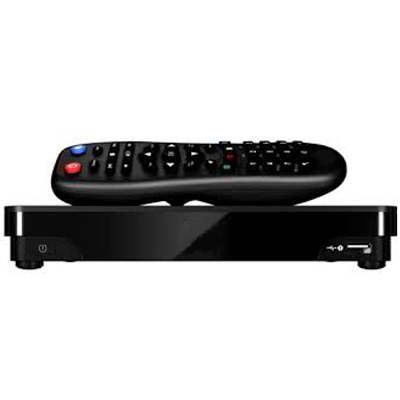
    MUMBAI: The Union Finance Minister P. Chidambaram in his Vote on Account speech in Parliament today announced a proposed reduction of excise duty from 12 per cent to 10 per cent on all goods falling under chapter 84 and 85 of the schedule to the Central Excise Tariff Act for the period up to 30 June, 2014. With effect from today, CENVAT on Consumer Premises Equipment (CPE) has been reduced.


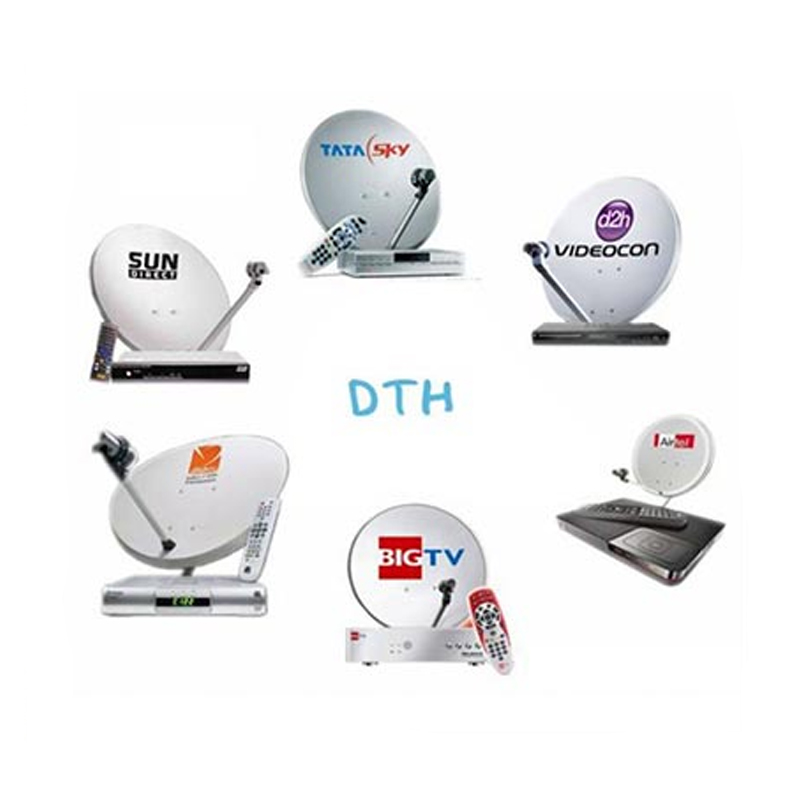
    The reduction in excise duty would be a great relief even to the DTH and TV industry. In fact, Dish TV welcomed the announcement as they hope this would give the DTH sector in India some respite from the levy of multiple taxes.


    The Direct to Home operator Dish TV which had been requesting the government to waive 12.36 per cent service tax till the rollout of GST and rationalise other taxes imposed on the DTH industry applauded the duty reduction move as its Set Top Boxes and other Consumer Premises Equipment fall under Chapter 85 of the Schedule.


    “This is a small relief. But any relief is welcome,” says Dish TV CEO RC Venkateish, further adding, “We still need to evaluate the reduction to be able to decide what it translates for the consumer and if they would see any reduction of cost for our services.” 


    Dish TV will evaluate the reduction in the next couple of days. “It is a highly taxed industry with dual taxation of entertainment and service tax. Major relief will be felt only if these two are reduced or one of them is eliminated,” says Venkatesh.


    “This reduction means that we will save some Rs 50-60 per Set Top Box (STB). So for a volume of say 2-2.5 million STB, we will save close to Rs 10-15 crore,” he informs.

  • Govt. to earn over Rs 61,600 crore from 2G Spectrum Auction

    Govt. to earn over Rs 61,600 crore from 2G Spectrum Auction

    NEW DELHI: The government is expected to earn about Rs 61,162 crore from the 2G spectrum auction that ended after 68 rounds of bidding over 10 days.


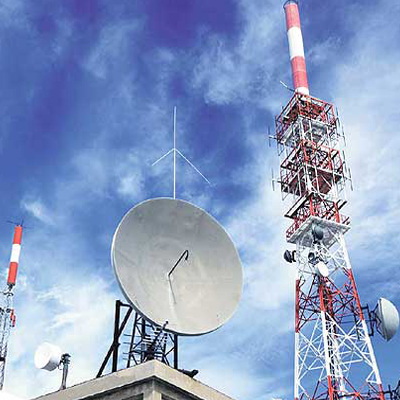
    Major telecom companies Airtel and Vodafone have bagged spectrum in the crucial 900 MHz band in important markets like Delhi, Mumbai and Kolkata.


    The government’s total revenue from the auction (which is provisional) is much higher than its initial estimate of about Rs 41,000 crore. The licences will be valid for a period of 20 years. The companies need to pay only a quarter to a third of the winning auction price upfront and the remainder by 2026.


    Telecom Secretary M F Farooqui said the government will get at least an estimated Rs 18,200 crore this fiscal, much higher than budget estimate of Rs 11,300 crore.


    With the government facing a huge budget deficit target for the current fiscal year ending in March amid a shortfall in tax collections and revenue receipts from divestment of stake in state companies, Finance Minister P Chidambaram will welcome the higher-than-expected revenues from the spectrum auction.


    Eight companies, including Bharti Airtel, Vodafone, and Reliance Industries, had applied to bid in the auction of 900 megahertz and 1800 megahertz band airwaves. The 900 megahertz band was auctioned only in three cities – Delhi, Mumbai and Kolkata.


    The stakes were especially high for Vodafone and Bharti which use 900 Mhz. They had to join the auction after the Supreme Court refused to extend their licences, which expire in November 2014. Idea too won spectrum in the 900 MHz band in Delhi.


    The Mukesh Ambani-backed Reliance Jio bagged 1800 MHz band in 14 circles out of the 22 on offer. This will help the company to not only offer data but also voice services in these regions. Reliance Jio had earlier won the rights to offer 4G broadband services across the country.


    In the 1800 MHz band, Airtel won in 15 circles, Vodafone in 10 and Idea in 11.


    Bidding for the 900 MHz band in Delhi, Mumbai and Kolkata was very aggressive, with Vodafone and Bharti Airtel forced to protect their turf. In Delhi, the winning bid was Rs 741 crore as against the reserve price of Rs 360 crore; in Mumbai, the winning bid was Rs 563 crore, while the reserve price was Rs 328 crore, and in Kolkata, the winning bid was Rs 195 crore vs a reserve price of Rs 125 crore.


    Bids for the 900 Mhz band run into higher sums as it is considered better quality spectrum which requires lower investment for telecom companies to set up infrastructure. In comparison, the 1800 Mhz band requires higher capital expenditure.


    The 2G spectrum had to be auctioned afresh after the Supreme Court ordered in 2012 the cancellation of 122 licences issued in 2008 by then Telecom Minister A Raja. The Supreme Court held that the process used by him to allot licences was “illegal” and ordered a new auction. Auctions in November 2012 and March 2013 flopped as most bidders stayed away from the sales, complaining that the floor bid prices were too high.


    The eight bidders applied to participate in the current auction after the government sharply cut auction reserve prices.

  • ET Now decodes the World Economic Forum at Davos

    ET Now decodes the World Economic Forum at Davos

    MUMBAI: ET Now will decipher the global trends emerging out of the World Economic Forum at Davos and its impact on the Indian economy and markets through its crisp and impactful series, Davos Direct, every night at 10 pm from January 21 to January 25.


    The special show brings exclusive interactions with the most prominent Indian policy makers like P. Chidambaram (Hon’ble Union Finance Minister), Anand Sharma (Hon’ble Union Minister of Commerce & Industry), and Montek Singh Ahluwalia (Deputy Chairman of Planning Commission). Also, the cr?me-de-la-cr?me of corporate India like Sunil Mittal, S.D. Shibulal, Uday Kotak and N. Chandrasekaran will discuss the nuances of India Inc.


    The event will witness a multitude of dignitaries from across the world who will engage in collaborative discussions which are directed towards this year’s theme ‘The Reshaping of the World: Consequences for Society, Politics and Business’. With a decade worth of experience featuring key path-breaking stories, Supriya Shrinate, ET NOW’s policy editor will present the developments at Davos as they unfold.


    Besides, ET NOW will also share exclusive insights by global thought leaders and economists like Joseph Stiglitz, Jeffrey Sachs, John Studzinski, John Rice, Stephen Pagliuca and Kenneth Rogoff on the revival of the global economy.

  • CASBAA & IBF request FM Chidambaram to roll back tax hike on tech services

    CASBAA & IBF request FM Chidambaram to roll back tax hike on tech services

    MUMBAI: The Cable & Satellite Broadcasting Association of Asia (CASBAA) and The Indian Broadcasting Foundation (IBF) have requested the Indian government to roll back the increase in taxation on royalty and fees for technical services in the hands of a non-resident as proposed in The Financial Bill 2013.

    In a letter addressed to finance minister P. Chidambaram, the two associations have stated that Section 115A of The Income Tax Act, 1961, levies gross taxes of 10 per cent on royalty and technical services. The latest proposal by the finance ministry proposes to take this up to 25 per cent. Along with surcharge and an education cess, the effective rate comes to 27.037 per cent. When grossed up with other related levies, it will actually amount to 33 per cent, they say.

    Their letter to the finance minister points out that the proposed increased levy will have an impact on the Indian and international satellite and broadcasting sectors as the services they provide come under “royalty and fees for technical services.”

    India has constrained satellite capacity and it is highly dependent on foreign satellites. A recent study has shown that international satellites are providing roughly 60 per cent of the broadcasting capacity for India’s satellite DTH broadcasters.

    The associations have reiterated in the letter that international satellite operators will per force have to pass on the increased operational cost to their Indian broadcasting and other clients, as their margins are not fat enough to absorb the impact of higher taxation. DTH operators, broadcasters who deliver channels to India’s 90 million cable TV homes and cable TV operators will also in turn, then pass on the increased costs on to their subscribers. The cascading effect could be substantial, the two associations warn.

    “We believe that a good tax policy should aim at moderate rates, particularly in industries providing an engine for India’s growth. An increase to the levels proposed in the bill would be counter-productive; it would affect not only the operators providing satellite services, but a whole host of related sectors – including broadcasting, media, telecommunications and IT, which have been spearheading India’s growth story in recent years. Hence the increase should be rolled back,” the letter highlights.

    It concludes by saying that “any future increases that might be considered should be phased in, with a transition period of at least five years, to allow taxpayers time to plan ahead and to avoid any one-off uplift which could force the closure of some small operators.”

    Will the finance minister give a kind ear to Casbaa & IBF?

  • Exemption of service tax to be limited to films exhibited in cinema halls

    Exemption of service tax to be limited to films exhibited in cinema halls

    NEW DELHI: The Government has decided to limit the benefit of exemption of service tax to films exhibited in cinema halls.

    Finance Minister P Chidambaram today said in his Budget speech for 2013-14 that he had accepted a request of the film industry in this connection.

    He pointed out that at the request of the film industry last year, full exemption of service tax was granted on copyright on cinematography.

    The Film Federation of India had in its memorandum to the Finance Ministry said that cinema theatres and digital distribution should not be subjected to service tax for Business Support Services.

    However, film industry sources said that they had expected more concessions in view of the fact that this year marks the centenary year of Indian cinema.

    Among other things, the Federation had appealed to the Government that entertainment tax imposed by states and local bodies should be subsumed in the proposed Goods and Services Tax (GST).

    The FFI said that the service tax on performing artistes should also be done away with. It was also demanded that the condition on filmmakers to fill a form under Section 52A of the Income Tax Act for all payments above Rs 50,000 should be confined to only cash payments.

    The Federation said the sale, distribution or exhibition of cinematographic films, not regarded as royalty under 9(1)(vi) of the Income Tax Act 1961, is nullified as it is not available under the Direct Tax Code 2010. As it is not regarded as royalty, it does not attract the 10 per cent with-holding tax under Section 194J of the Act. It had, therefore, said an amendment should be made to exclude this from the Code.

    Another demand was that exemption to digital conversion – and supply to cinemas – may be put in the Mega Exemption List.

    Film industry welcomes exemption move

    Film industry organisations today welcomed the benefit of exemption of service tax to films exhibited in cinema halls but felt that the Government had not taken note of the problems being faced by the film industry at a time when it was marking a centenary of Indian cinema.

    Film and Television Producers Guild of India president Mukesh Bhatt in a telephonic interview regretted that Chidambaram had not considered digital distribution of films for exemption. He said the government should realise that digital distribution is helping curb piracy of films and is, thus, helping the government earn in entertainment tax and other taxes.

    Exemption should have been given to all sectors relating to film exhibition and distribution, he told indiantelevision.com.

    Film Federation of India President Bijay Khemka told indiantelevision.com that while the industry welcomed the exemption of service tax to films exhibited in cinema halls, he wondered why the Minister had said the tax exemption would be ‘limited’ to this sector only. He said the Federation had in its memorandum to the Finance Ministry said that cinema theatres and digital distribution should not be subjected to service tax for Business Support Services.

    However, both Khemka and Bhatt felt that they would be able to say more after seeing the Finance Bill.

    Meanwhile reacting to the partial relief to the film sector, Ernst and Young Tax Partner Rakesh Jariwala said: ‘Partial relief for the film sector as the non-theatrical revenues of a movie are now brought back in the tax net. Producers and distributors will be able to recover a portion of their input credits with this change, thus mitigating a portion of the adverse impact created by the complete exemption granted last year.’

    He said for non-film business, impact of removal of exemption to copyright transactions will have to be measured in terms of eligibility of the service receiver to take credits.

    He said however that the question of double taxation of transactions in intangible rights (between service tax and Value added tax) remains unanswered.

  • Budget: Customs duty on imported STBs doubled

    Budget: Customs duty on imported STBs doubled

    NEW DELHI: The government has decided to double the customs duty on imported set-top boxes (STBs) to ten per cent, a move set to encourage domestic manufacturers but to have immediate consequences on prices and possibly hurt multi-system operators (MSOs) and DTH companies.

    The government feels that domestic production of STBs would get a stimulus even as implementation of digitisation spreads across the country.

    Finance Minister P Chidambaram said in his Budget speech for 2013-14 that the aim was also at value addition in the sector.

    With the first phase of digitisation having commenced in the metros (barring Chennai where it is held up by a court case) on 1 November last year and the second phase of switch-off of analogue signals scheduled for 31 March, the country is facing acute shortage of standardised STBs and has to depend on imported boxes.

    The Information and Broadcasting Ministry had last month urged the Finance Ministry to remove the anomaly between imported and indigenous STBs.

    Countdown had commenced in late November for the second phase covering 38 cities in 15 states.

    The Ministry had issued a notification on 11 November 2011 notifying Phase-wise digitisation of Analogue Cable Television Networks in India.

    The aim is to digitize the cable sector in the country by 31 December 2014. The target date for completely digitising cable sector in cities with population of more than one million is 30 March 2013, all urban areas by 30 September 2014, and the whole country by 31 December 2014.

    For the second phase, the 38 specific cities and areas which have been listed in the notification are – Bangalore, Hyderabad, Ahmedabad, Pune, Surat, Kanpur, Jaipur, Lucknow, Nagpur, Patna, Indore, Bhopal, Thane, Ludhiana, Agra, Pimpri-Chinchwad, Nashik, Vadodara, Faridabad, Ghaziabad, Rajkot, Meerut, Kalyan-Dombivali, Varanasi, amrtisar, Navi Mumbai, Aurangabad, Solapur, Allahabad, Jabalpur, Srinagar, Visakhapatnam, Ranchi, Howrah, Chandigarh, Coimbatore, Mysore and Jodhpur.