Tag: Out of home industry

  • Local, corporate & digital is Kinetic India’s OOH plan

    Local, corporate & digital is Kinetic India’s OOH plan

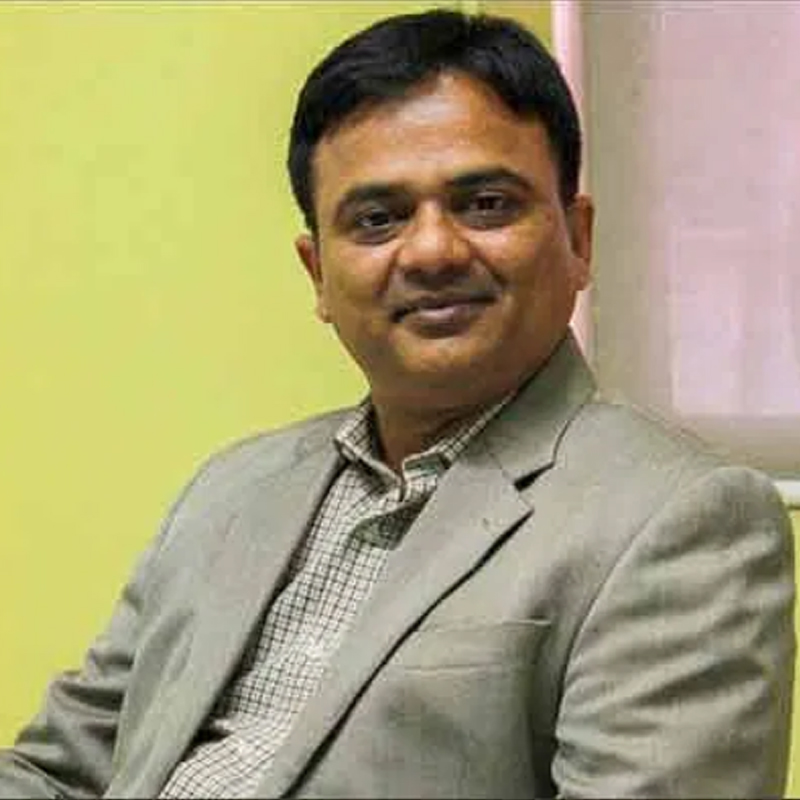
    NEW DELHI: The Covid2019 pandemic seems to have hit some industries harder than others, including events, experiential and out of home (OOH). The OOH industry saw a good year in 2019. According to the FICCI-KPMG report, the industry witnessed a growth of five per cent to reach a size of Rs 34 billion. Kinetic India managing director Ajay Mehta says that the unlock phases have seen over 149 new clients coming back to the OOH space.

    He says that during lockdown the conversation has become localised such as residential areas (high-rises with digital OOH), the local kirana store, the nearby grocery and retailer, etc.  “Very interestingly from 1 June onwards – data shows that grocery impacts exceeded pre-Covid2019 numbers.  This can be attributed to changed buying behaviour exhibited by audiences.  Post-July, we are seeing increased traffic on the roads and this is being recognised by advertisers and a few large-scale campaigns have started or are starting,” he adds.

    As India continues to battle this grim pandemic – Kinetic India is focussing its medium-term on five pillars. “We call it LoCDAT which stands for local – corporate – digital – airports – tier 2/3,” Mehta highlights.

    Explaining the five pillars, he shares, “Localise your campaigns – focus on hyperlocal targeting in and around the residential areas, which will continue to remain the key focus. As workplaces continue to open and people return to corporate offices they will gain an enhanced prominence in the new-normal as they are a unique touchpoint to connect with usually hard to target audience. Digital OOH – which has the highest reach for targeting 25-45-year olds across China will see greater investments in India as well.  Moving towards the programmatic for digital OOH will be critical for this medium to deliver ROI – which continues to remain largely missing in the traditional OOH space.”

    Advertisers, including FMCG, automobile and BFSI, have used the medium heavily during the pandemic. “The FMCG industry has seen the launch of over three dozen new products during this lockdown period in the cleaning and disinfectant category amongst others. Personal mobility has assumed prominence with car brands back on OOH with long-term investments.  BFSI with products having guaranteed returns is also present on OOH. Media brands are also back in a meaningful manner,” says Mehta.

    Mehta shares that the months of June-July generally witness a seasonal dip on account of a few brands fearing increased costs due to flex tears due to the monsoons.  He says: “However, the brands which decide to be present on OOH during this period are able to achieve an enhanced share of voice and cut-through.  However, it is heart-warming to see the rate at which clients are coming back to OOH since the declaration of Unlock 1.0. Multiple notable brands with contextualised creatives and success stories on OOH have shown the way for other brands to emulate.”

    As consumer habits have had a sea-change during this COVID2019 pandemic, the company expects mass brands to focus on OOH across the length and breadth of India. “As tier II and III cities open up faster on account of a lower Covid2019 infection rate, multiple brands especially in the FMCG, insurance and mobility (including four and two-wheeler) space are making their presence felt on OOH. Apart from these other categories like media including OTT, home improvement, mobile handsets, computers,” he shares.

    The industry in the past has suffered due to a lack of unified measurement system, but lately many big players have invested heavily to bring transparency. Kinetic India had recently announced IOM (India on the move), an in-house developed tool which understands the audience traffic pattern and helps in designing sharper targeting audience with minimised spillover.

    “The moot point today is that clients are demanding ROI more than ever.  Every investment is put under the scanner. IOM on a very simplistic platform helps our clients clearly understand the efficiency being delivered for their campaigns. It analyses multiple data points to track traffic movement across road, rail and air. This ensures a data-based approach to decision making. It is based on pre and post-Covid2019 numbers and helps establish a baseline to allow the client to calibrate their OOH investments,” Mehta emphasised.  

    “For this tool, we have focused on transparency and multiple available data sources for preparing our tools.  What is proprietary is the thought and execution that goes behind it.  We have used mobility data, transit data to derive a systematic measurement system that provides a real-time understanding of the on-ground audience scenario,” he concludes. 

  • OOH to reach 50-60% of last year’s billing by festive season: Laqshya Media Group’s Atul Shrivastava

    OOH to reach 50-60% of last year’s billing by festive season: Laqshya Media Group’s Atul Shrivastava

    NEW DELHI: Remember those hoardings from a few days ago, which led to much curiosity and speculation across Delhi and Mumbai?  FMCG brands including Maggi, Cadbury Dairy Milk, Red Label Tea and Amul Lassi put up hoardings that read: “#13thKiTayyari Kijiye. __ Stock Kar Lijiye” with each brand telling people to stock its product. It was Laqshya Media that executed the campaign for Zee TV's upcoming shows. 

    Laqshya Media Group is one of the largest comprehensive marketing communications group In India functioning primarily in outdoor, events and digital ecosystem. The group was praised on social media for its latest campaign with Zee TV.

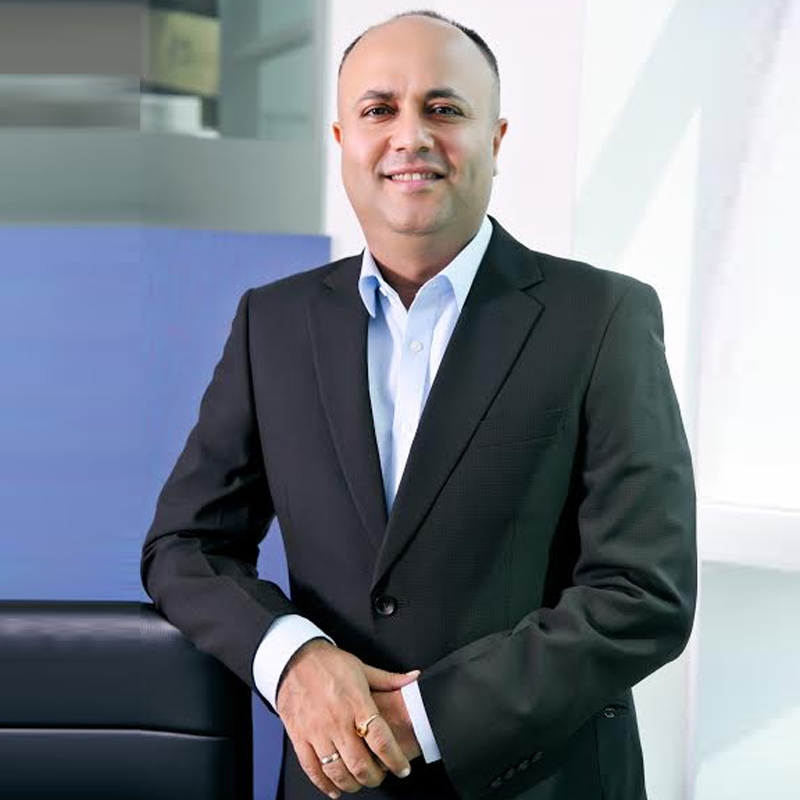
    While there is no denying that the whole world is reeling from the major upheaval caused by the Covid2019 pandemic, the OOH industry has taken the maximum hit. In a candid conversation with Laqshya Media Group CEO Atul Shrivastava shared about the company's revival plan and more.

    Edited excerpts:

    With unlock 2.0, have you witnessed an uptick in the OOH industry? 

    We have already received queries from brands waiting to resume advertising – particularly those who had long-term contracts with us and had put their campaigns on hold. We are also seeing demand from regional brands who rely heavily on OOH for advertising.

    We are anticipating a healthy rebound during the festive season, extending to the end of the calendar year. Since several brands have a huge inventory pile-up, they will be looking at liquidating that inventory during the festive season. And sales are very much dependent on visibility and marketing.

    What has been the impact on the out-of-home media industry?

    As the easing phase has begun, we have regained our sites (from the government’s Covid2019 awareness campaigns) and advertising has started.

    The March-June 2020 quarter saw an estimated 20 per cent of the previous year’s billings. If there are no further restrictions from the government, the sector will see a revival during the festive season. It is expected to reach 50-60 per cent of last year’s billing by that time.

    What is your plan on revival? It seems the next 6 months will also be grim? 

    Our plan on revival has been in the works since day one. Our team has been dedicatedly involved in deep market research. We have created research reports that were focused on OOH’s revival. We have analysed which sectors were going to invest in OOH advertising once the lockdown was over. In addition, we did a lot of consumer research. We studied aspects like – will people take public transport or private? Are people going to buy gold? Which products will people buy more? Are people only thinking about buying essentials? What was their food eating patterns and are they willing to eat out after lockdown?

    The aforementioned questions helped us to sketch a figure of our potential client base. Apart from rigorous research since the initial days of lockdown, we worked on brand building and PR activities.

    This helped us in carving a niche and helped us in deepening our already existing niche in the market. We, as a team never paused during the lockdown.

    It is understood that to overcome the current landscape some hardcore strategies are required. The next six months are crucial for us. We are working on connecting the dots, doing market research, reaching out to the potential clients who are working to start business immediately and keeping a track on people who are up for buying.

    How drastic is the impact on ad rates?

    Advertising rates for OOH inventory have declined. Since fewer people were on the roads, advertisers were unwilling to pay the same rates as they were in January and February. Brands were certainly looking for discounts. Ad rates for the next quarter will continue to be challenged for a little longer.  However, we are not reducing the rates of super-premium displays that have exceedingly high visibility and demand, too.

    How much uptake do you foresee for inventory at metro stations, suburban stations and shopping malls?

    Even though the government has initiated a phased opening of markets, people may be hesitant to visit them. For the next three months, demand for ambient media will continue to be muted.

    Footfall in malls that have opened in cities like Bengaluru, Hyderabad and Noida has been about 10 per cent that of pre-Covid2019 numbers. Therefore, media owners are focusing on occupancy, rather than looking for better ad rates in places like malls.

    Sites inside metro stations are still off since the services are not functional, but outside branding of stations is already making a difference. Since brands have begun showing interest in airports, even though airlines are not running at full capacity, we expect similar demand for inventory in metro and local train stations when operations resume.

    Which categories are going to be back on OOH? 

    We expect all sectors to come back and embrace OOH now that the country has embarked on the unlock phase. Many brands like Apple, Vivo, Asian Paints, Kotak, etc., have already started and are gaining first-mover advantage. Our research study stated that more than 84 per cent of consumers across our metros will notice OOH as much or even more after the lockdown period and that they will reduce the consumption of conventional media, post lockdown.

    A few categories that gained prominence during the lockdown are going to be bigger spenders on OOH. For example, e-commerce firms and digital payment gateways have greater demand now. We are also expecting a surge in advertising from manufacturers of two-wheelers and entry-level cars.

    While OTT video streaming platforms were booming in terms of consumption during the lockdown, we expect a slowdown in OOH advertising from this category over the next few months because they are out of fresh content. However, we are expecting them to return with a bang soon.

    Mobile phone brands that used to be fixtures on hoardings in and around airports, continue to advertise even now. However, real estate brands, which were also keen on airport display, are hesitant. Since airport media is priced at a premium, brands may take longer to return.

    With domestic air travel slowly picking up are you gearing up to resume advertising at airports?

    Air travel is seen as the safest mode of travel at the current times. With the opening up of domestic flights, brands are looking to quickly re-engage with their high-value customers. The time spent at airports has increased with not much to do once they reach the airports. So, advertising at strategic locations, like at the entry gate, waiting areas, etc. will ensure greater visibility and brand recall. Airports are an important medium, especially since the use of DOOH is more here. So, more investments at airports will garner greater benefits for the agencies.

    What is the big shift you have witnessed during the lockdown? 

    Our transformation from an OOH to a multi-media conglomerate has followed a carefully coordinated strategy of delivering the most optimised consumer-contact solution to our clients by combining digital, OOH and experiential. Another exciting transition has been the transformation of business models within the media verticals that we operate in. In order to make our OOH and experiential offerings more interactive, we added a digital marketing company to our network, which gives us the bandwidth to offer our clients an unbeatable offline-online combination. Though the current situation is challenging, our events teams have created and conducted large-scale online seminars and performance-arts events which have been well received by some of our blue-chip clients. It creates an opportunity for us to give a bundled offering to our clients, which is unique and distinct from what any other media company is offering in India.