Tag: OTTV Kids

  • Challenge of crafting characters in Indian animation

    Challenge of crafting characters in Indian animation

    MUMBAI: For most animation producers and distributors, the art of creating content strategy and research is what’s keeping them up at night. But a few of them say that a formulaic approach should be rejected in this category.

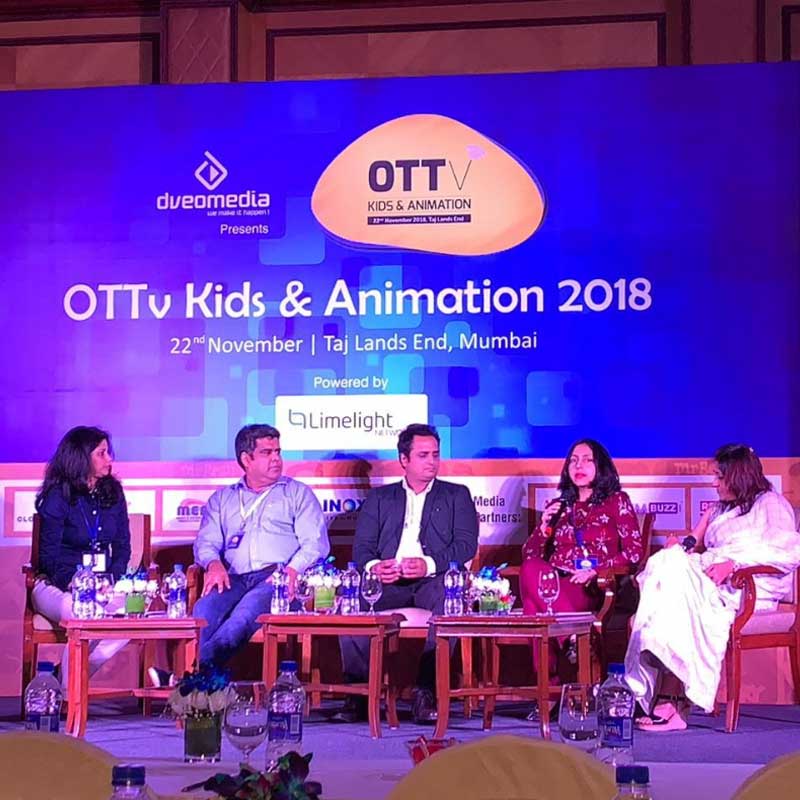
    This topic was taken up at a panel discussion at the OTTv Kids and Animation summit – The challenge of crafting stories to groom, educate and entertain. On the stage were Ka Kha Gaa founder and animation screenwriter Vivek Shukla, children’s author, lyricist and screenwriter Pooja Lulla, Inox Leisure CMO and filmmaker Saurabh Verma, Sesame Workshop India head business development and marketing Mona Singh. The session was moderated by OTT and media platforms content and creative strategist Deepa Singh.

    A special keynote was given by Viacom18 SVP content head kids cluster Anu Sikka on the local IP creation journey of the Indian kids' entertainment category. She raised a point on the Indian animation segment lacking the quality of storytelling and animation when compared to what the world is producing. To this, Shukla said that we lack seriousness, not talent. “People don’t take our writers seriously. The other thing is what kids want and their psychology for characters to look like and be funny,” he said.

    Following the same, Verma explained that the business of content creation is so easy and hence it is difficult. “I pitch a lot of ideas and the person sitting on the other side has a fixed mind about a certain character that they want us to create for them. If we pitch stories like Doraemon and Shinchan, the over thinking of the studios and the platforms will never make the characters happen. So there has to be someone who should believe in our ideas. The other thing is, if the client doesn’t like any idea, we never get any feedback for the same as to why they didn’t like our idea,” he said.

    According to Verma, the other aspect of business in entertainment is film and TV. On the one hand, a film is a serious business to put in a lot of energy and on the other hand, TV is controlled by a lot of other people; every episode is controlled by TRPs.

    Talking about the basic requirements and the key factors to be taken into consideration, Lulla said that characters are crucial for the structure of the story. They take the story forward. Then what matters is the setting of the story. Also, the timing and location influence your character majorly. The message is also very important like Stan Lee conveyed the iconic message that with great power come great responsibility through Spiderman.

    Adding to this, Verma said that emphasis should be laid on purity of the character, not merchandising. “Christopher Nolan took up the flawed character of Batman and added vulnerabilities and emotion. We shouldn’t create characters based on researches. The whole system of research is flawed, to begin with. We should reject the formulaic approach,” he said.

    Furthermore, Mona Singh said that children learn best from the characters they relate to and the banters that they can understand. “So when you ask us, what are the key factors, then I would say we have Indian characters, but we are intentionally evolving our own characters because they are global citizens and have access to all kinds of content.”

    Lastly, the session was summed up saying that storytelling is not a problem, ROI and the mindset is a problem.  

  • Reality shows: Kids’ personal lives come into focus

    Reality shows: Kids’ personal lives come into focus

    MUMBAI: Children-based reality shows or talent-based shows are gaining in popularity in India. But do they leave behind unwholesome after effects on the little contestants?

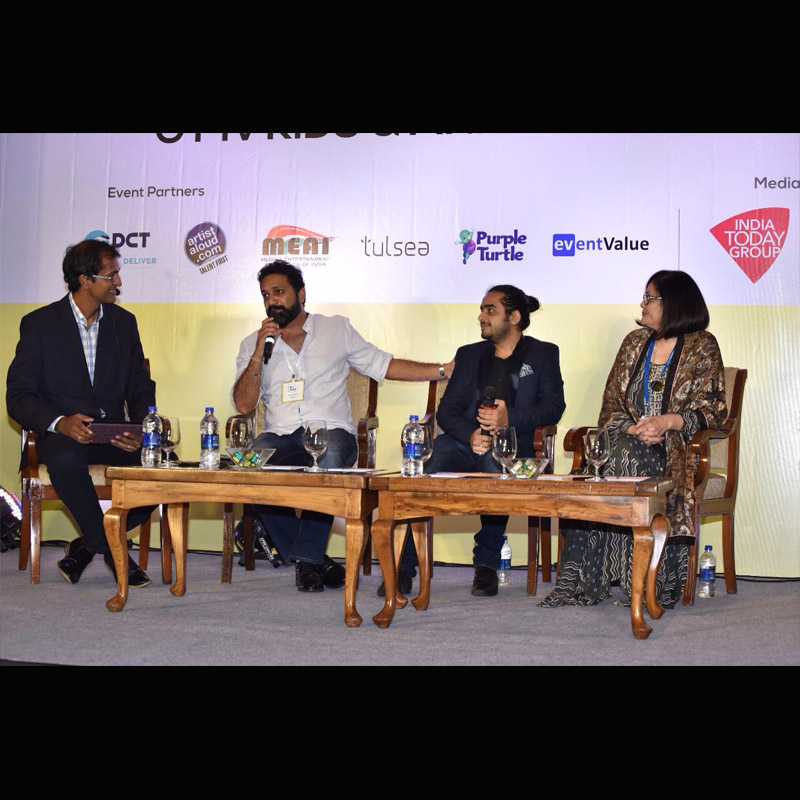
    Exploring this question at the OTTV Kids & Animation 2017 on 22 November were Frames co-founder Ranjeet Thakur, singer and musician Abhas Joshi, Billabong High International School – Santacruz principal Kusum Kanwar and moderator Dveo Media CEO Deepak Ramsurrun. They spoke on the topic ‘Do kids’ reality shows have more negative than positive impact on participants & young audiences.’

    Thakur has been producing reality shows for years and stated that they have remained the same as the talent-based shows that have been on TV since always.

    Joshi, who has been on shows like Sa Re Ga Ma Pa in 2004 and Jury’s Choice Voice of India, feels that shows today have changed since the last decade. Though the shows start off with the motive to promote talent, within a few episodes, the focus shifts to unravelling the personal lives of contestants. This also leads to bias in votes for those with interesting backgrounds.

    Kanwar agreed with Joshi’s views and admitted, “Children get a talent platform but after that are we scaffolding them. Do we have a cushioning for them to understand the success and failure that comes with it? I guess we are not doing that.” She revealed that there have been instances where kids skip studies in favour of these shows. She added, “Today reality shows are catching the emotional side of the audience for TRPs and other reasons.” Clarifying that she is not against the competition but when children realise that certain shows are scripted or the outcome is known, it eventually becomes difficult for a child to cope with that. Counsellors should guide children about both the positive and negative sides of these shows.

    To counter that, Thakur said that channels comply with government rules and have a psychologist, dietitian, nutritionist and doctors on the sets 24X7. He added, “We make sure that parents are around the children and that they are rested and given enough help and support from counsellors, psychologists and parents. We do not shoot for more than 10 hours a day.”

    However, Kanwar, said that channels’ focus on ‘star’ parents also adds to their experience of fame and they start living in a virtual world. “In the class, we have to treat them in the same way as others but due to this the kid’s curriculum and everyday interaction suffer. So, it’s misleading and a dichotomy actually.” Her school has a team of five counsellors and special educators to get the children back into reality.

    Sharing his experience from 2004, Joshi said it wasn’t so glamorous then. But today, kids become popular at a young age and get into the professional world, minting money at an unfair age. This leads to a change in their attitude and they leave the grooming part behind which can eventually end their careers in four to five years.

    Thakur has travelled to the smallest of towns in search of talent and found how gifted children don’t have opportunities. These children have the chance to turn their family’s fate. “We have seen positive impacts on various families across the country,” he said.

    Sticking to her point, Kanwar countered that while changing the fate of the family, kids have gone through a lot of pressure of earning money. She strongly felt that kids should be told and shown the career path after they complete their 10th or 12th standard education.

    She pointed out that kids are made to do unimaginable things such as flirting with a female judge six times his age on a show recently, making it difficult to bring back their innocence. Thakur agreed that drama is inserted in reality show to make them look ‘cool’.

    The panel concluded with stating that parents need to keep children grounded while reality shows need to have proper management methods to not negatively impact children.