Tag: OTT

  • Future will belong to those who can create compelling content: Raj Nayak

    Future will belong to those who can create compelling content: Raj Nayak

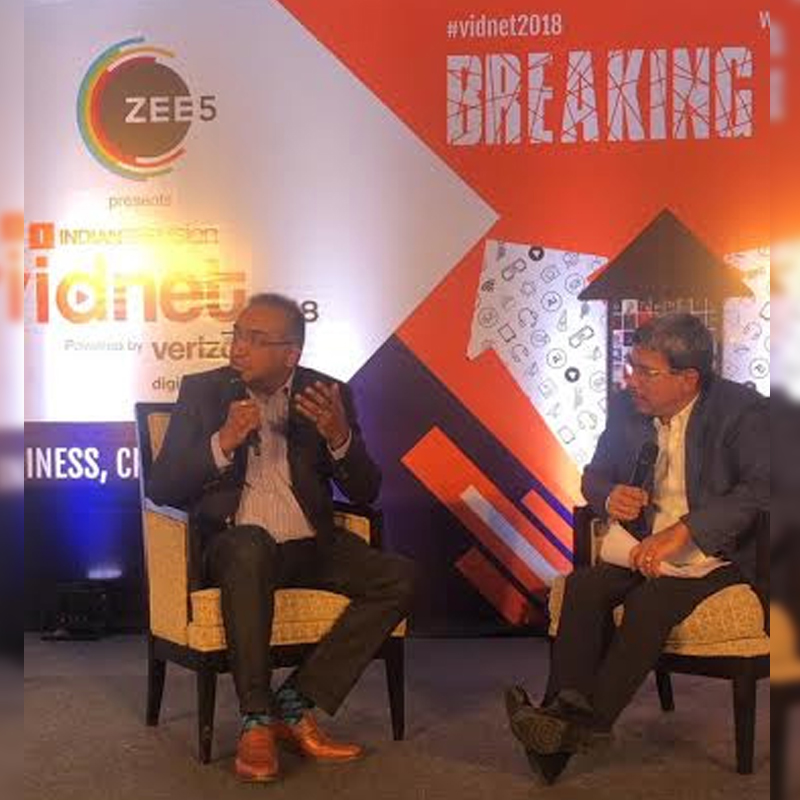
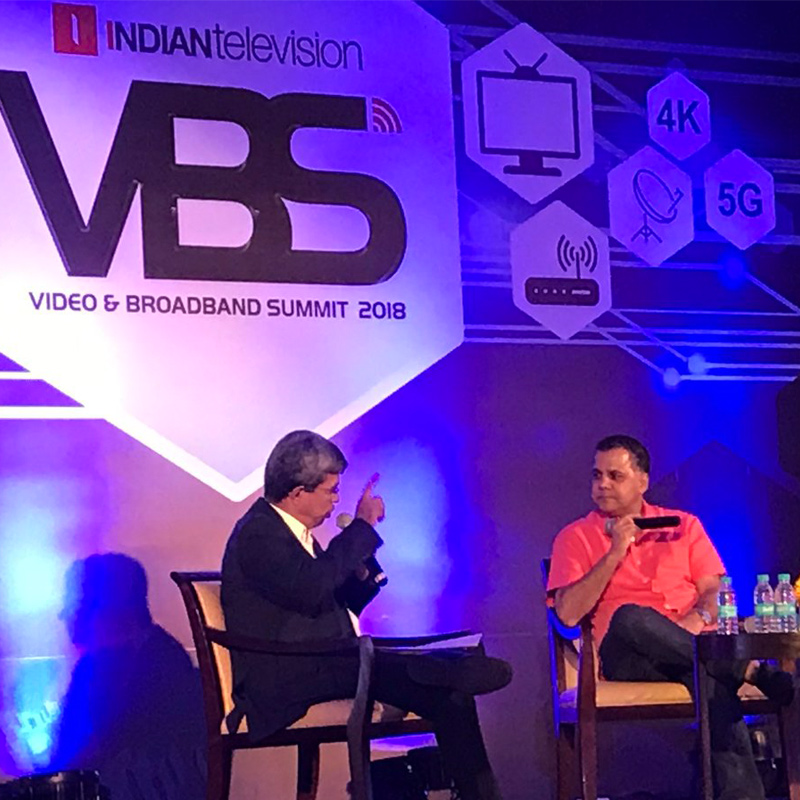
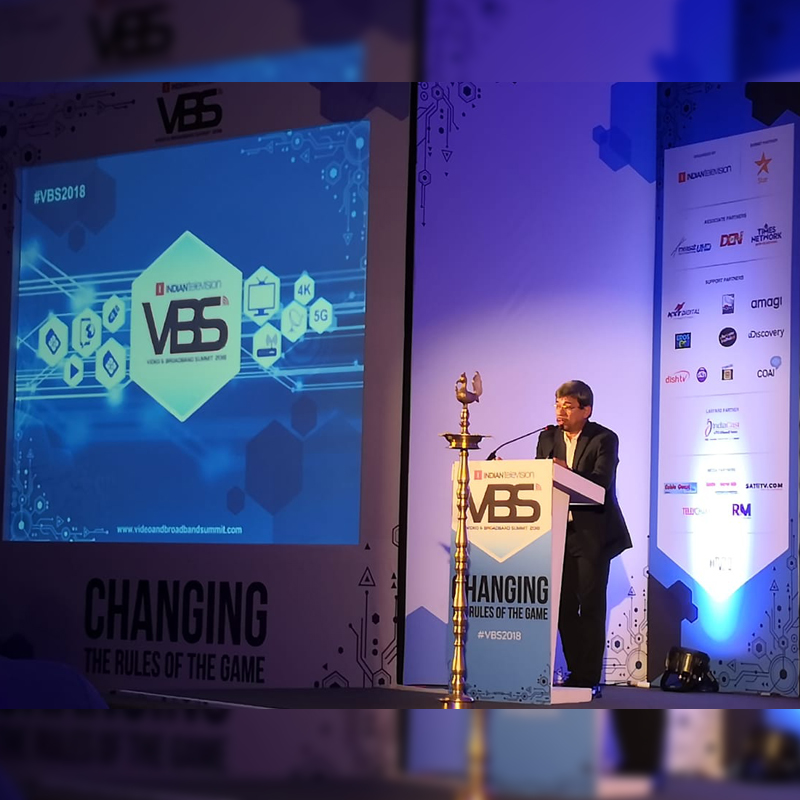
    GOA: He’s known as the risk taker who has never been afraid to experiment. After thirty years in the media industry out of which a whopping 26 years have been dedicated to the TV broadcast sector, exiting Viacom18 COO Raj Nayak is grateful to the media business for where he finds himself in life at the moment. Speaking at Indiantelevision.com’s Video and Broadband Summit 2018 in a freewheeling chat, Nayak revisited key chapters of his journey, his best memories at Viacom18, and commented on the nature of today’s media industry and its future.

    In a fireside chat with Indiantelevision.com founder, CEO and editor-in-chief Anil Wanvari, Nayak in his usual witty and cheerful demeanour captivated the audience with insights and learning from his stellar career. The media maven described his rollercoaster ride from Star TV to NDTV and then the shift into entrepreneurship to finally settling into the corporate world of Viacom18 as exciting.

    Answering Wanvari’s question about his evolution as a professional, Nayak shared how exciting it was to join satellite television from print media back in the 90s. He considers himself lucky to be at the right place at the right time. However, joining the TV industry then was considered a wasted opportunity until the satellite boom, he added.

    He further went on to say that the future will belong to those who can create content that is compelling because the challenge on the distribution front will eventually disappear. So, everybody will find a way to get their product out but there will be a taker at the end of the pipe only if it is compelling.

    The experienced professional said broadcasters got so used to making same patterned shows at Rs 8-10 lakh budget that it took Amazon and Netflix to come to change that habit. The quality of content has to go up now, he feels.

    According to him, linear TV has to change its style of narration and content. He cited the example of how ratings and viewership for individual shows are going witnessing a decline despite the increase in overall viewership. However, he is quick to add that the change is happening faster.

    “Content cost is going up, it’s not going down, it’s going up across broadcasters. I know of a broadcaster who tried to change that by restricting producers’ budgets but they lasted for not more than six months and now they are spending money more than ever,” Nayak said.

    The admirer of “Subhash ji” (Essel Group chairman Subhash Chandra) while talking about distribution repeats what Chandra said 20 years ago that if the content is king then distribution is God.

    While his seven and a half years at Viacom18 comprised of several landmark moments, he shared the ones closest to his heart with the audience. Nayak spoke about 24 which was a trendsetting show, Naagin and changing the time slot of Bigg Boss to 10.30 pm as defining moments of his tenure.

    “One of the things I was very happy to do and had the freedom and opportunity to do is a variety of content. We are the only channel in India who did so, where nobody expected to do we did the recordings of Yuvraj Singh when he was in cancer and Zindagi Abhi Baaki Hai,” he added.

    “Whatever I have achieved is because of this industry. If you don’t give back to the industry that has given you so much, I think you are doing a disservice,” the passionate veteran commented. He also named Star’s Uday Shankar and ZEEL’s Punit Goenka as leaders who he admires.

    Nayak says he draws motivation from the media industry and how it has evolved, given birth to so many entrepreneurs, created millions of jobs and helped individuals build glorious careers. The entry of Facebook and YouTube has made the system more democratic creating more opportunities, Nayak believes. Although, the absence of a common industry voice upsets him.

    “I can guarantee no one of you has watched more than three per cent of Netflix content yet you subscribe. House of Cards changed the trajectory of the game for the streaming service. Sacred Games increased the subscribers. All you need is 2-3 golden nuggets and that’s enough to change the whole dynamics of your business,” Nayak said.

    Sharing his vision for the industry in the next five years, he is certain that OTT will go big. But he also adds that from an ad sales model, monetisation will be a challenge so companies need to promote the SVoD model. Nayak also feels that TV will also continue to grow as big screen experience is never going to lose its charm. TV will turn into a box with Facebook, Google and everything available on it, Nayak predicted.
  • VBS 2018: Media & entertainment industry leaders address pressing issues on Day 1

    VBS 2018: Media & entertainment industry leaders address pressing issues on Day 1

    GOA: Rapid advance in technology and infrastructure, entry of disruptive forces and changes in consumption habits have led the Indian media and entertainment industry to major conversion. The interesting developments are attracting international players to invest in the market, with traditional domestic players adopting new strategies for growth. Where the industry is heading in the next few years is something everyone wants to know.

    To seek answers for several concerning questions, Indiantelevision.com brought together industry doyens on the first day of the Video and Broadband Summit. The conference dedicated to industry issues has been supported by esteemed broadcasters, technology companies as well industry bodies. All the speakers agreed that the VBS platform is the perfect stage to discuss relevant issues as well as to gain new insights while sharing their experience.

    Indiantelevision.com founder and CEO Anil Wanvari set the tone for the day with his welcome speech. He spoke about how demonetisation and GST put pressure on business in last couple of years. He also highlighted how the burgeoning OTT industry is throwing new challenges to traditional TV, cable and DTH operators along with the new tariff order that is likely to reshape the trajectory of the sector. He also added how a disruptive force like Jio FTTH is fueling the transformation.

    The first session moderated by Anil Wanvari was about the future of digital delivery platforms where Tata Sky chief content officer Arun Unni, PwC India partner Raman Kalra and One Take Media founder and CEO Anil Khera participated. As the influence of video and broadband has become unmistakable now, Tata Sky recently rolled out a broadband service. While he was asked about how it stands out, Unni said customer centric nature of the business makes their service different. While broadband and telco players are throwing a challenge for distribution, Khera thinks India still has potential for DTH and cable growth owing to almost  90 mn households still unpenetrated by TV. Kalra said while pay-TV and OTT platforms will stay together, there will be a constant battle among players to stay relevant to consumers with proper content.

    In a fireside chat with Anil Wanvari, COAI director general Rajan Mathews spoke about various issues in the telecom industry. He said consumer choices are changing rapidly today, hence the model which is working at present, may get disrupted in future. He also spoke about the high cost of utilizing satellites in the country despite them being produced and launched at very low cost. Talking about 5G, he said it will take a while to be rolled out and added that it would be focusing on education, health, traffic management, smart cities and agriculture.

    Anil Khera who has now ventured into the value-added service space after spending considerable time in the DTH industry, explained the importance of this vertical and how DTH players are utilizing it.

    Another engaging session where audience also took an active part in the discussion, was about monetising TV in times of transition. ZEEL chief growth officer Ashish Sehgal, KMPG India media and entertainment partner and head  Girish Menon and TAM India CEO LV Krishnan spoke on the issue. “Only thing TV can't do is engagement which digital platforms allow but you cannot build your brand without TV,” Sehgal made a very important comment.

    The eventful day ended with a fireside chat between Viacom18 COO Raj Nayak and Anil Wanvari. Nayak shared glimpses of his inspirational journey in the industry and Viacom18 where he was the brainchild of several successful endeavors. Talking about the future, he said it will belong to those who can create content which is compelling. Moreover, he also said content cost is not going down but it's going up across broadcasters. Giving the example of Netflix’s change of fortune with House of Cards, he added that for changing the trajectory of the business, delivering two-three golden nuggets every year are enough.

    For more insights stay tuned for the updates from the second day of video and broadband summit 2018!

  • Dish TV’s Jawahar Goel writes to TRAI on rationalizing DTH costs, taxes

    Dish TV’s Jawahar Goel writes to TRAI on rationalizing DTH costs, taxes

    MUMBAI: Even as the Indian government is readying a new DTH policy, aimed at providing some succor to the financially beleaguered sector, Dish TV MD Jawahar Goel has written to the broadcast and telecom regulator TRAI exhorting it to rationalize costs and taxes being levied presently on the operators.

    “With regard to our request for allowing deduction of the subscription amount paid to the broadcaster for determining the DTH license fee, it is stated that DTH services operators have been regularly appraising the TRAI and MIB [Ministry of Information and Broadcasting] on the matter of the heavy cost they have been incurring for the provision of the services,” Goel points out in a recent letter.

    According to the communication, reviewed by Indiantelevision.com, Indian DTH operators not only pay taxes to the tune of 33 per cent, but also cough up around 30- 35 per cent of their revenue as content cost. There are huge investments in subsidizing the consumer premises equipment to the consumers of which the STB being the major component, the letter states.

    Pushing for a major reduction in annual license fee to 6-8 per cent of the gross revenue of an operator, Goyal, who had earlier too bemoaned neglect of the sector by the government, contends that the principle of application of license fee on the adjusted gross revenue (AGR) should be similar to what is done for the telecom sector.

    “The AGR in case of DTH service should mean total revenue as reflected in the audited accounts from the operation of DTH, as reduced by (a) subscription fee charges passed on to the pay channel broadcasters (b) sale of hardware including integrated receiver decoder required for connectivity at the consumer  premise, [and] service/entertainment   tax  actually  paid to  the  Central/State  government  if gross revenue had included them,” Goel argues in his missive to the regulator.

    This is not the first time that the feisty Goel has fired salvos at the government and the regulator. Not only has he raised issues pertaining to the DTH sector, but has also voiced his concern on general matters relating to the Indian entertainment and broadcast sectors as Dish TV and its other siblings have had to grapple in recent times with lackluster economy and government apathy.

    In an effort to garner more support from the regulator, Dish TV highlights that a consultation paper on the DTH sector prepared by TRAI had acknowledged the satellite platforms needed a level playing field vis-a-vis cable operators who paid no license fee. “The DTH services are subjected to multiple taxation, which inter-alia includes service tax @ 12.36 per cent, entertainment tax at different rates by State governments and VAT@ 12.5 per cent. In addition, if license fee @10 per cent is also added, the cumulative taxation would come to a significant amount, which leads to high incidence of levies and taxes for DTH service[s],” Goel contends.

    “Since the Government is in the process of finalizing the terms and conditions of the new DTH license, we would sincerely request you [TRAI] to kindly issue necessary recommendation to the government of India in this regard before such terms and conditions are laid down”, Goel concludes making a case for rationalization of taxes on DTH operators, especially as new content delivery techs like OTT invade Indian shores.

    Meanwhile, sources in Ministry of Information and Broadcasting (MIB) tell Indiantelevision.com that the much-discussed new DTH policy is being given final touches before it’s sent to the Cabinet for approval.

    “Ideally we would have liked to send the new DTH policy to the Cabinet for approval within 2018 itself, but various government processes, like getting feedbacks from various ministries, could push finalization of the policy to early 2019,” a source in MIB said, adding the government is likely to provide some relief to the sector, though major reduction in the license fee seems unlikely.

  • Content is not a commodity you can win with price war: Sameer Nair

    Content is not a commodity you can win with price war: Sameer Nair

    MUMBAI:  He’s been in the television space during its golden age, worked with leading broadcaster Star India and production house Balaji Telefilms and witnessed the changing landscape in the Indian media and entertainment industry. Media veteran Sameer Nair is now looking at new age content for streaming platforms as Applause Entertainment CEO.

    At the stage of Vidnet 2018, the Aditya Birla Group chairman Kumar Mangalam Birla’s content studio CEO spoke on the state of the industry, Applause Entertainment’s plans in a fireside chat with Indiantelevision.com founder, CEO and editor-in-chief Anil Wanvari.

    187 million cable homes have made TV very powerful and matured, according to him. In addition to that, now the country has got around 500 million mobile phones leading to a flood of screens everywhere. As people are glued to these screens more than ever using in some way with a massive change in consumption habit, this creates an opportunity for everyone to be in the space.

    “I come from a time where we used to have people watching 4-5 hours of television a day. It’s probably down to an hour. But in the meantime, people are finding more time on screens to consume all sorts of content. So, I think the number of hours spent, time spent, is bound to grow. If you are able to do different things, it’s a good time to be in this space,” he commented.

    He saw the industry at a time when TRP was the benchmark to measure the success of a show. Now those days are gone when 10,000 boxes spread across India tried to tell what 600 million people were doing. The emergence of data gives much more accurate consumer feedback which Nair thinks is also “scarier”.

    Though there is no foolproof formula for success in this business, Nair thinks one should start making content with a reasonable understanding of market and audience. Moreover, working with focus groups of few people who want to watch ‘X’ or ‘Y’ to create content would be tricky. However, after creating content, data and audience reactions play a bigger role.

    Nair is vocal on the importance of finding a need gap by looking at things that are missing in the market. While drama series content on TV is dominated by daily soap opera, he thinks what India lacks is high-quality drama series. Though all the K-shows made huge money, according to him, in a diverse market like India, there should definitely be something more than just tele-novella.

    “Now the opportunity is to do more stories. I mean it’s just not drama, there are short forms, animation, and there are kids, all sorts of things happening. We are currently focused on doing dramas. But when you look at the market, when you see the opportunities that are there, I think it’s a good time to be a creator, no matter what you create,” he added.

    To grab more eyeballs in the burgeoning OTT space, there has been an upsurge of investment in content. Platforms with deep pockets are burning cash to make good content. Nair thinks it’s good for the industry to take up the value of content. According to him, it’s not only about monetisation but about the ability to build a business, a consumer habit. However, he also added that spending Rs 5 crore per episode cannot make that alone.

    “Content is not a commodity you can win with a price war. You have to win that with a great story, you have to reach out to consumers, you have to connect with them and then you could spend Rs 300 crore making it or Rs 10 crore. In recent time you have seen the examples in Bollywood too where small budget films have done well. The focus is got to be on that,” he said.

    Talking about Applause Entertainment’s near-term plan, he said it is working actively with the creative community, buying rights for international shows to adapt them into Indian context. It is also acquiring books to adapt them into series as well as original writing. They are also having conversations with platforms about who can carry these.

    It bought rights of two BBC productions The Office andThe Night Of to adapt. For the former, it has already made 28 episodes. It also bought the right of Debashis Basu and Sucheta Dalal’s The Scam. It is also working with Goldy Bahel and Abhimanyu Singh.

    “The way I see it is there are so many platforms, so many consumers, such a huge need gap for content, that I don’t regard myself a competitor. I am part of that mix. You are putting out ten shows, maybe you take one from me, you are putting out 100 shows, and maybe you take ten from me, that kind of thing. And we are essentially focused on helping build this industry,” he said.

    He said as broadcasters have been doing the same kind of shows for last 18 long years, the whole format is sort of fixed as producers also know what they are doing. But for new age content, writing 10-12 episodes and creating season after season is new.

    Nair thinks TV will be not dead in a hurry. While TV is making a lot of money, it’s not like that OTT does not have any room to grow. Moreover, even different models are emerging other than SVoD and AVoD in the OTT ecosystem. Hence, he reaffirms OTT and TV will exist together, at least in the next ten years.

  • OTT platforms chasing the regional pie

    OTT platforms chasing the regional pie

    MUMBAI: It isn't just the broadcast sector that's woken up to the call of the regional, but even the budding over the top (OTT) platforms.

    On the stage of Vidnet 2018, hosted by Indiantelevision.com, experts from India’s leading OTT platforms were present. Voot Originals head and VP Viacom Tanya Bami, Eros Now VP editorial and content strategy Piyush Bhatia, monozygotic CEO Ravi Luthria, Arre Sharan Budraja and Spuul content head Girish Dwibhashyam shared their views on the state of content on OTT. The panel was moderated by Monozygotic founder Rajiv Laxman.

    Dwibhashyam highlighted about Spuul’s SVOD format and said that initially its primary focus was largely outside India but over a period of time, it captured users in India as well. According to him, currently, long form and live television are more suited for SVOD and for short form content which is less than 10 minutes, AVOD is the way to go. He added, “Earlier, viewership used to come from Mumbai, Delhi metro belt but in the last 9-10 months the consumption has started coming in from the small towns for regional languages like Bhojpuri, Punjabi and that is the trend that we are observing these days. So our focus in India will be more in vernacular languages as we believe that the next 400 million internet users will be different from people right now and they will largely speak vernacular language and would want to watch the content in their own language rather than English language.”

    Bami agreed to Dwibhashyam's point about Indian audiences getting inclined towards regional content. She said, “Half of the population is supposed to parallelly grow by 23 per cent in the next couple of years. So, those are people moving away from TV and if they were to watch TV, they will be already on Voot.” Furthermore, according to her, people are moving away from conventional mainstream content and are looking at the international channels and OTT platforms and those are the stories that are offered in regional languages which will gain traction from the viewers. “So the attempt is to move into pure-play storytelling and that will attract newer audiences to the ones who are digital natives. So to top-up the footfall that we may have is why we would go SVOD. Each show will attract the audiences like we did a very big experiment with a popular show on MTV, Kaisi ye Yaariyan, by bringing it on Voot.”

    Throwing light on the original content on the platforms, Bami said that serving original content is a must, but content strategy is also important. She said that the platform will be able to maximise and juice it up around content like extra dose, or behind the scenes or probably any sort of engaging content to the audiences will attract eyeballs. She explained by giving an example of Bigg Boss’s content strategy on Voot with Video Vichaar.

    Commenting on the same, Bhatia also added that original content is everyone’s primary focus on every OTT platform. While Luthria said the industry should get into more collaborations and developing content base because that will drive the industry. “Three years down the line you see the problem coming in that there are so many things happening. Also, if you are saying that there is no consolidation, then there will be more disruptive content because everyone will be running behind the same pie. So, I suggest there should be collaborative, creative content development.”

    Dwibhashyam concluded by saying that the Bible for content for OTT will be the internal consumption dashboard. “I think the future is going to be where we have seen it with Netflix or Amazon that how they used their internal data, that every platform today knows what content is actually getting consumed and what type of content works basically and in future consumers are going to see the stuff that they would like to watch.”

  • VICE India unveils teaser of crime documentary ‘क Se Crime’

    VICE India unveils teaser of crime documentary ‘क Se Crime’

    MUMBAI: VICE India has launched the teaser of its crime documentary क Se Crime. Touted to be a non-fictional documentary episodic series, क Se Crime covers a whole length of crime-related stories of Uttar Pradesh.

    Present in India since April 2018, VICE India has launched 20+ original video content pieces and 100+ original editorial pieces aiming to be an all-inclusive voice of the youth showcasing the realities and diverse aspects of our country without conforming to the boundaries set by multiple languages or cultures.

    VICE India is a full-scale media company with content at its centre and a multi-platform distribution plan – producing scripted, film, news and culture content from India for television, SVOD, OTT, and digital platforms.

  • Airtel partners Bengali OTT platform Hoichoi

    Airtel partners Bengali OTT platform Hoichoi

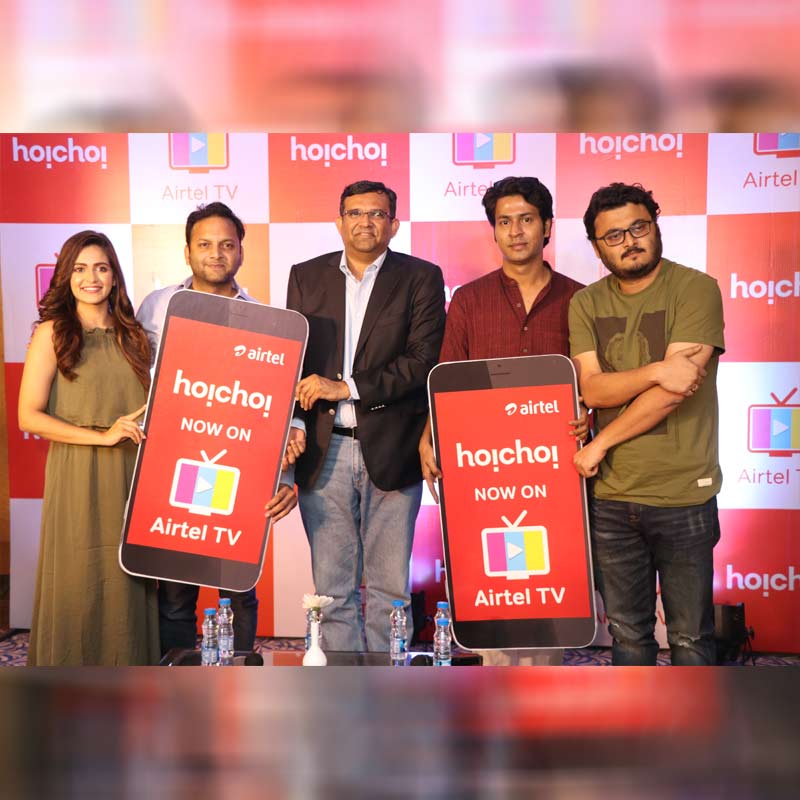
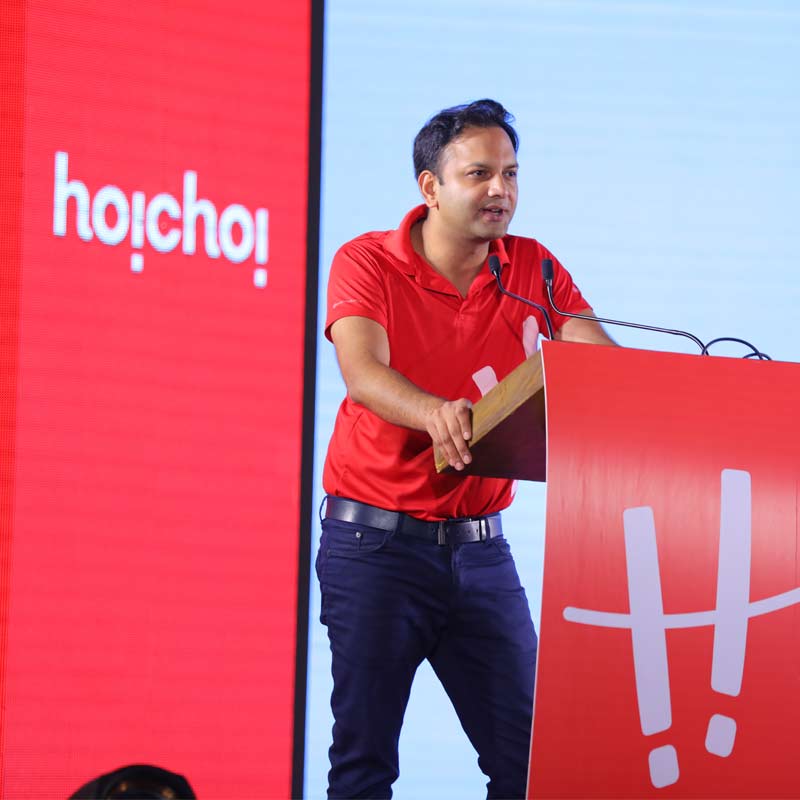
    MUMBAI: Hoichoi, the over-the-top platform exclusively for Bengali content, has entered into a partnership with leading telco player Bharti Airtel. The former’s exclusive content will be available now on the Airtel TV app following the partnership.

    Hoichoi’s library includes original shows as well as chartbuster movies. After completing one year since its launch, the company recently announced 30 original shows and 12 original films for the next one year. This entire originals catalogue will also come to Airtel TV.

    “It gives us immense pleasure to announce this partnership with Bharti Airtel to offer complete digital entertainment experience to their customers. This will help us in extending our content distribution network through Airtel TV’s fast-growing user base,” Hoichoi co-founder Vishnu Mohta said.

    Moreover, some of their original shows like Hello, Byomkesh, Dupur Thakurpo, Cartoon, Mismatch and Charitraheen are dubbed in Hindi and Tamil to reach out to a wider audience base. As the platform claims, two leading shows Hello and Byomkesh are also performing extremely well on the Airtel TV app.

    “We are delighted to bring Hoichoi’s quality content to Airtel TV that will offer our Bengali users access to their favourite digital content in their local language, with a simple click of a button. With consumption of regional content going up significantly, we will continue to focus on adding diverse entertainment content to our kitty as we work towards building a world-class digital content ecosystem,”  Bharti Airtel West Bengal and Orissa CEO Sameer Anjaria commented on the partnership.

  • hoichoi among Top 10 Grossing Entertainment Apps on iOS

    hoichoi among Top 10 Grossing Entertainment Apps on iOS

    MUMBAI: hoichoi, the world’s largest digital Bengali content platform has time and again aimed to redefine India’s OTT space for regional languages. Recently, hoichoi completed a year on 20th September and revealed many exciting announcements, which since have had their audience ecstatic about what’s in store. Within a year of its launch, hoichoi has streamed over 240 million minutes of content. 

    With many milestones are being touched, hoichoi in the month of November has secured its place among the top 10 grossing entertainment apps on the iOS platform, in India. Audience have subscribed to the app after downloading it, through the iTunes payment ecosystem. 

    hoichoi Co-Founder, Vishnu Mohta exclaimed, “hoichoi was launched with a mission of reaching out to the 250+ million Bengali’s residing worldwide. These new developments are highly encouraging that a regional app whose only barrier is that its language specific, is among the top 10 where Netflix, Sony Liv and all other National apps are included.” 

  • Entertainment Goes Online – A $5 Billion Opportunity in India

    Entertainment Goes Online – A $5 Billion Opportunity in India

    Mumbai: Over-the-top (OTT) content market in India is at an inflection point in India, as per the latest report by The Boston Consulting Group titled ‘Entertainment Goes Online’. 

    The report pegs the Indian OTT market to reach $5bn in size by 2023. This growth is being driven by rising affluence, increase in penetration of data into rural markets and adoption across demographic segments including women and older generations. 

    The ‘Entertainment Goes Online’ report is based on a first -of-its-kind consumer survey that seeks to understand consumers’ motivations in adopting OTT content over other conventional modes of content delivery. Survey results showed that there is a room for many types of OTT models such as SVOD (subscription-based platforms), AVOD (advertising-based platforms) and TVOD (transaction-based platforms) to succeed in the market. 

    “Majority of India has a single TV per household. Affordable data has created an alternate medium where consumers, for the first time, can tap into content basis individual preference at a time and space convenient for them. Whilst the current market operates with a largely advertising paid content paradigm, consumers are not averse to paying for convenient content access that OTT unlocks,” said Kanchan Samtani, Partner & Director, The Boston Consulting Group. Affluence and wide variety of content being developed for OTT market including diversity in genres and language gives OTT market a favorable edge over it traditional counterparts.

    The study identified three archetypes of customers in the Indian market, 1) traditionalists – who primarily consume on other than OTT platforms, 2) OTT Experimenter – who has significant consumption on both conventional and OTT platforms 3) Early Adopter – whose primary consumption occurs on OTT platforms. While early adopters are still a more urban phenomenon, going forward it will be more equally distributed.

    48% of India’s internet users (~650 million by 2023) are expected to be from rural areas. With development of regional content by various players, the rural market is poised to become a significantly large opportunity for players. OTT is riding the wave of increased data consumption and internet access in rural India, has opened a new distribution channel that is viable for regional and niche content. 

    Indian content including music, Bollywood content and cricket have large following in the Indian diaspora also. OTT Players with Indian content have potential to tap into this market too. “While the NRI content market is huge and demonstrates willingness to pay, it is not only dominated by cricket – Bollywood music and films are very significant. With their large content libraries, Indian OTT players are sitting on a metaphorical gold mine to serve this increasingly important customer base”, said Gaurav Jindal, Principal, The Boston Consulting Group.

    “One of the key insights of our consumer work was that, while OTTs rely on top-notch hero content to attract consumers to the platform, the stickiness of these consumers is not very high unless accompanied by ways in which they engage more deeply with the platform and is associated with strong marketing efforts," said Kanchan Samtani when discussing the subscriber acquisition and retention strategy of various OTT platforms.

    While Indian OTT players have taken many steps to capture the market, there is a lot that needs to be done before, Indian OTT market achieves the same penetration and maturity as its western counterparts.
     

  • Amazon Prime Video rates cheapest in India

    Amazon Prime Video rates cheapest in India

    MUMBAI: A recent study has found online streaming platform Amazon Prime Video is the cheapest in India. On the contrary, the service is most expensive in its home country United States. In a study by technology research firm Comparitech Ltd, India has been found as the cheapest place to watch Amazon Prime Video among 28 countries.

    “If we compare the overall cost per month of Amazon Prime Video around the world, India is by far the cheapest place to get it. At a cost of just $1.76 (£1.37) per month, it’s $11.23 or £4.62 cheaper than the US or UK, respectively,” the study said. Amazon Prime Video is 115 per cent cheaper in India than the average with a library of 2,351 titles, including movies, shows and documentaries.

    Japan, Brazil, Australia and Mexico follow India successively in the cheapest list. Indians can enjoy the service at Rs 129 while in US it costs $12.99.The annual membership plan comes at a discounted price of Rs 999 besides a free one-month trial. Moreover, telco players like Vodafone, Airtel also offer free Prime subscription under certain deals.

    Germany, Austria, Switzerland and the UK follow the US in the list of most expensive countries to get Amazon Prime Video. However, the report says Americans, along with paying the highest amount, also get to watch the most number of movies and TV shows on the over-the-top platform. In India, the platform’s library consists of close to 2,000 movies and about 400 shows.

    The study also found that Indian subscribers to Amazon Prime Video also pay one of the lowest rates per title, 137 per cent less than the worldwide average on a per title basis.