Tag: OTT

  • Innovation, customer-centric approach core to JHS Svendgaard’s marketing strategies

    Innovation, customer-centric approach core to JHS Svendgaard’s marketing strategies

    MUMBAI: One of the leading oral-care product manufacturers and exporters, JHS Svendgaard Laboratories Ltd, had an exciting 2018 with the company clocking in revenue of Rs 143 crore, besides adding some impressive clients towards its core contract manufacturing business of toothpaste, toothbrushes and mouthwash.

    Last month, the company even announced the expansion of its production capacity in South India to go beyond its current portfolio into other beauty items like creams, hair oils and shampoos. This will ease the company’s dependency on just the two northern plants.

    MD Nikhil Nanda, in an exclusive conversation with Indiantelevision.com, shared some insights into the marketing strategies of the company for the year that went by and what he is looking forward to in 2019. He also spoke on the evolving marketing scenario and how various brands are adapting to it.

    Edited excerpts:

    What was the year 2018 like for JHS Svendgaard and what are your plans for the coming year?

    We had a very exciting 2018 as we clocked in some good revenues and added new clients to our manufacturing business. Also, we saw our proprietary brand Aquawhite steadily gaining its market share in the category. Apart from that, we invested heavily in the kid’s range of Aquawhite™, which we are planning to launch in phases. The initial thrust is on Delhi/NCR market. The range has already been very well accepted at e-commerce platforms along with Big Bazaar, In&Out and leading outlets in Delhi.

    For the coming year, we have planned to invest in our newly launched character driven innovative and concept based kids range. We would like to create distribution benchmarks through the modern trade channel, e-commerce platforms and build our success through class A outlets in top cities around the country.

    What are the key marketing strategies that you are banking upon in 2019?

    As a company, we are driven by innovation and a consumer-centric approach. We want to consistently stay true to that and we believe that will be a strong reason for the consumers to accept us.

    Apart from the regular media and PR activities, we have recently signed Tiger Shroff as the brand ambassador for Aquawhite. He has a strong connection with the kids and we are sure the brand will thus be accepted by the audience at large. We are also looking at doing geography-targeted marketing through radio promotions in our key markets in order to engage our audience alike.

    According to you, how are the advertising and marketing trends evolving these days?

    Good content is ruling the market these days. Online video and paid search are driving the growth in global ad-spend, as advertisers focus on personalised and targeted communications. With advertisers now being able to use these channels to target with pinpoint accuracy and serve personalised messages, they are increasing both the efficiency and effectiveness of campaigns. Between 2018 and 2021, online video advertising will grow at an average of 18 per cent a year, twice as fast as other forms of internet display advertising and well ahead of any other channel. As per the recently launched Zenith’s Advertising Expenditure Forecasts, advertisers are now able to use personalised communication channels to serve targeted messages increasing the efficiency of campaigns.

    Can you present a brief on how ad-spends being made and managed between various media by the brands across categories in India?

    Currently, the ad-spends share stands at 45 per cent on television, 40 per cent on print, 10 per cent on digital and OTT, radio, OOH share the remaining 10 per cent. Growing allocation towards digital, radio, and OTT is being witnessed, but all this is still at an experimental stage. Having said that, I believe that, the CMOs have built considerable confidence in these new and emerging channels and thus they are increasing allocations. These segments are growing at much faster than traditional channels like television and print. OOH has literally lost its sheen and very large brands are able to afford and using as reminder media.
  • Netflix adds 8.8 million paid subs in Q4; stock falls as spending weighs on profits

    Netflix adds 8.8 million paid subs in Q4; stock falls as spending weighs on profits

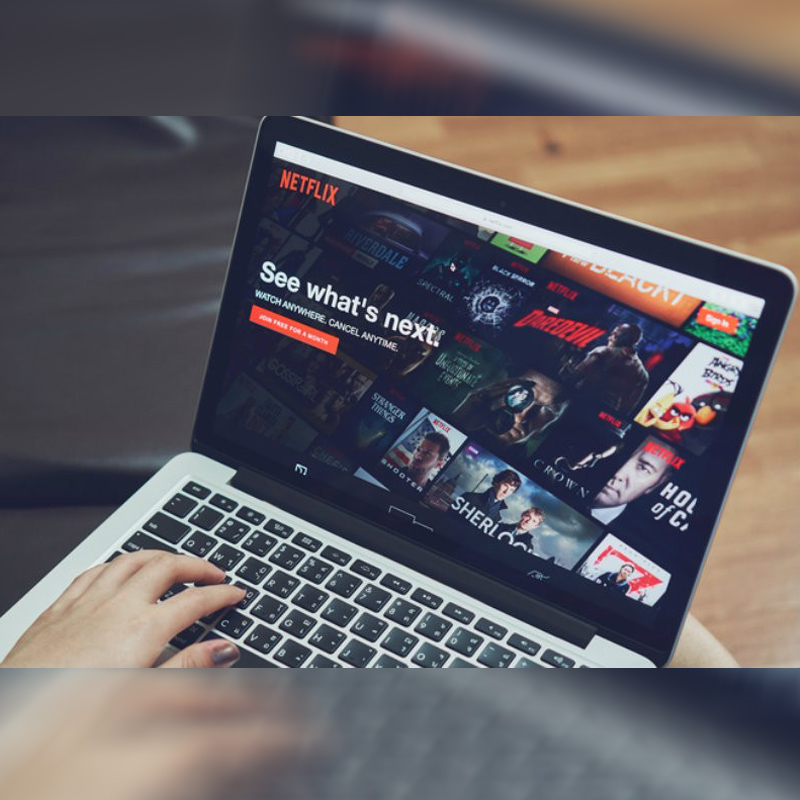
    MUMBAI: Netflix in its Q4 earnings beat Wall Street expectation in terms of international subscriber growth but the same in its domestic market remains tepid. For the quarter, the online video platform reported 1.5 million domestic subscriber addition and 7.3 million new subscribers internationally.

    Netflix posted mixed result in terms of revenue also. The company beat Wall Street estimates on earnings per share (EPS) but fell a bit short on the total revenue. It posted EPS of 30 cents versus 24 cents consensus estimate. On the other hand, against Wall Street's estimation of 4.21 billion revenue, the online video player reported $4.187 billion in revenue.

    As a result, Netflix stock fell 4.31 per cent thanks to slower domestic subscriber addition and revenue growth. The most closely watched stock gave the hope of bigger boom among investors. Notably, the copman beat its own projection in terms of subscriber addition. On the back of new 8.8 million global paid memberships in Q4, the subscriber addition went up to 29 million paid subscribers for the full year of 2018. It is clearly 33 per cent higher if compared to 22 million paid subscribers addition in 2017.

    “We added a record 8.8 million paid memberships (1.5 million in the US and 7.3 million internationally), higher than our beginning-of-quarter expectation for 7.6 million paid net adds and up 33 per cent year over year. For the full year, paid net adds grew 33 per cent to 29 million versus the 22 million we added in 2017,” the company commented in a letter to shareholders.

    Few days ago, Netflix announced its increase in US prices for the first time since 2017. The hike in subscription rate will be applied also to subscribers in Latin American and the Caribbean, where Netflix bills in US dollars. The most popular subscription plan will see the largest hike costing $13 a month, up from $11. Wall Street showed high enthusiasm by sending the stock shooting skyward after the announcement.

    “We change pricing from time to time as we continue investing in great entertainment and improving the overall Netflix experience. We want to ensure that Netflix is a good value for the money and that our entry price is affordable. We just increased our US prices for new members, as we did in Q4 in Canada and Argentina, and in Japan in Q3. The new pricing in the US will be phased in for existing members over Q1 and Q2, which we anticipate will lift ASP,” the company added in the letter.

    Apart from its well-known and critically acclaimed shows, Netflix is expanding its film market also. As claimed by the company, its films drew bigger attention in the last quarter. Netflix has also mentioned the relevance of international productions again as good ones enjoy viewership both inside and outside the country. “We’re making significant investments in productions all over the world because we have seen that great stories transcend borders,” the OTT platform commented.

    For the first quarter of 2019, Netflix forecasts global paid net additions of 8.9 million, with 1.6 million in the US and 7.3 million internationally. The revenue forecast for Q1 19 represents 21 per cent year over year growth.

    Next year is going to be a tough one for Netflix as its rivals like Disney, AT&T, NBC Universal, Apple are gearing up for their own online services. Given the strength of Disney’s scale, AT&T’s reach, anyone can assume the intensity of the challenge.

    “There are thousands of competitors in this highly-fragmented market vying to entertain consumers and low barriers to entry for those with great experiences. Our growth is based on how good our experience is, compared to all the other screen time experiences from which consumers choose. Our focus is not on Disney+, Amazon or others, but on how we can improve our experience for our members,” Netflix said.

  • Netflix raises US prices for the first time since 2017

    Netflix raises US prices for the first time since 2017

    MUMBAI: Is Netflix feeling the heat of well-funded competitors? The king of OTT platforms is increasing its US prices for the first time since 2017. The hike in subscription rate will be applied also to subscribers in Latin American and the Caribbean, where Netflix bills in US dollars. The move comes at a time when Disney is gearing up for its streaming service launch and NBC has just entered the market.

    The move is aimed at easing a large, debt-fueled investment in new films, series and documentaries this year. According to media reports, company executives are looking for more money to pay escalating content bills.

    The most popular subscription plan will see largest hike costing $13 a month, up from $11. Despite the hike, it costs lesser than HBO, whose streaming service charges $15 per month. The cheapest subscription will run $8.99, up from $7.99. The change in subscription will be effective for new customers immediately and for existing customers it will be rolled out during the next three months.

    “We change pricing from time to time as we continue investing in great entertainment and improving the overall Netflix experience,” the company said in a statement.

    Wall Street put its faith on the move as the company’s stock surged $21.70 to finish at $354.64 on Tuesday, its highest closing price in nearly three months. It shows that investors believe the price increase won’t significantly slowdown Netflix’s subscriber growth.

  • MIB may nod in favour of self-regulation code for online video streamers

    MIB may nod in favour of self-regulation code for online video streamers

    MUMBAI: An upswing in online streaming platforms in India has drawn attention of authority as well as stakeholders on regulation. As per industry sources, most of the major players have agreed to a code of self-regulation that may receive an endorsement from the Ministry of Information and Broadcasting (MIB).

    While Netflix, Star India’s Hotstar, Reliance Jio, Zee5, AltBalaji, SonyLiv and Times Internet Limited-owned MX Player are ready to follow the codes, giant international players Amazon Prime Video, Google and Facebook are not in agreement. According to sources, there are some differences over details of grievance redressal mechanisms among the players who are ready to accept the code.

    Indiantelevision.com has learnt of the existence of a document called “Code of best practices for curated online video platforms” which depicts the principles, objectives as well as the codes of the self-regulation.

    The key objectives of the code is to empower consumers to make informed choices and protect the interests of consumers. It also looks at the creative freedom of content creators and artists. Providing mechanism for grievance redressal in relation to content made available by the platforms has also been highlighted under the objectives.

    As per the said draft, the code properly defines prohibited content and age-inappropriate or sensitive content. Any content showing disrespect to the national emblem or national flag, child engaged in sexual activities, outrages religious sentiments, promotes terrorism will be prohibited.

    “The signatories to this code seek to protect the consumers’ ability to choose the content that is appropriate for themselves and their families. The objective is to use information and technological tools to equip consumers with requisite knowledge and awareness, to enable informed decisions on the consumption of content,” the draft is said to mention.

    Discussions on grievance redressal mechanism have also acquired an important place in the document. There is suggestion to internally institute as part of their operational systems an independent Standards and Practices (S&P) department to receive, objectively address any online consumer related concerns and complaints in relation to content made available.

    There are also suggestions that the signatories of the code shall establish a grievance redressal body – the Content Committee, which shall address grievances from users on violations of the code. The detailed process, functioning and powers of the Content Committee will be institutionalised in due course. However, ZEE5 and Netflix have not agreed to complaint redressal codes yet.

    Although the voluntary censorship code is aimed at maintaining creative freedom, the rules under the code highly reflect the model of TV content censorship. According to earlier reports, The Internet and Mobile Association of India (IAMAI) has supposedly drafted the code.

  • ZEE5 maintains momentum with 56.3 mn MAU in third quarter

    ZEE5 maintains momentum with 56.3 mn MAU in third quarter

    MUMBAI: Media conglomerate Zee Entertainment Enterprises Limited (ZEEL) on Tuesday published its third quarter financial results with its OTT ZEE5 demonstrating continued growth.

    ZEEL’s super streamer clocked 56.3 mn monthly active users (MAU) as of December, with a 36 per cent increase since September 2018.

    “ZEE5 is scaling up in line with our expectations and is on course to become India's number one digital entertainment platform," said ZEEL chairman Subhash Chandra.

    Since its February 2019 launch, ZEE5 has adopted an aggressive content strategy, producing original shows in several genres including comedy, drama, reality, thriller, and docu-drama.

    According to ZEEL’s filing with the BSE, users currently spend an average of 31 minutes per day on the app. The platform delivered similar engagement numbers in Q2 as well.

    “ZEE5 is quickly establishing itself as a leading digital entertainment platform,” tweeted ZEEL MD and CEO Punit Goenka, who seemed pleased the OTT’s growth trajectory.

    “Our expanding list of partnerships with telecom operators and ecosystem players, coupled with innovation in pricing, will make ZEE5 accessible to a wider audience,” he added.

    Last year, ZEE5 signed content deals with telecom majors Reliance Jio and Airtel.

    In the first leg of its global rollout, the OTT platform has focussed on South Asian audience across the world.

    Both in international and domestic markets, ZEE5 is confident of scaling up on the back of regional content.

    Since the beginning, the platform has emphasised on content in the “language of comfort”. In line with its regional play, the platform also launched regional subscription packs for Tamil, Telugu and Kannada users.

    During the last quarter, ZEE5 launched Rangbaaz, Karenjit Kaur S2 and Babbar Ka Tabbar S2 in Hindi, Chitra Vichitram and B. Tech in Telugu, What’s Up Velakkari and Alarm in Tamil, Date with Saie in Marathi and Kaali in Bengali.

    Two flagship shows of the platform Karenjit Kaur, Rangbaaz have created quite a buzz in a short span.

    In a bid to strengthen its live offerings, ZEE5 also added a dedicated section for news and even live-streamed the very popular Sunburn music festival.

  • Prasar Bharati to TRAI: OTTs streaming live TV should mandatorily carry all Doordarshan channels

    Prasar Bharati to TRAI: OTTs streaming live TV should mandatorily carry all Doordarshan channels

    MUMBAI: Public broadcaster Prasar Bharati has suggested to the Telecom Regulatory Authority of India (TRAI) that certain norms be made mandatory for OTT providers, in order to bring them on a level playing field with TV broadcasters and not just limit their comparison to telecom service providers (TSPs). OTT providers should abide by certain rules including one that OTT platforms streaming live TV should mandatorily carry all Doordarshan channels like DTH, MSOs or cable operators do.

    Under these regulations, Prasar Bharati is of the view that those OTT services should be included that provide audio/video content or broadcast services such as live, delayed or on-demand content. Such apps ‘should comply’ with basic regulatory and legal conditions which could be a subset of those that currently exist for TV broadcasters.

    Prasar Bharati made these suggestions as part of its comments to a recent TRAI consultation paper. While the consultation paper only looks at comparing OTTs to TSPs, Prasar Bharati feels that since several OTTs are providing content that is parallel to linear TV, it is only fair that when rules are made, it is taken into account that they not only substitute TSPs but even traditional broadcasters. After this, the type of service provider should also be made a criterion for creating regulatory and licensing norms.

    Prasar Bharati feels that currently, OTTs have a free reign but if OTT providers are relaying news content then they should register with the Ministry of Information and Broadcasting (MIB). The need for regulation, in this case, is especially high given the rising incidences of fake news and mischievous reporting. The regulations will also make OTT providers accountable and responsible especially if some content could be deemed to be ‘against national security’.

    It also brought into focus the system of audience measurement that has been established for linear TV and the same should also be applicable when these channels are shown live on OTT platforms.

    Prasar Bharati also sees the positive side of OTTs being helpful during calamities and natural disasters where it could prove as an important tool for broadcast. For this, it says that there needs to be synergy between various stakeholders.

    TRAI released a consultation paper on regulatory framework for OTT communication services in November. “The authority has chosen in this consultation to focus only on regulatory issues and economic concerns pertaining to such OTT services as can be regarded the same or similar to the services provided by TSPs,” TRAI said in the release. The paper mainly focused on issues regarding the relationship between OTTs and TSPs.

    The pubcaster has strongly advocated for basic regulatory and legal conditions to be applied to OTT providers offering broadcast services through internet.

  • BARC India exhorts TRAI to ‘empower’ it as digital measurer

    BARC India exhorts TRAI to ‘empower’ it as digital measurer

    MUMBAI: In a smart move that could lead to further enhancing of its credibility and importance, Broadcast Audience Research Council India (BARC India) has exhorted Telecom Regulatory Authority of India (TRAI) to “empower” it to be the uniform measurer of audience and other data related to TV, and OTT and digital platforms.   

    “BARC, which provides significant granular measurement data on television, if empowered by this Hon’ble authority, shall provide unbiased and accurate measurement data on contents broadcasted, streamed, re-transmitted, downloaded and shared in OTT platforms. The outcome of the above will lead to one single robust measurement report for television, OTT and digital platforms,” the Indian measurement organisation has said in its submission on TRAI’s consultation paper on regulatory framework for OTT communication services.

    Interestingly, while BARC India’s commitment to roll out digital media measurement services Ekam is a work in progress, the present TRAI consultation paper is more focussed on OTT voice or communications services like WhatsApp, Facebook’s Messenger and similar Indian products like Hike. However, it must be made clear here that many of the over 80 submissions from diverse stakeholders, including big TV companies like Star India and Zee, do dwell on video OTT and possibilities relating to regulations.

    Quoting from the Mobile Eco-system and Ad-sizing Report 2018 that highlights India has 250 million registered online video viewers, 100 million OTT viewers and that viewing of video content increased by 75 per cent in recent times, BARC India drives home the point if the contents streamed, viewed, re­transmitted and downloaded on OTT services “are measured and rated” by it, “more transparency in the digital eco-system” would follow.

    Highlighting the many strengths of the system and technology that the organisation presently employs and deploys, BARC India has submitted: “The OTT platforms prevail in the mobile and virtual worlds, which allow advertisers to easily and efficiently target well-defined groups or even individual consumers across various mediums…Hence, it is imminent to regulate, analyse and derive audience measurement system on OTT platforms.”

    Although several global agencies like comScore, Nielsen, App Annie and SimilarWeb provide third-party analytics on OTT platforms, the Indian industry lacks a credible and neutral measurement agency, it has been contended. As digital ad spends increase gradually, proper data analytics will offer additional opportunity to advertisers and clients to compare the effectiveness of media spends amongst various distribution platforms.

    BARC India, which has successfully set up a transparent, accurate, and inclusive TV audience measurement system that’s built upon a robust and future-ready technology backbone, while strengthening its case to measure and analyse the digital realm, has added the “big data and insights” generated by it presently powers “efficient media spends and content decisions” in a highly dynamic and growing television sector of India.

    With a panel that is currently being scaled up to 180,000 individuals, BARC India is also the largest measurement company of its kind in the world.

  • 2019 OTT TV trends in Asia and India

    2019 OTT TV trends in Asia and India

    MUMBAI: 2018 wrapped up as a fascinating year for OTT TV in Asia, with global content owners, Pay TV operators, and OTT players all ramping up their direct-to-consumer OTT offerings. With falling smartphone prices, OTT content market saw a boom in India as players across the spectrum set up shop. Original content was a game changer over the last few years, with OTT players outdoing the Bollywood big studios in their budgets. Netflix is investing Rs 500-600 crore per year into original content in India whereas Amazon Prime has announced that it would be investing around Rs 2000 crore in the same. In contrast, the budget of a Bollywood blockbuster like Padmaavat (2018) was merely Rs 200 crore.

    As content owners and pay TV operators launch — or even revamp — their direct-to-consumer OTT TV services, it’s an ongoing race to establish a business model that includes the right content, pricing, and user experience. Here’s my take on the top six trends that will shape OTT TV in India this year.

    1. Focus on the viewing customer

    While previous years have been dominated by conversations about tech or monetisation, 2019 will be dominated by a focus on the customer and enabling their access to great content. Disney’s Kevin Mayer puts this succinctly in a recent interview: “Having a better relationship with our consumer puts us in control of our own destiny.”

    2. Enabling access on every device

    Consumption trends are plotting a chart upward and to the right. Not all of this consumption is sensitive to copyright ownership, but it’s clear that video viewers have multiple devices and an internet connection, which facilitates increasing consumption. However, there’s a great deal of friction preventing these viewers from watching the content they want or even being offered the option of paying for the content they watch.

    3. Consumers want flexible payment options

    According to our OTT research, consumers have varying views across the region about whether they’re willing and happy to pay with their time (through watching advertising) or their money (subscriptions).  In 2019, we’ll see platforms using their understanding of their consumers’ preferred content to deliver premium experiences. Business model choices also need to be flexible for the consumer. In India and Asia, OTT providers could take a cue from the FMCG marketing playbook by offering sachet pricing. OTT TV providers can also offer small, low-priced subscription plans that are valid for a weekend or a week. The aim here is to enable users to sample the content and eventually convert the consumer into a more long-term subscriber.

    4. Does OTT advertising remove friction?

    Advertising paying for TV content is a contract the viewer is already familiar with. The benefit for the viewer is that they ‘pay’ with their attention. And they should receive more relevant, well-targeted ads than they would on a broadcast channel.

    Because of its highly targeted nature, ease of measurement, and tendency to have higher ad completion rates, OTT advertising is opening up new revenue streams for OTT TV providers — while also offering a highly engaging environment for brands. For advertisers, who tend to go where their audiences are, OTT TV is a beautiful mix of engaging content and addressability. It’s encouraging that agencies are seeing ad rates hit a plateau in the traditional, linear channels, while CMOs are excited by the high viewability of OTT TV services.  

    5. The content viewing experience guides OTT strategy

    According to Brightcove's OTT TV research with YouGov, trials and promotions tend to drive users to sign up for OTT services, but it’s the content itself that drives retention. We see many OTT providers not just investing in content, but also making their content work harder with content discovery and recommendation features. The research also sheds light on the importance of accessing content on mobile, which forces OTT providers to consider how their mobile OTT app could or should enhance the viewing experience. Features like offline download, which allows users to watch content when they’re not on wifi or a mobile network, and video continuity, which allows users to continue where they left off or ‘travel’ in between devices, remain desirable. All of these features are designed to increase stickiness to the service, as they allow for increased view times and encourage binge-watching habits.

    6. Pay TV operators experiment with OTT solutions

    Asia Pacific pay TV annual growth is slowly grinding to a two percent compound annual growth rate — from 267 million subscribers in 2018 to 288 million subscribers by 2023. Such low growth means that pay TV operators need to adapt to changing viewer habits by exploring the extension of their pay TV service to OTT TV services. Skinny bundles are an emerging product offering in Asia, with HOOQ launching skinny bundles in Indonesia that are targeted to tap into the 90 percent of Indonesia’s population who do not already access pay TV services. These kinds of content offerings acknowledge the difference between the buffet of the pay TV mega bundle and the a la carte personal choice of OTT TV. Understanding the context-driven difference in consumer preferences will allow pay TV operators to thrive in the OTT space.  

    Finding success in OTT TV services ultimately comes down to the viewing customer. For any global regional broadcaster or direct-to-consumer OTT service to thrive in this highly competitive environment, they must offer the desired elements to consumers.

    (The author is head of media sales, Asia, Brightcove. The views expressed here are his own and Indiantelevision.com may not subscribe to them)  

  • Viu India content head Bimal Unnikrishnan steps down

    Viu India content head Bimal Unnikrishnan steps down

    MUMBAI: Viu India vice president content Bimal Unnikrishnan has resigned. He joined the organisation last July to focus on driving a strong content-led value proposition for consumers, as well as strengthen the original content library for the OTT platform.

    The senior media professional has more than two decades of experience in the direction & programming division at media companies. Prior to Viu, he worked in media companies such as Sony Entertainment Television and Reliance Big Magic.

    Recently, Viu’s chief marketing officer Shantanu Gangane left the organisation. Viu is an OTT Video service by PCCW and Vuclip available in 15 markets.

  • Infotainment went the local way in 2018

    Infotainment went the local way in 2018

    MUMBAI: In 2018, the one common phenomenon that the whole television industry witnessed was the hijack and capture of part of its territory by OTT platforms wooing audiences with original content. That was the time when TV space woke up to secure its presence and fill in the gaps with localised content where it required the most. One of the genres that decided to focus on localising content was infotainment.

    There were days when only syndicated content was the staple of the broadcasters to survive in the market. The year 2018 finally saw their efforts paying off as viewers stayed glued to their TV screens. Original content broke all the walls by wanting the audiences to have more of it. However, the FICCI M&E report 2018 estimated  that BARC’s enhanced rural panel weightage would reduce the viewership of genres like infotainment. The factual genre occupies only about one per cent of total TV consumption.

    Players like Discovery, History TV18, National Geographic, Nat Geo Wild, Epic TV and Sony BBC Earth rolled up their sleeves with the intent to stay out of the box by offering self-produced content, keeping in mind the evolving taste buds of the Indian audiences. It is usually tricky to change audiences’ viewing habits when they have forever been fed with a plethora of syndicated content. But during the year, there came a time when Sony BBC Earth leapfrogged Discovery in terms of ratings, that was ruling the infotainment genre for almost a decade, within a year of its launch. The channel increased its market share from 22 per cent to 26 per cent in the six metro cities.

    It was a tough competition for both Sony BBC and Discovery channel that fought sportingly to win the battle and emerge as the dominant player in the market. Speaking about being on the leadership front, Discovery claimed to enjoy a 23 per cent market share in the All India Urban (2+) area.

    In an earlier interview, Sony Pictures Network English cluster business head Tushar Shah told Indiantelevision.com that the category which is supposed to be informative along with entertainment in it is missing the first half. But for Sony BBC Earth, the rise from the sixth position to the top has been quick. Sony BBC Earth stood at 5 per cent market share at launch and took up 22 per cent within a year backed by a strong distribution network, strategic content line-up and strong marketing innovations.

    One major move was the shift of Epic from a general entertainment channel (GEC) to infotainment. It proved to be a success as the channel’s market share scaled up from 3 per cent to 15 per cent. History TV18 also dived into serving local content.

    The genre wasn’t just about the hindi speaking market, in fact, it observed an upward arc due to regional support as well. Broadcasters found Tamil and Telugu as viable regional languages to launch into. Discovery and National Geographic channels are the only exceptions having Bengali language in their kitty. Epic TV is the only one with Hindi language. It is also the only channel that has all India-centric content while the rest of the players have a mix of syndicated content and home-grown shows. If you take into account Discovery Tamil, the channel's share of the pie grew by four per cent. That placed the Discovery network miles ahead of anyone else with a national market share of a massive 42 per cent.

    As far as Adex is concerned, the year 2017 led to a growth of 1.8 per cent, whereas it led to 1.9 per cent during FY18. Moreover the growth in the year FY17-18 was witnessed to be 2.38 per cent and the lifestyle genre dropped down to 2.24 per cent.

    While local content will continue to be a major part of broadcasters' move for 2019 as well, we can only wait and watch what new innovations will they launch to engage a larger section of the audience.